
Electric scooter brake pads must match your exact disc-brake caliper, approved pad material, and rotor requirements. Buying by scooter wheel size or a familiar-looking photograph can leave you with parts that do not fit. Before ordering, identify your brake, check its service instructions, and ask a qualified shop about any loss of braking performance. This guide covers replaceable disc-brake pads; scooters with other braking systems need their own specified service parts.
1. Which electric scooter brake pads fit your scooter?
The correct pads are the parts approved for the brake caliper installed on your scooter. The caliper holds the pads around the rotor, which is the metal disc attached to the wheel. Confirm that your scooter uses this arrangement before shopping for disc-brake pads.
Why does the brake model matter more than appearance?
A scooter name, wheel diameter, or phrase such as “dual brake” does not identify a replacement pad. Different brake systems can appear on different scooter models or versions, and a previous owner may have changed components. Our guide to electric scooter brakes explains the broader systems so you can identify what you are looking at.
- Find the brake information in your scooter manual.
- Record the caliper model if it is accessible.
- Ask support to confirm the replacement part number.
| Information | What it establishes |
|---|---|
| Scooter model and version | Which vehicle you own |
| Caliper identity | The installed brake assembly |
| Approved pad part number | The replacement to order |
If the manual shows a different braking system, stop comparing disc-pad listings and request the parts listed for that system. Similar-looking components are not enough evidence to place an order.
2. How can you identify your caliper and pad shape?
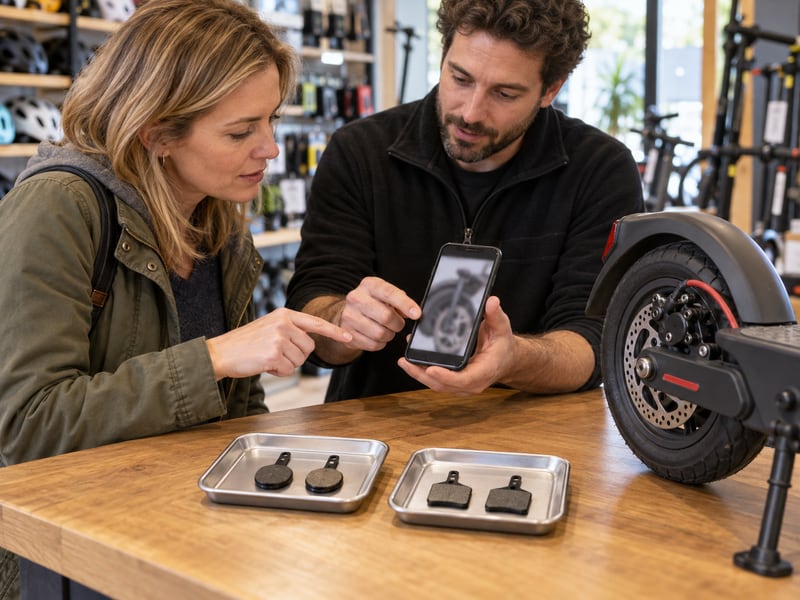
Use the brake maker’s model information and compatibility chart to identify the pad shape and part number. This official chart illustrates how pad options match the listed caliper models. A clear photograph can help a shop, but the outline alone may miss a difference in thickness, retaining hardware, or fit. Keep the scooter stationary and switched off while checking accessible identification.
What should you send when asking for help?
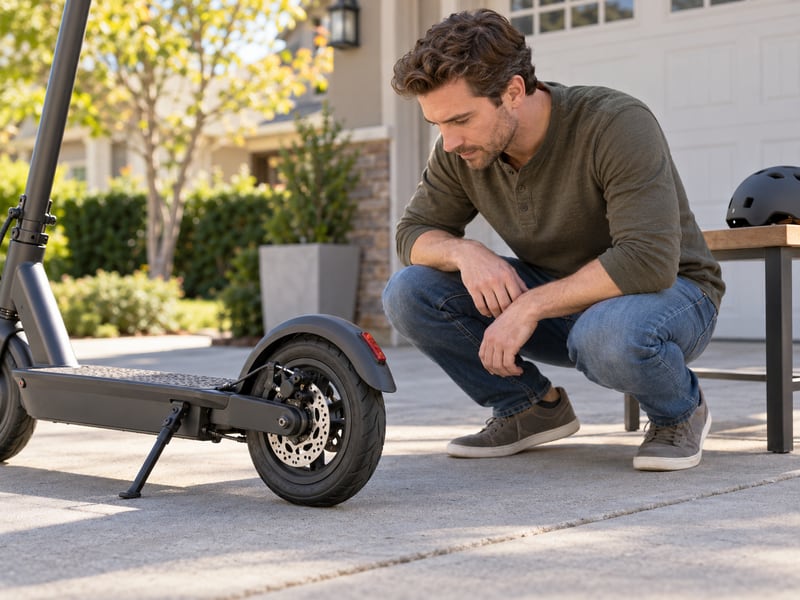
Photograph the installed caliper, its visible markings, and the wheel from a useful angle without touching the rotor. Include the scooter model and describe any earlier brake replacement. If identifying the component requires removal, let a qualified shop do that rather than loosening safety-critical hardware only to find a label.
- Ask whether the recommendation matches the exact caliper.
- Confirm which clips, pins, or springs the pack includes.
- Check how many calipers the supplied pads serve.
| Detail to compare | Reason |
|---|---|
| Backing-plate outline | Must match the specified pad |
| Retaining arrangement | Hardware differs between designs |
| Part identification | Connects the listing with the manual |
Save the confirmed part number with your scooter records. That makes the next purchase easier, but check again if you replace the brake assembly or the manufacturer changes its approved service parts.
3. Which pad material should you choose?
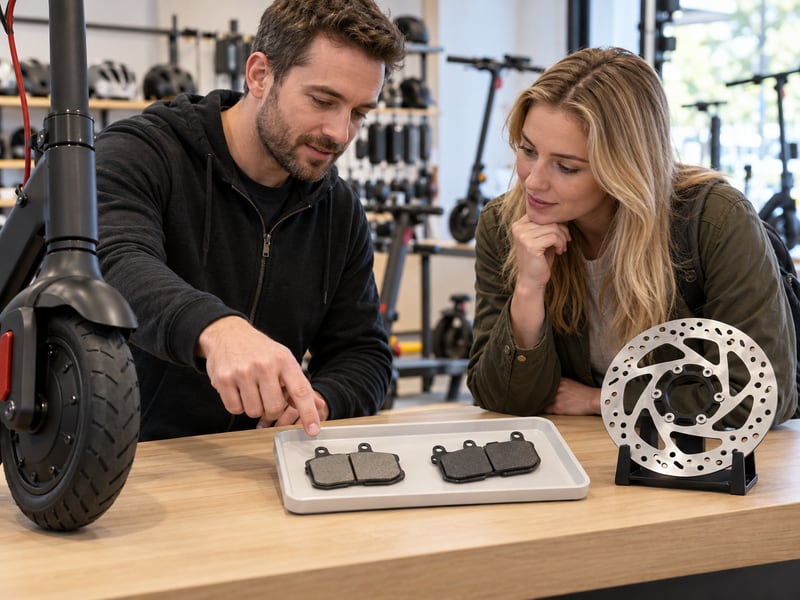
Choose electric scooter brake pads from the compounds approved for both your caliper and rotor, then compare the manufacturer’s descriptions for your riding conditions. The compound is the friction layer bonded to a metal backing plate; resin/organic and metallic/sintered are different types. The material name does not confirm the pad’s shape or compatibility.
What should you ask before changing compounds?
Tell the shop whether your rides involve wet conditions, grit, frequent stops, or sustained descents. Ask how the approved choices differ in noise, feel, wear, and bedding requirements for your particular brake. Some rotors restrict the permitted pad material, and changing compounds may also require rotor replacement under the brake maker’s instructions.
- Check the rotor’s model and material restrictions.
- Ask whether keeping the existing compound is appropriate.
- Include any required rotor work in the quote.
| Choice | Confirmation needed |
|---|---|
| Same compound | Approved replacement and rotor condition |
| Different compound | Caliper and rotor approval |
| Unclear seller terminology | Manufacturer’s actual specification |
Do not use backing-plate color as a universal material chart. Makers use their own product identifiers, so a copper-colored or black plate on an unfamiliar listing cannot establish what its friction material contains.
4. How do you check electric scooter brake pads for wear?
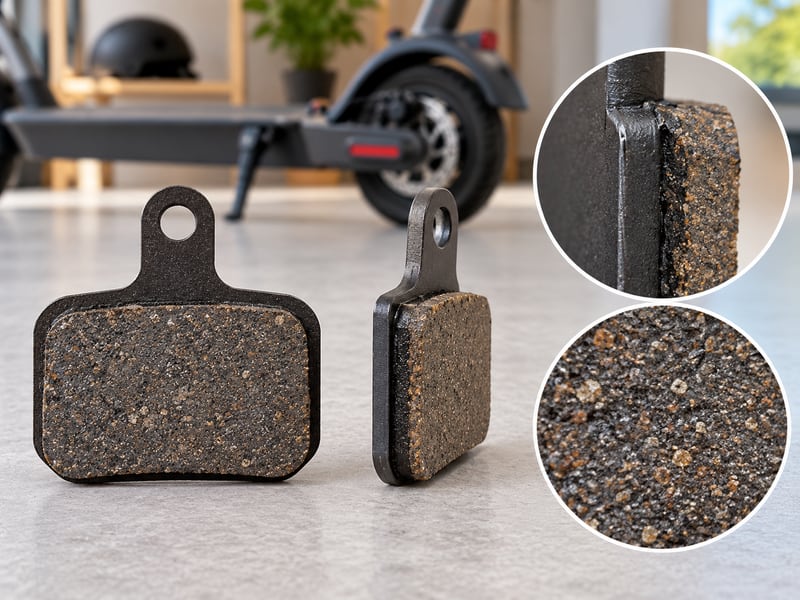
Check wear against the limit and measuring method in the exact brake manual, and arrange service if braking becomes unreliable. Some specifications describe friction material alone while others include the backing plate. Applying a number from another brake can give you the wrong replacement decision.
Which observations belong in your maintenance record?
Note changes in braking feel, unusual scraping, visible uneven wear, or the need for repeated adjustment. These observations help a shop investigate the whole brake rather than assuming that new pads will fix everything. Add the checks to your scooter maintenance routine and follow the inspection schedule for the installed brake.
- Inspect only the areas you can access safely.
- Keep fingers clear of the rotor and moving wheel.
- Ask a shop to measure pads you cannot evaluate.
| Observation | Action |
|---|---|
| At the specified wear limit | Replace as the manual directs |
| Uneven or uncertain wear | Have the brake checked |
| Unreliable braking | Stop riding until the fault is resolved |
There is no useful universal mileage deadline for every rider. Your conditions and pad compound affect wear, so a repeated inspection gives you better information than another owner’s replacement interval.
5. Does brake noise mean you need new pads?
Noise alone does not identify the cause, but persistent noise or reduced braking performance needs attention. Dirt, moisture, contamination, rubbing, or an incomplete bedding process can be involved in disc-brake noise. Replacing pads without finding the cause may leave the problem unresolved.
What should you describe to a repair shop?
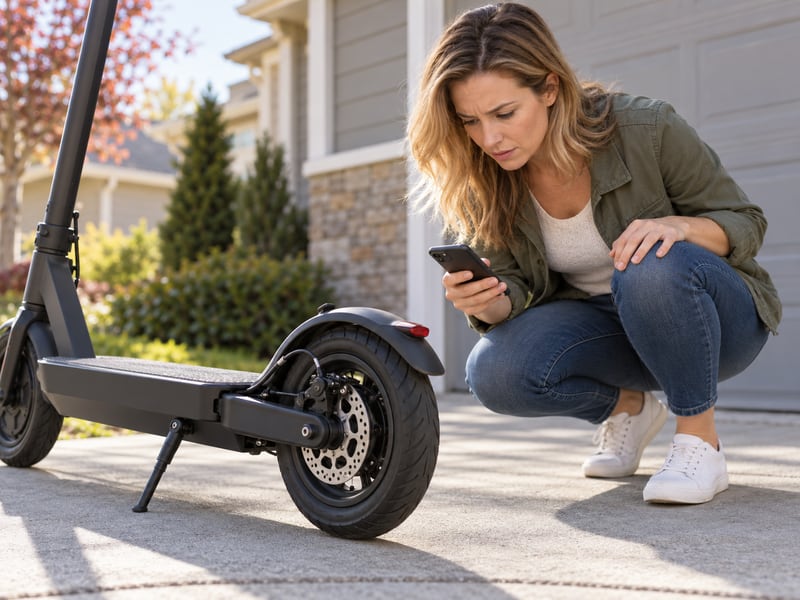
Explain whether the noise happens while braking, while the wheel turns freely, or after a particular ride. Mention recent pad changes, cleaning, lubricant use, and any change in lever feel. If the scooter now feels harder to stop, arrange inspection instead of continuing your commute to see whether the sound disappears.
- Describe when the sound started and when it occurs.
- Report any spray or fluid that reached the brake.
- Ask the shop to check the rotor and caliper too.
| Symptom | Question for the shop |
|---|---|
| Noise after replacement | Was installation and bedding completed? |
| Noise after contamination | Which parts need replacement or cleaning? |
| Rubbing or changed lever feel | Is there an adjustment or other fault? |
Never spray oil onto pads or a rotor to silence squealing. Brake friction surfaces need the cleaning or replacement method specified by their manufacturer, not a lubricant applied as a noise treatment.
6. What else should you check before ordering?
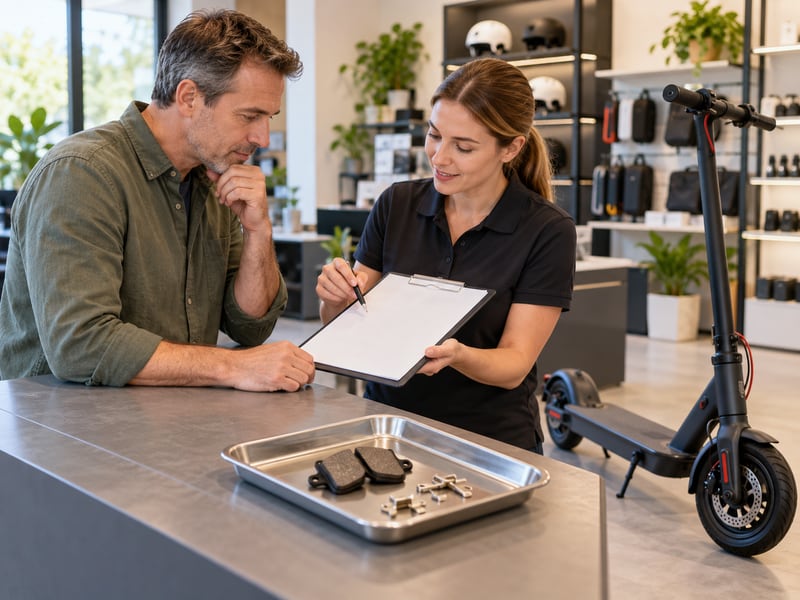
Before buying electric scooter brake pads, check the rotor, retaining hardware, caliper condition, and other reported faults. A rotor can have its own wear limit or damage requiring replacement. Ask a shop to assess parts you cannot identify or measure correctly.
How can you avoid buying an incomplete repair?
Request a clear explanation of what needs replacing and why. Ask whether a pad pack includes the necessary hardware, whether the listed quantity serves one brake, and whether the rotor remains suitable for the approved compound. A useful quote separates the parts, labor, and any additional work that needs your approval.
- Confirm the exact parts and quantities before payment.
- Ask whether damaged hardware needs replacement.
- Keep the old-part diagnosis with the service record.
| Quote item | What to clarify |
|---|---|
| Pads | Approved part and pack quantity |
| Rotor | Condition and compound compatibility |
| Service | Installation, checks, and bedding scope |
Check both brakes according to the scooter’s manual, but do not assume they use identical parts. A scooter with more than one braking system can require different inspection and service arrangements for each one.
7. Can you replace your scooter’s pads at home?
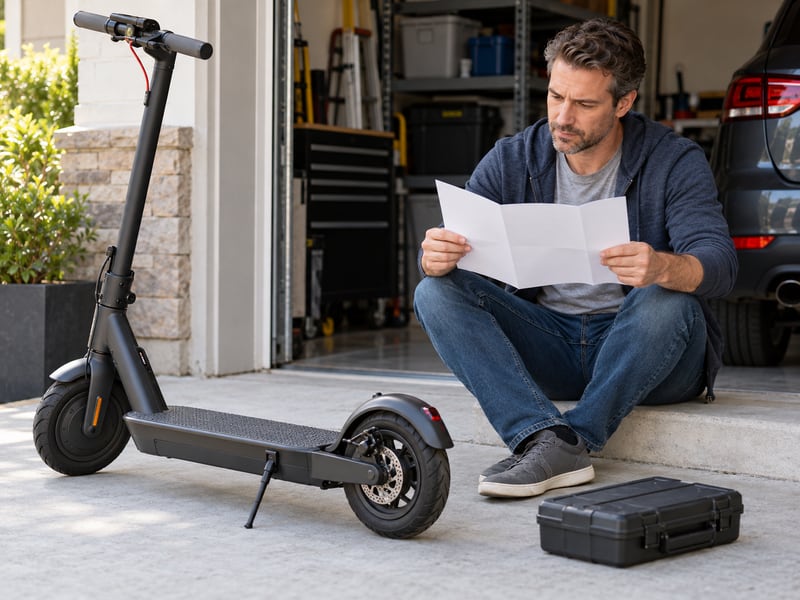
Consider home replacement only when you have the exact instructions, correct parts and tools, and the skill to complete and check the job. Otherwise, book a qualified shop that services your scooter and brake type. Reading a general guide cannot provide the missing specifications for a particular caliper.
Which details must come from the actual manual?
The manual controls access, pad removal, retaining hardware, specified fastener torque, and checks after installation. Hydraulic systems can also need specific spacers and handling precautions when parts are removed. Our brake adjustment guide offers background, but follow the installed component’s instructions for the work itself.
- Confirm the current procedure before removing hardware.
- Keep friction surfaces clean and handle parts as directed.
- Stop if a component is damaged or the fit is uncertain.
| Your situation | Suitable next step |
|---|---|
| Instructions and skills are complete | Follow the exact procedure |
| Missing specifications or tools | Arrange qualified service |
| Leaks, damaged parts, uncertain operation | Have the brake assessed |
Do not improvise a retaining pin, file a pad to fit, or borrow a torque value from another model. Those choices change the job from replacing an approved part to making an unsupported modification.
8. How should new electric scooter brake pads be bedded in?
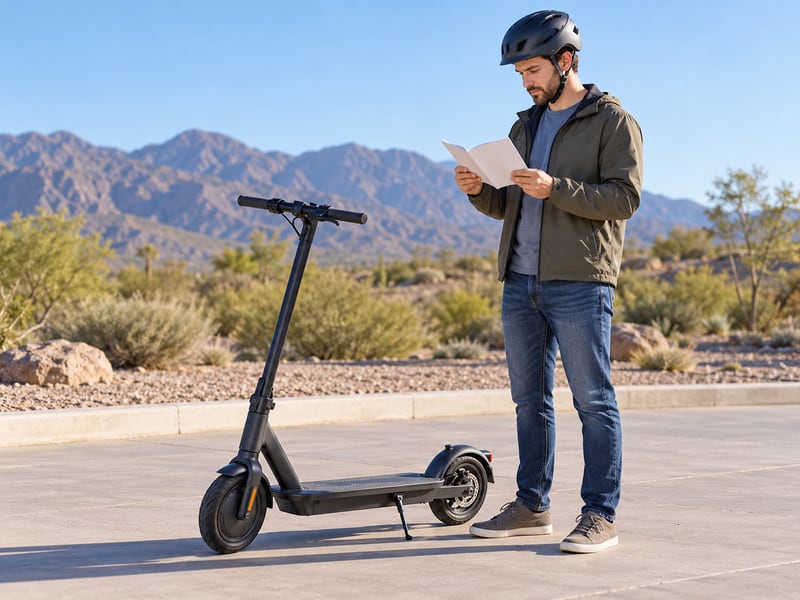
Follow the bedding instructions for the installed brake and approved pad-and-rotor combination before normal riding. Bedding uses controlled braking to establish the working surfaces. The required sequence belongs to that system; a fixed speed or number of stops copied from another brake is not a universal procedure.
What should you confirm before riding after service?
Ask the shop whether it completed bedding and which checks remain for you. If the manufacturer expects the owner to perform a procedure, read it fully and choose an appropriate location away from traffic and pedestrians. If braking is unreliable, return for service rather than starting a bedding run.
- Confirm the brake operates correctly before any ride.
- Follow the specified sequence and cooling guidance.
- Stop and seek help if operation feels wrong.
| Service question | Answer you need |
|---|---|
| Was bedding completed? | What the shop already performed |
| What remains for the owner? | Exact manufacturer instructions |
| What if braking is poor? | Inspection before normal use |
Keep bedding separate from testing an unknown repair in busy streets. The route to work is a poor place to find out that the pads, caliper, or rotor still need attention.
9. How do you keep pads clean between rides?
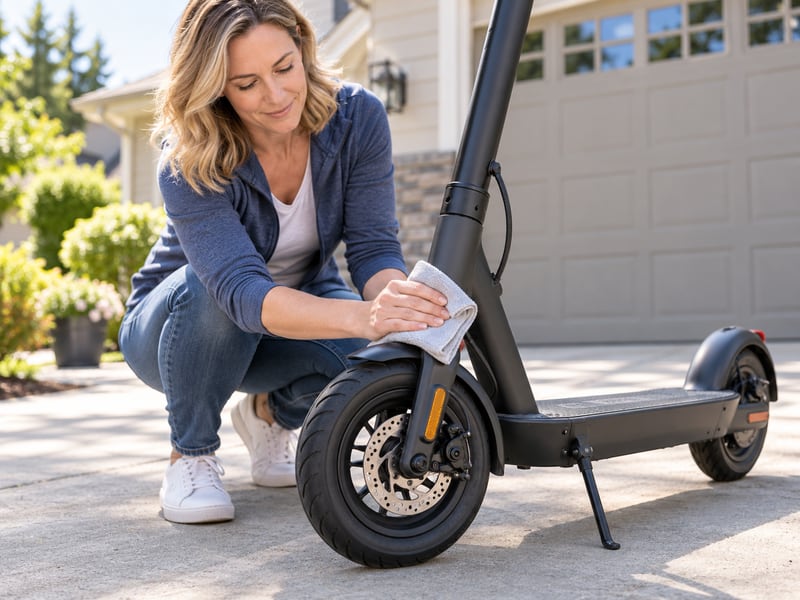
Keep oils and unapproved sprays away from the pads and rotor, and use the cleaning method specified for your brake. Let hot brake parts cool before inspecting them. Contaminated pads may need replacement, so ask for guidance rather than trying an online household treatment.
Which cleaning habits help you avoid trouble?
Plan where any lubricant or cleaning product will go before using it near a wheel. Avoid touching brake friction surfaces with oily hands, and follow the manual if cleaning requires parts to be removed. Our scooter cleaning guide covers general care; use the brake maker’s directions for its materials and seals.
- Keep dedicated clean cloths away from oily tools.
- Check approved products before spraying nearby parts.
- Report fluid leaks instead of wiping them away and riding.
| Situation | Care choice |
|---|---|
| Routine exterior dirt | Use the permitted cleaning method |
| Oil on friction surfaces | Ask about specified replacement or cleaning |
| Fluid leak or damaged component | Arrange service before riding |
Do not bake pads, burn off contamination, or coat them with a product advertised to make brakes silent. Those shortcuts do not establish that your brake will work as its manufacturer intended.
10. What should you confirm before buying replacement pads?
Confirm the caliper, approved pad part number, compound, rotor requirements, pack contents, and installation plan before ordering. Keep the seller’s confirmation with your receipt. Buying the correct part once is more useful than collecting several inexpensive sets that look similar online.

What should your final order checklist include?
Ask for clarification if the listing relies on a long list of scooter names without identifying the compatible caliper. Check that the delivered part matches the confirmed identification before installation. For a shop repair, request a record of the parts fitted and the checks completed so you know what was done.
- Save the manual and confirmed replacement details.
- Check the delivered quantity and retaining hardware.
- Arrange a brake inspection if any doubt remains.
| Before buying | Before returning to normal riding |
|---|---|
| Confirm approved fit and compound | Complete installation checks |
| Check rotor and hardware needs | Follow the required bedding process |
| Choose installation method | Resolve unusual operation or noise |
If you own a Dynamic Scooter and need help identifying the installed brake, contact us with your scooter model and clear photographs before ordering electric scooter brake pads.
FAQ
Q1: Can I use bicycle brake pads on my electric scooter?
Only when the exact pad is approved for the installed brake. A similar shape or shared wheel size does not establish compatibility.
Q2: How do I know if a pad listing fits my caliper?
Match the confirmed part number and manufacturer’s compatibility information. Ask the seller or a qualified shop when the listing is unclear.
Q3: Can I use a universal pad wear limit?
No. Use your brake’s stated limit and measuring method, including whether the specification counts only friction material or the complete pad.
Q4: Does a squeal mean the pads are worn out?
Not necessarily. Noise can have several causes; persistent noise or unreliable braking needs inspection before you continue riding.
Q5: What’s the best replacement pad material?
Choose an approved compound for your caliper, rotor, and conditions. Confirm any required rotor change or bedding instructions before switching materials.