
Minnesota calls a qualifying electric scooter a “motorized foot scooter.” The electric scooter laws Minnesota riders follow depend on a model’s capabilities and where they ride. Buying a scooter that fits the state’s definition, then checking local route restrictions, helps you avoid paying for a machine you cannot use as planned.
1. What do electric scooter laws in Minnesota cover?
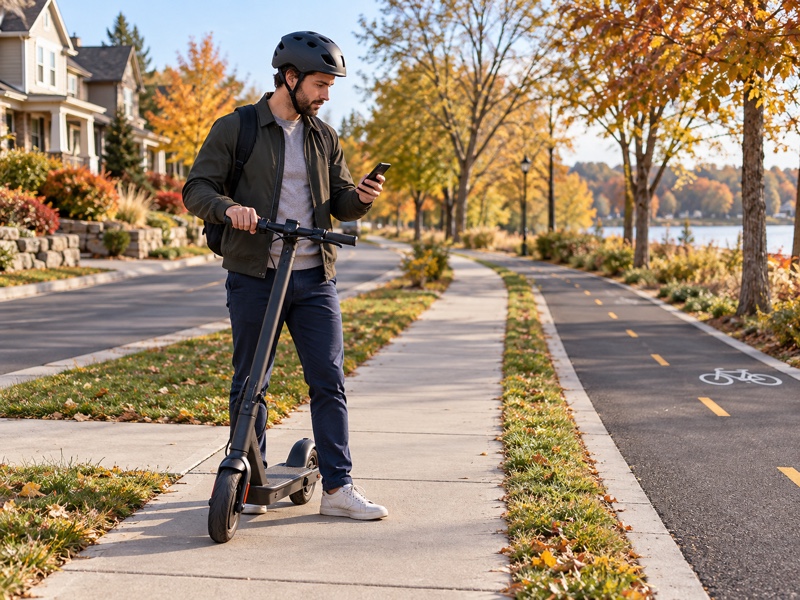
Minnesota regulates qualifying scooters through a specific vehicle category and gives their operators many bicycle rights and duties. Separate provisions address scooters themselves, including rider eligibility and permitted riding locations. Section 169.225 sets out those scooter rules.
A sales listing may use “commuter scooter,” “adult scooter,” or “electric scooter” without establishing its legal category. A shop’s product name cannot tell you whether a 25 mph model qualifies for Minnesota’s scooter treatment. Check the specification sheet before arranging a test ride or comparing prices.
Think about your actual trip. A two-mile grocery run might involve a residential road, a short trail connection, and a parking area. Each segment needs checking. A route displayed in a cycling app does not confirm scooter access, especially where a trail has its own restrictions.
| Check | What you need to establish |
|---|---|
| Device | It fits the state scooter definition |
| Rider | State eligibility and equipment rules apply |
| Route | Each road or path permits scooter use |
| Destination | You can leave it without blocking access |
Save the manufacturer’s specification page with your purchase records. That gives you a consistent starting point when asking a city or trail manager about your model.
2. Which scooters meet Minnesota’s legal definition?
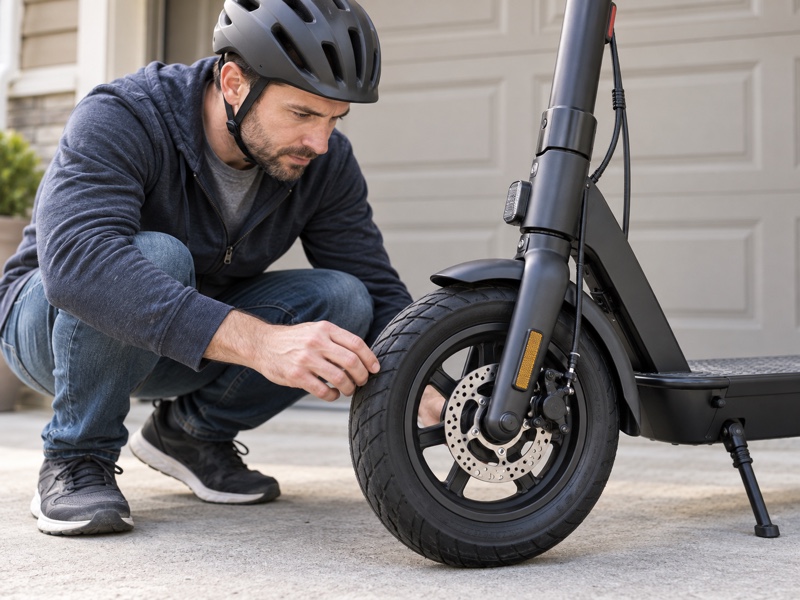
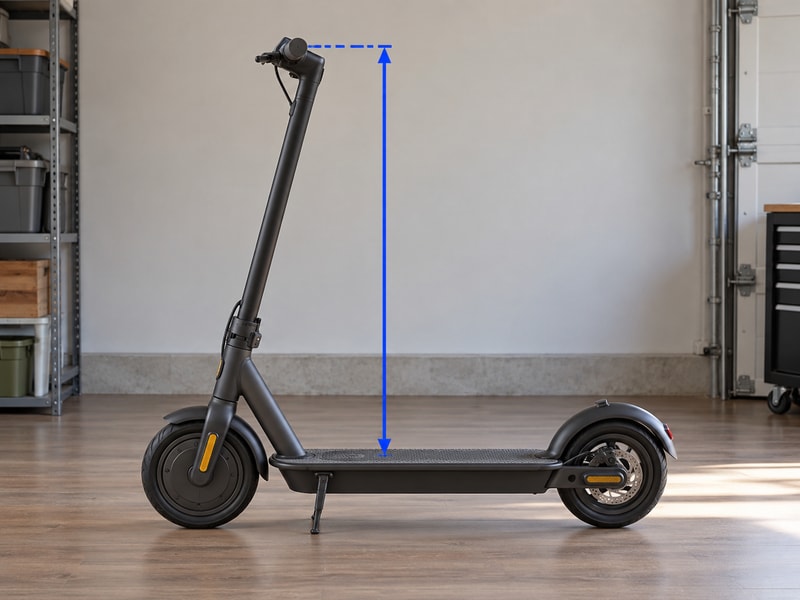
A qualifying motorized foot scooter has handlebars, no more than two wheels measuring 12 inches or less, and a motor capable of a maximum 15 mph on a nearly level surface. It can accommodate a standing or seated operator. The current statutory definition uses 12 inches, so older references giving a different wheel limit need checking.
The electric scooter laws Minnesota applies cover qualifying scooters with electric or combustion power. It excludes electric-assisted bicycles, motorized bicycles, motorcycles, and electric personal assistive mobility devices. It does not state a scooter wattage or weight ceiling.
| Specification | Minnesota category requirement |
|---|---|
| Steering | Handlebars |
| Wheels | At most two; diameter no greater than 12 inches |
| Motor capability | Maximum 15 mph under the statutory test |
| Riding position | Standing or seated |
A selectable 15 mph mode on a faster machine does not establish that its maximum capability meets this definition. Ask for written clarification before relying on an app setting. A model advertised at 20 mph deserves that conversation before you buy it.
Our guide to reading electric scooter specifications can help you separate top speed, wheel size, battery capacity, and rider load. Those figures answer different buying questions; a large battery alone says nothing about road legality.
3. What age and helmet rules apply in Minnesota?
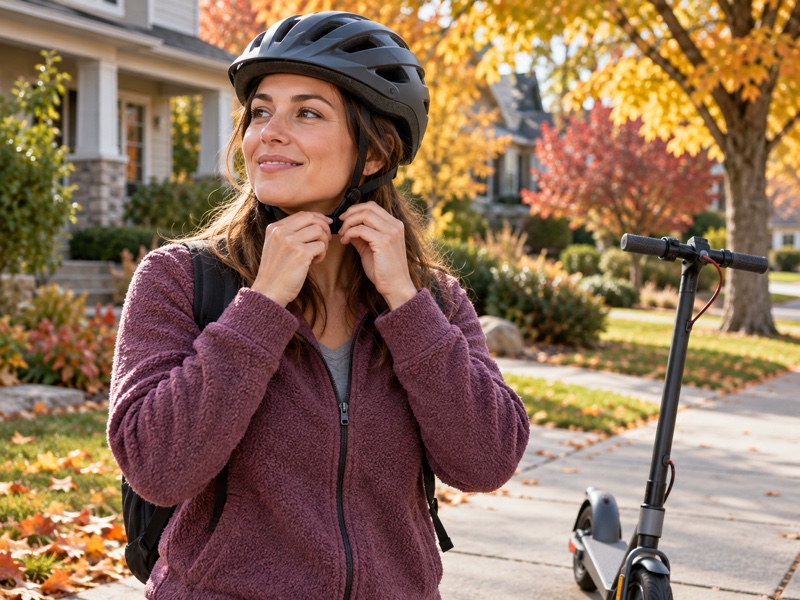
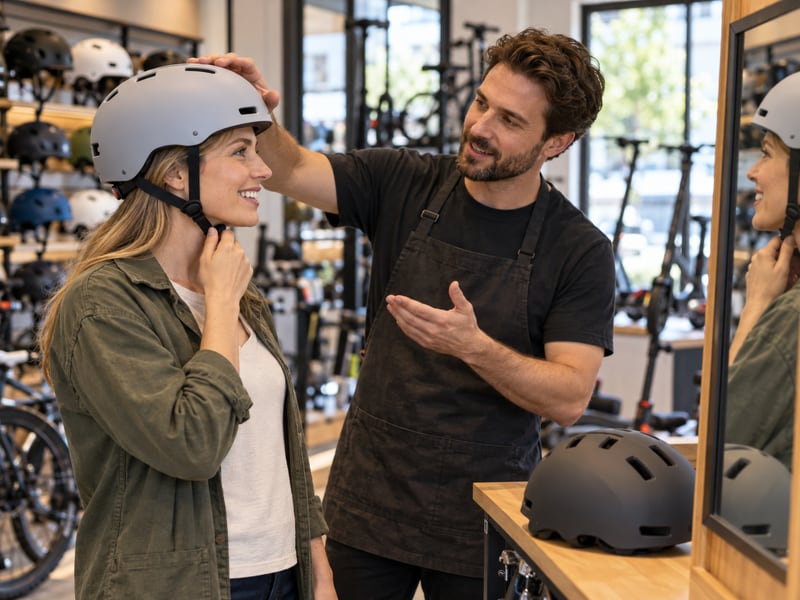
Operators must be at least 12, and riders under 18 must wear properly fitted and fastened protective headgear meeting state standards. Anoka County’s July 2026 guidance confirms both requirements. A rental service can impose a higher minimum age.
For an adult buyer, helmet fit should be part of the purchase budget. Fasten the strap and check whether the helmet stays level when you move your head. Compare the manufacturer’s sizing instructions with your head measurement rather than ordering solely by a small, medium, or large label.
| Rider | State rule or practical choice |
|---|---|
| Younger than 12 | Cannot operate a motorized foot scooter |
| Ages 12–17 | Qualifying protective headgear required |
| Ages 18 and older | Helmet remains a sensible riding purchase |
| Rental customer | Check the operator’s separate eligibility terms |
Cold weather changes how protective equipment fits. A bulky hat beneath a helmet can alter its position, so follow the helmet maker’s instructions for winter headwear. Recheck the straps after changing layers.
The electric scooter helmet buying guide covers fit and selection questions. A legal minimum riding age does not replace a parent’s assessment of a younger rider’s judgment, balance, and ability to manage traffic.
4. Do Minnesota electric scooter laws require a license?
Electric scooter laws Minnesota applies to qualifying motorized foot scooters require no driver’s license, state vehicle registration, or mandatory scooter insurance. The Minnesota State Patrol’s published guidance states these exemptions. State registration law also excludes this category from motor vehicles.
These answers depend on your machine fitting the scooter definition. A seated vehicle advertised as a scooter could require a different assessment. Keep questions about a faster model separate from questions about a qualifying 15 mph scooter.
| Item | Qualifying privately owned scooter |
|---|---|
| Driver’s license | No state requirement |
| State vehicle registration | Not required |
| Mandatory scooter insurance | Not required |
| Optional personal coverage | Ask your insurer about the actual policy |
An insurance exemption does not tell you who pays after a collision or theft. If coverage matters to your budget, describe the scooter accurately when contacting your insurer. Ask about liability, damage to your scooter, theft away from home, and any motorized-device exclusions. Request written answers against your policy.
For occasional use, compare ownership costs with rental charges using our renting versus buying guide. Include a lock, helmet, maintenance, and secure storage in your comparison. Registration fees alone give an incomplete ownership budget.
5. Where can you ride, and are sidewalks allowed?
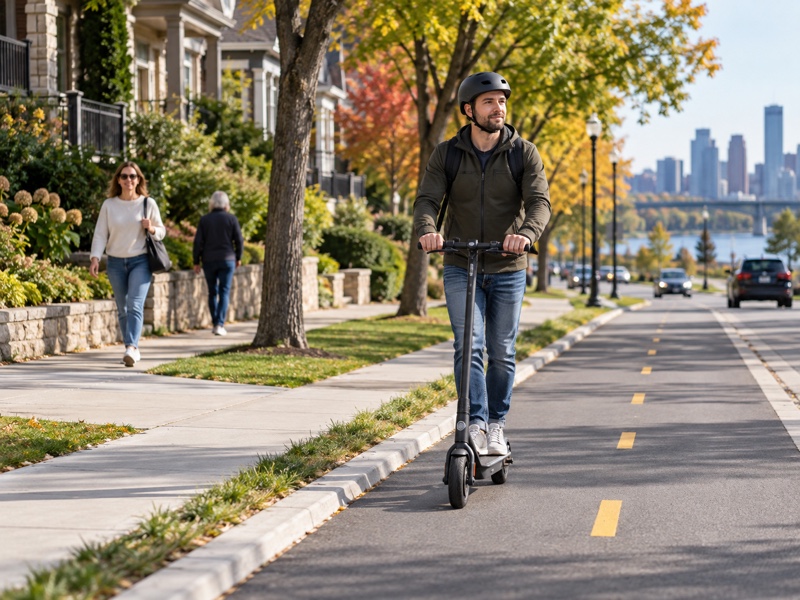
Qualifying scooters can use roadways and permitted bicycle facilities, while sidewalk riding is prohibited except when needed to enter or leave adjacent property. Olmsted County’s sheriff guidance explains these distinctions and directs riders to check city ordinances.
Access to a bicycle path, lane, trail, or bikeway depends on its designation and responsible authority. Facilities reserved exclusively for nonmotorized traffic and local prohibitions need separate attention. A paved surface or a bicycle symbol does not settle every access question.
| Route segment | What to check |
|---|---|
| Roadway | Suitable riding position and traffic conditions |
| Bike facility | Designation, local prohibition, posted restrictions |
| Sidewalk | Limited adjacent-property exception |
| Park connection | Park authority’s rules and signs |
Trace your route from door to door, including the final block. If the bike lane ends beside a busy shopping area, find a permitted connection or plan where you will stop, dismount, and walk. Avoid improvising a sidewalk shortcut after traffic becomes uncomfortable.
Make a separate return-route plan. A quieter outbound street may have a different layout in the opposite direction, and a trail gate or construction closure can remove your preferred connection. Keep an alternative route that you have checked for scooter access.
6. How should you handle turns and intersections?
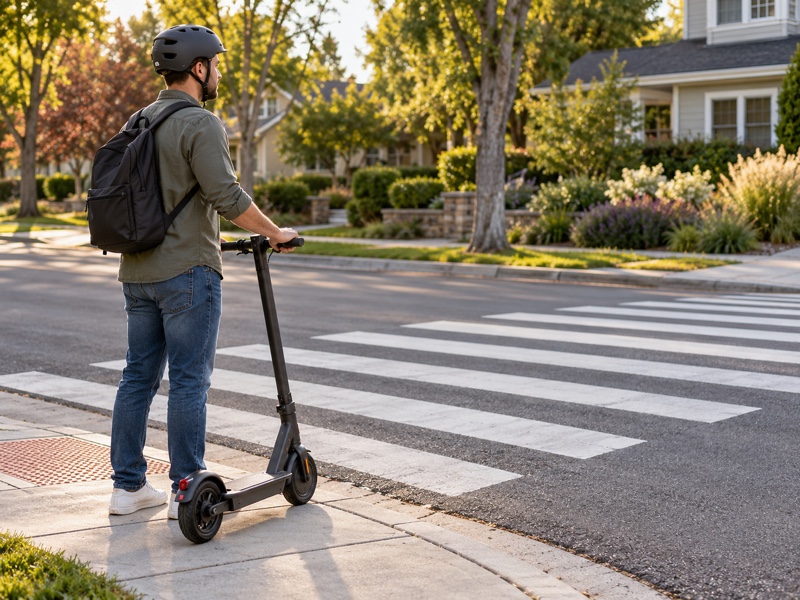
Under electric scooter laws Minnesota riders follow, stay as close as practicable to the right curb or roadway edge, with exceptions for passing and unsafe conditions. For a left turn, stop and dismount at the right edge, then cross on foot under pedestrian rules. The State Patrol guidance describes this procedure.
Build that walking stage into your commute time. A route with repeated left turns across busy roads may be less convenient than a slightly longer route with calmer crossings. Review the junctions before judging a route solely by distance.
| Situation | Preparation |
|---|---|
| Left turn | Identify a safe stopping and walking approach |
| Parked cars | Watch for doors and blocked sightlines |
| Surface hazard | Check surrounding traffic before changing position |
| Driveway crossing | Reduce speed and watch for entering vehicles |
Practice stopping and dismounting in a permitted area away from traffic. Keep your scooter upright and leave enough room for pedestrians when waiting at a crossing. Do not start crossing because another person has stepped into the street; check the applicable signal and approaching traffic yourself.
Our city-traffic riding guide offers further advice about visibility and predictable movement. For your daily route, identify the crossing that requires the most judgment and decide how you will handle it before leaving home.
7. Which lights do Minnesota electric scooter laws require?
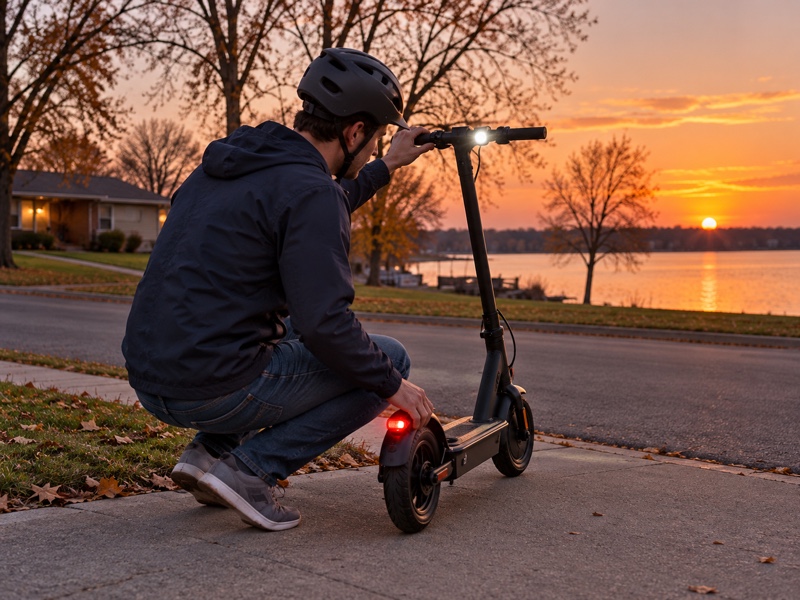
Minnesota requires a headlight and taillight meeting public-safety standards when vehicle lights are required. The scooter statute specifies both lights, and Olmsted County repeats the nighttime requirement. Do not assume a rear reflector alone answers a requirement for a taillight.
Check the lights in the clothing you will wear. A coat hem, backpack, or accessory bag can obstruct a lamp that looked visible during setup. Walk around the parked scooter and look from both directions. Check that each lamp remains secure after folding and unfolding the stem.
| Check | Practical inspection |
|---|---|
| Headlight | Working, secure, and unobstructed |
| Taillight | Working and visible behind the rider |
| Brakes | Consistent response during a slow test |
| Tires and steering | Suitable condition before departure |
Treat brakes, tires, and steering checks as routine preparation alongside the lighting requirement. A short low-speed test can reveal a rubbing brake, loose part, or handling problem before you enter traffic. Stop using a scooter that behaves unpredictably and arrange a repair.
Minnesota’s shorter autumn evenings can leave a return trip darker than expected. Switch on and inspect your lights before departing, even if daylight remains. Plan enough battery reserve for the ride home rather than using the outward trip as your full-range test.
8. How do Minnesota scooter rentals and local rules differ?
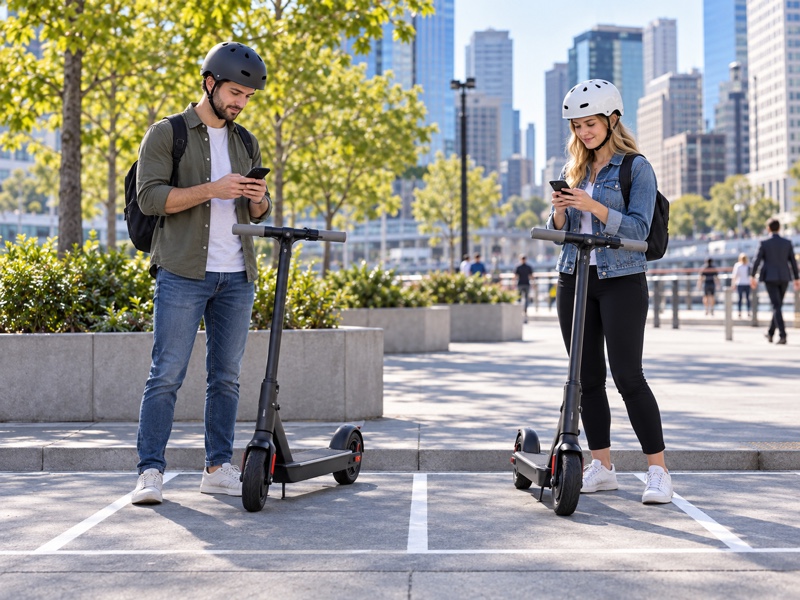
Local facility rules and rental agreements can add requirements beyond the electric scooter laws Minnesota sets statewide. Minneapolis says state law does not require a scooter driver’s license, while its rental information describes age-18 eligibility and driver-identification requirements associated with rentals.
Before paying, check the operator’s current agreement, service area, parking instructions, and process for ending a ride. A destination near the edge of an operating zone may be awkward if you cannot finish your rental there. Allow time for a parking location outside your destination’s doorway.
| Before a rental | Check this detail |
|---|---|
| Account setup | Eligibility, payment, and identification |
| Route | Allowed facilities and operating area |
| Destination | Permitted end-of-ride parking |
| Return trip | Availability and current service hours |
Ownership removes the need to find an available rental, but it leaves you responsible for storage and maintenance. Ask a workplace or apartment manager where you can keep your scooter before planning daily travel around it.
For a trail question, name the exact segment and ask the managing authority whether motorized foot scooters are allowed. Give your scooter’s maximum capability and wheel diameter. A precise question is easier to answer than asking whether all “electric vehicles” can use a park.
9. What should you check before buying a scooter?
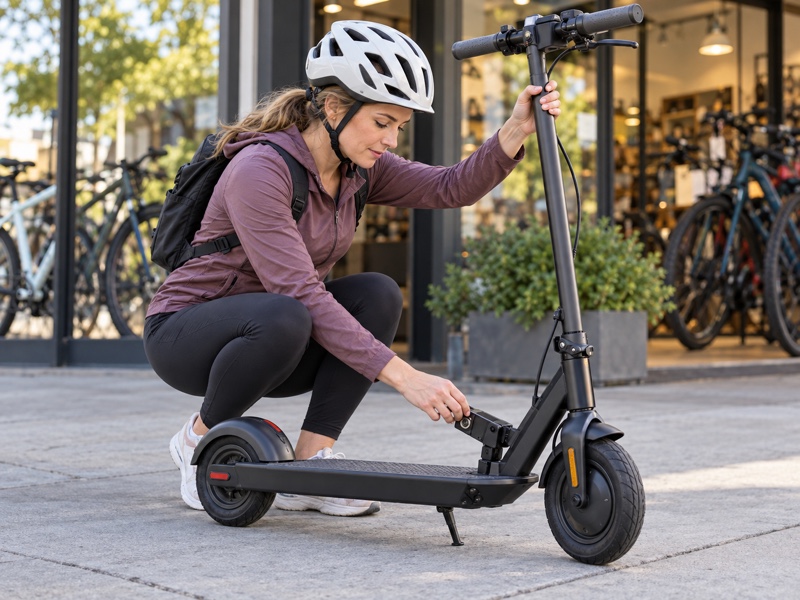
Check legal classification, permitted routes, rider fit, and storage before comparing optional features. A scooter can suit your height and budget yet fail the state definition because its motor capability exceeds 15 mph. Request the manufacturer’s written specifications before paying.
Inspect the riding position and controls during an authorized test. You should reach the brake comfortably, stand without crowding your feet, and turn the handlebars without awkward stretching. Check the manufacturer’s rider-weight limit with your usual bag and clothing in mind.
| Buying question | Evidence to request |
|---|---|
| Does it qualify? | Maximum capability and wheel dimensions |
| Does it fit? | Deck space, handlebar position, rider-load limit |
| Can you store it? | Folded dimensions and actual carrying weight |
| Can you maintain it? | Parts availability and service instructions |
Measure your storage space and any stairway landing before delivery. Decide where a wet scooter can dry without obstructing a shared entrance. Check your building’s charging and storage rules with its manager.
For a shortlist, visit Dynamic Scooter and ask about a model’s documented specifications against your Minnesota route requirements. Confirm eligibility before ordering, then compare comfort, range, portability, and service support within the models that meet your needs.
10. What else do Minnesota scooter riders ask?
Common questions about the electric scooter laws Minnesota riders follow concern faster models, seats, passengers, wheels, and parking. Use the state definition for the machine and the relevant authority’s rules for the place you intend to ride or park.
| Question | Short answer |
|---|---|
| Faster model | Recheck its legal category |
| Seat | Permitted within the scooter definition |
| Passenger | Not allowed on a motorized foot scooter |
| Wheel limit | 12 inches maximum |
| Parking | Check local rules and keep access clear |
Q1: Can I ride a 20 mph scooter at 15 mph?
Choosing a lower riding speed does not establish that a faster machine meets Minnesota’s 15 mph maximum-capability definition. Ask about its classification before buying or using it on public routes.
Q2: Does adding a seat turn my scooter into a moped?
A seat alone does not decide classification. Minnesota’s scooter definition allows standing or sitting. Motor capability, wheel dimensions, and the remaining definition still apply.
Q3: Can two adults share one scooter?
No. Section 169.225 prohibits carrying anyone besides the operator. Arrange a separate scooter or another form of transport for your companion.
Q4: Are 10-inch wheels the legal maximum?
No. The current definition permits wheels up to 12 inches in diameter. Ask the manufacturer for the wheel measurement if a listing gives only a vague “large wheel” description.
Q5: Can I leave my scooter on a sidewalk?
Check local scooter parking rules. Minnesota’s bicycle parking provision, read with scooters’ applicable bicycle rights, supports unobstructive sidewalk parking unless locally restricted. Keep the pedestrian route clear and use designated parking where required.