Electric scooters flood American streets, but many riders face fines and confiscation. Without knowing local laws, you risk legal trouble and safety issues that could cost hundreds in penalties. This guide reveals state-by-state rules to keep you riding legally.
Most electric scooters are legal on US streets with speed limits under 25 mph, but regulations vary by state and city. Riders typically need helmets, valid licenses, and must follow traffic laws. Some areas restrict scooter use to bike lanes or prohibit sidewalk riding entirely.
But here’s the thing – the legal landscape changes fast, and what’s legal in one city might be banned in the next.
1. What Makes an Electric Scooter Street Legal in the US?
Street-legal electric scooters must meet specific federal and state requirements. The Consumer Product Safety Commission sets basic safety standards for all scooters sold in America. These standards cover everything from brake performance to electrical safety systems.
Here’s why it matters – non-compliant scooters can be seized by police, and riders face hefty fines. Most states require scooters to have working brakes, lights, and reflectors for night riding. The braking system must stop the scooter within a specific distance at maximum speed.
Speed limits vary but typically cap at 15-20 mph on public roads. Motor power usually cannot exceed 750 watts, similar to electric bike regulations. This power limit keeps scooters in the low-speed vehicle category, avoiding motorcycle licensing requirements.
| Requirement | Standard Limit | Penalty for Violation |
| Maximum Speed | 15-25 mph | 50−50-50−200 fine |
| Motor Power | 750 watts | Confiscation possible |
| Age Minimum | 14-16 years | 25−25-25−100 fine |
| Weight Limit | 220-300 lbs | Equipment failure risk |
Weight limits often reach 220 pounds, matching most quality scooters on the market. Registration requirements differ by state, with some requiring license plates or permits.
2. Which States Allow Electric Scooters on Public Roads?
California leads with comprehensive scooter laws allowing street use in most cities. The state passed AB-2989 in 2018, creating a framework for scooter regulation. Riders must be 16 or older and wear helmets under 18 years old.
California requires scooters to have working brakes on both wheels. Front and rear lighting systems become mandatory after sunset. The state allows local cities to create additional restrictions but cannot ban scooters entirely.
Texas permits scooters on roads with speed limits under 35 mph. The best part? No helmet requirement for adults, making it rider-friendly for commuters. Texas law treats scooters like bicycles for most traffic purposes.
The Lone Star State requires scooters to stay in bike lanes where available. Sidewalk riding is prohibited in business districts but allowed in residential areas. Local cities can create stricter rules than state law.
Florida allows scooters on roads and bike paths but bans sidewalk riding in business districts. The state requires working lights and reflectors for night riding. Helmet laws apply only to riders under 16 years old.
New York recently legalized scooters statewide after years of restrictions. The state allows local control over scooter operations and parking rules. New York requires helmets for all riders under 18 and prohibits sidewalk use.
| State | Road Legal | Helmet Required | License Needed | Max Speed |
| California | Yes | Under 18 | No | 15 mph |
| Texas | Yes | No | No | 20 mph |
| Florida | Yes | Under 16 | No | 15 mph |
| New York | Yes | Under 18 | No | 15 mph |
| Washington | Yes | All riders | No | 15 mph |
Michigan and Illinois have similar laws but require helmets for all riders. Some states like Alabama still prohibit scooters on public roads entirely. These states classify scooters as motor vehicles, requiring full licensing and insurance.
Washington State requires helmets for all scooter riders regardless of age. The state allows scooters on roads with speed limits under 25 mph. Local cities can create additional safety requirements.
3. How Do City Laws Differ from State Regulations?
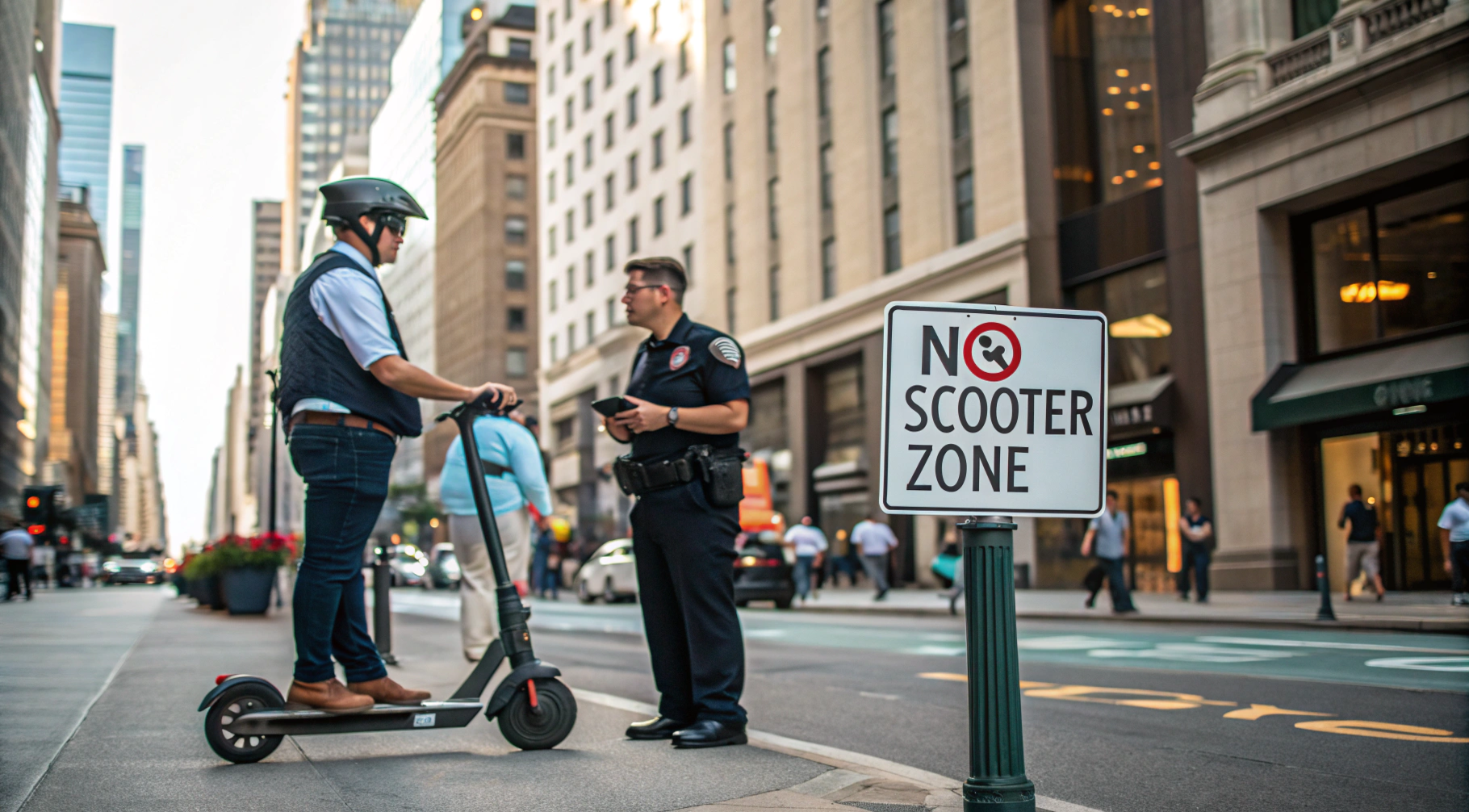
Cities often impose stricter rules than state laws allow. San Francisco requires permits for scooter companies and limits where riders can park. The city caps scooter speeds at 15 mph and requires GPS tracking for all rental units.
Now, you might be wondering why local laws matter more than state rules. Cities control traffic flow and sidewalk use, giving them authority over scooter operations. Municipal governments can ban scooters entirely despite state approval.
New York City banned scooters until 2020 despite state approval. The city now allows scooters but requires special permits for rental companies. Private scooter ownership remains legal with proper registration.
Miami requires business licenses for scooter rentals and sets specific parking zones. The city prohibits scooter parking on sidewalks and requires upright positioning. Violation fines start at $50 for improper parking.
Portland limits scooter speeds in downtown areas and requires companies to provide helmets. The city created special scooter parking corrals to reduce sidewalk clutter. Speed limits drop to 8 mph in high-pedestrian areas.
Seattle bans scooters from certain neighborhoods during peak hours. The city requires scooter companies to redistribute units daily to prevent clustering. Parking violations result in immediate scooter impoundment.
| City | Speed Limit | Parking Rules | Special Requirements |
| San Francisco | 15 mph | Designated zones only | Company permits |
| Miami | 15 mph | No sidewalk parking | Business license |
| Portland | 8 mph downtown | Upright parking only | Helmet provision |
| Seattle | 15 mph | No residential areas | Time restrictions |
| Austin | 10 mph | Bike rack areas | Insurance required |
Chicago requires scooter registration and insurance for commercial operators. The city limits the total number of scooters to 2,500 units citywide. Boston limits the number of scooters per company to reduce sidewalk clutter.
Los Angeles created a comprehensive scooter program with designated parking areas. The city requires companies to provide customer service in multiple languages. Scooter operators must maintain 95% uptime for their fleets.
4. What Safety Equipment Do You Need for Legal Riding?
Helmets top the safety requirement list in most jurisdictions. Many states mandate helmets for riders under 18, while others require them for all users. Helmet laws often carry fines ranging from 25to25 to 25to100 for violations.
Working brakes are mandatory in every state that allows scooters. Let me explain – both hand and foot brakes must function properly to meet legal standards. Brake systems must stop scooters within 15 feet at maximum speed.
Lights and reflectors become required after sunset in most areas. Front white lights and rear red reflectors help other vehicles see scooters in low light. Many states require lights visible from 500 feet away.
Bell or horn systems help alert pedestrians and other vehicles. Some cities mandate audible warning devices for all scooters. The sound must be audible from at least 100 feet away.
| Safety Item | Legal Requirement | Recommended Specs | Typical Cost |
| Helmet | Varies by age/state | DOT or CPSC certified | $30-100 |
| Front Light | Required at night | 300+ lumen LED | $15-50 |
| Rear Reflector | Required always | Red, visible 500 feet | $5-15 |
| Bell/Horn | Some cities | Audible 100 feet | $10-25 |
Protective gear like knee pads and elbow guards aren’t legally required but help prevent injuries. Some insurance companies offer discounts for riders who use full protective equipment. Medical studies show protective gear reduces injury severity by 60%.
Visibility clothing becomes important for night riding safety. Reflective vests or bright colors help other road users see scooter riders. Some cities recommend high-visibility gear during dawn and dusk hours.
Proper footwear affects scooter control and safety. Closed-toe shoes provide better grip on foot platforms. Flip-flops and sandals increase the risk of foot injuries during accidents.

5. Where Can You Legally Ride Electric Scooters?
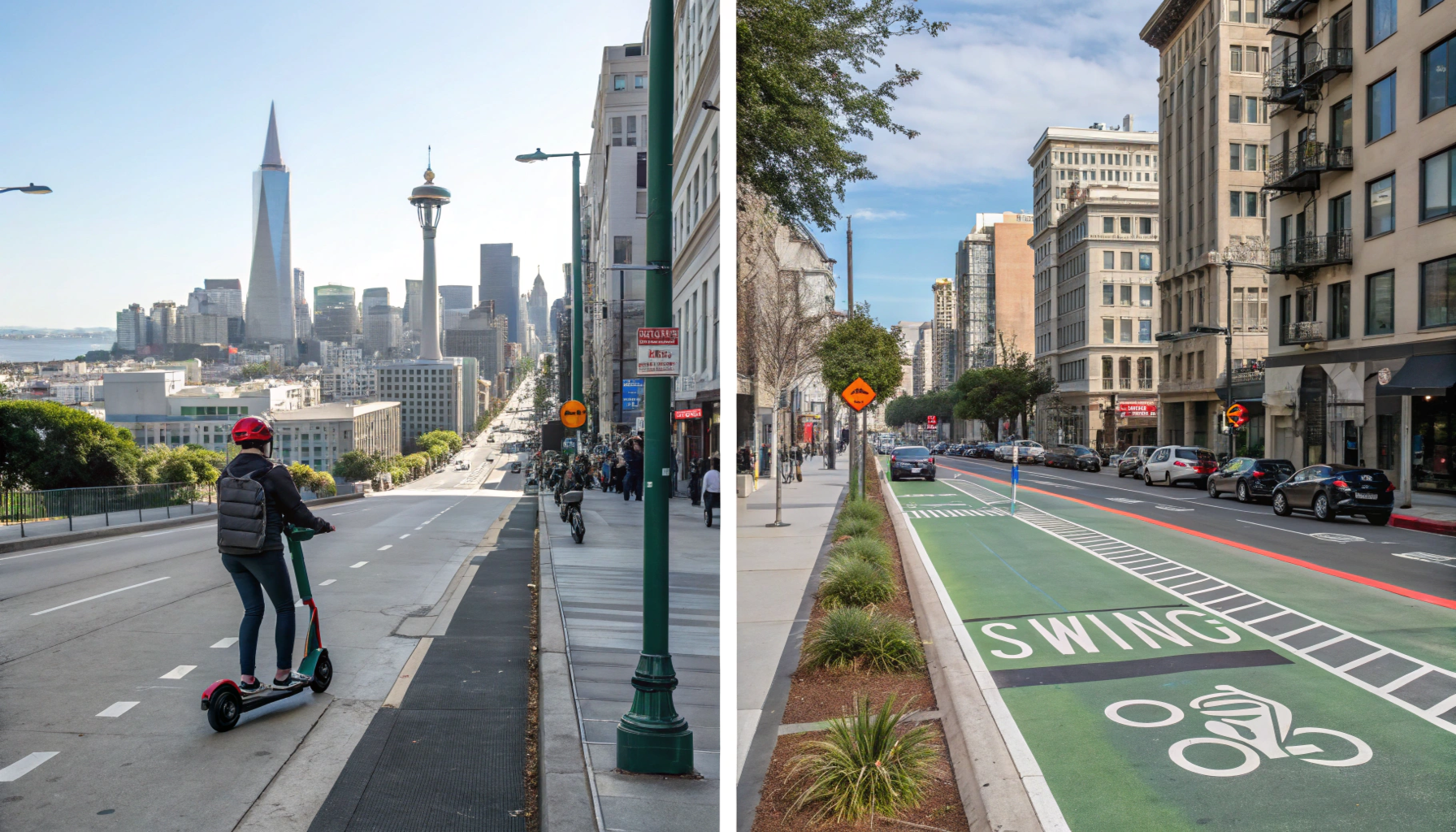
Bike lanes offer the safest legal riding space in most cities. Traffic moves slower than main roads, and cars expect non-motorized vehicles in these areas. Protected bike lanes provide the highest level of safety for scooter riders.
This is important because sidewalk riding remains illegal in many business districts. Pedestrians have right-of-way on sidewalks, making scooter use dangerous and often prohibited. Sidewalk accidents often result in serious pedestrian injuries.
Road riding is legal on streets with speed limits under 25-35 mph, depending on local laws. Highways and interstates ban all scooters due to high-speed traffic. Scooters must follow the same traffic rules as bicycles on roads.
Parks and recreational paths welcome scooters in most areas. Some national parks restrict motorized vehicles, so check local rules before riding trails. State parks often allow scooters on paved paths but ban them from hiking trails.
Multi-use paths serve pedestrians, cyclists, and scooter riders in many cities. These paths require slower speeds and yielding to pedestrians. Speed limits on multi-use paths typically range from 10-15 mph.
| Location Type | Generally Legal | Speed Limit | Notes |
| Bike Lanes | Yes | 15-20 mph | Safest option |
| Low-Speed Roads | Yes | Match traffic | Under 35 mph |
| Sidewalks | Varies | Walking speed | Often prohibited |
| Parks/Trails | Usually | 10-15 mph | Check local rules |
| Multi-Use Paths | Yes | 10-15 mph | Yield to pedestrians |
Private property requires owner permission for scooter use. Shopping centers and college campuses often have specific scooter policies posted at entrances. Violation of private property rules can result in trespassing charges.
Beach boardwalks and waterfront areas often restrict scooter use during peak hours. These areas prioritize pedestrian safety due to high foot traffic. Some beaches allow early morning scooter riding before crowds arrive.
6. What Penalties Face Illegal Electric Scooter Use?
Fines start around 25forminorviolationslikemissinglightsorreflectors.Moreseriousoffenseslikesidewalkridinginprohibitedareascancost25 for minor violations like missing lights or reflectors. More serious offenses like sidewalk riding in prohibited areas can cost 25forminorviolationslikemissinglightsorreflectors.Moreseriousoffenseslikesidewalkridinginprohibitedareascancost100-200. Traffic violations on scooters carry the same penalties as bicycle infractions.
The bottom line? Repeat offenders face escalating penalties and possible scooter confiscation. Some cities impound scooters for 30 days, costing owners storage fees. Impound fees typically range from $100-300 depending on the city.
DUI laws apply to electric scooters in most states. Riding under the influence can result in license suspension and criminal charges, just like driving a car. Blood alcohol limits for scooters match automotive DUI standards.
Reckless riding penalties mirror bicycle violations in many jurisdictions. Speeding, running red lights, or endangering pedestrians triggers standard traffic fines. Some cities use photo enforcement to catch scooter violations.
Hit-and-run accidents involving scooters carry serious criminal penalties. Leaving the scene of an accident can result in felony charges. Scooter riders must stop and exchange information just like car drivers.
| Violation Type | Typical Fine | Additional Penalty | Points on License |
| No helmet (required) | $25-75 | Safety course | 0-1 |
| Sidewalk riding | $50-150 | Warning first offense | 1-2 |
| Missing lights | $35-100 | Equipment inspection | 0-1 |
| DUI | $500-2000 | License suspension | 6-8 |
| Reckless riding | $100-300 | Court appearance | 2-4 |
Insurance claims may be denied if accidents occur during illegal scooter use. Medical bills and property damage become the rider’s full responsibility without coverage. Some health insurance policies exclude injuries from illegal vehicle operation.
Criminal charges can result from serious scooter violations. Assault with a vehicle charges apply when scooters injure pedestrians through reckless riding. These charges carry potential jail time and permanent criminal records.
7. How Do Electric Scooter Laws Compare to Bicycle Rules?
Most states treat electric scooters similarly to bicycles for traffic purposes. Both must follow the same road rules, including stopping at red lights and yielding to pedestrians. Lane positioning rules apply equally to both vehicle types.
What does this mean for you? Scooter riders get the same road rights as cyclists but must follow identical traffic laws. Lane splitting and sidewalk riding restrictions apply equally. Right-of-way rules favor both scooters and bicycles over motor vehicles.
Helmet laws often differ between scooters and bikes. Some states require scooter helmets for all ages while only mandating bike helmets for children. This difference reflects concerns about scooter stability and rider experience.
Parking rules typically favor bicycles over scooters. Many cities allow bike parking on sidewalks but restrict scooter parking to designated zones. Bike racks accommodate bicycles but often exclude scooters due to size differences.
Registration requirements vary significantly between the two vehicle types. Most areas don’t require bicycle registration, while some cities mandate scooter permits. Commercial scooter operations face stricter licensing than bike share programs.
| Aspect | Electric Scooters | Bicycles | Key Difference |
| Traffic Laws | Same as bikes | Standard rules | None |
| Helmet Rules | Often stricter | Child-focused | Age requirements |
| Parking | Restricted zones | More flexible | Location limits |
| Insurance | Rarely required | Optional | Coverage gaps |
| Registration | Sometimes required | Usually not | Permit needs |
Speed limits sometimes differ, with scooters capped lower than electric bikes. Motor power restrictions also vary, affecting performance capabilities between the two vehicle types. Electric bikes can often reach higher speeds legally.
Licensing requirements remain minimal for both vehicle types in most states. Neither typically requires driver’s licenses or special permits for personal use. Commercial operations face different rules for both scooters and bike share programs.
8. What Insurance Coverage Do You Need for Electric Scooters?
Personal auto insurance rarely covers electric scooter accidents or damage. Most policies exclude motorized vehicles not registered for road use. Here’s the deal – riders often face significant financial exposure without proper coverage.
Homeowner’s and renter’s insurance may provide limited scooter coverage. These policies sometimes cover theft or damage to personal scooters. Liability coverage for injuries to others varies by insurance company and policy terms.
Specialized scooter insurance products have emerged in recent years. These policies cover theft, damage, and liability specifically for electric scooters. Annual premiums typically range from $100-300 depending on coverage limits.
Health insurance becomes critical for scooter riders due to injury risks. Emergency room visits for scooter accidents average $2,500-5,000 without insurance. Some health plans exclude injuries from motorized vehicle use.
| Coverage Type | Typical Cost | What’s Covered | Exclusions |
| Auto Insurance | N/A | Usually nothing | Motorized vehicles |
| Homeowner’s | Included | Theft, some damage | Liability varies |
| Scooter Policy | $100-300/year | Comprehensive | Racing, commercial use |
| Health Insurance | Varies | Medical bills | May exclude motorized vehicles |
Commercial scooter operators must carry substantial liability insurance. Most cities require $1 million in coverage for rental scooter companies. This insurance protects both the company and injured third parties.
Umbrella insurance policies may provide additional scooter liability coverage. These policies extend beyond standard homeowner’s liability limits. Coverage typically applies to personal scooter use but excludes commercial activities.

Conclusion
Electric scooter legality varies significantly across American states and cities, but most areas now allow street use with proper safety equipment. Key requirements include speed limits under 25 mph, working brakes and lights, and helmet use for younger riders. Understanding local laws prevents costly fines and keeps you riding safely. The legal landscape continues changing as cities adapt to growing scooter popularity.
Dynamic Scooter offers street-legal models that meet federal safety standards and most state requirements. Our scooters feature dual-brake systems, LED displays, and foldable designs perfect for urban commuting. With IP54 waterproofing and smart battery management, our scooters provide reliable transportation while meeting legal compliance standards. Visit our website to find compliant scooters that match your local regulations and riding needs.
FAQ
Q1: Do I need a driver’s license to ride an electric scooter?
Most states don’t require a driver’s license for electric scooter use, but some cities mandate valid ID for rental scooters. A few states require motorcycle licenses for high-powered scooters over 750 watts. Personal scooters under 750 watts typically need no special licensing.
Q2: Can I ride my electric scooter in the rain?
While many scooters have water resistance ratings, most local laws don’t specifically address weather conditions. Wet conditions reduce braking effectiveness and increase accident risk, so check your scooter’s IP rating before riding in rain. Many manufacturers recommend avoiding heavy rain to prevent electrical damage.
Q3: Are there age restrictions for electric scooter riders?
Age minimums typically range from 14-16 years old, varying by state and city. Some areas allow younger riders with adult supervision, while others set higher age limits for rental scooters. Private scooter ownership often has lower age requirements than rental services.
Q4: Can I modify my electric scooter and still ride legally?
Modifications that increase speed or power beyond legal limits make scooters non-compliant. Adding safety features like better lights is usually acceptable, but removing required equipment violates most local laws. Speed governor tampering voids warranties and violates federal regulations.
Q5: What happens if I get in an accident on my electric scooter?
Accident liability follows standard traffic laws, with fault determined by who violated traffic rules. Your auto insurance may not cover scooter accidents, so consider separate coverage or check policy details before riding. Medical bills and property damage can become significant financial burdens without proper insurance coverage.