
Riders face confusion about helmet laws and risk serious legal trouble or injuries. Without knowing local requirements, you could face hefty fines or life-changing head trauma. This guide reveals exactly when helmets are required and how to stay compliant.
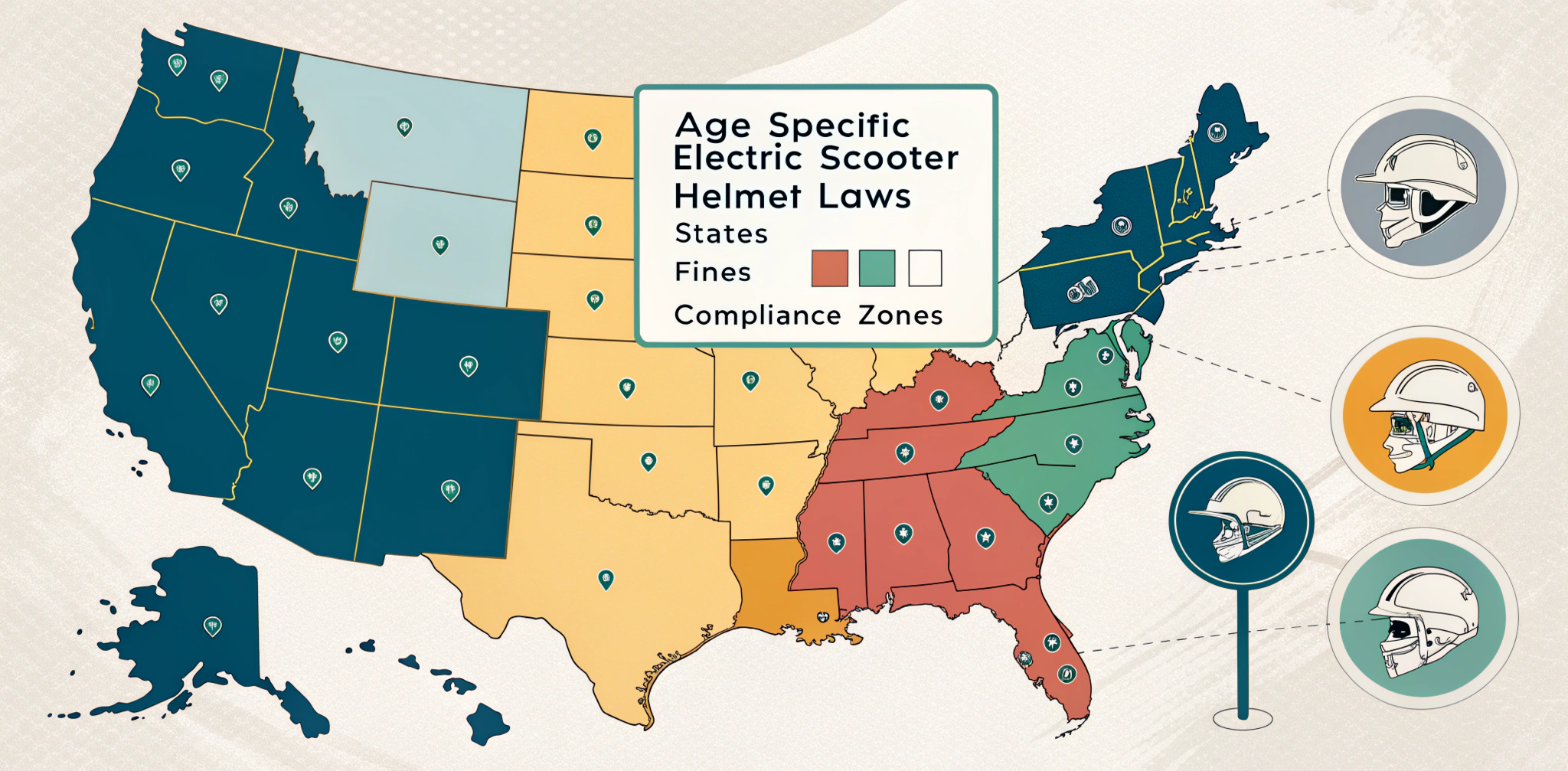
Electric scooter helmet laws vary dramatically by location, with most states requiring helmets for riders under 18 but allowing adults to ride helmet-free. However, many cities impose stricter rules requiring helmets for all riders regardless of age. Violations typically result in $25-200 fines, and riding without required helmets increases serious injury risk by 85%.
But here’s the thing – these laws change frequently, and ignorance won’t protect you from penalties.
1. Which States Allow Helmet-Free Electric Scooter Riding?
Most states allow adults over 18 to ride electric scooters without helmets. California permits helmet-free riding for adults but requires helmets for anyone under 18 years old. The state imposes $25 fines for violations.
Here’s why it matters – state laws set the baseline, but cities can add stricter requirements. San Francisco requires helmets for all riders in downtown areas during peak hours, regardless of state law.
Texas has no statewide helmet requirement for electric scooters. Individual cities create their own rules. Austin mandates helmets for riders under 18, while Dallas allows helmet-free riding for all ages.
Florida requires helmets only for riders under 16 years old. Adults and older teens can ride without helmets on public roads. The state allows cities to impose additional helmet requirements.
New York mandates helmets for all riders under 18 years old. Adults can ride helmet-free in most areas. The state recently legalized scooters with strict safety requirements.
| State | Adult Helmet Required | Minor Age Limit | Typical Fine |
| California | No | Under 18 | $25 |
| Texas | Varies by city | Varies | $25-75 |
| Florida | No | Under 16 | $30 |
| New York | No | Under 18 | $50-100 |
| Washington | Yes | All riders | $124 |
Washington State requires helmets for all electric scooter riders regardless of age. The state treats scooters like bicycles for helmet law purposes. Violations carry $124 fines.
Michigan requires helmets for riders under 19 years old. Cities can set stricter age limits. Detroit mandates helmets for all riders in the downtown core.
Oregon requires helmets for riders under 16 years old statewide. Portland extends this requirement to riders under 18 in school zones. The city provides free helmets at community centers.

2. What Are the Legal Penalties for Riding Without a Helmet?
Fines for helmet violations range from $25-200 depending on location and rider age. Most jurisdictions issue warnings for first-time offenses. Repeat violations result in higher fines and possible scooter confiscation.
The best part? Some cities offer alternatives to fines. Austin allows violators to complete safety courses instead of paying penalties. The 2-hour courses cost $25 and cover traffic laws.
Parents face additional penalties when minors ride without required helmets. California charges parents $25-100 for allowing children to violate helmet laws. Some states add points to parents’ driving records.
Scooter rental companies face substantial penalties for helmet violations. Cities can suspend operating permits or reduce fleet sizes. Miami fines companies $500-2000 when customers ride without required helmets.
Insurance claims may be denied or reduced for injuries during helmet violations. Health insurance policies often cut coverage by 25-50% for preventable injuries. Auto insurance typically excludes scooter accidents entirely.
| Violation Type | Fine Range | Additional Penalty | Repeat Offense |
| Minor without helmet | $25-50 | Parent liability | $50-100 |
| Adult violation | $50-200 | None | $100-300 |
| Rental company | $500-2000 | Permit suspension | Fleet reduction |
| Parent allowing | $25-100 | Driving points | $100-200 |
Criminal charges rarely result from helmet violations alone. Combined violations like speeding plus no helmet can trigger reckless endangerment charges. These carry potential jail time and license suspension.
Court appearances become mandatory for some repeat helmet violations. Judges can order community service or safety courses. Some cities require violators to attend victim impact presentations.
3. How Do City Laws Override State Helmet Requirements?
Cities often impose stricter helmet rules than state laws allow. Los Angeles requires helmets for all scooter riders in business districts. The city sets fines at $200 for violations.
Now, you might be wondering why local laws matter more than state rules. Cities control traffic flow and public safety, giving them authority to create additional requirements. Municipal laws always supersede less restrictive state rules.
Miami mandates helmets for all rental scooter riders but not private owners. The city works with scooter companies to provide helmets with rentals. Violations result in $75 fines and possible rental account suspension.
Seattle requires helmets for all scooter riders citywide. The law applies to both rental and private scooters. Police issue warnings for first offenses and $50 fines for repeat violations.
Chicago mandates helmets for riders under 17 years old. The city allows helmet-free riding for adults on most streets. School zones require helmets for all riders during school hours.
Nashville requires helmets for all electric scooter riders in the downtown core. The city created helmet-free zones in residential areas. Tourist districts have the strictest enforcement levels.
| City | Helmet Requirement | Coverage Area | Fine Amount |
| Los Angeles | All riders | Business districts | $200 |
| Miami | Rental riders only | Citywide | $75 |
| Seattle | All riders | Citywide | $50 |
| Chicago | Under 17 | All areas | $25-50 |
| Nashville | All riders | Downtown core | $100 |
Boston requires helmets for riders under 18 years old. The city provides free helmets at public libraries and bike shops. Violations carry 25finesforminorsand25 fines for minors and 25finesforminorsand50 for supervising adults.
Denver has no helmet requirements for electric scooters. The city focuses on speed limits and parking rules instead. Riders choose helmet use based on personal preference.
4. Which Helmet Types Meet Legal Standards?
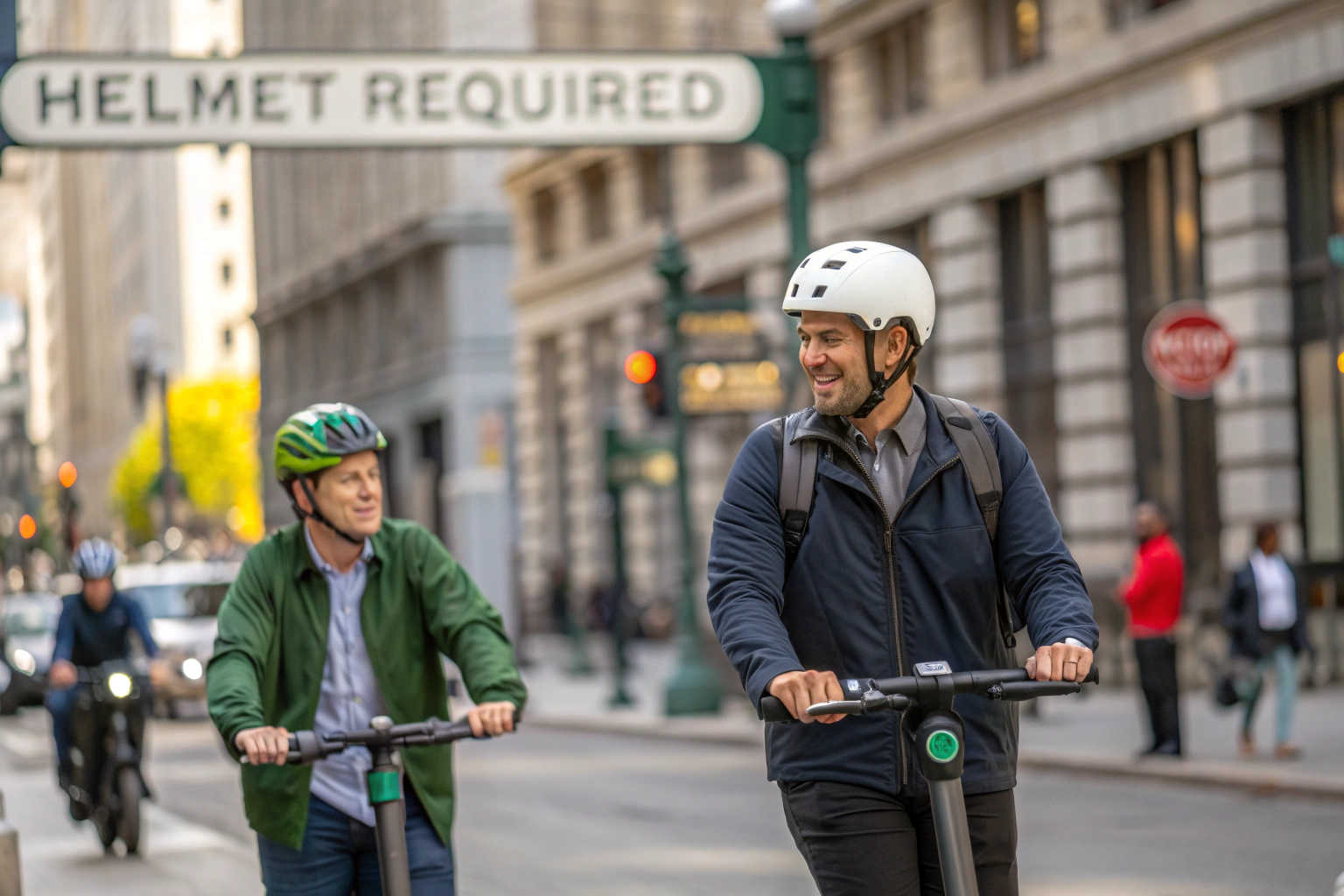
DOT-approved motorcycle helmets meet legal requirements in most jurisdictions. These helmets pass federal safety standards for impact protection. Look for DOT certification stickers inside helmets before purchasing.
Let me explain why helmet type matters for legal compliance. Standard bike helmets may not meet scooter helmet requirements in some cities. Areas with high-speed scooter limits often require motorcycle-style protection.
CPSC-certified bicycle helmets work for most electric scooter laws. These helmets cost $20-100 and provide adequate protection for low-speed crashes. They’re lighter and more comfortable than motorcycle helmets.
SNELL-certified helmets offer the highest protection levels available. These premium helmets cost $100-300 but provide superior impact resistance. High-speed and racing riders prefer SNELL certification.
Skateboard helmets typically don’t meet legal requirements for electric scooters. These helmets lack proper impact testing for scooter speeds. Police can cite riders wearing non-compliant helmets.
| Helmet Type | Legal Compliance | Price Range | Best Use Case |
| DOT motorcycle | Most areas | $50-200 | High-speed riding |
| CPSC bicycle | Most areas | $20-100 | City commuting |
| SNELL certified | All areas | $100-300 | Maximum protection |
| Skateboard | Few areas | $15-50 | Not recommended |
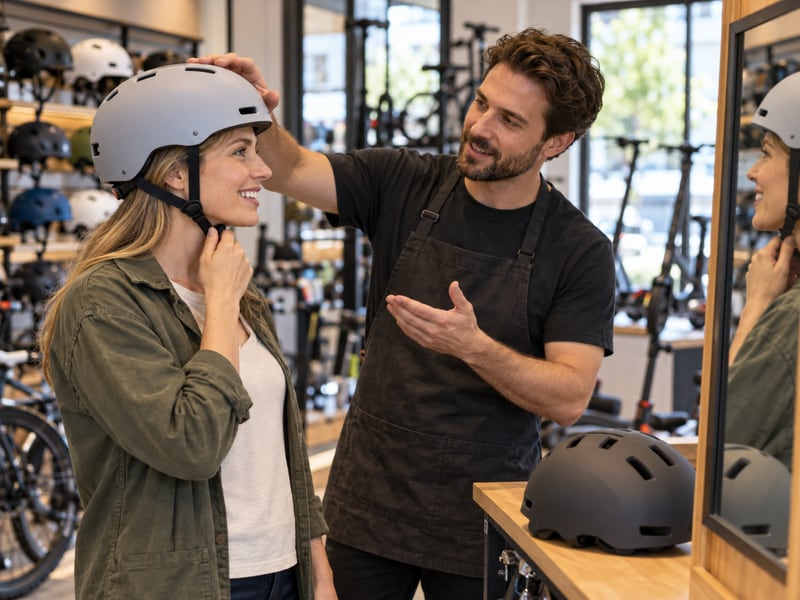
Proper helmet fit affects legal compliance in some jurisdictions. Loose or improperly worn helmets may not meet requirements. Chin straps must be fastened and properly adjusted for legal compliance.
Helmet age limits exist in certain areas. Helmets over 5 years old may not meet current safety standards. Replace damaged or expired helmets to maintain legal compliance.
Smart helmets with integrated technology are gaining legal acceptance. These helmets include turn signals, brake lights, and communication systems. Some cities offer insurance discounts for smart helmet users.

5. What Safety Risks Come with Helmet-Free Riding?
Riding electric scooters without helmets increases head injury risk by 85% during accidents. Brain injuries account for 45% of serious scooter-related injuries. Proper helmets prevent most traumatic brain injuries and skull fractures.
This is important because head injuries from scooter accidents often cause permanent disability. Medical bills for serious head trauma average $100,000-500,000. Recovery times range from months to lifetime care needs.
Concussion rates drop 70% when riders wear proper helmets. Even minor head impacts can cause lasting brain damage. Helmets absorb impact energy that would otherwise damage brain tissue.
Facial injuries decrease 60% with full-face helmet designs. Standard bike helmets protect the top and back of the head. Full-face models also shield the jaw, nose, and teeth from impact.
Death rates from scooter accidents are 3 times higher without helmets. Most fatal scooter accidents involve head trauma. Helmets convert potentially fatal injuries into survivable ones.
| Injury Type | Risk Reduction | Average Medical Cost | Recovery Time |
| Brain injury | 85% | $100,000-500,000 | 6 months-lifetime |
| Skull fracture | 90% | $50,000-150,000 | 3-6 months |
| Concussion | 70% | $5,000-25,000 | 2 weeks-6 months |
| Facial injury | 60% | $10,000-50,000 | 1-3 months |
Emergency room visits for scooter accidents cost $2,500-5,000 on average. Helmet use reduces the severity and cost of most injuries. Uninsured riders face significant financial hardship from preventable injuries.
Long-term disability rates increase dramatically without helmet protection. Traumatic brain injuries can affect memory, coordination, and cognitive function permanently. These disabilities impact earning potential and quality of life.
6. How Do Insurance Policies Handle Helmet Violations?
Health insurance may deny or reduce claims for injuries during helmet law violations. Many policies cut coverage by 25-50% for preventable injuries. Some insurers exclude coverage entirely for illegal vehicle operation.
Here’s the deal – insurance companies view helmet violations as negligent behavior. This gives them grounds to reduce payouts or deny claims entirely. Always check policy terms before riding without required helmets.
Auto insurance typically excludes electric scooter accidents completely. Most policies don’t cover motorized vehicles not registered for road use. Specialized scooter insurance costs $100-300 annually but provides better coverage.
Liability insurance becomes complicated during helmet violations. Courts may assign partial fault to riders who break safety laws. This reduces compensation for injuries caused by other parties.
Personal injury lawsuits face challenges when riders violate helmet laws. Defense attorneys use helmet violations to reduce damage awards. Juries often blame riders who ignore safety requirements.
Workers’ compensation may exclude scooter injuries during commuting. Some policies don’t cover injuries from illegal vehicle use. Check with employers before using scooters for work transportation.
| Insurance Type | Coverage Impact | Reduction Amount | Legal Risk |
| Health insurance | May deny claims | 25-50% | Medical debt |
| Auto insurance | Usually excludes | 100% | No coverage |
| Liability claims | Reduces awards | 10-40% | Lower compensation |
| Workers’ comp | May exclude | 50-100% | No benefits |
Disability insurance claims can be affected by helmet violations. Some policies exclude benefits for injuries during illegal activities. Long-term disability becomes more expensive without coverage.
Legal defense costs increase when helmet violations are involved. Attorneys charge more for cases with safety law violations. Settlement negotiations become more difficult with helmet violations.
7. What Trends Shape Future Helmet Law Changes?
More cities adopt helmet requirements as electric scooter use grows rapidly. San Diego recently mandated helmets for all riders after injury rates increased 40%. The city provides free helmets at transit stations.
What does this mean for you? Helmet laws will likely become stricter over time. Cities view helmets as the easiest way to reduce scooter injuries and medical costs. Early compliance protects you from future law changes.
Some states consider statewide helmet mandates for all scooter riders. Massachusetts proposed requiring helmets for all electric scooter users regardless of age. The bill includes $100 fines for violations.
Technology integration changes helmet requirements in some areas. Smart helmets with turn signals and brake lights may become mandatory. Cities offer insurance discounts for riders using connected safety gear.
Rental scooter companies push for universal helmet requirements. They face liability for rider injuries and support mandatory helmet laws. Companies provide free helmets to reduce legal exposure.
International trends influence US helmet law development. European cities with strict helmet requirements report 60% fewer head injuries. American cities study these models when creating new regulations.
| Trend | Timeline | Expected Impact | Likelihood |
| Stricter city laws | 1-2 years | Higher fines | Very likely |
| Statewide mandates | 2-5 years | Universal requirements | Likely |
| Smart helmet rules | 3-5 years | Technology requirements | Possible |
| Company mandates | 1-3 years | Rental restrictions | Very likely |
Age limits for helmet requirements may increase in coming years. Some cities consider helmet mandates for riders under 21 or 25. Young adults have higher accident rates and less traffic experience.
Enforcement technology improves helmet law compliance rates. Cameras can detect helmet violations automatically. Some cities test AI systems that identify non-compliant riders and issue digital tickets.
Public health campaigns support stricter helmet laws nationwide. Medical associations advocate for universal helmet requirements. Emergency room data drives policy changes in many cities.
Conclusion
Electric scooter helmet laws vary significantly by state and city, with most requiring helmets for minors but allowing adults to ride helmet-free. However, many cities impose stricter rules requiring helmets for all riders. Violations carry fines from $25-200 and can affect insurance coverage for injuries.
Helmets reduce head injury risk by 85% and prevent medical bills averaging $100,000-500,000 for serious accidents.
Dynamic Scooter prioritizes rider safety with comprehensive helmet guidance and safety programs. Our scooters feature built-in safety systems that work best with proper helmet protection. We partner with local helmet programs and provide detailed safety guides to keep you compliant with changing laws. Visit our website to find safety-compliant scooters and connect with helmet programs that protect you legally and physically on every ride.

FAQ
Q1: Can adults legally ride electric scooters without helmets? Most states allow adults over 18 to ride electric scooters without helmets, but many cities have stricter rules requiring helmets for all riders. Always check local laws before riding, as municipal regulations often override state laws with additional requirements.
Q2: What happens if I get caught riding without a required helmet? Penalties vary by location but typically include fines from $25-200. First offenses often result in warnings, while repeat violations can lead to higher fines, scooter confiscation, or mandatory safety courses. Some areas also impose penalties on parents of minors.
Q3: Do helmet laws apply to private scooter owners? Yes, helmet laws typically apply to all electric scooter riders regardless of ownership. Some cities have different rules for rental vs private scooters, but most jurisdictions apply the same helmet requirements to all riders in covered areas.
Q4: Will insurance cover injuries if I wasn’t wearing a helmet? Insurance coverage may be reduced or denied for injuries during helmet law violations. Health insurance policies often reduce coverage by 25-50% for preventable injuries, while some exclude coverage entirely for illegal vehicle operation. Check your policy terms carefully.
Q5: Are helmet laws becoming stricter for electric scooters? Yes, many cities are adopting stricter helmet requirements as scooter use increases and injury data accumulates. Some states are considering universal helmet mandates, and enforcement technology is improving. Early compliance protects you from future law changes.