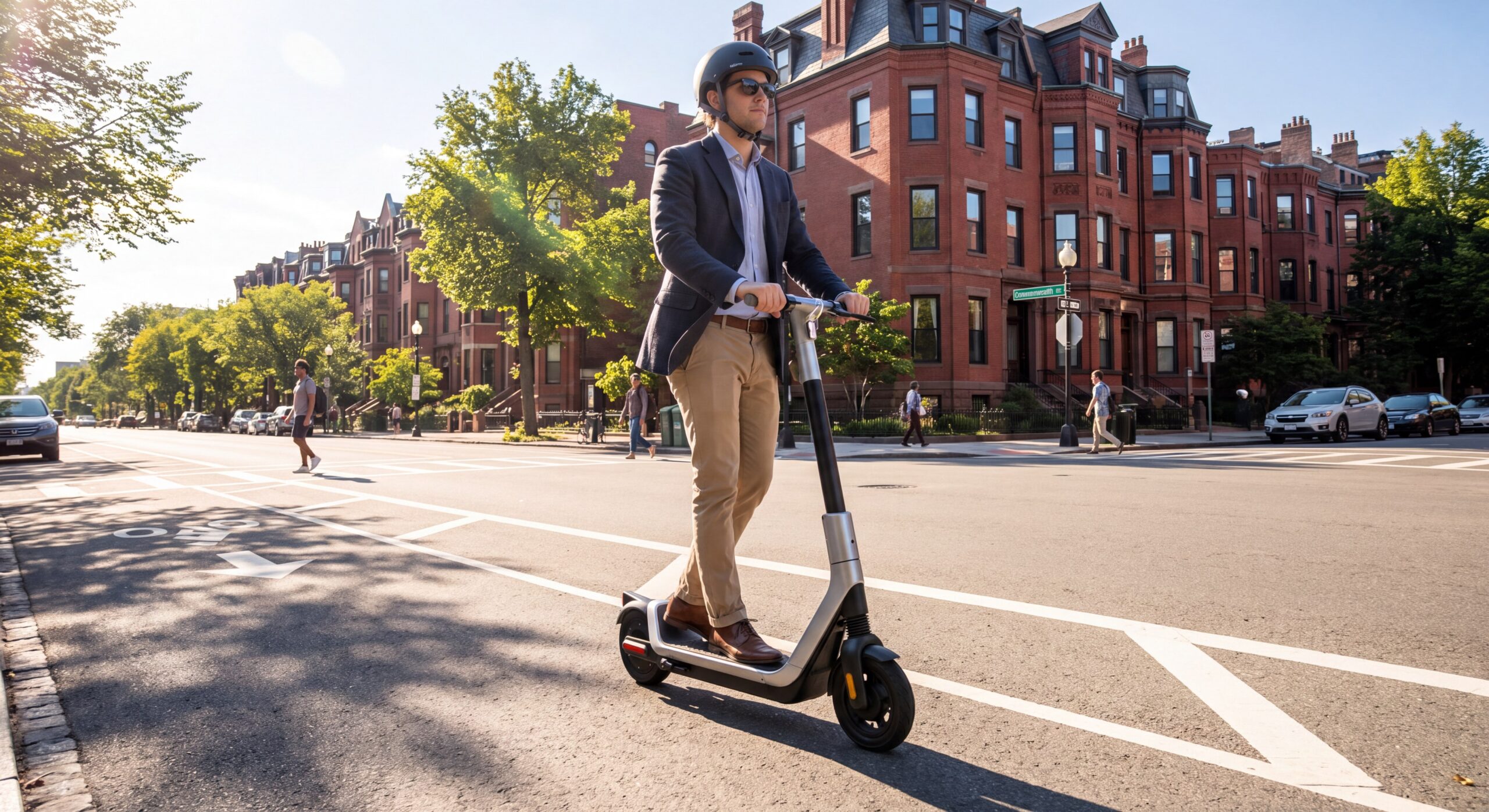

Electric scooters are praised for being a green and cost-effective way to travel, but how much electricity do they actually consume? You might worry that charging your scooter every day will lead to a surprisingly high electricity bill, negating the savings you were hoping for. It can be confusing to see numbers like volts, amp-hours, and watts and not know what they mean for your wallet. You might even wonder if your eco-friendly choice is secretly an energy hog, contributing more to your carbon footprint than you realize. This uncertainty can make it hard to fully embrace the benefits of electric micro-mobility.
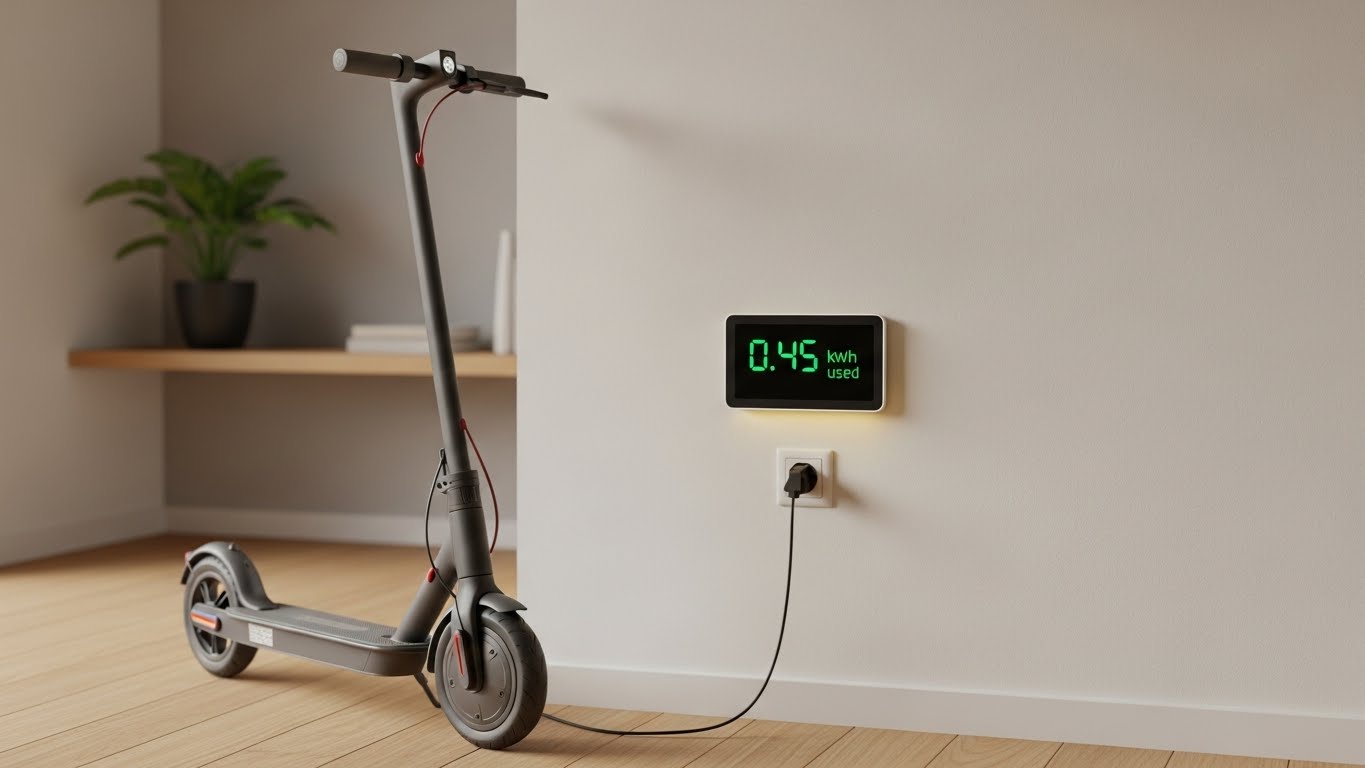
An electric scooter uses a very small amount of electricity, typically between 0.3 and 0.6 kilowatt-hours (kWh) for a full charge, which usually costs just a few cents. This makes them one of the most energy-efficient modes of powered transportation available, far more economical and environmentally friendly than cars or even public transit.
So, how is this calculated, and what does it mean in the real world? Here’s the deal… This article will demystify the numbers, compare the energy use of e-scooters to other vehicles, and show you exactly how much you can expect to pay to power your ride.
1. How is an electric scooter’s electricity usage measured?
To understand how much electricity your scooter uses, you first need to get familiar with a few key terms. The most important unit of measurement is the kilowatt-hour (kWh). This is the standard unit that your utility company uses to bill you for electricity. One kWh is the amount of energy you would use if you ran a 1,000-watt appliance for one hour.
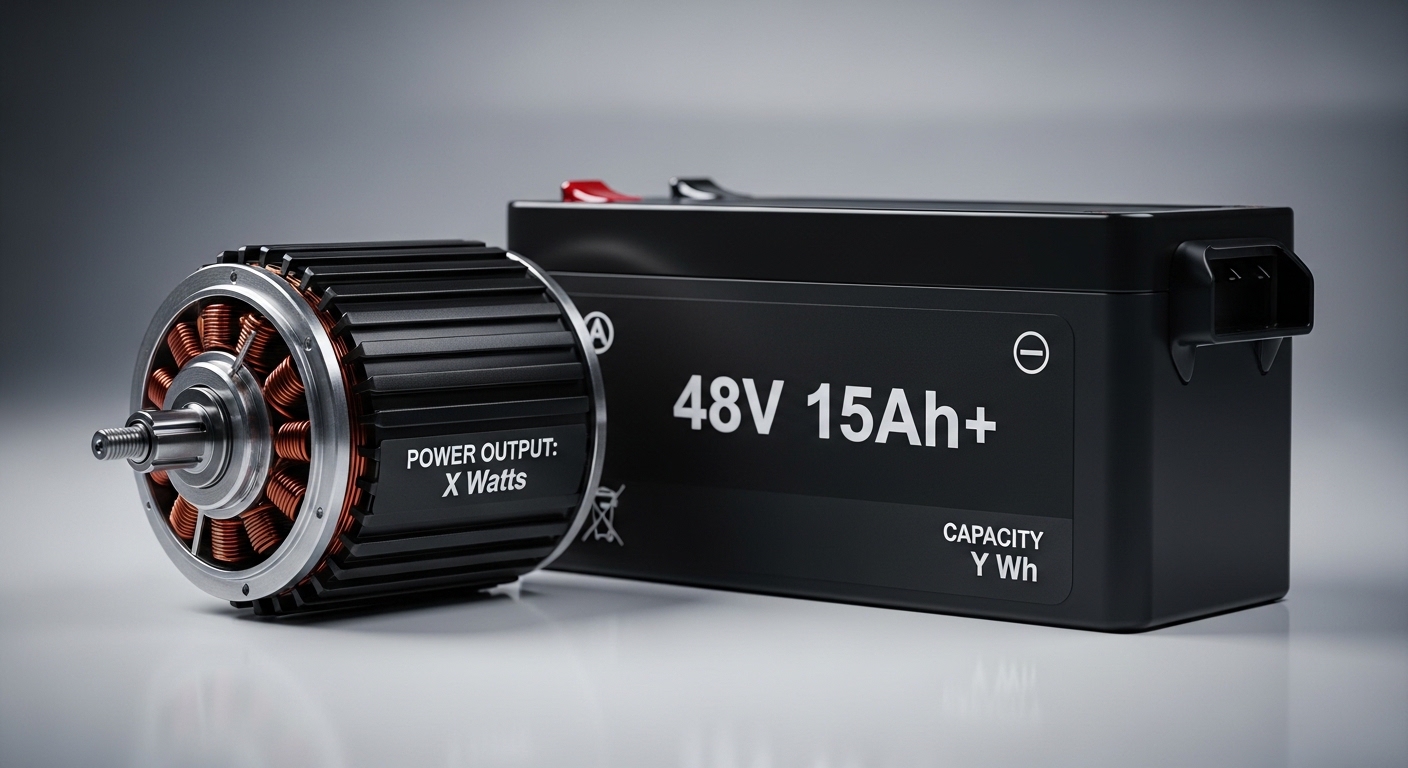
For electric scooters, the battery capacity is usually given in Watt-hours (Wh) or amp-hours (Ah) and volts (V). To find the total energy your battery can hold in Watt-hours, you simply multiply the amp-hours by the volts. For example, a battery rated at 10 Ah and 36V has a capacity of 360 Wh (10 Ah * 36V). To convert this to kilowatt-hours, you just divide by 1,000. So, a 360 Wh battery is equivalent to 0.36 kWh. This is important because… this number is the foundation for calculating your charging costs.
When you charge your scooter, the process isn’t 100% efficient; some energy is lost as heat. This means that to put 0.36 kWh of energy into your battery, you might need to draw around 0.4 kWh from the wall outlet. This small difference is important for precise calculations but doesn’t change the overall picture: scooters use a tiny fraction of the electricity of larger appliances or vehicles.
| Electrical Term | Definition | Relevance to E-Scooters |
| Kilowatt-hour (kWh) | Energy consumed by a 1,000W appliance in one hour | The unit used to measure and bill for electricity consumption. |
| Watt-hour (Wh) | A unit of energy equal to one watt of power sustained for one hour | The most common measure of an e-scooter battery’s capacity. |
| Amp-hour (Ah) | A unit of electric charge, indicating battery capacity | Multiplied by volts to determine the battery’s Watt-hour capacity. |
2. What factors determine an e-scooter’s electricity consumption?
The amount of electricity your scooter consumes on a given ride isn’t a fixed number. It’s influenced by a variety of factors. One of the biggest factors is the rider’s weight. A heavier rider requires the motor to work harder and draw more power to maintain the same speed as a lighter rider, which directly leads to higher energy consumption per mile.
The terrain you ride on also plays a huge role. Riding up hills is a major power drain, as the motor has to fight against gravity. Your riding style is another critical element. Aggressive acceleration and constant stop-and-go riding use far more energy than maintaining a smooth, steady speed.
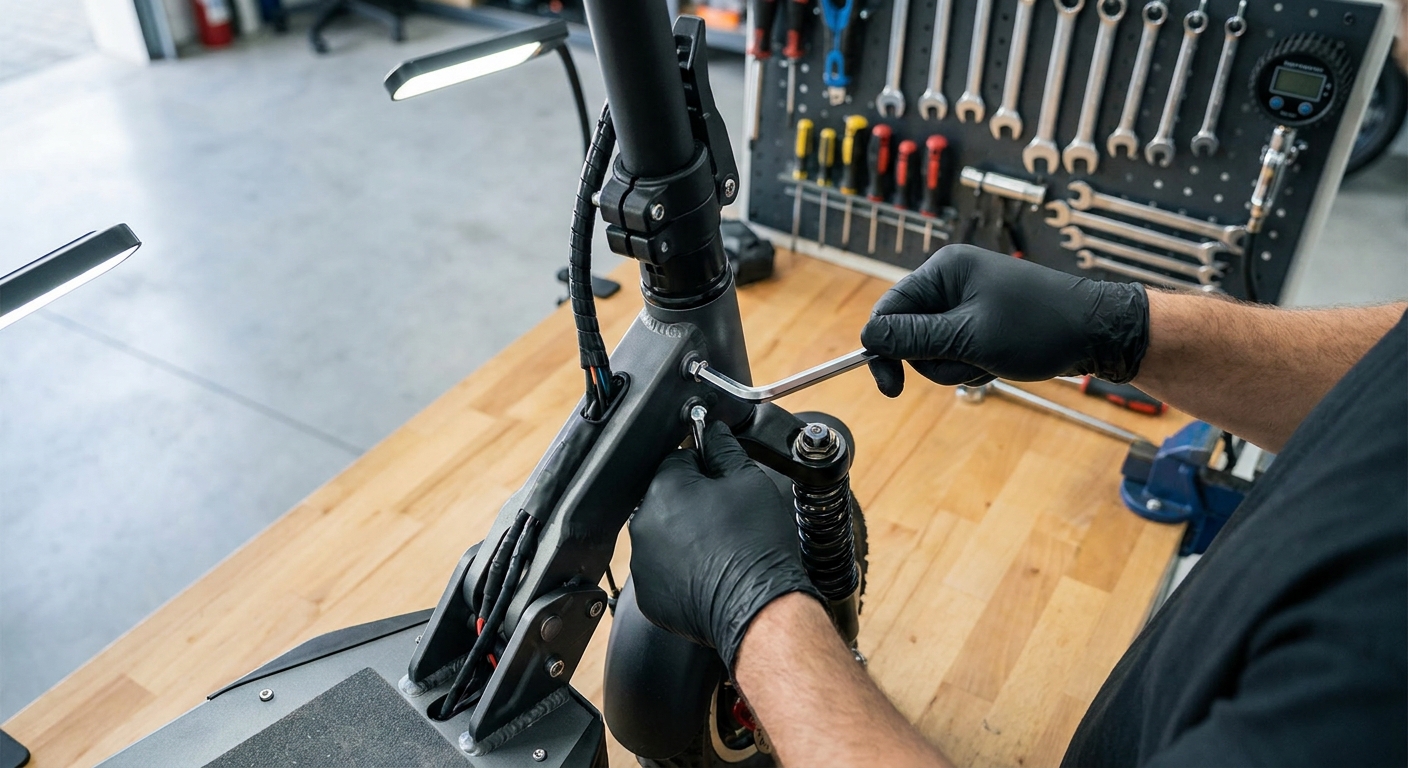
Finally, basic maintenance can have a surprising impact. The bottom line? Properly inflated tires have less rolling resistance, which means the motor doesn’t have to work as hard. A well-lubricated chain and clean components also contribute to better efficiency. All these factors combined determine the real-world range and electricity usage of your scooter.
| Factor | Impact on Electricity Use | How to Optimize for Efficiency |
| Rider Weight | Heavier weight increases consumption | Reduce unnecessary cargo. |
| Terrain | Hills significantly increase consumption | Choose flatter routes when possible. |
| Riding Style | Aggressive riding uses more power | Accelerate smoothly and maintain a steady speed. |
3. How much does it cost to fully charge an electric scooter?
One of the most attractive features of an electric scooter is its incredibly low running cost. To figure this out, you need two pieces of information: the capacity of your scooter’s battery in kWh and the price your utility company charges for electricity per kWh. The average price of electricity in the United States is around 16 cents per kWh.
Let’s take a typical electric scooter with a 360 Wh (or 0.36 kWh) battery as an example. To calculate the cost of a full charge, you simply multiply the battery capacity by the electricity rate. So, 0.36 kWh multiplied by $0.16/kWh equals just under 6 cents. Want to know the secret? That’s right, a full charge that can take you 15-20 miles costs less than a dime. Even with a larger battery, say 600 Wh (0.6 kWh), the cost is still only about 10 cents.
When you compare this to the cost of other forms of transportation, the savings are staggering. A single gallon of gasoline can cost 30 to 50 times more than a full scooter charge. A bus ticket for a single trip is often several dollars. This makes electric scooters one of the most economical ways to travel.
| Vehicle | Energy Cost for a 20-Mile Trip | Notes |
| Electric Scooter | ~$0.06 | Based on a 360 Wh battery and $0.16/kWh. |
| Gasoline Car (30 MPG) | ~$2.33 | Based on $3.50/gallon gasoline. |
| Public Bus | ~$2.50 | Based on a typical single-fare ticket. |
4. How does an e-scooter’s energy use compare to other vehicles?
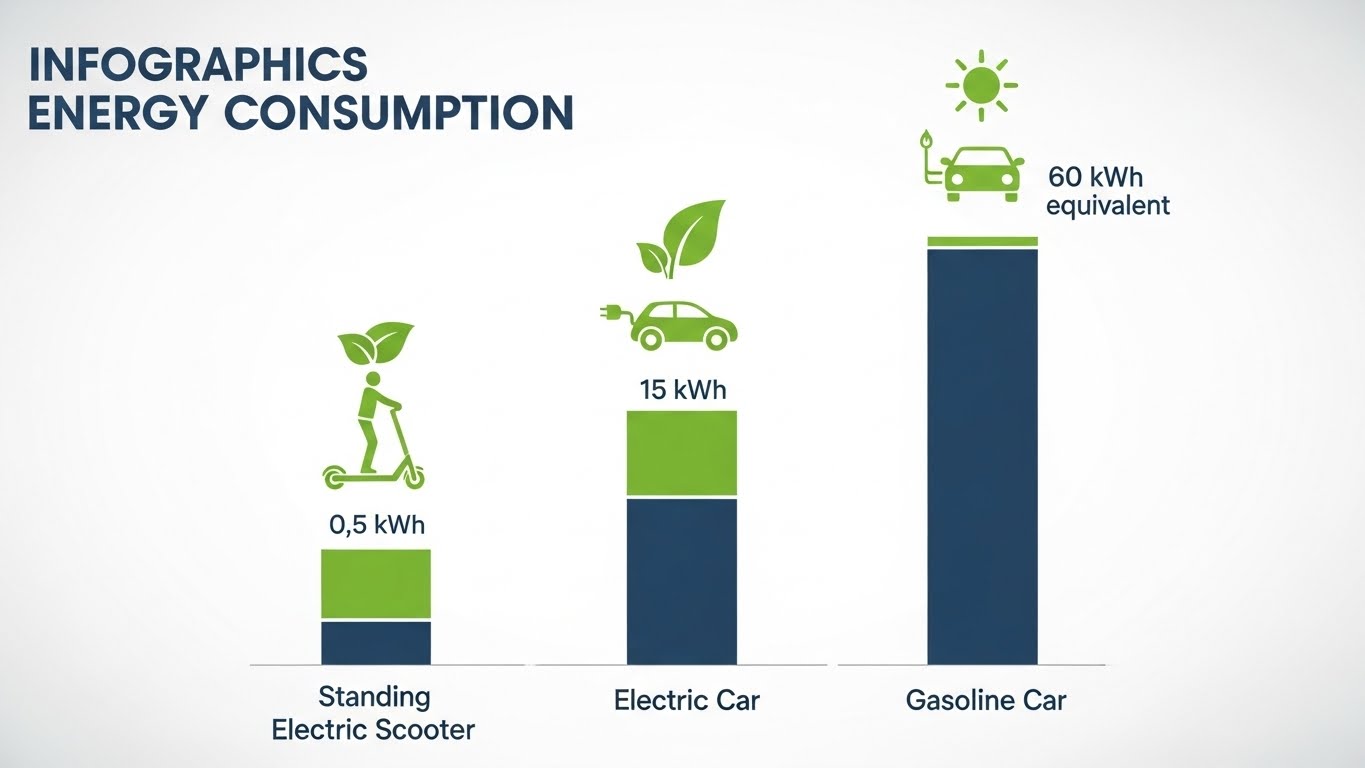
Electric scooters are champions of energy efficiency. When you compare the amount of energy it takes to move a person one mile, the e-scooter leaves almost every other mode of transportation in the dust. This is often measured in miles per gallon equivalent (MPGe).
An electric car might get around 100-130 MPGe. An electric scooter, however, can achieve an incredible MPGe of several hundred, sometimes even over 1,000 MPGe. Let me explain… this is because the scooter is incredibly lightweight. It’s not wasting energy moving a two-ton steel frame around; almost all the energy is used to move the rider.
Compared to a gasoline-powered car that gets 30 miles per gallon, the difference is astronomical. The scooter uses a tiny fraction of the energy to cover the same distance. Even when compared to public transportation, the e-scooter often comes out ahead in terms of energy used per passenger per mile. The personal, lightweight nature of the e-scooter makes it a model of efficiency.
| Vehicle Type | Typical Energy Efficiency (MPGe) | Key Reason for Efficiency |
| Electric Scooter | 500 – 1,000+ MPGe | Extremely low vehicle weight. |
| Electric Car | 100 – 130 MPGe | Efficient electric motor, but heavy. |
| Gasoline Car | 25 – 40 MPG | Inefficient internal combustion engine. |
5. What is the environmental impact of charging an e-scooter?
The environmental impact of an electric scooter is directly tied to the source of the electricity used to charge it. While the scooter itself produces zero tailpipe emissions, the power plants that generate the electricity might. The mix of energy sources in your local grid—coal, natural gas, nuclear, hydro, solar, and wind—determines the carbon footprint of your charge.
However, even in a grid with a high percentage of fossil fuels, charging an electric scooter is still far better for the environment than driving a gasoline-powered car. This is why… the overall efficiency of the system, from the power plant to the scooter’s wheels, is much higher. Large power plants are more efficient at converting fuel to energy than a small internal combustion engine.
As the world’s energy grids become cleaner and incorporate more renewables, the environmental benefits of electric vehicles will only grow. You can also take matters into your own hands by opting into a green energy program from your utility provider or even installing solar panels on your home. This allows you to charge your scooter with 100% renewable energy.
| Energy Source | Environmental Impact | Trend |
| Coal-Heavy Grid | Higher carbon footprint per charge | Decreasing in many regions. |
| Natural Gas Grid | Medium carbon footprint | Often used as a bridge fuel. |
| Renewable-Heavy Grid | Very low to zero carbon footprint | Increasing globally. |
6. How can you make your electric scooter more energy-efficient?
While electric scooters are already incredibly efficient, there are several things you can do to maximize your range and minimize your electricity consumption. The easiest and most effective habit to adopt is a smooth riding style. Avoid rapid acceleration and hard braking. Try to anticipate traffic and coast to a stop whenever possible.
Proper maintenance is also crucial. You need to know this… keeping your tires inflated to the recommended pressure is the single most important maintenance task for efficiency. Underinflated tires create more rolling resistance, forcing the motor to work harder. Regularly checking and cleaning your scooter’s moving parts can also reduce friction.
Reducing weight is another simple way to save energy. Don’t carry unnecessary items in a heavy backpack. Finally, take advantage of your scooter’s regenerative braking if it has it. This feature captures some of the energy that is normally lost during braking and uses it to recharge the battery.
| Efficiency Tip | Why It Works | How to Implement It |
| Smooth Riding | Avoids high power draws from acceleration | Accelerate gently and coast to stops. |
| Proper Tire Pressure | Reduces rolling resistance | Check and inflate tires weekly. |
| Use Regenerative Braking | Recaptures energy during deceleration | Brake early and gradually. |
7. Does fast charging use more electricity than standard charging?
In terms of the total amount of electricity drawn from the wall to fill the battery, fast charging is slightly less efficient than standard (slow) charging. The primary reason for this is heat. Pushing a large amount of current into a battery quickly generates more heat than doing it slowly. This heat represents wasted energy.
However, the difference in efficiency is usually quite small, often only a few percentage points. For a tiny scooter battery, this difference amounts to a minuscule amount of wasted electricity. But here’s the thing… the more significant consideration with fast charging is its effect on long-term battery health. The extra heat can accelerate the degradation of the battery’s internal components.
For this reason, it’s generally recommended to use standard charging for your daily needs and save fast charging for when you’re in a hurry. Standard charging is gentler on the battery and will help preserve its health and lifespan. The main goal is to protect your investment in the scooter’s most expensive component.
| Charging Method | Energy Efficiency | Impact on Battery Health |
| Standard Charging | Higher efficiency (less heat loss) | Gentler, promotes longer lifespan. |
| Fast Charging | Lower efficiency (more heat loss) | Can accelerate degradation if used excessively. |
| Trickle Charging | Can be inefficient over long periods | Best for maintaining charge, not for full recharges. |

8. How does battery size and health affect electricity consumption?
A scooter’s battery is its fuel tank, and both its size and health play a critical role in electricity consumption. A larger battery, measured in Watt-hours (Wh), will naturally require more electricity to fully charge. However, a larger battery also provides a longer range, so the cost per mile often remains very similar.
Battery health, on the other hand, has a direct impact on efficiency. All lithium-ion batteries degrade over time, meaning their maximum capacity gradually decreases. You need to understand this… this degradation also affects the battery’s internal resistance. As internal resistance increases, more energy is lost as heat during both charging and discharging.
You’ll notice this as a reduction in your scooter’s range. You’ll be charging it more often to cover the same distance, which can feel like you’re using more electricity. This is why proper battery care is so important for maintaining efficiency.
| Battery Characteristic | Effect on Consumption | User Implication |
| Larger Battery Size (Wh) | Higher electricity use per full charge | Longer range, less frequent charging. |
| Good Battery Health | Higher efficiency, less energy lost as heat | Maximum range and performance. |
| Poor Battery Health | Lower efficiency, more energy lost as heat | Reduced range, more frequent charging. |
9. What is the “real-world” electricity usage of a typical scooter?
Let’s put all this information together to see what the electricity usage looks like for a typical daily commuter. Imagine a rider who travels 10 miles a day, 5 days a week, for a total of 50 miles per week. We’ll assume their scooter has a 360 Wh (0.36 kWh) battery that gives them a real-world range of 15 miles per charge.
This rider would need to complete just over three full charges per week to cover their commute (50 miles / 15 miles per charge = 3.33 charges). The total weekly electricity consumption would be about 1.2 kWh (3.33 charges * 0.36 kWh/charge). The best part? At an average electricity cost of $0.16 per kWh, the total weekly cost to power this commute is less than 20 cents.
Over a full year, this commuter would use about 62 kWh of electricity. To put that in perspective, a typical refrigerator uses about 400-600 kWh per year. This means that commuting daily on an electric scooter for an entire year can use less electricity than just running your fridge.
| Time Period | Estimated Charges | Estimated kWh Used | Estimated Cost (@ $0.16/kWh) |
| Per Day (10 miles) | 0.67 | 0.24 kWh | ~$0.04 |
| Per Week (50 miles) | 3.33 | 1.2 kWh | ~$0.19 |
| Per Year (2,600 miles) | ~173 | ~62 kWh | ~$9.92 |
10. Is an electric scooter an economical choice for commuting?
When you look at the total cost of ownership, an electric scooter is one of the most economical choices for commuting. The initial purchase price is the largest single expense. However, after that, the running costs are incredibly low. As we’ve seen, the cost of electricity is almost negligible.
Maintenance costs are also minimal compared to a car. There are no oil changes, no spark plugs, and no complex engine parts to worry about. The main maintenance items are brake pads and tires, which are relatively inexpensive. The bottom line is this… when you add up the purchase price, the tiny electricity cost, and the low maintenance expenses, the total cost of ownership is far lower than that of a car.
The payback period for an electric scooter can be surprisingly short. If you’re replacing a daily commute that involved paying for gas, parking, and car maintenance, or even just daily bus or subway fares, the scooter can pay for itself in a matter of months. For a truly efficient and economical ride, consider the Dynamic Scooter lineup. Our models are engineered with high-quality, efficient motors and long-lasting batteries to provide the lowest possible running costs.
| Cost Category | Electric Scooter | Car |
| Initial Purchase | $500 – $2,000 | $25,000+ |
| Annual Fuel/Energy | ~$10 – $30 | $1,500+ |
| Annual Maintenance | ~$50 – $150 | $500 – $1,000+ |
Conclusion
So, does an electric scooter use a lot of electricity? The answer is a resounding no. They are marvels of energy efficiency, costing just pennies to charge while providing miles of clean, quiet, and convenient transportation. The combination of their lightweight design and efficient electric motors makes them one of the most economical and environmentally friendly ways to travel. The factors that influence consumption, like rider weight and terrain, are easily managed, and the overall cost of ownership is a fraction of that of a car.
If you’re looking for a smart, sustainable, and budget-friendly way to navigate your city, an electric scooter is an unbeatable choice. Ready to start saving? Check out the latest models from Dynamic Scooter and find the perfect ride for your commute.

FAQ
Q1: How many kWh does a typical electric scooter use to fully charge?
A typical electric scooter battery has a capacity between 300 Wh and 600 Wh. This means it uses between 0.3 kWh and 0.6 kWh for a full charge, accounting for slight inefficiencies in the charging process.
Q2: Is it cheaper to charge my scooter at home or at a public charging station?
It is almost always cheaper to charge your scooter at home. Public charging stations may have session fees or higher electricity rates that would be disproportionately expensive for a small scooter battery.
Q3: Does leaving the scooter plugged in after it’s fully charged waste electricity?
Modern smart chargers are designed to stop drawing power once the battery is full, so they waste very little electricity. However, it’s still good practice to unplug your charger once the scooter is fully charged to protect the long-term health of the battery.
Q4: How much does a full electric scooter charge cost on average in the US?
Based on an average electricity rate of 16 cents per kWh and a typical 360 Wh battery, a full charge costs about 6 cents. Even with a large 600 Wh battery, the cost is only around 10 cents.
Q5: Can I use a solar panel to charge my electric scooter to save electricity?
Yes, you can. You would need a solar panel with a sufficient power output and a charge controller to regulate the voltage going to your scooter’s battery. It’s a great way to make your scooter a truly zero-emission vehicle.