
Worried about charging your electric scooter at home but unsure about safety risks? Improper charging can lead to fires, electrical damage, or battery failure costing thousands in repairs. This comprehensive guide shows you how to charge safely, save money, and protect your investment at home.
Yes, you can safely charge your electric scooter at home using the original charger, proper ventilation, and basic safety precautions. Most electric scooters are designed for home charging with standard 110V outlets. Follow manufacturer guidelines, avoid overcharging, and charge in well-ventilated areas away from flammable materials. Proper setup prevents fires, extends battery life, and reduces electricity costs significantly.
But here’s the thing – knowing the right setup prevents costly mistakes and keeps your family safe while maximizing convenience.
1. What Are the Basic Requirements for Home Charging?
Most electric scooters work perfectly with standard household electrical systems. Your home’s 110V electrical infrastructure provides sufficient power for safe, efficient charging. Modern scooters are specifically designed to work with residential power systems.
Check your scooter’s power requirements before setting up charging. Most models specify voltage, amperage, and wattage needs in the user manual. These specifications help you choose the right outlet and circuit for safe operation.
Power consumption varies significantly by model and battery size. Lightweight scooters typically use 100-300 watts during active charging cycles. Mid-range models consume 200-400 watts. Heavy-duty scooters may require 400-600 watts for optimal charging speed.
Here’s why it matters – using inadequate electrical systems or overloading circuits creates serious fire risks and equipment damage.
Your home’s electrical circuits can easily handle scooter charging loads. Standard 15-amp household circuits support up to 1,800 watts safely. Most scooters use less than one-third of this capacity. However, avoid charging multiple high-power devices on the same circuit simultaneously.
| Scooter Type | Power Draw | Outlet Type | Circuit Requirement | Charging Time |
| Lightweight (24V) | 100-200W | Standard 110V | 15A circuit | 2-4 hours |
| Mid-range (36V) | 200-400W | Standard 110V | 15A circuit | 3-6 hours |
| Heavy-duty (48V) | 400-600W | Standard 110V | 20A circuit | 4-8 hours |
Indoor charging locations work best in garages, basements, utility rooms, or dedicated storage areas. These spaces offer excellent ventilation, hard flooring, and separation from living areas. Good ventilation prevents heat buildup that damages batteries and creates safety hazards.
Outdoor charging requires weatherproof electrical outlets and covered areas protecting equipment from rain. GFCI outlets provide additional safety for outdoor installations. Never charge in direct sunlight or during storms.
Safety equipment should include smoke detectors, fire extinguishers, and adequate lighting in charging areas. Keep charging spaces clean, organized, and free from clutter. Remove flammable materials like gasoline, paint, or cleaning supplies from charging zones.
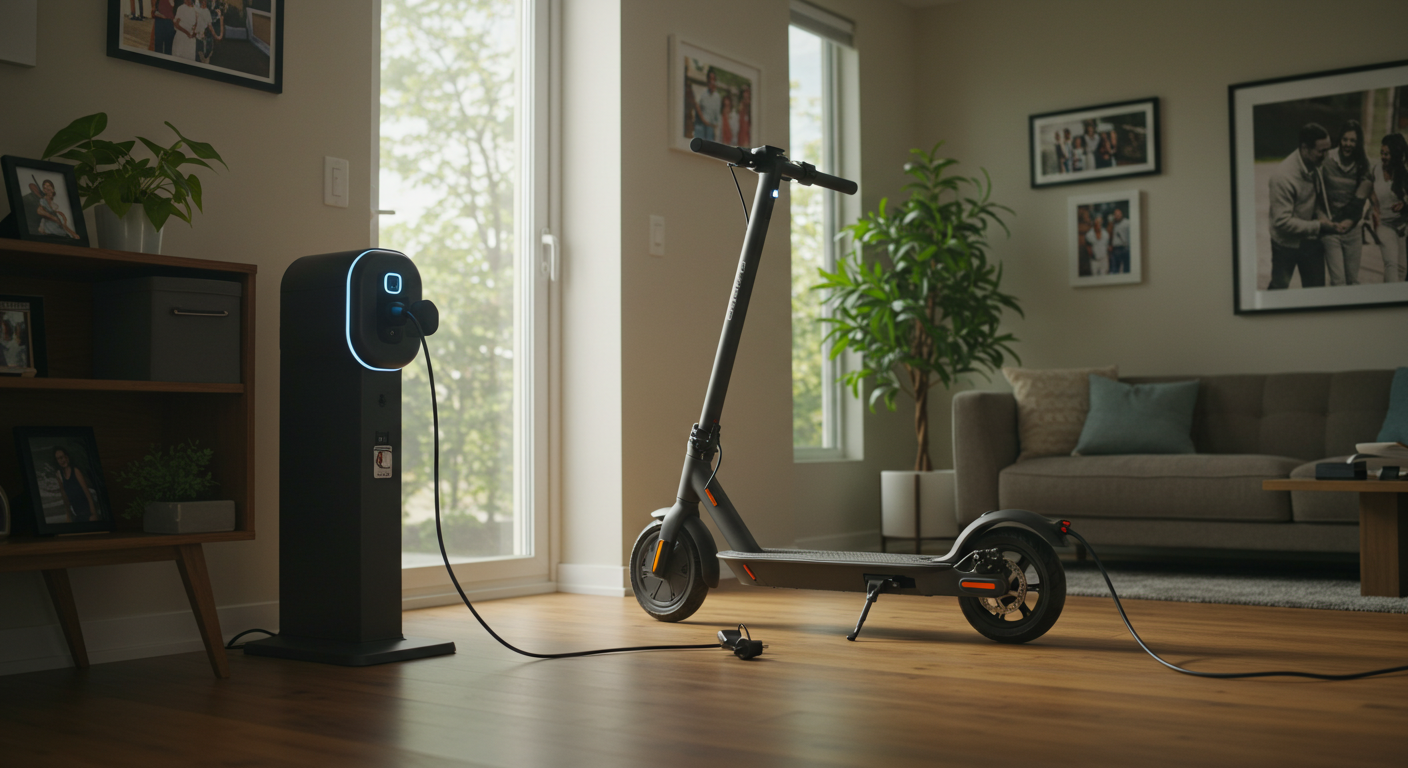
2. How Do You Set Up a Safe Charging Station at Home?
Choose locations with concrete, tile, or other non-flammable flooring for your charging station. Hard surfaces resist fire better than wood, carpet, or vinyl flooring. Concrete garage floors provide ideal charging surfaces with excellent fire resistance.
Proper ventilation prevents dangerous heat buildup during charging cycles. Open windows, doors, or use exhaust fans to maintain air circulation. Avoid small closets, tight spaces, or areas without adequate airflow that trap heat and potentially toxic fumes.
Cable management keeps your charging setup organized, safe, and professional-looking. Use cable ties, cord organizers, or cable trays to secure charging cords. Route cables away from walkways, doorways, and high-traffic areas to prevent tripping hazards.
The best part? A well-designed charging station makes daily use more convenient while dramatically improving safety for your entire household.
Dedicated charging areas should include adequate lighting for safe operation during evening hours. Install motion-activated LED lights or permanent fixtures providing clear visibility. Good lighting helps you spot potential problems quickly.
| Location Type | Ventilation Rating | Floor Type | Safety Score | Setup Cost |
| Garage | Excellent | Concrete | 9/10 | $50-100 |
| Basement | Good | Concrete | 8/10 | $75-150 |
| Utility room | Good | Tile | 7/10 | $100-200 |
| Covered patio | Excellent | Concrete | 8/10 | $150-300 |
Fire safety equipment should remain easily accessible from your charging area. Install smoke detectors if none exist in the charging space. Keep a Class C fire extinguisher rated for electrical fires within 10 feet of charging equipment.
Temperature control significantly impacts battery health, charging efficiency, and safety. Maintain charging areas between 50-80°F when possible. Extreme temperatures damage batteries, reduce charging efficiency, and create safety risks.
Storage solutions keep charging accessories organized and readily available. Install shelves, hooks, or cabinets for chargers, cables, and safety equipment. Organized storage prevents damage and makes equipment easy to find.
3. What Charging Equipment Do You Need?
Original manufacturer chargers provide the safest, most reliable charging experience available. Manufacturers design these chargers specifically for your scooter’s battery chemistry, voltage, and capacity requirements. Using original equipment prevents compatibility issues and safety hazards.
Third-party chargers may seem cost-effective but often lack proper safety features. Cheap alternatives may use incorrect voltages, inadequate current regulation, or poor-quality components. These deficiencies can damage batteries, create fire hazards, or void warranties.
Extension cords work safely when chosen and used correctly. Select heavy-duty cords rated for your scooter’s maximum power draw plus 25% safety margin. Use 12-gauge cords for most scooters. Avoid lightweight household extension cords that overheat under load.
Now, you might be wondering about smart charging accessories that add convenience, safety features, and automated control to your charging setup.
Surge protectors guard expensive electronics against power spikes, lightning strikes, and electrical fluctuations. Choose models rated for your scooter’s wattage with adequate joule ratings. Replace surge protectors every 3-5 years as protection capabilities degrade over time.
| Equipment Type | Primary Purpose | Safety Benefit | Typical Cost | Replacement Interval |
| Original charger | Primary charging | Maximum compatibility | $30-80 | 3-5 years |
| Heavy-duty extension | Reach distant outlets | Prevents overheating | $15-30 | 5-10 years |
| Surge protector | Spike protection | Prevents damage | $20-50 | 3-5 years |
| Smart timer | Automated control | Prevents overcharging | $15-40 | 10+ years |
Smart timers prevent overcharging by automatically cutting power after predetermined periods. Program timers for your battery’s full charging time plus 30-60 minutes buffer. This prevents leaving chargers connected indefinitely while ensuring complete charging.
Power strips with individual switches provide convenient control over multiple devices. Choose models with built-in surge protection and adequate amp ratings for your equipment. Avoid cheap power strips that lack proper safety certifications.
GFCI outlets or portable GFCI adapters provide ground fault protection preventing electrical shock. These devices detect current leaks and shut off power instantly. Use GFCI protection especially in garages, basements, or outdoor charging areas.
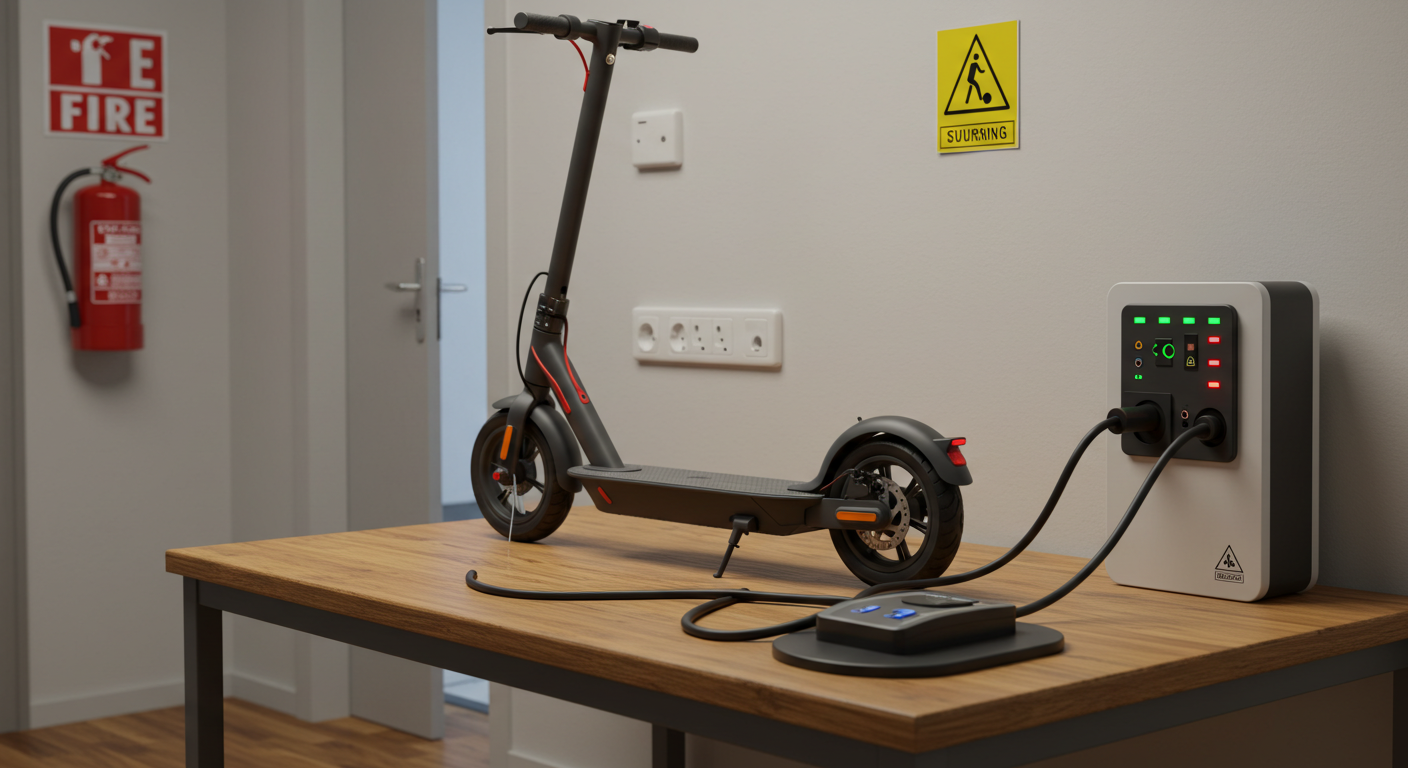
4. How Long Does Home Charging Take?
Charging times depend primarily on battery capacity, charger output, and current battery level. Small 24V batteries with 5-8Ah capacity typically charge completely in 2-4 hours. Large 48V batteries with 10-15Ah capacity require 4-8 hours for full charging.
Standard chargers work slower but generate less heat and stress on battery cells. Fast chargers reduce charging time by 30-50% but may slightly reduce overall battery lifespan. Most daily users prefer standard charging for routine use.
Battery chemistry affects charging characteristics significantly. Lithium-ion batteries charge faster and more efficiently than lead-acid alternatives. Lithium batteries also handle partial charging better without developing memory effects.
Let me explain why understanding charging time helps you plan daily routines and maximize battery health for long-term savings.
Temperature dramatically affects charging speed and efficiency. Cold batteries below 40°F charge much slower than warm batteries. Hot batteries above 100°F may stop charging automatically to prevent thermal damage.
| Battery Voltage | Capacity Range | Standard Charge | Fast Charge | Temperature Impact |
| 24V | 5-8Ah | 2-3 hours | 1-2 hours | +/- 30 minutes |
| 36V | 8-12Ah | 3-5 hours | 2-3 hours | +/- 45 minutes |
| 48V | 10-15Ah | 4-6 hours | 2-4 hours | +/- 60 minutes |
| 52V | 12-20Ah | 5-8 hours | 3-5 hours | +/- 90 minutes |
Overnight charging works excellently for most users with predictable schedules. Plug in before bedtime and wake up to fully charged batteries. Use programmable timers to prevent overcharging during extended overnight periods.
Partial charging doesn’t harm modern lithium-ion batteries like older battery technologies. Top off your battery anytime without waiting for complete discharge. This flexibility makes home charging extremely convenient for irregular usage patterns.
Charging indicators help monitor progress and identify potential problems. Most chargers feature LED lights showing charging status. Red typically indicates active charging while green shows completion. Learn your charger’s indicator meanings for proper operation.
5. What Are the Electricity Costs of Home Charging?
Home charging costs significantly less than gasoline, public charging stations, or other transportation alternatives. Calculate your costs using local electricity rates and your scooter’s battery capacity. Most residential areas charge 0.10−0.10-0.10−0.25 per kilowatt-hour.
Average charging costs range from 0.15−0.15-0.15−0.50 per complete charge depending on battery size and local rates. Daily commuters typically spend 3−3-3−15 monthly on electricity for scooter charging. This represents massive savings compared to gasoline vehicles.
Energy-efficient charging practices can reduce costs further while extending battery life. Charge during off-peak hours when utility rates drop significantly. Many utilities offer time-of-use pricing with 30-50% lower rates during nights and weekends.
This is important because small changes in charging habits create substantial savings over months and years of ownership.
Battery efficiency affects actual energy consumption during charging. Newer lithium batteries achieve 85-95% charging efficiency. Older or damaged batteries may waste 20-30% of input energy as heat. Monitor efficiency to identify battery problems early.
| Battery Size | Energy Used | Cost per Charge | Daily Cost | Monthly Cost |
| 250Wh (small) | 0.30 kWh | 0.15−0.15-0.15−0.25 | 0.15−0.15-0.15−0.25 | 3−3-3−8 |
| 500Wh (medium) | 0.60 kWh | 0.25−0.25-0.25−0.50 | 0.25−0.25-0.25−0.50 | 8−8-8−15 |
| 750Wh (large) | 0.90 kWh | 0.40−0.40-0.40−0.75 | 0.40−0.40-0.40−0.75 | 12−12-12−23 |
| 1000Wh (XL) | 1.20 kWh | 0.50−0.50-0.50−1.00 | 0.50−0.50-0.50−1.00 | 15−15-15−30 |
Time-of-use electricity rates offer significant additional savings opportunities. Many utilities charge 40-60% less during off-peak hours typically running 9 PM to 6 AM. Program charging during these periods when possible.
Solar panel systems can power scooter charging completely free after initial installation. Small 200-400 watt solar setups generate sufficient power for daily charging needs. Solar charging makes electric scooters truly zero-emission transportation.
Seasonal rate variations affect charging costs in some regions. Summer peak rates may double winter costs in hot climates. Plan charging schedules around seasonal rate structures for maximum savings.
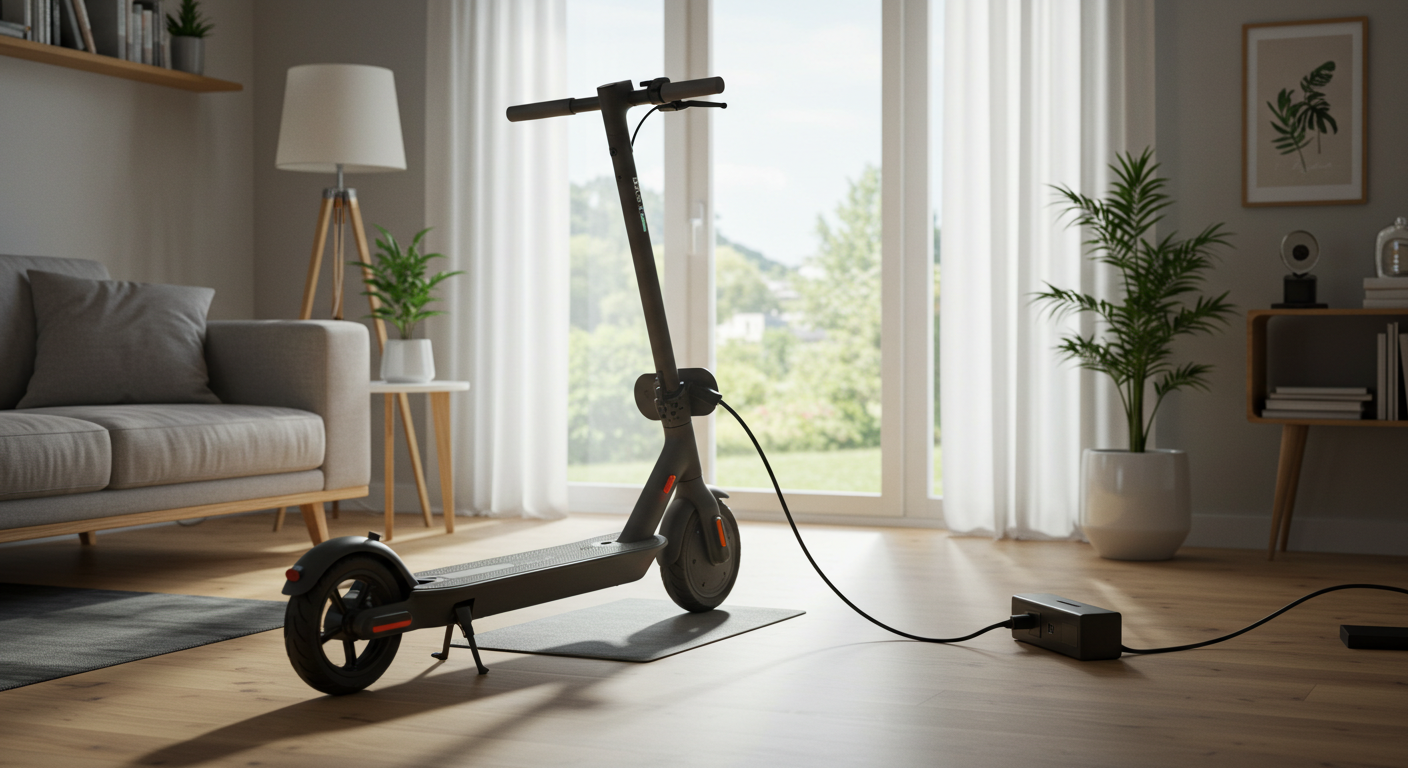
6. What Safety Risks Should You Avoid?
Fire hazards represent the most serious risk during home charging operations. Faulty chargers, damaged batteries, poor ventilation, or improper setup can cause devastating fires. Never leave obviously damaged equipment plugged in or unattended.
Electrical shock protection begins with dry hands, proper outlets, and basic electrical safety. Avoid charging in wet areas like bathrooms, laundry rooms, or outdoor spaces during rain. Use GFCI-protected outlets whenever available for additional safety.
Battery overheating manifests through hot surfaces, unusual odors, swelling, or visible damage. Stop charging immediately if batteries feel too hot to touch comfortably. Allow equipment to cool completely before investigating problems or contacting support.
Here’s the deal – recognizing early warning signs prevents serious accidents, property damage, and potentially life-threatening situations.
Overcharging damages batteries and creates safety hazards even with modern charging systems. Use timers, smart chargers, or manual monitoring to prevent extended overcharging. Most batteries should disconnect automatically when full.
| Risk Type | Warning Signs | Prevention Methods | Emergency Actions |
| Fire | Smoke, burning smell, sparks | Proper ventilation, quality equipment | Unplug immediately, call 911 |
| Overheating | Hot surfaces, swelling, odors | Temperature monitoring, timers | Stop charging, allow cooling |
| Electrical shock | Sparks, tingling, GFCI trips | Dry hands, proper outlets | Turn off circuit breaker |
| Overcharging | Extended charging, hot batteries | Timers, automatic shutoff | Disconnect power immediately |
Proper equipment storage during charging keeps batteries safe and accessible. Place scooters on hard, non-flammable surfaces away from walls and combustible materials. Maintain clear access for emergency disconnection.
Regular equipment inspection catches developing problems before they become dangerous. Check charger cords monthly for cuts, cracks, or exposed wires. Inspect battery cases for swelling, cracks, or corrosion. Replace damaged components immediately.
Carbon monoxide risks don’t apply to electric scooters but may exist in charging areas. Ensure adequate ventilation in garages or basements where gas appliances operate. Install carbon monoxide detectors in enclosed charging spaces.
7. How Do You Maintain Your Battery for Home Charging?
Optimal charging frequency significantly extends battery lifespan and maintains peak performance. Charge when batteries reach 20-30% remaining capacity rather than waiting for complete discharge. Frequent shallow charging works better than occasional deep charging.
Battery lifespan depends heavily on charging habits, temperature management, and usage patterns. Keep batteries between 20-80% charge for daily use when possible. Perform full 100% charges weekly to calibrate battery management systems.
Temperature management during charging prevents damage and maximizes battery life. Charge in moderate temperatures between 50-80°F whenever possible. Let hot batteries cool to room temperature before charging. Warm cold batteries gradually before charging.
What does this mean for you? Proper charging habits can double your battery’s useful lifespan while maintaining better performance throughout its life.
Seasonal maintenance adjusts charging practices for weather changes. Summer heat requires extra ventilation and temperature monitoring. Winter cold may require indoor charging and longer charging times for optimal results.
| Charging Practice | Battery Impact | Lifespan Effect | Cost Savings | Implementation |
| 20-80% daily charging | Minimal cell stress | +50% lifespan | $200-400 | Use timers |
| Temperature control | Prevents thermal damage | +30% lifespan | $150-300 | Climate control |
| Avoid deep discharge | Reduces wear cycles | +25% lifespan | $100-200 | Monitor levels |
| Weekly full charge | Calibrates systems | +15% lifespan | $75-150 | Schedule routine |
Signs of battery degradation include noticeably shorter range, longer charging times, and reduced power output. Batteries naturally lose 10-20% capacity over 2-3 years of normal use. Plan for replacement when range drops below 70% of original capacity.
Storage procedures for extended periods require special charging considerations. Store batteries at 40-60% charge during winter months or extended non-use. Check and recharge stored batteries monthly to prevent deep discharge damage.
Battery recycling programs help dispose of worn-out batteries responsibly. Many retailers and manufacturers offer take-back programs. Never dispose of lithium batteries in regular trash due to fire and environmental hazards.

Conclusion
Charging your electric scooter at home is safe, convenient, and highly cost-effective when done properly with the right equipment and procedures. Use original chargers, maintain proper ventilation, follow basic safety precautions, and monitor charging progress regularly. Home charging costs just 3−3-3−15 monthly while providing complete convenience and flexibility for daily transportation needs. Proper setup and maintenance practices keep your family safe while maximizing battery life, minimizing operating costs, and ensuring reliable performance for years of service.
Dynamic Scooter offers comprehensive charging guides, safety equipment, and expert support to help you create the perfect home charging station that maximizes safety, efficiency, and cost savings. Visit our website today to access detailed resources, find the right accessories, and get professional advice for safe, efficient home charging that protects your investment and delivers years of reliable service.
FAQ
Q1: Can I charge my electric scooter indoors safely?
Yes, you can safely charge your electric scooter indoors with proper ventilation, using the original charger, and following manufacturer guidelines. Choose areas with hard flooring and good airflow while avoiding bedrooms or enclosed spaces without ventilation.
Q2: How much does it cost to charge an electric scooter at home?
Home charging typically costs 0.15−0.15-0.15−0.50 per full charge, depending on your local electricity rates and battery capacity. Monthly costs range from 3−3-3−15 for regular users, making it extremely cost-effective compared to gasoline vehicles.
Q3: Is it safe to charge my scooter overnight?
Most modern electric scooters have built-in charging protection making overnight charging generally safe. However, use programmable timers and avoid charging unattended for extended periods beyond normal charging time plus one hour.
Q4: Can I use any charger to charge my electric scooter at home?
Always use the original charger or manufacturer-approved alternatives specifically designed for your scooter model. Third-party chargers may use incorrect voltages, lack safety features, or damage your battery while creating fire hazards.
Q5: What should I do if my scooter gets hot while charging?
Stop charging immediately if your scooter becomes unusually hot to the touch. Unplug the charger, allow the equipment to cool completely, and inspect for visible damage before contacting customer support or a qualified technician for assistance.