
While seeing your child zoom down the sidewalk might look like simple fun, the reality is that an electric scooter is a powerful motorized vehicle that carries significant health risks. As pediatric experts, we want to help you understand the dangers that these high-speed devices pose to developing bodies and why waiting is the safest choice for your family.
Is the speed of an electric scooter dangerous for kids?
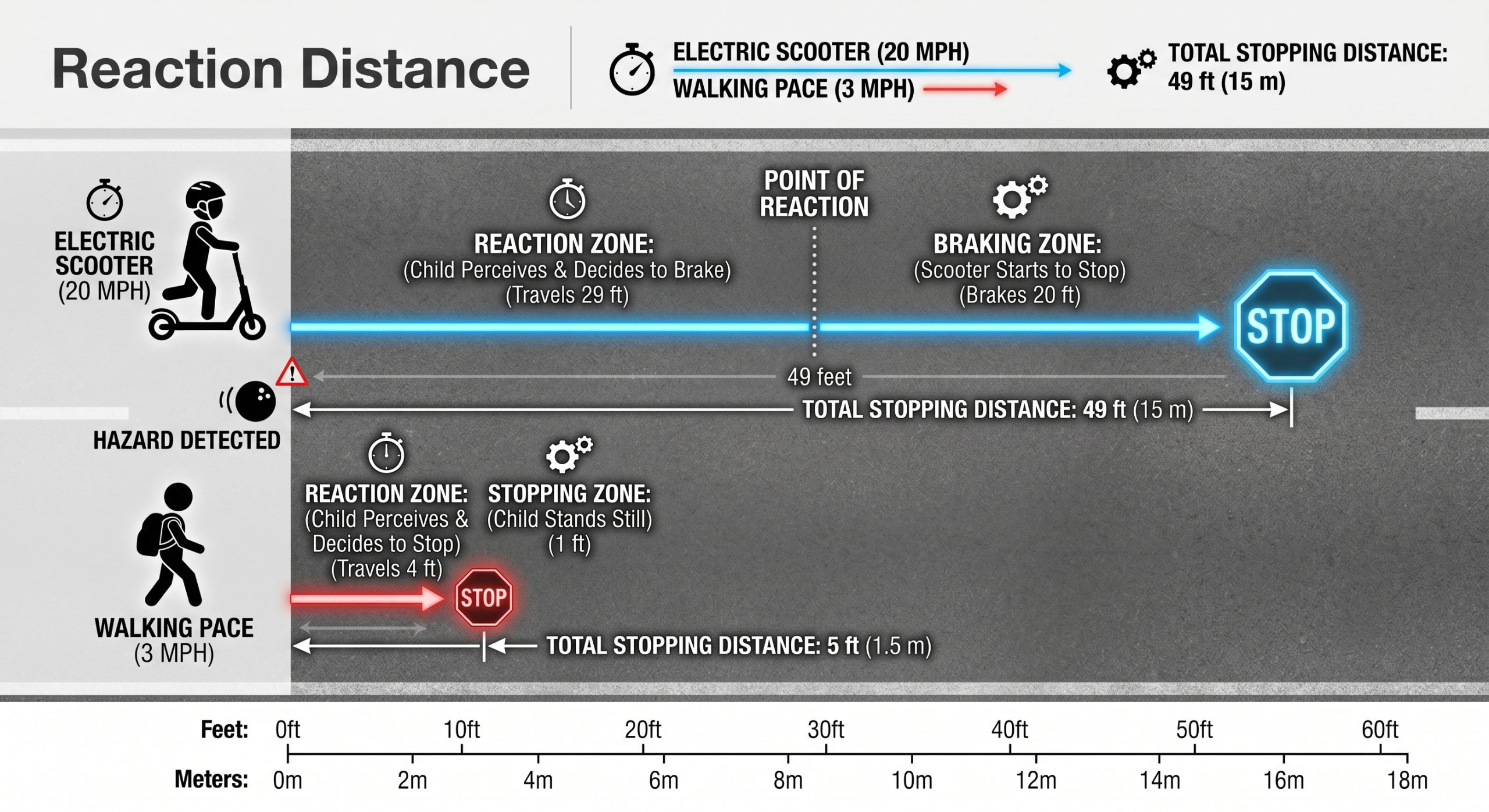
No, children are not physically or developmentally prepared for the high speeds these devices achieve without effort. Unlike a traditional bicycle where speed is earned through physical exertion, a motorized device can hit 15 to 25 mph instantly, which is far faster than a child can safely manage.
The Impact of High Velocity
Think about this: a fall at 20 mph is vastly different than a tumble from a slow-moving tricycle.
- High-speed collisions increase the force of impact on the pavement.
- Children lack the muscle strength to stabilize themselves at high velocities.
- Stopping distances are much longer than kids realize.
Friction and Braking Challenges
You might not realize that braking at high speeds requires significant coordination.
- Sudden braking often leads to “endo” flips over the handlebars.
- Small tires struggle to maintain grip during emergency stops.
- Pavement friction causes deep “road rash” that may require skin grafts.
Key Takeaway on Speed Risks
The bottom line? The velocity of these machines turns minor falls into emergency room visits.
| Risk Factor | Impact on Children |
|---|---|
| Max Speed | Often exceeds 15-20 mph, surpassing child reaction times. |
| Braking | Requires advanced motor skills to avoid flipping. |
| Surface | Small wheels catch on tiny cracks at high speed. |
What injuries happen on an electric scooter?
Riding results in severe orthopedic fractures, facial trauma, and traumatic brain injuries that are often more complex than typical playground accidents. Because of the standing position and high center of gravity, children are frequently thrown forward onto their faces or outstretched arms.
Common Orthopedic Fractures
Look: we are seeing a spike in complex bone breaks that require surgery.
- Clavicle (collarbone) breaks from direct impact.
- Shattered wrists and elbows from “foosh” (fall on outstretched hand) injuries.
- Forearm fractures that involve both bones (radius and ulna).
Soft Tissue and Dental Damage
Here is the truth: a helmet doesn’t protect the face or teeth.
- Jaw fractures and knocked-out permanent teeth are frequent.
- Deep lacerations to the chin and forehead.
- Severe abrasions (“road rash”) that can lead to permanent scarring.
Key Takeaway on Physical Injuries
It’s a fact that motorized scooter injuries are significantly more severe than bicycle-related accidents.
| Injury Category | Typical Severity | Recovery Period |
|---|---|---|
| Head Trauma | High (Concussions/Skull fractures) | Weeks to Months |
| Fractures | Moderate to High (Often requiring surgery) | 6-12 Weeks |
| Skin/Dental | Moderate (Painful grafting or implants) | Variable |
At what age can a kid ride an electric scooter?
You should wait until your child is at least 16 years old before they operate any motorized scooter. This recommendation is supported by the American Academy of Pediatrics (AAP) because of the unique risks associated with motorized transport and the maturity required to navigate them.
The 16-Plus Safety Standard
Listen: there is a reason for this specific age limit.
- 16-year-olds are beginning to understand the “rules of the road.”
- Physical size allows for better control of the machine’s weight.
- Younger children lack the spatial awareness for high-speed maneuvering.
Legal Restrictions and Local Laws
In many areas, including Illinois, riding in public spaces is restricted to those 18 and older.
- Private property is not necessarily safer if the terrain is uneven.
- Rental companies often have strict age requirements in their apps.
- Law enforcement can cite parents for allowing underage riders on streets.
Key Takeaway on Age Requirements
The simple truth is that “kid-sized” doesn’t mean “kid-safe” when a motor is involved.
| Age Group | Recommendation | Primary Concern |
|---|---|---|
| Under 16 | Do Not Ride | Developmental and physical inability to manage risk. |
| 16-18 | High Caution | Requires adult-grade safety gear and training. |
| 18+ | Follow Laws | Should always wear a helmet and follow traffic rules. |
Does an electric scooter require high maturity?
Yes, operating these vehicles requires advanced executive function and impulse control that young children have not yet developed. A child’s brain is still learning how to assess “invisible” risks, such as a car turning a corner or the danger of a wet patch of leaves.
Executive Function and Fast Movement
Think about it. A split-second decision at 15 mph can be the difference between safety and a crash.
- Kids tend to focus on the “fun” rather than the environment.
- Impulse control is not fully formed, leading to risky “stunts.”
- Estimating the speed of oncoming traffic is difficult for young eyes.
Reaction Time Under Pressure
When things go wrong, a child’s natural instinct is often to freeze or overcorrect.
- Over-steering is a leading cause of loss of control.
- Failure to hear approaching vehicles while focused on riding.
- Inability to multitask (steering, braking, and scanning for hazards).
Key Takeaway on Cognitive Readiness
The reality is that a child’s brain isn’t wired to handle motorized traffic until their mid-teens.
| Cognitive Skill | Maturity Level in Kids | Importance for Riding |
|---|---|---|
| Impulse Control | Low | Prevents sudden, dangerous maneuvers. |
| Risk Assessment | Developing | Helps anticipate car movements or road debris. |
| Spatial Awareness | Moderate | Vital for maintaining distance from hazards. |
Can helmets keep an electric scooter rider safe?
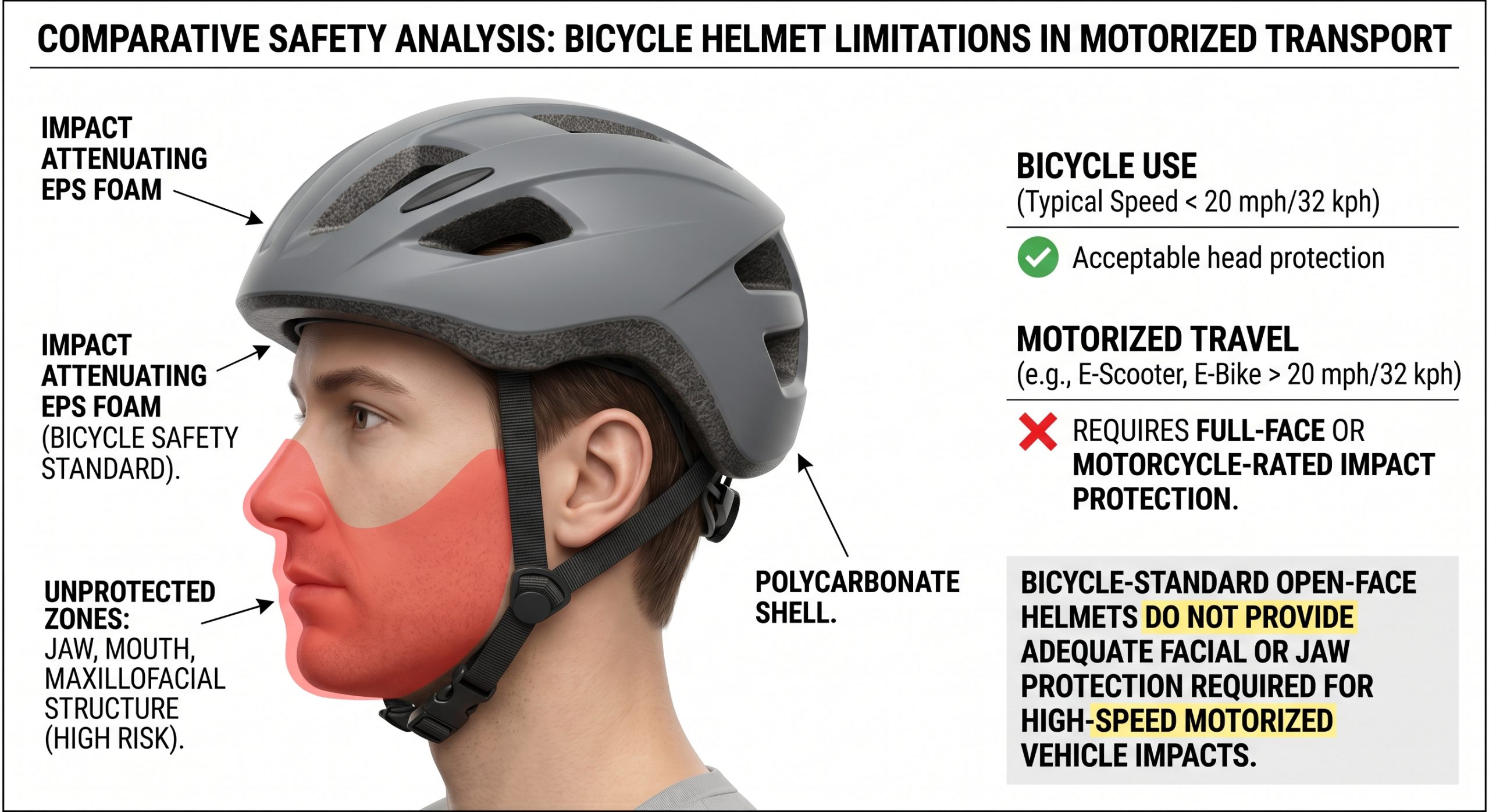
While a helmet is non-negotiable, a standard bicycle helmet is often insufficient for the high-impact forces of a motorized crash. Many parents don’t realize that standard gear is rated for much lower speeds and different types of falls than those occurring on scooters.
Limitations of Standard Cycle Gear
The deal is this: a bike helmet is designed for a different fall trajectory.
- It doesn’t protect the jaw or face, where many scooter injuries occur.
- Impact ratings may not cover the 20+ mph speeds some scooters reach.
- Poorly fitted helmets often slip backward during a forward-facing fall.
Full-Face Protection Requirements
If a device goes over 20 mph, motorcycle-grade equipment is actually what’s needed.
- Full-face helmets protect the teeth and jaw from shattering.
- Wrist guards are essential but rarely used by children.
- Elbow and knee pads can prevent bone-deep road rash.
Key Takeaway on Safety Equipment
Do not rely on a helmet to make an inherently dangerous activity safe for a child.
| Gear Type | Protection Level | Missing Coverage |
|---|---|---|
| Bike Helmet | Basic | Face, Jaw, Dental, High-speed impact. |
| Pads | Moderate | Does not prevent internal injuries or fractures. |
| Closed-Toe Shoes | Essential | Necessary to prevent severe toe/foot lacerations. |
Is an electric scooter too heavy for a child?
Yes, the weight of the battery and motor makes these machines difficult for a child to steer or jump away from during a fall. A typical motorized model can weigh 30 to 50 pounds, which is a significant mass to have land on a small limb.
Handling and Maneuverability Issues
Here is the problem: a heavy machine is harder to turn quickly.
- Children lack the upper body strength to “muscle” a heavy scooter.
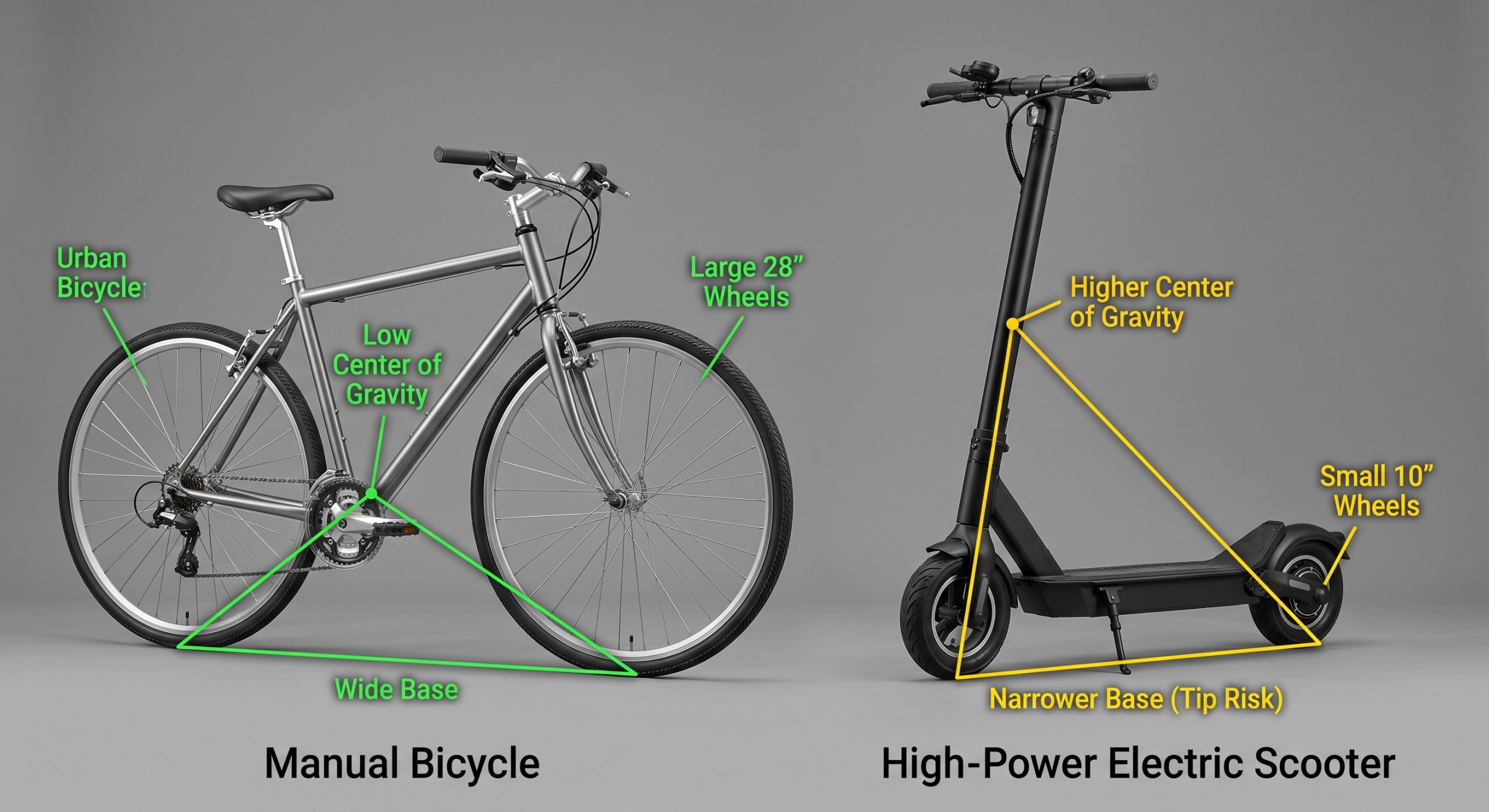
- The weight makes the scooter prone to tipping when stopped.
- Steering becomes sluggish, making it hard to avoid obstacles.
Danger During a Fall or Tumble
When a child falls, the heavy scooter often follows them down.
- Crush injuries to legs and ankles are common.
- The “trap” effect: a child can’t easily push the machine off themselves.
- Entanglement with the handlebars or deck during a crash.
Key Takeaway on Machine Mass
The physical weight of the motor and battery creates a “crush risk” that manual scooters don’t have.
| Feature | Manual Scooter | Electric Model |
|---|---|---|
| Average Weight | 5-10 lbs | 30-60 lbs |
| Control | Easy to maneuver | Heavy and sluggish for kids |
| Fall Risk | Easy to step away | Often falls on the rider |
How does an electric scooter behave in traffic?
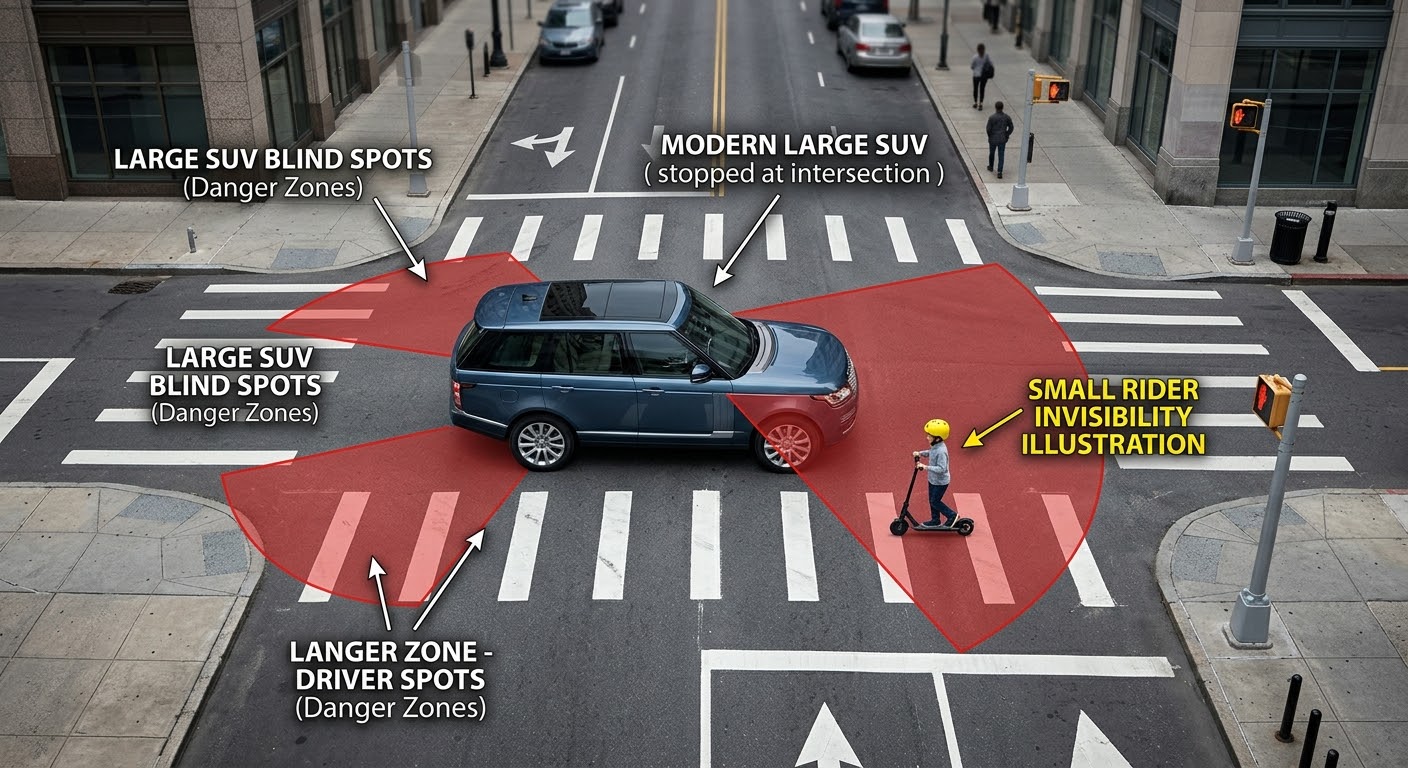
These devices are often invisible to drivers and lack the stability needed to navigate street traffic safely. Because they are quiet and low-profile, cars often don’t see them until it is too late, especially at intersections or when pulling out of driveways.
Visibility in Crowded Streets
You must realize that a child on a scooter is below the sightline of many SUVs.
- Drivers are not looking for fast-moving objects on sidewalks.
- E-scooters move too fast for pedestrians but are too slow for car lanes.
- Lack of turn signals makes the rider’s movements unpredictable to others.
Intersections are the most common site for fatal or life-altering collisions.
- Kids may not understand right-of-way rules.
- Fast-moving scooters can enter a crosswalk before a driver can react.
- Potholes and sewer grates are “traps” that can throw a rider into traffic.
Key Takeaway on Traffic Hazards
The mix of high speed and low visibility makes the road a deadly place for a child rider.
| Hazard | Driver Perspective | Child Perspective |
|---|---|---|
| Driveways | Hard to see objects moving at 15 mph. | “I have the right of way.” |
| Intersections | Looking for cars, not small scooters. | Focused on the light, not the cars. |
| Parked Cars | Doors opening (“dooring”) is a constant risk. | Unaware of the “door zone” danger. |
Is adult supervision enough for an electric scooter?
No, because a motorized crash happens in the blink of an eye, an adult standing nearby cannot intervene in time to prevent an injury. Supervision cannot override the laws of physics or the mechanical speed of the device once it is in motion.
The Myth of Close Proximity
Think about this: if a child hits a bump at 15 mph, they are on the ground before you can shout “stop.”
- You cannot catch a child who is moving faster than you can run.
- Mechanical failures (like a stuck throttle) happen instantly.
- Distractions can take your eyes off the child for the one second that matters.
Unpredictable Mechanical Failures
Even the best supervision can’t prevent a battery fire or a brake failure.
- Software glitches can cause sudden acceleration.
- Folding mechanisms can fail if not locked perfectly by a child.
- Supervision doesn’t improve the child’s reaction time or bone density.
Key Takeaway on Adult Supervision
Watching your child ride doesn’t make the machine safer; it only gives you a front-row seat to the risk.
| Supervision Limitation | Why It Fails |
|---|---|
| Reaction Time | Adults cannot outrun a 20 mph vehicle. |
| Mechanical Control | The adult is not the one holding the brakes. |
| Physical Barrier | Parents cannot “soften” the pavement from a distance. |
Are there safer options than an electric scooter?
Yes, there are many ways for kids to stay active and enjoy the outdoors without the extreme risks of motorized speed. Traditional forms of transport provide the same joy while helping your child build strength and coordination.
Benefits of Manual Kick Scooters
Here is a better way: manual scooters are powered by your child’s own muscles.
- Speed is limited by how fast the child can physically push.
- The machines are lightweight and easier to “jump away” from.
- They help build balance and cardiovascular health.
Pedaling for Health and Safety
Bicycles remain one of the best ways for kids to get around.
- Larger wheels handle bumps and cracks much better than tiny scooter wheels.
- The seated position is more stable and lowers the center of gravity.
- High-visibility accessories are easier to mount on a bike frame.
Key Takeaway on Safer Alternatives
Choosing manual power over battery power reduces injury risk by a significant margin.
| Alternative | Safety Benefit | Development Benefit |
|---|---|---|
| Manual Scooter | Lower speed, lighter weight. | Balance and leg strength. |
| Bicycle | Better stability, larger wheels. | Cardio and coordination. |
| Skateboard | Low center of gravity. | Core strength and agility. |
Why is a high-power electric scooter a risk?
The sheer mechanical force of a high-power motor is designed for adult commuters, not for the fragile skeletal structure of a child. When a machine provides 250 to 500 watts of power, it becomes a vehicle that requires licensing-level responsibility.
Sudden Acceleration Surges
Look: a child’s hand can easily slip and pin the throttle wide open.
- “Whiskey throttle” (unintentional acceleration) leads to direct collisions.
- High torque can pull the scooter out from under a child’s grip.
- Electric motors provide instant power, unlike gas engines that ramp up.
Battery and Mechanical Risks
You have to consider the hardware inside the machine as well.
- Large lithium-ion batteries are a fire hazard if the deck is damaged.
- High-power brakes can lock up, sending the rider flying.
- Maintenance is complex; loose bolts at high speed are catastrophic.
Key Takeaway on Machine Power
A motorized vehicle is a tool for adults, not a toy for children, due to its mechanical intensity.
| Power Feature | Risk to Children |
|---|---|
| Torque | Can cause the rider to fall backward off the deck. |
| Braking Force | Can cause “over-the-handlebars” flips. |
| Battery Mass | Increases the force of the machine hitting the rider. |
Conclusion
The safety of our children is always the top priority. While the convenience and “cool factor” of motorized transit are tempting, the physical and developmental risks for those under 16 are simply too high. By choosing safer, manual alternatives, you allow your child to develop the coordination and judgment they need to eventually handle more complex vehicles later in life. If you have questions about choosing the right adult-rated models or safety gear for your older teens, please contact us today for expert guidance.
Frequently Asked Questions
Can I let my 12-year-old ride if they wear a helmet?
No, the AAP recommends waiting until age 16 regardless of safety gear, as helmets do not prevent the complex fractures and internal injuries caused by high-speed motorized impacts.
What’s the best alternative to a motorized scooter?
A traditional manual kick scooter or a well-fitted bicycle are the best alternatives, as they allow for speed control through physical effort and offer better stability.
Can my child ride an electric scooter on the sidewalk?
In many jurisdictions, motorized scooters are banned from sidewalks because they pose a danger to pedestrians; however, riding them in the street is even more dangerous for children.
Are some electric scooters made specifically for kids?
While some brands market “kids’ models,” these still reach speeds that exceed a child’s developmental ability to react to hazards or manage the machine’s weight safely.
Why does the AAP recommend waiting until age 16?
The age of 16 is recommended because it aligns with a child’s physical growth, improved executive brain function, and the maturity needed to understand traffic safety and risk.