
The electric scooter laws Pennsylvania applies leave ordinary stand-up scooters without a legal public-road category. Buying one for a commute can leave your route unavailable. Check the exact device and intended location before paying, then distinguish a bill’s passage from enacted permission when planning how you will use your scooter.
1. Do Pennsylvania electric scooter laws allow public riding?
Under the electric scooter laws Pennsylvania applies, ordinary electric kick scooters remain undefined devices in PennDOT's guidance, so buyers should not plan public riding under that category.
What does the current state guidance say?
Check what a shop listing leaves unanswered: The PennDOT micromobility sheet, revised August 2026, gives electric scooters their own row but no legal classification. Its explanation covers roads, sidewalks and bike lanes.
Seeing scooters in use does not establish a legal category for yours. A product listing, a route suggestion or another rider's account cannot supply the missing state authorization.
How should that affect your purchase plan?
Write down where you intend to use the scooter before comparing prices. If your entire reason for buying depends on public riding, resolve that issue before paying a deposit or accepting delivery. The general guide to street-legal scooters in America should be read alongside Pennsylvania's current source.
- Identify the actual riding location.
- Confirm the device category.
- Separate present permission from proposed changes.
| Purchase assumption | Current check |
|---|---|
| A store sells it locally | Sale does not establish road permission |
| Other people ride nearby | Check official rules |
| The trip uses a bike lane | PennDOT includes bike lanes |
Key Takeaway: Sale and nearby use cannot establish road permission. Resolve the intended location before spending money.
2. Did HB1633 change Pennsylvania electric scooter laws?
No, the House vote did not establish statewide riding permission under the electric scooter laws Pennsylvania applies. It advanced HB1633 for further consideration.

What stage had the bill reached?
Here's the difference behind that passage headline: The official HB1633 record records House passage on October 20, 2026, by 176 votes to 27. The published history reports a Senate Transportation referral on October 26. Check the bill's enactment information before relying on proposed rules.
The House's announcement describes a framework that would regulate private scooters and shared programs. Read those proposed changes separately from the electric scooter laws Pennsylvania currently applies.
How can you avoid acting on an outdated headline?
Open the bill's official record and read its actions, current text and any enactment information. Confirm any effective date before changing your plans. A headline about passage may describe one chamber's vote rather than the completion of legislation.
- Check the bill number and legislative session.
- Look for enactment rather than a committee vote.
- Check an enacted measure's effective date separately.
| Recorded event | What it establishes |
|---|---|
| House passage, October 20 | Approval by the House |
| Senate referral, October 26 | Further legislative consideration |
| No enactment shown | Proposed rules remain proposals |
Key Takeaway: A chamber vote differs from enactment. Check for enactment and an effective date before changing your riding plan.
3. How do kick scooters differ from e-bikes and mopeds?
The electric scooter laws Pennsylvania applies assign separate definitions to electric-assist pedalcycles, mopeds, seated motor scooters, and self-balancing mobility devices. Those definitions do not automatically cover a stand-up kick scooter.

Why do pedals and wheel layout matter?
Look past the shared electric label: Under Vehicle Code section 102, an electric-assist pedalcycle needs operable pedals. It also has limits of 100 pounds, 750 watts and 20 mph on motor power alone, with two or three wheels more than 11 inches in diameter. A scooter does not become that bicycle merely by meeting its speed limit.
An EPAMD requires a self-balancing design with two non-tandem wheels. A conventional kick scooter's front-and-rear wheel arrangement does not fit that description.
What should you describe when asking for guidance?
Send clear photographs of the entire device, pedals if present, seating and wheel arrangement. Include the model specification. Asking whether “electric scooters” are legal can produce an answer about a seated motor scooter when you mean a standing deck.
- State whether it has operable pedals.
- Describe a seat or standing platform.
- Identify tandem or side-by-side wheels.
| Device description | Classification feature |
|---|---|
| Electric-assist pedalcycle | Operable pedals and other limits |
| EPAMD | Self-balancing, non-tandem wheels |
| Seated motor scooter | Separate motor-driven-cycle rules |
Key Takeaway: Physical design determines the definition you need. Describe pedals, seating, and wheel arrangement when asking about the model.
4. Do Pennsylvania electric scooter laws allow sidewalk riding?
No, the electric scooter laws Pennsylvania applies do not create an exception merely because a public route feels quieter. PennDOT's stated restriction concerns undefined electric scooters.

Why doesn't a bike lane settle the question?
Check each connection on the map: An official House legislative memo also identifies scooter riding on roads and sidewalks as illegal; its proposed penalties are proposals. PennDOT's newer 2026 guidance expressly includes bike lanes. A bicycle route map does not establish permission for every battery-powered device.
Treat the route as several permissions rather than one line on a screen. A station entrance, municipal street, campus path and private forecourt may each involve a different authority or property manager.
What should you ask about an uncertain location?
Name the location and explain whether you intend to ride, walk the device or store it. Those are different requests. If the proposed trip depends on riding a public segment, keep that segment out of your plan until its use is established under current rules.
- Identify who controls the space.
- Describe the exact device and intended activity.
- Keep a permitted alternative for the connection.
| Location on a map | Question to resolve |
|---|---|
| Bike lane | Does your vehicle category have access? |
| Sidewalk | Are you riding or walking the device? |
| Campus or park | What do state and property rules allow? |
Key Takeaway: Access questions vary along your trip. Identify the controller and permitted activity for every uncertain segment.
5. Can paperwork make a scooter road legal in Pennsylvania?
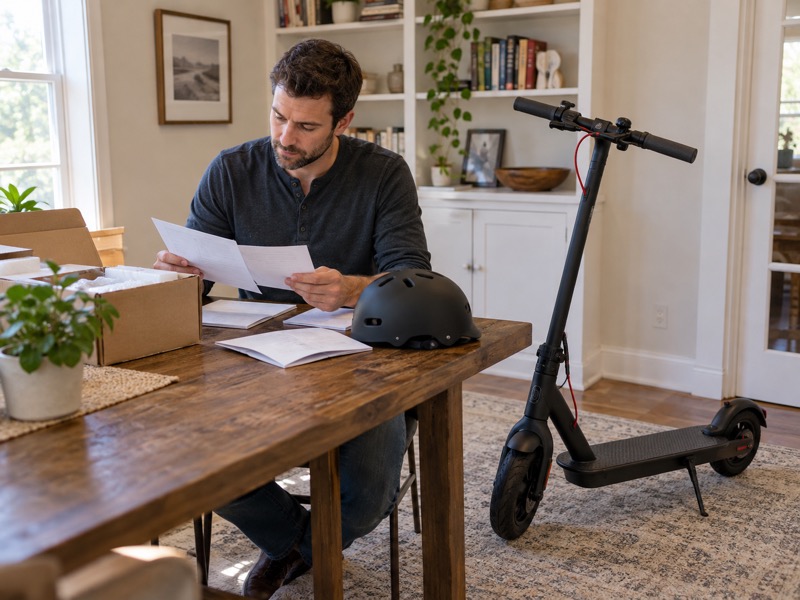
No, the electric scooter laws Pennsylvania applies do not make an ordinary stand-up scooter eligible for public-road use just because its rider holds a license or insurance. An attempt to register the device does not establish eligibility either.
What does PennDOT require of road-going motor scooters?
Ask what the paperwork actually proves: PennDOT's motor-scooter guidance requires registration, insurance and compliance with equipment and inspection rules for the vehicles it describes. It warns that scooters without the motorcycle federal safety-certification label are not intended for highways.
That page addresses a vehicle category with its own requirements. Do not treat it as a promise that any device with a motor can complete the same process. A seller's receipt or serial number does not establish eligibility.
What evidence should you obtain before paying?
Ask the seller which Pennsylvania category the exact device meets and what documentation supports that answer. Take unresolved registration questions to PennDOT. A general explanation of electric scooter registration provides background, but the state agency decides its procedures.
- Request the claimed category in writing.
- Ask for relevant certification documentation.
- Resolve eligibility before assuming registration is available.
| Document or feature | What it cannot establish alone |
|---|---|
| Car driver's license | Device eligibility |
| Insurance policy | Permission to use a public road |
| Store receipt | Compliance with vehicle requirements |
Key Takeaway: Paperwork does not independently establish device eligibility. Obtain a supported classification answer before paying.
6. Do rider eligibility rules and helmets make a scooter road legal?
No, the electric scooter laws Pennsylvania applies do not legalize public riding of an undefined stand-up scooter through another category's rules on how old riders must be or helmet requirements.

Why should you avoid borrowing rules from a different row?
Check the device before borrowing a rider rule: Read rider requirements in the electric scooter laws Pennsylvania applies alongside the matching device definitions. PennDOT's motor-scooter page discusses its own registration and equipment conditions. A scooter buyer needs to establish vehicle eligibility before treating a rider requirement as permission.
If you are comparing a scooter with an e-bike, make separate lists for their requirements. Match every entry to the correct device before using it in a buying decision.
What safety preparation still belongs in your plan?
Choose a helmet that fits and follow its instructions wherever you have established permission to ride. Practise the controls only in an appropriate permitted location. Do not assume that a small electric device is outside impaired-driving rules; the current micromobility sheet expressly warns that DUI laws can apply.
- Check the category before checking how old its riders must be.
- Adjust protective equipment before use.
- Keep alcohol and impaired riding out of the plan.
| Question | Correct order |
|---|---|
| May this device use the location? | Establish access |
| Which rider requirements apply? | Match its legal category |
| Is the rider prepared? | Check fit, controls and conditions |
Key Takeaway: Access comes before the rider checklist. Match safety preparation and rider requirements to a permitted device and location.
7. What should you check for private-property use?
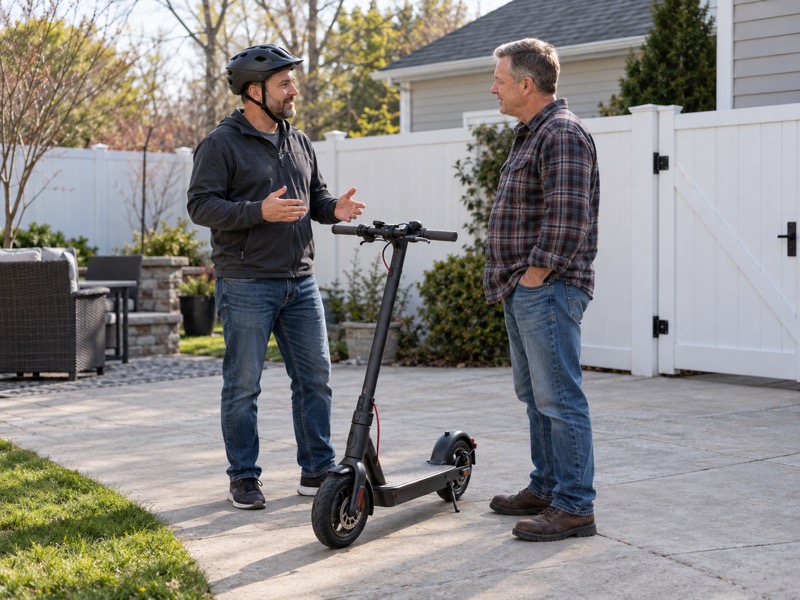
Under the electric scooter laws Pennsylvania applies, you should confirm the owner's permission and the rules governing the particular property before planning scooter use there.
Does private ownership of land answer every question?
Ask who actually controls access: No, a privately owned place may still be open to customers, residents, delivery vehicles or other traffic. Ask who controls the area and whether powered-device use is permitted there. An apartment courtyard or business parking lot should not be treated as available because it has no municipal street sign.
Describe the activity you propose, including who will ride and whether the area will remain closed to other traffic. If the owner cannot authorize it, find another permitted activity or location rather than relying on an informal assumption.
How do you prepare an authorized space?
Inspect the surface and entry points with the person responsible for the property. Keep pedestrians, pets and moving vehicles out of any agreed practice area. If you cannot control access, do not use the area as a riding course.
- Obtain clear permission from the responsible person.
- Check local, building and property restrictions.
- Agree on access, storage and operating boundaries.
| Property example | Permission to confirm |
|---|---|
| Shared residential courtyard | Management and resident rules |
| Business lot | Owner's authorization and public access |
| Closed personal practice area | Boundaries and other applicable restrictions |
Key Takeaway: Private ownership leaves other questions unresolved. Agree on boundaries and check applicable restrictions before practice.
8. How can you buy without assuming street permission?
Buy only for a use you can establish under the electric scooter laws Pennsylvania applies today. Check return, storage and support terms before committing.
What needs answering before checkout?
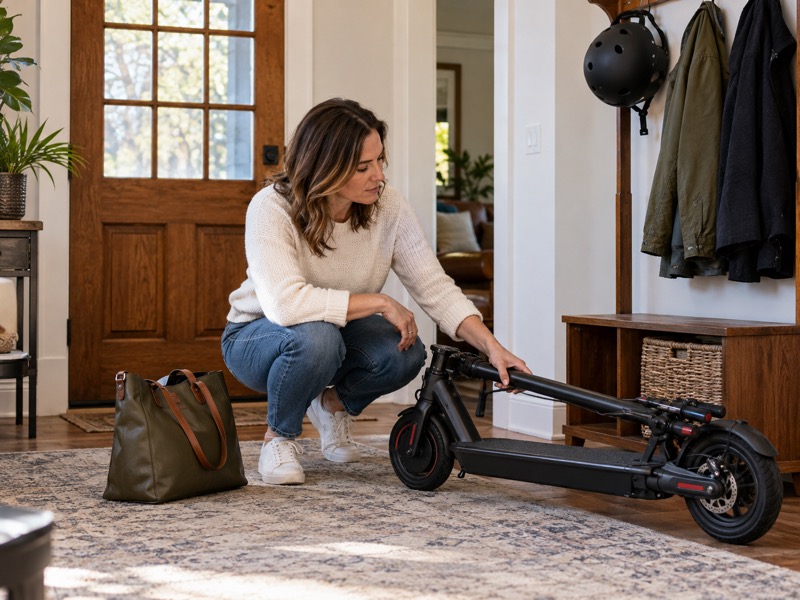
Here's the question to settle before checkout: Record your intended use and ask whether the exact model suits it. Compare carrying weight, folded shape, service access, and features against your permitted use; a checklist cannot establish location permission.
Read return conditions before assembling or using the scooter. Ask about shipping costs, packaging, restocking charges and the treatment of a used product. Keep the written terms that applied when you bought it.
How should you assess daily handling?
Try the lift you will perform at home, including a work bag if you normally carry one. Measure the storage space and doorway. A compact folded length may still leave awkward handlebars or a weight you cannot comfortably manage.
- Confirm the permitted intended use.
- Check the exact return conditions.
- Measure storage and test carrying comfort.
| Before paying | Evidence to keep |
|---|---|
| Intended use | Permission or authoritative guidance |
| Product specification | Exact model and version |
| Return terms | Written policy and receipt |
| Storage fit | Measurements and carrying trial |
Key Takeaway: Permission, return conditions, and carrying comfort need separate checks. Keep written terms with your specifications and measurements.
9. What can you plan while legislation remains pending?
You can plan permitted transport, storage, and ownership under the electric scooter laws Pennsylvania has in force without relying on a future change. Keep another permitted way to complete public connections available.

How should you build a workable commute?
Separate carrying permission from riding permission: Keep walking, transit or another permitted transport option available for every public connection. If a future law changes access, reassess your route using its enacted text and effective date. A scooter stored at home does not solve an unauthorized segment between your home and station.
Confirm current carrier rules before transporting a scooter. Ask about the exact device, battery and service you plan to use. Permission to carry it on a vehicle would answer a transport question, not permission to ride it outside the station.
What ownership preparations are useful now?
Practise folding and securing your scooter while stationary, following the manual. Agree on home storage and charging with the people responsible for the building. Follow a safe home-charging routine and the manufacturer's equipment instructions.
- Keep access routes and exits clear.
- Store the manual and purchase records together.
- Recheck official law before changing your riding plan.
How do you make these plans useful?
| Planning task | Can be checked separately |
|---|---|
| Commute alternative | Current permitted transport |
| Scooter carriage | Carrier's current device policy |
| Home storage | Space and building rules |
| Future public riding | Enactment and effective date |
Key Takeaway: Check commute alternatives, carriage, and storage separately. Tie public riding plans to enacted law and its effective date.
Summary: Pennsylvania buyers need clear answers about device classification, permitted use, storage, and pending legislation. Check those points before committing money or planning public riding. For help comparing portability and ownership features, contact us with your intended use. Dynamic Scooter supports practical mobility choices grounded in clear information and responsible ownership.
FAQ
The electric scooter laws Pennsylvania buyers need to check concern present access and device classification. Resolve those questions before relying on proposed rules or advice from another state.

Which answer helps you check your intended use?
Check the permission behind your plan: a slow speed, a proposed bill, or a sales description does not settle where your exact device may operate.
- Q1: Can I ride slowly if I stay out of traffic? Don't assume so. PennDOT includes sidewalks and bike lanes in its guidance on undefined devices; slower riding does not establish an exception for an ordinary stand-up scooter.
- Q2: Can I treat HB1633's proposed limits as current law? No. Check for enactment and an effective date before changing your riding plan.
- Q3: How do I know whether a scooter is an EPAMD? Check its design. EPAMDs are self-balancing devices with two non-tandem wheels; an ordinary front-and-rear-wheel kick scooter does not meet that layout.
- Q4: Can I use an online “street legal” claim as proof? No. Ask which Pennsylvania category the exact model meets and request documentation; keep unresolved classification questions open until an authoritative answer arrives.
- Q5: What's the best question to ask before ordering? Ask where you can lawfully use this scooter today. Then compare portability, folded dimensions, and ownership features against that permitted use and your storage requirements.
Key Takeaway: Establish permission for the exact device before comparing ownership features, and check a bill's enactment and effective date before relying on proposed changes.