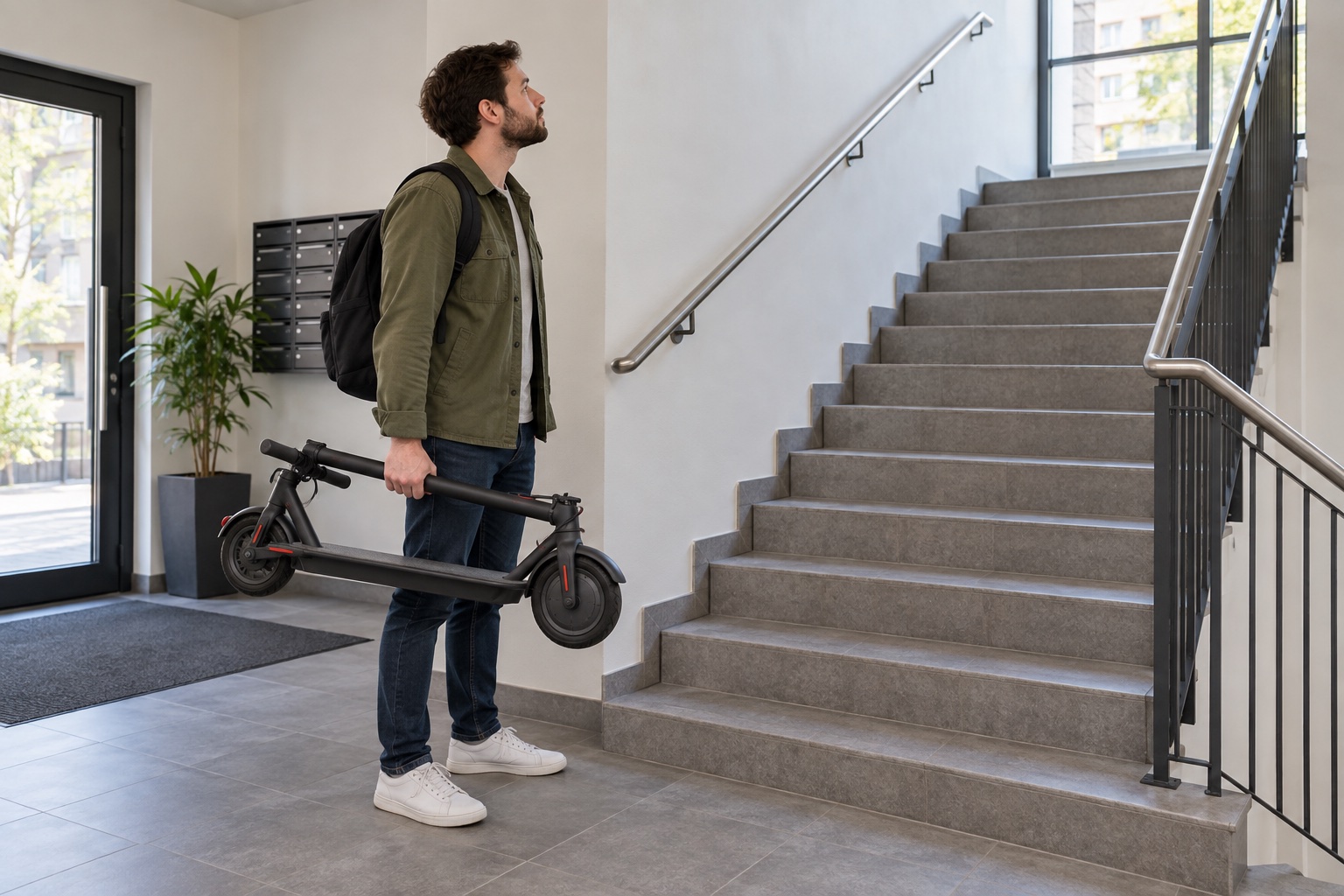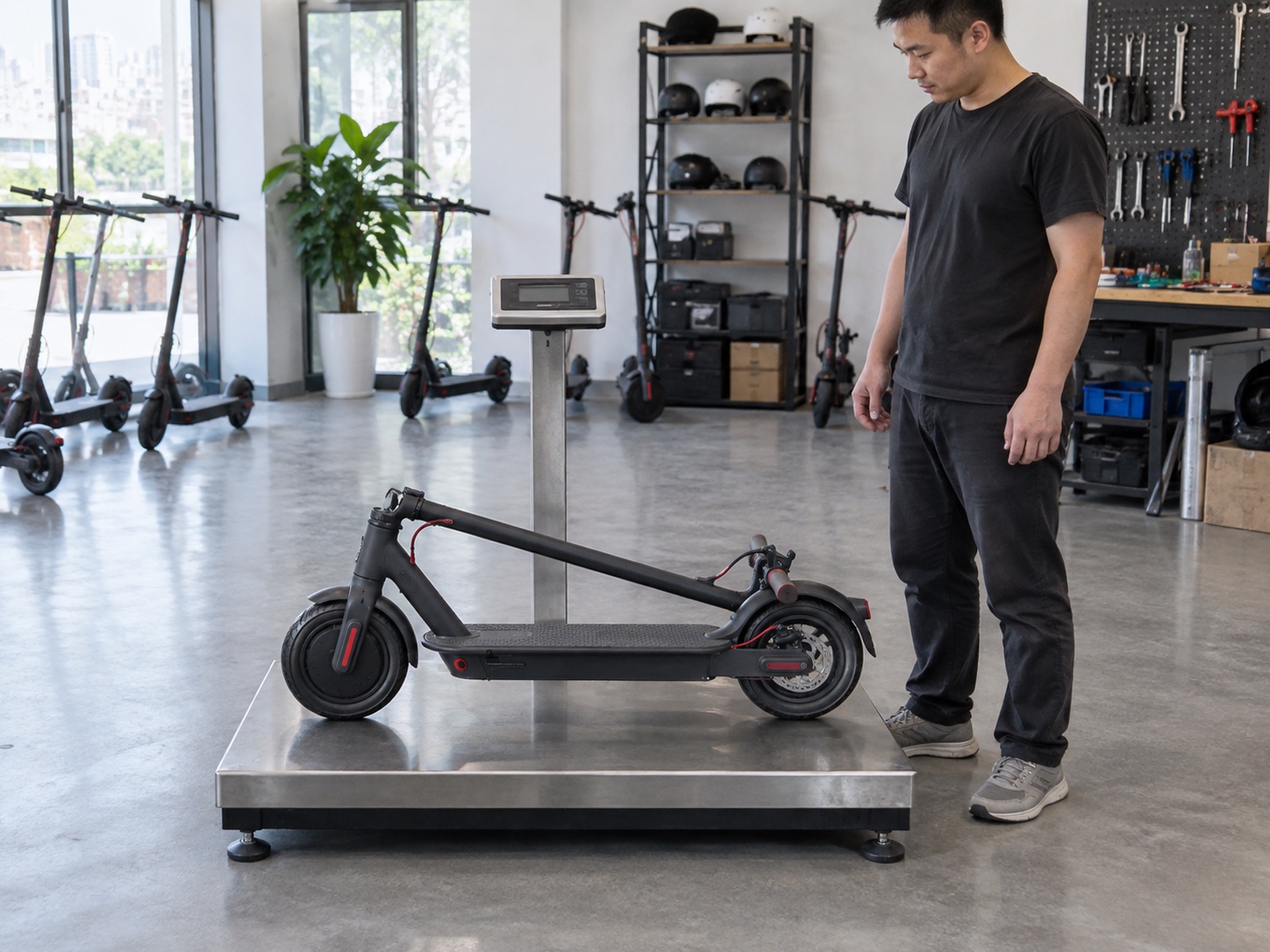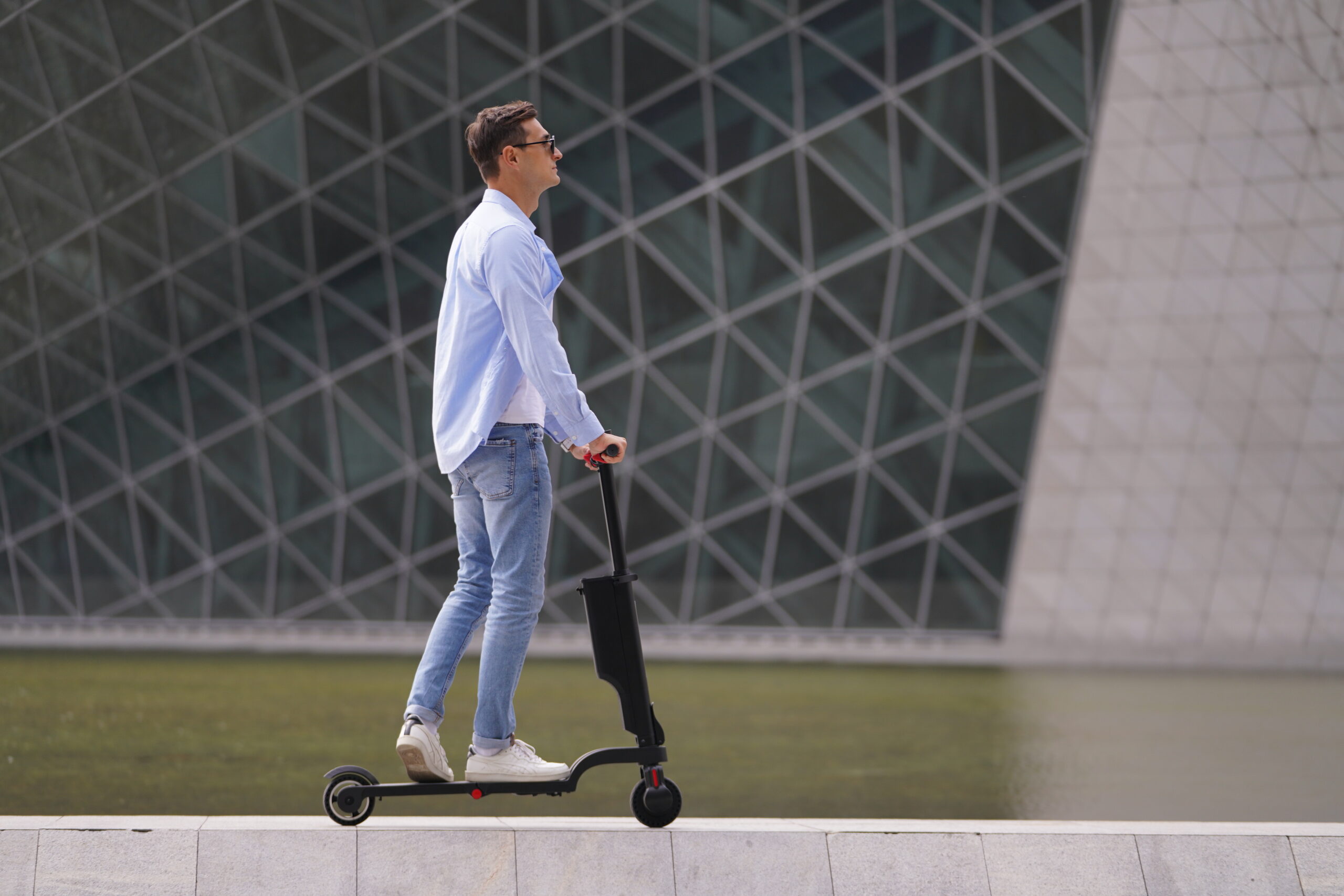

Storing your electric scooter in the garage seems convenient, but is it truly safe? Many owners assume it’s the perfect spot, only to find that extreme temperatures, humidity, or poor security have caused irreversible damage. A dead battery, rusted parts, or a stolen scooter are common outcomes of improper storage, turning your convenient ride into a source of frustration.
Yes, you can store an electric scooter in a garage, but only if the environment is controlled. The ideal garage must be dry, secure, and maintain a stable temperature between 50°F and 77°F (10°C and 25°C). Storing a scooter in a garage with extreme heat, freezing temperatures, or high humidity can damage the battery, electronics, and frame, potentially voiding your warranty.
So, how can you make your garage a safe haven for your scooter? Here’s the secret… This guide will walk you through everything you need to know, from managing temperature and humidity to implementing the best security practices.
1. Why Is Proper Electric Scooter Storage So Important?
Proper storage is a critical aspect of electric scooter ownership that directly impacts its long-term health and safety. The most important component to consider is the lithium-ion battery. These batteries are sensitive to their environment, and improper storage can drastically shorten their lifespan. Leaving a scooter in a place that is too hot or too cold can lead to a permanent loss of capacity, meaning your rides will get shorter over time.
Beyond the battery, the scooter’s other electronic components are also at risk. The controller, display, and wiring are all vulnerable to damage from moisture and extreme temperatures. This is crucial because… corrosion on these parts can lead to intermittent power, faulty readings, or a complete electrical failure. The scooter’s structural integrity is also at stake. High humidity can cause the frame to rust, while prolonged sun exposure can degrade plastic parts and tires.
Finally, there are the concerns of safety and security. A scooter that is not stored securely is an easy target for theft. Furthermore, improper charging practices during storage can create a fire hazard. Taking the time to store your scooter correctly not only protects your investment but also ensures it is safe and ready to ride whenever you need it.
| Storage Factor | Risk of Improper Storage | Best Practice |
| Battery Health | Permanent loss of capacity | Store at a moderate temperature and 40-60% charge |
| Electronics | Corrosion and failure | Keep the scooter in a dry, low-humidity environment |
| Structural Integrity | Rust and degradation | Use a protective cover and avoid direct sunlight |

2. What Are the Ideal Temperature Conditions for Garage Storage?
Temperature is the most critical factor when storing your electric scooter, especially for its battery. Batteries operate best within a specific temperature range, and storing them outside this range can cause irreversible damage. The ideal storage temperature for most scooter batteries is between 50°F and 77°F (10°C and 25°C). Storing your scooter within this cool, stable range will do more to preserve its battery life than anything else.
Extreme cold is a major enemy of battery performance. If you store your scooter in a garage where temperatures drop below freezing (32°F or 0°C), you will notice a temporary drop in range and power. But here’s the thing… repeatedly storing or charging the battery in freezing conditions can lead to lithium plating, a permanent degradation of the battery’s internal structure that reduces its capacity.
Extreme heat is even more dangerous. Storing your scooter in a hot garage, where temperatures can exceed 100°F (38°C), accelerates the chemical degradation of the battery cells. This leads to a faster loss of capacity and can cause the battery to swell. In extreme cases, heat can lead to thermal runaway, a significant fire hazard. Monitoring your garage’s temperature and taking steps to insulate it can make a world of difference.
| Temperature Range | Impact on Battery | Recommended Action |
| Below 32°F (0°C) | Risk of permanent damage if charged | Never charge below freezing; bring battery inside |
| 50°F to 77°F (10°C to 25°C) | Optimal Storage Range | Maintain this temperature for longevity |
| Above 77°F (25°C) | Accelerated degradation | Improve ventilation or move to a cooler location |
3. How Does Humidity in a Garage Affect Your Scooter?
While temperature gets the most attention, humidity is a silent killer for electric scooters. Many garages are surprisingly damp, and this moisture can wreak havoc on your scooter over time. The most obvious issue is corrosion. Metal components, including the frame, screws, and brake parts, can begin to rust, weakening the scooter’s structure and compromising its safety.
Even more concerning is the effect of humidity on the scooter’s electronics. The controller, wiring, and connectors are all susceptible to damage from moisture. Here’s why that’s a problem… when moisture gets into these electrical components, it can cause short circuits, leading to erratic behavior or a complete failure. Corrosion on the electrical contacts can create poor connections, resulting in power loss and an unreliable ride.
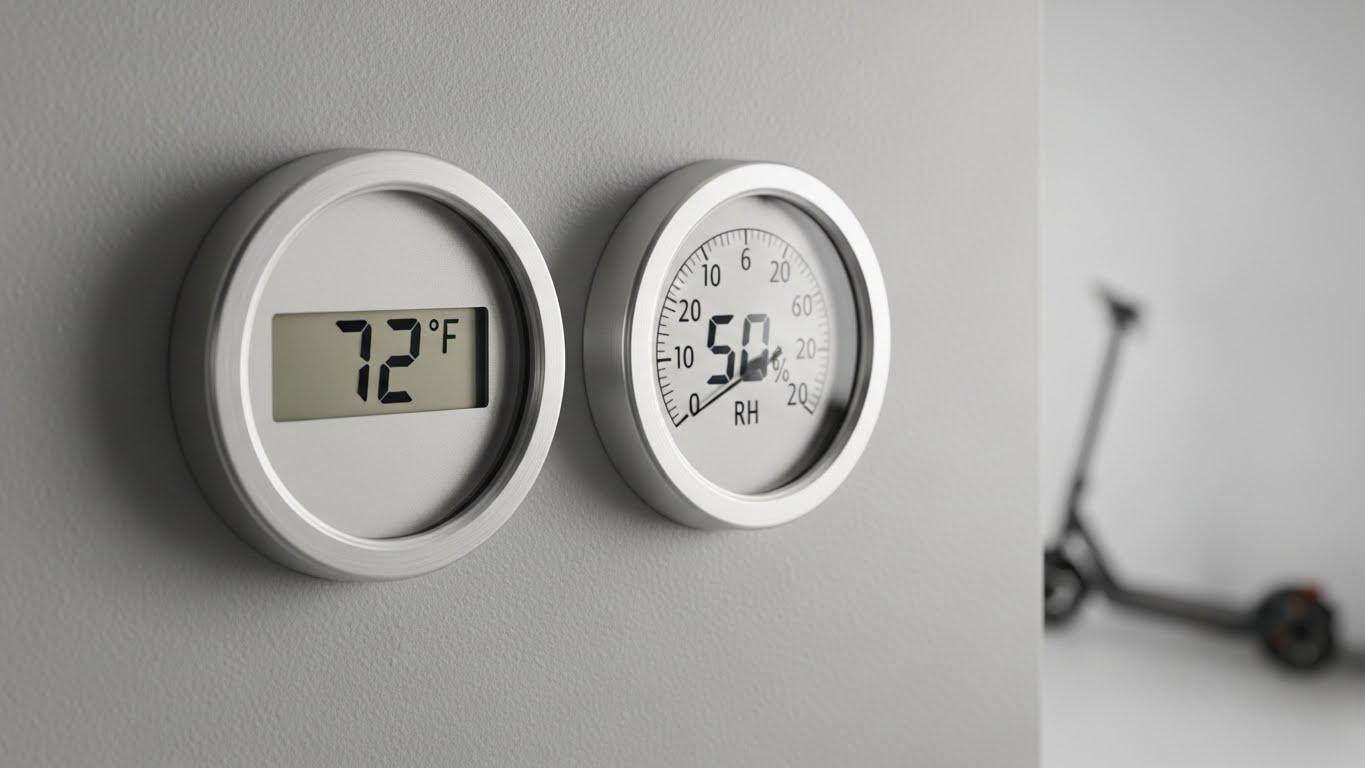
Furthermore, a damp environment is the perfect breeding ground for mold and mildew. You can monitor the humidity level in your garage with a hygrometer. If you find the humidity is consistently above 60%, you should take steps to control it. Using a dehumidifier or improving the garage’s ventilation can create a much safer storage environment and protect your scooter from the slow damage of excess moisture.
| Humidity Level | Risk to Scooter | How to Control It |
| High (>60%) | High risk of rust, corrosion, and mold | Use a dehumidifier and improve ventilation |
| Moderate (40-60%) | Low risk, generally safe | Monitor periodically |
| Low (<40%) | Ideal for preventing corrosion | No action needed |
4. What Are the Risks of Charging Your Scooter in the Garage?
Charging your scooter in the garage is convenient, but it introduces risks that you must manage. The primary concern is fire safety. While rare, fires can happen, and lithium-ion batteries contain a huge amount of energy. The most common cause of charging fires is using a damaged or incorrect charger. You should only ever use the charger that came with your scooter or a high-quality replacement from a reputable manufacturer like Dynamic Scooter.
Proper ventilation is another critical safety factor. The charging process generates heat, and this heat needs to dissipate. Charging your scooter in a cluttered, unventilated corner can cause heat to build up, which is dangerous for the battery. The bottom line is… you should always charge your scooter in a clear, open space with good airflow, away from any flammable materials. It is also a bad idea to use a flimsy extension cord, as it can overheat and become a fire hazard.
Finally, you should never leave a charging scooter completely unattended. While modern chargers have automatic shut-off features, technology can fail. It is wise to be present during the charging cycle or to check on it periodically. Never leave your scooter charging overnight in the garage while you are asleep. By following these best practices, you can minimize the risks and ensure charging your scooter in the garage is a safe process.
| Charging Practice | Risk | Safe Alternative |
| Using a cheap charger | High risk of overcharging and fire | Use the original manufacturer’s charger |
| Charging in a cluttered area | Heat buildup and fire hazard | Charge in a clear, open space |
| Using a flimsy extension cord | Overheating and fire risk | Plug directly into the wall or use a heavy-duty cord |

5. How Should You Prepare Your Scooter for Long-Term Garage Storage?
If you plan on storing your scooter in the garage for an extended period, like over the winter, a little preparation goes a long way. The first step is to give it a thorough cleaning. Use a damp cloth to wipe down the frame and deck to remove any dirt or road salt. This prevents grime from causing corrosion or staining over time. Be careful not to spray water directly into any electronic components.
Proper battery preparation is the most important part of long-term storage. You should never store your scooter with a fully charged or completely empty battery. Storing a battery at 100% puts a strain on the cells, while storing it at 0% can cause it to enter a deep discharge state from which it may never recover. Here’s the key… the ideal charge level for long-term storage is between 40% and 60%. This puts the least amount of stress on the battery’s chemistry.
Finally, take care of the mechanical parts. Check the tire pressure and inflate the tires to the recommended PSI to prevent flat spots. It is also a good idea to lubricate any moving parts, like the folding mechanism, according to your scooter’s manual. Once done, cover your scooter with a breathable, protective cover. This will shield it from dust, scratches, and pests, ensuring it is ready to ride when you take it out of storage.
| Preparation Step | Reason | How to Do It |
| Clean the Scooter | Prevents corrosion | Wipe down with a damp cloth |
| Adjust Battery Charge | Preserves battery health | Charge or discharge to 40-60% |
| Check Tire Pressure | Prevents flat spots | Inflate to recommended PSI |
6. What Are the Best Security Measures for a Garage-Stored Scooter?
Even if your garage is locked, you shouldn’t assume your scooter is safe. Garages are a common target for burglars, so taking extra security measures is a wise investment. The first line of defense is the garage door itself. Ensure it is in good working order and consider adding a garage door lock or a security brace for an extra layer of protection.
Inside the garage, you should treat your scooter as if it were parked on the street. This means locking it up properly. A simple cable lock is not enough. You need to know this… the best security comes from using a high-quality, heavy-duty lock. A thick chain lock or a solid D-lock (U-lock) offers a much stronger deterrent, as they are significantly more resistant to cutting and picking.
For maximum security, you should lock your scooter to something. A determined thief can simply carry your scooter away, lock and all. You need to anchor it to a fixed, immovable object. You can install a ground or wall anchor directly into the concrete floor or a wall stud of your garage. For the ultimate peace of mind, you might also consider a GPS tracker. This way, even if a thief defeats your physical security, you still have a way to track and recover your property.
| Security Measure | Protection Level | Implementation |
| Securing Garage Door | Basic | Add a manual lock or brace |
| High-Quality Lock | Intermediate | Use a heavy-duty chain or D-lock |
| Anchoring Scooter | High | Lock the frame to a wall or ground anchor |
7. How Can You Protect Your Scooter from Pests and Dust in the Garage?
Garages can be a haven for pests and a magnet for dust, both of which can cause significant damage to your scooter. Rodents like mice and rats are a serious threat. They are known to chew on anything, and the soft insulation on your scooter’s wiring can be an irresistible target. A single chewed wire can disable your scooter and create a dangerous short circuit.
To protect against pests, ensure your garage is as sealed as possible. Block any holes or gaps where rodents might enter. It is also a good idea to store your scooter away from any potential food sources that might attract them. The best part? Using a thick, durable scooter cover can provide an excellent physical barrier that is much harder for a pest to chew through than the wires themselves.
Dust is a less dramatic but equally persistent problem. Over time, dust can settle on your scooter and work its way into moving parts like the folding mechanism, wheel bearings, and brake calipers, causing them to become stiff. It can also get into electronic components, where it can attract moisture and contribute to corrosion. Using a breathable cover is the best way to keep dust off while allowing any moisture to escape.
| Threat | Potential Damage | Prevention Method |
| Rodents | Chewed electrical wires, shorts | Seal garage entry points, use a thick cover |
| Insects | Nests in small crevices | Keep the garage clean, use a cover |
| Dust | Grime in moving parts, electrical issues | Use a breathable cover during storage |
8. What Are the Alternatives to Storing Your Scooter in a Garage?
While a well-prepared garage can be a great storage spot, it is not the only option. If your garage is damp, unheated, or not secure, you should consider an alternative. The most obvious alternative is to bring your scooter inside your home or apartment. This is by far the safest option in terms of temperature, humidity, and security. Many modern scooters, like those from Dynamic Scooter, are designed to be compact and can be easily folded and tucked away.
If you don’t have space inside, a dedicated outdoor storage shed can be a good compromise, but only if it is properly equipped. A standard shed offers little protection from extreme temperatures. However… an insulated shed, perhaps with a small heater for the winter, can create a stable environment that is almost as good as a garage. This option provides excellent security without taking up valuable living space.
For those who need the highest level of protection, a professional, climate-controlled storage unit is the ultimate solution. These facilities maintain a constant, ideal temperature and humidity level year-round and have excellent security. While this is the most expensive option, it provides complete peace of mind, especially for long-term storage. The best choice for you will depend on your climate, living situation, and budget.
| Storage Location | Pros | Cons |
| Inside Your Home | Best protection from elements and theft | Takes up living space |
| Insulated Shed | Good protection and security | Can be expensive to set up |
| Climate-Controlled Unit | Ultimate protection | Most expensive option, off-site |

9. What Common Mistakes Should You Avoid with Garage Storage?
When it comes to garage storage, a few common mistakes are responsible for most scooter damage. The most frequent error is related to the battery. Storing the scooter with the battery either completely full or completely empty is a recipe for disaster. Always take the time to get the battery to that ideal 40-60% charge level before putting it away for any extended period. This simple step can add years to your battery’s life.
Another major mistake is ignoring the environment. Tossing your scooter in a damp, unventilated corner and forgetting about it is a surefire way to invite rust and electrical problems. You need to understand this… the garage environment changes with the seasons. You need to be aware of the temperature and humidity levels and take steps to control them if they fall outside the safe range. A simple thermometer and hygrometer are inexpensive tools that can save you from an expensive repair bill.
Finally, do not neglect security. It is a common mistake to assume that a locked garage door is enough to deter a thief. You must lock your scooter within the garage. Failing to use a high-quality lock and anchor your scooter to a fixed object makes it an easy target for a quick theft. By avoiding these simple but critical mistakes, you can ensure that your scooter will be safe and in perfect working order when you are ready to ride again.
| Mistake to Avoid | Why It Is Harmful | The Correct Approach |
| Storing at 0% or 100% Battery | Causes permanent battery degradation | Store the battery at a 40-60% charge |
| Ignoring Temperature/Humidity | Leads to rust, corrosion, and damage | Monitor the environment and control it |
| Neglecting Security | Makes the scooter an easy target for theft | Use a high-quality lock and anchor |
10. How Does Garage Storage Impact Your Scooter’s Warranty?
Your scooter’s warranty is a valuable protection, but it is important to understand that it does not cover damage caused by user negligence, including improper storage. Nearly every scooter manufacturer, including Dynamic Scooter, has specific guidelines in the user manual regarding storage conditions. Failing to follow these guidelines could give the company grounds to deny a warranty claim.
For example, most warranties explicitly state that the scooter must be stored within a specific temperature and humidity range. If you bring in a scooter with a dead battery and technicians find evidence of corrosion from being stored in a damp garage, they will likely determine that the damage was caused by improper storage, and the repair will not be covered. This is why… it is essential to read and understand the storage section of your user manual and follow it to the letter.
Keeping good records can also be helpful. If you ever need to make a warranty claim, being able to demonstrate that you have taken good care of your scooter can work in your favor. The best way to protect your warranty is to follow the manufacturer’s advice. Storing your scooter in a climate-controlled environment, keeping the battery at the proper charge level, and ensuring it is secure will not only keep your scooter in great shape but also ensure your warranty remains valid.
| Warranty Consideration | Why It Matters | How to Protect Your Coverage |
| Manufacturer’s Guidelines | Failure to follow can void your warranty | Read and adhere to the user manual |
| Environmental Damage | Warranties do not cover rust or corrosion | Store your scooter in a dry, climate-controlled location |
| Battery Health | Failures from improper storage are not covered | Maintain battery at 40-60% charge during storage |
Conclusion
Storing your electric scooter in a garage can be a safe and convenient solution, but only if you take the right precautions. The key is to create a stable environment that protects your scooter from the damaging effects of extreme temperatures and humidity.
By maintaining a moderate temperature, controlling moisture, preparing your scooter for storage, and implementing robust security measures, you can ensure your ride remains in peak condition. The benefit of proper storage is a longer lifespan for your scooter, better performance, and the peace of mind that comes from knowing your investment is protected.
Ready to find a scooter built to last? The Dynamic Scooter lineup is engineered with durability in mind, and our team is always here to provide expert advice on how to care for it. Visit our website to explore our models and learn more.

FAQ
Q1: Can I store my electric scooter in a garage during winter?
Yes, but only if the garage is heated or insulated enough to prevent the temperature from dropping below freezing (32°F or 0°C). Storing or charging a lithium-ion battery in freezing temperatures can cause permanent damage.
Q2: Is it safe to leave my scooter battery charging overnight in the garage?
It is not recommended. For maximum safety, you should only charge your scooter when you are home and awake. This allows you to respond quickly in the rare event of a charger or battery malfunction. Always charge in a well-ventilated area away from flammable materials.
Q3: How often should I check on my scooter during long-term storage?
It is a good idea to check on it at least once a month. During this check, you can verify the battery’s charge level and top it up to the 40-60% range if needed. This also gives you a chance to inspect for any signs of pests or moisture.
Q4: Will storing my scooter in a damp garage void the warranty?
Yes, it very likely will. Most manufacturer warranties, including Dynamic Scooter’s, do not cover damage caused by rust or corrosion from exposure to moisture. It is considered user negligence, so it is critical to store your scooter in a dry environment.
Q5: What’s the best way to lock a scooter inside a garage?
The best method is to use a high-quality D-lock or a heavy chain lock to secure the scooter’s frame to an immovable object. You can install a dedicated ground or wall anchor in your garage for this purpose. This prevents a thief from simply carrying the scooter away.