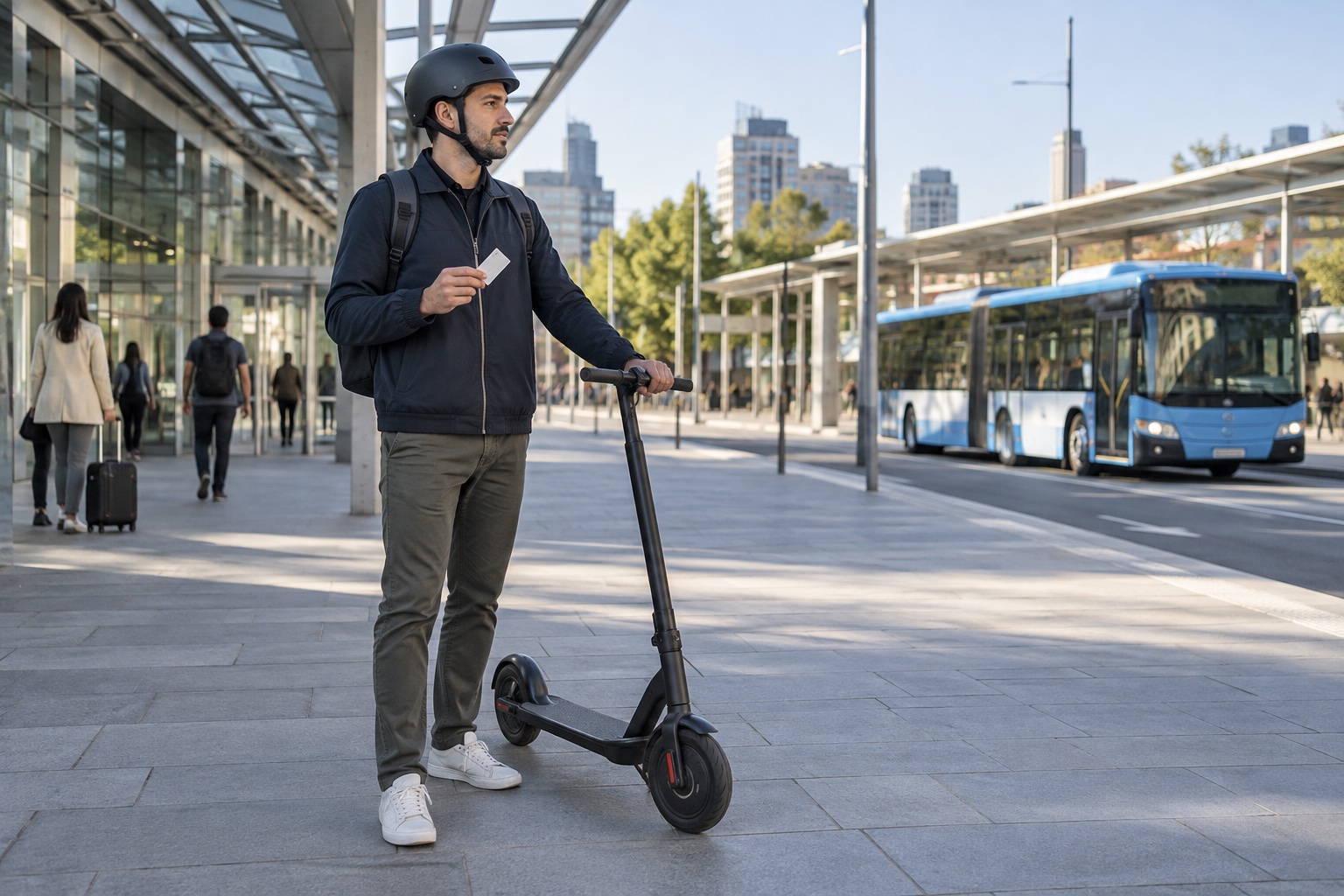

Yes, 15 mph is fast enough for many short scooter trips when your route permits it. You step off a train with two miles left before work; walking eats into your morning, while a scooter bought only for top speed may be harder to carry. A 15 mph electric scooter can cover that last stretch without turning your commute into a race. Test the door-to-door trip, not the number on the box.
1. What Does a 15 MPH Electric Scooter Feel Like?
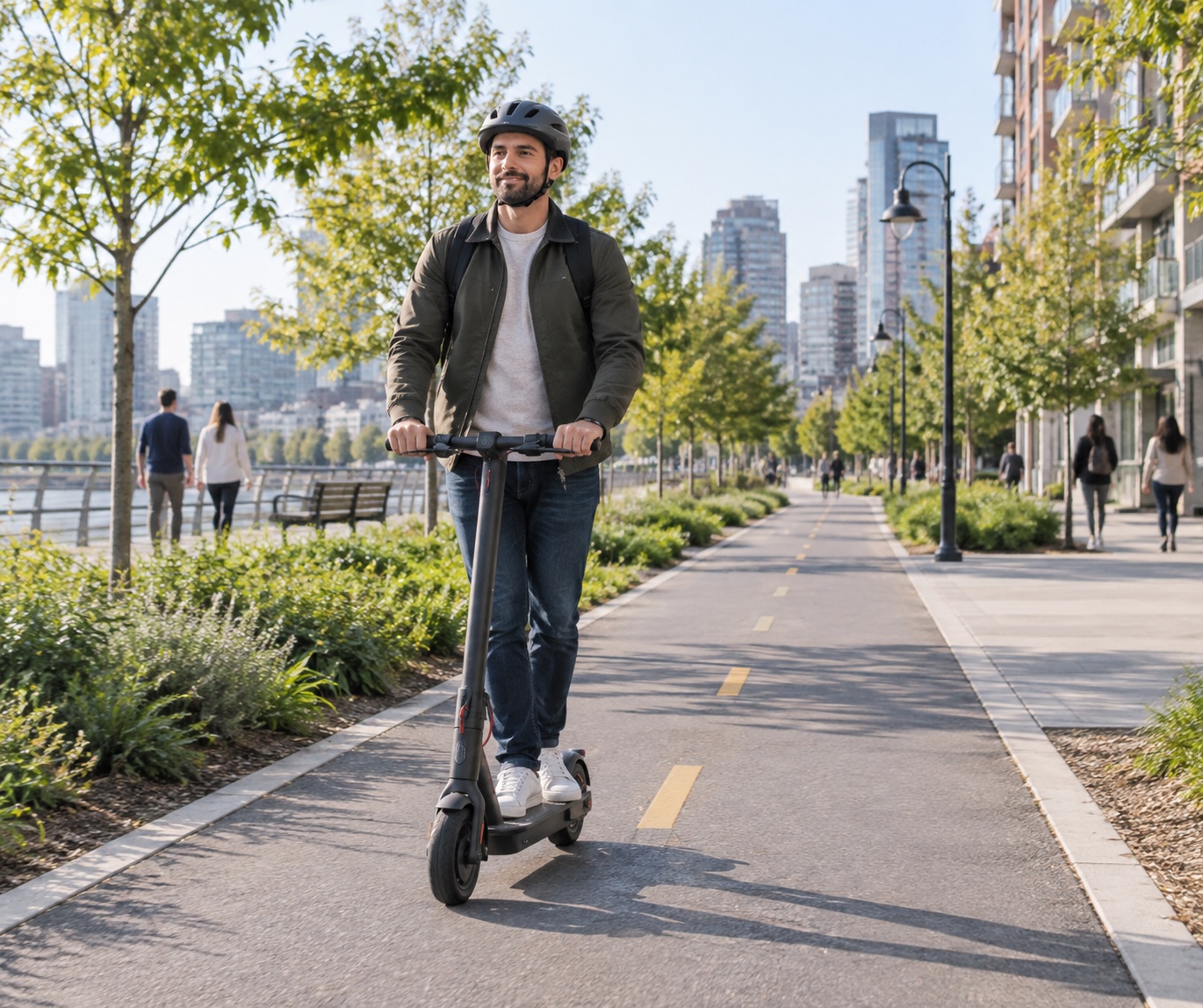
A 15 mph electric scooter feels brisk on smooth open pavement and noticeably faster in a narrow or busy space. The figure is a rated top speed, about 24 km/h, rather than the pace you should hold everywhere.
Why can the same speed feel different?
Think about the path beneath you: a smooth, open lane gives you time to see a turn, while rough pavement demands earlier braking. Standing close to the ground can make speed feel more immediate than it does in a car. Try a quiet, permitted route before deciding that the scooter feels either timid or quick.
- Keep both hands on the bars and look well ahead.
- Slow for uneven pavement, blind corners, and other people.
- Get familiar with the throttle and brakes before using full speed.
What does the top-speed number leave out?
It says nothing about acceleration, braking, or stability on your route. Two scooters with the same stated maximum can behave differently as the battery drains or the road rises.
| Condition | How 15 mph may feel |
|---|---|
| Open, smooth path | Brisk but manageable for a prepared rider |
| Crowded or rough space | Too quick for the available stopping room |
Key Takeaway: Treat 15 mph as available speed, then choose your actual pace from the path in front of you.
2. How Long Does 15 MPH Take for a Real Trip?
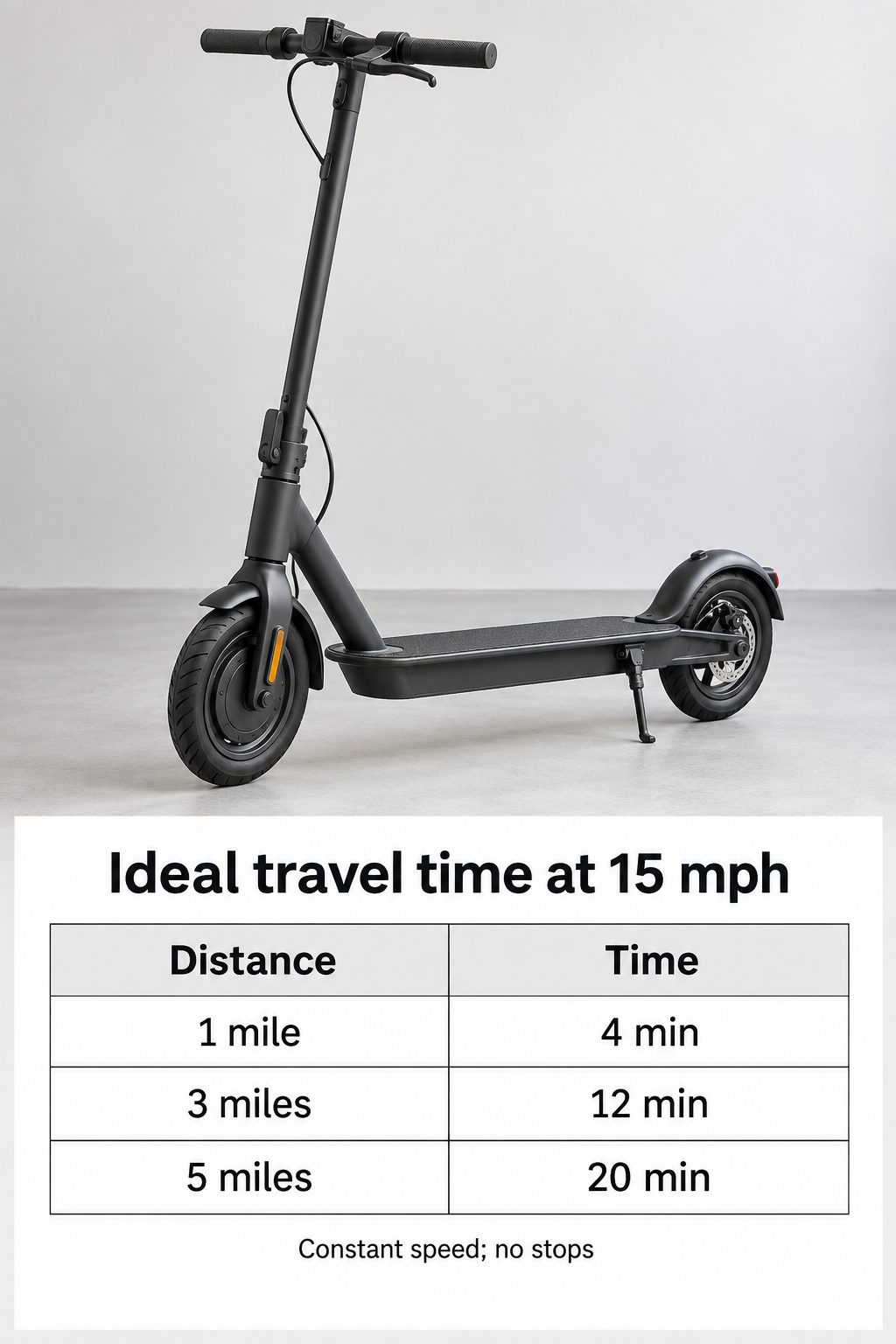
At a constant top speed, a 15 mph electric scooter covers one mile in four minutes, three miles in twelve, and five miles in twenty. Those are moving-time calculations, not promises for a city commute. But signals, turns, pedestrians, and the walk from parking to your destination add time.
How should you estimate door-to-door time?
Add the parts you cannot ride: include the elevator, lock-up, crossing waits, and any stretch where riding is restricted. A three-mile route with frequent stops can take much longer than twelve minutes even if you briefly reach 15 mph. Measure one normal trip rather than using a straight-line map distance.
- Mark the route you can legally ride.
- Add time for traffic lights and walking connections.
- Allow extra time for hills or poor surfaces.
How much time does the headline speed save?
Compare equal distances under equal conditions. At a constant 10 mph, three miles takes eighteen minutes; at 15 mph, it takes twelve. The six-minute difference shrinks or grows with stops, so a better route can matter as much as a faster scooter.
| Distance | At constant 10 mph | At constant 15 mph |
|---|---|---|
| 1 mile | 6 minutes | 4 minutes |
| 3 miles | 18 minutes | 12 minutes |
| 5 miles | 30 minutes | 20 minutes |
Key Takeaway: Use these figures as a moving-time baseline, then time your actual route before buying for speed alone.
3. Is 15 MPH Enough for a Daily Commute?
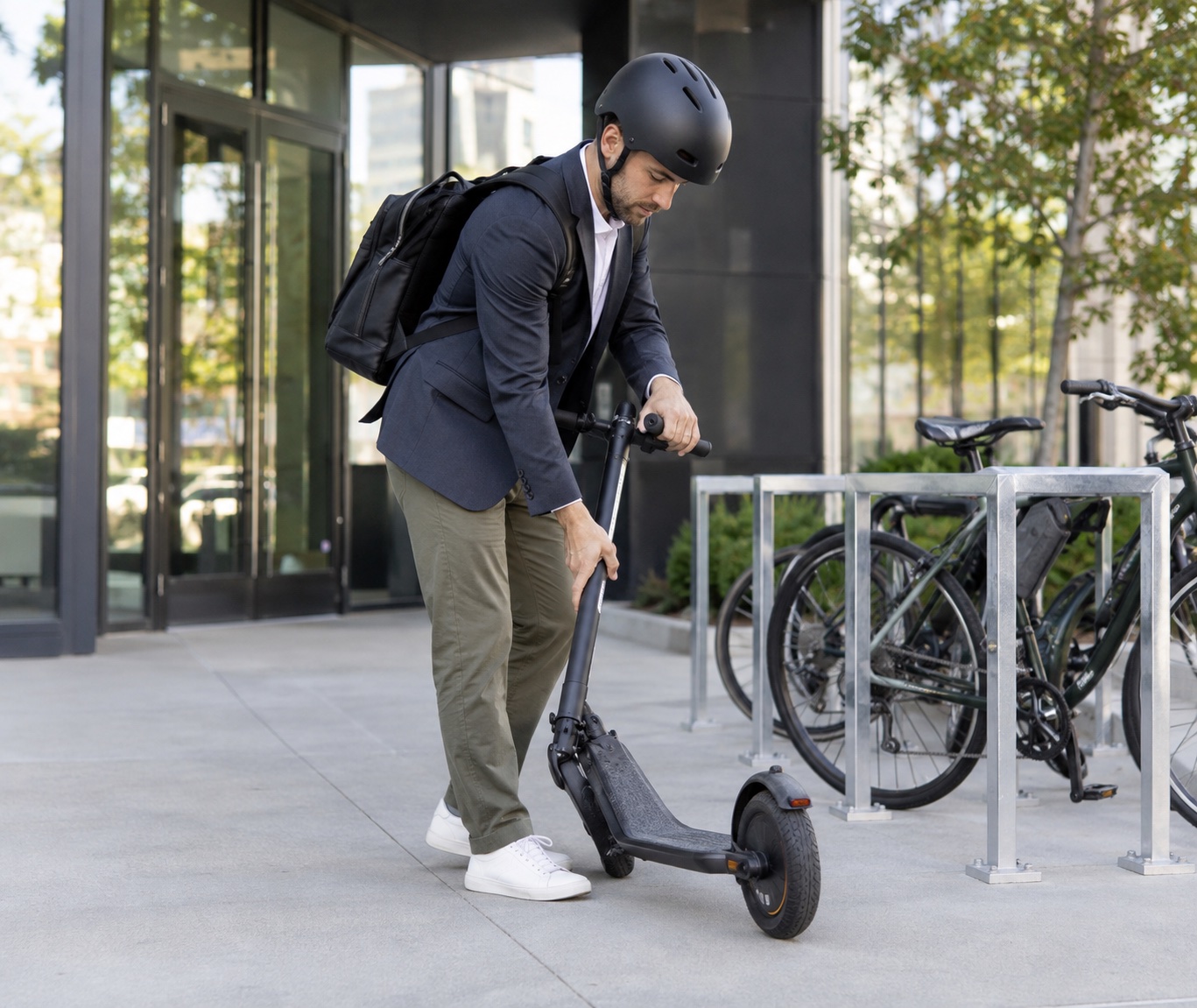
Yes, a 15 mph electric scooter is enough for many short urban commutes if its range, carrying weight, and local rules fit the trip. A quick ride loses value when you cannot bring the scooter onto transit or charge it reliably.
Which commute suits this speed?
Start at your front door: a station-to-office connection may benefit more from a compact scooter than from a higher top speed. If your route has many signals, you will spend little time at 15 mph.
- Record your round-trip distance, not only the morning leg.
- Check transit and workplace storage rules.
- Leave range margin for hills, wind, and extra stops.
When should range take priority?
Range matters more when you cannot recharge before riding home. Dynamic Scooter Model B lists up to 12 miles of range, but the stated maximum can change with load, terrain, and riding conditions. If your planned round trip approaches a model’s rated range, compare a larger battery option or a different route.
| Commute pattern | What to check before top speed |
|---|---|
| Short trip with transit | Folded size and carry weight |
| Long round trip without charging | Usable range and comfort |
Key Takeaway: Choose 15 mph for a commute only after the scooter passes your distance, charging, and carrying tests.
4. Can You Ride Safely at 15 MPH?

Yes, you can use a 15 mph electric scooter responsibly when you match your pace to the path, wear a helmet, and leave room to stop. Fifteen mph is too fast for some crowded or uneven spaces. Local rules may set a lower limit or restrict where you can ride.
What should you check before moving?
Before you roll: inspect the brakes, tires, lights, throttle, and handlebar connection. The U.S. Consumer Product Safety Commission recommends a helmet, a pre-ride check, and slowing for obstacles.
- Wear a properly fitted helmet and keep both hands on the bars.
- Test the brakes at low speed before joining traffic.
- Slow near crossings, driveways, and people walking.
Is the speed legal on every route?
No single rule covers every city, state, province, path, or road. Check posted limits and current local regulations before you ride, then follow the lower limit where one applies. A scooter’s capability does not grant permission to use its top speed.
| Situation | Safer response |
|---|---|
| Clear permitted route | Ride within the posted limit and your sight line |
| Crowded or damaged path | Slow down or walk the scooter |
Key Takeaway: Your stopping room and local rules set the riding speed; the motor’s maximum does not.
5. How Does 15 MPH Compare With Other Scooter Speeds?

A 15 mph electric scooter sits between 10 mph and 20 mph examples in a simple time comparison. A faster model may be larger, heavier, or better suited to a different route, so compare more than the speed badge.
What changes over three miles?
Keep the distance equal: at a constant pace, three miles takes eighteen minutes at 10 mph, twelve at 15 mph, and nine at 20 mph. Yet those numbers exclude acceleration, stops, and speed restrictions. If you rarely have an open stretch, the theoretical saving from 20 mph may not show up in your commute.
- Compare travel time on the same route.
- Check scooter weight and folded size alongside speed.
- Review local rules before valuing a higher maximum.
When is a faster model worth considering?
Longer open routes, heavier loads, or steeper terrain may justify looking beyond compact commuter models. For example, a larger performance scooter may answer those needs, but its size and running costs deserve a separate check. Do not buy extra speed for a path where you cannot use it.
| Constant pace | Ideal time for 3 miles | What to weigh |
|---|---|---|
| 10 mph | 18 minutes | Slower travel on open routes |
| 15 mph | 12 minutes | Balance of pace and portability |
| 20 mph | 9 minutes | Extra speed may go unused |
Key Takeaway: Compare the minutes you can actually save with the weight, cost, and rules that come with the scooter.
6. Why Might You Not Reach the Rated 15 MPH?
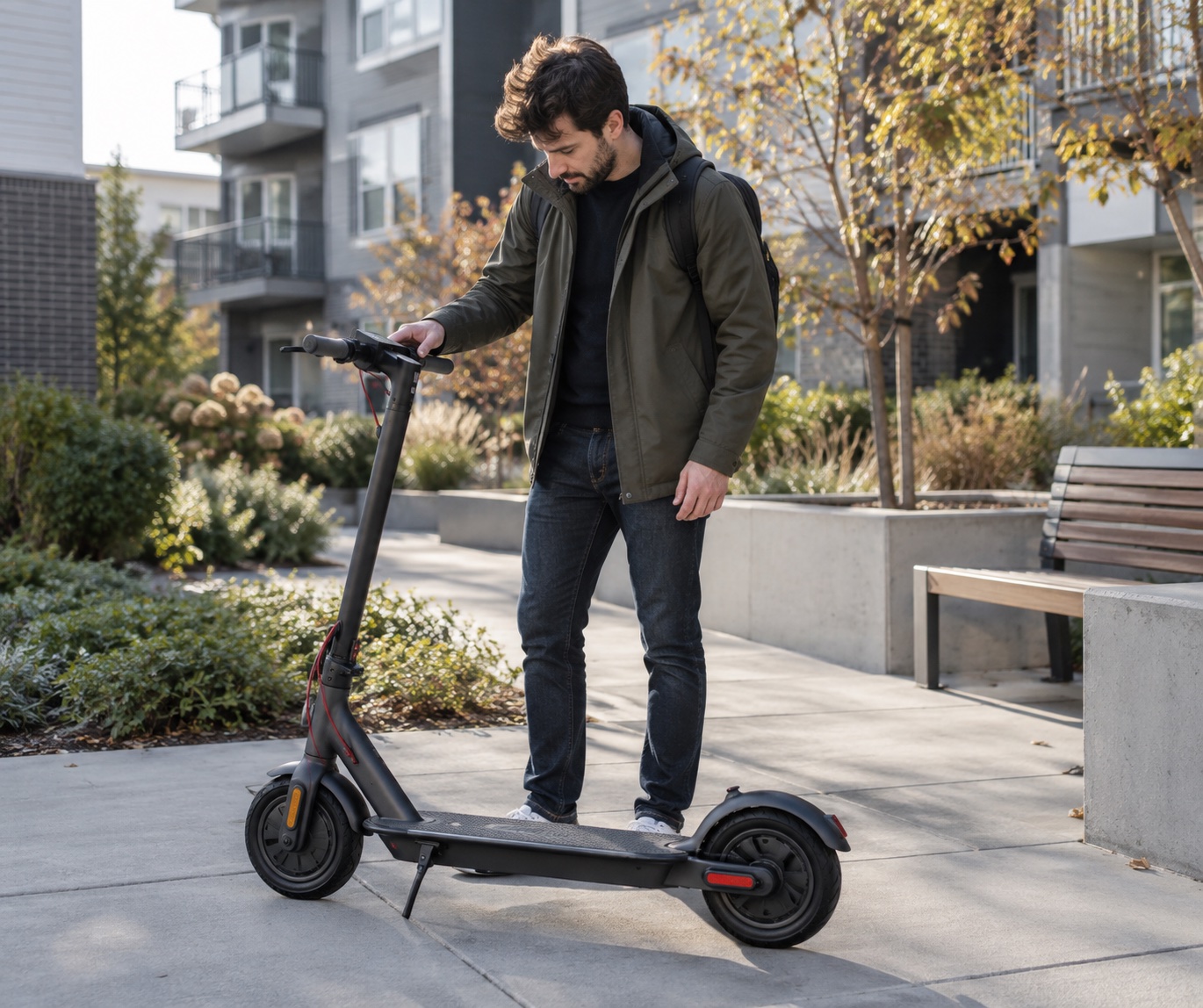
A 15 mph electric scooter may run below its stated maximum on hills, into wind, or with a heavier load. Tire condition, battery charge, and control settings can matter too.
What should you check before calling support?
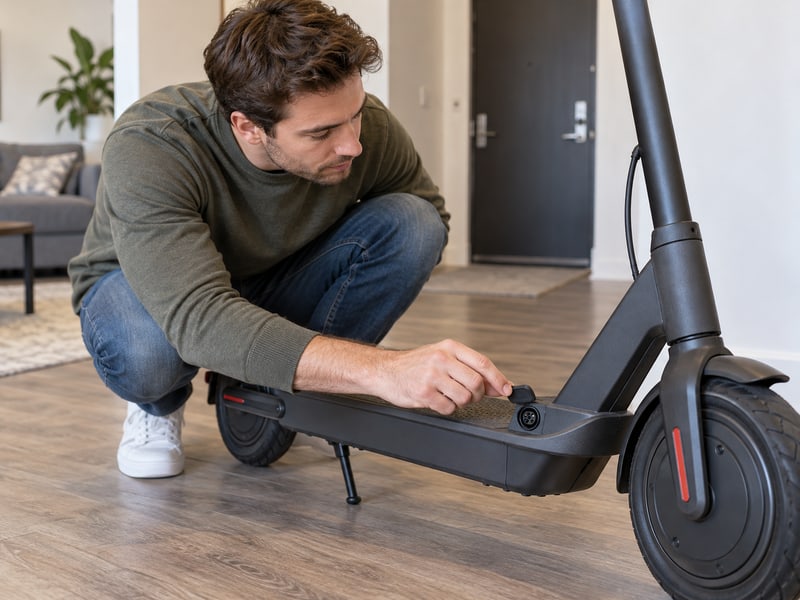
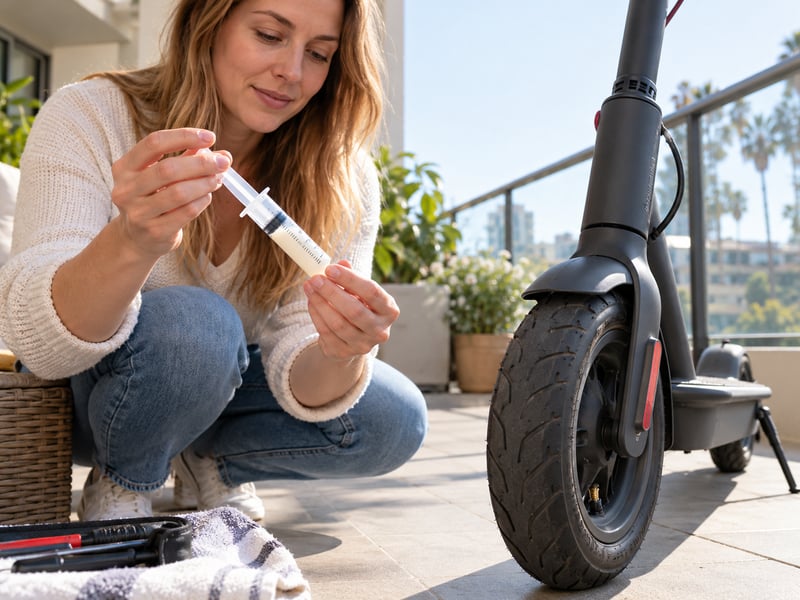
Check the ordinary causes: look at the selected ride mode, tire pressure if the tires are pneumatic, and the charge level. Compare what you see with the model’s manual before assuming the motor has failed. Stop riding if you notice a brake dragging, damaged tire, or abnormal heat.
- Confirm the scooter is in the intended riding mode.
- Inspect tires and brakes with the scooter powered off.
- Note the terrain, wind, and load when the slowdown occurs.
When should you ask for service?
Ask for model-specific support if the loss of speed appears suddenly on a familiar flat route or comes with warning lights. Record the charge level and symptoms; that helps a technician narrow the cause. Do not bypass speed controls or open electrical parts to chase the published maximum.
| Observation | Sensible next step |
|---|---|
| Slower only uphill or in wind | Compare the route with normal conditions |
| Sudden slowdown on level ground | Check basics, then contact support |
Key Takeaway: Look for a repeatable change on the same route before deciding the scooter is underperforming.
7. How Do Hills and Rider Weight Affect 15 MPH?
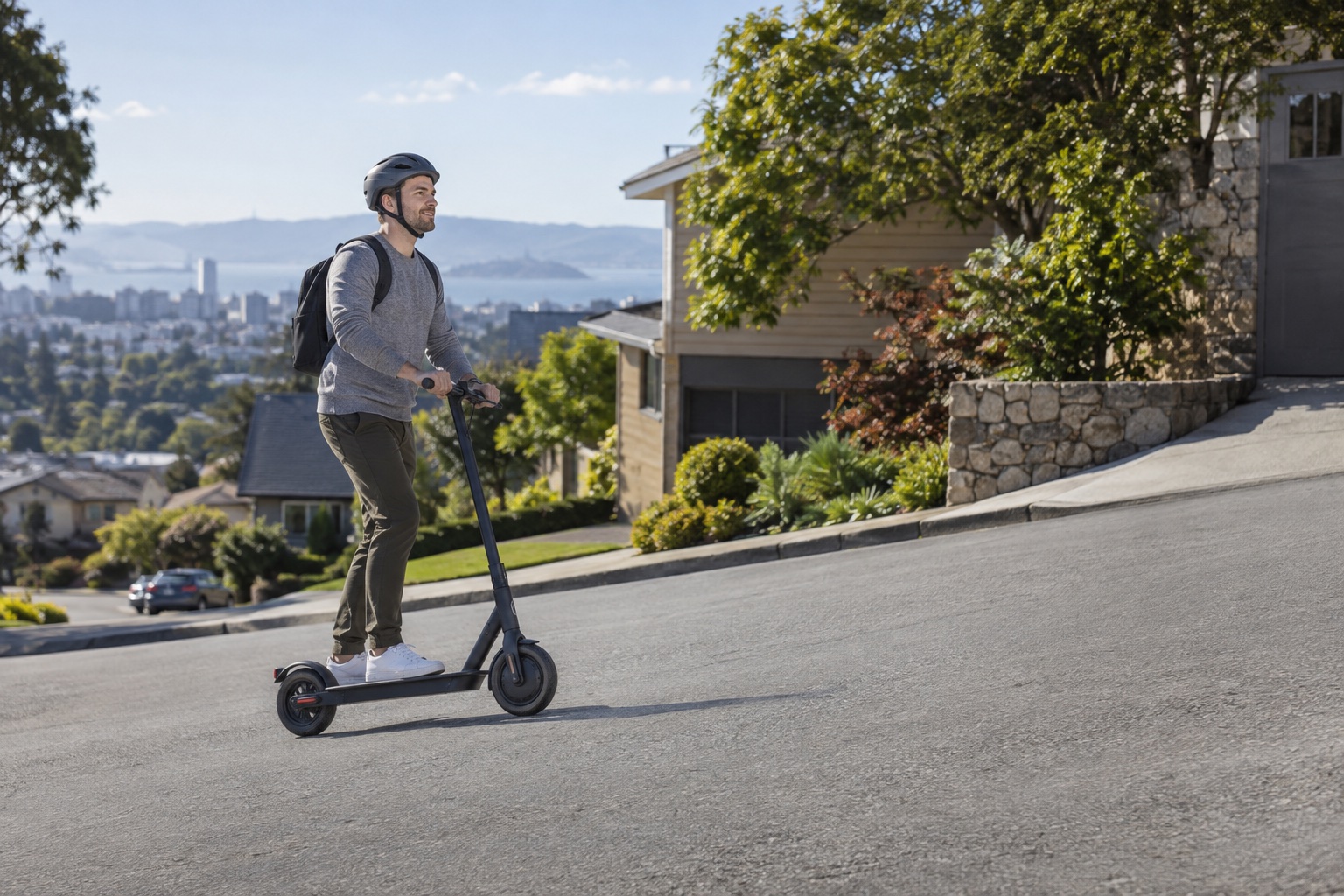
Hills and rider weight can slow a 15 mph electric scooter and reduce the distance available from a charge. Climbing asks the motor for more work, while the total load includes your bag and other gear. So check a scooter’s payload and climbing limits before you buy.
What should you map before buying?
Put the hill on your route map: a short steep climb can matter more than several level blocks. Compare the scooter’s stated climbing ability and payload with your route and total carried weight. Dynamic Scooter Model B lists a 220 lb payload and a 10° climbing angle, but your real pace will depend on conditions.
- Include your bag in the load calculation.
- Mark the steepest climb on the return trip.
- Leave range margin for repeated uphill riding.
What if the route feels too demanding?
Choose a model rated for the load and terrain rather than pushing a compact commuter scooter beyond its limits. On rough or steep sections, slowing or walking may be the more sensible choice.
| Route feature | What it changes |
|---|---|
| More load | Acceleration and climbing demand |
| Repeated hills | Energy use and return-trip margin |
Key Takeaway: Match the scooter’s rated load and climbing ability to your hardest regular trip, not your easiest one.
8. When Is 15 MPH Too Fast or Too Slow?

A 15 mph electric scooter is too quick for some busy shared spaces and may feel slow on a long, open route where a faster scooter is permitted. But posted limits still apply.
Where should you slow below 15 mph?
Read the space ahead: reduce speed near people walking, doorways, driveways, and rough patches. On a narrow path, your room to avoid someone can disappear before you reach the scooter’s maximum. Yield where required and walk the scooter if riding would crowd others.
- Ease off before blind corners and crossings.
- Give pedestrians clear room and a predictable line.
- Follow any lower posted limit.
When might it feel limiting?
A longer route with few stops can make a higher speed attractive, but only if the route allows it and you can control the scooter comfortably. Still, extra speed will not fix short range, poor brakes, or a heavy frame you dislike carrying.
| Route | Better response |
|---|---|
| Busy shared path | Slow well below the scooter’s maximum |
| Long permitted open stretch | Compare speed with range and comfort |
Key Takeaway: Let the busiest part of your route set your safety plan and the longest part set your range plan.
9. What Matters More Than Top Speed When Buying?

For many buyers, brakes, range, portability, and support matter more than a 15 mph electric scooter’s top speed. You will notice a weak brake or awkward fold every day, even if the speed figure looks right.
Which specifications deserve your attention?
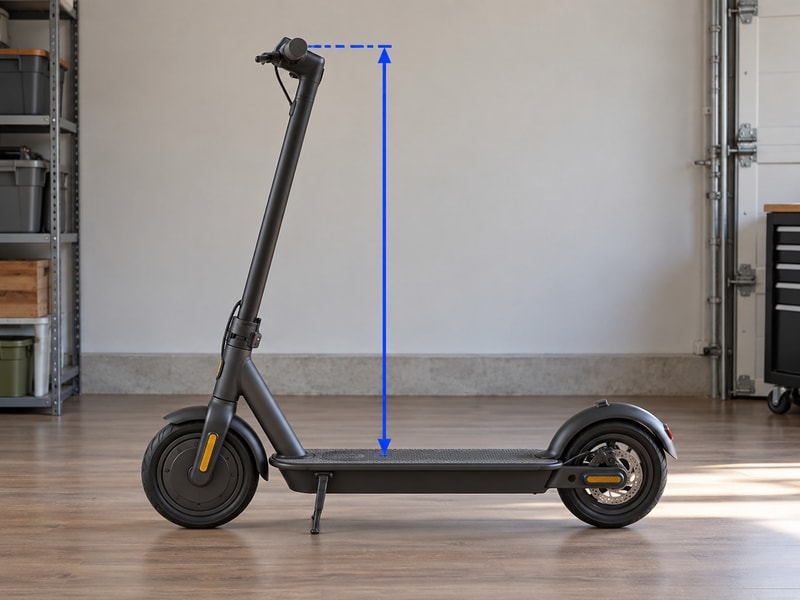
Look beyond the display: check the brake setup, tire type, payload, folded dimensions, and stated range. Our scooter specifications guide can help you read those claims against your own route.
- Try the fold and lift the scooter yourself.
- Check the brake feel at a low, safe speed.
- Confirm charger, parts, and warranty support.
What should a test ride tell you?
It should show how steadily the scooter starts, steers, and stops at a pace you would actually use. Check for rattles, loose controls, or an uncomfortable stance. If a test ride is unavailable, read the manual and ask the seller specific questions about your route.
| Buying check | Why it matters daily |
|---|---|
| Brakes and tires | Control on imperfect pavement |
| Range and folded weight | Fit for the whole commute |
Key Takeaway: Buy the scooter you can stop, carry, and support confidently; top speed is one specification among several.
10. Is a 15 MPH Electric Scooter Right for You?
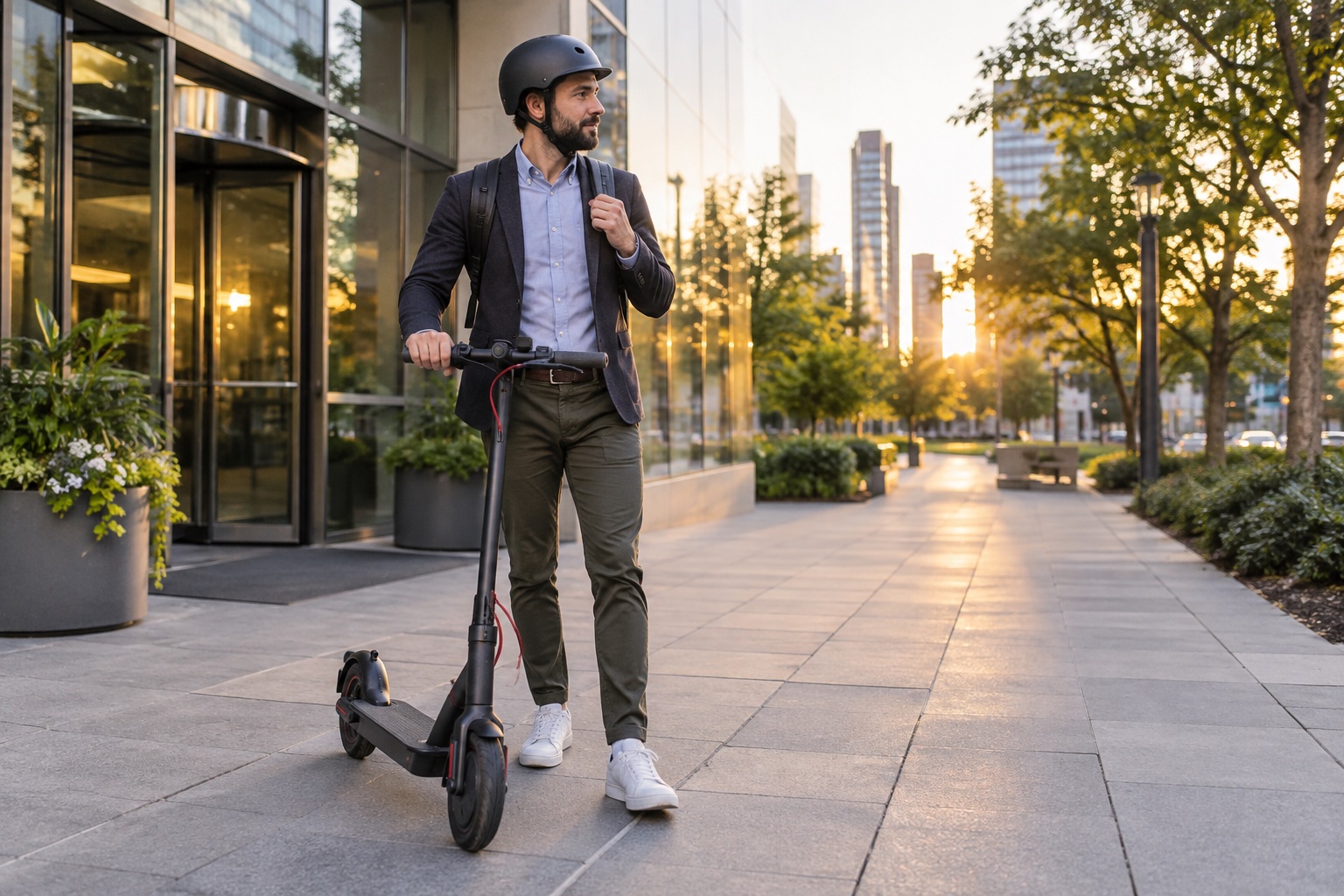
A 15 mph electric scooter is right for you if its permitted speed, real-world range, and carrying size fit your usual short trips. But it may be a poor match if you need sustained speed on long open routes or cannot ride where the scooter is allowed.
How can you make the decision?
Use your real commute: map the distance, hills, crossings, storage, and charging options. Then compare the scooter’s rated speed and range with a comfortable margin for the return leg. If you can, test how the scooter stops and folds before ordering.
- Is 15 mph permitted where you plan to ride?
- Can the scooter cover the full round trip with margin?
- Can you carry and store it without a struggle?
What should you do next?
The route-time math, speed comparisons, and safety checks give you a practical way to choose. Dynamic Scooter builds compact models for the daily gap between transit, work, and home; we can help you match one to your distance and terrain.
| If your route is… | Your next step |
|---|---|
| Short with frequent stops | Prioritize control and portability |
| Long with hills | Check range, load, and climbing ability |
Key Takeaway: You now know what 15 mph means for travel time, safety, and real-world performance; contact us today with your route so we can help you choose a scooter that fits it.
Frequently Asked Questions
Q1. Can I commute three miles on a 15 mph scooter? Yes, if the route permits riding and the scooter has enough range for your full trip. Twelve minutes is the ideal moving time at a constant 15 mph; allow more for stops.
Q2. What’s the best speed on a crowded shared path? Slower than 15 mph, and sometimes walking is best. Follow posted limits, yield where required, and leave room to stop.
Q3. How do I know if I’ll actually reach 15 mph? Check the model’s stated conditions and ride it on a safe, permitted route. Hills, load, wind, and settings can lower your actual speed.
Q4. Can I ride a 15 mph scooter uphill? It depends on the model’s climbing rating, your load, and the grade. Stay within the published limits and plan extra battery margin.
Q5. How do I know if 15 mph is allowed on my route? Check current local rules and signs for each road or path you plan to use. Scooter limits and permitted riding areas vary by location.