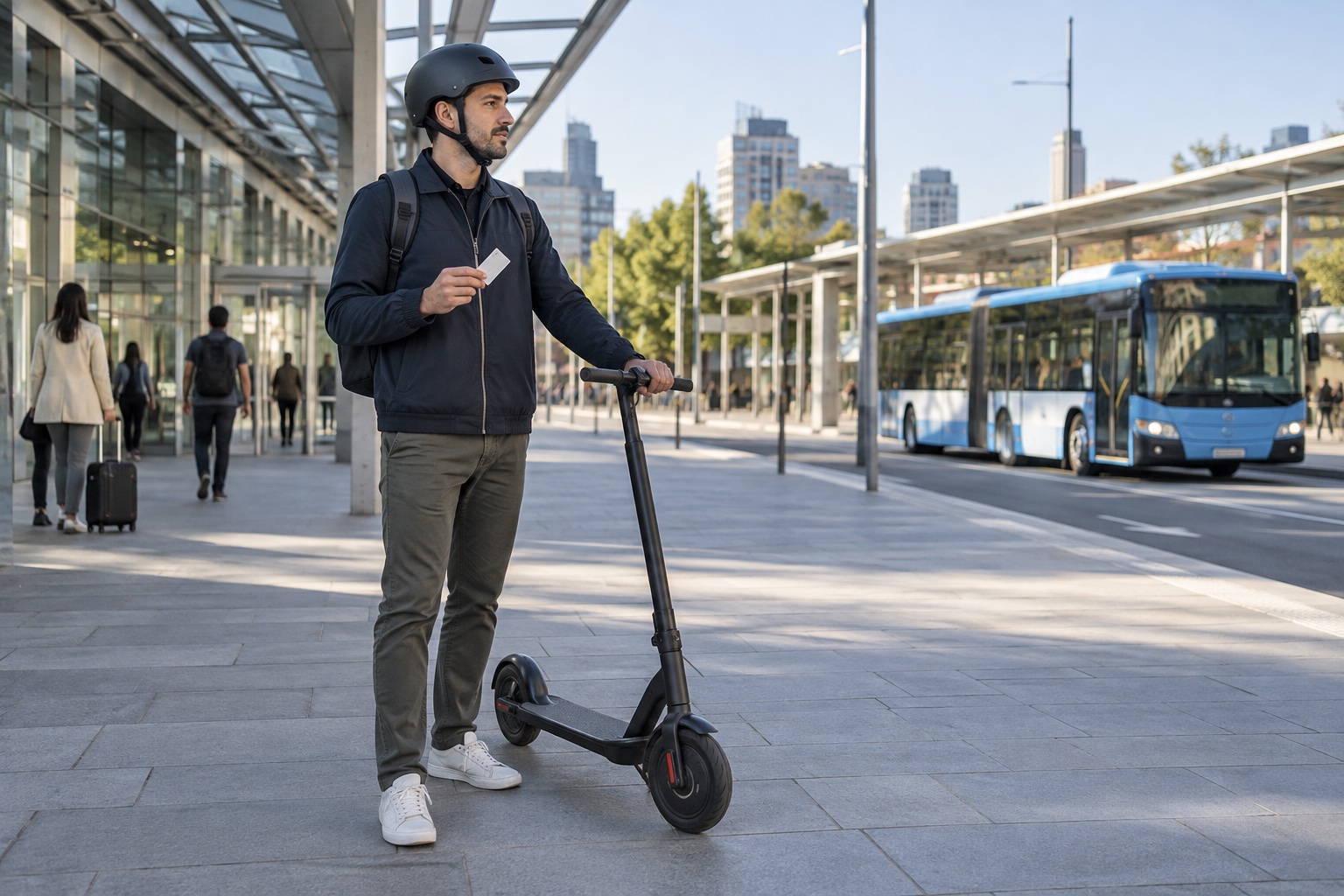

Fold and lock your scooter, lift it close to your body, and climb only when you can see each step and stay balanced. You reach your apartment after a wet commute, then face a narrow staircase with a scooter that swings when you pick it up. One slip could hurt you or damage the scooter. Carrying an electric scooter upstairs becomes more manageable when you check its weight and folding lock, choose a secure grip, and take another route when the stairs are unsafe.
1. Why is carrying an electric scooter upstairs difficult?
For many riders, carrying an electric scooter upstairs is difficult because the long deck and uneven weight can pull the scooter away from your body. A tight turn or a dangling handlebar makes that problem worse, even when the listed weight sounds manageable.
Why does the scooter feel heavier on stairs?
Try a level-ground lift: pick up the folded scooter for a few seconds before approaching the staircase. Notice whether one end dips and whether you can hold the frame without squeezing cables or controls.
- Check whether you can see past the scooter.
- Find a solid grip that keeps the deck from swinging.
- Set it down if your hands or back strain during the trial.
Which stair features make a carry harder?
Narrow treads, sharp turns, poor lighting, and wet floors leave less room for a stable step. Treat the route as part of the load.
| Stair condition | What it changes |
|---|---|
| Narrow landing | Less room to turn without swinging the deck |
| Wet steps | Less grip underfoot |
| Poor lighting | Harder to judge each tread |
Key Takeaway: Even a comfortable lift can be unsafe on a poor route; inspect the whole staircase before carrying it.
2. What should you check before lifting your scooter?
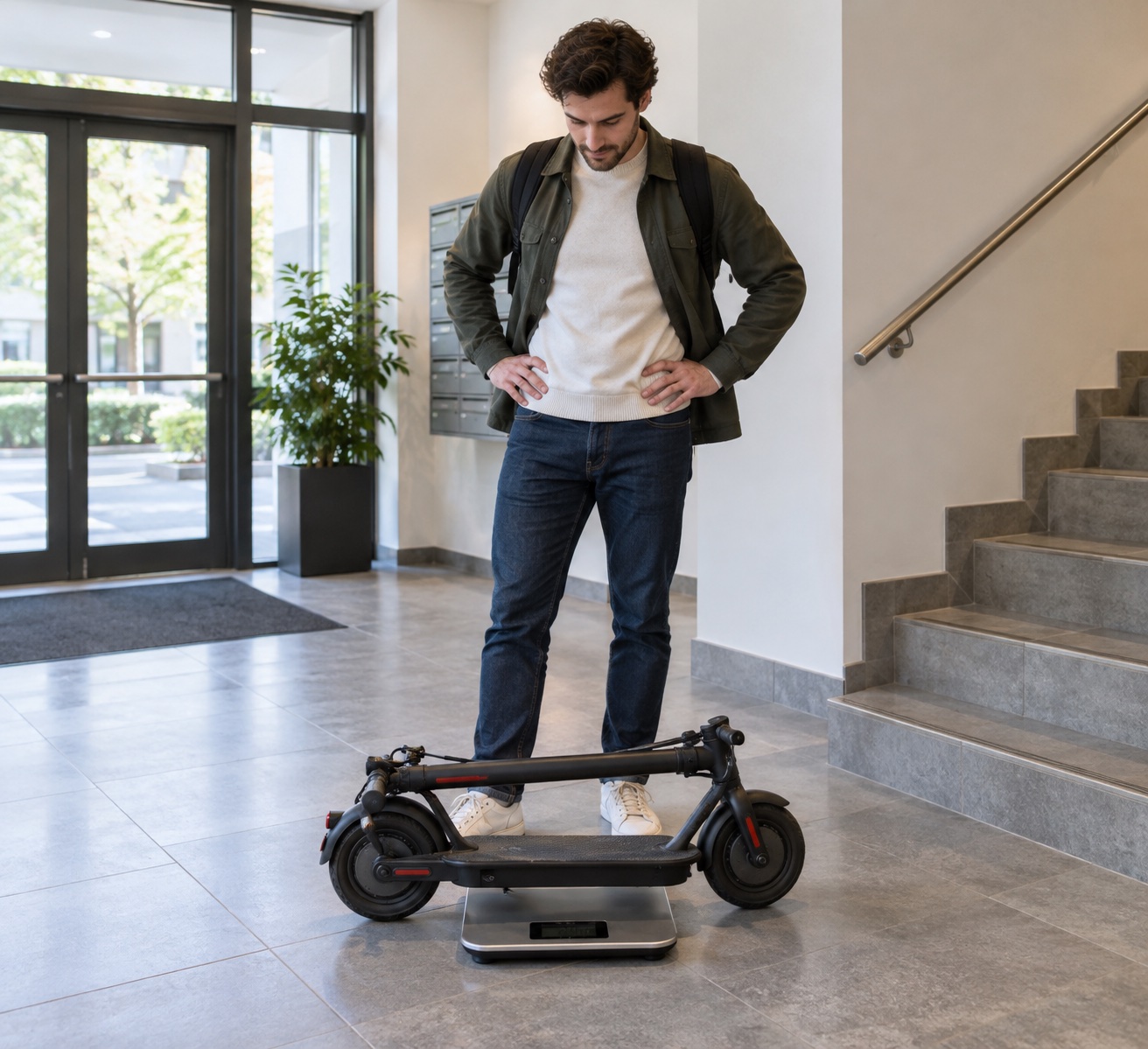
Before carrying an electric scooter upstairs, check its actual weight, folding lock, intended grip points, and the path to your destination. If any of those is uncertain, pause on level ground and work it out before the climb.
How can you verify the real carry weight?
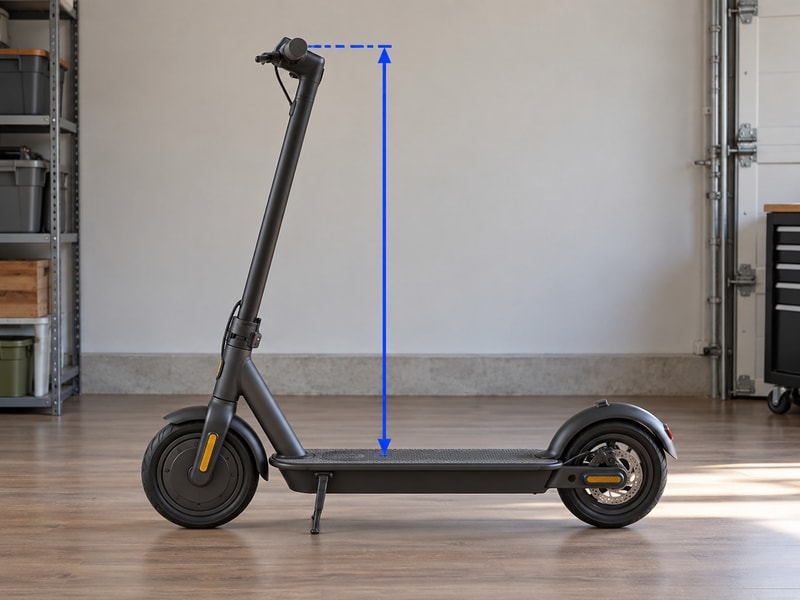
Look beyond the label: a listed weight may describe a different configuration from the one in your hands. Include the battery, bag, and accessories in the weight you test. The Dynamic Scooter model range lists Model B at 10 kg, but your stairs and grip still decide whether that weight works for you.
- Read the exact model’s current specifications.
- Practice lifting it from the floor without twisting.
What should pass a pre-carry check?
Turn the scooter off and follow its manual for folding. Confirm the latch is engaged, the handlebars cannot swing, and loose items are removed. Walk the empty route to find resting spots.
| Check | Ready to climb when… |
|---|---|
| Folding lock | Stem stays secured during a gentle test |
| Grip | Hands hold solid structure, clear of wires |
| Route | Steps are dry, lit, and unobstructed |
Key Takeaway: A short inspection keeps you from adjusting a loose scooter halfway up; confirm the load and route before lifting.
3. How do you use the fold-and-lift method?
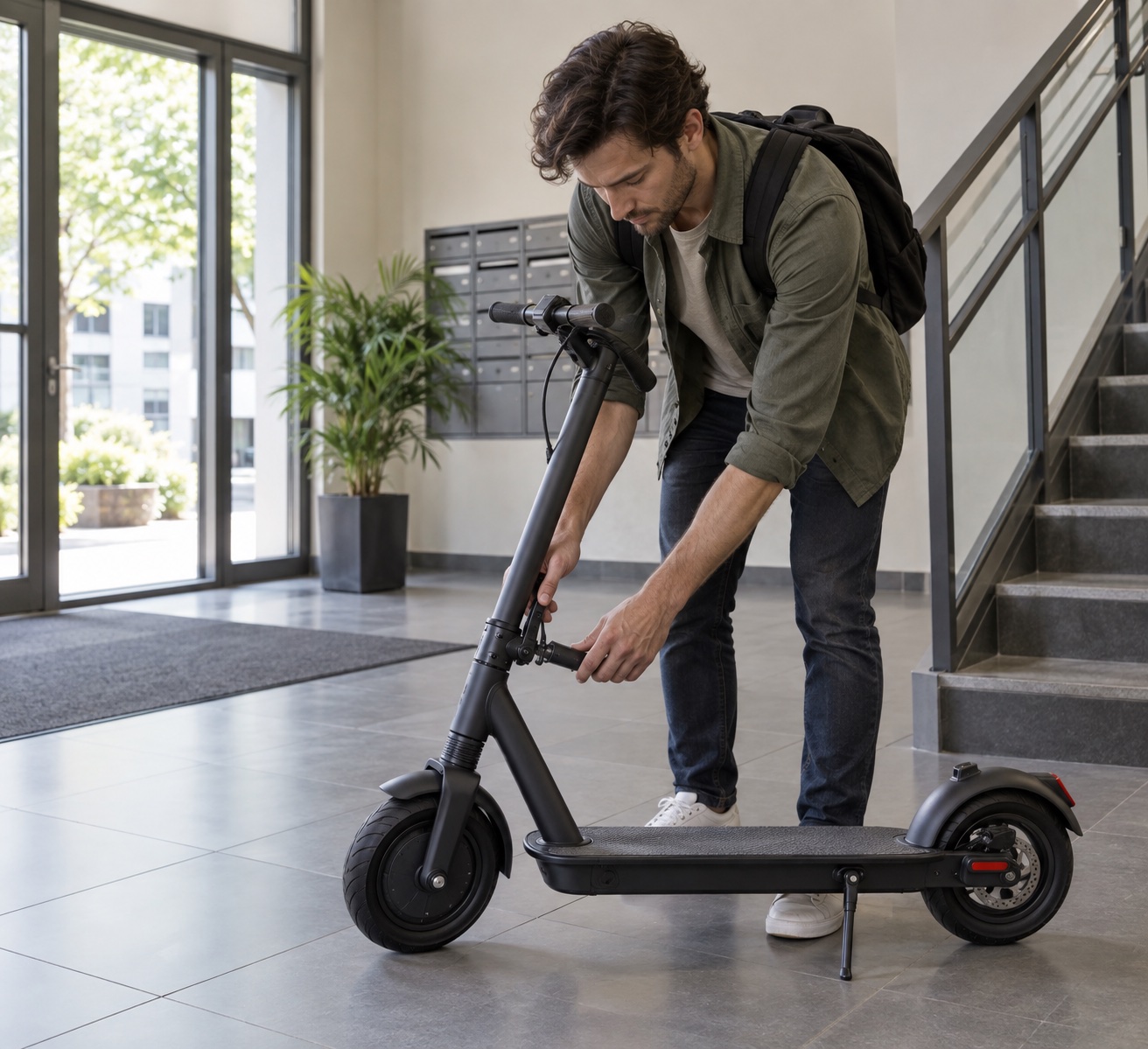
The fold-and-lift method for carrying an electric scooter upstairs starts by switching the scooter off, folding it as instructed, and locking the stem. Lift from sturdy points named in your manual and keep the scooter close enough that it does not swing.
Where should your hands go?
Find the balance point: on many folded scooters, one hand supports the deck while the other steadies a solid part of the frame. Do not grab a cable, throttle, loose handlebar, or folding latch as a carry handle.
- Keep your elbows near your sides.
- Lift smoothly with your hips and knees.
- Put the scooter down if the lock shifts or clicks open.
How do you move up the steps?
Face the stairs and keep each tread in view. Move one step at a time, using the rail when your carry setup allows it. Reset your grip at a landing, never mid-step.
| Part of the move | Safer habit |
|---|---|
| Lift | Bring the scooter close before standing |
| Climb | Watch each tread and avoid rushing |
| Rest | Set it down fully on a clear landing |
Key Takeaway: A repeatable lift keeps your sight and balance clear; secure the fold and use structural grip points.
4. When does a two-handed carry make sense?
A two-handed carry for carrying an electric scooter upstairs makes sense only when the scooter stays close, you can see the treads, and the stair route remains clear. Both hands on the scooter can steady a heavy deck, but that also leaves no hand for the rail.
When should you use both hands?
Check your sight line: stand at the first step with the scooter held as you plan to carry it. If the deck blocks your feet or forces you sideways, use an elevator or ask another adult for help instead. A steady grip cannot compensate for a blocked view.
- Hold the deck and a solid frame point.
- Keep the load below your line of sight.
What if the handlebar shifts during the lift?
Put the scooter down on a landing and inspect the folding hardware. A loose bar can change the scooter’s balance without warning; the loose handlebar repair guide explains what to check before riding again. Never try to tighten a moving part while standing on a step.
| Sign | Better response |
|---|---|
| Clear view and steady load | Continue slowly if the route is safe |
| Swinging stem or blocked view | Stop and change method or route |
Key Takeaway: Control on level ground does not prove control on stairs; use both hands only when you can still see and balance.
5. Can a strap or shoulder carry help on stairs?
For carrying an electric scooter upstairs, a properly fitted strap or compatible bag can help you control the load and keep a hand free. Use only a carry accessory approved for your exact scooter and secure it to the points the maker specifies.
Is a dedicated bag worth considering?
Match the bag to the scooter: a loose bag can let the deck shift as you turn. The Model B backpack is described for carrying that model and its accessories; check its dimensions, load instructions, and closure before relying on it for stairs. Test the packed scooter on level ground and check your view.
- Close every fastener and contain loose parts.
- Keep the load snug against your back or side.
Should you sling the bare frame over a shoulder?
Avoid an improvised shoulder carry unless the manufacturer identifies a safe method for that model. A hard deck edge can press into your neck, and a folding joint may shift when the scooter hangs from an unapproved point. Use an elevator if a strap or bag cannot hold the scooter securely.
| Carry option | Check before stairs |
|---|---|
| Model-specific bag | Fit, closure, balance, and view |
| Approved strap | Rated attachment points and length |
| Bare shoulder carry | Maker’s explicit guidance |
Key Takeaway: A carry accessory helps only when it stays stable throughout the climb; test model compatibility before taking the stairs.
6. Which stair safety habits reduce the risk of a fall?
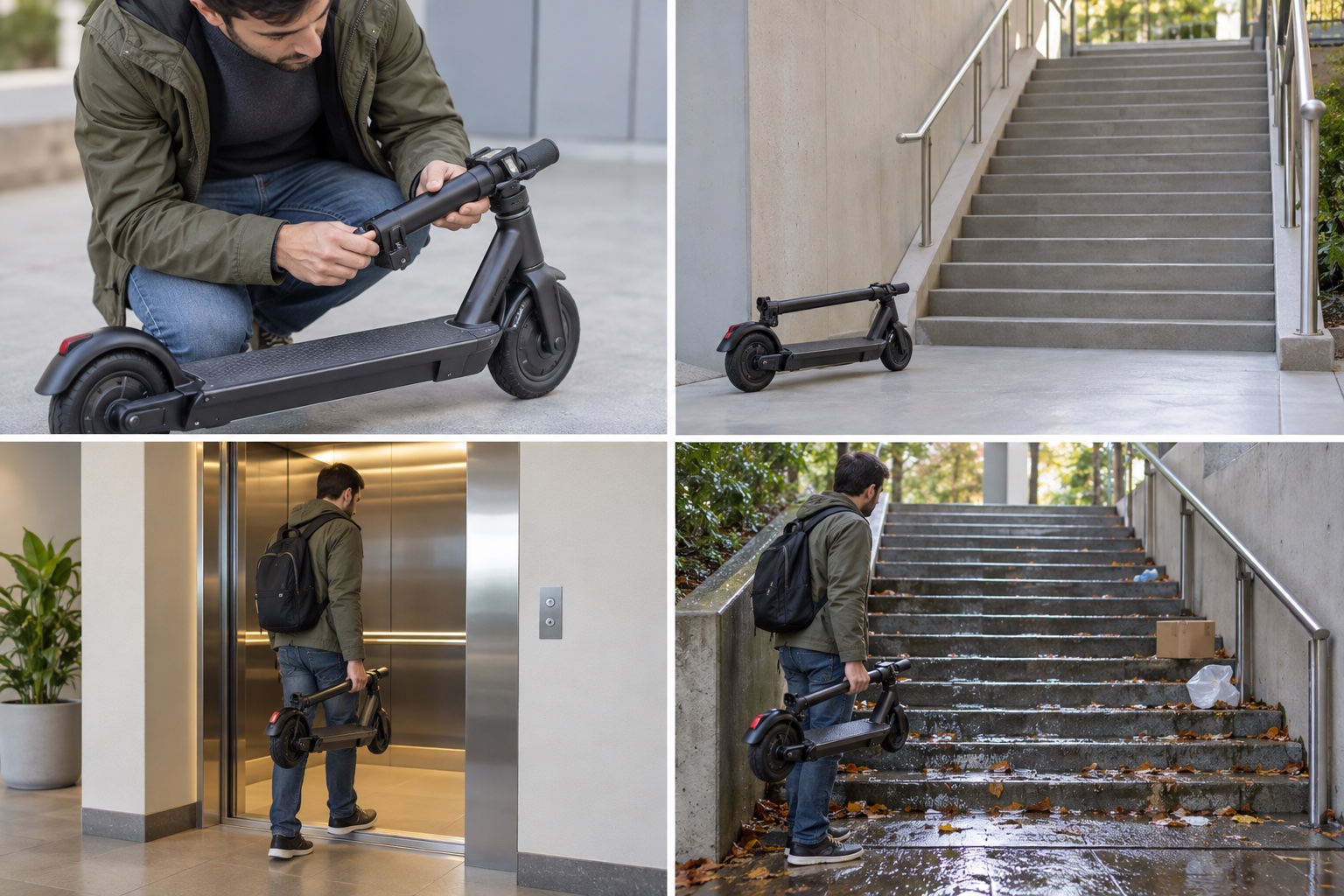
While carrying an electric scooter upstairs, reduce fall risk by keeping the steps dry and visible, wearing shoes with grip, and avoiding any hold that blocks your balance. If a rail is available, choose a carry method that lets you use it when possible.
What should you check at the bottom of the stairs?
Give the route one look: loose mats, water, poor lighting, and people coming down all change the climb. The Canadian Centre for Occupational Health and Safety advises planning the path and getting a secure grip before lifting a compact load.
- Dry soles and steps come before speed.
- Keep enough light to see each tread edge.
- Wait until the stairwell is clear.
When should you stop instead of climbing?
Stop if the scooter hides a step, swings, or strains your grip before you reach the next landing. Return to level ground and use an elevator.
| You see… | Choose… |
|---|---|
| Dry, clear stairs and stable grip | Slow carry, if comfortable |
| Wet or cluttered stairs | Elevator or later trip |
| Blocked view or slipping load | Put the scooter down |
Key Takeaway: Use the chart before each climb, and stop whenever footing, vision, or grip becomes uncertain.
7. What if your scooter is too heavy to carry?
If carrying an electric scooter upstairs feels too heavy or awkward, use an elevator, an approved accessible route, or help from another adult. Do not force a lift that you could barely manage on level ground.
Which alternatives actually remove the risky lift?
Change the route before the grip: a lift or ground-floor storage avoids a repeated stair carry altogether. Check scooter rules and elevator access at stations or offices before leaving home.
- Use the building elevator when scooters are permitted.
- Store the scooter at an approved lower level.
Can you use a ramp instead?
Use a ramp only if the building permits it and its design suits the scooter and location. A loose board on stairs can shift under wheels and create a worse hazard. For a permanent change, ask building management about an approved access solution.
| Alternative | Best fit |
|---|---|
| Elevator | Repeated daily trips between floors |
| Approved storage | When upper-floor access is difficult |
| Help from another adult | Occasional unavoidable move |
Key Takeaway: Fewer lifts often help more than a different grip; change the route if the carry feels marginal.
8. How do you prevent damage during a stair carry?
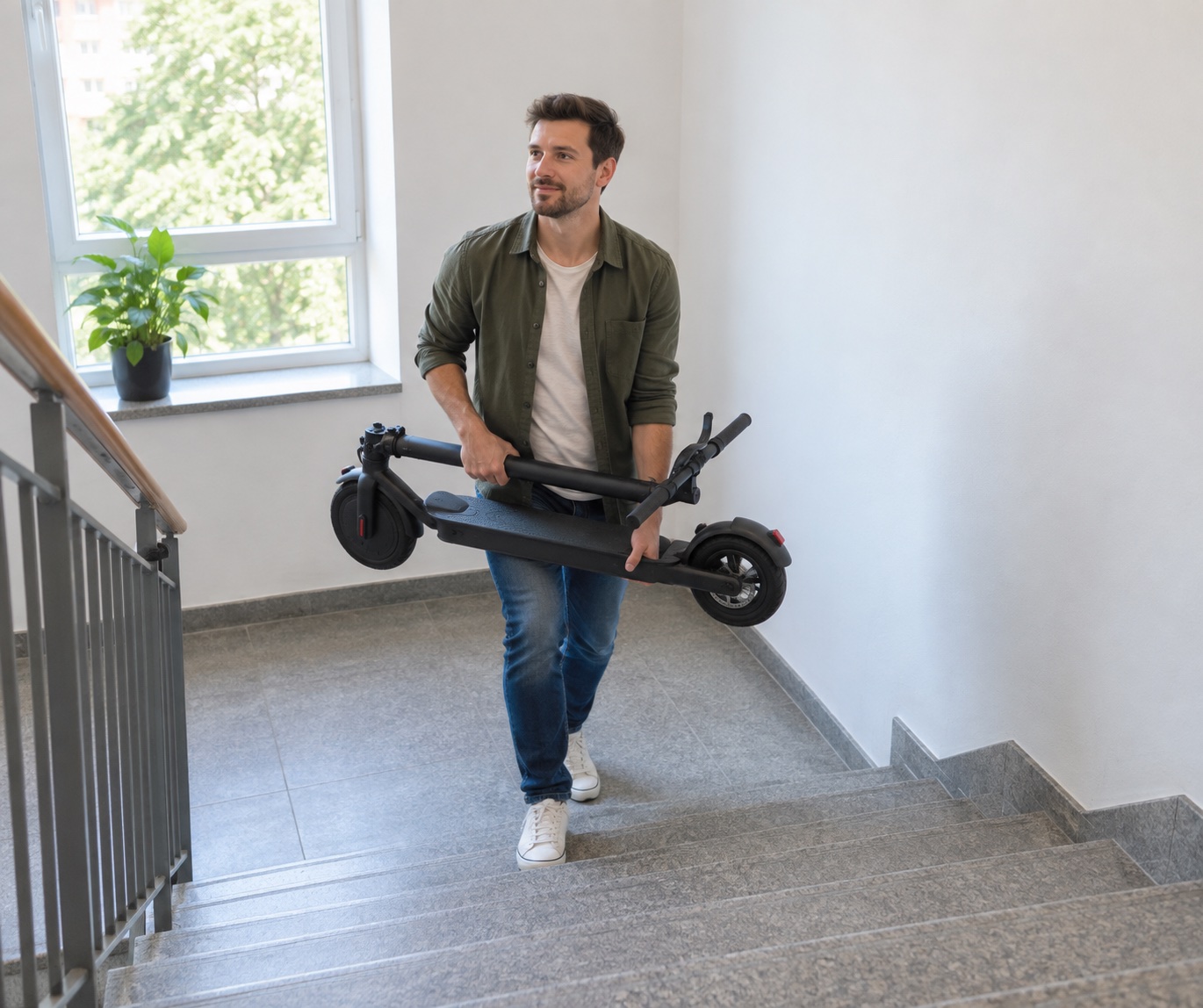
To prevent damage while carrying an electric scooter upstairs, secure the fold, contain loose parts, and keep wheels and handlebars clear of walls and people. The scooter should move as one compact load, without a swinging stem or trailing cable.
What usually gets bumped or pulled?
Watch the ends: wheels, brake levers, and the handlebar often reach farther than you expect on a turn. Leave clearance on each landing so nothing drags along paint or railings. Never lift by a cable or brake lever.
- Check both ends before turning.
- Keep loose accessories inside a bag or at home.
- Avoid resting the scooter against a doorway or stair rail.
How should you set it down on a landing?
Choose a level spot clear of foot traffic and lower the scooter under control. Keep fingers away from folding joints and check that the scooter cannot roll or tip before release.
| Risk | Small prevention step |
|---|---|
| Scraped wall | Turn only with visible clearance |
| Pinched cable | Keep the fold tidy and cables free |
| Tipping at a landing | Set down on level ground, clear of traffic |
Key Takeaway: A controlled set-down protects the scooter and stairwell; plan each turn and resting point before lifting.
9. What should you inspect after frequent stair carries?
After carrying an electric scooter upstairs regularly, inspect the folding latch, handlebar, brakes, deck, and battery case for movement or damage.
Which quick checks matter after a carry?
Start where your hands were: look for a latch that no longer closes cleanly, a bar that moves under a gentle check, or a cable that was pinched in the fold. Follow your model’s manual for any adjustment and keep water away from electrical parts.
- Confirm the stem and handlebar feel secure.
- Check that both brakes work before riding.
- Look for cracks, leaks, or unusual heat at the battery case.
When should you stop riding and ask for service?
Stop if the folding lock will not hold, a brake behaves differently, or the battery case is damaged. Do not open a sealed battery or ride a scooter with an uncertain latch. Record the problem and contact qualified support with the model details.
| Finding | Next action |
|---|---|
| Secure latch and normal brakes | Continue routine checks |
| Loose fold or changed braking | Stop riding and seek service |
| Battery case damage | Stop use and request qualified help |
Key Takeaway: Post-carry checks protect the next ride; stop for new looseness, brake changes, or battery damage.
10. How do you choose a scooter for a stair-heavy commute?
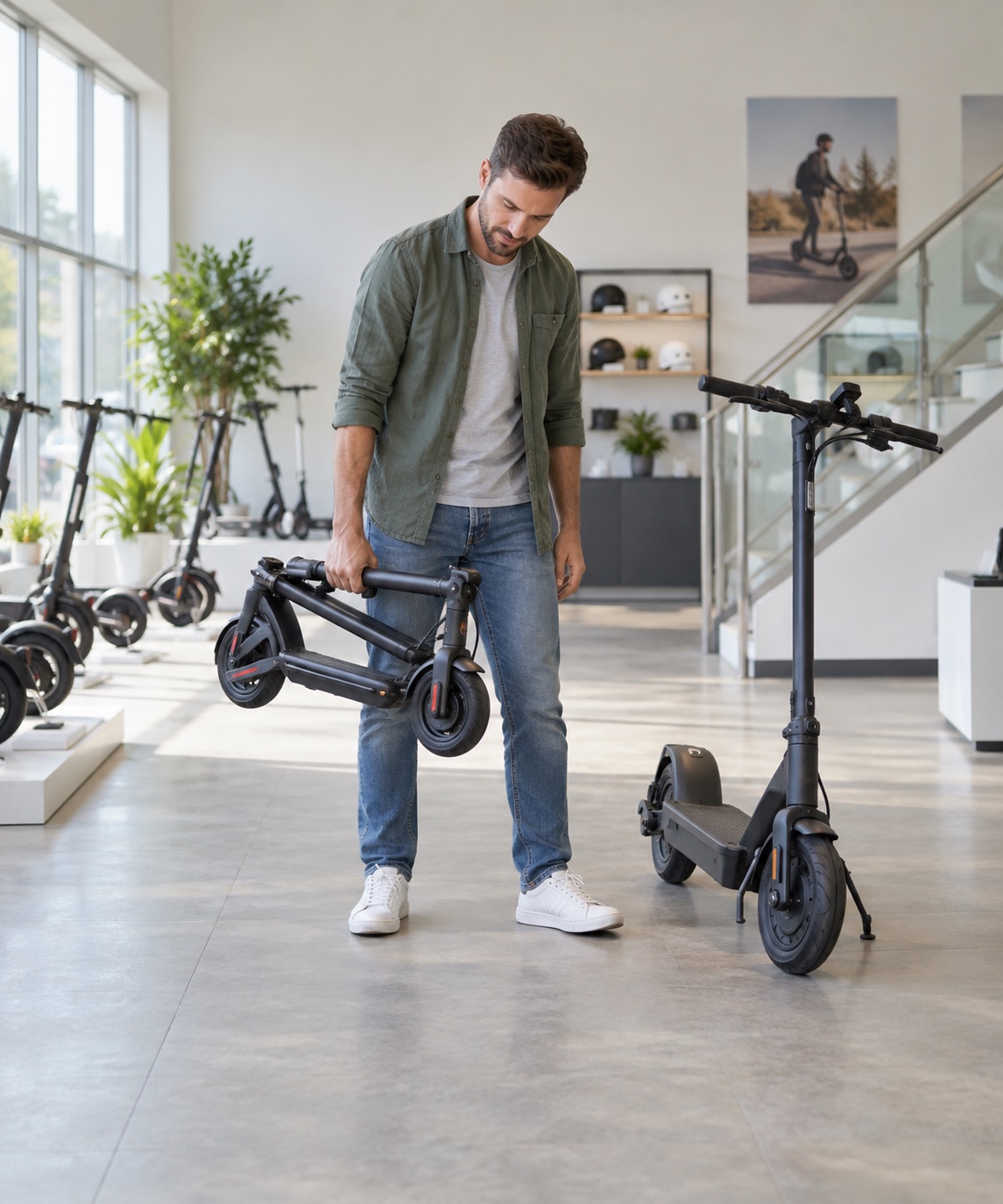
For carrying an electric scooter upstairs every day, choose a model whose weight, folded size, balance, and grip you can handle on your actual route. Range and speed still matter, but they do not make a difficult staircase disappear.
Which specifications should you compare?
Test the full trip: carry distance from the front door, number of turns, and storage space can matter as much as the scooter’s weight. Compare current manufacturer figures for mass and folded dimensions, then try a level-ground lift if possible. Our foldable scooter buying guide gives you more points to compare across models.
- Verify whether weight includes the battery.
- Check folded size against doors and landings.
- Confirm where the manual permits you to hold it.
What makes a daily carry sustainable?
A secure fold and a balanced, repeatable grip matter more than a single successful test lift. Imagine the trip when you are tired, carrying a work bag, or facing wet steps. If the route only works under perfect conditions, plan a lower-floor parking option instead.
| Buying question | Why it matters |
|---|---|
| Can I lift this exact model comfortably? | Daily effort must be repeatable |
| Can I see around it on my stairs? | Sight line affects footing |
| Is storage available downstairs? | May remove the lift altogether |
Key Takeaway: The best match fits the ride and the walk from street to door; choose for your real staircase.
Your next climb
You now have a way to check the load, choose a secure carry, spot unsafe stairs, and catch damage before the next ride. We build compact scooters for the whole trip, including the stairs between the street and your door. If your route needs a lighter folded scooter or a better carrying setup, contact us today with your stair count and storage constraints; our team can help you compare Model B with your commute.
Frequently Asked Questions
Q1. Can I carry a 10 kg electric scooter up stairs every day?
Yes, if you can lift that exact folded scooter comfortably and keep your footing clear. Test its balance on level ground and use another route when stairs are wet or crowded.
Q2. What’s the best way to hold a folded scooter on stairs?
A secure grip on approved structural points is best. Keep the scooter close, watch each step, and follow the manufacturer’s instructions for your model.
Q3. How do I know if my scooter’s folding lock is secure?
The lock should fully engage and hold during the manual’s recommended check. If the stem shifts or the latch does not seat properly, stop and arrange service before riding or carrying it.
Q4. Can I use a shoulder strap on any electric scooter?
No. Use a strap only when the manufacturer approves it for your model and specifies secure attachment points.
Q5. What should I do if the stairs are wet or too narrow?
Stop and choose an elevator or another approved route. A slippery tread or blocked sight line gives you little room to recover if the scooter shifts.