...

May 22, 2026

Are Electric Scooters Truly Green? The Real Truth

Yes, electric scooters are highly environmentally friendly when you own your ride rather than relying on shared rental programs. If you are tired of spending your morning trapped in gridlocked traffic, watching fuel prices climb, and feeling the stress of a long, pollution-heavy commute, you are not alone. Gridlock wastes your valuable time and harms our planet’s air quality. Fortunately, switching to a personal Electric Scooter offers a clean, fast, and incredibly fun solution to modern urban travel. Why Is the Electric Scooter So Popular Today? The Electric Scooter has skyrocketed in popularity because it offers an incredibly fast, affordable, and flexible way to navigate congested urban areas. Think about it. Why spend hours trapped in traffic when you can glide smoothly past gridlock? Rising Worldwide Sales Trends Are you curious about how fast this micro-mobility revolution is expanding across the globe? Look at the facts: millions of commuters are ditching traditional transportation in favor of light electric alternatives. Here is why. The demand for flexible urban mobility has triggered massive sales growth in both North American and European cities. Why Are Commuters Making the Switch? How much money could you save by changing your daily transit habits? When you choose a personal ride, you instantly eliminate expensive parking fees, fuel costs, and transit passes. Let that sink in. Your daily commute becomes a customized journey that fits perfectly around your schedule. Key Takeaway: The surging popularity of modern micro-mobility solutions is driven by a global shift toward cost-effective, time-saving, and accessible urban transit alternatives. Driver of Popularity Direct Benefit to You Long-Term Impact Traffic Avoidance Bypasses gridlocked lanes Shorter, predictable commute times Financial Savings Eliminates fuel and parking fees Hundreds of dollars saved annually Understanding why these vehicles are gaining massive popularity is essential, but we must also examine whether negative public misconceptions are holding riders back. Do Electric Scooter Myths Affect Public Perception? Yes, common myths surrounding the electric scooter often skew public perception by exaggerating safety issues and focusing heavily on rider error. Many media reports fail to distinguish between public rentals and personal vehicles. Let that sink in. Debunking the Safety Scares Are you worried that lightweight electric vehicles are inherently dangerous to ride? Think about it. Statistically, modern engineering makes these vehicles remarkably stable when operated responsibly. Here is why. Most reported incidents are not caused by manufacturing defects, but by external road hazards and lack of rider awareness. Is Rider Error to Blame for Accidents? Did you know that the vast majority of micro-mobility accidents are entirely preventable? When you analyze the data, sidewalk riding and riding under the influence emerge as the primary causes of injury. But that is not all. Learning local traffic rules is your best defense against accidents. Key Takeaway: Education and infrastructure—not vehicle design—are the critical factors in reducing accidents and improving the safety reputation of modern light electric vehicles. Public Perception / Myth Statistical Reality Root Cause of Concern High Vehicle Danger Infrastructure and rider behavior dictate safety levels Lack of dedicated lanes and rider education Sidewalk Riding Safety Sidewalk riding increases pedestrian conflict rates Insufficient municipal riding regulations While public misconceptions often stem from user behavior rather than the vehicle itself, a larger question remains: how do these micro-mobility alternatives perform when evaluated strictly on environmental sustainability? Does an Electric Scooter Harm the Environment? No, a personal Electric Scooter is remarkably eco-friendly when compared to fossil-fuel vehicles, especially when lifecycle emissions are properly managed. Let that sink in. By choosing electricity over gasoline, you immediately eliminate direct tailpipe emissions. Evaluating the Carbon Footprint How much can you reduce your carbon footprint by switching to electric power? While battery manufacturing does require an initial energy investment, the operational phase is incredibly clean. Here is why. Recharging your vehicle uses a fraction of the power needed by an electric car, minimizing grid demand. What Do Lifecycle Studies Reveal? Are you confused by scientific reports that paint a negative picture of micro-mobility? If you read closely, you will see that these negative studies focus almost entirely on short-lived shared rental fleets. Think about it. A high-quality personal ride amortizes its manufacturing footprint over thousands of miles, making it incredibly green. Key Takeaway: While manufacturing requires an upfront carbon cost, the operational phase of light electric vehicles offers a massive net reduction in greenhouse gas emissions compared to fossil-fuel vehicles. Lifecycle Phase Environmental Impact Mitigation Strategy Manufacturing Moderate emissions Utilize highly recyclable materials and green energy Operational Use Low emissions Source electricity from renewable grids for recharging Understanding the raw lifecycle emissions of a personal vehicle is only half the battle; to see the full environmental picture, we must examine the operational realities of commercial rental networks. Are Rental Electric Scooter Fleets Vandalized? Yes, commercial rental electric scooter fleets frequently face severe vandalism and high depreciation, which heavily reduces their environmental benefits. When rental units are mistreated by the public, their useful life is cut short. The Real Cost of Ride-Sharing Services Have you ever thought about the hidden emissions of shared transit models? While riding a rental is fun, the logistics behind them are surprisingly carbon-heavy. Here is why. Fuel-guzzling collection vans must drive around cities daily to retrieve, charge, and redeploy these shared fleets. Why Do Shared Models Suffer Vandalism? Have you ever wondered why public users treat shared vehicles with such little care? Because they do not own them, riders often leave them exposed to theft, physical damage, and the elements. Let that sink in. This lack of ownership leads to thousands of units being destroyed or thrown into waterways every year. Key Takeaway: The short operational lifespan and carbon-heavy logistics of shared rental fleets significantly reduce their overall environmental benefits. Shared Fleet Challenge Environmental Impact Operational Consequence Logistical Recharging High vehicle emission overhead Fossil-fuel vans driving daily to collect and redeploy fleets Public Vandalism Premature landfill waste Heavy depreciation and short average vehicle lifespans Because the structural vulnerabilities and logistical overhead of shared fleets compromise their

Are Electric Scooters Truly Green? The Real Truth Read More »

Electric Scooter Laws In Nebraska: The Complete Guide for Commuters

Are electric scooters legal in Nebraska? Yes, electric scooters are legal in Nebraska, but navigating the confusing patchwork of local rules can make any rider feel like they are one wrong turn away from an expensive ticket. Staring at conflicting guidelines between different towns makes commuting stressful and leaves you second-guessing your route. Fortunately, our comprehensive guide to municipal electric scooter laws strips away the complex legal jargon to keep your daily ride smooth, safe, and fully compliant. Are E-Scooters Legal Across the State of Nebraska? Understanding Nebraska’s Electric Scooter Laws is essential because there is no single state-wide framework governing personal micromobility devices. Instead, the state delegates regulatory authority to individual cities and towns, creating different rules depending on your zip code. To explore wider micromobility trends and tips, you can browse through our comprehensive blog where we dissect safety guides, maintenance, and vehicle comparisons. What Is the Current Legal Status of E-Scooters? You might be wondering about the state’s official stance on personal electric rides. Here is the honest truth: This classification gives riders baseline rights on public roads across the state. However, local towns still hold the ultimate power to restrict your daily route. Why Are Local Ordinances So Important Here? Navigating different towns can become a legal headache if you do not know the local ordinances. Think about it: A minor oversight can lead to unexpected municipal fines that ruin your ride. Therefore, knowing the exact rules of your destination is crucial. Key Takeaway: Always check municipal ordinances before riding outside Nebraska’s two largest cities, as local rules dictate your legal boundaries. Region Primary Regulatory Authority State Framework Exist? Key Risk Factor Omaha City Municipal Code No Local speed zones Lincoln City Municipal Code No Strict campus rules Rural Areas County / Town Clerks No Outdated bike laws This breakdown highlights how municipal jurisdiction supersedes state silence, making localized research mandatory. Do You Have to Register an E-Scooter with the DMV? Nebraska’s state-level Electric Scooter Laws make the registration process incredibly simple for personal owners. You will be pleased to know that these micromobility vehicles are fully exempt from titling and DMV registration across the entire state. To see how this compares to other light models, check out our sleek and fully compliant models designed for stress-free urban commuting. Are Personal Electric Scooters Exempt from DMV Registration? The Nebraska Department of Motor Vehicles classifies personal electric scooters as exempt utility devices. Believe it or not: This means you can purchase a scooter and hit the road immediately without waiting in long DMV lines. It is the ultimate hassle-free transportation solution. Do You Need Number Plates for Your Electric Scooter? Some riders worry about displaying visible plates when cruising on public roads. On top of that: You can enjoy a clean aesthetic on your personal ride without any bulky mounting brackets. Your scooter is legally cleared to run plate-free. Key Takeaway: You save money and time because personal electric scooters bypass all DMV registration fees and plate requirements statewide. The registration policies remain beautifully consistent across all local and state levels, minimizing administrative hurdles for riders. Is a License Required to Ride a Scooter in Nebraska? When examining Nebraska’s Electric Scooter Laws, the licensing requirements can vary significantly between different jurisdictions. While the state does not mandate a driver’s license for electric scooters, certain municipalities require some form of official identification. Do You Need a Driver’s License in Omaha? If you plan to ride in Omaha, you might be wondering if your standard driver’s license is necessary. Let’s face it: Having your ID ready ensures you can easily access micromobility options whenever you need them. It is always best to keep it on hand. What Permits Are Needed to Ride in Lincoln? In Lincoln, the rules are slightly more restrictive for local and visiting riders alike. Here is the kicker: Failing to carry identification can turn a fun ride into a legal headache very quickly. Make sure your wallet is secure before heading out. Key Takeaway: Always carry a valid driver’s license or state ID card when riding in Nebraska’s major metropolitan areas to avoid legal penalties. Jurisdiction Driver’s License Required? Alternative State ID Allowed? Permit Acceptable? Omaha Recommended Yes (for identification) Yes Lincoln Yes Yes (state-issued ID) Yes Reviewing these license restrictions reveals a split approach between Omaha’s relaxed recommendations and Lincoln’s strict enforcement. What Are the Minimum Age Limits for Nebraska Riders? Age restrictions represent a critical pillar of local Electric Scooter Laws across the state’s primary urban centers. Both Omaha and Lincoln enforce clear rules regarding how old a rider must be to legally operate these vehicles on public streets. Can Teenagers Under 18 Ride Legally in Nebraska? Many parents wonder if their children can use electric scooters for school commutes or weekend rides. To be blunt: Keeping underage riders off public roads is a matter of both legal compliance and physical safety. Private properties remain the safest playground for minors. How Do Rental Companies Enforce Age Restrictions? Shared scooter fleets use advanced technology to prevent underage riders from accessing their fleets. How do they do it? These verification steps help keep the streets safe and ensure that only mature riders are navigating active traffic lanes. Bypassing these checks carries severe legal risks. Key Takeaway: The legal age limit is strictly set at 18 across Nebraska’s urban hubs, meaning younger riders are confined to private property. Location Minimum Legal Age Verification Required? Underage Penalty? Omaha 18 Years Yes (In-App Scan) Parental Citation Lincoln 18 Years Yes (ID Verification) Direct Fine The strict age caps detailed below protect younger riders while ensuring traffic safety compliance on public roadways. Can You Legally Ride Electric Scooters on Sidewalks? Municipal Electric Scooter Laws in Nebraska generally prohibit riders from operating on pedestrian sidewalks in commercial areas. Instead, cities designate public roads and marked bike lanes as the primary pathways for micromobility. If you want a scooter that handles street transitions perfectly, explore our compact Model B which

Electric Scooter Laws In Nebraska: The Complete Guide for Commuters Read More »

Electric Scooter Laws In North Carolina: The Complete Guide to DMV & Local Rules

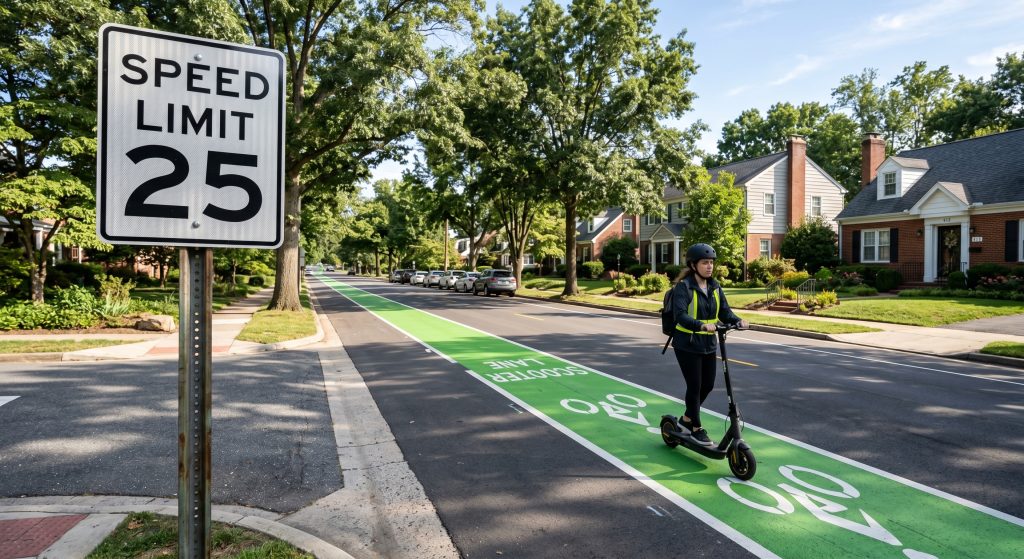
You pull your electric scooter out of the box, ready to zip through North Carolina’s streets, but a nagging question stops you cold: are you actually riding legally? The state’s legal framework remains highly fragmented, leaving riders vulnerable to unexpected local citations and confusing DMV guidelines. Without clear statewide regulations, you risk operating what local police might classify as an unregistered moped or even an illegal motorcycle. This regulatory gray area can turn a simple morning commute into an expensive legal headache with local authorities. Fortunately, keeping up with Electric Scooter Laws does not have to be an uphill battle. This comprehensive guide breaks down municipal exceptions, DMV requirements, and safety standards to keep your daily ride completely legal across the Tar Heel State. Are there statewide scooter rules in NC? The current moped classification Yes, North Carolina does have statewide regulations, which means understanding state-level Electric Scooter Laws is essential to ensure your ride is fully legal. Currently, any two- or three-wheeled vehicle that cannot exceed 30 mph on level ground is legally treated as a moped. This means standard personal e-scooters fall directly into this category by default. This classification binds you to state DMV registration laws. The motorcycle speed threshold If your device can exceed the 30 mph threshold, North Carolina’s legal framework shifts significantly. Think about it this way: at this high speed, the DMV reclassifies the vehicle as a motorcycle, subjecting you to strict motorcycle standards. This means high-performance models require specialized registration and licensing. Standard commuter devices, however, are designed to remain well within safe, moped-class velocity limits. Staying below this threshold simplifies your legal requirements dramatically. Key Takeaway: Under North Carolina state law, electric scooters are legally classified as mopeds if their maximum speed is 30 mph or less, but they are treated as motorcycles if they go faster. Vehicle Classification Top Speed Range Key Legal Requirements Moped Class Under 30 mph DMV registration, standard driver’s license Motorcycle Class Over 30 mph DMV registration, motorcycle endorsement, safety inspection The following analysis guides your understanding of the licensing requirements you must satisfy before hitting the pavement. Do you need a license to ride in NC? DMV registration requirements Yes, you do need a valid license to ride an e-scooter legally in North Carolina because of their state-level moped classification. Because the state categorizes these devices as mopeds, they technically require formal registration with the North Carolina DMV. This process involves submitting proof of ownership and paying a nominal registration fee. Driver’s license rules But that is not all. To operate any moped-class vehicle on public roadways in North Carolina, you must hold a valid driver’s license. This can be a standard Class C license or a learner’s permit. Riding on public streets without a valid license can result in immediate traffic citations. Key Takeaway: You must possess a valid driver’s license or learner’s permit to operate an e-scooter on NC roads, and the vehicle technically requires DMV registration under state-level moped rules. Requirement Type Legal Status Action Needed Driver’s License Mandatory Must carry a valid Class C license or permit DMV Registration Mandatory (State Level) Submit proof of ownership to the local DMV office Understanding licensing requirements is vital, but age-based limitations also dictate who can legally ride. How old do you have to be to ride? State minimum age limit You must be at least 16 years old to legally ride under North Carolina’s Electric Scooter Laws when operating on public streets. At the state level, North Carolina moped laws dictate that riders must meet this minimum age requirement. Operating these devices under this age limit on public streets is strictly prohibited. Local city age restrictions While the state sets the baseline at 16, individual municipalities have the authority to raise this limit. Here is the deal: major cities often set stricter limits to manage dense urban traffic. For example, Raleigh has established an older age threshold of 18 for riders using micromobility options. Always consult local municipal codes to ensure compliance in your specific city. Key Takeaway: The baseline minimum age to ride an e-scooter in North Carolina is 16, though major cities like Raleigh raise the age limit to 18. Jurisdiction Minimum Age Rule Reference State of North Carolina 16 Years Old General Moped Statutes City of Raleigh 18 Years Old Local Municipal Code These age parameters keep riders safe, but you must also know which public roads are actually open to scooter traffic. Can you ride an e-scooter on roads? Street speed limit rules Yes, you can ride your electric scooter on public roads in North Carolina, but only under very specific speed restrictions. Riding on the road is legal in North Carolina, but you must restrict your travel to specific streets. State laws limit moped-class vehicles to roadways with posted speed limits of 25 mph or less. Riding on high-speed thoroughfares or highways is illegal and highly dangerous. Where to ride safely Navigating urban areas safely requires choosing highly portable, compact electric scooter models that match city traffic patterns. Choosing a lightweight option makes it easier to transition between permitted streets and designated parking hubs. This can save you a lot of hassle. Make no mistake, utilizing quiet residential streets and marked lanes is the best way to enjoy your daily commute. This protects you from fast-moving traffic and keeps you fully compliant with state speed-matching guidelines. It also keeps you visible to other drivers. Key Takeaway: E-scooters are permitted on North Carolina public roads, provided the road’s posted speed limit does not exceed 25 mph. Roadway Type Speed Limit Legally Permitted? Residential Streets 25 mph or less Yes Major Arterials 30 mph to 45 mph No State Highways 55+ mph No While road access is clear, the rules regarding sidewalk riding vary dramatically depending on the city you are in. Are e-scooters legal on NC sidewalks? Sidewalk bans in Raleigh No, navigating municipal Electric Scooter Laws reveals that sidewalk riding is generally illegal in major cities across

Electric Scooter Laws In North Carolina: The Complete Guide to DMV & Local Rules Read More »

Shopping Cart
Scroll to Top