
No power in your scooter? Breaking down on the road wastes time and can be unsafe. Understanding how long it takes to charge an electric scooter is essential for anyone using this convenient transport mode.
Electric scooters take 3-12 hours to charge. This depends on battery size and charger type. This guide explains key factors and offers tips to improve charging speed.
Want to know how to charge faster without harming the battery? How to extend battery life? Keep reading for answers.
1. How Long Does an Electric Scooter Take to Charge?
Most electric scooters require 3-12 hours for a full charge, depending on several factors. Let’s get straight to it.
Different Brand Charging Times
● Entry-level scooters with smaller batteries typically charge in 3-5 hours, while high-performance models with larger batteries may need 8-12 hours. Dynamic Scooter’s Model B strikes a balance, charging fully in about 4-5 hours with its standard charger, making it practical for daily commuters.
Main Factors Influencing Charge Time
● Battery capacity (measured in Ah or Wh) is crucial – larger capacity means longer charging time. Charger power (in Watts) directly affects speed – higher power delivers energy faster. Current battery level and health also matter – charging from empty takes longer, and older batteries charge less efficiently.
Dynamic Scooter Charging Advantage
● The Model B features an advanced Battery Management System that optimizes charging, making it approximately 20% faster than comparable scooters. Here’s the real kicker: its removable battery design allows users to purchase a spare, eliminating downtime completely – use one battery while charging another.
| Scooter Category | Battery Type | Typical Capacity | Standard Charge Time | Notes |
|---|---|---|---|---|
| Dynamic Scooter Model B | Li-ion | Medium | 4-5 hours | Removable battery, optimized BMS |
| Entry-Level Commuter | Li-ion | Small | 3-5 hours | Basic features |
| Mid-Range Commuter | Li-ion | Medium | 5-8 hours | Balanced performance |
| High-Performance | Li-ion | Large | 8-12+ hours | Extended range |
| Older Models | Lead-Acid | Medium | 6-12 hours | Older technology |

Seasonal changes also impact charging. Cold temperatures can add 1-2 hours to charging time, while the optimal range (15-25°C) ensures maximum efficiency.
2. How Does Battery Capacity Affect Charging Time?
Battery capacity significantly determines charging duration. It’s a straightforward relationship, mostly.
Common Electric Scooter Battery Capacities
● Entry-level scooters feature 4-6Ah batteries, mainstream commuters like Dynamic Scooter Model B typically have 5-15Ah, while high-performance models can reach 30Ah or more. Larger capacity means longer range but also longer charging time.
Relationship Between Capacity and Charge Time
● The relationship is generally linear – double the capacity roughly doubles charging time with the same charger. However, most lithium-ion batteries charge faster initially (up to 80%) and then slow down for the final 20% to protect battery health.
Determining Your Scooter’s Battery Capacity
● Check your user manual, specification sheet, or the battery label itself. As a rough estimate, 1Ah typically provides 3-5 miles of range, though this varies with riding conditions.
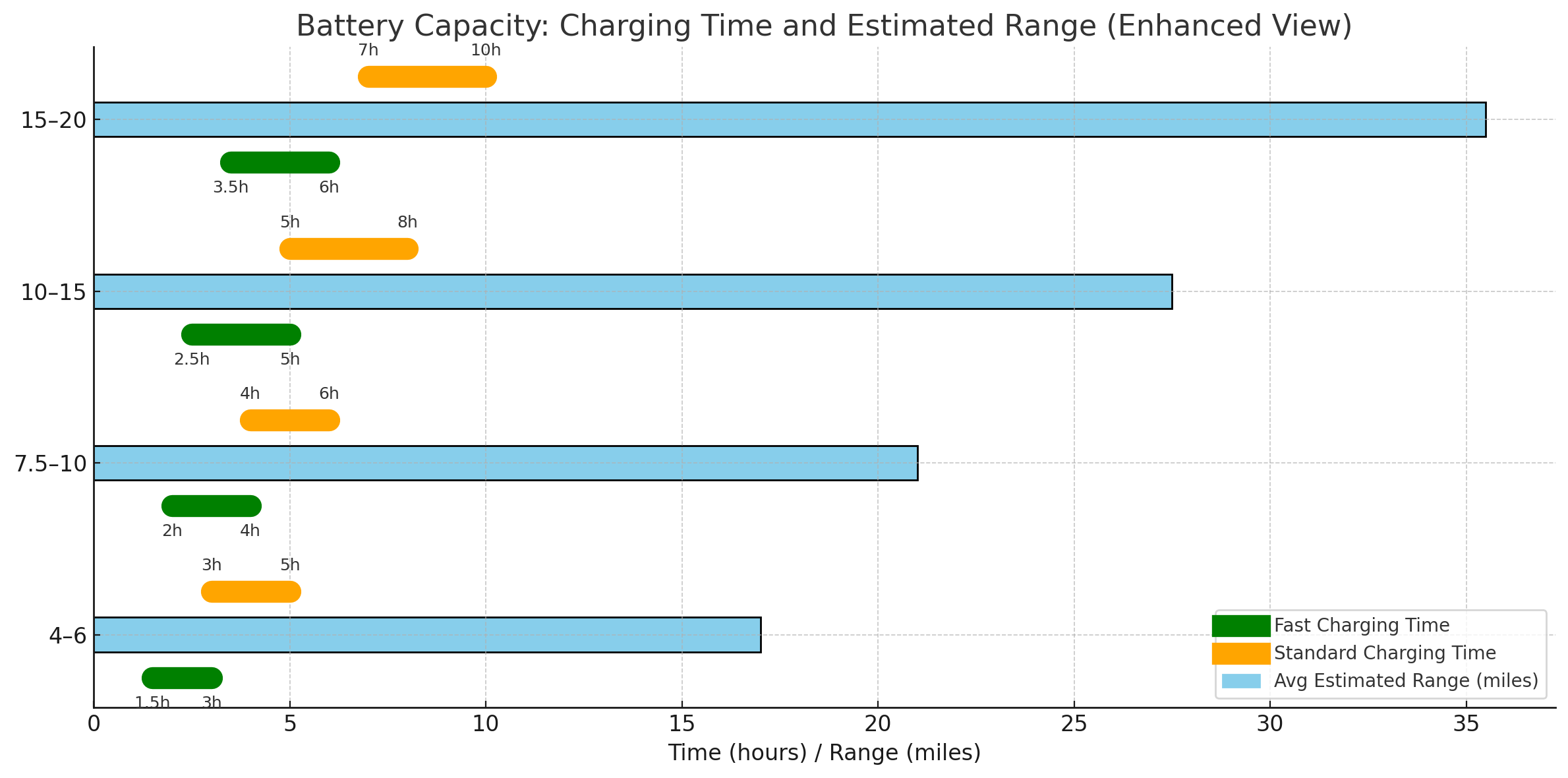
| Battery Capacity | Charging Time (Standard) | Charging Time (Fast) | Estimated Range |
|---|---|---|---|
| 4-6Ah | 3-5 hours | 1.5-3 hours | 9-25 miles |
| 7.5-10Ah | 4-6 hours | 2-4 hours | 12-30 miles |
| 10-15Ah | 5-8 hours | 2.5-5 hours | 15-40 miles |
| 15-20Ah | 7-10 hours | 3.5-6 hours | 21-50 miles |
Remember that battery capacity degrades over time, affecting both charging time and range.
3. Will Charger Type Change Charging Speed?
The charger type significantly impacts charging speed. This is where things get interesting.
Standard vs. Fast Chargers
● Standard chargers (typically 1.5-2A output) prioritize battery longevity with slower charging. Fast chargers (3-5A or more) can reduce charging time by 40-60% but may affect long-term battery health. Dynamic Scooter provides an efficient standard charger, with faster options available for those prioritizing speed.
Charging Time Differences by Wattage
● Higher wattage means faster charging. For example, doubling the charger’s wattage from 84W to 168W could potentially halve the charging time, assuming the battery can handle the increased power safely.
Choosing the Right Charger
● Safety and compatibility are paramount. Always ensure the charger’s voltage matches your scooter’s battery voltage, the connector is compatible, and the current doesn’t exceed what your battery can safely handle. Stick with manufacturer-recommended chargers whenever possible.
| Charger Type | Typical Power | Charging Speed | Impact on Battery | Best For |
|---|---|---|---|---|
| Standard Charger | Low | Slow | Minimal | Regular overnight charging |
| Official Fast | Medium-High | Fast | Moderate | Occasional quick charging |
| Third-Party Fast | Very High | Very Fast | Potentially High | Emergency use only (risky) |
| Smart/Adjustable | Variable | Flexible | Minimal-Moderate | Optimizing charge/health |
For everyday charging, standard chargers are best for battery longevity. Save fast charging for when time is critical.
4. What Special Attention is Needed for the First Charge?
The first charge sets the foundation for your battery’s health. Think of it as conditioning your battery.
New Scooter First Charge Recommendations
● Most manufacturers recommend an extended first charge of 8-12 hours, even after the indicator shows full. This allows the Battery Management System to properly balance all cells in the battery pack, optimizing future performance.
Optimal Duration for First Charge
● For lithium-ion batteries, 8-12 hours is typical; lead-acid batteries may need 12-24 hours. The key takeaway: don’t unplug when the light turns green – follow the manufacturer’s recommended duration for this critical first charge.
Avoiding Common First Charge Mistakes
● Don’t use the scooter before the first full charge, don’t interrupt the charging process, always use the original charger, and ensure a suitable charging environment (moderate temperature, dry, well-ventilated).
| First Charge Action | Recommendation | Why It Matters |
|---|---|---|
| Duration | 8-12 hours (or per manual) | Ensures proper cell balancing |
| Charger | Original only | Guarantees compatibility and safety |
| Environment | 15-25°C, dry, ventilated | Optimizes charging efficiency |
| Interruptions | None – complete cycle | Allows full conditioning |
This small investment of time during the first charge pays dividends in battery performance and longevity.
5. How Can Electric Scooter Charging Time Be Shortened?
Several strategies can reduce charging time when you’re in a hurry. Ready for the good part?
Practical Fast Charging Techniques
● Using an official fast charger is the most direct method, potentially cutting charging time by 40-60%. Another approach is partial charging – since batteries charge fastest up to about 80%, stopping at this level can save 30-40% of total charging time while also benefiting battery health.
Charging Environment Optimization
● Temperature significantly affects charging speed. The optimal range is 15-25°C (60-77°F). Charging in cold conditions slows the process considerably, while excessive heat may cause the BMS to limit charging rate for safety. Ensure good ventilation around the charger and battery.
Using Third-Party Fast Charging Devices
● Exercise extreme caution with third-party fast chargers. While they may offer dramatic time savings, incompatible chargers risk damaging your battery, BMS, or charging port, potentially creating safety hazards and voiding your warranty.
| Method | Time Saved | Risk Level | Best For |
|---|---|---|---|
| Official Fast Charger | 40-60% | Low | Safe speed when needed |
| Charge to 80% Only | 30-40% | None | Daily use with shorter range needs |
| Optimize Temperature | 10-20% | None | All charging scenarios |
| Spare Battery (Dynamic) | 100% | None | Eliminating wait time completely |
6. What is the Relationship Between Charging Time and Battery Lifespan?
Charging speed and battery longevity are closely connected. This is where it gets critical for long-term ownership.
Impact of Fast Charging on Battery Life
● Consistently using high-speed charging (fully charging in under 1-2 hours) can reduce a battery’s cycle life by 20-30% or more. Fast charging generates more heat and can cause uneven lithium plating, accelerating degradation of battery materials.
Charging Habits to Extend Battery Lifespan
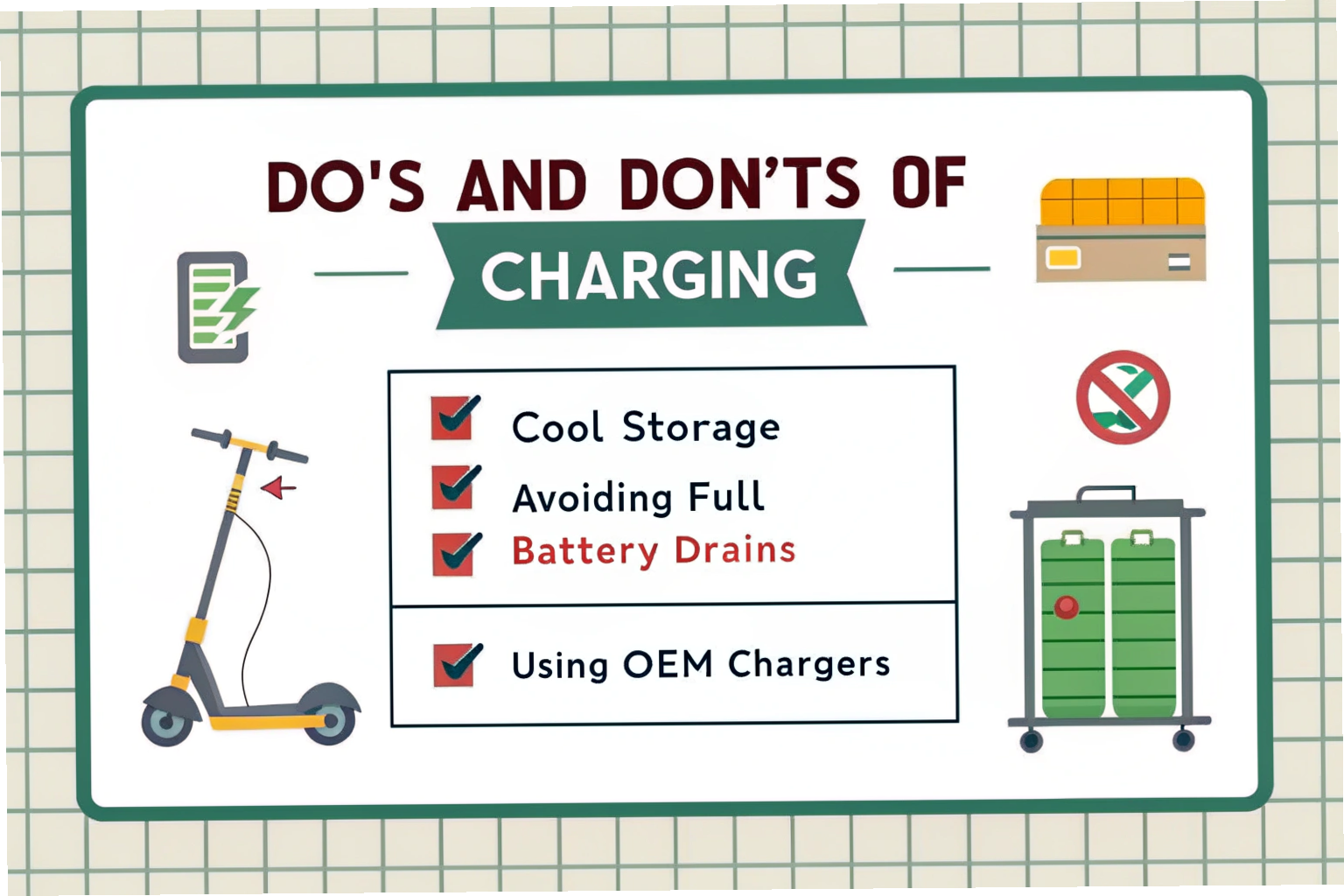
● Use standard charging whenever possible, avoid deep discharges (below 20%), don’t routinely charge to 100% if not needed (80% is ideal for daily use), unplug once fully charged, and maintain moderate charging temperatures.
Monitoring Battery Health Status
● Watch for decreased range on a full charge compared to when new. A 20-30% reduction indicates significant degradation. Some scooters offer battery health diagnostics through connected apps. Ironically, an aging battery might charge faster because its effective capacity has decreased.
| Charging Habit | Impact on Lifespan | Recommendation |
|---|---|---|
| Standard Charging | Positive | Use for regular charging |
| Fast Charging | Negative | Use occasionally when necessary |
| Charging 20-80% | Very Positive | Ideal for daily use |
| Full 0-100% Cycles | Negative | Limit to monthly for calibration |
| Charging in Extreme Temps | Negative | Avoid whenever possible |
7. What Are the Charging Strategies for Different Usage Scenarios?
Different usage patterns require tailored charging approaches. Let’s figure out the best plan for you.
Daily Commuter Charging Plan
● If your daily commute uses less than 50-60% of battery capacity, charging every other day is gentler on the battery. For longer commutes, nightly charging is necessary. Consider charging to 80-90% if that provides sufficient range, as this maximizes battery lifespan.
Long-Distance Rider Charging Plan
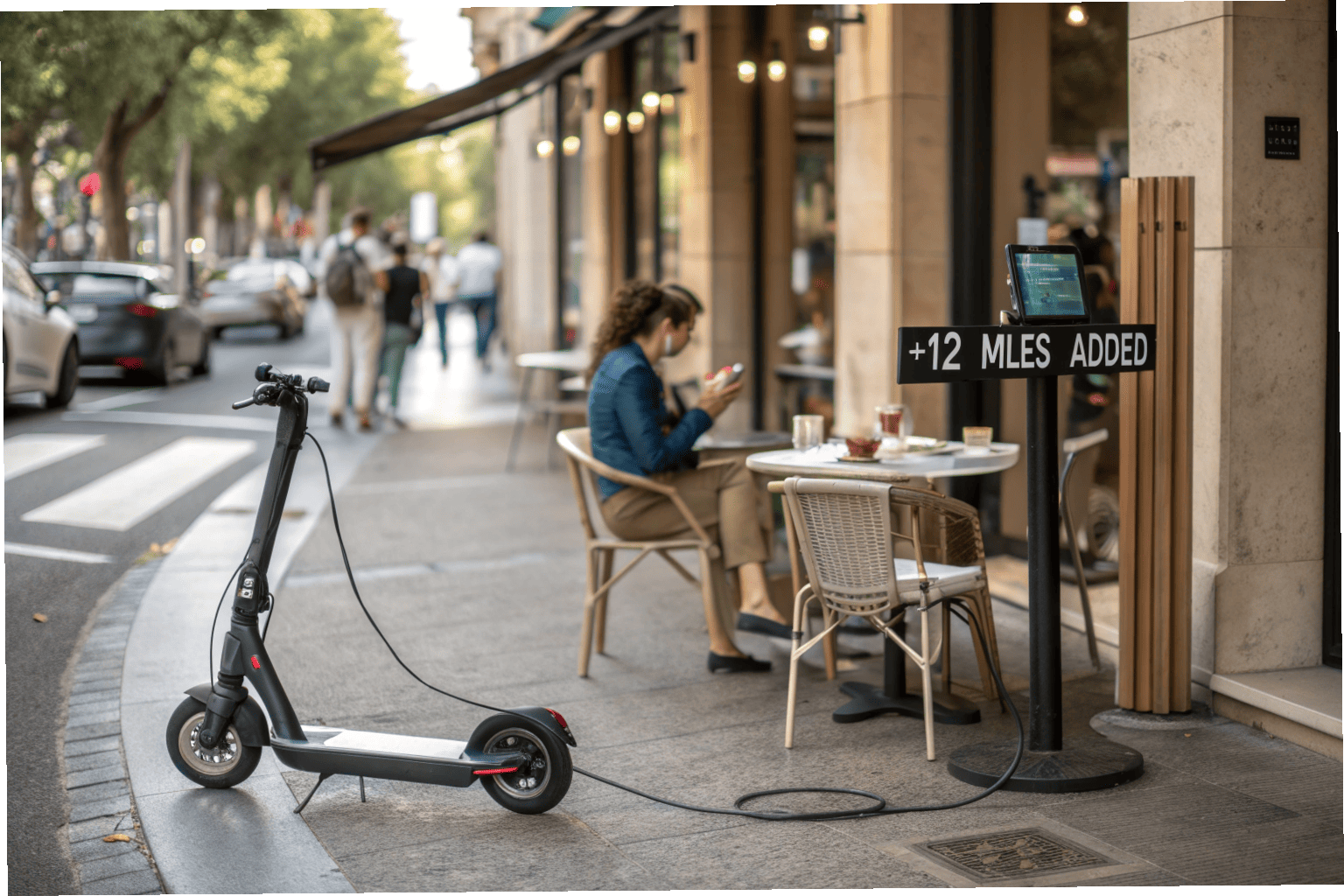
● Start with a 100% charge before long rides. Research charging opportunities along your route – cafes, libraries, or public charging stations. Even 30-60 minutes of charging during breaks can add valuable range.
Occasional User Charging Frequency
● For infrequent users, storage charging level is key. Keep the battery at 40-60% charge when not in use for extended periods. Check the charge level every 1-2 months and top up if it falls below 30%.
| Usage Pattern | Charging Frequency | Ideal Charge Level | Key Consideration |
|---|---|---|---|
| Daily Short Commute | Every 1-2 days | 80-90% | Balance convenience and battery health |
| Daily Long Commute | Daily | 90-100% | Ensure sufficient range |
| Weekend/Occasional | After use if needed | Storage: 40-60% | Proper storage charge is critical |
| Long-Distance Trips | Before + during | 100% before trip | Plan charging stops |
8. What Charging Errors Should Be Avoided?
Certain charging mistakes can damage your scooter or create safety hazards. Pay close attention here; safety first!
Common Charging Mistakes and Hazards
● Using incompatible chargers is the most dangerous error, potentially causing battery damage or fire. Other mistakes include charging in unsuitable environments (extreme temperatures, damp areas, near flammables), frequently interrupting charge cycles, and leaving the scooter plugged in for days after reaching full charge.
Charging Safety Precautions
● Charge on non-flammable surfaces with good ventilation. Regularly inspect the charger, cord, and charging port for damage. Avoid extension cords when possible. Never leave charging unattended for extended periods, especially overnight if you have concerns about electrical reliability.
Correctly Disconnecting the Charger
● First unplug from the wall outlet, then disconnect from the scooter. This prevents arcing at the scooter’s charging port, protecting the connectors. Store cables loosely coiled rather than tightly wrapped.
| Charging Error | Potential Consequence | Correct Practice |
|---|---|---|
| Wrong/Cheap Charger | Battery damage, fire hazard | Use only original/certified chargers |
| Wet/Damp Environment | Short circuit, electrical shock | Charge only in dry locations |
| Covering Charger | Overheating, reduced efficiency | Ensure good airflow around components |
| Damaged Cables/Ports | Short circuit, charging failure | Inspect regularly, replace if damaged |
| Prolonged Overcharging | Accelerated battery aging | Unplug within hours of full charge |
9. Can You Ride an Electric Scooter While It’s Charging?
The answer is a resounding no, you should absolutely not ride your electric scooter while it is plugged in and charging.
Risk Analysis of Riding While Charging
● The physical hazard of being tethered by a power cord creates obvious fall risks. Electrically, simultaneous high-power draw (motor) and input (charger) could overload circuits, damage components, or cause dangerous heat buildup. Vibrations during riding could dislodge connections, potentially causing sparks or shorts.
Manufacturer Recommendations
● All reputable manufacturers, including Dynamic Scooter, explicitly prohibit riding while charging. This universal safety protocol protects both users and equipment. Ignoring this instruction could void your warranty.
Safe Alternatives
● If you need more range urgently, a quick 15-30 minute partial charge can provide enough power for a short trip. For those frequently facing this issue, Dynamic Scooter’s removable battery system offers the ideal solution – simply swap in a charged battery and continue riding while the depleted one charges separately.
| Need More Range? | Safety Level | Practicality | Better Alternative |
|---|---|---|---|
| Riding While Charging | Dangerous | Impractical | NEVER do this |
| Quick Partial Charge | Safe | Good | 15-30 minutes can add useful range |
| Spare Battery (Dynamic) | Safe | Excellent | Instant full range with battery swap |
Safety should always take priority over convenience, especially with high-energy electrical systems.

10. How to Determine When an Electric Scooter is Fully Charged?
Knowing when charging is complete helps optimize both convenience and battery health. Learning to read these signals is easy.
Charging Indicators on Different Models
● Most chargers have an LED that shows red/orange while charging and green when full. Many scooters also display battery status on the device itself through LED lights, digital displays, or smartphone apps. Dynamic Scooter Model B uses both charger indicators and clear display information.
Risks and Prevention of Overcharging
● Modern scooters with Battery Management Systems have built-in overcharge protection. However, relying solely on this isn’t ideal. Leaving a scooter plugged in for days after reaching full charge keeps the battery at high voltage, accelerating aging. Best practice is to unplug within 1-3 hours after the indicator turns green.
Introduction to Smart Battery Management Systems
● The BMS protects against overcharging, over-discharging, balances cell voltages, monitors temperature, and manages the overall charging process. Dynamic Scooter’s advanced BMS optimizes charging profiles based on battery state and temperature, enhancing both safety and longevity.
| Indicator | What It Shows | What To Do |
|---|---|---|
| Charger: Red/Orange | Charging in progress | Normal operation |
| Charger: Green | Charging complete | Unplug within 1-3 hours |
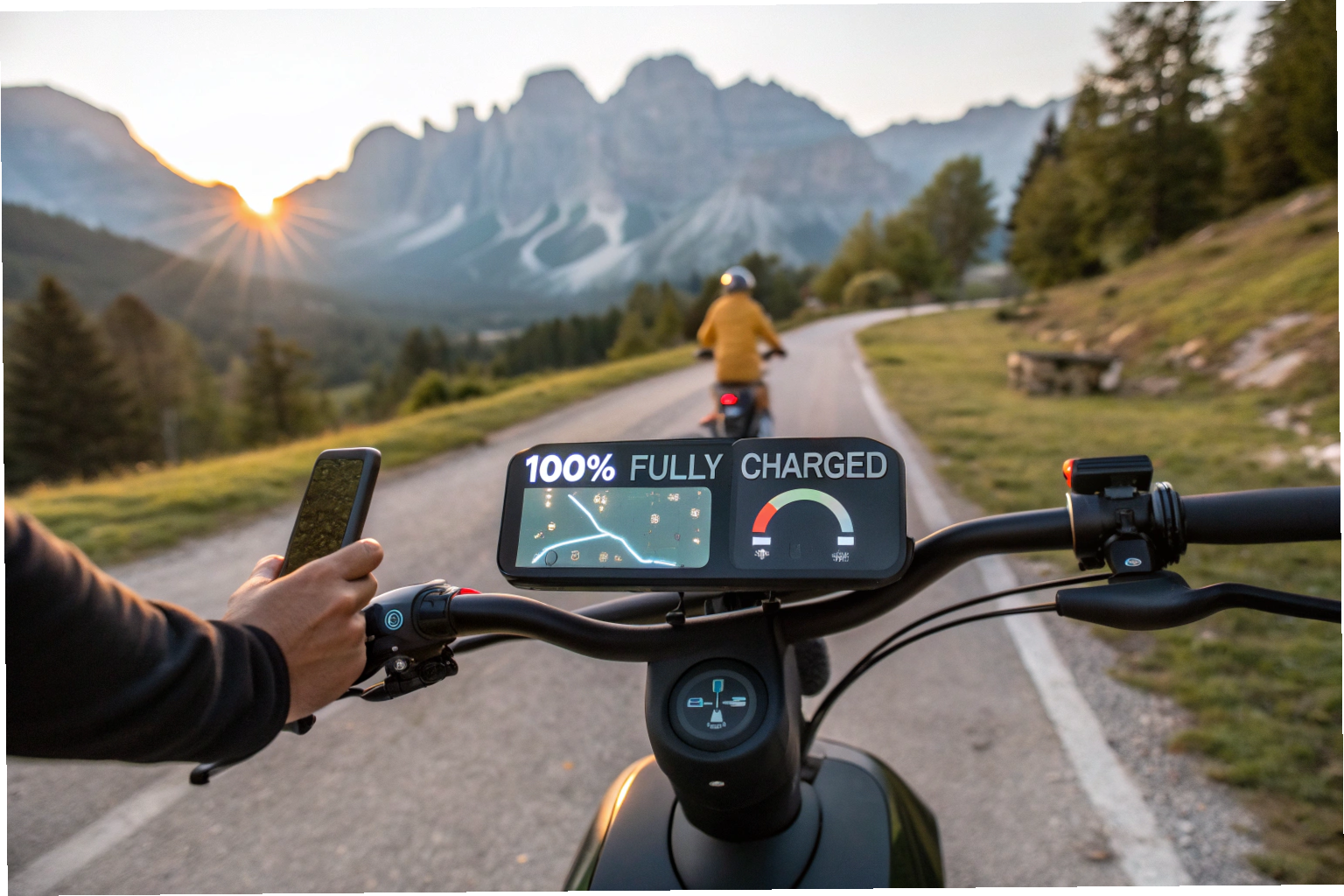
| Scooter: 100%/Full Bars | Battery fully charged | Ready to disconnect |
| Charger: Flashing/Off | Potential error | Check connections or contact support |
Understanding these indicators helps you manage charging efficiently while maximizing battery health.
11. How to Handle Charging Issues While Traveling?
Traveling with your electric scooter introduces charging challenges that require preparation. Don’t let charging logistics limit your adventures.
Recommended Travel Charging Accessories
● Consider a compact travel charger if available for your model. Pack a short, heavy-duty extension cord for inconveniently placed outlets. For international travel, bring universal plug adapters and verify your charger supports the destination’s voltage (usually 100-240V, printed on the charger label).
International Travel Charging Considerations
● Research airline regulations regarding lithium battery transport – size limits may apply. Check destination country regulations for electric scooters. Consider using a surge protector in regions with unstable power grids.
Emergency Charging Solutions on the Road
● Portable power stations can charge scooters away from outlets but are bulky and expensive. Car inverters convert vehicle power to AC for charging (use with the engine running). Some public locations offer e-mobility charging points, though these remain relatively uncommon for scooters.
| Travel Accessory | Purpose | Key Consideration |
|---|---|---|
| Travel Charger | Compact charging solution | Ensure manufacturer compatibility |
| Universal Plug Adapters | Connect to foreign outlets | Doesn’t convert voltage |
| Portable Power Station | Charge without wall outlets | Check capacity matches your needs |
| Car Inverter | Use vehicle power | Run engine to avoid draining car battery |
12. How Might Electric Scooter Charging Technology Evolve in the Future?
Charging technology is advancing rapidly, promising greater convenience and efficiency. What’s the real story behind future charging?
Latest Advances in Fast Charging
● New battery chemistries and materials (like solid-state batteries and graphene-enhanced electrodes) may enable much faster charging – potentially full charges in 15-30 minutes without the degradation issues current fast charging causes. Smarter algorithms will optimize power delivery second-by-second, balancing speed and battery health.
Potential for Wireless Charging
● Wireless charging pads for scooters could eliminate the need for cables entirely – simply park over a designated area to begin charging. Current challenges include lower efficiency, higher cost, and alignment requirements, but ongoing development aims to overcome these limitations.
Trends in Sustainable Charging Solutions
● Solar-powered public charging stations are being piloted in some cities. Enhanced regenerative braking systems will capture more energy during deceleration. Integration with smart home energy systems could allow charging during off-peak hours when electricity is cheaper and potentially greener.
| Future Technology | Potential Benefit | Estimated Timeline |
|---|---|---|
| Ultra-Fast Charging | Full charge in 15-30 minutes | 3-5 years |
| Wireless Charging | Cable-free convenience | 5-7 years for mainstream adoption |
| Battery Swapping | Instant full charge via exchange | 3-5 years (limited implementation) |
| Solar Charging Stations | Sustainable public charging | Already beginning in some cities |
FAQ
Q1: How far can an electric scooter travel on a full charge?
Range varies widely based on battery capacity, rider weight, terrain, and speed. Entry-level scooters typically offer 8-15 miles, mid-range commuters like the Dynamic Scooter Model B provide 15-25 miles, while high-performance models can achieve 30-50+ miles. Real-world range is often slightly less than advertised due to variable conditions.
Q2: Can a mobile phone charger be used to charge an electric scooter?
No, phone chargers output 5V at low wattage (5-20W), while scooter chargers typically output much higher voltages (42V or 54.6V) at significantly higher wattages (50-250W+). Using the wrong charger could fail to charge the scooter or damage components. Always use the specific charger designed for your scooter model.
Q3: Is it normal for an electric scooter to get hot while charging?
Mild warmth in the charger and battery area is normal during charging. However, if either becomes uncomfortably hot to touch, or if you notice unusual smells, sounds, or swelling, immediately disconnect the charger and contact support. Excessive heat indicates a potential problem requiring attention.
Q4: What state should the battery be in if the electric scooter is not used for a long time?
For long-term storage (over a month), keep lithium-ion batteries at 40-60% charge – neither full nor empty. Store in a cool, dry place away from extreme temperatures. Check the charge level every 1-2 months and recharge to 40-60% if it drops significantly.
Q5: Should the electric scooter be turned on or off when charging?
Always turn the scooter OFF before charging. Charging while powered on can interfere with the process, potentially confuse the BMS, slow charging speed, and in some cases pose safety risks. Power down completely before connecting the charger.