
Losing your e-scooter charger is frustrating. This guide explores how to charge electric scooter without charger, covering alternative methods, risks, and essential safety. While an OEM charger is always best, understanding emergency options is vital. We will cover battery needs to knowing when to call professionals.
Yes, charge an e-scooter without its original charger via a compatible universal charger, USB-PD (if supported), or an identical scooter charger. Prioritize safety: match voltage, amperage, and polarity precisely. OEM chargers are safest.
Bottom line: charging without the dedicated charger needs extreme caution and knowledge to avoid damage or hazards. This guide aims to inform your decisions for safe power-up when your charger is missing. A rushed attempt can be severe; knowledge is your first defense.
1. What Are the Common Reasons for Needing to Charge an E-Scooter Without Its Charger?
Several scenarios lead to needing to charge electric scooter without charger. It happens. Misplacing or forgetting the charger is common. Chargers can also suddenly malfunction. Some riders intentionally leave bulky chargers behind to travel light. Emergencies also arise: far from home, low battery, charger inaccessible. In these cases, finding alternative ways to charge electric scooter without charger becomes urgent. Knowing safe methods is key to avoid turning inconvenience into a costly mistake.
2. Can You Really Charge an Electric Scooter Safely Without the Original Charger?
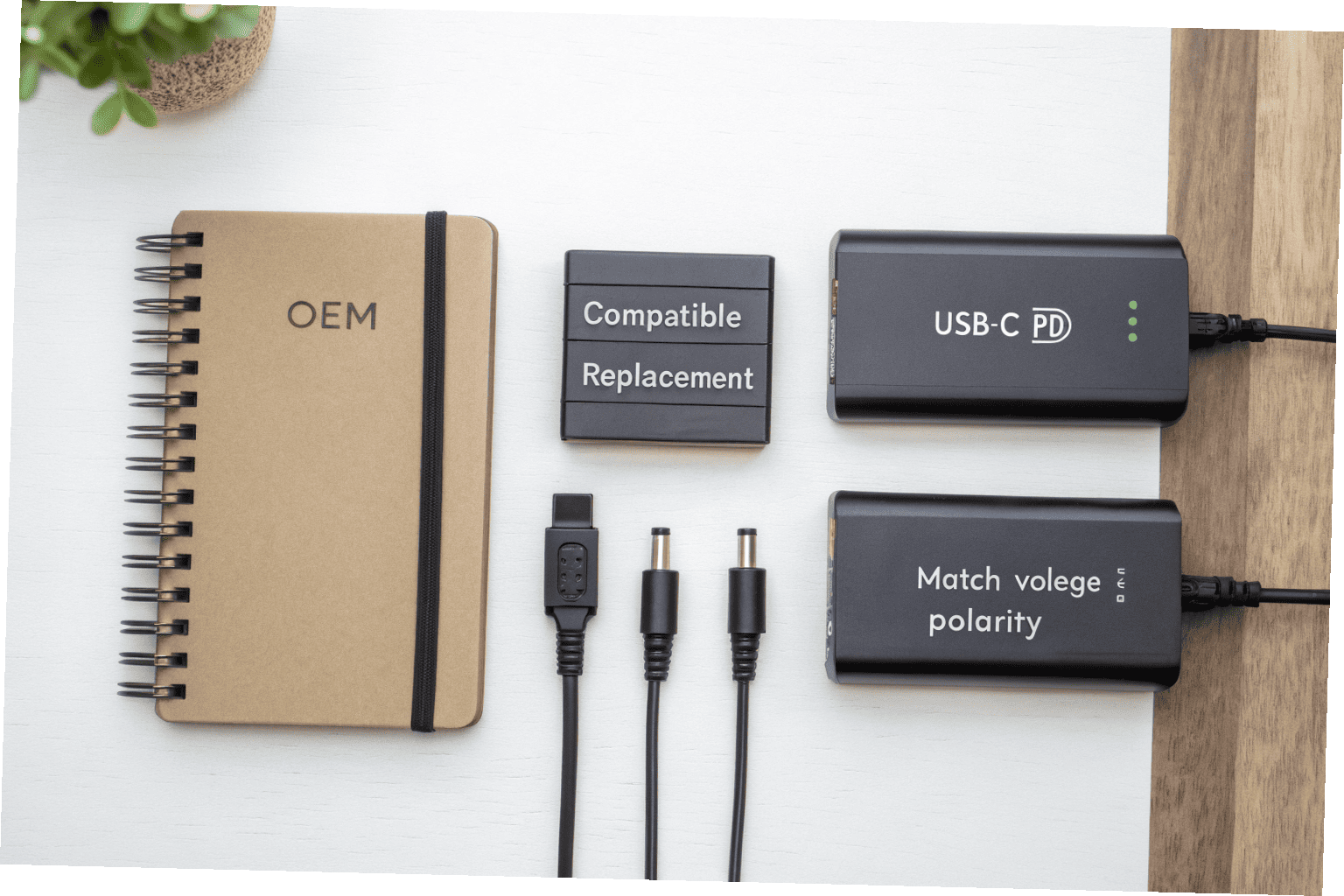
Safely trying to charge electric scooter without charger is complex and risky. Caution is paramount. While technically possible, it introduces variables compromising safety. The main concern is matching battery electrical needs: correct voltage (V), amperage (A), connector, and critical polarity. An OEM charger guarantees this, working with the scooter’s Battery Management System (BMS). Alternatives bypass this. Risks include frying the BMS/battery with wrong voltage, overheating with wrong amperage, arcing with ill-fitting connectors, or catastrophic damage from reversed polarity. Manufacturers warn against non-approved chargers, voiding warranties. So, while you might find ways, consider it only in emergencies, with full understanding of battery needs, meticulous compatibility checks, and unwavering safety adherence. An OEM charger is always safest.
3. What Alternative Charging Methods Could Potentially Work for Electric Scooters?
When you must charge electric scooter without charger, few alternatives exist, each with risks. Extreme caution needed. Universal chargers exist but quality varies; precise voltage, amperage, and correct polarity are critical and hard to guarantee. Mistakes are disastrous. USB charging is viable only if your model supports USB Power Delivery (USB-PD) for its main battery (uncommon but increasing). It’s slower and needs a high-power USB-PD source and certified cable. DIY solutions are exceptionally dangerous (shock, fire risk) and for experts only. Using another e-scooter’s charger is possible only if all specs (voltage, amperage, connector, polarity) are an exact match. Slight differences cause damage. Thorough research and electrical safety understanding are non-negotiable. The OEM charger remains the safest.
4. How Might a USB Port Be Utilized for E-Scooter Charging?
Using a USB port to charge electric scooter without charger is appealing but limited. Not a universal fix. Confirm your model supports main battery charging via USB; most don’t (ports are for accessories). Some newer models use USB-C Power Delivery (PD). If so, you need a compatible high-wattage USB-C PD source (45W, 60W, 100W+) and a rated cable. Standard USB-A or low-wattage USB-C won’t work. USB-PD charging is much slower than dedicated AC chargers, suitable for emergency top-ups. Use certified chargers/cables, ensure compatible voltage (PD negotiates), and monitor for overheating. Always verify scooter manual compatibility.
5. Is It Ever Safe to Employ a Universal Charger for Your Electric Scooter?
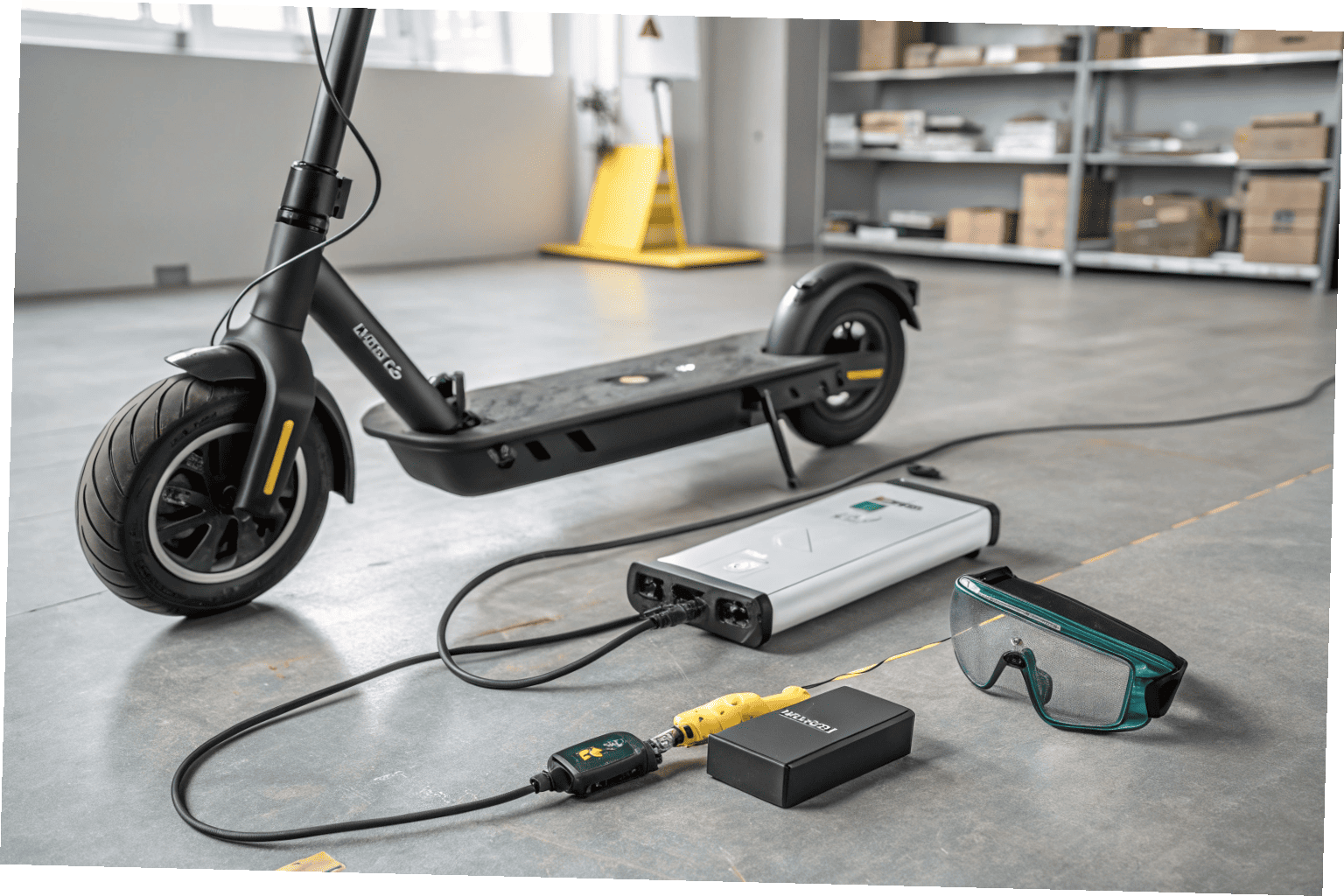
Using a universal charger to charge electric scooter without charger is perilous; safety is conditional. High-stakes gamble. Precisely matching voltage (V) and amperage (A) is vital. Too high voltage fries components; too low won’t charge. Amperage should match or be slightly higher; lower means slow charging and charger overheating. Correct connector type is key. Crucially, correct polarity is non-negotiable; reversed polarity causes instant, severe damage (fire, short circuits). If considering a universal charger as a last resort: choose high-quality, reputable brands with clear markings/safety certifications. Meticulously set correct voltage. Triple-check polarity (use a multimeter if proficient). Ensure perfect connector fit. Never leave unattended; monitor constantly. It remains risky versus an OEM charger.
6. What Specific Dangers Are Associated with Improvised or DIY E-Scooter Charging Setups?
Improvised or DIY setups to charge electric scooter without charger are exceptionally dangerous for non-experts. Do not attempt. Risks include severe electrical shock from high DC voltages (36V+). DIY setups lack control circuitry, leading to battery overcharging (damaging cells, causing overheating, fire/explosion) or deep discharge. Short circuits from improvised wiring cause intense heat and fire. Such methods will void warranties. Commercial chargers have multiple safety layers; bypassing these is unsafe. The potential for catastrophic failure is too high.
| DIY Charging Danger | Description of Risk | Why It\’s Critical to Avoid for Non-Experts |
|---|---|---|
| Electrical Shock | Direct contact with high-voltage DC can cause severe injury or fatality. | Lack of training, safety gear, and controlled environment. |
| Battery Overcharge/Deep Discharge | Incorrect voltage/current damages cells, causes overheating, swelling, or failure. | DIY setups lack precise control and safety cutoffs of BMS/OEM chargers. |
| Overheating & Thermal Runaway | Excessive heat from improper charging leads to fire/explosion. | Battery chemistry is sensitive; heat degrades and can ignite cells. |
| Short Circuits | Unintended current paths cause massive heat, fire, or explosion. | Improvised wiring, loose connections, unsuitable materials are common. |
| Voiding Warranty | Unauthorized modifications/charging methods nullify manufacturer coverage. | Manufacturers don\’t cover damage from non-approved practices. |
7. How Can You Accurately Match Voltage and Amperage When Considering an Alternative Charger?
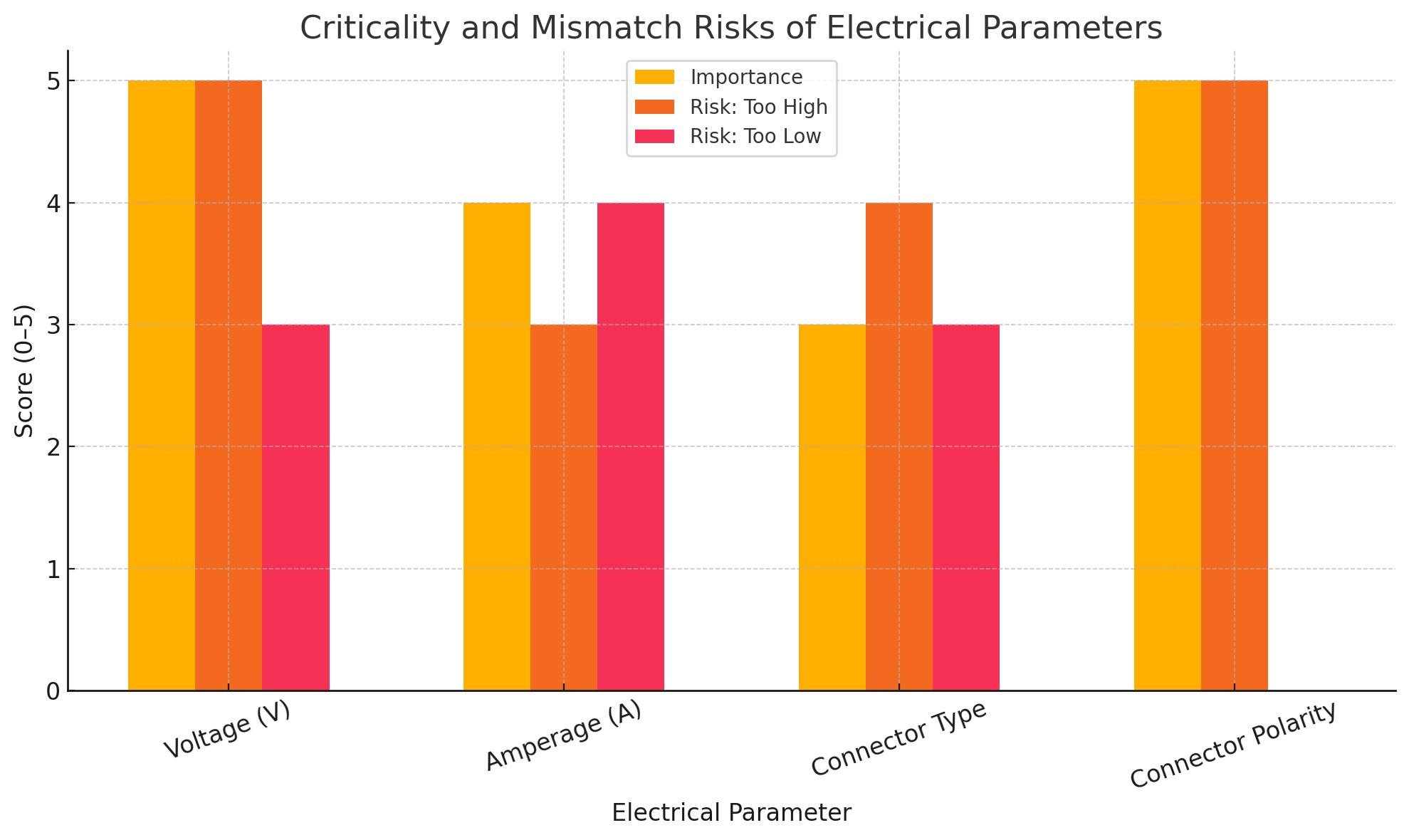
To charge electric scooter without charger safely with an alternative, accurately matching voltage/amperage is paramount. Crucial for safety. Locate battery specs: manual, original charger label (OUTPUT V/A), battery casing, or manufacturer site. Understand roles: Voltage (V) = electrical pressure; must match battery needs precisely (e.g., 36V battery often uses 42V charger). Too high fries circuits; too low won’t charge. Amperage (A) = current flow; ideally match original or be slightly higher. Lower amperage means slow charging and charger overheating. Mismatched voltage is more critical, but correct amperage ensures efficiency. Careful verification is key.
| Electrical Parameter | Importance for Matching | Consequence of Mismatch (Too High) | Consequence of Mismatch (Too Low) |
|---|---|---|---|
| Voltage (V) | ABSOLUTELY CRITICAL | Battery/BMS/electronics damage, fire, explosion | No charge, very slow charge, potential charger strain |
| Amperage (A) | VERY IMPORTANT | Generally OK if BMS regulates; slight risk with poor BMS | Very slow charge, charger overheating, charger failure |
| Connector Type | CRITICAL | Physical incompatibility, poor connection, arcing | Physical incompatibility |
| Connector Polarity | ABSOLUTELY VITAL | Instant severe damage, short circuit, fire | (Not applicable, polarity is either correct or reversed) |
8. What Are the Recommended Steps If Your E-Scooter Charger Is Lost or Becomes Inoperable?
If your charger is lost/broken, stay calm. Prioritize OEM solutions. First, contact the manufacturer/authorized dealer for a genuine replacement. This guarantees compatibility and maintains warranty. It is the safest route. If urgent and an official replacement is delayed, cautiously evaluate temporary safe alternatives, fully understanding risks and meticulously matching all specs. Long-term benefits of original parts outweigh risky workarounds. Avoid panic-driven unsuitable methods.
| Action When Charger Lost/Inoperable | Key Considerations | Primary Benefit |
|---|---|---|
| Contact Manufacturer for OEM Charger | Model/Serial No. ready, inquire cost/availability | Safest, ensures compatibility, maintains warranty |
| Check Authorized Dealers/Service | Locate nearby, call ahead for stock | Faster than direct MFG, genuine parts, expert advice |
| Evaluate Temporary Safe Alternatives | EXTREME CAUTION, full risk understanding, exact spec match | Last resort for minimal essential charge only |
| Use Only Original/Approved Parts | Long-term commitment to OEM or certified parts | Optimal performance, max battery life, safety, warranty |
9. Are There Viable Portable Charging Solutions for E-Scooters When You’re On The Move?
For mobile riders needing to charge electric scooter without charger, options exist. Caveats apply. High-capacity power banks (DC output or USB-C PD) are promising, requiring matched specs (DC) or high wattage (USB-C PD, if scooter supports). Solar chargers are eco-friendly but slow, better for trickle charging. Car chargers (DC-DC specific to scooter voltage) or power inverters (12V DC to AC for OEM charger) use vehicle power. Inverters need sufficient continuous wattage. Safety: use car solutions with engine running or briefly if off; ensure ventilation for inverters. Proactive battery care also minimizes emergency needs.
| Portable Charging Option | Primary Power Source | Key Advantage(s) | Key Limitation(s) |
|---|---|---|---|
| High-Capacity Power Bank | Stored Electricity | Portable, good for partial/full charge (model dep.) | Capacity limits, recharge time for bank, cost, weight |
| Solar Charger | Sunlight | Eco-friendly, off-grid capability | Very slow, weather dependent, large panel for good output |
| Car Charger (DC-DC) | Car Battery (12V) | Convenient on road trips, direct charging | Scooter-specific model needed, drains car battery if engine off |
| Car Inverter (DC-AC) | Car Battery (12V) | Use original OEM charger, versatile for other devices | Inverter cost/size, drains car battery, energy conversion loss |
10. What Fundamental Precautions Must Be Observed When Attempting Any Alternative E-Scooter Charging Method?
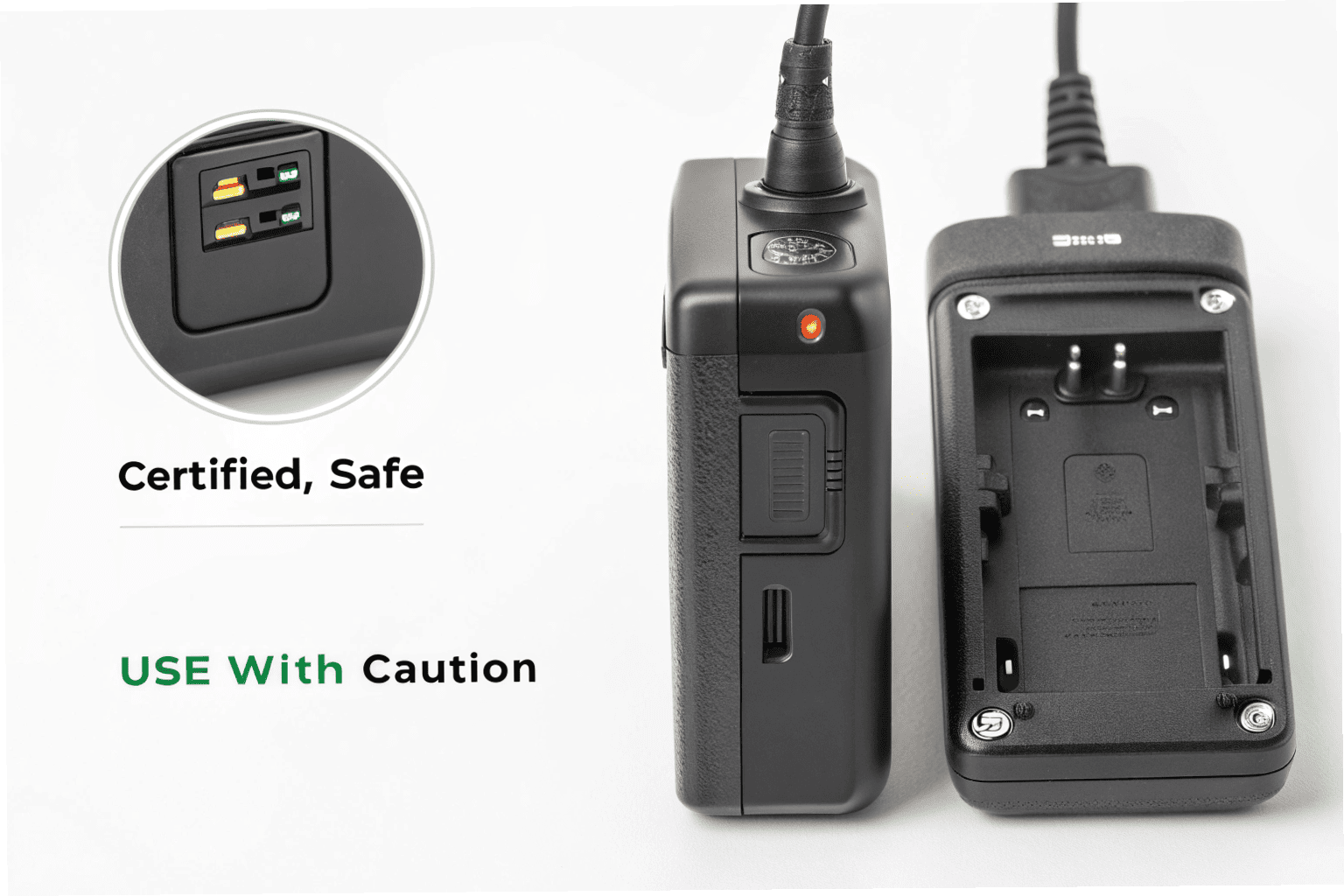
When attempting to charge electric scooter without charger via alternative methods, safety is key. Non-negotiable rules. Never leave unattended; be present to disconnect if issues arise (overheating, smells, smoke). Monitor battery/charger for excessive heat; if too hot, stop. Charge in a well-ventilated space, on a non-combustible surface, away from flammables. If abnormalities occur (noises, odors, swelling), disconnect immediately. Meticulously double-check all connections (voltage, connector fit, CRITICAL POLARITY) before powering on. These steps are vital.
| Precaution Category | Specific Action(s) | Rationale for Precaution |
|---|---|---|
| Constant Monitoring | Never leave unattended; continuously check for overheating (battery & charger). | Allows immediate response to issues, prevents escalation. |
| Safe Charging Environment | Well-ventilated space; away from flammables; on non-combustible surface. | Dissipates heat/fumes; reduces fire spread risk. |
| Alertness to Abnormalities | Watch/listen/smell for unusual signs (smoke, odd odors, noises, swelling, excess heat). | Early detection of malfunctions (overheating, short circuit, etc.). |
| Immediate Disconnection | Unplug from mains and scooter instantly if any abnormality is detected. | Stops hazardous condition; prevents further damage/fire. |
| Connection Verification | Double-check voltage settings, connector fit, and ESPECIALLY POLARITY before power-on. | Prevents instant damage from incorrect voltage or reversed polarity. |
11. How Can You Proactively Maintain Your E-Scooter’s Battery Health to Prevent Charging Dilemmas?
Proactive battery care minimizes needing to charge electric scooter without charger. Healthy battery = happy rider. Avoid frequent complete discharges; Li-ion prefers partial. Recharge at 20-30%. Prevent overcharging: unplug when full. Store optimally: cool, dry, 40-60% charge for long storage. Regularly inspect charger, cables, ports for damage/dirt. These habits extend battery life.
| Battery Health Practice | Key Action | Benefit for Preventing Charging Dilemmas |
|---|---|---|
| Avoid Frequent Full Discharges | Recharge when at 20-30% capacity if practical. | Extends battery lifespan, maintains consistent range. |
| Prevent Overcharging | Unplug once fully charged; avoid leaving plugged in for days. | Reduces stress on cells, slows capacity degradation. |
| Optimal Storage Conditions | Cool, dry place; 40-60% charge for long-term storage. | Preserves battery health during inactivity. |
| Regular Visual Inspections | Check charger, cables, ports for damage/dirt monthly. | Catches minor issues before they cause charging failures. |
12. When Is It Imperative to Seek Professional Assistance for E-Scooter Charging Issues?
Sometimes, DIY for charge electric scooter without charger is ill-advised; professional help is imperative. Know your limits. If battery damage is suspected (swelling, leaking, dents), stop charging, call experts. Damaged batteries are dangerous. If charging port is damaged/loose/burnt, seek professional repair. If uncertain/uncomfortable with any alternative method, don’t experiment; consult an expert. If charging failures persist despite a seemingly compatible charger, it signals an internal fault (BMS, wiring) needing diagnosis.
| Situation Requiring Pro Help | Key Indicators | Why Professional Help is Crucial |
|---|---|---|
| Suspected Battery Damage | Swelling, leaking, physical dents/cracks, strong chemical odor. | Damaged Li-ion batteries are highly volatile; risk of fire/explosion. |
| Damaged/Loose/Burnt Charge Port | Bent/broken pins, loose housing, melted/charred appearance, burning smell. | Risk of short circuits, overheating, fire, further electronic damage. |
| Uncertainty/Discomfort | Lack of confidence in matching specs, unease with any alternative method. | Prevents mistakes due to lack of knowledge; prioritizes user safety. |
| Persistent Charging Failures | Scooter won’t charge despite using a seemingly compatible/OEM charger. | Indicates deeper internal fault (BMS, wiring, battery); needs expert diagnosis. |
Avoid charging hassles. Dynamic Scooters offer reliable, easily accessible OEM chargers and robust battery systems, ensuring you are always ready to ride. Choose Dynamic for a worry-free experience.
FAQ: Charging Your E-Scooter Without the Original Charger
FAQs for how to charge electric scooter without charger.
Q1: Safest way if no original charger?
A: Procure an identical, genuine replacement from manufacturer/authorized dealer. OEM is safest.
Q2: Use laptop charger for e-scooter?
A: Highly unsafe. Assume no interchangeability. Different specs (V, A, polarity) risk severe damage.
Q3: Time for alternative charging vs. original?
A: Varies. Often slower. Matched universal might be similar. USB will be slower. Lower A = longer time.
Q4: Non-original charger voids warranty?
A: Usually, yes. Manufacturers are strict. Using non-approved chargers typically voids warranty.
Q5: Signs of damaged battery (from incorrect charging)?
A: Reduced range; swollen/leaking/dented casing; excessive heat; sudden power loss; scooter won’t turn on. Battery often warns. Cease use, seek professional help.
Needing to charge electric scooter without charger requires prioritizing safety and compatibility. The safest path is a genuine OEM replacement. If temporary alternatives are used in emergencies, extreme caution, constant monitoring, and adherence to all safety rules are vital. DIY setups are exceptionally dangerous. Proactive battery care reduces dilemmas. Knowing when to seek professional help is key. When figuring out how to charge electric scooter without charger, the smartest charge is a safe one.