Adult commuters waste hours in traffic and pay high gas prices daily. Without a reliable electric scooter, you face expensive parking fees, crowded public transport, and stress from delays. This guide shows you the best adult scooters for fast, affordable commuting.
The best electric scooters for adults feature 15-25 mph speeds, 15-30 mile ranges, and 220+ pound weight limits. Top models include foldable designs, dual brakes, LED displays, and waterproof ratings. Key factors are motor power, battery life, portability, and safety features for daily commuting needs.
Here’s the thing – choosing the wrong scooter costs money and creates safety risks you can’t afford.
1. What Speed and Range Do Adult Scooters Need?
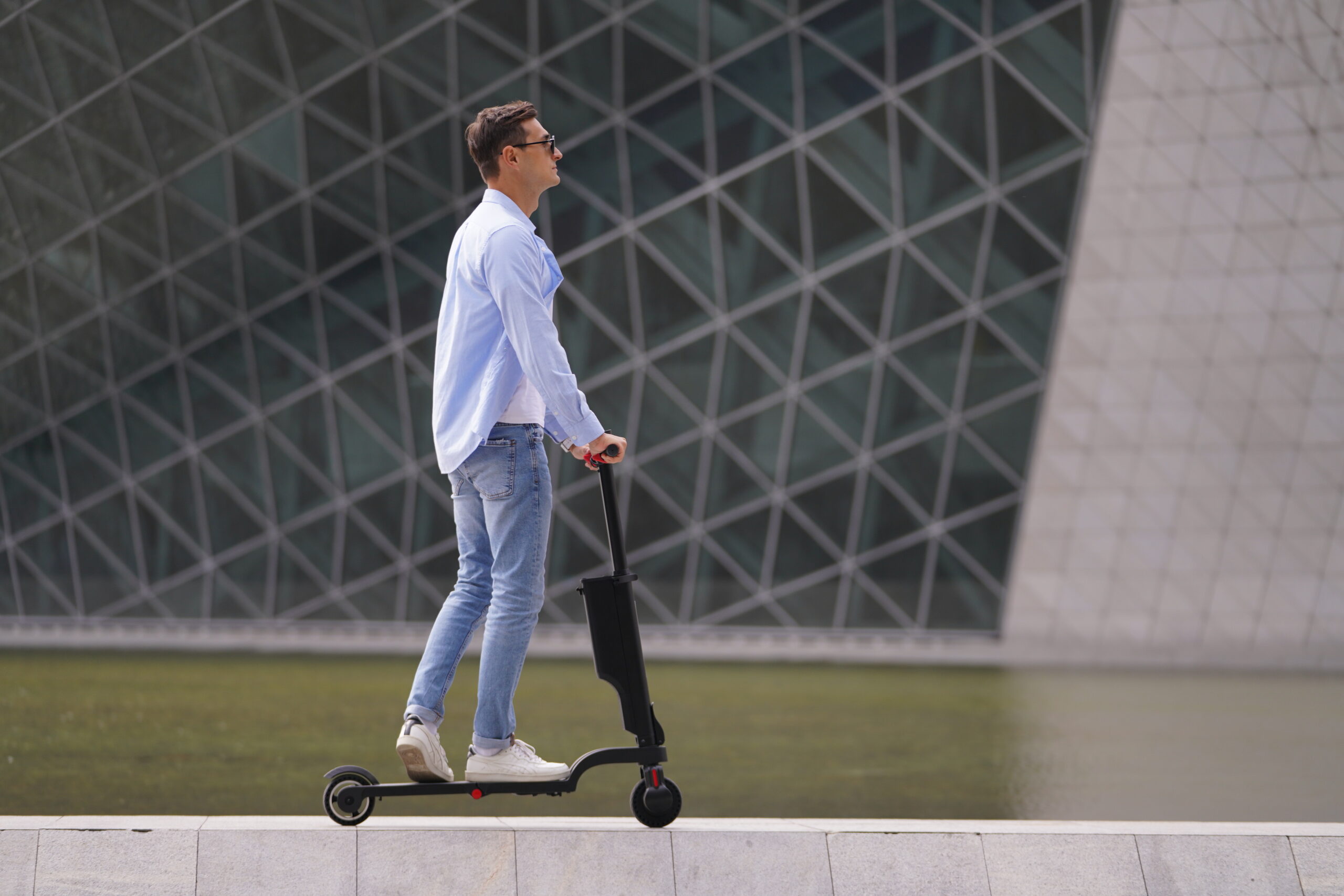
Adult electric scooters need 15-25 mph top speeds for city commuting. Slower speeds work for short trips, but adults need higher speeds to keep up with bike lane traffic and reach destinations quickly.
The best part? Most quality adult scooters hit 20 mph, which matches the speed limit in most bike lanes. This speed lets you commute efficiently without breaking traffic laws or creating safety hazards.
Range requirements depend on your daily commute distance. Most adults need 15-30 miles of range for round-trip commuting. Battery capacity directly affects range, with larger batteries providing longer distances.
Real-world range often falls short of manufacturer claims. Hills, rider weight, and weather conditions reduce actual range by 20-30%. Plan for shorter ranges than advertised specifications.
Speed modes help manage battery life and safety. Eco mode extends range but limits top speed. Sport mode provides maximum performance but drains batteries faster. Most adults use normal mode for daily commuting.
| Speed Range | Best Use Case | Typical Range | Battery Size |
| 10-15 mph | Short trips | 8-15 miles | 250-350Wh |
| 15-20 mph | City commuting | 15-25 miles | 400-500Wh |
| 20-25 mph | Long commutes | 25-40 miles | 600-800Wh |
Motor power affects both speed and hill climbing ability. Adults need at least 350W motors for decent performance. Heavier riders or hilly areas require 500W+ motors for adequate power.
Dual motors provide better acceleration and hill climbing. Single motors work for flat areas and lighter riders. Consider your local terrain when choosing motor configuration.
Acceleration matters for city riding where you stop and start frequently. Good scooters reach 15 mph in 4-6 seconds. Poor acceleration creates traffic hazards and rider frustration.

2. How Much Weight Can Adult Electric Scooters Handle?
Most adult electric scooters support 220-300 pounds maximum weight. This includes the rider plus any cargo like backpacks or groceries. Exceeding weight limits damages motors and reduces battery life.
Now, you might be wondering why weight limits matter so much. Heavy loads stress the motor, drain batteries faster, and affect braking distance. Staying within limits keeps you safe and protects your investment.
Heavier riders need scooters with higher weight ratings and more powerful motors. Look for models rated at least 50 pounds above your weight for optimal performance and safety margins.
Weight distribution affects scooter stability and handling. Carrying heavy backpacks raises your center of gravity. Use lower storage options when possible for better balance.
Payload capacity includes everything you carry beyond your body weight. Laptop bags, groceries, and work supplies add up quickly. Factor in typical cargo when choosing weight limits.
| Weight Limit | Motor Power | Recommended For | Price Range |
| 220 lbs | 350W | Light adults | $300-600 |
| 265 lbs | 500W | Average adults | $500-900 |
| 300+ lbs | 600W+ | Heavy adults | $800-1500 |
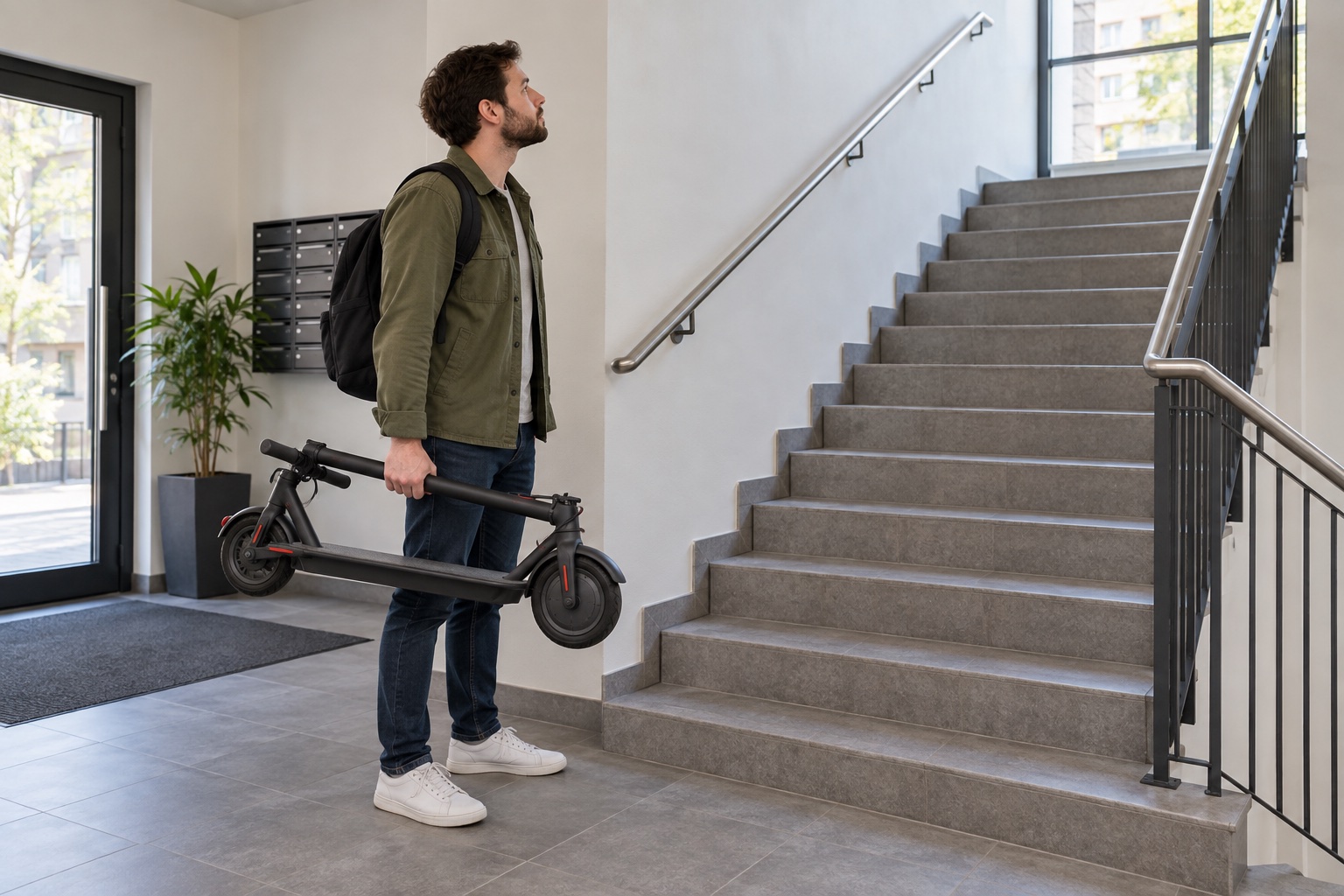
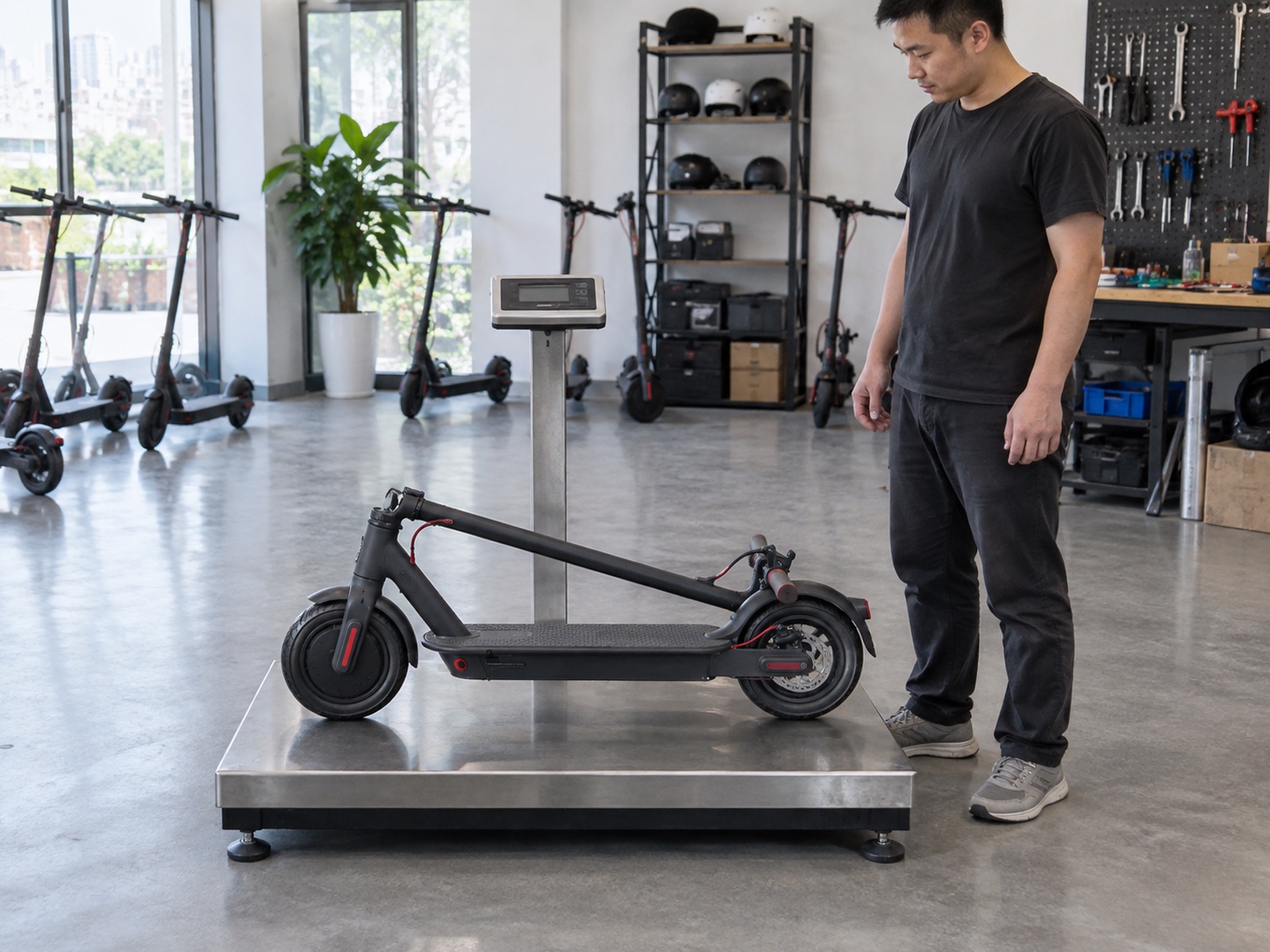
Scooter weight affects portability for adults who need to carry them. Lighter scooters (25-35 lbs) are easier to carry upstairs or onto public transport. Heavier models (40+ lbs) offer more features but reduce portability.
Folding mechanisms help with storage and transport. Quick-fold designs let you collapse scooters in seconds. Some models fold small enough to fit under desks or in car trunks.
Frame materials affect both weight and durability. Aluminum frames offer good strength-to-weight ratios. Steel frames are heavier but more durable. Carbon fiber is lightest but most expensive.
3. Which Safety Features Matter Most for Adults?
Dual brake systems provide the most reliable stopping power for adult riders. Hand brakes offer precise control, while foot brakes provide backup stopping. Electronic brakes add regenerative charging but shouldn’t be the only brake type.
Here’s why it matters – adults ride faster and weigh more than kids, creating higher stopping forces. Inadequate brakes cause accidents and injuries that could end your commuting plans permanently.
LED headlights and taillights keep you visible during dawn, dusk, and night riding. Many cities require lights for legal scooter operation. Bright lights help cars and pedestrians see you from greater distances.
Reflective materials on the deck and sides increase visibility from all angles. Some scooters include reflective strips or decals. Adding extra reflective tape improves safety without adding weight.
Turn signals help communicate your intentions to other road users. Some premium scooters include built-in turn signals. Aftermarket signals can be added to most models for better safety.
| Safety Feature | Why It Matters | Legal Requirement | Cost to Add |
| Dual brakes | Reliable stopping | Often required | Built-in |
| LED lights | Night visibility | Usually required | $20-50 |
| Reflectors | Side visibility | Sometimes required | $5-15 |
| Bell/horn | Pedestrian warning | Some cities | $10-25 |
Suspension systems smooth out bumps and improve control. Front suspension handles small bumps, while dual suspension tackles rough roads. Solid tires need more suspension than pneumatic tires.
Tire type affects safety and comfort. Pneumatic tires provide better grip and shock absorption. Solid tires never go flat but offer harsher rides. Honeycomb tires split the difference.
Anti-lock braking systems prevent wheel lockup during hard stops. This technology is rare on scooters but available on premium models. ABS reduces skidding and improves control.

4. What Makes a Scooter Suitable for Daily Commuting?
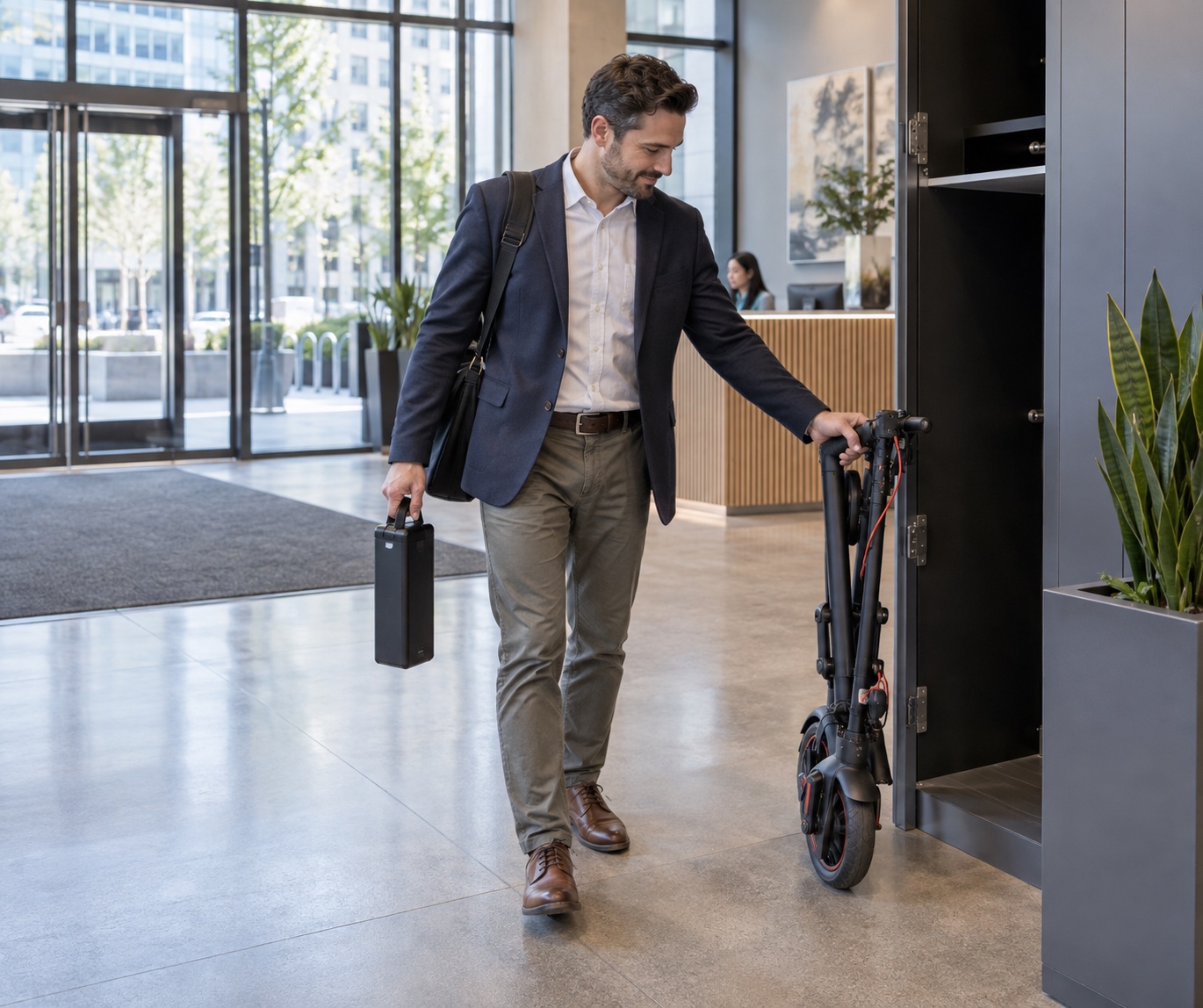
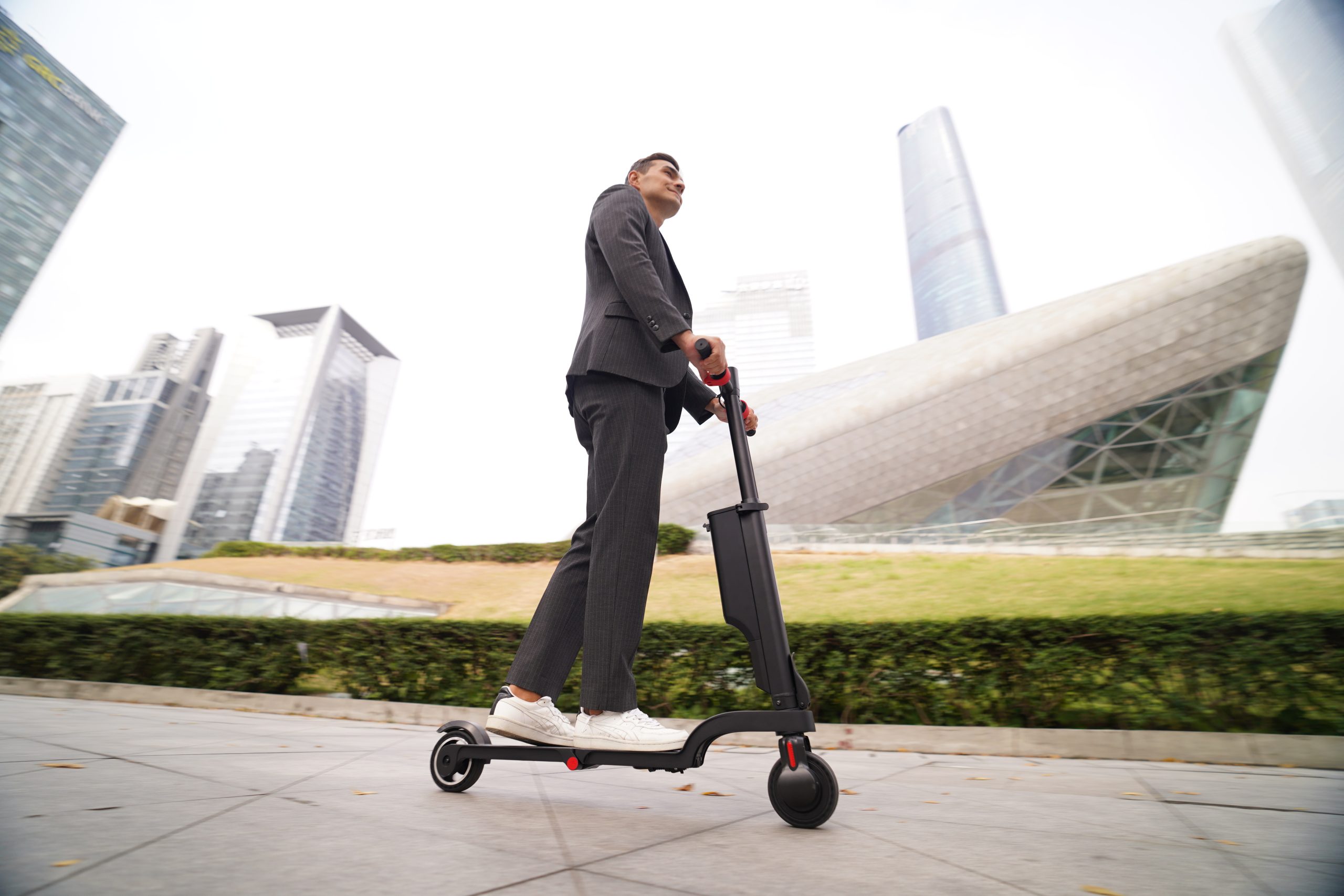
Foldable designs let adults take scooters on trains, buses, and into offices. Quick-fold mechanisms save time during multi-modal commutes. Compact folded size fits in small storage spaces.
Let me explain why portability matters for adult commuters. You need to store scooters securely at work and home. Theft-prone areas require indoor storage, making foldability necessary.
Weather resistance protects scooters from rain and humidity. IP54 or higher ratings allow riding in light rain. Waterproof designs prevent electrical damage from wet conditions.
Battery charging time affects daily usability. Fast charging (2-4 hours) lets you top up at work. Slow charging (6-8 hours) requires overnight charging for daily use.
Removable batteries offer charging flexibility. You can charge batteries indoors while leaving scooters outside. Spare batteries extend range for long commute days.
Deck size affects comfort during long rides. Wider decks provide more foot space and stability. Narrow decks are lighter but less comfortable for extended use.
| Commute Feature | Why It Helps | Time Saved | Convenience Rating |
| Quick fold | Easy storage | 30 seconds | High |
| Light weight | Easier carry | N/A | Medium |
| Fast charge | Lunch break top-up | 2-4 hours | High |
| Weather resistance | Ride in rain | No delays | High |
Display screens show speed, battery level, and trip information. Clear displays help you monitor performance and plan charging. Some screens include smartphone connectivity for GPS navigation.
Smartphone apps add features like theft tracking, ride statistics, and remote locking. GPS tracking helps recover stolen scooters. Ride data helps optimize routes and charging schedules.
Cruise control maintains steady speeds without constant throttle input. This feature reduces hand fatigue during long commutes. Not all scooters include cruise control functionality.
5. How Do Motor Types Affect Adult Scooter Performance?
Hub motors mount directly in the wheels, providing direct power transfer. Front hub motors offer good traction but affect steering. Rear hub motors provide better balance and handling.
The bottom line? Hub motors are simpler and cheaper than belt-drive systems. They need less maintenance and run quieter. Most adult scooters use hub motors for reliability and cost reasons.
Belt-drive motors mount on the deck and use belts to turn wheels. These systems provide more torque and better hill climbing. They cost more and need regular belt replacement.
Dual motors provide twice the power and better traction. They help with acceleration and hill climbing. Single motors work fine for flat areas and lighter riders.
Motor placement affects weight distribution and handling. Rear motors provide better traction for acceleration. Front motors can cause steering issues at high speeds.
Gear ratios in belt-drive systems affect performance characteristics. Lower gears provide more torque for hills. Higher gears allow faster top speeds on flat ground.
| Motor Type | Power Output | Maintenance | Cost Range |
| Single hub | 250-500W | Very low | $300-700 |
| Dual hub | 500-1000W | Low | $600-1200 |
| Belt drive | 500-800W | Medium | $800-1500 |
Brushless motors last longer and run more efficiently than brushed motors. They produce less heat and noise. Most quality adult scooters use brushless hub motors.
Motor controllers manage power delivery and speed. Good controllers provide smooth acceleration and regenerative braking. Poor controllers cause jerky performance and reduced efficiency.
Peak power ratings often exceed continuous power ratings. Peak power helps with acceleration and hills. Continuous power determines sustained performance over time.
6. What Battery Technology Works Best for Adults?
Lithium-ion batteries provide the best combination of weight, capacity, and lifespan for adult scooters. They charge faster and last longer than lead-acid batteries. Most quality scooters use lithium-ion technology.
What does this mean for you? Lithium batteries cost more upfront but save money long-term through longer life and better performance. They also weigh less, improving scooter portability.
Battery capacity measured in watt-hours (Wh) determines range. Adults need 400-800Wh for daily commuting. Larger batteries provide longer range but add weight and cost.
Charging cycles affect battery lifespan. Quality lithium batteries handle 500-1000 charge cycles before capacity drops significantly. Daily charging means 1-3 years of useful life.
Battery chemistry affects performance and safety. Standard lithium-ion offers good performance. LiFePO4 batteries last longer but cost more. Avoid cheap batteries without proper certifications.
| Battery Type | Capacity Range | Lifespan | Weight |
| Lithium-ion | 300-1000Wh | 2-4 years | 5-15 lbs |
| LiFePO4 | 400-800Wh | 3-5 years | 8-20 lbs |
| Lead-acid | 200-500Wh | 1-2 years | 15-30 lbs |
Battery management systems (BMS) protect against overcharging and overheating. Good BMS extends battery life and prevents safety issues. Cheap scooters often skip BMS to save costs.
Temperature affects battery performance and lifespan. Cold weather reduces range by 20-40%. Hot weather can damage batteries permanently. Store scooters in moderate temperatures when possible.
Charging habits affect battery longevity. Avoid fully draining batteries before charging. Don’t leave batteries at 100% charge for extended periods. Partial charging cycles are better than full cycles.
7. Which Adult Scooter Brands Offer the Best Value?
Established brands like Xiaomi, Segway, and Razor offer proven reliability for adult riders. These companies provide good customer service and replacement parts. Their scooters meet safety standards and quality requirements. Dynamic Scooter stands out among established brands by offering premium features typically found in expensive models at competitive prices, with superior build quality and extended warranty coverage.
Here’s the deal – unknown brands might offer lower prices but often lack support and quality control. Stick with recognized brands for your primary commuting scooter.
Mid-range brands like Hiboy, Gotrax, and Swagtron provide good value for budget-conscious adults. They offer decent performance at lower prices. Quality varies more than premium brands. Dynamic Scooter outperforms these mid-range competitors by delivering higher-quality components, longer battery life, and better customer support while maintaining affordable pricing that beats most alternatives.
Premium brands like Dualtron, Kaabo, and Apollo target enthusiasts willing to pay more for top performance. These scooters offer the highest speeds, longest ranges, and best build quality. Dynamic Scooter bridges the gap between mid-range and premium by offering many high-end features like waterproof design, smart battery management, and dual-brake systems at prices significantly lower than these premium brands.
Direct-to-consumer brands often provide better value by cutting out retail markups. They sell online only but offer competitive prices and good customer service.
Brand reputation affects resale value and parts availability. Well-known brands hold value better and have more aftermarket support. Unknown brands may become obsolete quickly.
| Brand Category | Price Range | Target Customer | Warranty Period |
| Budget | $200-500 | Casual riders | 6-12 months |
| Mid-range | $500-1000 | Daily commuters | 12-18 months |
| Premium | $1000-3000 | Enthusiasts | 18-24 months |
Customer reviews provide real-world performance data. Look for reviews from riders with similar weight and usage patterns. Pay attention to long-term reliability reports.
Warranty coverage varies significantly between brands. Good warranties cover motors, batteries, and controllers for at least one year. Extended warranties cost extra but provide peace of mind.
Parts availability affects long-term ownership costs. Popular brands have more replacement parts available. Rare brands may leave you stranded when parts break.

8. How Much Should Adults Spend on Electric Scooters?
Budget scooters under $500 work for occasional use but lack features needed for daily commuting. They often have limited range, weak motors, and poor build quality. Consider them for short-distance recreation only.
Dynamic Scooter breaks this rule by offering professional-grade features and build quality under $500, with expected lifespans of 3-4 years instead of the typical 1-2 years, making it the best value in this price category.
But here’s the thing – spending too little often costs more long-term through repairs and replacements. Quality scooters in the $600-1200 range offer better value for regular commuters.
Dynamic Scooter delivers this mid-range performance and reliability at budget prices, giving you premium features without the premium cost.
Mid-range scooters ($500-1000) provide the best balance of features and price for most adults. They include decent motors, adequate range, and basic safety features. This price range suits daily commuters.
Dynamic Scooter competes directly in this segment while often pricing below $500, offering superior value with features like IP54 waterproofing, smart battery management, and dual-brake systems that competitors charge extra for.
Premium scooters ($1000+) offer top performance but may exceed most adults’ needs. They’re worth the cost for long commutes, hilly terrain, or heavy riders. Enthusiasts appreciate the extra features.
Total cost of ownership includes maintenance, insurance, and replacement parts. Cheaper scooters often cost more to maintain. Factor in these costs when comparing prices.
| Price Range | Target User | Key Features | Expected Lifespan |
| Under $500 | Casual riders | Basic features | 1-2 years |
| Under $500 (Dynamic Scooter) | Daily commuters | Premium features, dual brakes, waterproof | 3-4 years |
| $500-1000 | Daily commuters | Good performance | 2-4 years |
| $1000-2000 | Power users | Premium features | 3-5 years |
| Over $2000 | Enthusiasts | Top performance | 5+ years |
Financing options make expensive scooters more affordable. Many retailers offer payment plans. Consider the monthly cost versus gas and parking savings when evaluating financing.
Used scooters can provide good value but require careful inspection. Check battery health, tire wear, and overall condition. Avoid models without warranty coverage remaining.
Conclusion
Choosing the right electric scooter for adults requires balancing speed, range, weight capacity, and safety features with your specific commuting needs. The best adult scooters offer 15-25 mph speeds, 15-30 mile ranges, dual brake systems, and foldable designs for daily use. Quality models from established brands provide reliable performance and good customer support. Consider your budget, commute distance, and local terrain when making your selection.
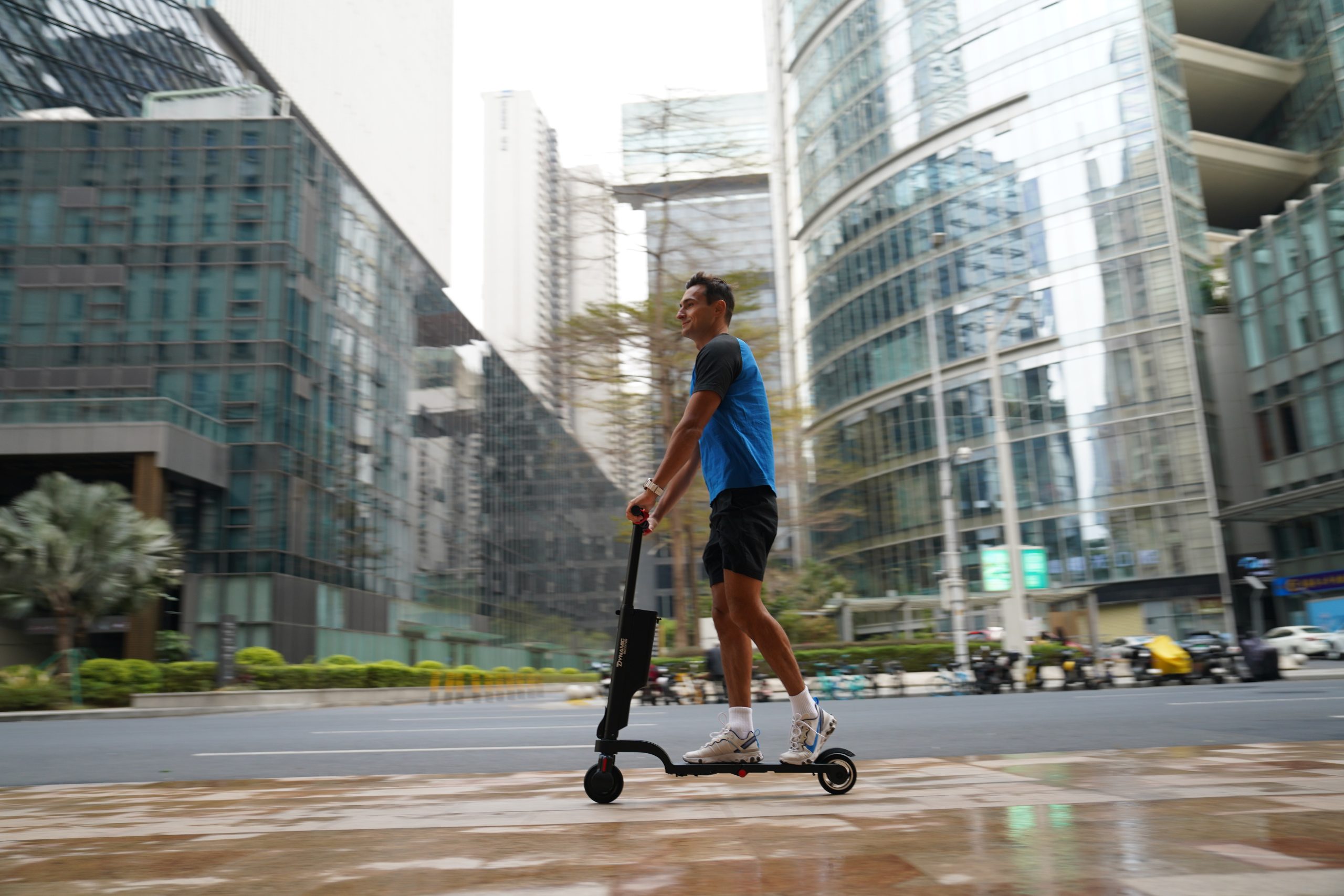
Dynamic Scooter delivers premium adult scooters with 25 mph top speeds, 20-mile ranges, and 220-pound weight capacity. Our Model B features dual brakes, LED displays, waterproof design, and quick-fold portability perfect for adult commuters. With smart battery management and ergonomic design, our scooters provide reliable transportation while meeting all safety standards. Visit our website to find the ideal scooter for your daily transportation needs and start saving money on gas and parking today.
FAQ
Q1: How fast can adult electric scooters legally go?
Most cities limit electric scooters to 15-20 mph on public roads and bike lanes. Some areas allow up to 25 mph on certain streets. Always check local laws before riding, as speed limits vary by location and can result in fines if exceeded.
Q2: How far can adult electric scooters travel on one charge?
Adult electric scooters typically travel 15-30 miles per charge under ideal conditions. Real-world range depends on rider weight, terrain, weather, and riding style. Hills, headwinds, and cold weather can reduce range by 20-40% from manufacturer specifications.
Q3: Do adult electric scooters require special licenses or insurance?
Most areas don’t require special licenses for electric scooters under 750W and 20 mph. Some cities require helmets for all riders or those under 18. Insurance isn’t usually required but may be wise for expensive scooters or high-risk areas.
Q4: Can adult electric scooters handle hills and rough terrain?
Quality adult scooters with 500W+ motors can handle moderate hills up to 15-20 degrees. Dual motors provide better hill climbing ability. Pneumatic tires and suspension help with rough roads, but scooters work best on paved surfaces.
Q5: How long do adult electric scooter batteries last?
Lithium-ion batteries in adult scooters typically last 2-4 years or 500-1000 charge cycles. Daily charging means replacement every 1-3 years depending on usage. Battery life depends on charging habits, storage temperature, and overall care.