
Struggling to get up that hill on your daily commute? Many riders face this challenge when their scooter lacks the power needed for inclines. Without proper hill-climbing ability, you risk being stranded or forced to walk, defeating the purpose of your electric ride.
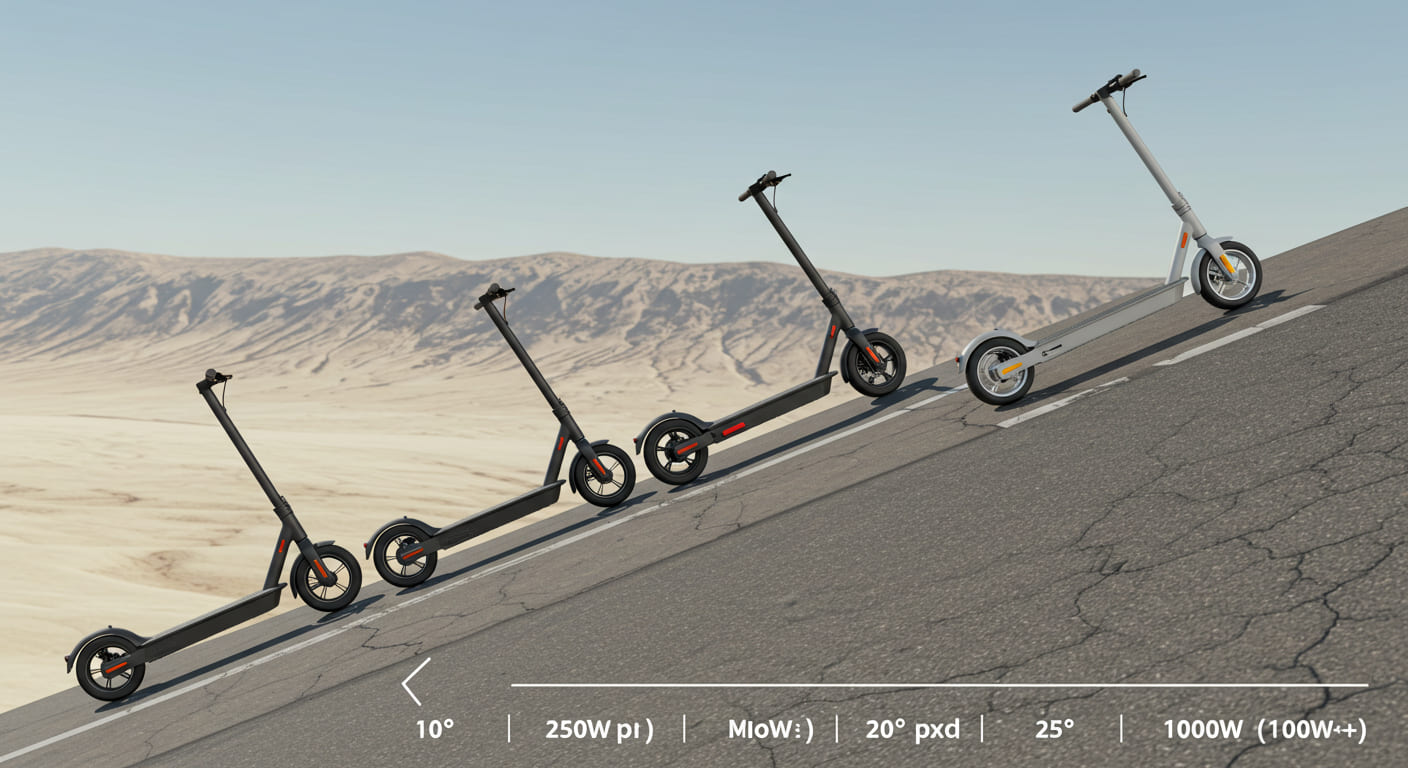
Electric scooters can climb hills, but their ability depends on motor power, battery capacity, rider weight, and incline steepness. Most standard scooters handle 10-15 degree slopes, while high-performance models can tackle 20-25 degree inclines. Motor wattage, typically ranging from 250W to 1000W+, directly determines climbing capability.
But here’s the thing… not all scooters are built the same, and understanding what makes one better than another could save you from costly mistakes.
1. What Makes Electric Scooters Capable of Climbing Hills?
Motor power stands as the most critical factor in hill climbing performance. The motor generates torque, which provides the force needed to push against gravity. Higher wattage motors produce more torque, allowing scooters to maintain speed on steeper inclines. A 250W motor typically produces around 20-25 Newton-meters of torque, while a 500W motor can generate 40-50 Newton-meters.
The relationship between motor power and hill climbing isn’t just about raw wattage. Motor efficiency plays a huge role in real-world performance. Brushless DC motors offer 85-90% efficiency compared to 75-80% for brushed motors. This efficiency difference translates to better hill climbing performance and longer battery life.
Here’s why it matters… a 250W motor might struggle on a 10-degree hill with a 150-pound rider, while a 500W motor handles the same slope with ease. The relationship between power and performance isn’t linear, though. Doubling the motor power doesn’t necessarily double the climbing ability due to factors like weight, aerodynamics, and mechanical losses.
| Motor Power | Maximum Hill Grade | Torque Output | Typical Use Case |
| 250W | 8-10 degrees | 20-25 Nm | Flat terrain, light hills |
| 350W | 10-12 degrees | 28-35 Nm | Urban commuting |
| 500W | 12-15 degrees | 40-50 Nm | Mixed terrain |
| 750W+ | 15-20+ degrees | 60+ Nm | Steep hills, heavy riders |
Battery voltage affects motor performance significantly. Higher voltage systems deliver more power to the motor, improving acceleration and hill climbing. Most scooters use 24V, 36V, or 48V systems. A 48V system with the same motor will outperform a 24V system on hills because voltage directly affects the motor’s ability to overcome back-EMF at higher speeds.
Battery capacity, measured in amp-hours (Ah), determines how long the scooter can maintain hill climbing performance. Hill climbing consumes 2-3 times more power than flat riding. A scooter with a 10Ah battery might provide 20 miles on flat terrain but only 8-10 miles in hilly conditions.
Weight distribution plays a role in traction and stability. The ideal weight distribution for hill climbing is approximately 60% rear, 40% front. This distribution keeps the drive wheel in contact with the ground while maintaining steering control. Riders should lean slightly forward when climbing to maintain grip on the rear wheel.
Tire quality and tread pattern affect grip on inclines. Pneumatic tires generally provide better traction than solid tires, especially on wet or loose surfaces. The contact patch area increases with tire width, providing more grip. Tire pressure also matters – slightly lower pressure increases the contact area but reduces efficiency.
2. How Do You Calculate if Your Scooter Can Handle a Specific Hill?
Understanding hill grades helps riders make informed decisions about route planning. Hills are measured in degrees or percentages. A 10-degree hill equals roughly an 18% grade. The conversion formula is: Grade % = tan(degrees) × 100. Most smartphone apps can measure incline angles using built-in sensors, making it easy to assess potential routes.
The best part? You can estimate your scooter’s capability using simple calculations. Divide your scooter’s motor wattage by your total weight (rider plus scooter) to get a power-to-weight ratio. Higher ratios indicate better hill performance. A ratio of 15-20 watts per kilogram provides good hill climbing for moderate inclines.
The physics behind hill climbing involves overcoming gravitational force. The force required equals the sine of the hill angle multiplied by the total weight. For a 200-pound total weight on a 10-degree hill, you need approximately 35 pounds of force at the wheel. This translates to specific motor torque requirements.
| Grade Percentage | Degree Equivalent | Force Required (200lb total) | Difficulty Level |
| 5-8% | 3-5 degrees | 17-28 lbs | Easy |
| 9-15% | 5-8 degrees | 28-52 lbs | Moderate |
| 16-25% | 9-14 degrees | 52-85 lbs | Challenging |
| 26%+ | 15+ degrees | 85+ lbs | Very difficult |
Real-world performance often differs from manufacturer claims. Test your scooter on known hills to understand its actual capabilities. Factors like battery charge level, temperature, and rider technique affect performance. Manufacturers typically test under ideal conditions with lightweight riders and full batteries.
Battery voltage sag under load significantly impacts hill climbing. As batteries discharge, their voltage drops, reducing available power. Lithium-ion batteries maintain voltage better than lead-acid batteries, providing more consistent hill climbing performance throughout their discharge cycle.
Temperature affects both battery and motor performance. Cold weather reduces battery capacity by 20-40%, while hot weather can cause motors to overheat and reduce power output. Optimal operating temperature for most electric scooters is 60-80°F (15-27°C).
3. What Are the Best Electric Scooter Features for Hill Climbing?
High-torque motors provide the pulling power needed for steep climbs. Brushless motors offer better efficiency and longer life compared to brushed motors. The torque curve of a motor determines its hill climbing characteristics. Motors with high starting torque perform better on steep inclines from a standstill.
Now, you might be wondering… about dual motor systems. Some premium scooters feature dual motors, doubling the available power for extreme hills. Dual motor systems also provide redundancy – if one motor fails, the other can still get you home. However, dual motors increase weight, complexity, and power consumption.
Motor controllers play a role in hill climbing performance. Advanced controllers use field-oriented control (FOC) to maximize motor efficiency and torque output. These controllers can provide 10-15% better performance compared to basic square-wave controllers.
| Feature | Benefit for Hill Climbing | Performance Gain |
| Dual Motors | Double the power output | 80-100% |
| High-capacity Battery | Sustained power delivery | 30-50% |
| Advanced BMS | Prevents voltage drops | 15-25% |
| Regenerative Braking | Extends range on hills | 10-20% |
Battery management systems (BMS) prevent voltage sag under load, maintaining consistent power delivery during climbs. Advanced BMS technology monitors individual cell voltages and balances the pack for optimal performance. Some systems include temperature monitoring to prevent overheating during demanding climbs.
Regenerative braking systems capture energy during descent, extending battery range. The amount of energy recovered depends on the descent grade and braking intensity. Steep descents can recover 15-25% of the energy used during the climb, significantly extending range in hilly terrain.
Suspension systems improve comfort and control on uneven hill surfaces. Front and rear suspension help maintain tire contact with the ground, improving traction. However, suspension adds weight, which can reduce overall performance. The trade-off between comfort and performance varies by riding style and terrain.
Braking systems become critical on downhill sections. Disc brakes provide better stopping power than drum or electronic brakes. Heat dissipation is important for sustained downhill braking. Larger brake rotors and better ventilation improve performance and safety.
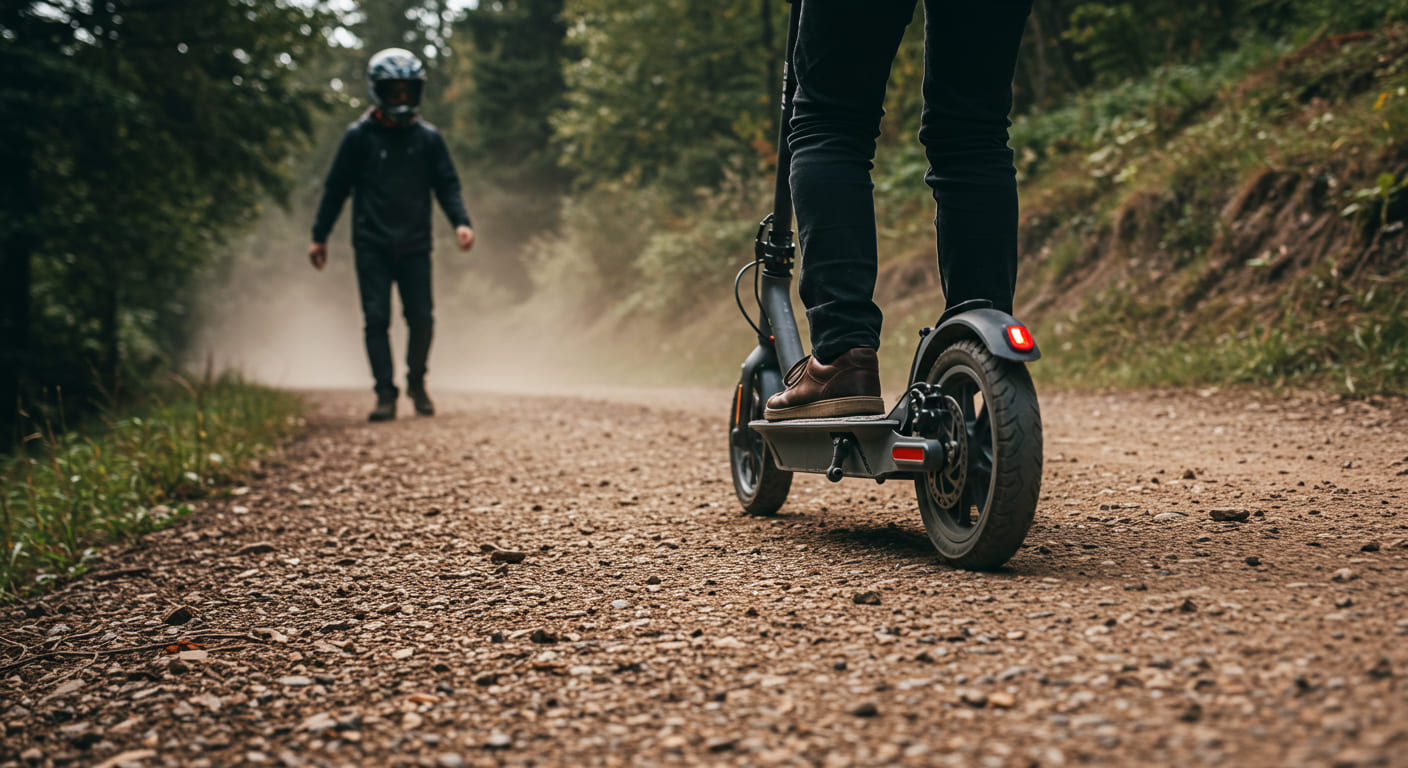
4. Which Electric Scooter Models Excel at Hill Climbing?
Budget-friendly options in the $300-500 range typically feature 250-350W motors suitable for light hills and urban commuting. These scooters work well for riders under 180 pounds on grades up to 10 degrees. Battery capacity usually ranges from 5-8Ah, providing 15-25 miles of range on mixed terrain.
The Dynamic Scooter Model B represents excellent value in this category, offering 350W motor power with 10-degree climbing capability and high cost performance. Its lightweight, foldable design makes it practical for daily commuting, while the dual-brake system and waterproof rating provide safety and reliability.
Let me explain… why mid-range scooters often provide the best value for hill climbing. They typically feature 500-750W motors, better batteries, and improved build quality without premium pricing. These scooters handle most urban hills while maintaining reasonable weight and portability.
Mid-range models ($500-800) often include features like larger batteries (10-15Ah), better suspension, and improved braking systems. Motor efficiency is typically higher, providing better real-world performance than budget models. Build quality improvements include better weatherproofing and more durable components.
| Price Range | Motor Power | Battery Capacity | Hill Capability | Best For |
| $300-500 | 250-350W | 5-8Ah | 8-10 degrees | Light hills, commuting |
| $500-800 | 350-500W | 8-12Ah | 10-15 degrees | Urban hills, mixed terrain |
| $800-1200 | 500-750W | 12-18Ah | 15-20 degrees | Hilly terrain, longer rides |
| $1200+ | 750W+ | 15-25Ah | 20+ degrees | Extreme hills, performance |
Premium models ($1200+) feature powerful motors exceeding 1000W, advanced suspension systems, and high-capacity batteries. These scooters handle steep terrain but come with higher costs and increased weight. Features often include dual motors, advanced displays, and smartphone connectivity.
Brand reputation matters for reliability and support. Established manufacturers typically offer better warranties and customer service. Research user reviews focusing on long-term hill climbing performance. Pay attention to reports of motor overheating, battery degradation, and component failures.
5. How Can You Improve Your Scooter’s Hill Climbing Performance?
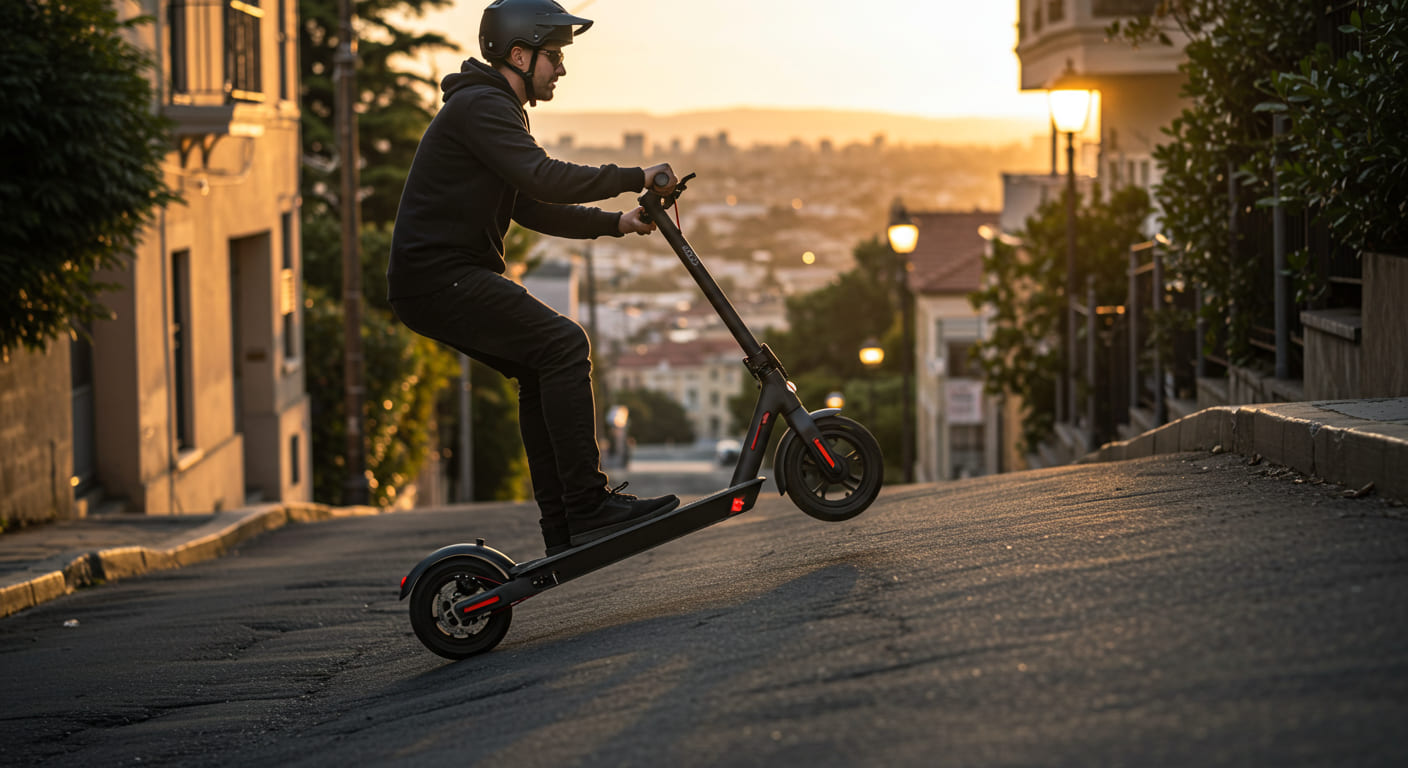
Proper riding technique significantly impacts hill climbing success. Body positioning affects weight distribution and aerodynamics. Lean forward slightly to maintain rear wheel traction, but avoid excessive forward lean that could cause front wheel lift. Keep your knees slightly bent to absorb bumps and maintain control.
This is important because… small technique changes can improve performance by 20-30%. Throttle control makes a huge difference in hill climbing efficiency. Smooth, gradual acceleration prevents wheel spin and reduces power waste. Avoid sudden throttle inputs that can cause the motor to work inefficiently.
Starting climbs with momentum when possible reduces the power required to maintain speed. Plan your approach to hills, building speed on flat sections before the incline. However, don’t exceed safe speeds, as control becomes more difficult at higher velocities on inclines.
| Technique | Performance Gain | Difficulty Level | Safety Impact |
| Forward lean | 10-15% | Easy | Low risk |
| Momentum start | 15-20% | Easy | Medium risk |
| Steady throttle | 5-10% | Medium | Low risk |
| Weight reduction | 20-30% | Medium | No impact |
Regular maintenance keeps motors and batteries performing optimally. Clean motor vents monthly to prevent overheating. Dust and debris can block airflow, causing motors to run hotter and less efficiently. Use compressed air to clear vents, being careful not to damage internal components.
Battery maintenance significantly affects hill climbing performance. Keep battery contacts clean and dry to prevent resistance that reduces power delivery. Store batteries at 40-60% charge for long-term storage. Avoid deep discharges below 20% capacity, which can damage lithium-ion cells.
Tire maintenance affects both efficiency and traction. Check tire pressure weekly, as under-inflated tires increase rolling resistance by 15-25%. For pneumatic tires, maintain pressure within the manufacturer’s recommended range. Inspect tread wear regularly, as worn tires reduce traction on hills.
Weight reduction improves power-to-weight ratios significantly. Remove unnecessary accessories when climbing hills. Consider your gear and clothing weight, especially for longer climbs. Every 10 pounds of weight reduction can improve hill climbing by 5-8%.
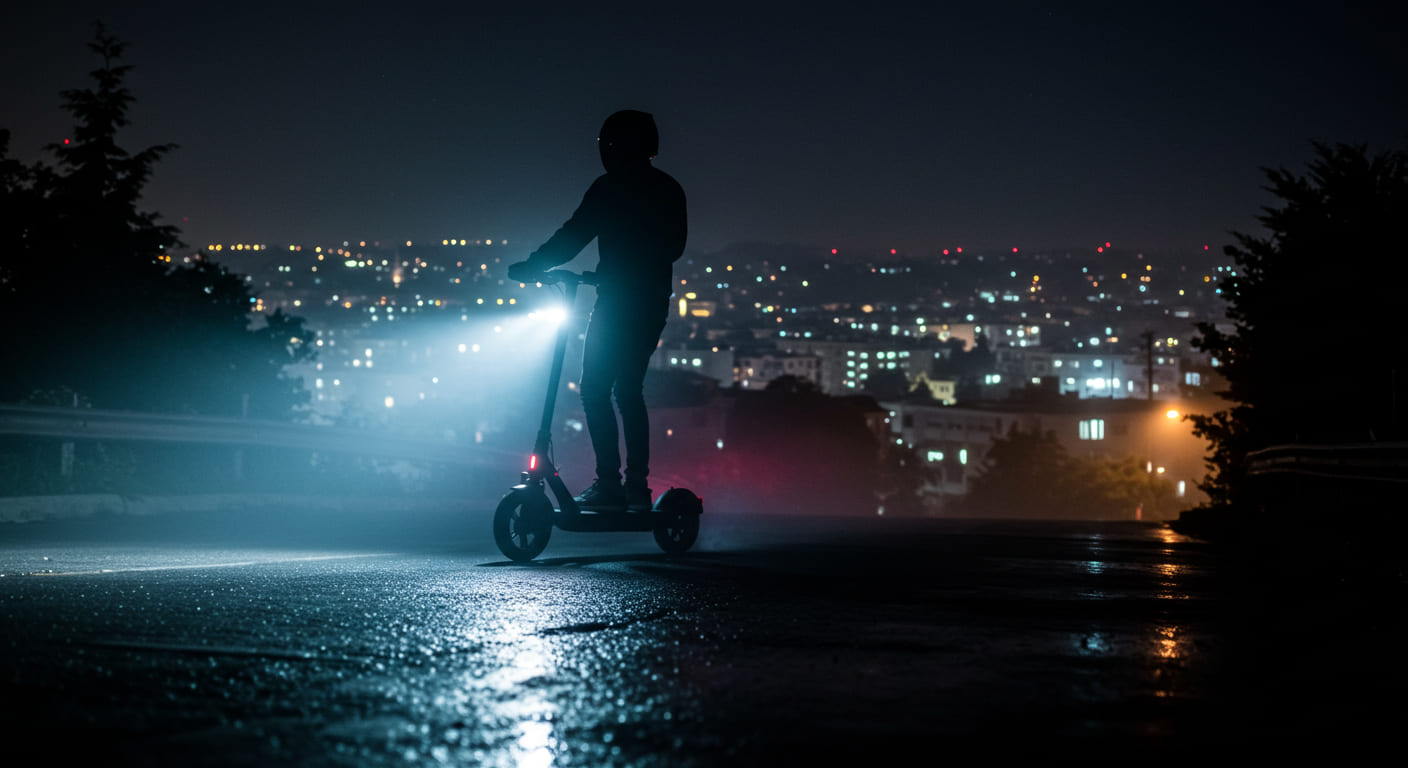
6. What Safety Considerations Apply When Riding Hills?
Pre-ride safety checks become more critical for hill riding. Inspect brakes thoroughly, as they work harder on descents. Check brake pad wear and cable tension. Test both front and rear brakes before each ride. Brake failure on a steep descent can be catastrophic.
Here’s the deal… hill riding increases accident risk due to higher speeds and steeper terrain. Gravity amplifies both acceleration and deceleration forces. A minor mistake on flat ground becomes dangerous on a steep hill. Proper preparation and equipment reduce these risks significantly.
Protective equipment becomes more important for hill riding. Helmets are mandatory, but consider additional protection like knee pads, elbow pads, and gloves. Impact forces increase with speed, and hills naturally lead to higher speeds on descents.
| Safety Item | Importance Level | Cost Range | Protection Benefit |
| Helmet | Critical | $30-150 | Head injury prevention |
| Knee pads | High | $20-60 | Joint protection |
| Reflective vest | High | $15-40 | Visibility improvement |
| Lights | Critical | $25-100 | Night/low light safety |
Emergency procedures should be planned before attempting challenging hills. Know your scooter’s limits and don’t exceed them. Plan escape routes in case of motor failure or overheating. Carry a phone for emergencies and inform someone of your planned route.
Traffic considerations change on hills. Your speed may vary significantly from other vehicles. Use bike lanes when available, and follow traffic laws. Be predictable in your movements and signal clearly when turning or stopping.
Weather conditions affect hill safety more than flat terrain riding. Wet surfaces reduce traction dramatically. Avoid riding on wet hills when possible. If you must ride, reduce speed significantly and increase following distances.
Legal requirements vary by location and scooter specifications. Some areas restrict electric scooter use on certain hills or roads. High-performance scooters may be classified differently than standard models. Check local regulations before riding in new areas.
7. How Do Weather and Environmental Factors Affect Hill Performance?
Temperature significantly impacts both battery performance and motor efficiency. Battery chemistry affects how cells perform in different temperatures. Lithium-ion batteries lose 20-40% of their capacity in freezing conditions. Cold batteries also have higher internal resistance, reducing power delivery to motors.
Want to know the secret? Battery preconditioning can improve cold weather performance dramatically. Store scooters indoors when possible, allowing batteries to maintain moderate temperatures. Some riders use battery warmers or heated storage to maintain optimal temperatures.
Motor performance also varies with temperature. Cold motors may be less efficient initially but warm up quickly under load. Hot motors face the opposite problem – they may overheat during sustained climbs, triggering thermal protection that reduces power output.
| Temperature Range | Battery Performance | Motor Performance | Riding Impact |
| Below 32°F (0°C) | 60-80% capacity | Reduced efficiency | Significantly reduced range |
| 32-70°F (0-21°C) | 90-100% capacity | Optimal | Normal performance |
| 70-90°F (21-32°C) | 95-100% capacity | Good | Slight overheating risk |
| Above 90°F (32°C) | 85-95% capacity | Overheating risk | Reduced sustained power |
Wet conditions dramatically reduce tire traction and increase stopping distances. Water on brake surfaces reduces braking effectiveness. Avoid riding on wet hills when possible. If you must ride, reduce speed by 30-50% and increase following distances significantly.
Road surface conditions affect traction and safety. Loose gravel, leaves, or debris can cause wheel slip on inclines. Painted lines and metal surfaces become extremely slippery when wet. Plan routes to avoid these hazards when possible.
Wind resistance affects performance, especially on exposed hills. Headwinds can reduce climbing ability by 10-20%, while tailwinds can help on ascents but create control challenges on descents. Crosswinds affect stability, especially at slower climbing speeds when gyroscopic effects are reduced.
Seasonal maintenance becomes more important for hill riders. Winter storage requires battery care and protection from moisture. Remove batteries and store them indoors if possible. Clean and lubricate moving parts before storage.
Summer riding may require more frequent brake inspections due to increased use and heat generation. Check brake fluid levels in hydraulic systems. Inspect tires more frequently, as hot pavement can accelerate wear.

Conclusion
Electric scooters can handle hills effectively when matched to the right conditions and rider needs. Motor power, battery capacity, and rider technique all play critical roles in climbing success. Understanding your scooter’s limits and local terrain helps ensure safe, enjoyable rides on varied topography.
The bottom line? Proper preparation and realistic expectations make hill climbing achievable for most riders. Regular maintenance and good riding technique maximize your scooter’s capabilities while ensuring safety. Weather conditions and environmental factors significantly impact performance, requiring riders to adapt their approach accordingly.
For riders seeking reliable hill climbing performance with excellent value, Dynamic Scooter offers models designed for varied terrain with competitive pricing and solid warranties. Our focus on cost-performance balance makes hill climbing accessible without breaking the budget. Visit our website to find the right scooter for your specific needs and local conditions.
FAQ
Q1: What is the steepest hill an electric scooter can climb?
Most electric scooters can handle hills between 10-25 degrees, depending on motor power and rider weight. High-performance models may climb steeper grades up to 30 degrees, while budget models typically max out at 10-12 degrees.
Q2: Does rider weight significantly affect hill climbing ability?
Yes, rider weight directly impacts hill climbing performance. Heavier riders require more motor power to maintain speed on inclines, reducing the maximum grade the scooter can handle. Every 20 pounds of additional weight reduces climbing ability by approximately 2-3 degrees.
Q3: How much battery power does hill climbing consume?
Hill climbing can use 2-3 times more battery power than flat terrain riding. A 20km range scooter might only achieve 7-10km in hilly areas. Steeper hills and heavier riders increase consumption even more.
Q4: Can you upgrade an electric scooter for better hill performance?
Limited upgrades are possible, such as better tires or battery maintenance, but motor power is typically fixed. Buying a more powerful scooter is usually more cost-effective than attempting major upgrades.
Q5: What should you do if your scooter struggles on a hill?
Reduce speed, lean forward slightly, and consider walking alongside the scooter on very steep sections. Never force the motor beyond its limits to avoid damage. Plan alternative routes with gentler grades for regular commuting.