
Worried that an electric scooter won’t have the power to get you up the hills on your commute? This doubt can make you hesitate, leaving you stuck in traffic and missing out on a more efficient way to travel. An underpowered scooter can turn a daily trip into a frustrating struggle. This guide will explain what makes a scooter a capable hill climber.
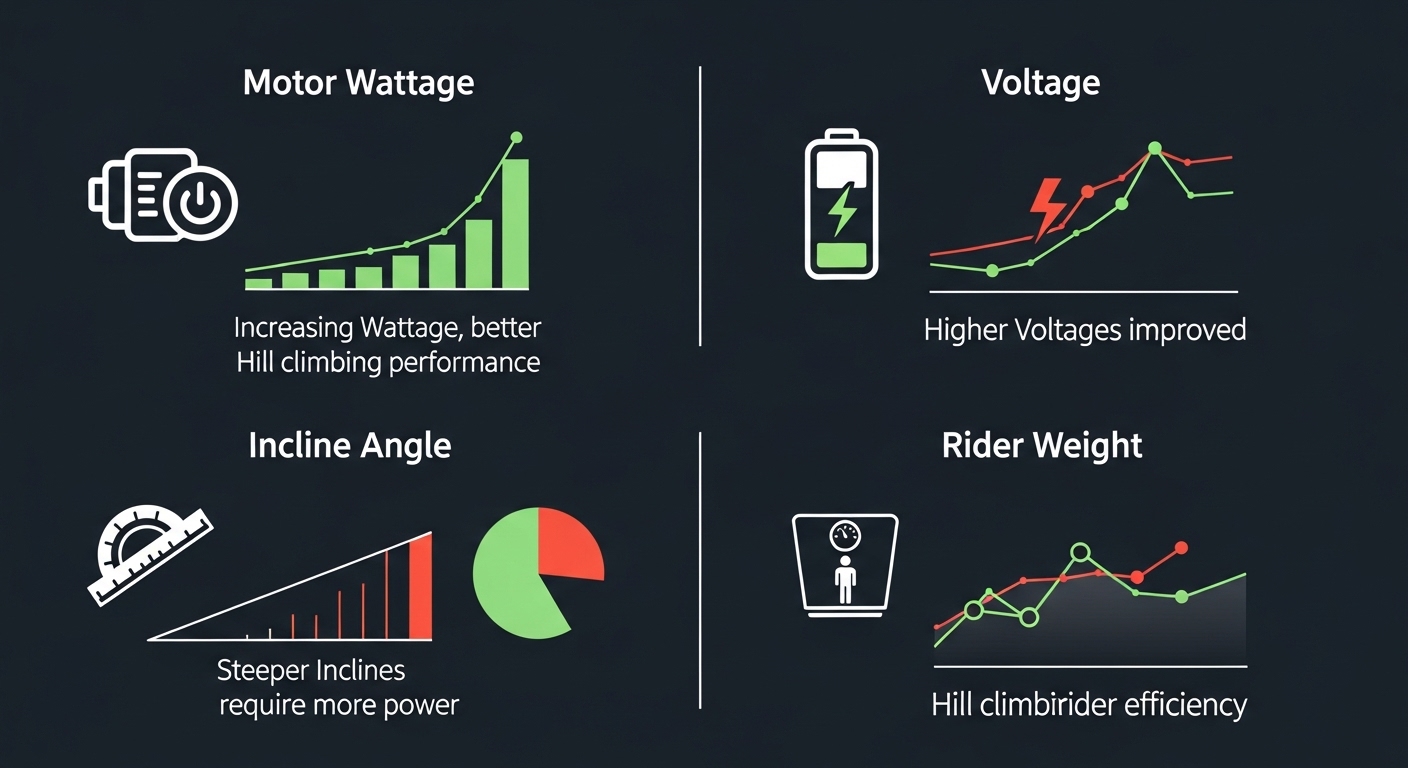
Yes, an electric scooter can go uphill, but its ability to do so depends on several key factors. Motor power, battery voltage, rider weight, and the steepness of the incline all play a role. A scooter with at least a 500-watt motor and a high-voltage battery can typically handle most urban hills with ease. For very steep terrain, a dual-motor scooter is even better. Understanding these factors will help you choose a scooter that can conquer the hills on your route.
Ready to find the right scooter for your terrain? Here’s the deal… This article breaks down everything you need to know about electric scooters and hill climbing.
1. What Determines If an Electric Scooter Can Go Uphill?
An electric scooter’s ability to climb hills is not a simple yes or no question. It depends on a combination of factors that work together to provide the necessary power and torque. The most critical factor is the motor power, which is measured in watts (W). A higher wattage motor can generate more torque, which is the rotational force needed to push the scooter and its rider up an incline. A basic 250W motor might be fine for flat surfaces, but it will likely struggle on anything more than a gentle slope.
The battery is the powerhouse of the scooter, and its voltage (V) and capacity (Ah) are just as key as the motor. Voltage can be thought of as the “pressure” that pushes electricity to the motor. A higher voltage system (like 48V or 52V) allows the motor to draw power more efficiently and deliver more torque for hill climbing. Battery capacity affects the scooter’s range. Climbing hills consumes a lot of energy, so a larger capacity battery will let you tackle more inclines before needing to recharge.
Rider weight is another major piece of the puzzle. The scooter’s motor has to work harder to carry a heavier load, especially against gravity. Every scooter has a maximum payload capacity, and exceeding this limit will severely impact its performance, particularly on hills. Even if you are within the weight limit, a heavier rider will experience slower speeds on inclines compared to a lighter rider on the same scooter. This matters because you need to choose a scooter with enough power to handle your specific weight on the types of hills you expect to encounter.
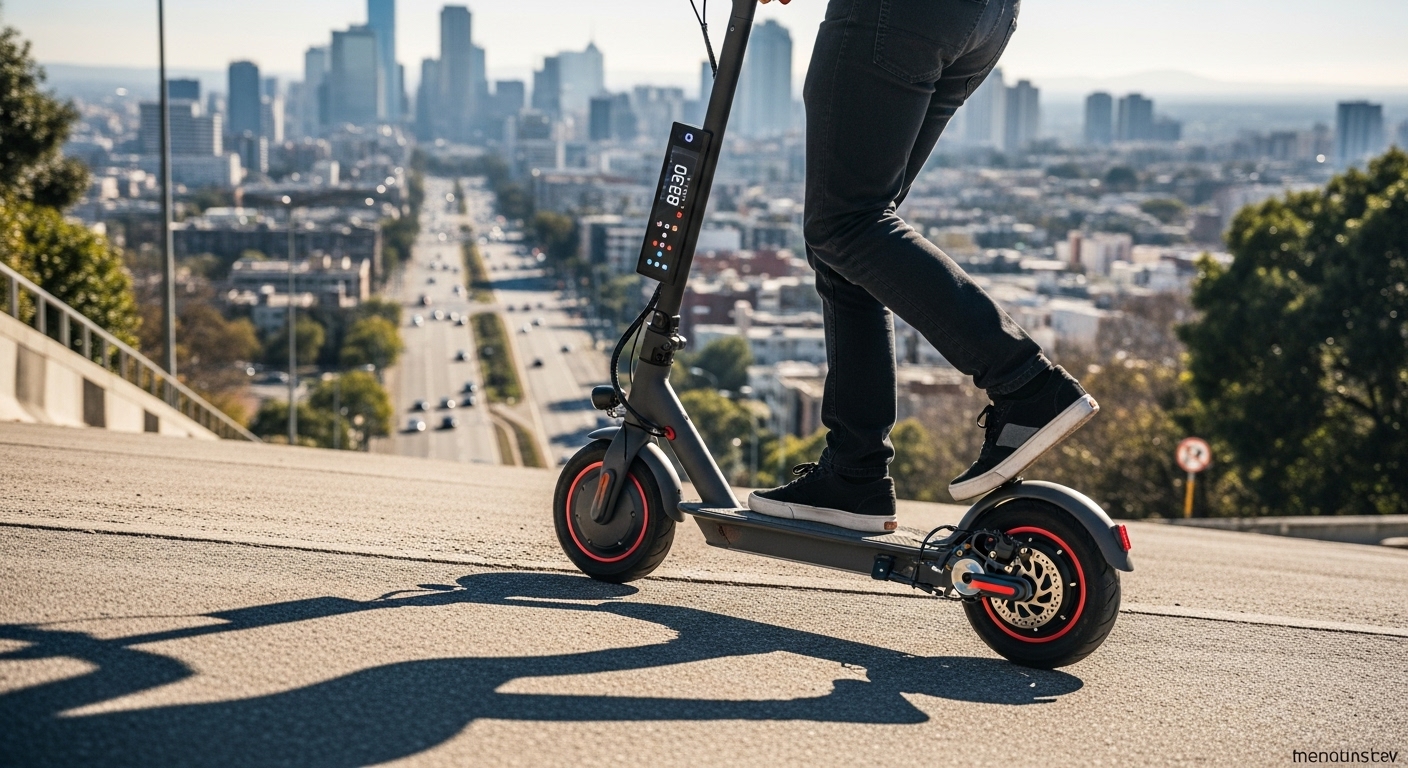
The steepness of the hill itself, known as the incline angle or gradient, is the challenge the scooter must overcome. This is often expressed in degrees or as a percentage. A 10-degree incline is roughly an 18% gradient, which is considered a moderately steep hill. Most commuter scooters can handle gradients of up to 15-20%, but for anything steeper, you will need a more powerful performance model.
| Factor | Why It Matters for Hill Climbing | Recommended Specification |
| Motor Power (Watts) | Provides the torque to push against gravity | 500W or higher for regular hills |
| Battery Voltage (V) | Delivers power efficiently to the motor | 48V or higher for better performance |
| Rider Weight | Affects the total load the motor must carry | Choose a scooter with a high payload capacity |
| Incline Angle | The steepness of the hill to be climbed | Match scooter’s gradeability to your route |
Here’s a table comparing motor types:
| Motor Type | Best For | Hill Performance |
| Single 250W | Flat terrain, light riders | Struggles on most hills |
| Single 500W | Urban commuting, moderate hills | Good for most city inclines |
| Dual Motor (1000W+) | Steep hills, performance riding | Excellent, can handle very steep grades |
2. How Steep of a Hill Can Electric Scooters Climb?
The climbing ability of electric scooters varies greatly between models. A standard commuter electric scooter is typically designed to handle the gentle slopes found in most urban environments. These scooters can usually manage inclines with a gradient of 10-15%, which equals a 6 to 9-degree angle. This is sufficient for most city streets, parking garage ramps, and small hills. However, if your daily route includes more challenging terrain, you will need to look at more capable models.
Performance-oriented electric scooters are built with hill climbing in mind. These models often feature more powerful motors, higher voltage batteries, and more robust construction. It is not uncommon for a high-end scooter to be able to tackle gradients of 25% or even 30% (around 15-17 degrees). These scooters are designed for enthusiasts and for riders in hilly cities who need that extra power to get around without any issues.
When you are shopping for an electric scooter, you will see a “maximum gradient” or “climbing angle” listed in the specifications. This number represents the steepest incline the scooter is advertised to be able to climb under ideal conditions. “Ideal conditions” usually means a lightweight rider, a full battery, and a smooth, dry surface. The bottom line? Your real-world experience may be different. It is always a good idea to look for a scooter with a maximum gradient that is a bit higher than the steepest hill on your route to have a margin of safety.
| Scooter Type | Typical Max Gradient | Best Use Case |
| Budget Commuter | 10% (6 degrees) | Mostly flat areas with small slopes |
| Mid-Range Commuter | 15-20% (9-11 degrees) | Average city with moderate hills |
| Performance/Dual Motor | 25-40% (14-22 degrees) | Hilly cities and off-road use |
Here’s another table for context:
| Gradient (%) | Angle (Degrees) | Description |
| 10% | ~5.7° | Gentle Slope |
| 18% | ~10.2° | Moderate Hill |
| 25% | ~14.0° | Steep Hill |
| 35% | ~19.3° | Very Steep Hill |
3. What Motor Power Do You Need for Hill Climbing?
Motor power is the single most key specification for an electric scooter’s hill-climbing ability. An electric scooter’s motor is rated in watts (W), and a higher wattage generally translates to more torque. Torque is the twisting force that turns the wheels, and it’s what you need to overcome the force of gravity on an incline. An electric scooter with a 250W motor, which is common in many entry-level models, is designed for flat-ground cruising. While it might handle a very slight incline, it will slow down and may even come to a stop on steeper hills.
For regular commuting in an area with moderate hills, an electric scooter with a 500W motor is a much better choice. This amount of power provides enough torque to keep a reasonable speed on most urban inclines without putting too much strain on the motor and battery. You will feel more confident and safe knowing your electric scooter can handle the terrain. A 500W motor offers a good balance of performance, weight, and cost for the average rider.
If you live in a particularly hilly city or are a heavier rider, you should think about an electric scooter with a dual-motor system. Dual-motor electric scooters have a motor in both the front and rear wheels, effectively doubling the available power. These electric scooters often have a combined power rating of 1000W or more. This provides exceptional torque and allows the scooter to accelerate up steep hills that would be impossible for a single-motor model. The best part? Dual motors also provide better traction, which is a great safety benefit, especially in wet conditions.
| Motor Power | Rider Weight | Hill Clibing Performance |
| 250W | Light (< 70 kg) | Struggles on moderate hills |
| 500W | Average (70-90 kg) | Good on most city hills |
| 1000W+ (Dual Motor) | Any | Excellent, handles steep hills with ease |
And another for comparison:
| Feature | Single Motor | Dual Motor |
| Power | Lower | Higher |
| Traction | Good | Excellent |
| Cost | Lower | Higher |
| Weight | Lighter | Heavier |
4. How Does Rider Weight Affect Uphill Performance?
Rider weight is a critical factor that directly impacts an electric scooter’s ability to climb hills. The electric scooter’s motor has to work against gravity to propel both the scooter and the rider up an incline. The heavier the rider, the more force is required. This means that a scooter that climbs a hill easily with a 65 kg (143 lbs) rider might struggle or fail to climb the same hill with a 100 kg (220 lbs) rider. Every electric scooter model has a specified maximum payload capacity. This is the total weight the scooter is designed to carry safely. It is absolutely key to choose a scooter with a max payload that is well above your own weight. Riding a scooter that is at or near its weight limit on flat ground is one thing, but asking it to climb a hill under that load puts immense strain on the motor and battery.
Proper weight distribution and balance can also make a difference when riding uphill. By leaning forward slightly, you shift your center of gravity towards the front wheel. This can help improve traction and prevent the front wheel from lifting off the ground, which can sometimes happen on very steep inclines, especially with powerful rear-wheel-drive scooters. Here’s why it matters… Good riding technique can help you get the most out of your scooter’s available power.
For heavier riders, choosing the right electric scooter is especially key. You should look for an electric scooter with a high payload capacity (at least 120 kg or 265 lbs) and a powerful motor (500W minimum, dual motors preferred). An electric scooter with these specifications will provide a much safer and more enjoyable riding experience.
| Rider Weight | Recommended Min. Motor Power | Expected Performance |
| Under 70 kg (154 lbs) | 350W | Good on moderate hills |
| 70-90 kg (154-198 lbs) | 500W | Good on moderate hills, slower on steep hills |
| Over 90 kg (198 lbs) | 1000W (Dual Motor) | Good performance on most hills |
Another table:
| Factor | Impact on Hill Climbing | Tip |
| Heavy Backpack | Increases total weight | Pack light for hilly routes |
| Standing Position | Affects center of gravity | Lean forward slightly |
| Tire Pressure | Low pressure increases rolling resistance | Keep tires properly inflated |
5. What Are the Best Techniques for Riding Uphill?
While having a powerful electric scooter is the most key factor for hill climbing, your riding technique can also make a big difference. One of the best things you can do is to build up momentum before you start the incline. Don’t approach a hill from a standstill. Get a running start on the flat ground leading up to the hill. This momentum will help carry you part of the way up and will reduce the strain on the motor.
Your body positioning is also key. As you ride uphill, lean your body forward. This shifts your center of gravity over the front of the scooter, which helps to keep the front wheel planted on the ground and improves traction. It also presents a more aerodynamic profile, reducing wind resistance. Avoid standing perfectly upright or leaning back, as this can make the electric scooter feel unstable.
Managing your speed and battery is another smart technique. It might be tempting to use the highest power mode to tackle a hill, but this will drain your battery very quickly. If the hill is long, it might be better to use a lower power mode and keep a steady, slower speed. This will conserve battery and prevent the motor from overheating. Let me explain… A steady climb is often more efficient than short bursts of maximum power.
Safety should always be your top priority. When riding uphill, be aware of the traffic around you. Your speed will be lower than usual, so cars and cyclists may be approaching you from behind more quickly. Stay to the side of the lane to allow others to pass safely.
| Technique | Why It Helps | How to Do It |
| Build Momentum | Reduces strain on the motor | Accelerate on the flat before the hill |
| Lean Forward | Improves traction and stability | Shift your body weight towards the handlebars |
| Conserve Battery | Prevents overheating and extends range | Use a lower power mode for a steady climb |
| Walk If Needed | Protects the motor from damage | Get off and push on extremely steep hills |
And one more:
| Uphill Riding “Do” | Uphill Riding “Don’t” |
| Do check your battery level before a hilly ride | Don’t attempt a steep hill on a low battery |
| Do keep a steady speed | Don’t make sudden accelerations or stops |
| Do stay aware of your surroundings | Don’t weave in and out of traffic |
6. How Do Different Terrain Types Impact Climbing Ability?
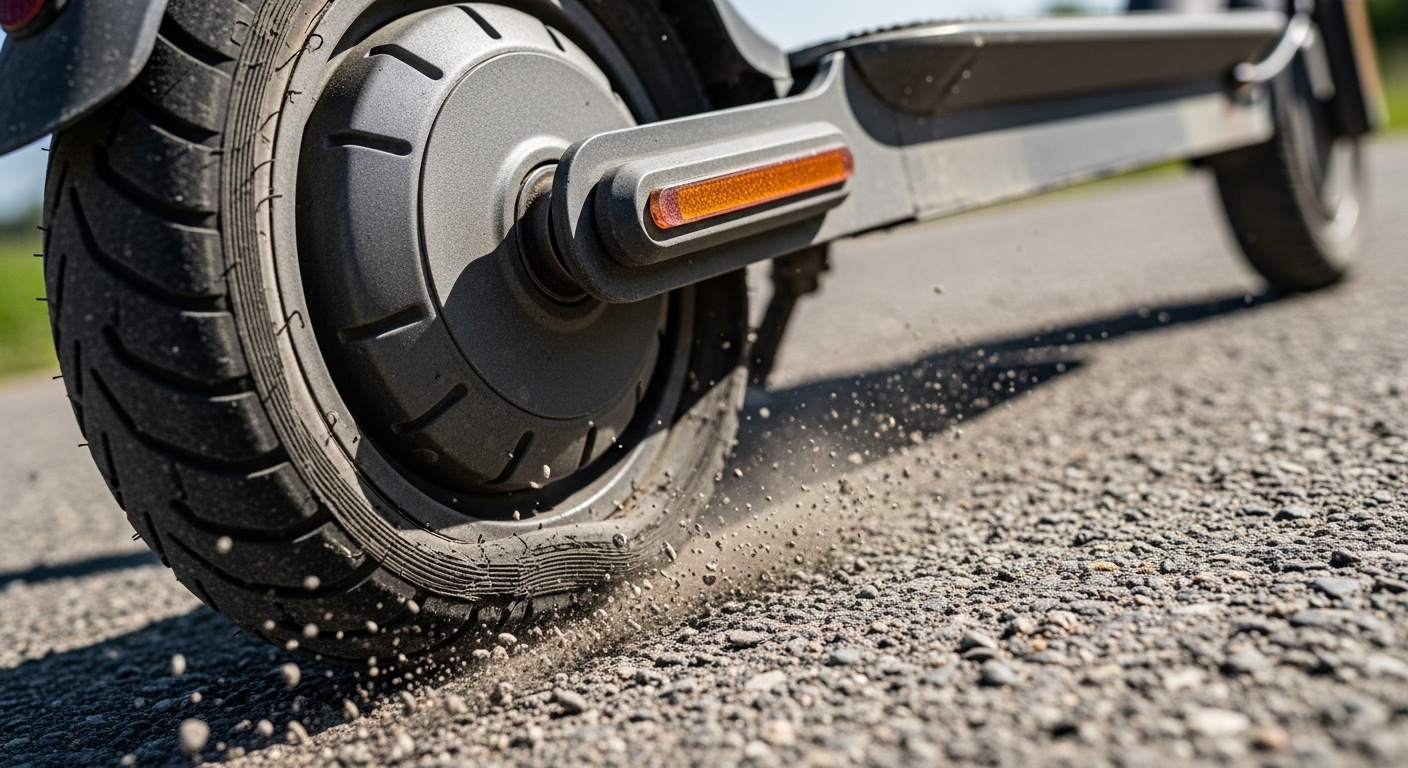
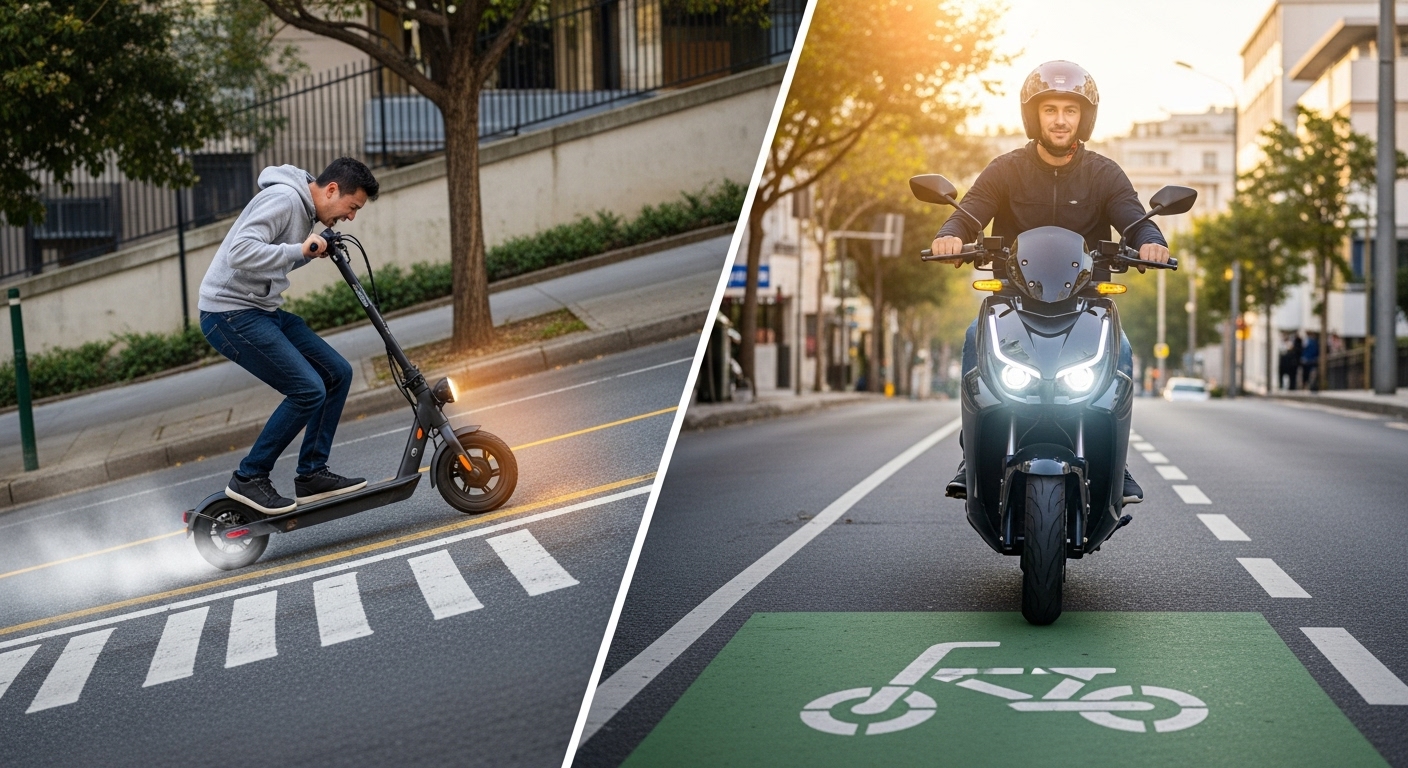
The surface you are riding on can have a big impact on your electric scooter’s ability to climb a hill. A smooth, paved road provides the best conditions for hill climbing. The tires can get a firm grip, and there is minimal rolling resistance. This allows the motor to transfer its power to the ground efficiently. Most scooter performance specifications are based on riding on this type of ideal surface.
Things get more challenging when you move to rougher terrain. Surfaces like gravel, dirt, or grass create much more rolling resistance. The tires have to work harder to move over the uneven ground, and they are more likely to slip. This means that a hill that is manageable on pavement might be impossible on a gravel path.
Wet or slippery conditions add another layer of difficulty. Rain, wet leaves, or oil patches can dramatically reduce the traction of your tires. This is especially dangerous on an incline, as the wheels can spin without moving the scooter forward. If you have to climb a hill in wet conditions, it is key to do so at a very slow and controlled speed. Here’s the deal… Always be extra cautious when riding on wet hills.
Even temperature can play a role. In very hot weather, the motor and battery can be more prone to overheating, especially under the strain of a long, steep climb. In very cold weather, the battery’s capacity and power output can be temporarily reduced.
| Terrain Type | Impact on Climbing | Recommendation |
| Smooth Pavement | Ideal, low resistance | Best surface for hill climbing |
| Gravel/Dirt | High resistance, risk of slipping | Avoid steep hills, use off-road tires |
| Wet Surfaces | Reduced traction, very high risk | Ride slowly, use dual-motor scooter if possible |
| Grass | Very high resistance, poor traction | Not recommended for hill climbing |
And another table:
| Condition | Effect on Performance | Tip |
| Hot Weather | Risk of overheating | Watch motor temperature, take breaks |
| Cold Weather | Reduced battery output | Keep scooter indoors before riding |
| Worn Tires | Poor traction | Replace tires when tread is low |
7. What Features Should You Look for in a Hill-Climbing Scooter?
If you know your commute involves hills, you can choose an electric scooter that is designed for the task. The most key feature to look for is a powerful motor. As we’ve discussed, a motor with a rating of at least 500W is recommended for moderate hills. For very hilly areas, a dual-motor scooter with a combined power of 1000W or more is the best choice.
A high-voltage battery system is another key feature. A 48V or 52V system will deliver power to the motor more efficiently than a 36V system, resulting in better torque and climbing performance. Look for a battery from a reputable brand like LG or Samsung, as these are generally higher quality and will perform better under load.
The right tires can make a big difference. Larger, pneumatic (air-filled) tires generally provide better traction and a smoother ride than smaller, solid tires. Look for tires with a deep, aggressive tread pattern, as this will help grip the road surface. Want to know the secret? The combination of a powerful motor and grippy tires is the winning formula for conquering hills.
Don’t forget about the brakes. What goes up must come down, and a reliable braking system is needed for safely going downhill. Look for an electric scooter with a dual-braking system, which typically includes a combination of disc brakes, drum brakes, and electronic regenerative brakes.
| Feature | Why It’s Key for Hills | What to Look For |
| Powerful Motor | Provides the necessary torque | 500W+ (single) or 1000W+ (dual) |
| High-Voltage Battery | Delivers power efficiently | 48V or higher |
| Large, Grippy Tires | Improves traction and stability | 10-inch pneumatic tires with deep tread |
| Dual Braking System | Safe and reliable stopping power downhill | Disc brakes + electronic/drum brakes |
One last table:
| Feature | Good for Hills | Better for Hills | Best for Hills |
| Motor | 500W Single | 750W Single | 1000W+ Dual |
| Battery | 36V 10Ah | 48V 13Ah | 52V 18Ah+ |
| Tires | 8.5″ Solid | 10″ Pneumatic | 10″ Pneumatic (Wide) |
| Brakes | Single Disc | Dual Disc | Hydraulic Disc |
Conclusion
Yes, an electric scooter can definitely go uphill, but not all scooters are created equal. A scooter’s hill-climbing ability is a direct result of its motor power, battery voltage, and build quality, balanced against the rider’s weight and the steepness of the incline. For casual riding on gentle slopes, a standard 350W to 500W scooter may be enough.
However, for daily commuting in a hilly area, investing in a scooter with a more powerful motor (500W or higher) and a high-voltage battery is a wise choice. By understanding the key factors and choosing a scooter that fits your needs, you can confidently conquer any hill in your path.
If you need a reliable scooter for a hilly commute, we invite you to check out the Dynamic Scooter Model B. Our focus on powerful motors and quality components means you get a scooter you can depend on. Contact us to find the perfect scooter for your terrain.

FAQ
Q1: Can a 250W electric scooter go uphill?
Yes, a 250W scooter can handle gentle inclines of 5-10 degrees, but it will struggle on steeper hills. Performance depends on rider weight and battery charge. For regular hill climbing, a 500W or higher motor is recommended.
Q2: Why does my electric scooter slow down on hills?
Your scooter slows down on hills because the motor must work harder against gravity. This is normal behavior. Factors like low battery, heavy rider weight, or insufficient motor power can make the slowdown more noticeable.
Q3: Will climbing hills drain my battery faster?
Yes, climbing hills uses much more battery power than riding on flat ground. The motor draws more current to overcome gravity, which can reduce your range by 30-50% on hilly routes compared to flat terrain.
Q4: Can I damage my scooter by riding up steep hills?
Riding up hills within your scooter’s rated capacity won’t cause damage. However, forcing a low-power scooter up very steep hills repeatedly can overheat the motor and strain the battery, potentially shortening their lifespan.
Q5: What’s the difference between climbing angle and gradient?
Climbing angle is measured in degrees (e.g., 15°), while gradient is expressed as a percentage (e.g., 25%). A 10-degree angle equals roughly an 18% gradient. Both describe the steepness of a hill.