
Many riders wonder whether electric scooters have gears like bicycles. The answer is more complex than a simple yes or no. Most electric scooters don’t have traditional mechanical gears. Instead, they use electronic speed control systems. Understanding how scooters manage speed helps you choose the right model. This guide explains scooter transmission systems in detail.
Electric scooters typically don’t have mechanical gears. Instead, they use electronic motor controllers to manage speed. Dynamic Scooter models feature direct-drive motors with smooth electronic speed control. This system is simpler and more reliable than traditional gears. Electronic control provides consistent performance. No gears mean less maintenance and better reliability.
Ready to understand scooter transmissions? Here’s the deal…
1. Do Electric Scooters Have Traditional Gears?
Most electric scooters don’t have traditional mechanical gears. Understanding this fundamental difference helps you appreciate scooter design.
Traditional bicycles have mechanical gears. Gears change the mechanical advantage. They allow riders to maintain efficiency across different speeds. Bicycles need gears because human power varies. Pedaling at different cadences requires different gear ratios. This is important because mechanical gears solve a specific human-powered problem.
Electric scooters don’t need mechanical gears. Electric motors provide consistent power across all speeds. Motors can deliver maximum torque instantly. There’s no need to shift gears. Electronic controllers manage speed automatically. The motor adjusts power delivery electronically. No mechanical shifting is required.
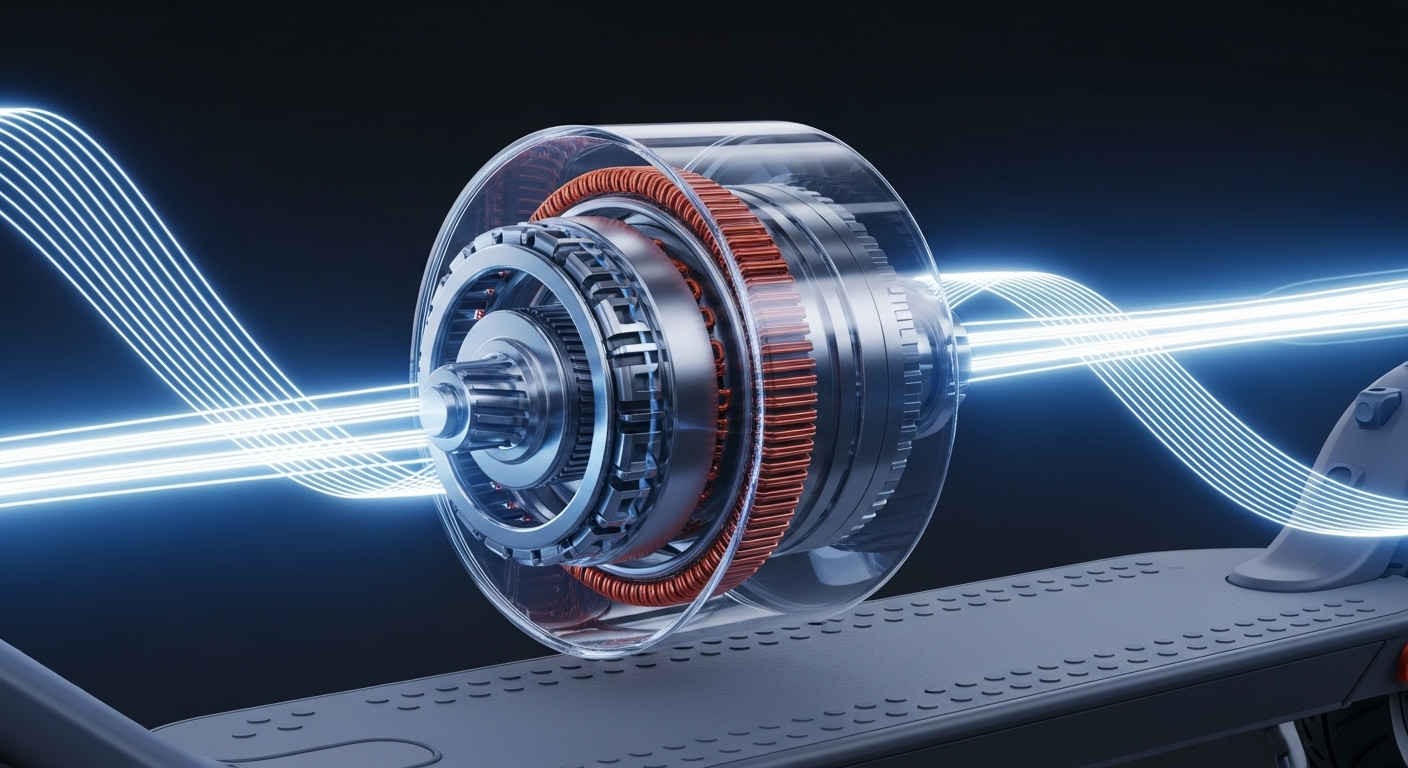
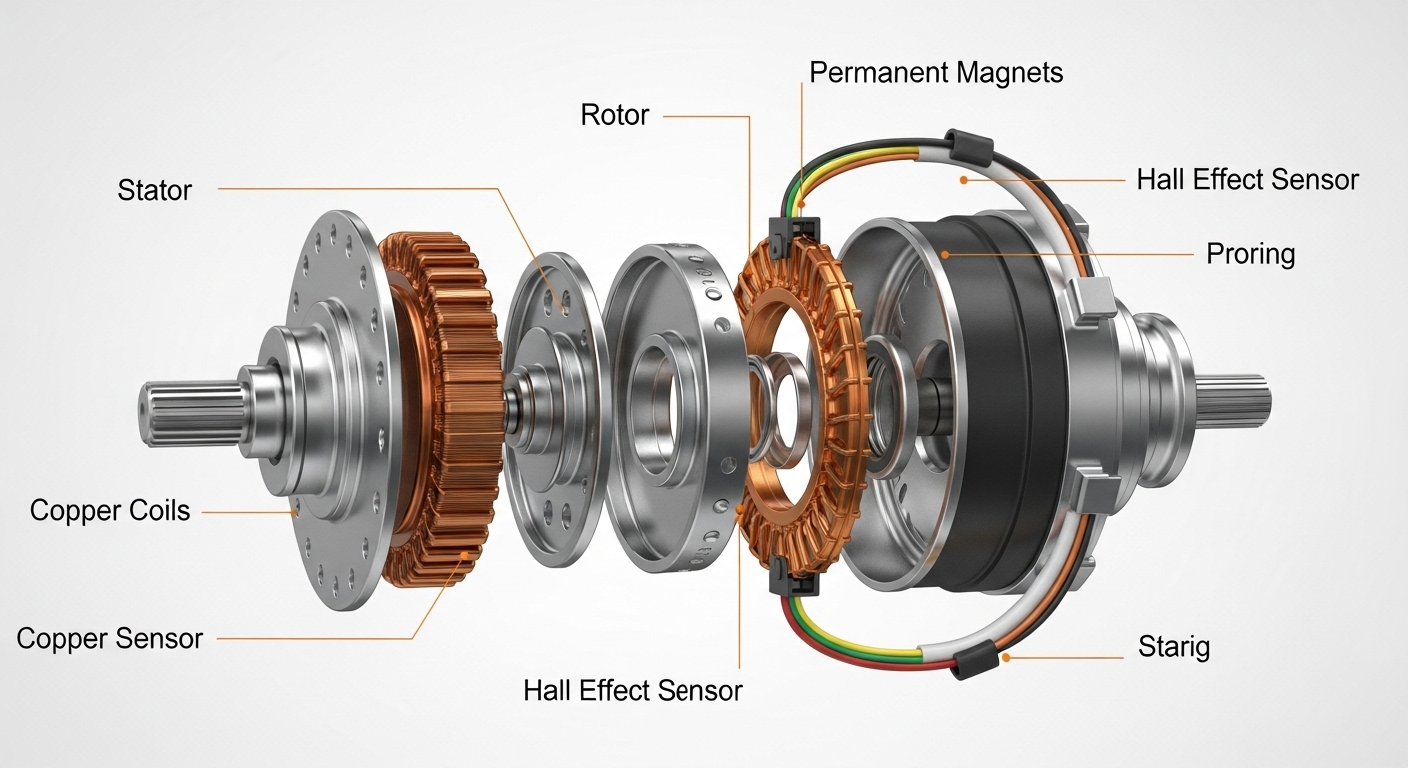
Direct-drive motors are standard on scooters. Direct-drive means the motor connects directly to the wheel. No gearbox sits between the motor and wheel. Power transfers directly from motor to wheel. This design is simple and reliable. Direct-drive is the most common scooter configuration.
Hub motors are the typical choice. Hub motors sit inside the wheel hub. They’re compact and efficient. Hub motors integrate seamlessly with the wheel. This design saves space and weight. Hub motors are ideal for scooters.
Some scooters have geared hub motors. Geared motors use internal gears. These gears reduce motor speed while increasing torque. Geared motors are less common on scooters. They’re heavier than direct-drive motors. Most scooters use direct-drive instead.
The Dynamic Scooter uses a direct-drive motor. This provides reliable, consistent performance. No gears mean fewer moving parts. Fewer parts mean better reliability. Direct-drive is the superior choice for scooters.
| Motor Type | Gears Present | Complexity | Reliability |
| Direct-Drive | No | Low | High |
| Geared Hub | Yes | Medium | Medium |
| Mid-Drive | Sometimes | High | Medium |
| Belt Drive | Sometimes | High | Low |
| Chain Drive | Sometimes | High | Low |
2. How Do Scooters Control Speed Without Gears?
Electronic speed control replaces mechanical gears. Understanding this system helps you appreciate scooter technology.
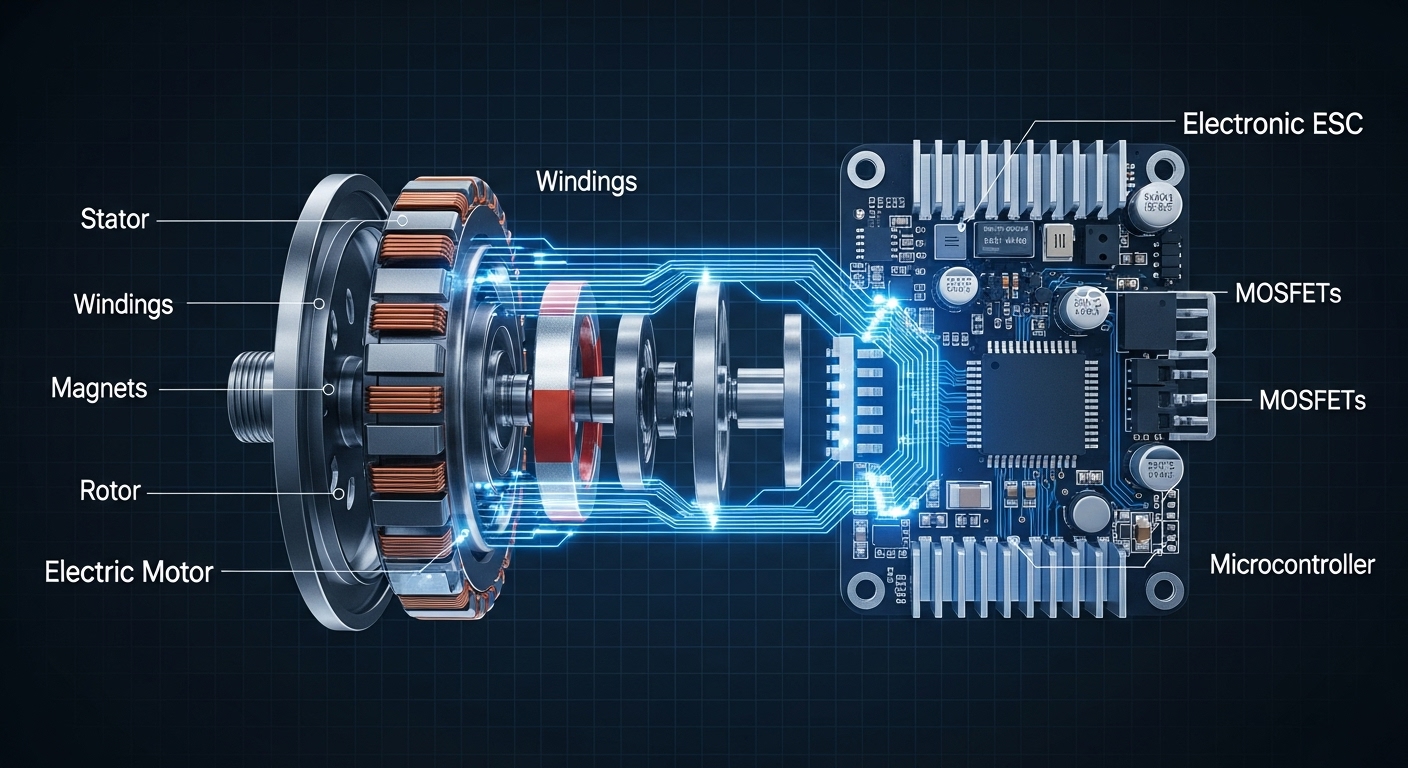
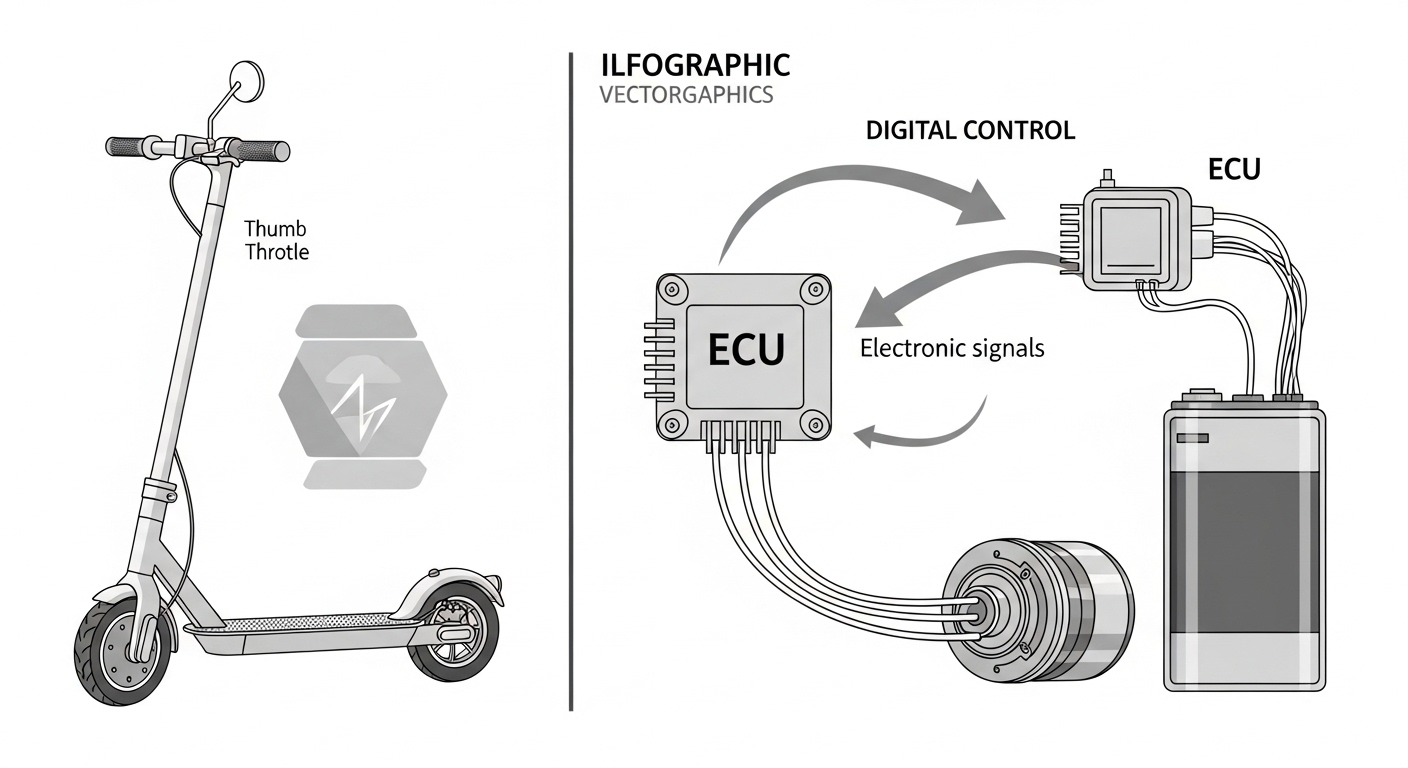
Electronic controllers manage motor speed. Controllers receive input from the throttle. They adjust power delivery to the motor. Power adjustment happens electronically. This is instantaneous and smooth. No mechanical shifting is needed.
Throttle input controls acceleration. Riders twist or press the throttle. This sends a signal to the controller. The controller increases motor power. Acceleration is smooth and progressive. Here’s why it matters… Electronic control provides better acceleration than mechanical gears.
Variable speed control is continuous. Scooters don’t have discrete speed steps. Speed changes smoothly and continuously. Riders can achieve any speed up to the maximum. This is more flexible than gear ratios.
Motor controllers use pulse-width modulation. PWM adjusts power by turning the motor on and off rapidly. The frequency is so fast that riders don’t notice. The motor appears to run at variable power. PWM is efficient and smooth.
Regenerative braking captures energy. When riders brake, the motor reverses. The motor becomes a generator. Kinetic energy converts back to electrical energy. This energy charges the battery. Regenerative braking extends range significantly.
Torque is constant across speeds. Unlike bicycles, scooter motors deliver maximum torque instantly. This provides excellent acceleration. Riders feel responsive performance. Constant torque is a key advantage of electric motors.
| Control Method | Smoothness | Efficiency | Complexity |
| PWM Control | Excellent | High | Medium |
| Throttle Input | Excellent | High | Low |
| Continuous Speed | Excellent | High | Low |
| Regen Braking | Good | High | Medium |
| Motor Torque | Excellent | High | Low |
3. What Are the Advantages of Gearless Scooters?
Gearless design offers significant benefits. Understanding these advantages helps you appreciate scooter engineering.
Simplicity is the primary advantage. Fewer moving parts mean simpler design. Simpler design means lower manufacturing costs. Lower costs mean more affordable scooters. Simplicity also improves reliability. This is important because simple systems fail less often.
Maintenance is minimal on gearless scooters. No gears to adjust or replace. No chain to lubricate. No derailleurs to repair. Maintenance is straightforward and inexpensive. Most riders can perform basic maintenance themselves.
Reliability is excellent on gearless scooters. Fewer moving parts mean fewer failure points. Gearless systems rarely break down. Electronic controllers are very reliable. Gearless scooters last longer than geared alternatives.
Weight is lower on gearless scooters. Direct-drive motors are lightweight. No gearbox adds extra weight. Lighter scooters are easier to carry. Lighter weight improves performance. Weight savings matter for portability.
Efficiency is high on gearless scooters. Direct-drive systems have minimal energy loss. No gearbox friction reduces efficiency. Electronic control is very efficient. High efficiency means longer range. Efficiency translates to better value.
Silent operation is a benefit of gearless scooters. No gears means no gear noise. Electronic motors are nearly silent. Quiet operation is pleasant for riders. Noise reduction improves the riding experience.
| Advantage | Impact Level | Benefit |
| Simplicity | High | Lower cost, better design |
| Low Maintenance | High | Less work, lower costs |
| Reliability | Critical | Fewer breakdowns |
| Light Weight | Medium | Better portability |
| High Efficiency | High | Longer range |
| Silent Operation | Medium | Pleasant riding |
4. What Are the Disadvantages of Gearless Scooters?
Gearless design has some limitations. Understanding these helps you make informed decisions.
Limited torque at high speeds is a disadvantage. Direct-drive motors have fixed gear ratios. At high speeds, torque decreases. Hill climbing becomes difficult at high speeds. This is a trade-off of direct-drive design. Here’s why it matters… Torque limitations affect performance on hills.
Motor size must be larger for power. Direct-drive motors need more power to achieve performance. Larger motors are heavier. Larger motors consume more battery. This increases scooter weight and cost. Motor size is a practical limitation.
Battery drain is faster on hills. Climbing hills requires maximum power. Direct-drive motors work hard on hills. Battery drains quickly on steep inclines. Range decreases significantly on hilly terrain. Hill performance is limited.
Motor heat increases during hard use. Motors work harder without gear reduction. Heat builds up during extended use. Overheating can damage motors. Heat management becomes important. Motor cooling is necessary.
Acceleration might feel less responsive. Direct-drive motors have fixed characteristics. Acceleration response is predetermined. Some riders prefer the feel of geared systems. Acceleration feel is subjective.
Efficiency decreases at very high speeds. Direct-drive motors become less efficient at maximum speed. Energy consumption increases. Range decreases at high speeds. This is a physics limitation. High-speed efficiency is reduced.
| Disadvantage | Severity | Impact |
| Limited Torque | Medium | Reduced hill climbing |
| Larger Motor | Medium | Increased weight |
| Battery Drain | High | Reduced range on hills |
| Motor Heat | Medium | Cooling requirements |
| Acceleration | Low | Subjective feel |
| High-Speed Loss | Low | Reduced efficiency |
5. Do Any Scooters Have Mechanical Gears?
Some specialized scooters do have gears. Understanding these alternatives helps you appreciate different approaches.
All-terrain scooters sometimes have gears. Off-road scooters need extra torque. Geared systems provide mechanical advantage. Mechanical advantage helps on rough terrain. All-terrain scooters are heavier and more complex. Most casual riders don’t need all-terrain scooters.
Dual-motor scooters sometimes use gears. Dual motors provide extra power. Some dual-motor systems include geared reduction. Geared reduction increases torque. This helps with acceleration and hill climbing. Dual-motor scooters are expensive.
Mid-drive scooters use gears sometimes. Mid-drive motors connect to the wheel through a drivetrain. Some mid-drive systems include gears. Geared mid-drives provide mechanical advantage. Mid-drive scooters are rare and expensive.
Belt-drive scooters use gears sometimes. Belt drives connect motor to wheel through a belt. Some belt systems include gears. Geared belt drives provide torque multiplication. Belt drives are less common than hub drives.
Chain-drive scooters use gears sometimes. Chain drives connect motor to wheel through a chain. Geared chain drives are possible. Chain drives are heavy and require maintenance. Chain drives are uncommon on scooters.
The Dynamic Scooter uses direct-drive. Direct-drive is the best choice for most riders. It provides excellent reliability and low maintenance. Direct-drive is the industry standard. Most quality scooters use direct-drive.
| Scooter Type | Gears Present | Complexity | Cost |
| Hub Direct | No | Low | Low |
| All-Terrain | Sometimes | High | High |
| Dual-Motor | Sometimes | High | Very High |
| Mid-Drive | Sometimes | Very High | Very High |
| Belt-Drive | Sometimes | High | High |
| Chain-Drive | Sometimes | High | High |
6. How Do Scooter Motors Compare to Bicycle Gears?
Scooter motors and bicycle gears serve different purposes. Understanding these differences helps you appreciate each system.
Electric motors provide instant torque. Bicycle gears require cadence matching. Motors deliver power immediately. Gears require the right pedaling speed. Motors are more responsive. This is important because instant torque improves acceleration.
Motor power is consistent. Bicycle power varies with pedaling effort. Motors maintain consistent power output. Consistent power is more predictable. Predictability improves safety. Motors provide better control.
Motor efficiency is high. Bicycle gears have mechanical losses. Motors have minimal losses. Motor efficiency means longer range. Efficiency translates to better value. Motors are more efficient.
Gears provide mechanical advantage. Bicycles use gears to optimize efficiency. Gears allow different cadences. Different cadences suit different riders. Gears provide flexibility. Mechanical advantage is valuable for human power.
Gears require maintenance. Bicycle gears need adjustment and lubrication. Gears wear out over time. Maintenance is necessary and regular. Gears add complexity. Motor systems are simpler.
Motor systems are more reliable. Fewer moving parts mean fewer failures. Electronic systems are very reliable. Reliability means less downtime. Reliability is valuable for commuters.
| Aspect | Electric Motors | Bicycle Gears |
| Torque Delivery | Instant | Cadence-dependent |
| Power Consistency | Constant | Variable |
| Efficiency | High | Medium |
| Mechanical Advantage | Fixed | Variable |
| Maintenance | Minimal | Regular |
| Reliability | Excellent | Good |
7. What Should You Know About Scooter Motor Performance?
Understanding motor performance helps you choose the right scooter. Motor characteristics affect riding experience significantly.
Motor power is measured in watts. Higher wattage means more power. More power means better acceleration. More power also means better hill climbing. Typical scooters have 250-500W motors. The Dynamic Scooter has a powerful motor for excellent performance.
Torque is measured in newton-meters. Higher torque means stronger acceleration. Torque affects hill climbing ability. Direct-drive motors have fixed torque curves. Torque is important for performance.
RPM is the motor’s rotation speed. Higher RPM means higher top speed. RPM is limited by motor design. Direct-drive motors have high RPM. High RPM enables high speeds.
Efficiency varies by motor type. Direct-drive motors are very efficient. Geared motors are slightly less efficient. Efficiency affects range and battery life. Higher efficiency means better value.
Motor cooling is important during hard use. Motors generate heat during operation. Cooling prevents overheating. Adequate cooling extends motor lifespan. Motor design affects cooling capability.
Motor lifespan depends on usage. Proper maintenance extends lifespan. Avoiding overheating helps. Quality motors last many years. Motor quality matters for longevity. Here’s why it matters… Motor quality affects long-term value.
| Motor Characteristic | Typical Range | Impact on Performance |
| Power | 250-1000W | Acceleration, hills |
| Torque | 20-80 Nm | Acceleration, control |
| RPM | 200-600 | Top speed |
| Efficiency | 85-95% | Range, battery life |
| Heat Output | Low-Medium | Cooling needs |
| Lifespan | 2-5 years | Long-term value |
Conclusion
Electric scooters don’t have traditional mechanical gears. Instead, they use direct-drive motors with electronic speed control. This design is simpler, more reliable, and requires less maintenance than geared systems. Electronic controllers manage speed smoothly and efficiently. Direct-drive motors deliver instant torque for responsive acceleration. Gearless design means fewer moving parts and better reliability. Most quality scooters use direct-drive technology. The Dynamic Scooter features a direct-drive motor for excellent performance. Electronic control provides smooth, responsive acceleration. Reliable direct-drive technology means years of dependable service.
This New Year, invest in a quality scooter with proven technology. Use code NY10 for 10% off. Choose Dynamic Scooter for reliable, efficient, gear-free performance.
FAQ
Q1: Do electric scooters need gears?
No, electric scooters don’t need gears. Electric motors provide consistent power across all speeds. Electronic controllers manage speed automatically. Gears are unnecessary for electric power. Direct-drive systems are simpler and more reliable.
Q2: What’s the difference between geared and direct-drive motors?
Geared motors use internal gears to increase torque. Direct-drive motors connect directly to the wheel without gears. Direct-drive is simpler and more reliable. Geared motors are heavier and require more maintenance. Most scooters use direct-drive.
Q3: Can scooters climb hills without gears?
Yes, scooters can climb hills without gears. Direct-drive motors provide good torque for hill climbing. Performance depends on motor power and weight. Lighter riders climb hills more easily. Powerful motors help on steep hills.
Q4: How do scooters control speed without gears?
Electronic controllers manage speed using pulse-width modulation. PWM adjusts power by rapidly turning the motor on and off. The throttle sends signals to the controller. The controller adjusts power delivery accordingly. This provides smooth, continuous speed control.
Q5: Are gearless scooters more reliable than geared scooters?
Yes, gearless scooters are generally more reliable. Fewer moving parts mean fewer failure points. Direct-drive systems have excellent reliability. Electronic controllers are very dependable. Gearless design means less maintenance and better longevity.