
The Future of Cordless Charging for Electric Scooters lies in a highly integrated network of inductive ground pads, resonant parking docks, and weatherproof receiver plates that completely eliminate the manual hassle of plug-in cords.
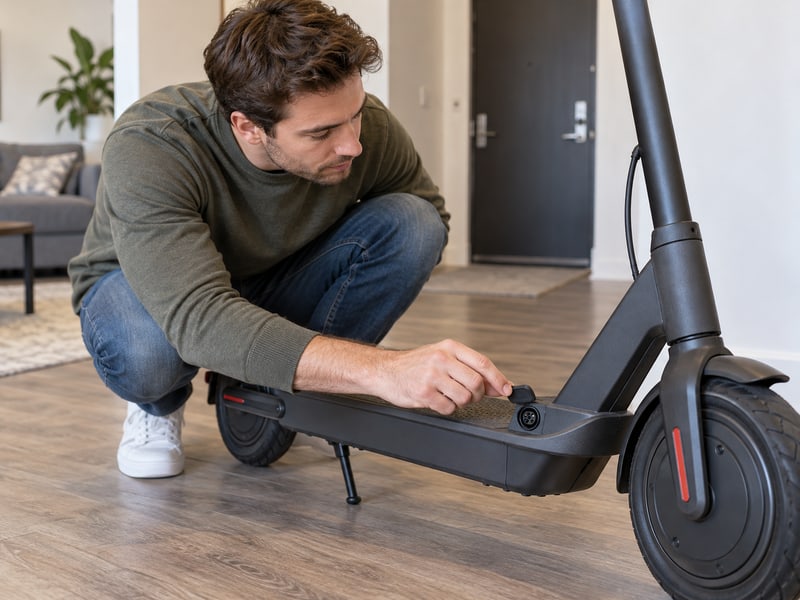
For years, both private riders and large-scale fleet operators have struggled with standard wired chargers, dealing with cables that fray, snap, and fail when exposed to the elements. Imagine standing in a heavy downpour, trying to jam a wet charging cable into a dirt-clogged, rain-soaked port while worrying about short circuits and lost operational hours.
Fortunately, implementing wireless charging for electric scooters offers a seamless, weatherproof alternative that charges vehicles automatically the moment they are parked.
Is wireless charging for electric scooters the future?

Yes, wireless charging for electric scooters is absolutely the future of urban micro-mobility because it solves the ultimate friction point of physical cable wear. By replacing fragile ports with durable induction plates, cities and operators can run continuous transport loops with zero manual plug-in effort. This technological leap allows vehicles to charge automatically whenever they park, maximizing fleet utility and convenience.
What is driving the need for cordless power?
As micro-mobility usage continues to surge globally, cities require highly reliable infrastructure to support millions of daily trips. The constant manual labor of collecting, plugging, and redeploying vehicles creates a massive bottleneck that threatens operational efficiency.
Think about it:
- High operational costs of manual vehicle recovery and redistribution.
- Increased carbon footprints from diesel-powered fleet collection vans.
- Accelerated wear and tear on fragile physical charging components.
This systemic friction forces the industry to seek automated, cord-free power alternatives. Private commuters also crave a more intuitive charging experience that mirrors modern smartphone convenience. Rolling home and simply parking your vehicle over a pad is far superior to untangling heavy cords. Transitioning to a touchless system represents the natural evolution of personal electric transport.
How do physical plugs fail your modern fleet?
Standard plug-in connectors are notoriously fragile and highly susceptible to mechanical failure under heavy daily use. When exposed to harsh weather conditions, these open metal ports quickly corrode, gather dirt, or bend out of shape.
Let’s face it:
- Water ingress causing immediate short circuits and battery damage.
- Vandalism and physical abuse of exposed, delicate charging ports.
- Incompatible charging pins across different vehicle models in a fleet.
These frequent physical failures cause significant downtime and ballooning maintenance costs. Every hour a scooter spends in the repair shop is an hour of lost revenue and rider frustration. Shifting to solid-state, contact-free plates completely removes these physical points of failure. This simple upgrade dramatically improves the lifetime durability of your transportation assets.
Key Takeaway:
Eliminating physical charging ports prevents the most common mechanical failures in micro-mobility fleets today. Sealed induction systems guarantee continuous operation regardless of dirt, debris, or heavy rain.
| Feature | Traditional Wired Charging | Wireless Inductive Charging |
|---|---|---|
| Physical Wear | High (frequent port/cable damage) | Zero (no physical contact) |
| Weather Hazard | High (risk of shorting in rain) | None (hermetically sealed) |
| User Effort | Manual plug-in required | Automated upon parking |
| Fleet Downtime | High (due to port repairs) | Minimal (continuous top-offs) |
Analyzing these systemic vulnerabilities reveals why moving toward a sealed, plug-free standard is critical for long-term fleet survival.
How does wireless charging for electric scooters work?
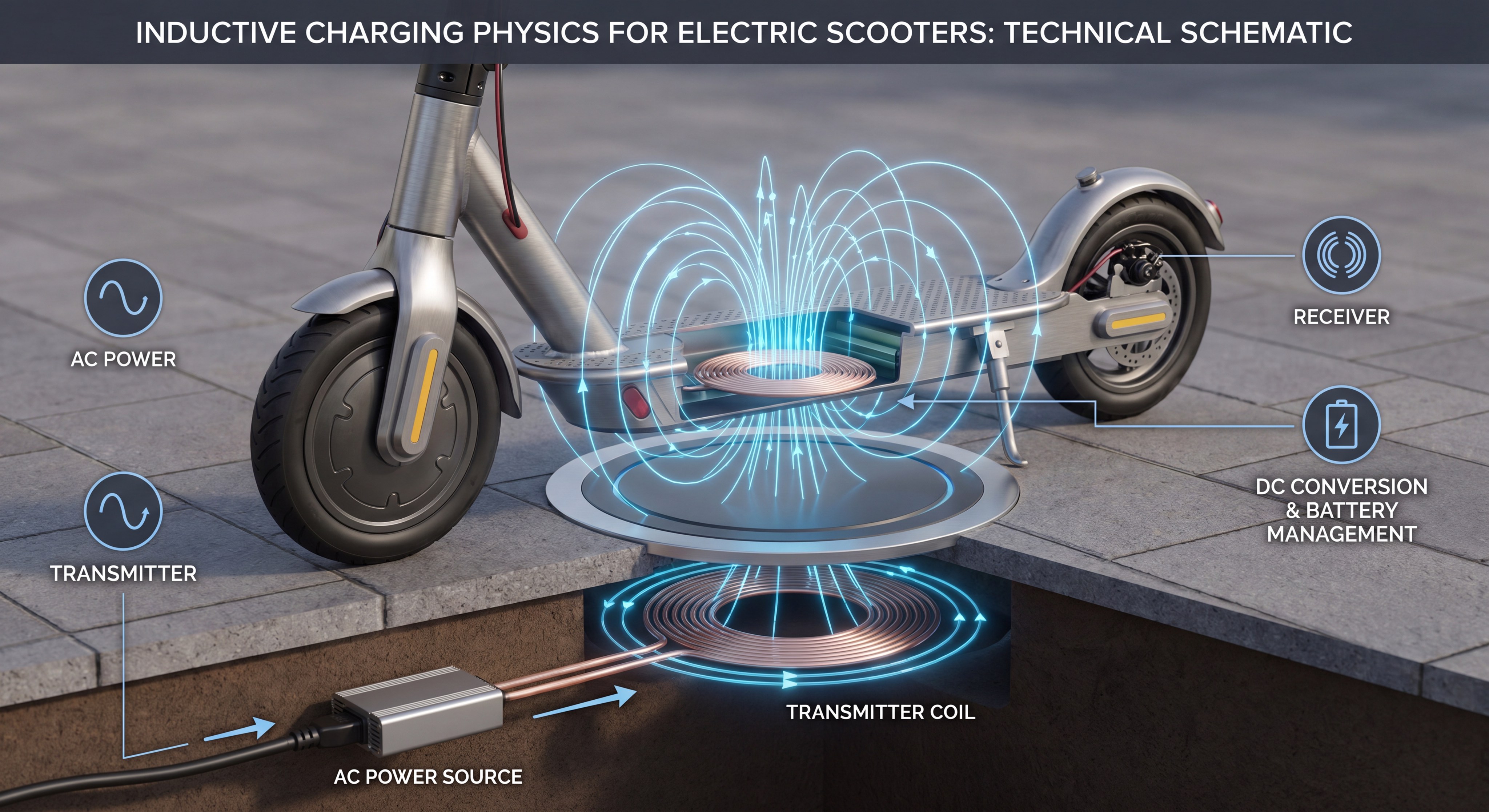
To understand how wireless charging for electric scooters works, we must look at the principles of electromagnetic induction. The system uses a transmitter coil in the ground pad and a receiver coil beneath the scooter deck to transfer power across an air gap. This setup converts mains alternating current into a safe, localized magnetic field that directly charges the vehicle’s battery.
Is magnetic resonance key to constant power?
Magnetic resonance is a highly advanced form of induction that allows energy to transfer efficiently over larger physical distances. Traditional inductive pads require strict, millimeter-perfect physical contact to initiate a charge.
Here is the thing:
- Resonant systems match the magnetic frequencies of both coils.
- Larger air gaps can be crossed safely without physical contact.
- Flexible alignment allows charging even if the scooter is parked off-center.
This flexibility makes resonance incredibly practical for real-world public parking setups. By utilizing matching resonant frequencies, energy can flow smoothly even if a scooter deck sits several inches above the ground pad. This advancement eliminates the need for expensive mechanical lowering systems or complex physical docks. It delivers a reliable charge every single time.
How do transmitter coils send power safely?
The transmitter coil embedded in the charging pad remains completely dormant until it detects a matching receiver coil. Once aligned, it initiates a high-frequency alternating current to generate a safe, localized magnetic field.
Make no mistake:
- Strict digital handshakes verify the vehicle’s identity before power flows.
- Automatic shutdown occurs instantly if the magnetic alignment is broken.
- Advanced copper shielding prevents magnetic fields from escaping outward.
These automated safeguards prevent accidental shocks or unintended energy discharge. As the magnetic field reaches the scooter’s receiver coil, it induces a secondary current. An internal bridge rectifier then converts this alternating current back into direct current to feed the battery. This closed loop ensures that high-voltage power is never exposed to the outside world.
Key Takeaway:
By utilizing highly coordinated magnetic coils and safety handshakes, wireless energy transfer remains completely isolated, safe, and efficient.
| Parameter | Standard Inductive Charging | Advanced Resonant Charging |
|---|---|---|
| Operating Frequency | 80 kHz – 300 kHz | 6.78 MHz |
| Max Air Gap Distance | 0.5 inches – 1.5 inches | 2.0 inches – 6.0 inches |
| Alignment Tolerance | Low (requires precise alignment) | High (supports loose parking) |
| Power Output Range | 100W – 350W | 250W – 1000W+ |
Understanding these electrical mechanics helps fleet operators evaluate the optimal power output and spacing required for safe municipal deployment.
Why choose wireless charging for electric scooters?

Selecting wireless charging for electric scooters is the smartest way to dramatically reduce ongoing operational overhead while enhancing rider safety. Removing the physical cord eliminates the primary point of wear, protecting the internal electronics from environmental damage. This shift results in a highly reliable transit network that functions perfectly in any weather condition.
Can you reduce maintenance costs immediately?
Wired chargers are a constant drain on company resources due to regular cable failures, physical wear, and vandalized charging stations. Eliminating physical cables from the equation removes these persistent liabilities from your balance sheet.
Let’s face it:
- Fewer replacement adapters and cables to purchase annually.
- Reduced labor hours spent troubleshooting physical port connections.
- Less transit vehicle wear from collecting broken or dead units.
These immediate savings allow operators to achieve profitability much faster than traditional networks. A sealed chassis also means that delicate battery management systems are never exposed to moisture during charging. This protection extends the overall chemical lifespan of your expensive battery cells. The long-term savings on battery replacement are truly substantial.
Does it improve daily charging convenience?
For everyday commuters, the physical hassle of plugging in a heavy scooter after a long ride can be incredibly annoying. A cordless setup makes charging as natural and intuitive as parking your vehicle.
The truth is:
- No more untangling dirty cords on your garage floor.
- Instant power transmission as soon as the kickstand drops.
- Clean, clutter-free storage areas without hanging cables.
This effortless user experience encourages more people to choose micro-mobility for their daily trips. By simplifying the docking process, users are far more likely to leave their vehicles in designated, organized parking areas. This simple change helps clean up city sidewalks and improves public perception of scooter networks. Convenience becomes a powerful tool for civic harmony.
Key Takeaway:
Adopting cordless charging dramatically simplifies the user journey while cutting down on expensive mechanical repairs. A cleaner, more reliable system benefits both public riders and private owners.
| Benefit Category | Impact on Private Owners | Impact on Fleet Operators |
|---|---|---|
| Convenience | Effortless home parking and storage | Automatic, rider-driven recharging |
| Durability | Weatherproof, long-lasting chassis | Reduced fleet maintenance costs |
| Safety | No risk of electrical shock or sparks | Fire-safe thermal monitoring systems |
| Aesthetics | Clutter-free home or garage | Clean, organized city sidewalks |
Evaluating these operational benefits shows why a transition to cord-free docks is the logical next step for modern transport investments.
Can wireless charging for electric scooters save cash?

Investing in wireless charging for electric scooters is a highly effective way to slash your long-term operating costs and boost net margins. While the upfront installation of inductive pads requires a capital outlay, the massive reduction in daily manual labor quickly offsets this cost. This automation shifts the burden of vehicle charging from paid field crews directly onto stationary, self-serving infrastructure.
How quickly do inductive systems pay off?
Fleet managers must constantly balance the high costs of manual vehicle collection against the daily revenue generated per ride. Transitioning to stationary charging docks allows you to automate the entire refueling process.
Think about it:
- Eliminating overnight recovery fleets and coordination.
- Drastically reducing the payroll for manual charging crews.
- Increasing active rental hours per vehicle per day.
These operational improvements lead to a rapid return on your initial infrastructure investment. Most operators see a full return on investment within the first twelve to eighteen months of deploying stationary charging stations. After this point, the dramatic reduction in daily overhead translates directly into pure profit. Automation is the key to unlocking sustainable economic scaling.
Why do physical cable repairs drain your budget?
Standard copper wires and plastic plugs are simply not designed to withstand the brutal wear and tear of public use. Constant bending, weather exposure, and rough handling mean these parts must be replaced frequently.
Here is the thing:
- High cost of purchasing specialized replacement cables.
- Labor expenses for technicians to wire and test new ports.
- Lost rental revenue while scooters sit inactive in repair bays.
These recurring maintenance costs quietly eat away at your operational margins over time. Solid-state, sealed wireless receivers have zero moving parts and require virtually no ongoing maintenance. By removing physical connectors, you permanently close the financial drain of cable repairs. This makes your entire budget far more predictable and secure.
Key Takeaway:
Replacing fragile physical cords with automated wireless pads turns a constant maintenance liability into a one-time capital investment. This structural shift delivers immediate and compounding financial savings.
| Expense Category | Annual Cost (Wired Fleet – 100 Units) | Annual Cost (Wireless Fleet – 100 Units) |
|---|---|---|
| Manual Retrieval Labor | $45,000 | $5,000 (minimal hub balancing) |
| Cable & Port Repairs | $12,000 | $1,200 (solid-state checks) |
| Lost Revenue (Downtime) | $8,500 | $1,500 (scooters remain active) |
| Total Operating Cost | $65,500 | $7,700 |
Analyzing these comparative balance sheets demonstrates the overwhelming economic superiority of automated, contact-free charging networks.
Does wireless charging for electric scooters keep safe?

Yes, modern wireless charging for electric scooters is designed with multiple layers of advanced safety features to protect both riders and hardware. By completely sealing the charging components inside the scooter’s chassis, there is no risk of spark hazards, electrical shocks, or water-related short circuits. This high level of physical protection makes contact-free power one of the safest refueling methods available.
How does foreign object detection protect you?
Active Foreign Object Detection (FOD) is a critical safety system that prevents accidental heating of stray metal items. If an object like a coin, key, or soda can lands on the charging pad, the system reacts instantly.
Let’s face it:
- FOD sensors constantly scan the active magnetic field.
- Power is cut within milliseconds of detecting any metal object.
- Visual indicators alert users to clear the pad surface.
This automated safeguard ensures the pad remains completely cold and safe to touch. Without this smart technology, stray metal objects would absorb electromagnetic energy and become dangerously hot, posing a severe burn or fire risk. Implementing advanced FOD protocols guarantees that public sidewalks remain safe for pedestrians, pets, and riders alike.
Can smart thermal sensors prevent overheating?
Lithium-ion batteries are highly sensitive to extreme heat, which can degrade cell health and, in rare cases, trigger thermal runaway. To prevent this, wireless charging systems use real-time temperature monitoring.
The truth is:
- Thermal sensors inside the deck track heat levels continuously.
- Charging speeds throttle down dynamically if temperatures rise.
- Integrated cooling channels disperse thermal energy efficiently.
These proactive measures keep the battery within its optimal operating temperature range at all times. By managing thermal energy efficiently, the system ensures a fast charge without putting the battery under unnecessary stress. This constant feedback loop between the vehicle and the pad prevents overheating before it can even start. Safety is baked directly into every step of the process.
Key Takeaway:
Integrated safety protocols like Foreign Object Detection and thermal monitoring ensure that wireless charging remains completely secure, reliable, and risk-free.
| Safety Feature | Primary Hazard Addressed | Operational Response |
|---|---|---|
| Foreign Object Detection | Stray metal heating up on pads | Shuts down power field in milliseconds |
| Thermal Monitoring | Battery degradation and fire risk | Throttles charging current dynamically |
| Digital Handshake | Unapproved devices absorbing power | Keeps transmitter dormant until verified |
| Ground Fault Circuit | Moisture or soil current leaks | Trips power source instantly |
Reviewing these rigorous safety standards proves that induction technology offers a highly controlled, secure power environment.
Will wireless charging for electric scooters change cities?
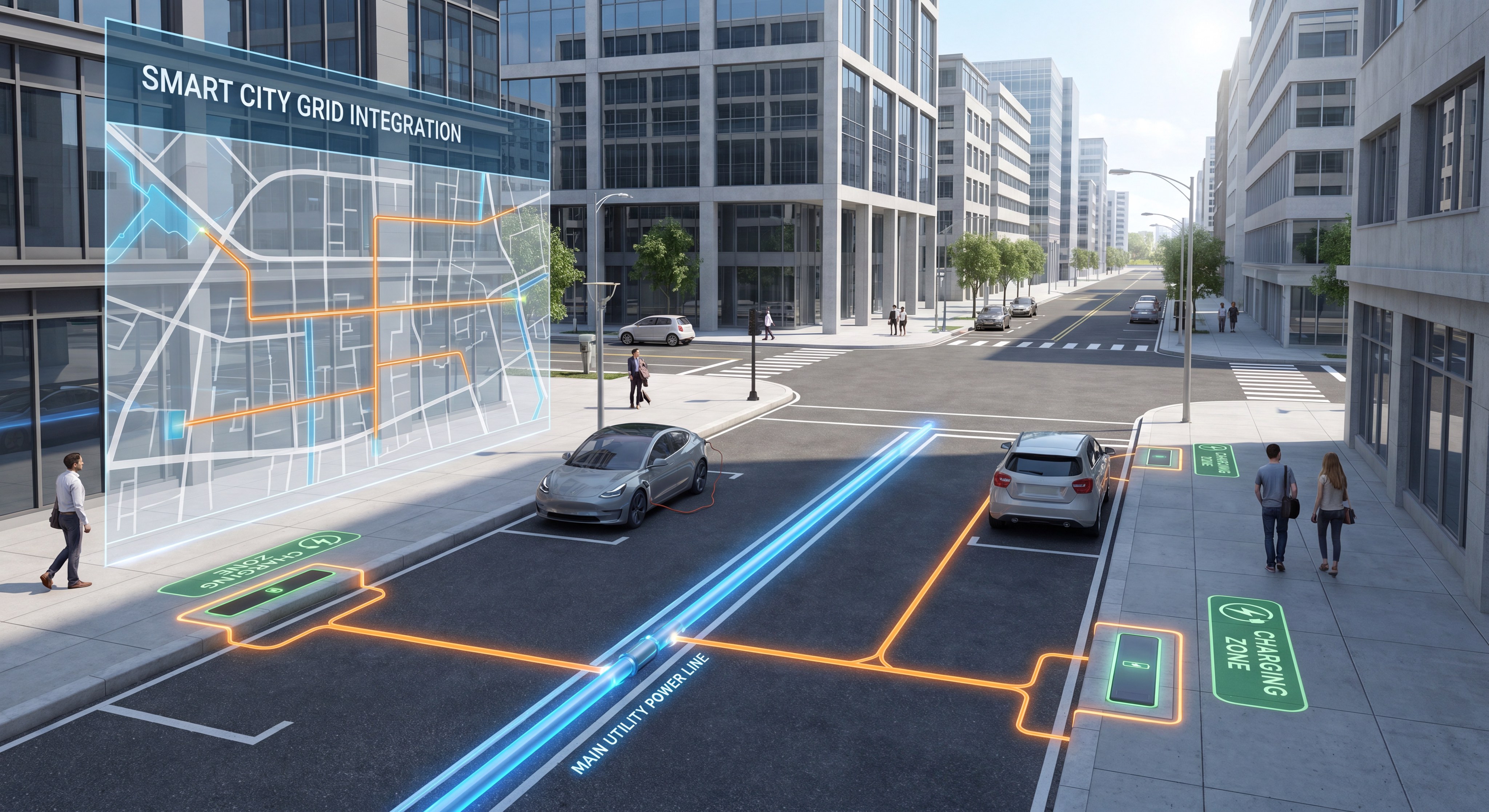
Yes, implementing wireless charging for electric scooters will fundamentally transform modern urban environments by cleaning up cluttered sidewalks and organizing public spaces. By integrating stationary charging tiles directly into concrete plazas and walkways, cities can eliminate the messy piles of tipped-over scooters that frustrate pedestrians. This smart design creates a highly organized, clean, and pedestrian-friendly urban landscape.
Can urban sidewalks become power sources?
Embedding inductive charging loops directly into the pavement allows cities to create invisible, highly efficient power corridors for light electric vehicles. This integration turns standard concrete walkways into active components of the municipal smart grid.
Think about it:
- Flush-mounted pads that sit perfectly level with the sidewalk.
- No raised obstacles or cords to trip pedestrians.
- Safe underground routing directly from main utility lines.
This seamless design maintains the beauty of historic urban neighborhoods while supporting modern transport. These embedded networks can also share power with other municipal assets, such as smart benches, public lighting, and safety cameras. By building a unified, underground power grid, cities can reduce infrastructure duplication and save millions in public funds. Sidewalks are the future of urban energy.
How do public plazas benefit from no cords?
Public parks and pedestrian plazas are designed to be beautiful, open spaces where people can walk, sit, and gather without clutter. Introducing physical charging cables and heavy metal racks would ruin the visual appeal of these areas.
Let’s face it:
- Messy cables creating a severe tripping hazard for citizens.
- Vandalized plug stations detracting from local neighborhood beauty.
- Cluttered parking areas blocking pedestrian and wheelchair pathways.
A cord-free, inductive approach keeps these community spaces clean, safe, and visually appealing. Because inductive charging pads can be styled to match the surrounding stonework or concrete, they remain completely invisible when not in use. This allows city planners to support clean transportation without compromising on public aesthetics. Beautiful design and modern utility can coexist perfectly.
Key Takeaway:
Integrating invisible inductive pads into public walkways and plazas allows cities to support micro-mobility while keeping streets beautiful, organized, and safe.
| Urban Design Goal | Wired Docking Impact | Wireless Inductive Impact |
|---|---|---|
| Sidewalk Accessibility | Low (heavy racks block pedestrian flow) | High (flush pads keep walkways clear) |
| Visual Aesthetics | Poor (exposed metal, cords, and clutter) | Excellent (invisible, integrated tiles) |
| Pedestrian Safety | Low (trip hazards from cables) | High (flat surfaces, zero cords) |
| Regulatory Compliance | Hard (violates ADA sidewalk rules) | Easy (meets strict accessibility codes) |
Reviewing these urban design metrics highlights why civic leaders are increasingly mandating wireless integration for public transit hubs.
What is next in wireless charging for electric scooters?

The next major breakthrough in wireless charging for electric scooters will combine long-distance magnetic resonance with standardized, universal retrofit kits. These advancements will allow scooters to charge quickly and efficiently over larger air gaps and with looser alignment tolerances. As this technology continues to mature, cordless charging will transition from a premium feature to a standard industry requirement.
Will long-distance resonance free scooters?
Next-generation resonant systems are set to liberate riders from the strict parking requirements of older inductive pads. By allowing energy to jump safely across several inches of air gap, these systems make charging completely effortless.
Let’s face it:
- No need to park in a millimeter-perfect position.
- Supports scooters with high-clearance off-road decks.
- Charges multiple parked vehicles from a single source.
This flexible range makes cordless power incredibly practical for busy, real-world parking environments. Riders can simply park their scooters next to a charging barrier or over a pad and walk away, confident that the vehicle is receiving a fast charge. This level of convenience will make plugging in your ride feel completely outdated. The future of micro-mobility is highly flexible and cord-free.
How do standardized kits drive adoption?
Widespread adoption of cordless power relies heavily on the industry establishing a single, universal standard for coils and frequencies. Standardizing these components allows riders to charge any brand of scooter on any public pad.
The truth is:
- Universal receiver plates that work with any battery.
- Open-source charging pads compatible with all models.
- Lower manufacturing costs due to high volume production.
This shared approach builds trust and encourages cities to invest heavily in public charging networks. As standardized kits become cheap and widely available, more manufacturers will integrate wireless receivers directly into their factory models. This shift will make cordless charging a standard, expected feature for every new electric vehicle sold. Unity is the key to unlocking global adoption.
Key Takeaway:
Embracing long-distance resonance and universal component standards will quickly turn cordless power into a standard feature for all personal and commercial electric scooters.
| Milestone | Technical Innovation | Expected Impact on Users |
|---|---|---|
| Standardized Coils | Universal frequency and size agreements | Charge any scooter on any public pad |
| Long-Range Resonance | Power transfer over a 6-inch vertical gap | Park-and-forget convenience on any terrain |
| Multi-Vehicle Pads | Single transmitter powering three scooters | Drastically lowers public installation costs |
| Smart Grid Bilateral | Scooters feed excess power back to grid | Earn credits by docking during peak hours |
Reviewing this technical roadmap demonstrates how rapidly contact-free charging is evolving to meet the demands of tomorrow’s smart cities.
Conclusion
Transitioning away from physical charging cables solves the final major design weakness of light electric vehicles. By protecting internal electronics from weather ingress, removing high-wear physical ports, and automating fleet operations, wireless energy transfer is poised to become the standard infrastructure for modern cities.
If you are ready to upgrade your daily ride, enjoy zero-maintenance durability, and experience the absolute convenience of premium micromobility, contact us today to explore our latest high-performance models and accessories. The future of urban transportation is clean, efficient, and completely cordless.
Frequently Asked Questions
Can I charge my electric scooter wirelessly in the rain?
Yes, you can charge your vehicle safely in any weather. Because inductive pads and receivers are fully sealed with non-conductive, weatherproof materials, there are no exposed metal pins or active electrical contacts. This design completely eliminates the risk of short circuits, electrical shocks, or spark hazards in wet conditions.
What’s the best way to ensure my scooter is aligned on the charging pad?
Magnetic alignment guides are the most reliable and user-friendly solution. Premium wireless charging pads feature built-in neodymium magnets that gently pull the scooter’s receiver plate into the optimal position. This ensures a perfect, high-efficiency energy transfer without requiring any physical effort or precise parking from the rider.
Will wireless charging degrade my scooter’s battery life?
No, high-quality wireless charging systems will not harm your battery. Modern wireless receivers include dedicated power management chips that regulate the incoming current, ensuring the battery charges at a stable rate while monitoring temperatures to prevent degradation.
Can I retrofit an older electric scooter model with wireless charging?
Yes, you can easily retrofit many existing scooters using aftermarket receiver kits. These kits feature a thin receiver plate that mounts directly to the underside of your deck, which then plugs into your scooter’s existing physical charging port.