
Staying cool and safe while riding an electric scooter in summer requires a combination of smart riding habits, proper protective gear, and proactive battery maintenance. As summer temperatures soar, navigating your daily commute on two wheels can quickly turn from an exciting breeze into an exhausting, sweaty ordeal that risks overheating both you and your vehicle.
High ambient heat does not just make you uncomfortable; it actively degrades your battery health, spikes tire pressures to dangerous levels, and puts you at risk of sudden heat fatigue. Fortunately, with a few proactive strategy shifts and basic maintenance adjustments, you can keep your ride smooth, breezy, and completely safe all season long.
How to enjoy riding an electric scooter in summer?
Enjoying your ride during the hottest months comes down to choosing shaded pathways and traveling during the coolest windows of the day. To fully experience the joy of riding an electric scooter in summer, planning ahead is absolutely essential. By taking proactive steps, you can avoid the oppressive midday sun completely.
Should you map out your route through shady streets?
Look: choosing tree-lined avenues rather than wide-open concrete highways is one of the easiest ways to beat the heat. Tree canopies create natural microclimates that are significantly cooler than open urban asphalt.
To keep your commute comfortable, consider these route-mapping priorities:
- Prioritizing parks and greenways over main concrete streets.
- Steering clear of heavy multi-lane traffic corridors that radiate vehicle engine heat.
- Seeking out paths with high building shadows during late afternoon trips.
| Commuting Window | Average Temperature Impact | Battery Strain Level | Recommendation |
|---|---|---|---|
| Early Morning (6 AM – 9 AM) | Lowest of the day (Cool breeze) | Minimal | Best time for long trips |
| Midday (12 PM – 3 PM) | Peak solar radiation (Extreme heat) | High | Avoid or keep trips short |
| Late Evening (6 PM – 9 PM) | Moderately cool (Sun setting) | Low to Medium | Great for casual riding |
This operational breakdown illustrates how choosing the right hour to ride drastically lowers thermal loads.
Key Takeaway: You can dramatically lower your body and scooter temperatures simply by shifting your riding schedule away from peak midday sun and choosing tree-shaded pathways.
Is riding an electric scooter in summer safe for batteries?

Yes, riding an electric scooter in summer is safe for batteries as long as you prevent them from reaching critical heat thresholds. High-quality lithium-ion packs are built with robust thermal management systems to handle typical seasonal warm weather. However, pushing your vehicle to its limits under extreme heat can accelerate cell degradation.
How does extreme heat trigger thermal runaway?
Here is the thing: when lithium-ion cells exceed their safe operating temperatures, internal chemical reactions can escalate out of control. This can lead to rapid performance drops or, in extreme cases, permanent cellular breakdown.
To preserve your battery’s lifespan, keep these essential rules in mind:
- Never plug your scooter in immediately after a long, hot ride.
- Store your battery in climate-controlled indoor spaces.
- Avoid demanding maximum throttle output when riding on hot asphalt.
| Temperature Range | Battery State | Risk of Damage | Action Required |
|---|---|---|---|
| Under 85°F (29°C) | Optimal operating zone | None | Normal riding and charging |
| 85°F – 110°F (29°C – 43°C) | Warm operating zone | Low | Monitor performance; do not charge hot |
| Above 110°F (43°C) | Critical heat threshold | High | Stop riding; let battery cool down |
By referencing this temperature matrix, riders can proactively prevent critical thermal thresholds from being breached.
Key Takeaway: Extreme heat alters battery chemistry; always let your scooter’s battery cool to room temperature for at least 30 minutes after a summer ride before plugging it in to charge.
Why is riding an electric scooter in summer so exhausting?
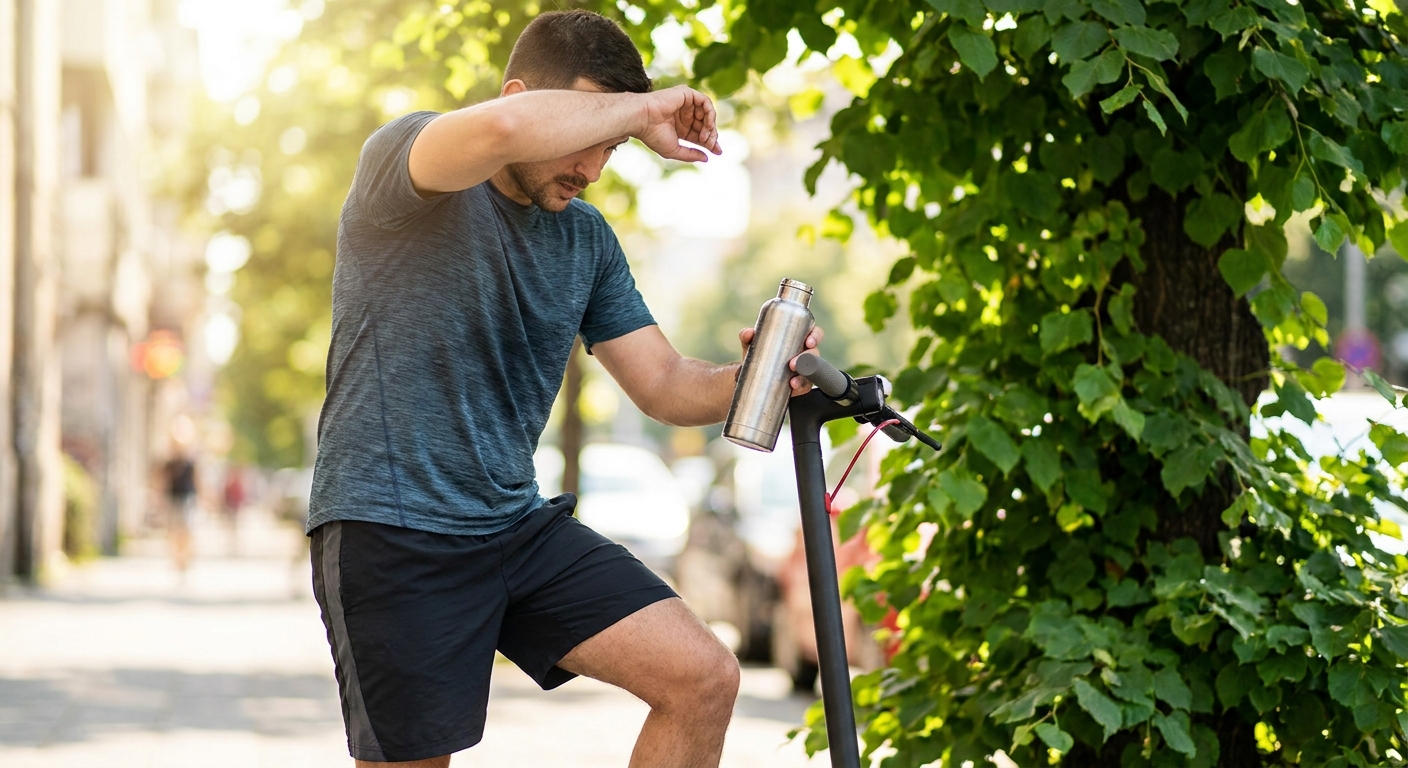
Riding an electric scooter in summer is highly exhausting because your body continuously fights dehydration, wind resistance, and solar radiation while maintaining balance. Even though you are standing, your muscles work constantly to keep you stabilized. Standing on a deck might seem effortless, but riding an electric scooter in summer drains your physical energy surprisingly fast.
Are regular rest stops in shaded areas necessary?
Believe it or not: riding at high speeds creates a deceptive wind-chill effect that masks how much you are actually sweating. Taking structured breaks is vital to prevent heat exhaustion before you feel the physical symptoms.
Ensure you stay refreshed by practicing these healthy habits:
- Drinking electrolyte-infused water before you start your journey.
- Wearing polarized, UV-blocking sunglasses to eliminate blinding street glare.
- Stopping every twenty minutes in a shaded park to cool down your core temperature.
| Fatigue Factor | Physiological Impact | Preventative Action |
|---|---|---|
| Dehydration | Decreased focus, slower reflexes | Drink electrolyte-rich water before riding |
| Sun Glare | Eye strain, headaches | Wear UV-blocking polarized sunglasses |
| Heat Exhaustion | Dizziness, muscle cramps | Take a 10-minute break in the shade |
This physical health assessment highlights why hydration and protection must remain top priorities for hot weather commuting.
Key Takeaway: Summer scooter riding is an active sport; stay fully hydrated and take structured shade breaks to prevent heat fatigue from slowing down your reaction times.
Can riding an electric scooter in summer cause tire flats?

Yes, hot summer weather can directly cause tire flats because riding an electric scooter in summer on blistering asphalt heats the air inside your pneumatic tires. As the air expands, your tire pressure rises beyond its recommended limit, increasing the risk of a sudden puncture or blowout. Keeping a close eye on your tires is essential for maintaining safety.
How often should you inspect tire tread in hot weather?
Why does this matter? Warm asphalt softens tire rubber, making your tread wear down much quicker and leaving it highly vulnerable to sharp road debris. Inspecting your tires weekly ensures you catch structural wear before a flat occurs.
Make tire safety a regular part of your routine with these steps:
- Measuring your PSI before heading out when the tires are still cool.
- Inspecting the tire tread for embedded glass, metal shards, or bald spots.
- Slightly reducing inflation levels by 2-3 PSI to accommodate thermal expansion.
| Tire Parameter | Cold Weather Standard | Hot Summer Adjustment | Impact of Neglect |
|---|---|---|---|
| Tire Pressure (PSI) | 45 – 50 PSI | Reduce by 2-3 PSI | High risk of blowout due to expansion |
| Tread Condition | Hard/Inflexible | Soft/Pliable | High wear rate and puncture vulnerability |
| Road Contact Area | Balanced | Narrowed (Over-inflated) | Reduced traction and slipping on turns |
This critical maintenance index clearly details how heat-induced pressure changes dictate overall ride safety and tire life.
Key Takeaway: Heat causes tire pressure to swell; check your PSI weekly during summer and lower it slightly to account for air expansion on hot asphalt.
What gear works for riding an electric scooter in summer?

The best summer gear consists of highly ventilated protective helmets, lightweight reflective clothing, and mesh riding gloves. When riding an electric scooter in summer, finding apparel engineered for ventilation is the key to maintaining physical comfort. The right protective choices will keep you safe without causing you to overheat.
Should you wear light-colored reflective clothing?
Let me explain: dark fabrics absorb the sun’s thermal radiation and trap it directly against your body. Choosing light colors and specialized reflective materials deflects the sun’s rays while ensuring you remain highly visible to surrounding traffic.
Optimize your hot-weather gear list with these breezy alternatives:
- Swapping heavy leather boots for protective, ventilated riding shoes.
- Using high-airflow, multi-vented road helmets rather than closed skate helmets.
- Wearing specialized perforated mesh gloves to protect your hands comfortably.
| Gear Category | Material to Avoid | Summer Standard | Primary Benefit |
|---|---|---|---|
| Helmet | Closed skate helmets | Multi-vented road/MTB helmet | Maximum airflow, sweat reduction |
| Clothing | Heavy dark cotton | Lightweight light-colored nylon | Reflects sun, wicks sweat, high visibility |
| Gloves | Thick leather | Perforated mesh gloves | Hand protection without overheating |
This riding gear standard demonstrates how utilizing ventilated materials allows you to optimize safety while reducing sweat.
Key Takeaway: You can stay safe and cool by wearing highly ventilated, light-colored protective gear that actively wicks sweat while reflecting the sun’s rays.
How does riding an electric scooter in summer affect range?

High summer temperatures can decrease your overall travel range by increasing the internal electrical resistance within your battery cells. If you frequently enjoy riding an electric scooter in summer, you might notice a sudden drop in battery life during extremely hot days. This occurs because the thermal stress drains energy cells much faster than standard operating conditions.
Does high heat lower your scooter’s battery efficiency?
Crucial step: keeping your speed moderate is the easiest way to prevent excessive heat buildup in the motor and controller. By staying out of high-power sport modes, you directly minimize energy waste and preserve valuable battery cells.
Ensure you get the maximum possible distance out of every single charge:
- Riding in Eco or Standard mode rather than demanding high-current Sport settings.
- Avoiding steep uphill climbs during the hottest parts of the day.
- Ensuring your tires are properly inflated to minimize mechanical rolling resistance.
| Riding Speed | Motor Temperature | Battery Strain | Expected Range Output |
|---|---|---|---|
| Eco Mode (10-12 mph) | Low | Very Low | 100% of maximum rated range |
| Standard Mode (15-18 mph) | Moderate | Medium | 85% – 90% of rated range |
| Sport Mode (20+ mph) | High | Extremely High | 60% – 70% of rated range (Heat drop) |
This motor efficiency profile details how managing your speed directly corresponds to keeping battery strain minimal.
Key Takeaway: Avoid riding in top-tier performance modes during high heat; keeping your speeds moderate keeps both motor and battery running cool, maximizing range.
Where to park when riding an electric scooter in summer?

You should park your scooter in a cool, indoor, climate-controlled space or under a deep shadow to protect it from extreme heat. While riding an electric scooter in summer is incredibly fun, leaving it parked out in the open sun can quickly turn it into a thermal trap. Dark-colored structural frames absorb heavy amounts of UV radiation and direct that heat inward.
Can you safely store your electric scooter indoors?
Think of it this way: your electric scooter’s delicate electronic components are just as sensitive to heat as your personal smartphone. Storing your scooter inside an air-conditioned room is always the best way to safeguard its overall lifespan.
If you must park outdoors, make sure you prioritize these locations:
- Tucking your scooter under structural building awnings or large trees.
- Using a light-colored, reflective UV-resistant cover when parking outside.
- Avoiding hot metal bike racks that are placed in unshaded parking lots.
| Parking Location | Average Temperature Shift | Security & Damage Risk | Recommendation |
|---|---|---|---|
| Direct Sun (Outdoor) | Up to +40°F over ambient temp | Severe thermal battery damage | Avoid completely |
| Shaded Tree/Canopy | Equal to ambient temp | Minimal thermal damage | Acceptable for short stops |
| Indoor/AC Airway | 72°F stable | Optimal protection | Best practice for long storage |
This spatial storage comparison shows why moving your scooter indoors remains the single best way to protect delicate components.
Key Takeaway: Never leave your electric scooter locked in direct sunlight; treat it like an expensive smartphone and store it in a cool, indoor space whenever possible.
Why clean your deck before riding an electric scooter in summer?

Cleaning your deck prevents caked-on dirt and road grime from acting as insulation that traps heat inside your scooter’s frame. Before riding an electric scooter in summer, taking a few minutes to wipe down the chassis is a smart preventative habit. Grime buildup acts as a thermal blanket, keeping internal operating temperatures higher than normal.
Does a clean scooter dissipate heat more efficiently?
Keep in mind: aluminum and steel frames are engineered to act as natural heat sinks that actively cool down internal electronics. When these metal surfaces are covered in dried mud, they lose their ability to dissipate heat.
Keep your scooter operating coolly by focusing on these cleaning steps:
- Using a damp microfiber cloth to gently wipe away accumulated road grease.
- Clearing out dirt, hair, and dust from around the motor hub axles.
- Keeping the folding mechanism clean to prevent debris from wearing out hinges.
| Scooter Area | Contaminant Type | Thermal Impact | Action Plan |
|---|---|---|---|
| Under-Deck Plate | Road grease & dried mud | Insulates the controller and battery compartment | Wipe down weekly with a damp microfiber cloth |
| Wheel Hubs | Dust & hair buildup | Increases mechanical friction and motor heat | Brush out and inspect wheel bearings monthly |
| Main Stem | Dust & grime | Minimal thermal impact, but degrades folding latches | Wipe clean to ensure secure locking |
This strategic maintenance breakdown clarifies how keeping your chassis clear of debris prevents heat from becoming trapped inside.
Key Takeaway: A clean scooter is a cool scooter; regularly wiping down the aluminum frame and under-deck casing allows maximum thermal dissipation during hot summer operations.
Ready to safely enjoy riding an electric scooter in summer?
Choosing to prioritize route planning, seasonal maintenance, and smart battery protection solves the complex challenges of thermal battery degradation, sudden flat tires, and physical heat exhaustion. With these proactive steps integrated into your routine, riding an electric scooter in summer becomes a comfortable, efficient, and thoroughly enjoyable experience. You can easily keep both yourself and your electric ride running at peak efficiency even during the hottest days of the year.
At Dynamic Scooter, our focus is on providing reliable, high-performance urban commuting solutions that keep you moving seamlessly through every single season. We design our vehicles to withstand real-world conditions, giving you the freedom to explore your city with confidence and total peace of mind. If you are ready to upgrade your summer travel experience or need expert advice on choosing the perfect high-quality vehicle for your daily route, feel free to contact us today to find your ultimate summer ride.
Can I charge my electric scooter as soon as I finish a ride on a hot day?
No, you must wait for your scooter’s battery to cool down before plugging it into a charger. Charging a lithium-ion battery while it is still hot from a long ride can cause permanent cell degradation or lead to dangerous thermal runaway. It is highly recommended to wait at least thirty minutes until the deck feels cool to the touch.
What’s the best tire pressure to use during extremely hot weather?
The best option is to reduce your standard cold tire pressure by about two to three PSI. High summer asphalt temperatures cause the air inside your pneumatic tires to expand quickly, which raises internal pressure above safe riding limits. Lowering your PSI slightly beforehand leaves room for this expansion and prevents sudden tire blowouts.
How do I know if my electric scooter’s motor is starting to overheat?
You can detect overheating by watching for a sudden drop in acceleration, a sluggish throttle response, or an unusually hot rear hub motor. Many modern digital displays will also flash a temperature warning symbol to alert you of elevated heat levels. If you notice any of these signs, stop riding immediately and park in a shaded area to let the motor cool down.
Can I safely ride my electric scooter through sudden summer rainstorms?
Yes, but you must exercise extreme caution as the wet pavement will be incredibly slick. Sudden summer downpours wash oil residues onto the road surface, dramatically reducing your tire traction during the first ten minutes of rainfall. It is best to pull over, wait for the storm to pass, and avoid deep puddles that could compromise your electrical components.
Is it okay to ride right after charging in hot weather?
Yes, you can ride after charging, but it is recommended to let the battery rest briefly before starting your trip, especially in high temperatures. Charging generates heat within the battery cells, and immediately riding—particularly at high speeds—can compound thermal stress and reduce long-term battery health.