
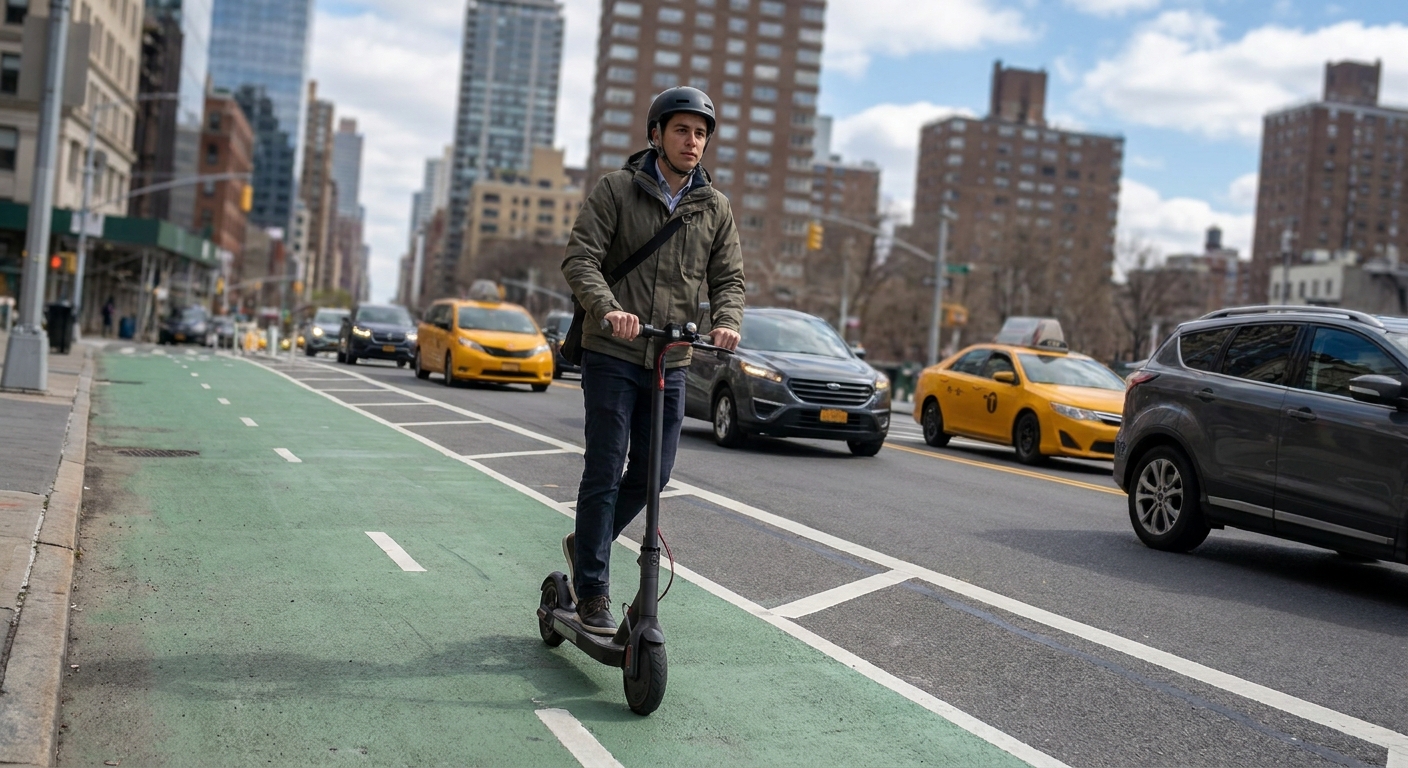
To ride your electric scooter uphill and downhill safely and efficiently, you need to adjust your body posture, manage throttle acceleration, and use your brakes progressively. Imagine pushing your machine toward a steep, intimidating street, only to feel the motor groan, lose speed, and leave you dangerously stranded in traffic.
This terrifying scenario can cause panic, but with the right balancing strategies and high-quality hardware, you can easily turn any hill into a smooth ride. By mastering riding an electric scooter uphill and downhill, you will confidently tackle the steepest hills in your city without stress.
How to Master Riding an Electric Scooter Uphill and Downhill?
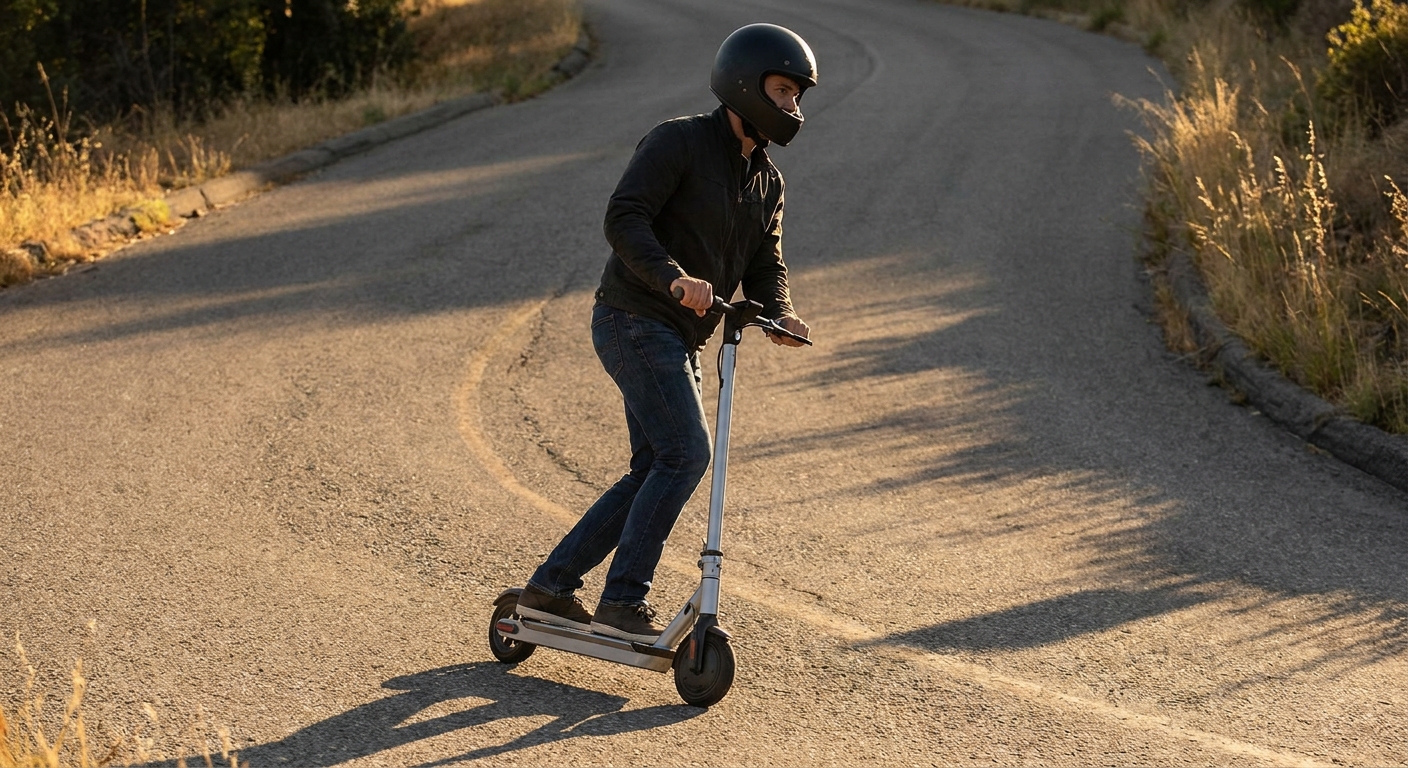
You can master riding an electric scooter uphill and downhill by adjusting your body weight dynamically and using smooth, gradual brake inputs. Learning how to move your body in tandem with gravitational forces keeps both wheels locked to the ground. This foundational skill ensures total control over your machine on any urban terrain.
By practicing these adjustments, you transition from a passenger to an active, secure operator. Consistent control inputs will keep you completely safe.
How Should You Stand on Uphill Climbs?
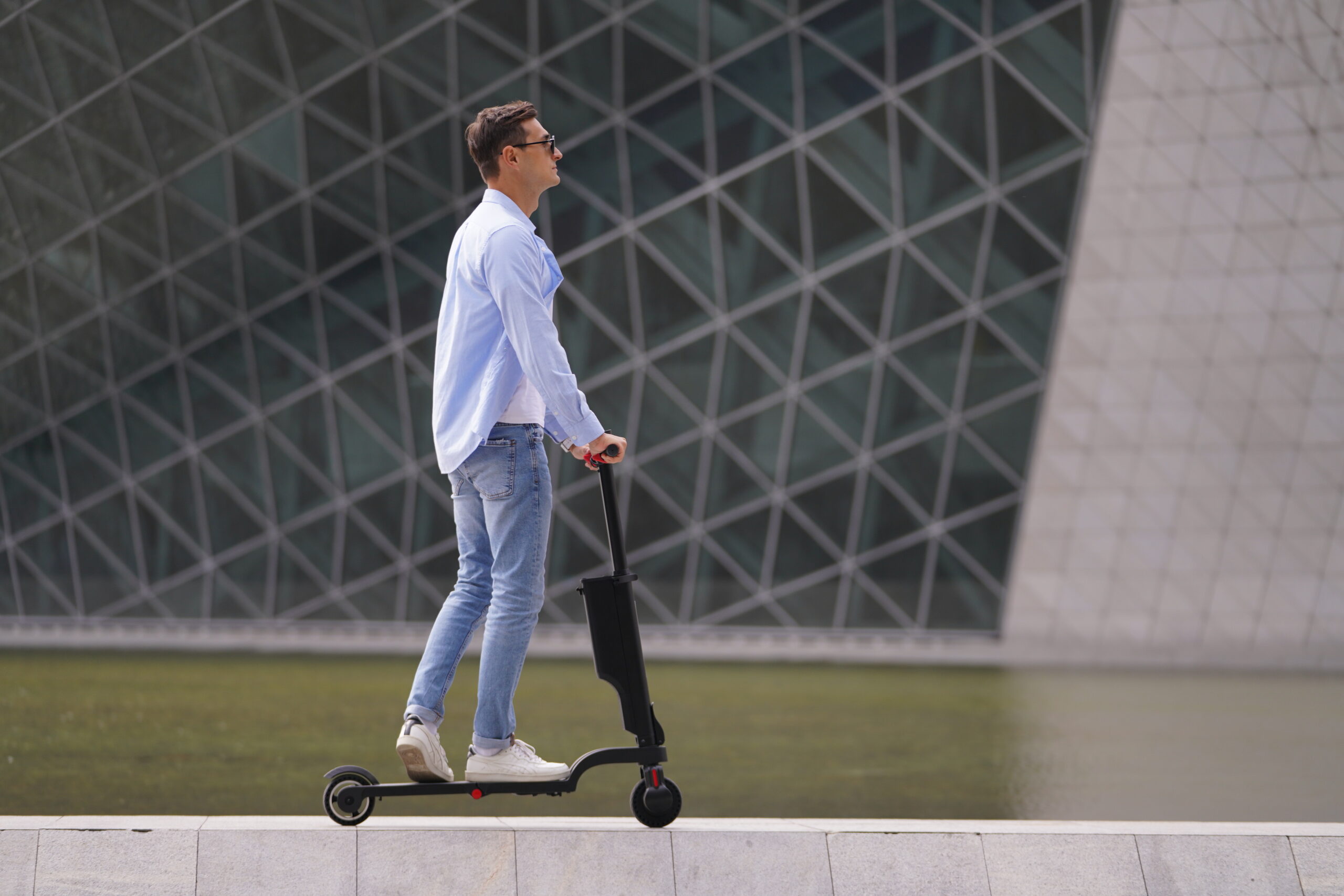
When climbing a steep hill, lean your body forward from your hips and shift your weight over the front deck. This action keeps your front tire firmly planted against the asphalt and prevents the scooter from tipping backward.
Think about it: gravity constantly pulls you backward, so counteracting that force with your posture is vital.
- Move your feet into an active split-foot stance.
- Keep your knees slightly bent to absorb road shocks.
- Avoid pulling backward on the handlebars as you climb.
What Posture is Best for Steep Descents?
Descending safely requires you to do the exact opposite by shifting your weight backward over the rear wheel to maintain traction. Keep your knees bent, push your hips behind the deck, and stand low.
But that is not all: this relaxed, athletic posture ensures your mechanical brakes retain maximum grip. Staying flexible allows you to absorb sudden road vibrations easily.
Key Takeaway: Shifting your weight forward on climbs and backward on descents keeps you balanced and prevents sudden tipping.
| Direction | Body Lean Position | Primary Hazard Addressed |
|---|---|---|
| Uphill | Forward at hips | Front-wheel lifting |
| Downhill | Backward at hips | Pitching forward |
Varying your physical posture directly counteracts the gravitational forces acting on your scooter.
Does Motor Overheat Riding an Electric Scooter Uphill and Downhill?
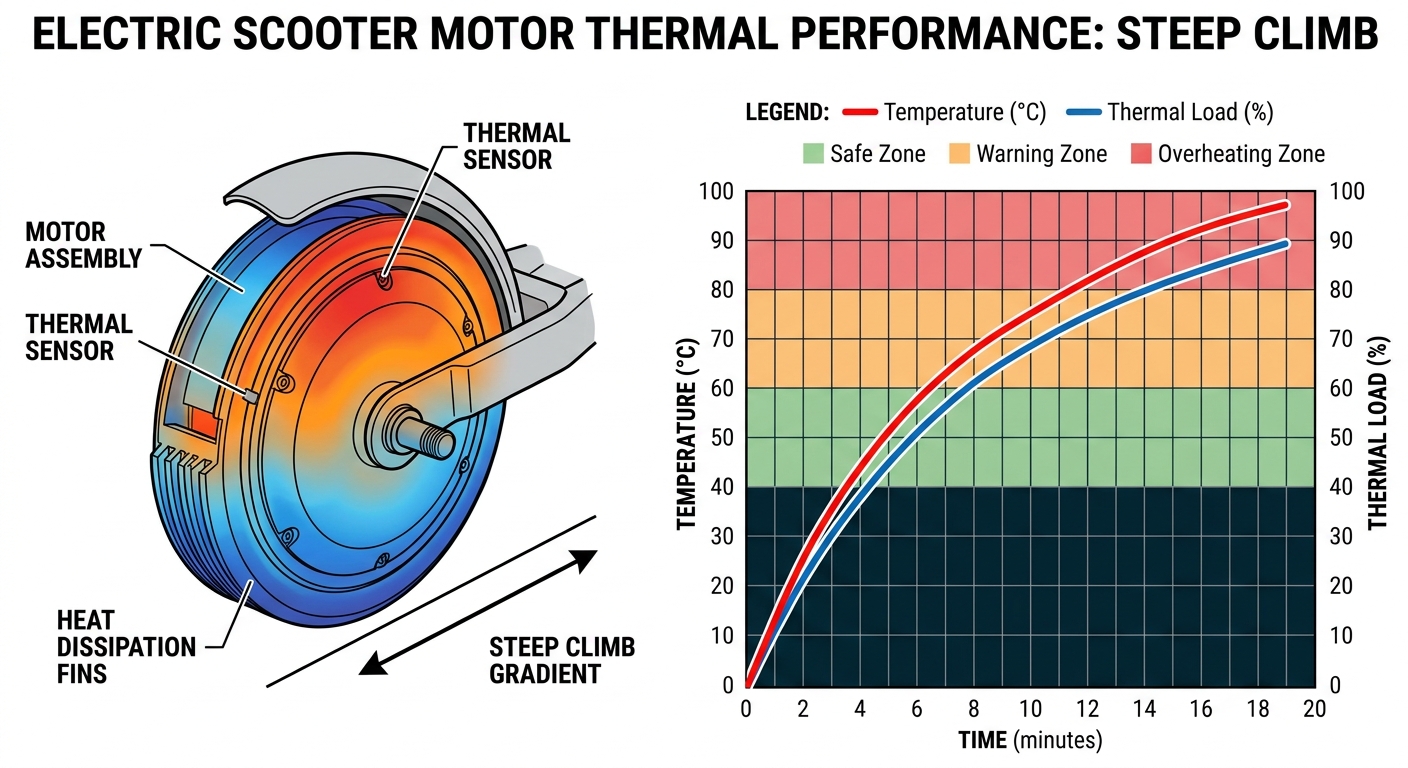
Yes, your motor can overheat during riding an electric scooter uphill and downhill if you force a low-wattage system up steep inclines for prolonged periods. Steep climbs force electric motors to draw maximum current, which raises internal operating temperatures quickly. Understanding these limits prevents damage to your scooter’s delicate electronic controllers.
If your motor begins to feel sluggish or warm, it is trying to protect itself from excessive thermal stress. Giving your hub motor brief breaks on long routes will prolong its lifespan.
Why Do Steep Hills Strain Your Motor?
Brushless DC motors operate under heavy load when pushing your weight against gravity. This physical strain raises internal operating temperatures and drops your system’s efficiency.
Here is the deal: running a motor at maximum throttle on steep slopes eventually degrades its copper coils.
- Avoid climbs steeper than your scooter’s maximum gradient rating.
- Let your motor rest after long, steep ascents.
- Stay within the manufacturer’s recommended payload capacity.
Can Dual Motors Handle Thermal Stress Better?
Dual motors distribute the thermal workload across two hubs rather than straining a single wheel. This design keeps overall operating temperatures much lower.
The best part? You get double the climbing torque without the risk of melting delicate internal components.
Key Takeaway: Monitoring your motor’s temperature on climbs protects its internal wiring and prevents expensive heat damage.
| Motor Config | Climbing Efficiency | Thermal Risk Level |
|---|---|---|
| Single Motor | Moderate | High |
| Dual Motor | Excellent | Low |
Distributing power across dual hubs reduces heat buildup and ensures reliable performance on steep roads.
Does Battery Drain Riding an Electric Scooter Uphill and Downhill?

Yes, battery power drains much faster when riding an electric scooter uphill and downhill due to the immense energy required to fight gravity. Your battery pack must supply continuous high current to keep the motor running at stable speeds on slopes. Consequently, hilly routes can decrease your estimated riding range significantly.
Fortunately, modern lithium-ion batteries are resilient, and smart riding tactics can preserve your battery life. Managing your acceleration is the key to extending your commute range.
Why Do Climbing Demands Exhaust Your Battery?
Climbing steep slopes forces the controller to draw maximum wattage, which rapidly depletes the lithium-ion cells. This heavy draw can temporarily drop your voltage reading under load.
Think about it: battling gravity requires continuous energy output from your power cells.
- Charge your battery fully before taking hilly routes.
- Use eco modes on minor inclines to save power.
- Check your tire pressure regularly to reduce rolling resistance.
How Does Regenerative Braking Help on Descents?
Regenerative braking systems convert kinetic energy from your descent back into electrical power. This process feeds juice back into your battery pack, increasing your range.
But that is not all: it also slows you down safely without wearing out physical brake pads.
Key Takeaway: Balancing climbing energy consumption with downhill regenerative braking helps optimize your total riding range.
| Slope Phase | Energy Direction | Battery Temperature Impact |
|---|---|---|
| Ascent | Discharge (High) | High Warmth |
| Descent | Charge (Regen) | Low Cool-down |
Leveraging regenerative braking on descents acts as an essential tool to offset uphill battery depletion.
How Do Brakes Control Riding an Electric Scooter Uphill and Downhill?
Brakes control riding an electric scooter uphill and downhill by managing your speed through mechanical friction and electronic resistance. Relying on both braking systems prevents wheel lockups and ensures a controlled descent. Knowing how to feather your brakes is vital to navigating steep slopes safely.
Using proper braking techniques on slopes is the single most important safety skill you can learn. It prevents sliding and ensures a stable descent.
Why is Progressive Braking Essential on Descents?
Squeezing brake levers suddenly can lock your wheels and send you into a dangerous skid. You must apply gradual pressure to keep the tires rotating while shedding speed.
Here is the deal: sudden deceleration shifts your body weight forward violently, which can cause you to lose balance.
- Feather both levers together to balance stopping forces.
- Use a relaxed, two-finger grip for precise control.
- Release the levers slightly if you feel the wheels slide.
What is the Advantage of Dual Braking?
Dual braking combines front disc and rear electronic brakes for maximum stopping power. This setup distributes braking force evenly across both tires.
But that is not all: having two independent braking systems guarantees you can stop even if one system fails.
Key Takeaway: Feathering both physical and electronic brakes prevents heat glaze and ensures reliable stopping power.
| Brake Type | Primary Use Case | Wear and Tear |
|---|---|---|
| Disc Brake | Emergency stopping | Moderate to high |
| Regen Brake | Steady deceleration | Zero wear |
Combining mechanical and electronic brakes offers the safest and most reliable way to control your speed down steep slopes.
Which Tires Perform Riding an Electric Scooter Uphill and Downhill?
High-traction tires perform best when riding an electric scooter uphill and downhill by maintaining a strong grip on sloped surfaces. Slick or worn tires will slip easily under heavy motor torque or strong braking pressure. Choosing the right tires is critical for your safety on steep roads.
Tires serve as your only contact point with the pavement, meaning tread design is paramount. High-quality compounds help you stay grounded.
Why are Honeycomb Tires Ideal for Slopes?
Honeycomb tires feature internal air pockets that cushion your ride while eliminating the risk of sudden flats. Their deep treads grip sloped asphalt exceptionally well.
Think about it: a sudden flat on a steep descent is incredibly dangerous and hard to control.
- Check tread depth weekly for signs of wear.
- Keep tires free of mud and street debris.
- Choose wider tire profiles for superior lateral stability.
How Does Wet Weather Affect Slope Grip?
Wet leaves, damp painted lines, and metal grates on hills turn slick instantly. You must reduce speed beforehand and avoid leaning heavily into turns on slopes.
Let’s be honest: water reduces tire friction significantly, meaning you need twice as much braking distance to stop.
Key Takeaway: Using high-traction honeycomb tires keeps you grounded and removes the danger of high-speed punctures on slopes.
| Tire Type | Flat Risk | Grip Level (Dry) | Grip Level (Wet) |
|---|---|---|---|
| Pneumatic | High | Excellent | Good |
| Honeycomb | Zero | Excellent | Very Good |
Opting for puncture-proof honeycomb tires guarantees stable traction and removes the hazard of unexpected tire failures.
How to Balance Body Riding an Electric Scooter Uphill and Downhill?
You balance your body during riding an electric scooter uphill and downhill by shifting your center of gravity opposite to the slope’s inclination. This physical compensation keeps the scooter stable and prevents traction loss. Learning how to move your weight keeps you securely in charge of your ride.
Maintaining your balance prevents the scooter from tipping over or losing tire traction. It also lowers the physical strain on your arms.
How Do You Handle Center of Gravity Changes?
When climbing, lean forward from your hips to keep weight on the front wheel. On descents, bend your knees and push your hips backward over the rear deck.
Here is the deal: keeping your weight centered over the deck prevents sudden tire lift.
- Maintain a wide, split stance.
- Bend knees slightly to absorb shock.
- Do not lock your elbows.
Why is a Relaxed Grip Crucial?
Death-gripping the handlebars drains your energy and reduces steering sensitivity. Keep your shoulders relaxed and let your legs handle the balance.
The best part? A relaxed body reacts much faster to unexpected bumps or gravel patches.
Key Takeaway: Utilizing a dynamic, split-foot stance prevents sudden tipping and saves your arm muscles from fatigue.
| Riding Scenario | Body Action | Primary Weight Focus |
|---|---|---|
| Climbing Up | Lean forward | Shift forward |
| Dropping Down | Push hips back | Shift backward |
Proactive posture adjustments keep your tires locked to the pavement and reduce riding fatigue.
What Speed is Safe Riding an Electric Scooter Uphill and Downhill?
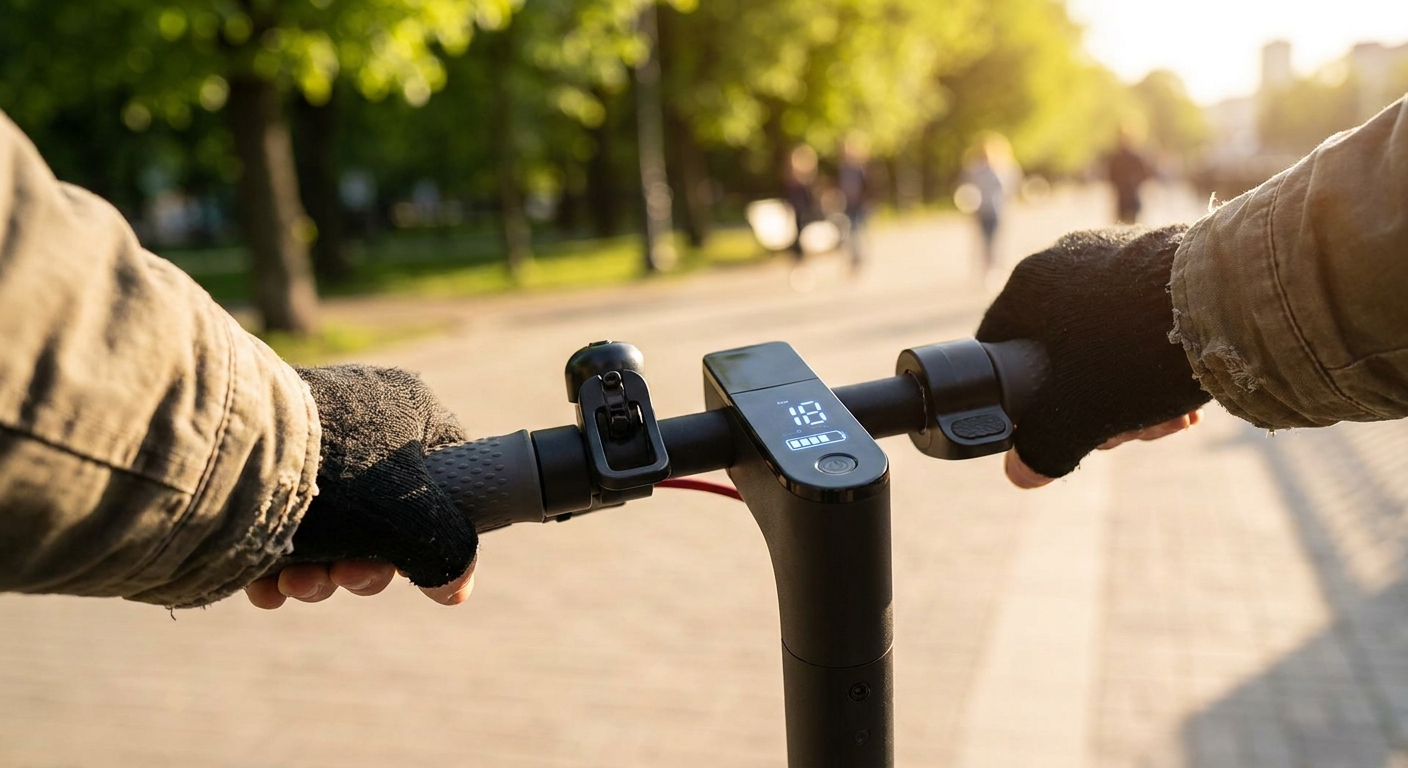
A safe speed for riding an electric scooter uphill and downhill is between 10 to 15 mph, depending on road conditions and slope steepness. Excessive speed on downhills increases stopping distance dramatically. Conversely, climbing too slowly can cause your motor to stall.
Maintaining a controlled speed ensures you can react to obstacles safely. Respecting speed limits keeps you and pedestrians safe.
Why Should You Limit Downhill Speed?
Gravity accelerates your scooter quickly on descents, making it easy to lose control. Keeping a moderate speed allows you to react to hazards.
Think about it: high-speed crashes on hills are much more severe than on flat pavement.
- Keep speed below 15 mph.
- Apply gentle braking constantly.
- Scan ahead for obstacles.
How Do You Maintain Momentum Uphill?
Building gentle momentum on the flat approach before hitting the hill gives your motor an advantage. This approach prevents the motor from bogging down midway.
But that is not all: a steady, moderate speed protects your battery and motor from excessive amp draw.
Key Takeaway: Managing your speed proactively prevents motor stalls on climbs and runaway speeds on descents.
| Road Type | Safe Uphill Speed | Safe Downhill Speed |
|---|---|---|
| Moderate Hill | 12 – 15 mph | 10 – 15 mph |
| Steep Hill | 8 – 12 mph | 8 – 10 mph |
Regulating your speed based on slope severity is crucial for keeping stopping distances manageable.
Why Wear Helmet for Riding an Electric Scooter Uphill and Downhill?
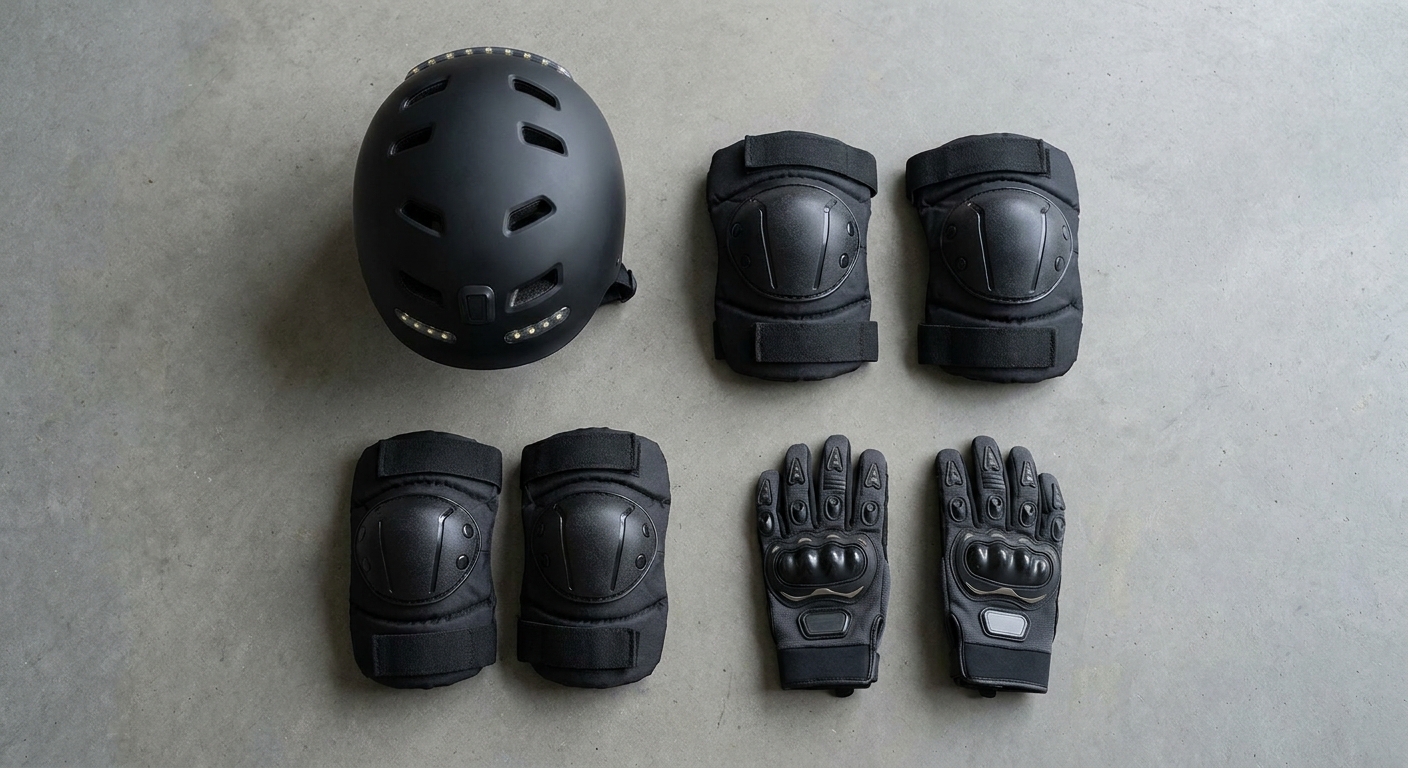
You must wear a helmet during riding an electric scooter uphill and downhill because sloped terrains carry a much higher risk of falls and high-speed impacts. Downhill gravity accelerates you rapidly, leaving less time to react to bumps. A certified helmet is your primary defense against head injuries.
Wearing protective gear ensures that a simple tumble does not turn into a life-changing accident. Safety should always come first.
How Does Gravity Multiply Fall Risk?
When descending, your center of mass shifts forward, which increases the likelihood of pitching over the handlebars if you hit a bump. A helmet absorbs the critical impact energy.
Here is the deal: head protection is non-negotiable whenever you ride at high speeds.
- Use a snug-fitting helmet.
- Check for safety certifications.
- Replace helmets after any impact.
What Other Protective Gear Helps?
Padded riding gloves, knee pads, and elbow guards protect your extremities during a slide. This gear gives you the confidence to ride safely.
The best part? Modern protective gear is lightweight, highly ventilated, and comfortable to wear daily.
Key Takeaway: Wearing a certified helmet and gloves protects your body from severe injuries on unpredictable slopes.
| Gear Item | Primary Protection | Importance on Slopes |
|---|---|---|
| Helmet | Head & Skull | Absolute Essential |
| Gloves | Palms & Wrists | Recommended |
Investing in proper protective gear drastically reduces the risk of injury during sloped commutes.
How to Choose Roads Riding an Electric Scooter Uphill and Downhill?

You can choose roads for riding an electric scooter uphill and downhill by selecting clean, well-paved streets with moderate gradients. Avoiding potholes, loose gravel, and extreme slopes makes your ride far more predictable. Good route planning saves battery and prevents wear.
Taking a slightly longer path on flat terrain is often better than risking a dangerous climb. Smart routing makes your commute stress-free.
Why is Asphalt Quality Crucial on Slopes?
Asphalt defects on hills are twice as dangerous because your tires are already operating under heavy load. Potholes can easily throw you off balance.
Think about it: keeping your wheels on smooth surfaces ensures maximum rubber contact.
- Avoid roads with loose dirt.
- Ride away from deep drainage grates.
- Choose designated bike paths.
How Do You Identify Extreme Gradients?
Street signs often indicate gradient percentages to warn travelers. Gradients over 15 degrees should be avoided by most lightweight commuter scooters.
But that is not all: planning your path using mapping apps can help you find flat detours.
Key Takeaway: Planning your route on smooth, moderate hills preserves your battery and ensures a safer, more stable trip.
| Slope Gradient | Difficulty Level | Recommendation |
|---|---|---|
| 0% – 8% | Easy / Mild | Perfect for commuters |
| 8% – 15% | Moderate | Exercise caution |
Selecting smooth, mild streets prevents mechanical strain and protects your tires from slipping.
Can Model B Master Riding an Electric Scooter Uphill and Downhill?
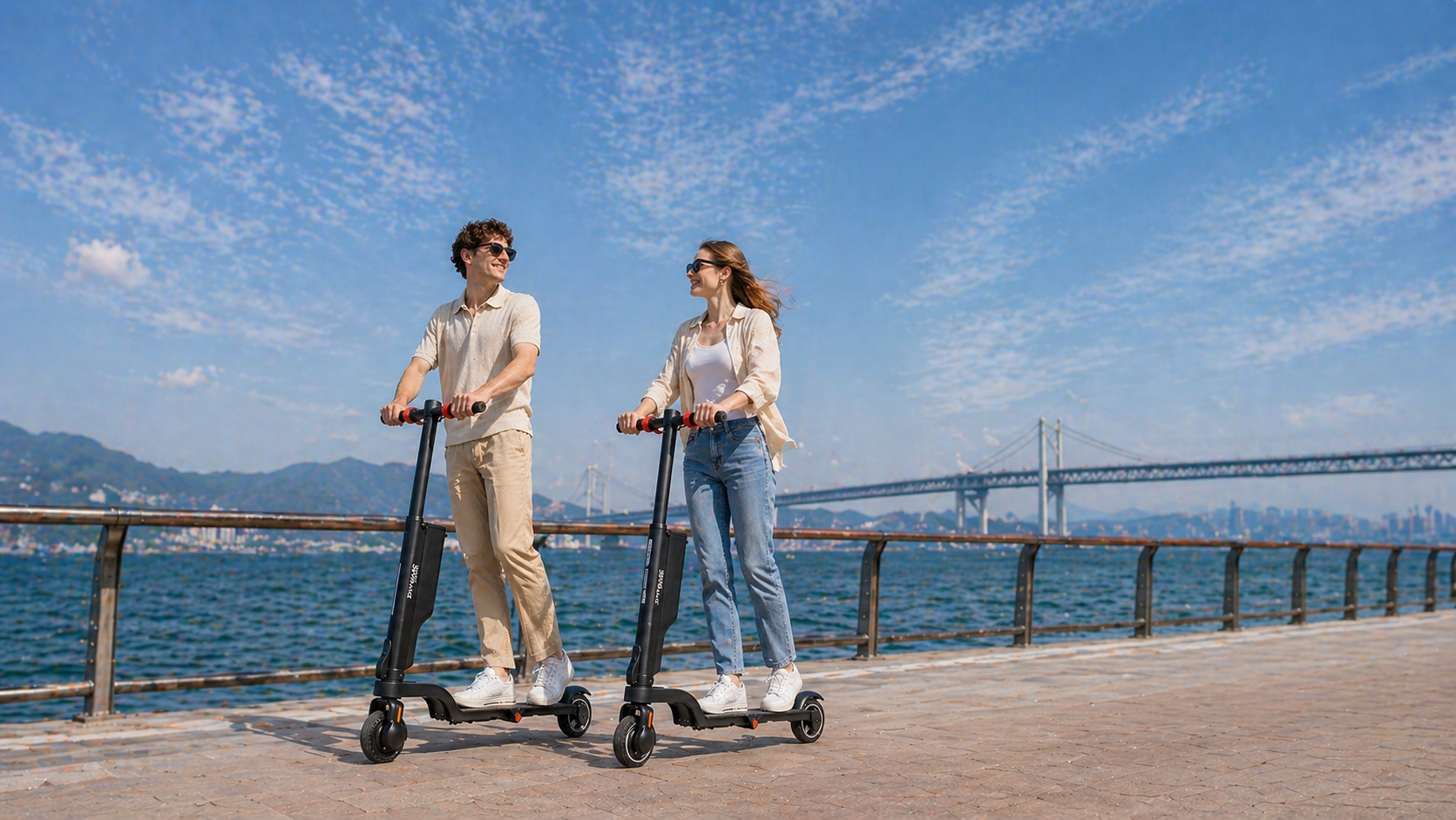
Yes, the Dynamic Scooter Model B can master riding an electric scooter uphill and downhill easily due to its high-torque motor and advanced braking systems. Engineered specifically for urban commuters, it delivers the stability and torque required to handle hills. It turns intimidating slopes into a smooth, effortless cruise.
Its durable frame is optimized to handle structural stresses without compromising stability. You will feel secure on every climb and descent.
Why Does its Motor Excel on Climbs?
The Model B features a high-performance brushless hub motor optimized for climbing slopes up to 10 degrees. This provides steady power without overheating.
Here is the deal: its smart power distribution prevents the motor from bogging down midway.
- Delivers consistent torque.
- Resists thermal heat buildup.
- Maximizes battery efficiency.
How Do its Brakes Ensure Safe Descents?
Equipped with dual responsive brakes, the Model B offers unmatched stopping control on steep drops. The progressive levers allow you to slow down smoothly.
But that is not all: its durable honeycomb tires ensure you retain perfect grip, even on slick streets.
Key Takeaway: Relying on the Model B’s robust motor and hybrid brakes ensures you can conquer any incline safely.
| Model B Feature | Slope Benefit | Hardware Standard |
|---|---|---|
| High-Torque Hub | Smooth 10° climbs | Brushless DC |
| Dual Brake System | Controlled descents | Mechanical + Regen |
Choosing a scooter with specialized hill-climbing features is the best way to handle hilly terrain confidently.
Conclusion
Navigating steep hills and rapid descents no longer has to be a source of stress or anxiety on your daily commute. By mastering weight distribution, feathering your dual brakes, and choosing a reliable, portable companion like the Dynamic Scooter Model B, you can conquer any urban incline with ease.
Our mission is to provide you with the safest, most efficient micro-mobility solutions that make city life simpler. If you are ready to elevate your daily ride, or if you have any questions about choosing the perfect model, feel free to contact us today and let our expert support team guide you.
Frequently Asked Questions (FAQ)
Can I ride my electric scooter on extremely steep hills?
No. You should avoid climbing slopes that exceed your manufacturer’s specified maximum incline rating. Standard commuter scooters, like the Model B, are optimized for up to a 10-degree climb angle. Attempting steeper hills can strain your motor and cause rapid battery drain.
What’s the best way to brake when going downhill fast?
Absolutely. You must use a hybrid combination of electronic and rear mechanical brakes while leaning your body weight backward. Applying both brakes gradually prevents wheel lockups and skidding, keeping you in complete control.
How do I know if my scooter motor is overheating?
Immediately. You can identify motor overheating if you notice a sudden drop in climbing power or feel excessive heat radiating from the hub wheel casing. If this occurs, immediately stop in a safe area and let the motor cool down for fifteen minutes.
Can I recharge my battery while coasting downhill?
Yes. You can recharge your battery on descents if your electric scooter is equipped with regenerative braking. This system captures kinetic energy during braking and converts it back into battery power, slightly extending your range.
How do I know if my tire tread is safe for slopes?
Easily. You can check your safety by inspecting the depth of your tire grooves and looking for any smooth spots. Tires with worn-down treads cannot grip steep or wet asphalt properly, increasing your risk of sliding on downhills.