...

August 27, 2025

Electric Scooter vs Kick Scooter: Which Should You Buy?

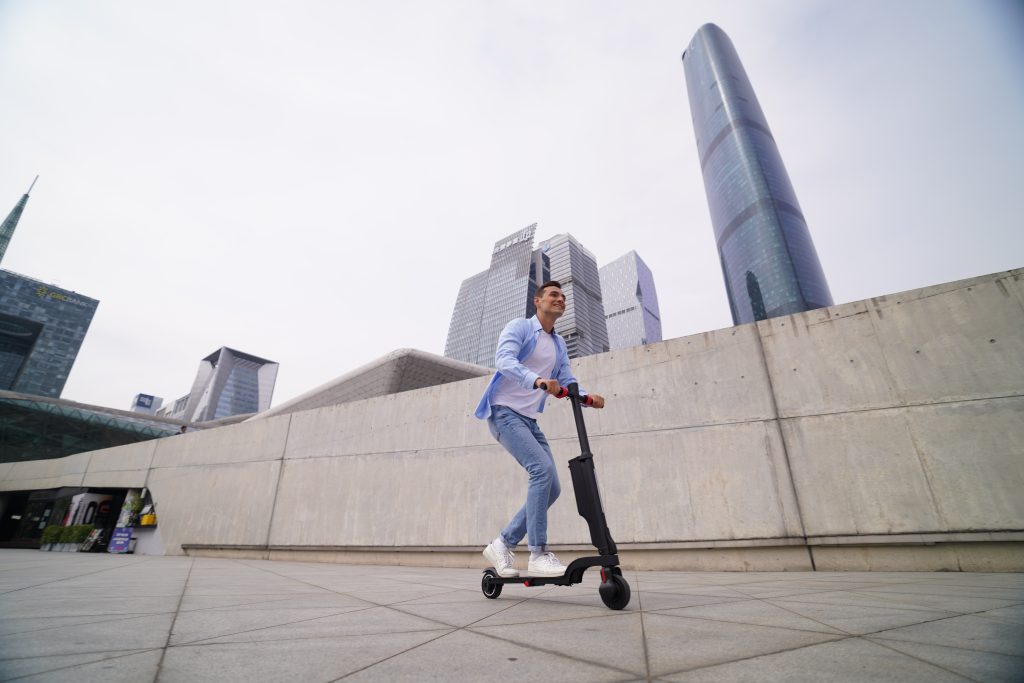
Choosing between an electric scooter and a kick scooter can feel overwhelming. Both options offer unique benefits for different users. Electric scooters provide effortless transportation with motor assistance. Kick scooters offer exercise benefits and simplicity. Without understanding the key differences, you might invest in the wrong type. This could waste money on something that doesn’t fit your needs, budget, or lifestyle. The key is comparing several important factors. You need to look at speed, cost, exercise benefits, and maintenance requirements. You should also consider practical applications. This helps you make an informed decision that matches your specific transportation goals and daily usage patterns. Here’s the thing – the right choice depends entirely on your priorities and intended use. 1. What Are the Key Performance Differences? Electric scooters and kick scooters represent fundamentally different approaches to personal transportation. Here’s why it matters – understanding these performance differences helps you choose the option that best matches your speed requirements, distance needs, and physical capabilities. Electric scooters deliver consistent speeds of 15-25 mph without physical effort. They maintain performance regardless of rider fitness level, terrain challenges, or weather conditions. Most quality electric models can travel 15-30 miles per charge, making them suitable for longer commutes. Some manufacturers also produce electric kick scooter models that combine traditional kick scooter design with small electric motors. These hybrid models offer the best of both worlds, providing exercise when desired and motor assistance when needed. Kick scooters rely entirely on human power, with speeds typically ranging from 8-15 mph depending on rider fitness and effort level. Performance varies significantly based on physical condition, terrain, and weather. Range is limited only by rider endurance, but practical distances rarely exceed 5-10 miles. Hill climbing capabilities differ dramatically between the two options. Electric scooters handle inclines effortlessly with motor assistance, while kick scooters require significant physical effort on hills. This difference significantly impacts route planning and usability in hilly areas. Performance Factor Electric Scooters Kick Scooters Advantage Top Speed 15-25 mph 8-15 mph Electric Range 15-30 miles 5-10 miles practical Electric Hill Climbing Effortless Requires effort Electric Consistency Weather independent Varies with conditions Electric Acceleration patterns also vary significantly. Electric scooters provide instant acceleration from a standstill, while kick scooters require time to build momentum through pushing. This affects traffic integration and stop-and-go urban riding scenarios. Weather resistance favors electric scooters in challenging conditions. Rain, wind, and cold temperatures minimally impact electric performance, while these conditions can make kick scooter riding difficult or dangerous. The Dynamic Scooter Model B exemplifies electric scooter performance with its 20-mile range, 18 mph top speed, and reliable hill-climbing capabilities that make it suitable for diverse urban environments. 2. How Do Costs Compare Between Electric and Kick Scooters? The financial comparison between electric and kick scooters extends beyond initial purchase price to include long-term ownership costs. The best part? Understanding total cost of ownership helps you make a financially sound decision based on your usage patterns and budget constraints. Initial purchase prices show significant differences between the two options. Quality kick scooters cost $50-300, while electric scooters range from $200-2000+. The Dynamic Scooter Model B offers exceptional value at $375.37, bridging the gap between basic and premium electric options. Operating costs favor kick scooters due to their mechanical simplicity. Electric scooters require electricity for charging, typically costing $20-50 annually for regular users. Kick scooters have zero operating costs beyond occasional maintenance. Maintenance requirements differ substantially between the options. Kick scooters need basic upkeep like wheel bearing lubrication and brake adjustments. Electric scooters require battery maintenance, electrical system care, and more complex repairs when problems occur. Cost Category Electric Scooters Kick Scooters Annual Difference Initial Purchase $200-2000+ $50-300 $150-1700+ Electricity $20-50/year $0 $20-50 Maintenance $50-150/year $20-50/year $30-100 Insurance $50-100/year $0-25/year $25-75 Replacement costs impact long-term budgeting differently. Electric scooter batteries typically need replacement every 2-4 years at $100-300 cost. Kick scooters may need wheel or bearing replacements but at much lower costs. Theft risk affects insurance and replacement considerations. Electric scooters are more attractive to thieves due to higher value, potentially requiring additional security measures or insurance coverage. Value retention varies between options. Quality kick scooters maintain value well due to simple construction, while electric scooters depreciate faster due to battery aging and technology advancement. 3. Which Option Provides Better Exercise Benefits? Exercise considerations play a crucial role in scooter selection for health-conscious users. Now, you might be wondering how these two options compare for fitness goals, calorie burning, and overall physical activity integration into daily routines. Kick scooters provide excellent cardiovascular exercise through continuous pushing motion. Users burn 200-400 calories per hour depending on intensity, terrain, and body weight. This makes kick scooters effective for fitness goals and weight management. Electric scooters offer minimal exercise benefits since motors provide propulsion. Users primarily engage core muscles for balance and steering, burning only 50-100 calories per hour. However, they enable longer distances that might encourage more frequent outdoor activity. Muscle engagement differs significantly between options. Kick scooters work leg muscles, core, and cardiovascular system intensively. Electric scooters mainly engage core and balance muscles while providing a low-impact standing position. Exercise Aspect Electric Scooters Kick Scooters Health Impact Calories Burned 50-100/hour 200-400/hour Kick scooters win Cardiovascular Minimal Moderate to high Kick scooters win Muscle Engagement Core only Full body Kick scooters win Joint Impact Very low Low to moderate Electric slightly better Age and fitness considerations affect exercise suitability. Kick scooters require good physical condition and may be challenging for older adults or those with mobility limitations. Electric scooters accommodate various fitness levels and physical capabilities. Weather impact on exercise varies between options. Kick scooters provide year-round exercise opportunities in suitable weather, while electric scooters enable consistent transportation regardless of physical energy levels. Long-term health benefits favor kick scooters for users seeking active transportation. Regular kick scooter use can improve cardiovascular health, leg strength, and overall fitness levels over time. 4. How Do Portability and Storage Requirements Differ? Portability and storage considerations significantly impact daily usability for

Electric Scooter vs Kick Scooter: Which Should You Buy? Read More »

What’s the Complete History of Scooter Evolution? Surprising Facts Inside

The scooter’s journey tells a fascinating story of innovation and adaptation. It started as a simple wooden toy. Today it’s a sophisticated electric vehicle. Many people don’t realize how dramatically scooters have transformed over the past century. They evolved from basic push-powered devices to high-tech transportation solutions. Understanding the evolution of past and present scooter designs reveals important insights. This humble vehicle became a cornerstone of modern urban mobility. It influences everything from children’s play to adult commuting and last-mile transportation solutions. Here’s the thing – the scooter’s evolution mirrors our changing transportation needs and technological capabilities. 1. What Were the Origins of the First Scooters? The earliest scooters emerged in the early 1900s as homemade children’s toys created from wooden crates and roller skate wheels. Here’s why it matters – these primitive designs established the fundamental scooter concept that remains unchanged today: a platform for standing with wheels and a steering mechanism. The first commercial scooters appeared around 1915-1920, manufactured by companies like Autoped and Krupp. These early models featured small engines and were marketed as practical transportation for adults. The Autoped, introduced in 1915, is considered the first motorized scooter with a 155cc engine. World War I significantly influenced early scooter development. Fuel shortages and transportation restrictions made small, efficient vehicles attractive alternatives to automobiles. Many manufacturers pivoted from bicycle production to scooter manufacturing during this period. Era Key Features Notable Models Primary Users 1900-1920 Wooden platforms, steel wheels Homemade versions Children 1920-1940 Metal construction, small engines Autoped, Krupp Roller Adults and children 1940-1960 Improved stability, better brakes Vespa, Lambretta Urban commuters The Great Depression sparked innovation in affordable transportation. Scooter manufacturers focused on creating economical vehicles that offered basic mobility without the expense of automobiles. This period saw the development of more reliable engines and improved construction techniques. Post-World War II Europe embraced scooters as essential transportation. Countries like Italy and Germany, with damaged infrastructure and limited resources, found scooters provided practical mobility solutions. The famous Vespa, introduced in 1946, exemplified this trend. Early safety concerns led to the first regulations and design improvements. Manufacturers began incorporating better braking systems, improved lighting, and more stable platforms. These changes established safety standards that influence modern scooter design. 2. How Did Scooters Gain Popularity in the Mid-20th Century? The 1950s and 1960s marked the golden age of scooter culture, particularly in Europe and parts of Asia. The best part? This era established scooters as symbols of freedom, youth culture, and practical urban transportation that continues to influence modern perceptions. Italian manufacturers dominated the scooter market during this period. Vespa and Lambretta became household names, producing millions of units and establishing design principles still used today. Their success came from combining style, reliability, and affordability. The mod subculture in Britain adopted scooters as cultural symbols. Young people customized Vespa and Lambretta scooters with mirrors, lights, and accessories, creating a distinctive aesthetic that influenced fashion and music. This cultural movement spread scooter popularity beyond practical transportation. Manufacturing improvements during this era included better engines, automatic transmissions, and weather protection. Scooters became more reliable and user-friendly, attracting riders who might have been intimidated by motorcycles or unable to afford cars. Decade Cultural Impact Technical Advances Market Growth 1950s Italian style influence Automatic transmission 500% increase 1960s Mod culture adoption Improved engines European expansion 1970s Decline in Western markets Basic electric experiments Asian market growth The oil crisis of the 1970s briefly renewed interest in fuel-efficient scooters. However, improving car affordability and changing lifestyle preferences led to declining scooter sales in Western markets. Many manufacturers shifted focus to motorcycles or other products. Asian markets, particularly in India and Southeast Asia, continued embracing scooters throughout this period. Companies like Bajaj and TVS built thriving businesses serving growing urban populations who needed affordable, efficient transportation. The foundation for modern scooter design was established during this era. Key innovations included CVT transmissions, step-through frames, and under-seat storage that remain standard features in contemporary models. 3. When Did Electric Scooters First Appear? Electric scooter development began in the 1970s, though early attempts were limited by battery technology and market readiness. Now, you might be wondering how these primitive electric models evolved into today’s sophisticated e-scooters that dominate urban transportation. The first electric scooters were essentially motorized versions of traditional kick scooters. Companies like Go-Ped introduced electric models in the 1980s, but heavy lead-acid batteries and limited range restricted their appeal to niche markets. Razor revolutionized the scooter market in 1999 with their aluminum kick scooter, creating a global phenomenon. While not electric, this model established the folding scooter format that would later become standard for electric versions. Early 2000s electric scooters remained hobbyist products due to technological limitations. Battery technology hadn’t advanced sufficiently to create practical, lightweight electric scooters. Most models were heavy, expensive, and offered limited range. Period Battery Type Typical Range Weight Market Reception 1970s-1980s Lead-acid 5-10 miles 60-80 lbs Very limited 1990s-2000s Nickel-metal hydride 10-15 miles 40-60 lbs Niche market 2010s Lithium-ion 15-25 miles 25-35 lbs Growing adoption The smartphone revolution indirectly accelerated electric scooter development. Lithium-ion battery improvements for phones and laptops made lightweight, powerful batteries available for scooters. This technological spillover effect was crucial for the industry. Crowdfunding platforms like Kickstarter enabled electric scooter innovation in the 2010s. Small companies could raise capital for development without traditional manufacturing partnerships. Many successful modern brands started through crowdfunding campaigns. The sharing economy model, pioneered by companies like Bird and Lime around 2017, finally brought electric scooters into mainstream consciousness. Suddenly, electric scooters were available on street corners in major cities worldwide. 4. What Innovations Define Modern Electric Scooters? Today’s electric scooters incorporate advanced technologies that were unimaginable in past and present scooter comparisons from just a decade ago. This is important because these innovations have transformed scooters from simple transportation devices into sophisticated mobility platforms with smart features. Lithium-ion battery technology enables the lightweight, long-range performance that makes modern e-scooters practical. Current batteries provide 15-40 mile ranges while weighing just 5-10 pounds, a

What’s the Complete History of Scooter Evolution? Surprising Facts Inside Read More »

Should You Buy an Electric Bike or Electric Scooter? Best Choice for You

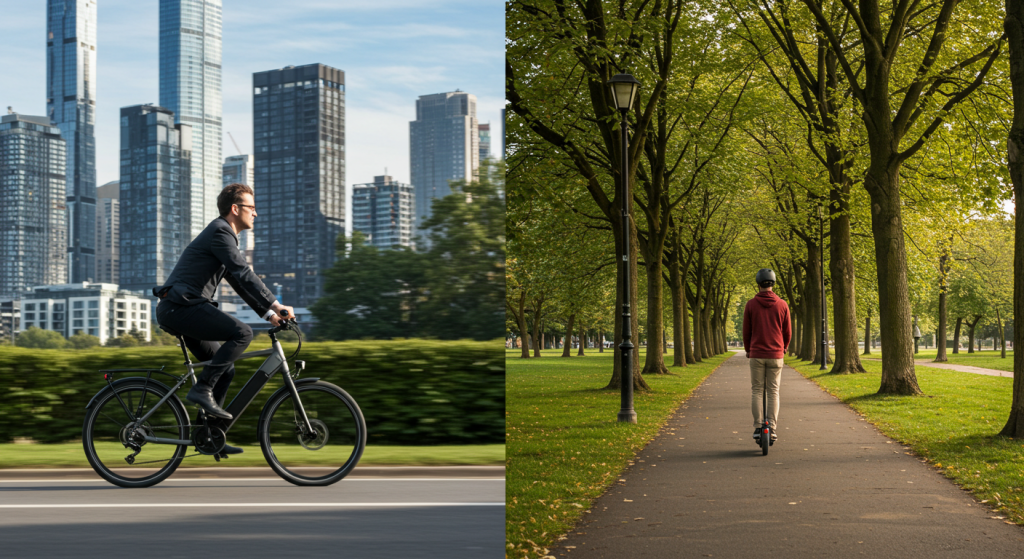
Choosing between an electric bike and electric scooter can feel overwhelming with so many factors to consider. Both offer eco-friendly transportation, but they serve different needs and lifestyles. Without proper comparison, you might invest in the wrong option for your daily commute, budget, or riding preferences. The key is understanding the differences in speed, range, cost, portability, and practical applications to make an informed decision that matches your specific transportation needs. Here’s the thing – the right choice depends entirely on your individual circumstances. 1. What Are the Key Differences Between Electric Bikes and Electric Scooters? Electric bikes and electric scooters represent two distinct approaches to personal electric transportation. Here’s why it matters – understanding these fundamental differences helps you choose the option that best fits your lifestyle and transportation needs. Electric bikes combine traditional pedaling with electric motor assistance. They typically feature larger frames, comfortable seating, and pedals that allow manual propulsion. Most e-bikes can travel 20-50 miles per charge and reach speeds of 20-28 mph depending on local regulations. Electric scooters offer a more compact, standing-ride experience. They rely entirely on electric power with no pedaling option. Most scooters are lighter, more portable, and designed for shorter trips. Range typically spans 8-25 miles with speeds of 15-25 mph. Feature Electric Bikes Electric Scooters Riding Position Seated Standing Manual Backup Pedaling available None Typical Range 20-50 miles 8-25 miles Average Speed 20-28 mph 15-25 mph Weight differences significantly impact portability and storage. Electric bikes typically weigh 40-70 pounds, making them challenging to carry upstairs or into buildings. Electric scooters usually weigh 25-40 pounds and often fold for easier transport. Battery placement affects balance and handling characteristics. E-bikes distribute battery weight across the frame for stability. Scooters concentrate battery weight in the deck or stem, creating different handling dynamics. The Dynamic Scooter Model B exemplifies quality scooter design with its lightweight construction, foldable frame, and impressive 20-mile range. It bridges the gap between portability and performance that many commuters seek. 2. How Do Speed and Range Compare Between E-Bikes and E-Scooters? Speed and range capabilities vary significantly between electric bikes and scooters, affecting their suitability for different transportation needs. The best part? Understanding these differences helps you choose based on your actual travel requirements rather than marketing claims. Electric bikes generally offer superior range due to larger battery capacity and pedal assistance. Premium e-bikes can travel 40-80 miles on a single charge when combining electric power with pedaling. This makes them suitable for longer commutes and recreational rides. Electric scooters prioritize portability over maximum range. Most quality scooters provide 15-25 miles of range, which covers typical urban commuting needs. The trade-off comes in the form of lighter weight and easier storage. Speed regulations affect both vehicle types differently. In most areas, e-bikes can legally travel faster than scooters on bike paths and roads. Class 3 e-bikes can reach 28 mph with pedal assistance, while most scooters are limited to 15-20 mph. Performance Metric Electric Bikes Electric Scooters Best For Maximum Range 40-80 miles 15-25 miles Long commutes vs short trips Top Speed 20-28 mph 15-20 mph Highway access vs city streets Hill Climbing Excellent with pedals Good with powerful motors Hilly terrain vs flat areas Real-world performance often differs from manufacturer specifications. Factors like rider weight, terrain, weather, and riding style significantly impact both speed and range. E-bikes maintain performance better under challenging conditions due to pedal backup. Battery technology continues improving for both vehicle types. Newer lithium-ion batteries offer better energy density and longer lifespans. However, e-bike batteries typically last longer due to less frequent full discharge cycles. Charging time varies between models but generally favors scooters. Most e-scooters charge fully in 3-6 hours, while e-bikes may require 4-8 hours due to larger battery capacity. 3. Which Option Offers Better Value for Your Money? Cost considerations extend beyond initial purchase price to include maintenance, insurance, and long-term value. Now, you might be wondering about the total cost of ownership for each option over several years of use. Entry-level electric scooters start around $300-500, while quality models range from $500-1500. Premium scooters with advanced features can cost $1500-3000. The Dynamic Scooter Model B offers excellent value at $375.37 with features typically found in more expensive models. Electric bikes generally cost more upfront, with entry-level models starting around $800-1200. Mid-range e-bikes cost $1500-3000, while premium models can exceed $5000. The higher cost reflects more complex components and larger batteries. Maintenance costs favor electric scooters due to simpler mechanical systems. Scooters have fewer moving parts, no chain or gears, and simpler brake systems. E-bikes require regular chain maintenance, gear adjustments, and more frequent tire replacements. Cost Factor Electric Bikes Electric Scooters Annual Difference Initial Purchase $800-5000+ $300-3000 Varies widely Maintenance $100-300/year $50-150/year $50-150 savings Insurance $100-200/year $50-100/year $50-100 savings Replacement Parts Higher cost Lower cost $100-200 savings Resale value typically favors electric bikes due to their durability and established market. Quality e-bikes retain 40-60% of their value after 2-3 years, while scooters may retain 30-50% depending on condition and brand reputation. Operating costs remain minimal for both options. Electricity costs for charging average $0.05-0.15 per full charge. Both options eliminate fuel costs, parking fees, and many transportation expenses associated with cars. Long-term value depends on usage patterns. Heavy daily users may find e-bikes more cost-effective despite higher upfront costs. Occasional users or those with short commutes often find scooters provide better value. 4. How Do Portability and Storage Requirements Differ? Portability and storage considerations significantly impact daily usability for urban commuters and travelers. This is important because your ability to easily transport and store your vehicle affects how often you’ll actually use it. Electric scooters excel in portability due to folding mechanisms and lighter weight. Most quality scooters fold in 10-30 seconds and fit in car trunks, under desks, or in closets. The compact folded size makes them practical for multi-modal transportation. Electric bikes require more storage space and are challenging to transport. Even folding e-bikes are bulkier and heavier than

Should You Buy an Electric Bike or Electric Scooter? Best Choice for You Read More »

Shopping Cart
Scroll to Top