
...

July 16, 2026

Why Electric Scooters Are Perfect for College Students?

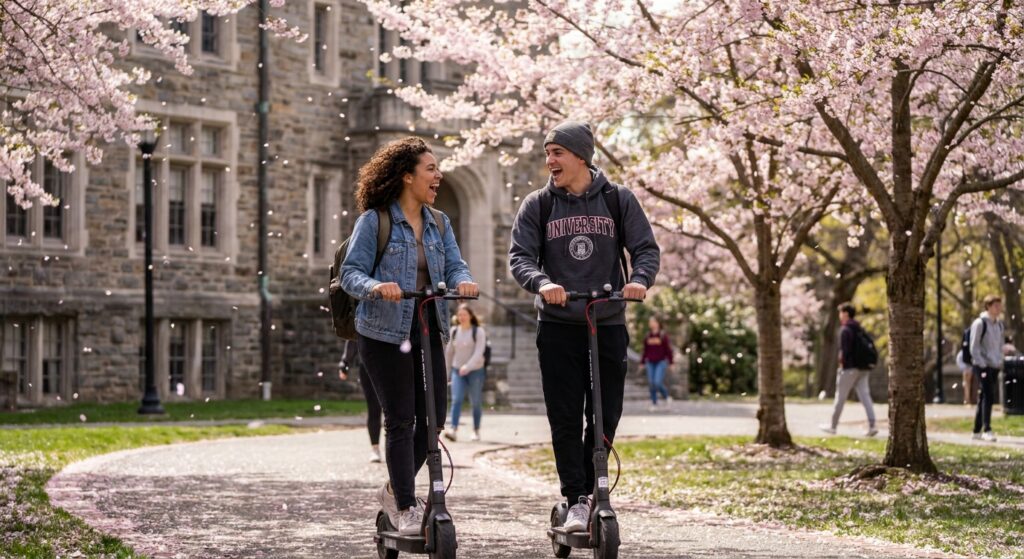
Electric scooters are perfect for college students because they eliminate expensive parking permits, slash stressful commute times, and offer an incredibly budget-friendly, highly reliable alternative to traditional car ownership. Sprawling university campuses are notoriously difficult to navigate. Walking long distances between back-to-back lectures is physically exhausting, campus shuttle buses are consistently overcrowded or delayed, and purchasing a campus parking permit is an expensive nightmare that rarely guarantees a parking spot close to class. Imagine waking up early only to spend twenty minutes hunting for parking in the rain, sprinting across campus drenched in sweat, and ultimately walking into your midterm exam ten minutes late and highly stressed—all while spending thousands of dollars annually on gas, maintenance, and parking citations. Fortunately, there is a smarter, faster, and highly affordable way to master your daily campus transit. By utilizing premium electric scooters for college students, you can effortlessly bypass traffic, park right outside your classroom door, and arrive at every single lecture feeling refreshed, energized, and completely on time. Why choose electric scooters for college students? Choosing these modern micro-mobility devices allows college students to navigate expansive campuses with unmatched speed, ultimate scheduling flexibility, and absolute daily convenience. Modern university life requires a highly agile transportation method that adapts to a student’s busy schedule. Choosing electric scooters for college students provides a reliable way to bypass transit delays and pedestrian congestion. These lightweight electric vehicles fit seamlessly into the fast-paced routine of academic lectures, study groups, and part-time jobs. They transform tiring daily treks into quick, enjoyable journeys. Master Your Daily Class Schedule Back-to-back classes on opposite sides of a large university campus can be impossible for you to make on foot. A personal scooter ensures you never have to sprint between academic buildings or worry about tardiness penalties. Here is the deal: Is public transit too slow? Waiting around for unreliable campus loop shuttles wastes your valuable study time every single day. Having your own motorized ride lets you control your schedule completely without relying on rigid bus timetables. Let’s face it: choosing a micro-mobility solution simplifies your daily college logistics, allowing you to focus your energy on academics rather than transit stress. Metric Walking Campus Shuttle Electric Scooter Speed Slow (2–3 mph) Moderate (variable) Fast (15–19 mph) Schedule Control High Low (fixed times) Maximum (on-demand) Physical Effort High Low Low The table demonstrates that personal electric scooters offer the optimal balance of speed and control compared to traditional campus transit methods. Are electric scooters for college students safe? Modern personal electric scooters are engineered with robust safety features, including advanced dual-braking systems and high-visibility lighting, to keep student riders secure on campus pathways. High-quality electric scooters for college students prioritize rider protection by integrating premium safety mechanisms like dual braking and LED visibility packages. Adhering to basic campus riding rules and wearing a helmet makes these vehicles exceptionally secure. Responsive controls allow you to safely navigate around unpredictable pedestrians and crowded bike lanes. Critical Safety Features to Look For When shopping for a campus vehicle, you should prioritize models with dual-braking configurations and durable frames. These features provide immediate stopping power and stable handling under various riding conditions. Here is the deal: How to ride defensively on campus? Staying safe on campus requires proactive riding habits and respect for pedestrian traffic. You must always yield to walkers, obey posted speed limits, and stay within designated bicycle lanes to protect yourself and others. Think about it: investing in a scooter equipped with superior braking, lighting, and frame construction guarantees a safe, dependable, and worry-free daily campus commute. Feature Cheap/Generic Scooter Premium Student Scooter (Model B) Brake Type Single rear fender brake Dual electronic & disc brakes Lighting Dim, low-mounted LED Ultra-bright dual LED headlights Deck Grip Standard plastic grip tape Textured non-slip rubberized deck Selecting a model with premium safety specifications ensures absolute control and rider protection on crowded walkways. How do electric scooters for college students save money? Replacing a car or ridesharing with a personal electric scooter completely eliminates expensive campus parking permits, high fuel costs, and routine vehicle maintenance. Keeping monthly college expenses under control is a major priority for students operating on tight budgets. Utilizing electric scooters for college students provides immediate financial relief from the heavy burdens of car ownership. Instead of wasting money on gas and parking tickets, you can power your scooter for pennies using standard dorm outlets. The initial purchase pays for itself in just a few months of active use. Ditching Overpriced University Parking Passes University parking permits can cost you upwards of $400 a semester, with no guarantee of finding an open spot. A scooter allows you to park for free at any campus bike rack right next to your class. Here is the deal: Can you replace rideshares completely? Relying on rideshare apps for quick trips to off-campus apartments or grocery stores quickly drains your bank account. Having an electric scooter gives you on-demand, free transportation whenever you need to travel. Think about it: transitioning to a personal electric scooter is one of the smartest financial decisions you can make to lower your monthly living expenses. Expense Category Car Ownership (Per Year) Public Transit (Per Year) Dynamic Scooter Model B (One-time) Upfront Cost High (variable) $0 $392.17 Parking/Permits $400 – $800 $0 $0 Fuel / Energy $1,200+ (Gas) $600+ (Passes) ~$10 (Dorm Electricity) The financial comparison highlights the unmatched cost-effectiveness of the Model B scooter for student budgets. Where to store electric scooters for college students? Thanks to compact folding frames, these scooters can be easily stored under dorm beds, inside lecture hall desks, or inside narrow apartment closets. Choosing portable electric scooters for college students ensures you never have to sacrifice precious square footage to store your ride securely. Most high-quality models feature a quick-folding mechanism that reduces the vehicle’s size in seconds. This allows you to bring your scooter indoors, shielding it from weather damage and outdoor theft. Dorm Room Storage Hacks Storing a bulky bicycle inside

Why Electric Scooters Are Perfect for College Students? Read More »
How to Extend Electric Scooter Battery Life?

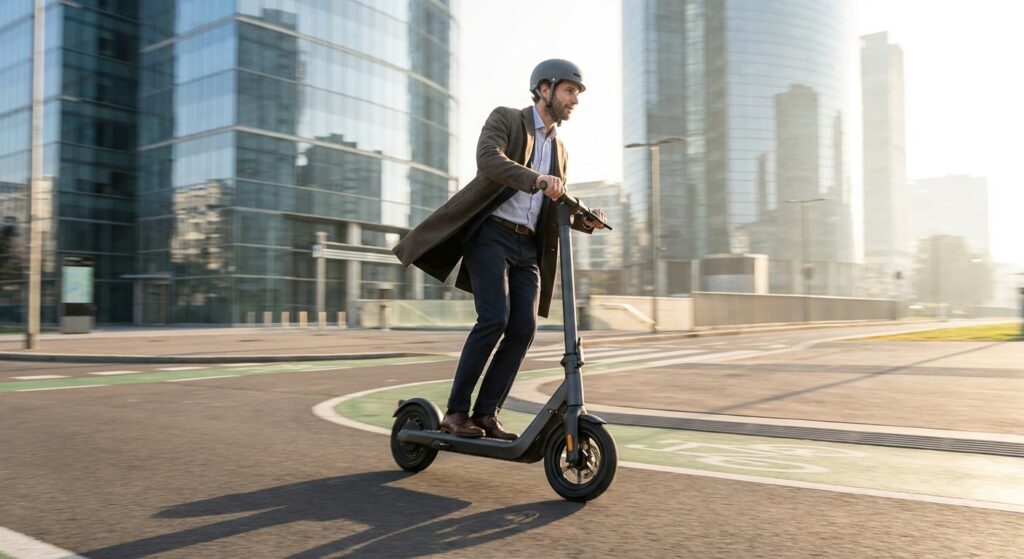
You can extend electric scooter battery life by avoiding total depletion, keeping charges within moderate ranges, and storing your device in climate-controlled spaces. Many riders experience a sudden loss in range and power simply because of poor everyday maintenance habits. There is nothing worse than getting stranded halfway through your morning ride with a dead battery and a long walk ahead of you. Fortunately, you can easily extend electric scooter battery life by following a few simple adjustments to your charging and riding routines. Why does your scooter battery drain fast? Your scooter battery drains fast because of normal cell degradation over time combined with poor riding and charging habits. Overloaded payloads, low tire pressure, and riding in extreme cold will pull extra current from the power pack. Knowing how these daily habits harm your ride will help you extend electric scooter battery life over years of ownership. Preventing sudden drops in voltage keeps your commute smooth and fast. Does total depletion harm lithium cells? Draining your battery completely to zero percent puts immense stress on modern lithium-ion chemistry. These deep discharges can permanently damage the capacity of the power cells, leaving you with a shorter travel range. Look: you should proactively plug in your vehicle before the power levels drop too low. Try to make it a daily rule to charge your ride before it completely turns off. To avoid deep discharges, follow these steps: How does daily wear impact battery age? Every ride and charge represents a chemical cycle that slowly reduces the capacity of your cells. Overloading your motor with excessive cargo weight forces the battery to discharge faster, raising internal temperatures. Keeping your vehicle clean and well-maintained minimizes the physical resistance that ages your power cells. Key Takeaway: Protecting your power cells from excessive strain prevents early capacity loss and ensures your commuter ride stays ready. Charge Cycle Practice Long-Term Health Impact Recommended Strategy Deep Discharges (0%) High cell degradation Recharge at 20% Balanced Charging (20-80%) Stable cell health Partial daily charges Monitoring your daily discharge rates allows you to plan timely top-ups and avoid premature battery replacements. How should you charge your scooter daily? You should charge your scooter daily by connecting it to a reliable power source whenever the level drops below thirty percent. Consistently top off your battery after daily commutes to maintain a stable, predictable voltage output. Making minor adjustments to your daily plugged-in schedule will help you extend electric scooter battery life over years of commuting. A healthy charging discipline keeps your cells structurally sound and ready. Why is proper daily plug-in order vital? Think about it: the sequence in which you plug in your power cords matters for electrical safety. Always connect the charger to your wall outlet before linking the adapter to your vehicle deck. This prevents dangerous electrical arcs from damaging the delicate charging port pins. Following this simple sequence protects your internal power management systems. Can daily routines prevent voltage drops? Developing a reliable daily schedule ensures that you never get caught riding with low voltage. Low power levels force your motor to pull more current, which overheats the cells. Try to follow these basic habits: Key Takeaway: Sticking to a safe plug-in routine prevents localized heating and keeps your power flowing reliably. Connection Step Correct Action Potential Danger First Step Plug charger into wall outlet Spark prevention Second Step Plug connector into scooter Port pin preservation Establishing a set connection order safeguards your scooter’s internal electronics against volatile current surges. Which power adapter is safe for charging? Only the original power adapter supplied by the manufacturer is truly safe for charging your electric scooter. Cheap generic replacements often lack certified safety standards and can easily cause severe electrical spikes. Using certified, official accessories is the best way to extend electric scooter battery life and prevent unexpected fire hazards. Stick to factory-issued gear to keep your system safe. Why are generic chargers dangerous? In fact: third-party adapters often deliver mismatched voltage outputs that can permanently damage individual battery cells. Without precise current regulation, a cheap cable can overcharge your system, leading to dangerous thermal runaway. You should never compromise your safety just to save a few dollars on an unbranded power brick. Avoid generic adapters by checking these signs: How does the power management system help? Your scooter has an advanced internal safety board that communicates directly with your official power brick. This connection balances individual cell levels and shuts off current when charging is fully complete. Keeping this system happy ensures consistent performance and keeps you moving safely. Key Takeaway: Relying on genuine power adapters protects your internal electronics and maximizes your daily range. Adapter Source Voltage Control Fire Hazard Risk Original Factory Certified stable Exceptionally low Generic Third-Party Unregulated Extremely high Using manufacturer-approved power sources ensures proper communications between the charger and the battery board. What is the ideal battery charge range? The ideal battery charge range for daily use is between twenty and eighty percent. Keeping your cells within this sweet spot reduces mechanical stress on the modern lithium layers inside. This deliberate partial charge strategy is an excellent method to extend electric scooter battery life without overworking your system. Staying within these parameters keeps your cell structures chemically stable. Why is the middle capacity area optimal? Here is the truth: maintaining a full hundred percent charge creates high-voltage stress inside the power cells. This continuous pressure is similar to keeping a spring tightly wound for days at a time. To reduce this structural tension, try to stop charging before the indicator hits maximum. Prioritize this range using these quick tips: When should you charge up to maximum? You should only charge to a full one hundred percent when you are planning a long weekend ride. Completing a full charge occasionally is helpful to let your battery management board balance individual cells. Just make sure to ride your scooter shortly after filling it up completely. Key Takeaway: Keeping your daily charge level in

How to Extend Electric Scooter Battery Life? Read More »

Electric Scooter Racing: Rules, Speed, Gear, and Technology

Yes, electric scooter racing is rapidly emerging as the most electrifying extreme sport of the decade, capturing audiences worldwide. You spend your hard-earned mornings locked in gridlocked traffic, staring at endless rows of taillights, and feeling your valuable time slip away. This daily, soul-crushing routine turns your commute into a stressful tax on your productivity and peace of mind. Fortunately, a revolutionary movement is shaking up urban transit, and this is why electric scooter racing is taking over global city centers as the ultimate showcase of sustainable speed. By transforming lightweight battery-powered devices into high-performance racing machines, this sport has successfully bridged the gap between daily commuter utility and pure, world-class athletic thrill. It challenges our assumptions about sustainable transport while delivering jaw-dropping spectacles on tight street circuits. Why is electric scooter racing the ultimate new sport? Yes, this sport represents the ultimate intersection of sustainable high-speed technology, tactical athletic skill, and accessible city-center motorsport. You get to witness a competition that turns everyday urban commuting tools into elite track machines. This is why electric scooter racing has captured the imaginations of modern sports fans worldwide. It delivers an intense, sustainable adrenaline rush right to your doorstep. What makes the sport so physically demanding? Think about it:Standing on a narrow deck at speeds exceeding 100 km/h requires immense core strength, sharp reflexes, and perfect balance. You cannot simply lean back; you must actively fight powerful G-forces through tight chicanes and sharp turns. This intense physical exertion demands peak conditioning from the athletes. It is a grueling test of stamina that rivals any traditional motorsport. Why is the fan experience so unique? Here is the kicker:Unlike traditional racing sports where you sit far away in remote grandstands, this event brings you right to the edge of the asphalt. You can feel the rush of air and hear the distinct electric whine as competitors battle wheel-to-wheel in famous city centers. Sport Aspect Traditional Motorsport Electric Scooter Racing Venue Accessibility Remote closed circuits Iconic city-center street tracks Audience Proximity Far-off grandstands Directly behind safety barriers Carbon Footprint High exhaust emissions 100% Carbon Neutral Operations This comparative analysis highlights why the event format appeals so deeply to the values of modern, urban audiences. Key Takeaway: Understanding the structural and physical uniqueness of this discipline helps you appreciate why it has quickly secured its spot as the ultimate urban motorsport of the modern age. What machines power professional electric scooter racing? Custom engineering wonders like the S1-X racing model power this elite tier of competition to deliver jaw-dropping performance on asphalt. These are highly specialized carbon-fiber beasts built with zero compromises for professional track use. Following electric scooter racing introduces you to a world of bespoke motors, custom chassis, and cutting-edge battery management. It represents the absolute absolute peak of lightweight electric vehicle performance. What makes the S1-X chassis so special? But that’s not all:You are looking at a frame constructed from advanced aerospace-grade carbon fiber and composite alloys to guarantee maximum rigidity. This lightweight stiffness gives you the razor-sharp handling required to carve through tight chicanes without structural flexing. This high-tech construction ensures the chassis remains completely stable under immense cornering forces. It turns a simple scooter into an elite precision instrument. How do twin motors deliver such torque? It gets better:The vehicle uses dual high-output motors that deliver relentless, instantaneous power straight to both wheels. You get immediate throttle response with zero delay, pulling you out of tight hairpins with incredible acceleration. Machine Component Technical Spec Performance Impact Chassis Material Carbon Fiber Composite Unmatched rigidity and lightweight handling Powertrain Dual 6 kW Motors (12 kW Total) Relentless, instantaneous out-of-corner acceleration Lean Angle Limit Exceeds 50 Degrees Extreme cornering stability on street tracks This technical breakdown demonstrates how advanced engineering elevates these lightweight platforms into high-performance racing machines. Key Takeaway: Exploring these elite technical specifications shows you how track-developed technology is pushing the boundaries of lightweight electric vehicle performance. What gear protects riders in electric scooter racing? State-of-the-art protective gear featuring smart materials and active airbag systems protects riders from high-speed impacts. When you are racing on tight street circuits, safety is the number one priority. This is why electric scooter racing requires highly specialized safety apparel engineered for high-velocity slides and direct pavement impacts. It ensures that professional athletes can confidently push their boundaries while staying completely safe. How do smart racing suits work? Want to know the best part?Your racing suit is equipped with active sensors that detect a loss of control in milliseconds, deploying instant airbag protection. You get a protective shield around your collarbones, shoulders, and ribs before you even hit the pavement. This smart technology turns wearable apparel into an active safety system. It represents a massive leap forward in athletic protection. Why are helmets and gloves specialized? Here is the kicker:The helmets are designed to offer a wider field of view than standard motorcycle helmets because standing riders have a completely different visual plane. You need maximum vertical and peripheral visibility to spot rivals trying to pass you on the inside line. Safety Equipment Key Technology Protective Function Racing Suit Intelligent Airbag System Instant inflation to protect collarbones and ribs Helmet Wide-Angle Carbon Shell Maximum visibility and high-impact head protection Gloves Kevlar Stitching & Palm Sliders Prevents friction burns during high-speed slides This specialized protective gear matrix shows how advanced safety materials are vital for high-speed standing motorsport. Key Takeaway: Understanding this high-tech protective gear reassures you that safety remains the foundational pillar of the entire racing ecosystem. How do professionals master electric scooter racing tracks? Athletes master these challenging courses through precise track lines, active body weight shifts, and intense physical conditioning. You must adapt your riding style completely to manage the unique center of gravity of a standing machine. This makes electric scooter racing a beautiful, highly technical dance on the limits of grip. It demands absolute concentration as you skim past concrete barriers at eye-watering speeds. What is the secret to cornering? Think about

Electric Scooter Racing: Rules, Speed, Gear, and Technology Read More »

Shopping Cart
Scroll to Top