
Adult electric scooters can weigh roughly 10–50 kg (22–110 lb), from compact foldable commuters to large performance machines. That range makes electric scooter weight a specification worth checking against your own route, not a number to compare in isolation.
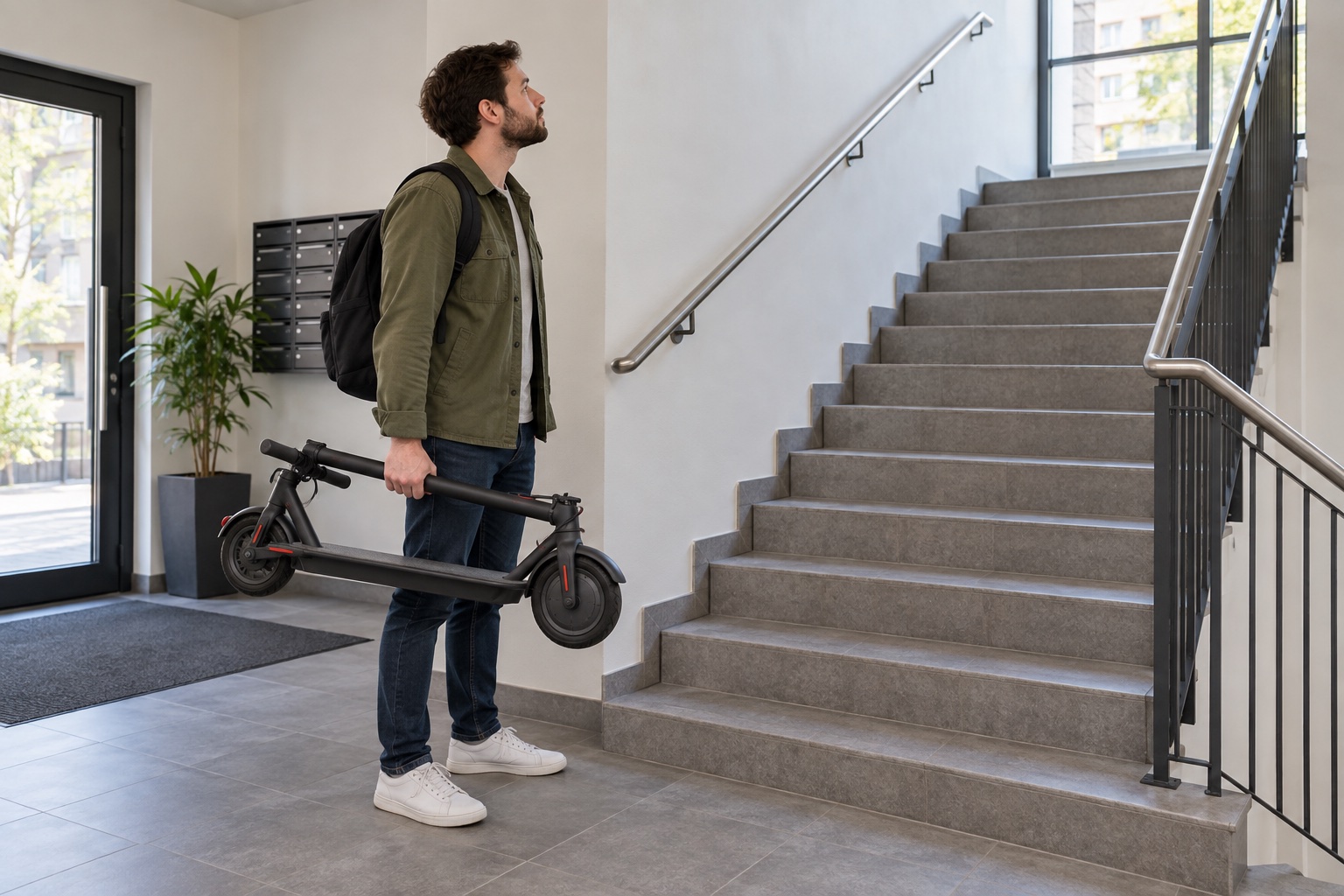
You reach the train station and find two flights of stairs between you and the platform. A scooter that felt nimble on the road suddenly feels awkward in your hands, and you still have a bag to carry. This guide helps you compare the listed mass, the folded shape, and the riding features before that moment arrives.
1. What Does an Average Adult Scooter Weigh?
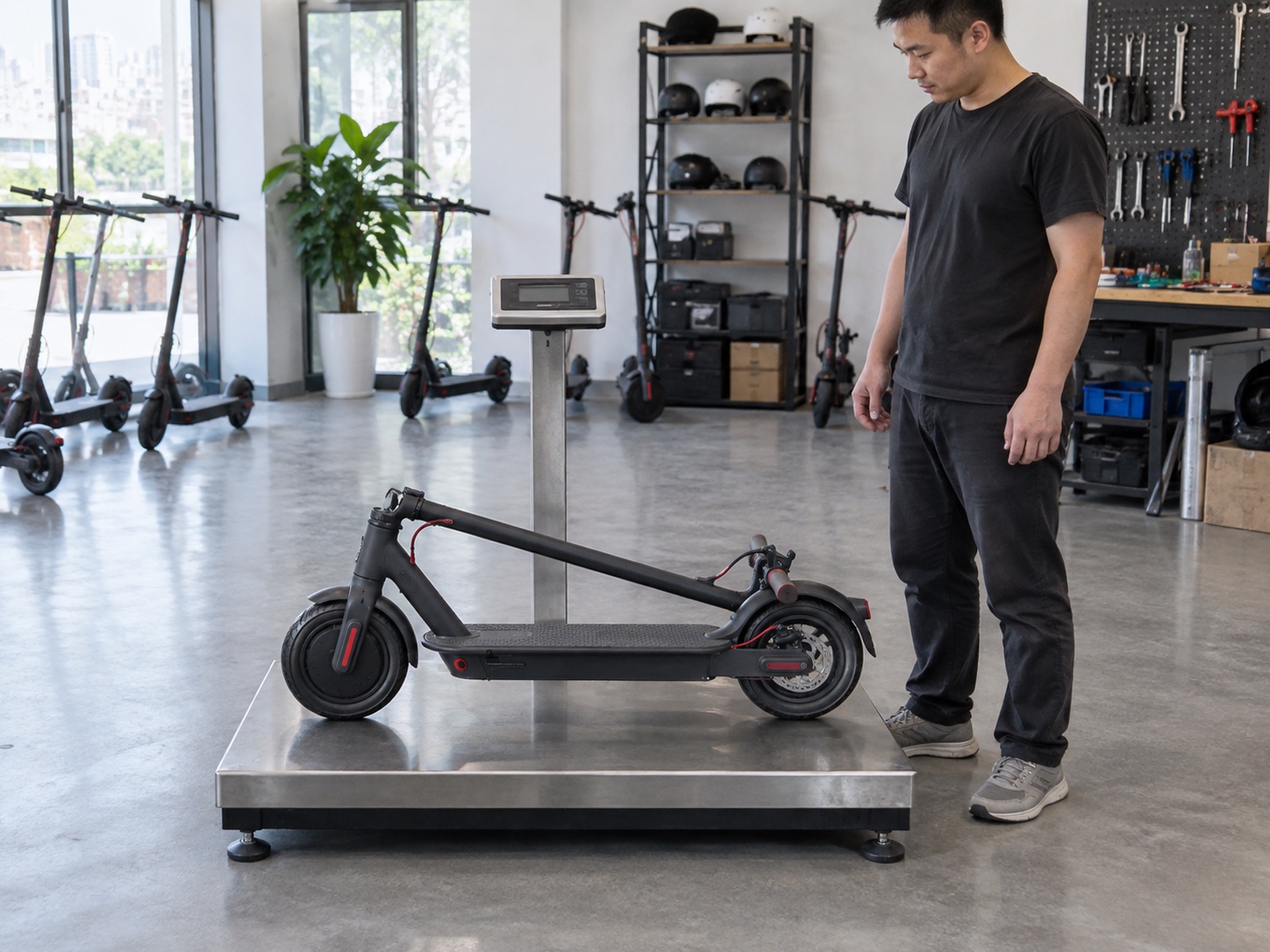
For everyday adult commuters, electric scooter weight often sits around 10–25 kg (22–55 lb), although there is no single average that describes every design. Dynamic Scooter lists the Model B at 10 kg (about 22 lb), while larger machines with bigger batteries and suspension can weigh several times as much.
Why can an average mislead you?
Start with the actual model. Two scooters sold for commuting can feel quite different when one has to go upstairs every evening. Compare their net weights under the same conditions, with batteries installed and accessories accounted for.
- Check whether the figure is for the complete scooter.
- Convert kilograms and pounds before comparing listings.
- Note how often you will lift it, not only how far you will ride.
Which figures should you keep separate?
| Figure | What it describes | Example |
|---|---|---|
| Scooter mass | The machine you carry | Model B: 10 kg |
| Maximum payload | Rider and carried gear | Model B: up to 100 kg |
| Shipping mass | Box and packing included | Ask the seller |
These numbers answer different buying questions.
Key Takeaway: Compare scooter mass with your lifting routine, and never mistake a payload rating for the scooter's own weight.
2. How Does Electric Scooter Weight Vary by Category?
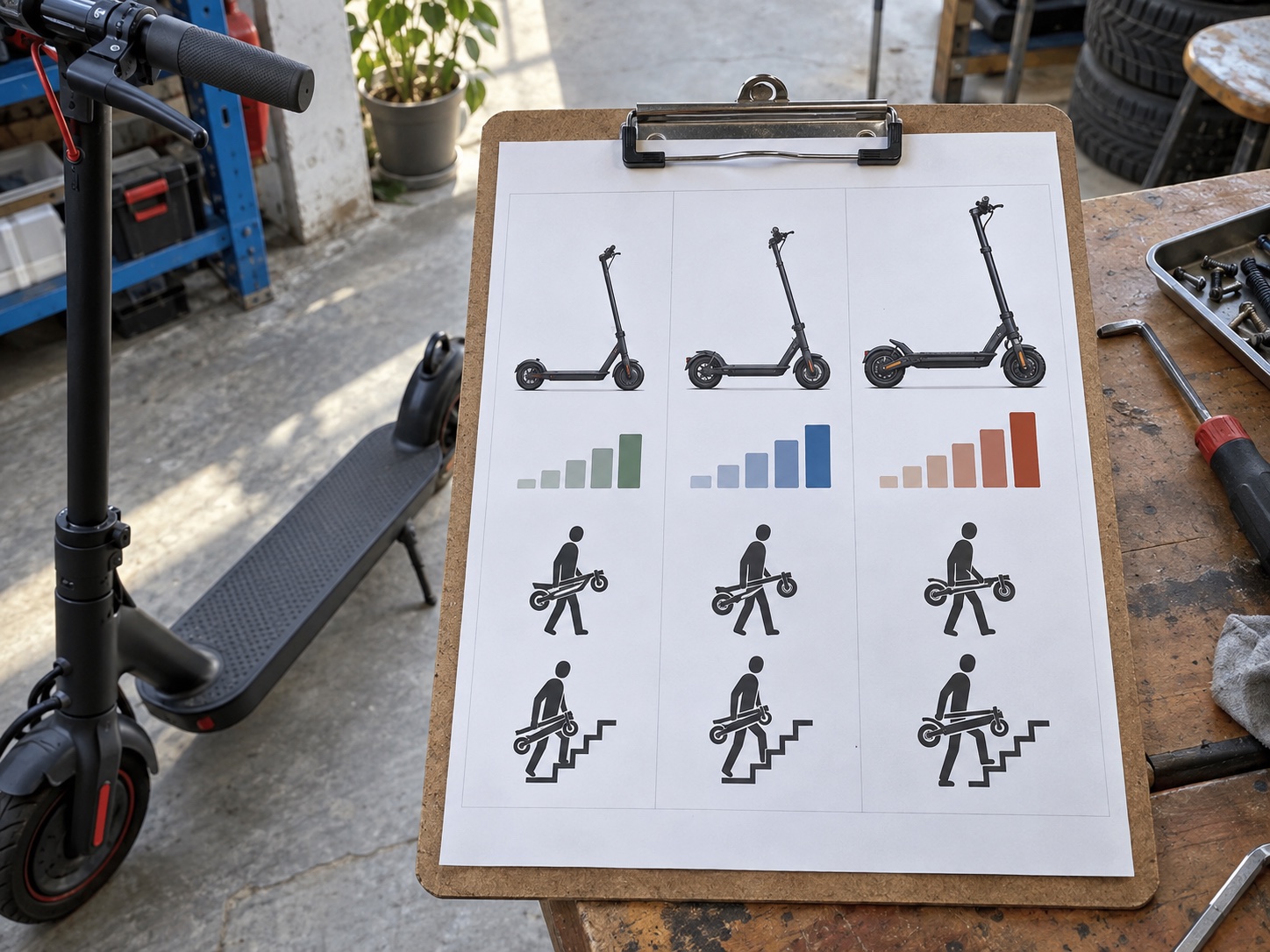
Electric scooter weight varies from about 10–15 kg for compact foldables to more than 25 kg for many long-range or performance designs. These are useful shopping bands rather than industry standards; the exact model and fitted battery decide the number you will carry.
What changes as scooters get larger?
Picture the daily lift. A compact Model B can suit a stair-and-train trip, while a larger deck and suspension make more sense when carrying is rare. Published manufacturer specifications also show how wide the category can run, from a 49 lb commuter model to a 109 lb performance model.
- Compact designs favor a shorter folded package.
- Mid-size commuters may add battery capacity or comfort features.
- Performance designs often add wider decks, motors, and suspension.
How should you read a weight band?
| Shopping band | Approximate mass | Likely trade-off |
|---|---|---|
| Compact foldable | 10–15 kg / 22–33 lb | Easier frequent carrying |
| Everyday commuter | 15–25 kg / 33–55 lb | More room for comfort and range |
| Large performance | Over 25 kg / 55 lb | Harder lifts and storage |
A model can cross these bands without being wrongly labeled.
Key Takeaway: Use categories to narrow your search, then verify the exact scooter and its included equipment.
3. What Makes One Electric Scooter Heavier Than Another?
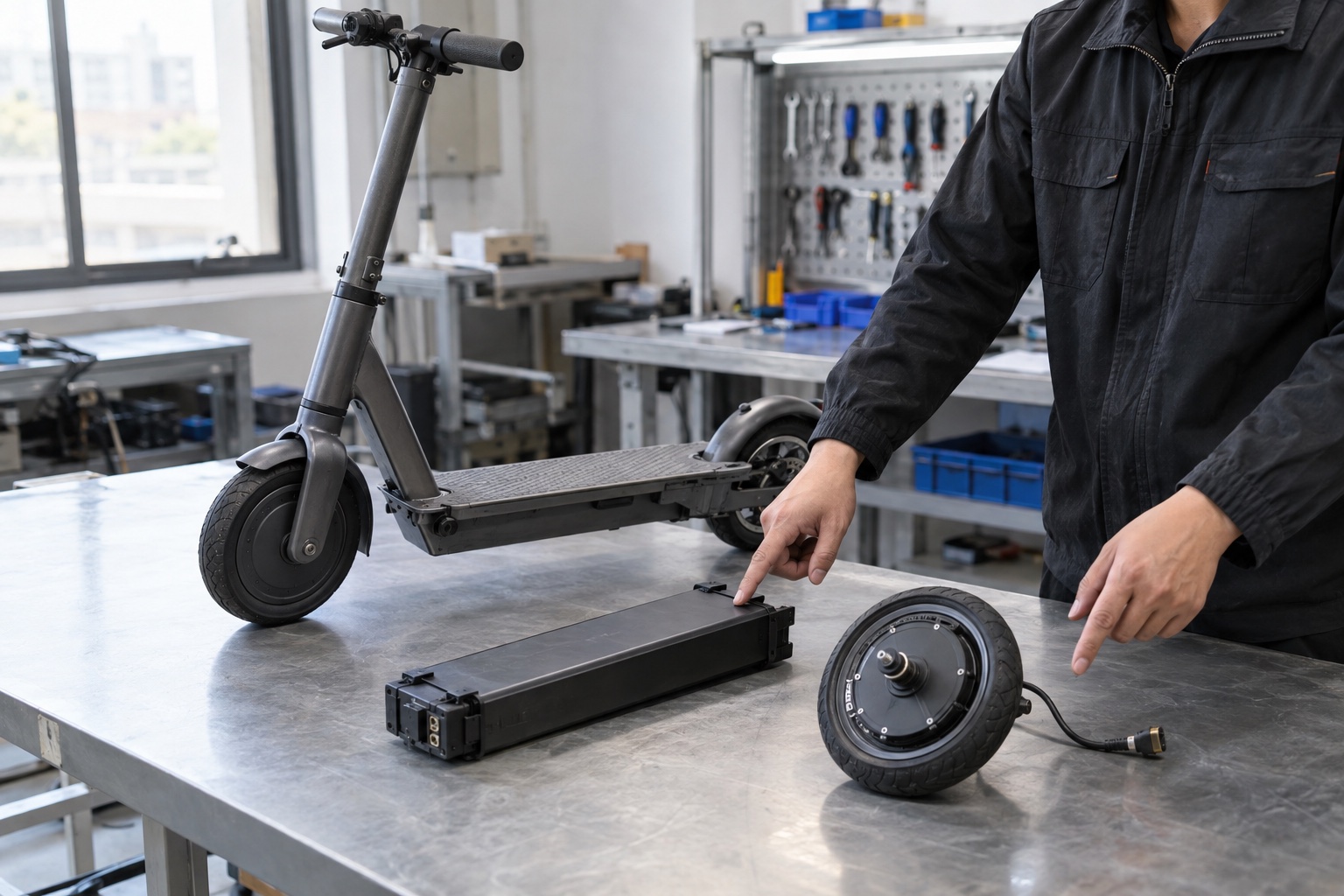
Battery capacity, frame construction, motors, tires, and suspension explain most electric scooter weight differences. A bigger battery often adds mass along with potential range, but the benefit depends on the whole electrical system and the conditions of your ride.
Which parts account for the extra mass?
Look under the deck and at the wheels. A sealed battery pack, sturdy frame, and large tires take up real space and material. Dual motors and suspension can add more, while a removable battery changes how you carry the scooter without making its total mass disappear.
- Battery: compare capacity in watt-hours, not only voltage.
- Frame and deck: inspect size and material.
- Wheels and suspension: consider your actual road surface.
Does added weight buy useful performance?
| Added component | Possible benefit | Question to ask |
|---|---|---|
| Larger battery | More stored energy | What range test supports the claim? |
| Suspension | Smoother rough-road ride | Will you carry it often? |
| Wider tires or deck | More planted feel | Does it fit your storage space? |
Each addition has to earn its place in your route.
Key Takeaway: Judge extra kilograms by the ride or comfort they provide, not by a longer feature list.
4. Why Does Weight Matter on a Daily Commute?
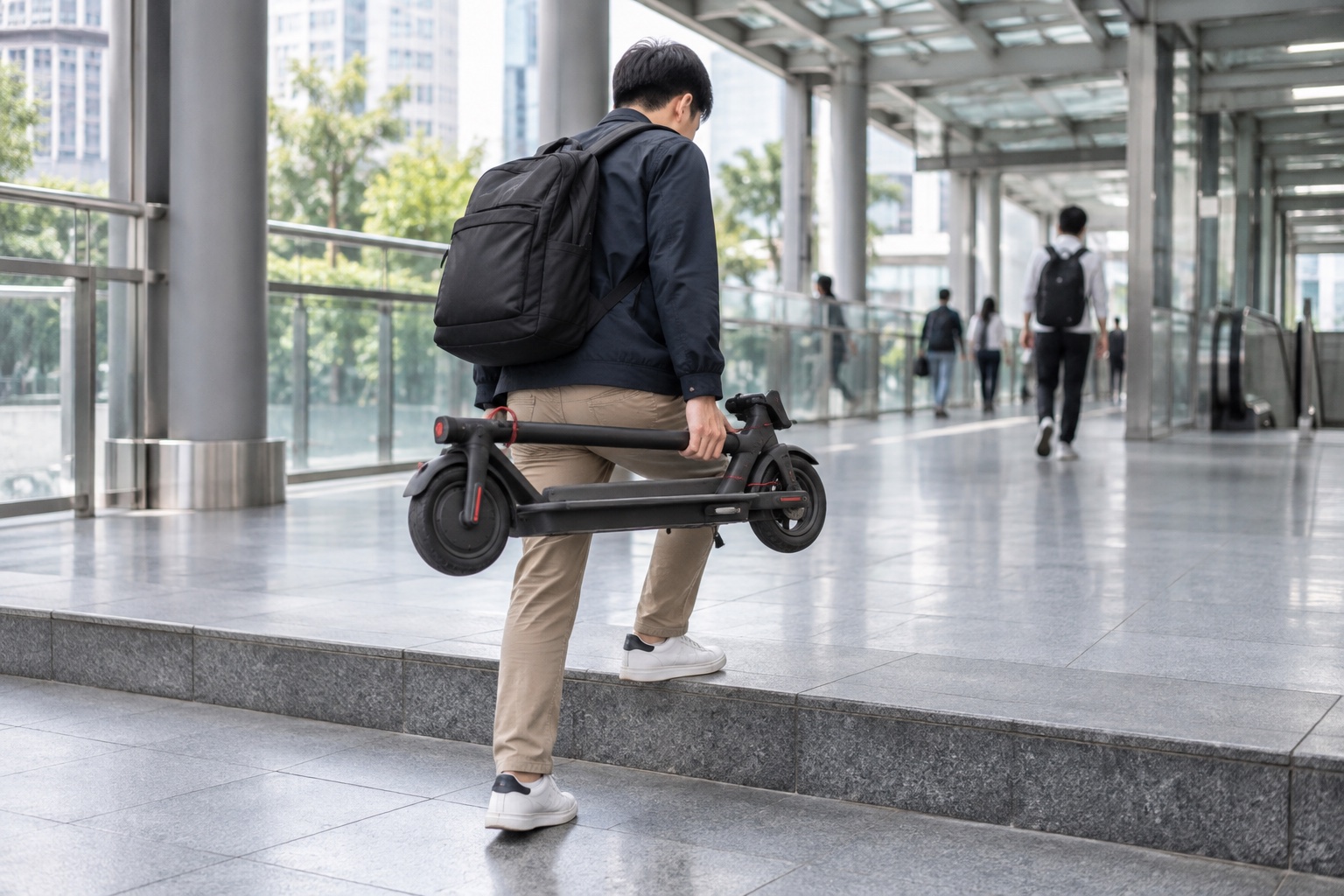
Electric scooter weight matters because commuting includes lifting, turning through doors, and storing the scooter after the ride. A short trip can involve more carrying than you expect if your station lacks an elevator or your office has stairs.
Where will you notice the weight?
Walk through your route in your head. Count the steps between street and platform, then consider the car trunk or storage shelf at the other end. The folded balance can matter as much as the number on the spec sheet.
- Lift it from ground level without dragging a wheel.
- Check whether the folded stem locks for carrying.
- Keep a hand free for doors or a stair rail when possible.
What can make the same mass feel harder?
| Situation | Why it feels harder | Check before buying |
|---|---|---|
| Long staircase | Repeated lift under load | Try a real carry |
| Crowded train | Awkward folded shape | Measure folded size |
| High car trunk | Lift from below waist level | Check grip and balance |
The route, not a catalog label, sets your carrying problem.
Key Takeaway: Choose for the heaviest lift you repeat, not only for how the scooter feels while rolling.
5. Which Weight Range Fits Your Riding Style?
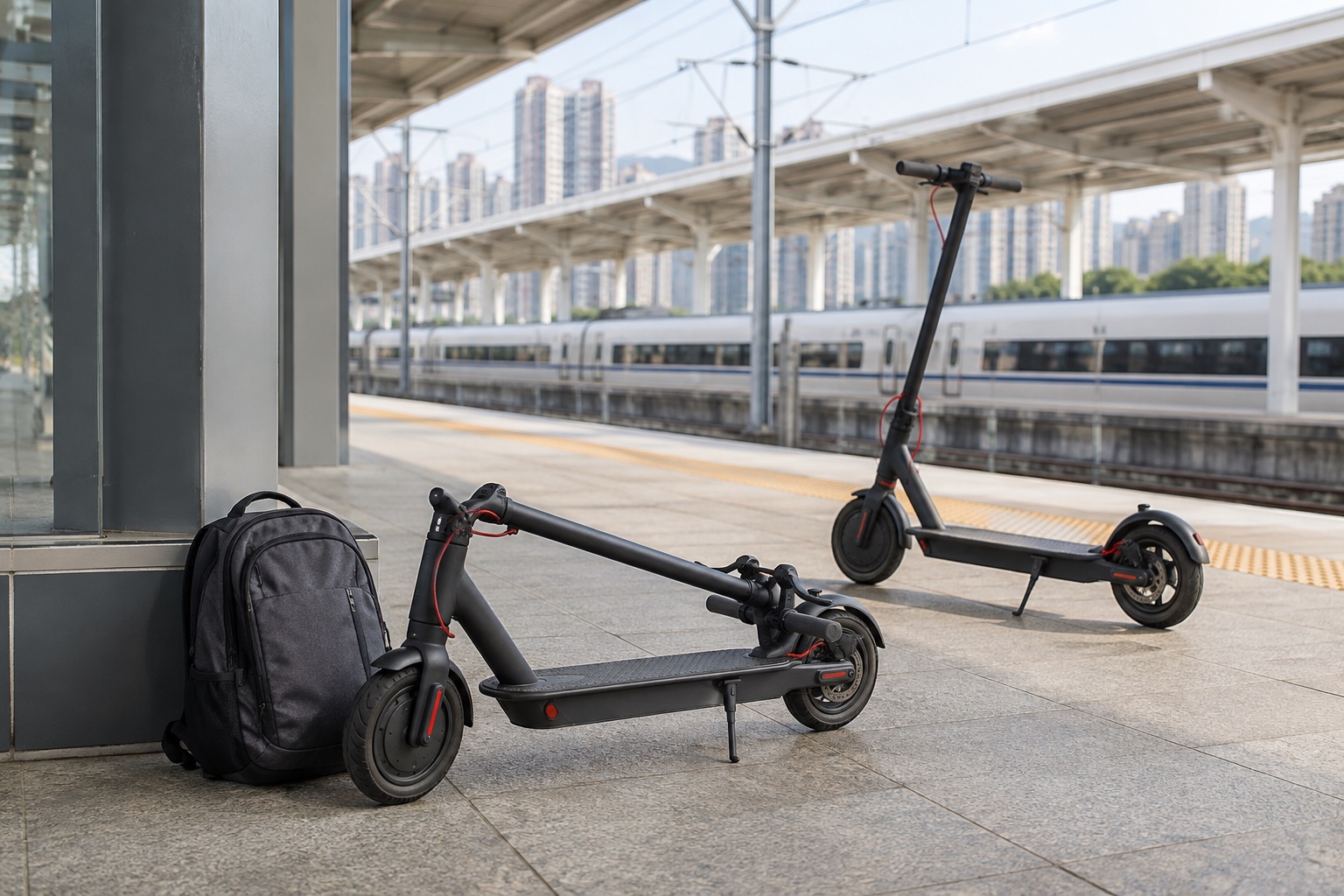
The best electric scooter weight for you depends on how often you carry the scooter, how far you ride, and the road surface. A model near 10–15 kg may suit daily stairs, while a heavier design can be reasonable when you store it at ground level.
What should shape your shortlist?
Use your hardest ordinary day. If you ride to a train, lift the scooter twice, and carry a work bag, weight deserves more attention than peak speed. If you ride door to door on uneven pavement, tire and suspension choices may matter more.
- Frequent lifts: prioritize a stable folded grip.
- Longer rides: compare battery energy and tested range.
- Rough routes: inspect tires, brakes, and suspension.
Which trade-off fits each routine?
| Routine | Main priority | Check next |
|---|---|---|
| Train plus short ride | Carry comfort | Folded dimensions |
| Door-to-door commute | Ride fit | Battery and brakes |
| Rough weekend route | Control and tires | Storage and lifting |
This turns a broad weight range into a personal shortlist.
Key Takeaway: Pick the lightest model that still handles your real route, not the lightest number in a search result.
6. How Does Rider Weight Affect Scooter Performance?
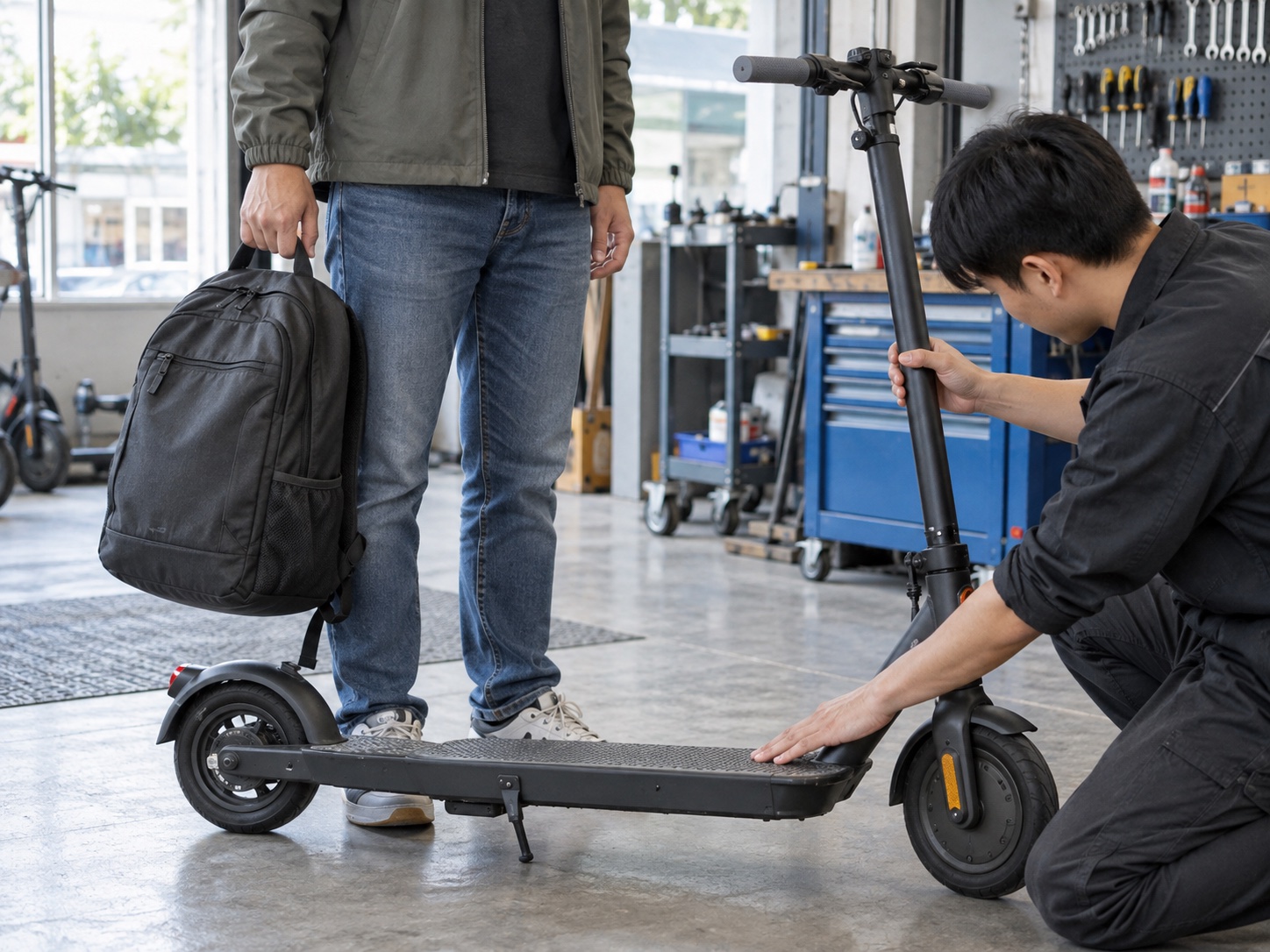
Rider weight can affect acceleration, hill climbing, and range, but electric scooter weight is a different specification from maximum payload. Add your body weight, clothing, and carried bag when comparing your total load with the maker's limit.
What does maximum payload include?
Count what goes on the deck. A backpack becomes part of the load when you ride, even if it is not attached to the scooter. Our weight capacity guide explains why the stated limit matters more than a scooter's own mass when you assess rider fit.
- Add rider and carried gear together.
- Keep below the model's stated maximum.
- Expect hills and rough surfaces to demand more from the motor.
Which number answers which question?
| Specification | Use it to answer |
|---|---|
| Net scooter mass | Can I lift and store it? |
| Maximum payload | Can it carry me and my gear? |
| Battery capacity | Is the energy reserve suitable? |
Mixing these numbers can lead to a poor fit.
Key Takeaway: Check payload for safe rider fit and scooter mass for portability; one does not substitute for the other.
7. Is a Lighter Scooter Always Better?
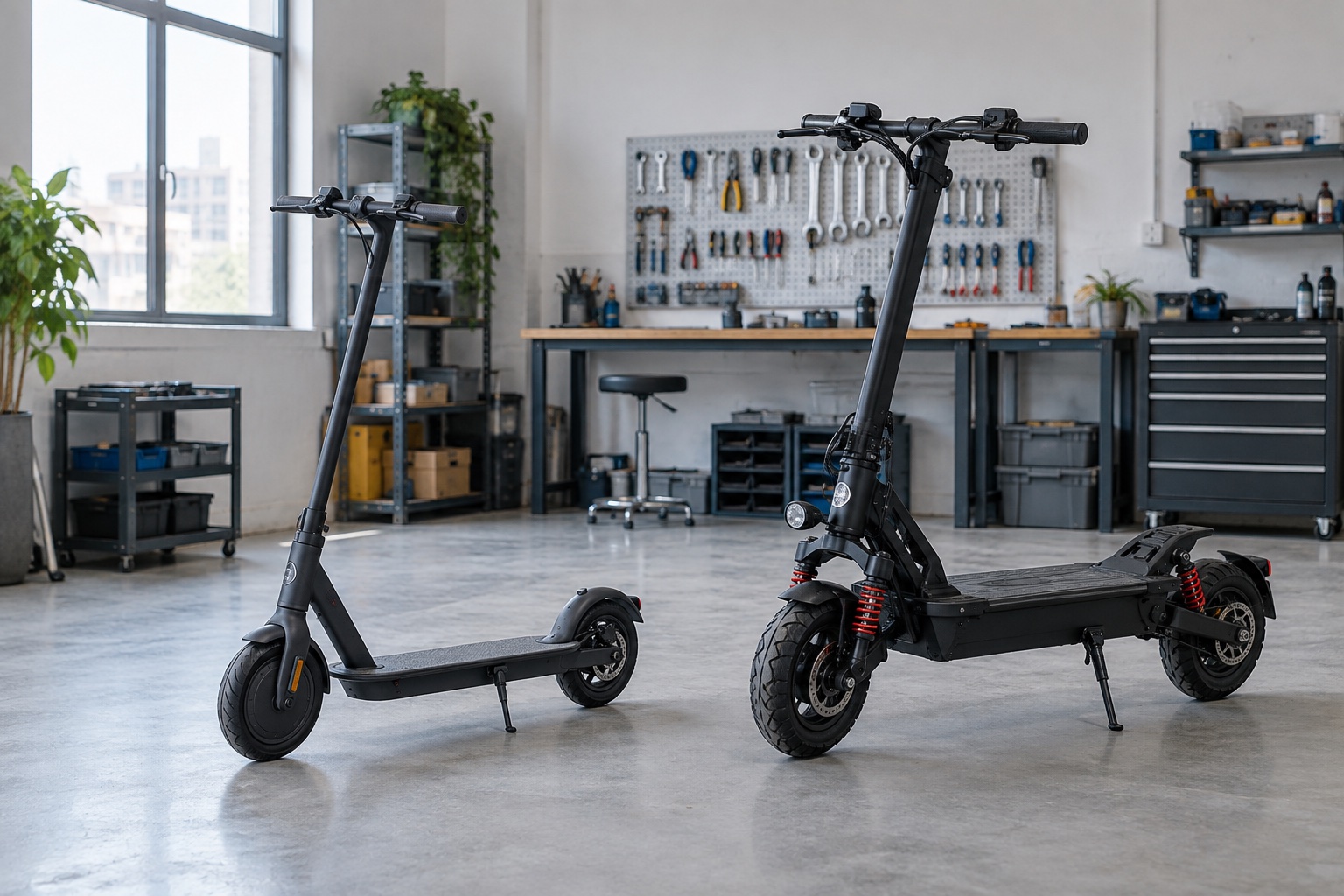
No, a lower electric scooter weight is useful only if the scooter still meets your range, load, braking, and comfort needs. A few extra kilograms may make sense for larger tires or a battery that covers your route.
What might a light design give up?
Compare the ride you will repeat. A compact scooter can be pleasant to lift yet tiring on rough pavement if its wheels and deck do not suit the route. The reverse is also true: a large machine may ride well but spend most weekdays awkwardly parked.
- Check brakes and tires alongside the claimed mass.
- Compare battery capacity with your trip length.
- Test the folded grip before choosing a heavier option.
Where is the useful balance?
| Priority | Lean toward | Confirm |
|---|---|---|
| Daily stairs | Compact, easy carry | Enough range and payload |
| Rough pavement | Comfort features | Weight you can still manage |
| Long rides | More battery capacity | Storage and charging fit |
The best balance changes with where you ride and park.
Key Takeaway: Weight is a constraint to manage, not a contest to find the smallest possible figure.
8. How Do You Verify a Scooter's Listed Weight?
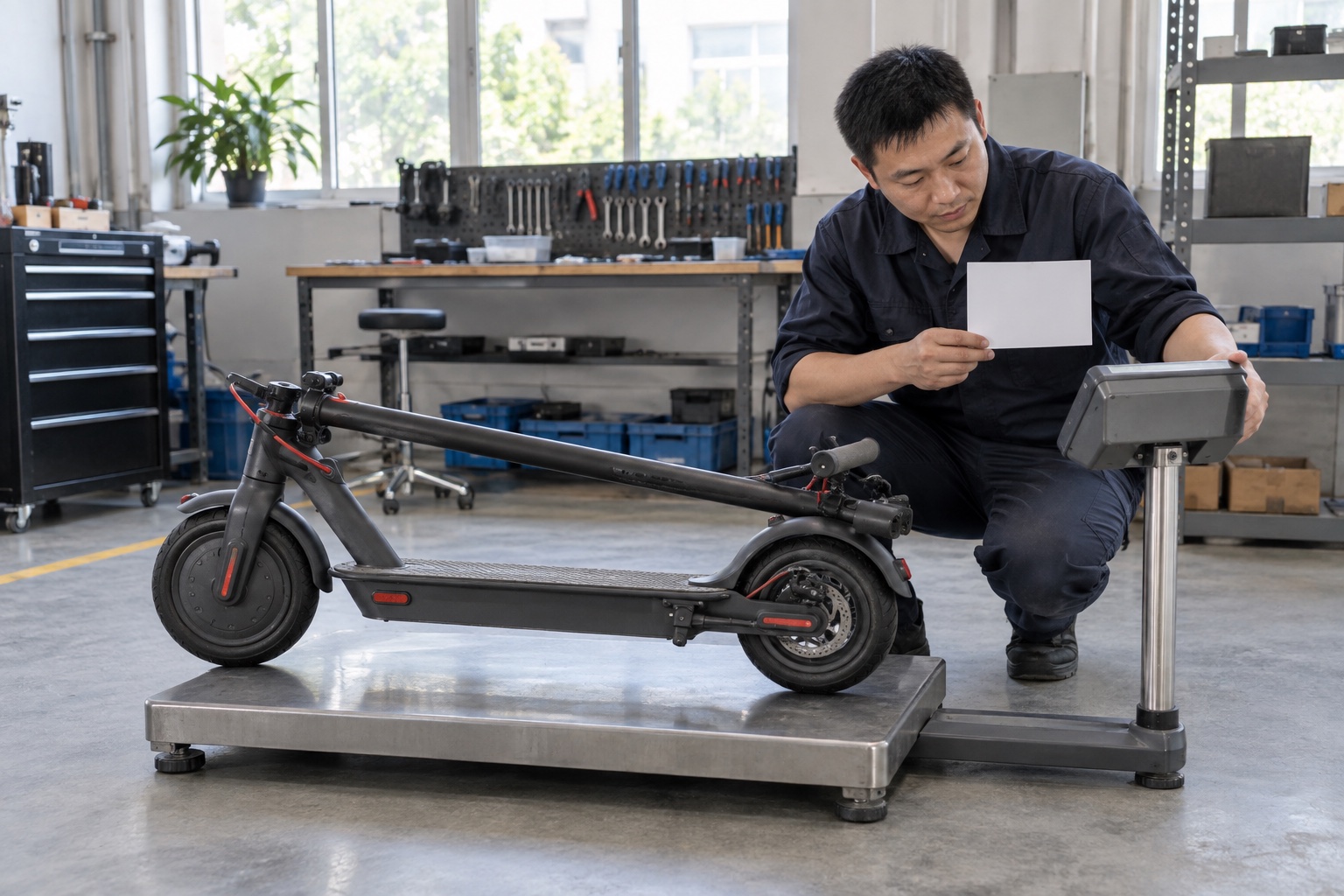
To verify electric scooter weight, ask whether the listed figure includes the fitted battery and standard equipment, then compare it with the complete unit if possible. A shipping weight includes the carton and packing, so it will not tell you what you lift onto a train.
What belongs in a fair comparison?
Use the same definition for every model. Check the product page and manual for “net weight,” then ask what changes when you add a spare battery, lock, or carrying bag. If the listing is vague, request the full scooter weight in writing.
- Confirm battery installed or removed.
- Separate standard equipment from optional add-ons.
- Ask whether the published figure is rounded.
Which label should you trust for carrying?
| Label | Usually includes | Use for carry planning? |
|---|---|---|
| Net weight | Complete scooter as specified | Yes, after checking inclusions |
| Shipping weight | Scooter, box, and packing | No |
| Maximum payload | Rider and gear capacity | No |
A clear definition makes two listings comparable.
Key Takeaway: Verify the weight of the exact configuration you will carry, not the easiest number to find.
9. What Should You Check Before Carrying a Scooter?
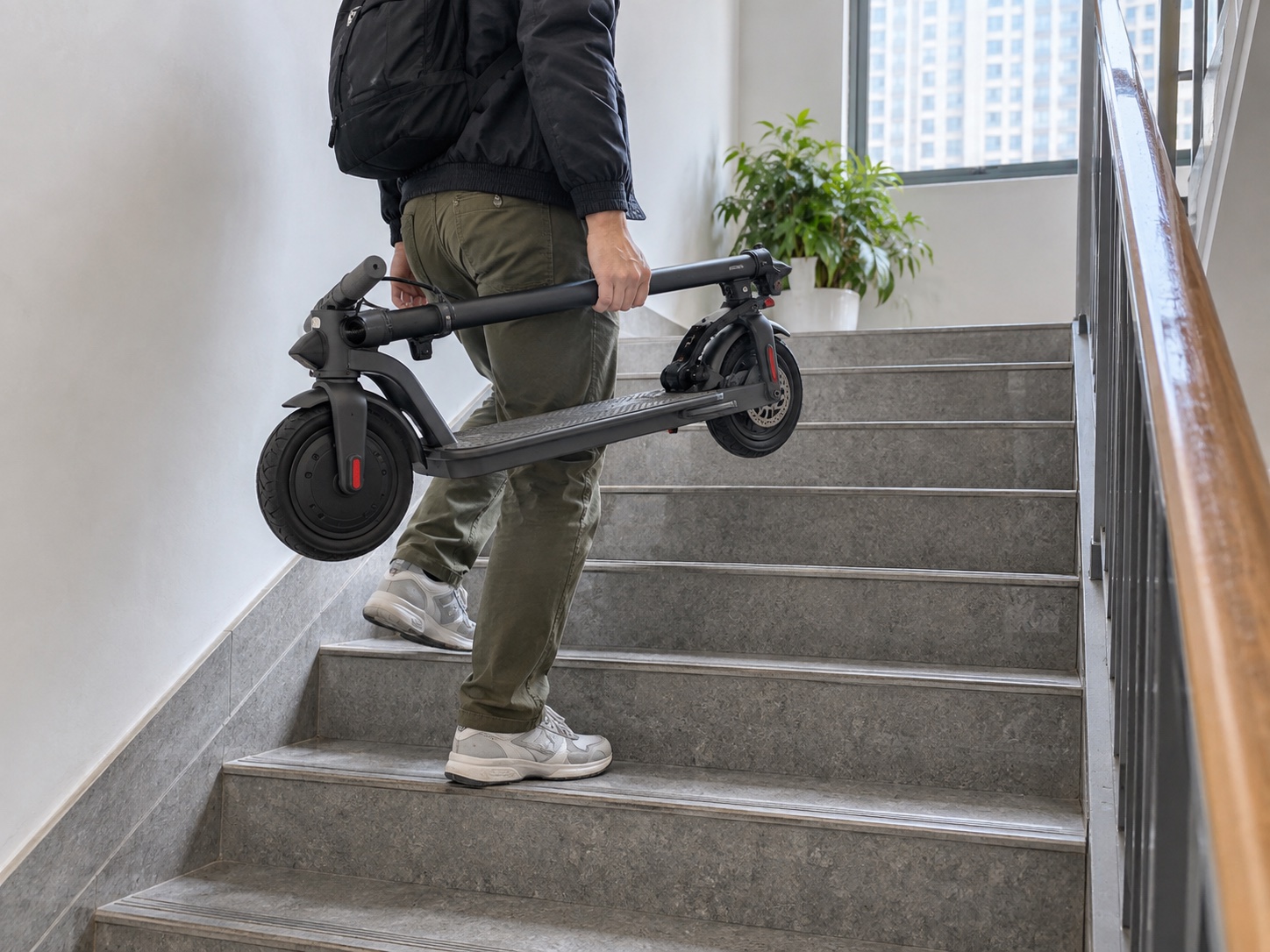
Before lifting, check electric scooter weight alongside the folded lock, grip position, and route ahead. A scooter that feels manageable for one step may become uncomfortable across a long platform or several flights of stairs.
How can you test carry comfort?
Try the lift before you commit. Fold the scooter as directed, stand close, and raise it without twisting your back. Walk a few steps with it; if the mass shifts or the latch feels uncertain, set it down and reassess.
- Confirm the folding lock is secure.
- Keep the scooter clear of your legs and other people.
- Check transit rules before planning a train connection.
What changes the carry plan?
| Carry obstacle | Practical response |
|---|---|
| Repeated stairs | Choose a mass you can lift comfortably |
| Long walk indoors | Test balance and grip |
| Small storage area | Measure folded length and height |
Trying the complete route exposes problems a spec sheet cannot.
Key Takeaway: Treat your comfortable lift and the folded shape as part of the purchase decision.
10. What Should You Ask a Manufacturer or Dealer?
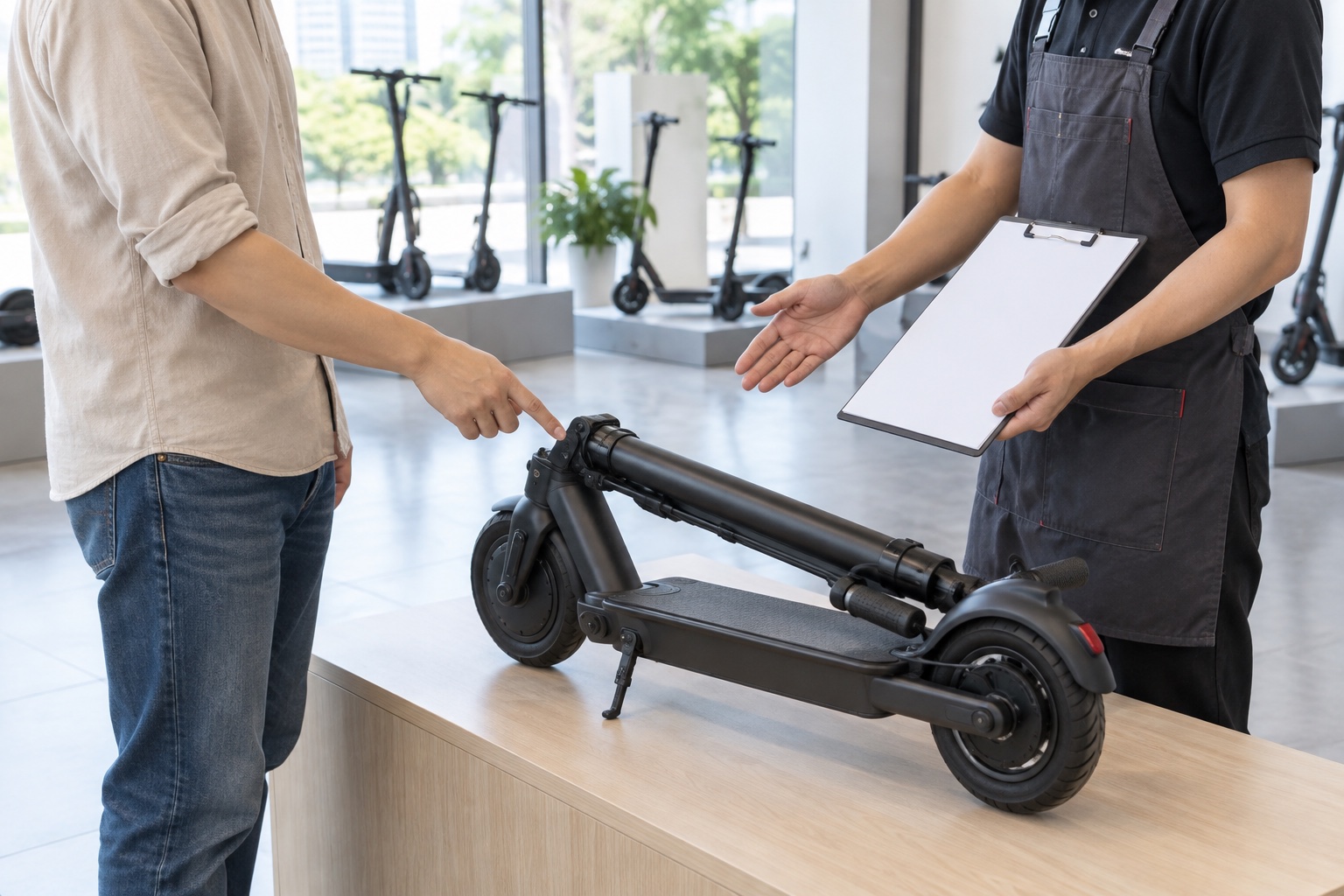
Ask a manufacturer or dealer for electric scooter weight with the battery fitted, folded dimensions, payload rating, and written specifications for the exact version being sold. Those answers let you compare products without relying on a broad category label or an old listing.
What should a seller confirm?
Ask for details you can use. A supplier should distinguish net and shipping weight and explain whether a spare battery or accessory changes either figure. Buyers comparing several units can also use our wholesale page to start a model-specific discussion.
- Request a current spec sheet or manual.
- Confirm included battery and accessories.
- Ask about service and warranty for your market.
Which answer should make you pause?
| Seller response | What to do |
|---|---|
| Clear net weight and configuration | Compare with your route |
| Only a boxed shipping figure | Ask for scooter-only mass |
| No written payload or service terms | Keep looking |
Clear answers make the final comparison easier.
Key Takeaway: Buy the model whose weight and included parts a seller can state plainly.
What to do next
You now have a way to compare scooter mass, rider capacity, battery size, carry comfort, and the seller's specifications without mixing those numbers up. At Dynamic Scooter, we treat the walk from platform to office as part of the commute. If you want help matching a model to your stairs, storage space, and riding distance, contact us today with those details.
Frequently Asked Questions
Q1: Can I carry a 10 kg scooter up stairs every day? Possibly. Try lifting the folded scooter and walking a short flight before making daily stairs part of your plan.
Q2: What's the best scooter weight for a train commute? Often, a compact model around 10–15 kg is easier to manage. Your own lift, folded dimensions, and transit rules decide the fit.
Q3: How do I know if a listed weight includes the battery? Check the net-weight definition in the manual or ask the seller. Compare only figures that include the same equipment.
Q4: Can a heavier rider use a lightweight scooter? Yes, if the rider plus gear stays within the stated payload limit. Scooter mass and rider capacity are separate specifications.
Q5: How do I know whether a lighter model has enough range? Compare battery capacity and the maker's test conditions with your route. Weight alone cannot tell you how far a charge will take you.