Electric Scooter

How to Read Electric Scooter Specs: Motor, Battery, Range & Portability Explained

You start reading specs like a professional by focusing on how technical components like motor power and battery capacity interact with your specific daily commute. You’re likely staring at a spec sheet filled with confusing numbers and abbreviations that feel like a math test. If you choose the wrong machine, you might end up with a scooter that’s too heavy to carry or too weak to climb your neighborhood hills. Learning to decipher electric scooter specs ensures you invest in a ride that fits your lifestyle without any buyer’s remorse. Which power ratings are essential for electric scooter specs? Nominal power is the most essential rating because it represents the continuous output a motor can handle without overheating. When reviewing electric scooter specs, you will often see “Peak Power” advertised in big, bold letters, but this is only for short bursts. You need to know what the motor can do consistently during your 20-minute ride. What is nominal motor power? Nominal power is the “true” strength of your scooter during a steady cruise. Think of it as the engine’s baseline performance level. Here is the kicker:A motor with high nominal power will handle headwinds and flat roads much more efficiently than a weak motor pushing its limits. Why does peak power matter? Peak power is the maximum energy the motor can draw for a few seconds at a time. It is vital for situational needs rather than constant speed. The best part?You only really feel peak power when you’re racing away from a red light or tackling a bridge. Key Takeaway: Prioritize a high nominal power rating for a reliable daily commute, using peak power only as a secondary metric for hill climbing. Power Spec Purpose Importance Nominal Power Continuous cruising High Peak Power Acceleration & Hills Medium Analytical Guide: Always compare the ratio of nominal to peak power to understand if a motor is built for sustained endurance or just short-lived speed. How do battery metrics define electric scooter specs? Battery metrics define the range and torque potential of your ride by calculating the total energy stored in the cells. To truly understand electric scooter specs, you must look past simple marketing names and calculate the Watt-hours (Wh). This single number tells you exactly how much “fuel” you have in the tank. What do Volts and Ah represent? Voltage (V) represents the electrical “pressure,” while Amp-hours (Ah) represent the capacity of the battery pack. These two work together to determine how fast and how far you can go. Think about it:Higher voltage is like having a wider pipe for water to flow through, allowing for more power to reach the motor instantly. Why are Watt-hours the gold standard? Watt-hours (Wh) is the only measurement that allows for a fair comparison between different scooter models. You calculate it by multiplying the Volts by the Amp-hours. But wait, there’s more:Two scooters might both claim a “10Ah battery,” but if one is 36V and the other is 48V, the 48V model actually has significantly more energy. Key Takeaway: Use Watt-hours (Wh) as your primary point of comparison to avoid being misled by inconsistent Voltage or Amp-hour listings. Battery Metric Unit Role Voltage V Torque & Top Speed Capacity Ah Energy Storage Total Energy Wh Real-world Range Potential Analytical Guide: A higher Watt-hour count is the most reliable predictor of a scooter’s ability to maintain high speeds over long distances. Why is range estimation so confusing in electric scooter specs? Range estimation is confusing because manufacturers often test their scooters under “perfect” conditions that rarely exist in the real world. When you see electric scooter specs claiming a 40km range, that test was likely done with a 65kg rider on a flat track in 25°C weather. Your actual mileage will vary based on how you ride and where you live. What are real-world range killers? Several environmental and physical factors will significantly reduce your battery life compared to the advertised numbers. Understanding these helps you set realistic expectations for your commute. The reality is:Most riders should expect to achieve about 60% to 70% of the manufacturer’s maximum advertised range during a typical urban commute. How do you calculate your own range? You can get a better estimate by looking at the Watt-hour (Wh) spec and applying a simple “Rule of 15.” This provides a much more honest view of what to expect. Here is the deal:If your scooter has a 360Wh battery, expect a very safe and reliable 18km to 20km of range, regardless of what the box says. Key Takeaway: Always subtract 30% from any advertised range to find your “commuter-safe” distance, ensuring you never run out of juice. Condition Range Impact Flat & Slow 100% of Advertised City Stop-and-Go 70% of Advertised Hills & Full Speed 50% of Advertised Analytical Guide: Evaluating range through the lens of Watt-hours per kilometer prevents you from being stranded by overly optimistic marketing claims. How do weight limits define the best electric scooter specs? Weight limits define the structural integrity and safety margins of the vehicle’s frame and folding mechanism. When you check electric scooter specs, the “Max Load” tells you the highest weight the scooter can support without risking a mechanical failure. It isn’t just about whether the motor can move you; it’s about whether the stem will snap. Why is payload capacity vital? The payload capacity includes you plus everything you are carrying, such as a heavy laptop bag or groceries. Exceeding this limit causes immediate stress on the most vulnerable parts of the scooter. Make no mistake:Riding a scooter rated for 100kg when you weigh 110kg is a recipe for a “stem wobble” that can become dangerous at high speeds. How does frame material matter? The materials used in the frame—usually aluminum or magnesium alloys—determine how much weight the scooter can handle while remaining portable. Believe it or not:A higher weight rating often means the manufacturer has used higher-grade bearings and a more robust steering column, even if you are a […]

How to Read Electric Scooter Specs: Motor, Battery, Range & Portability Explained Read More »
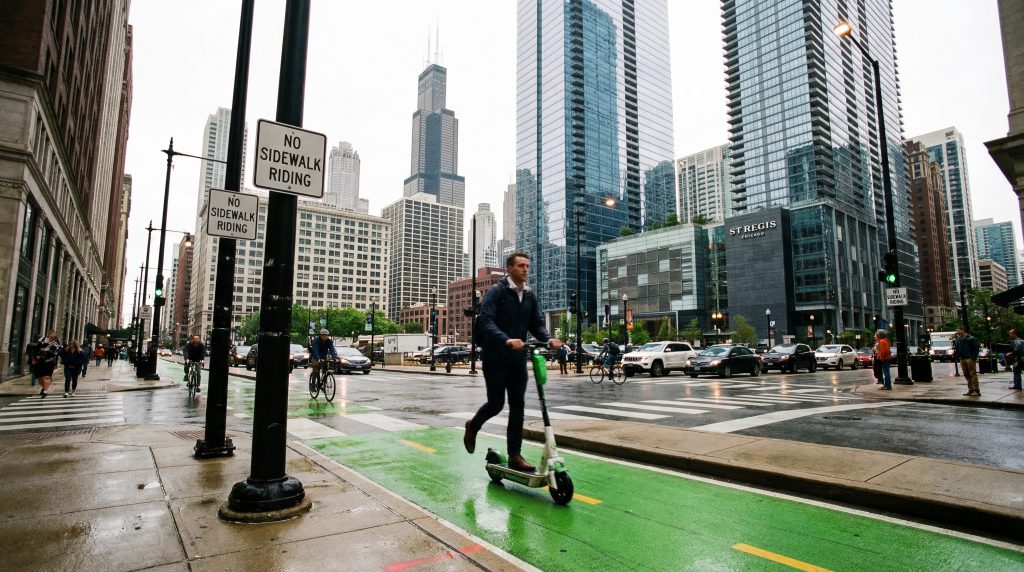
Electric Scooter Laws In Illinois: License, Speed Limits & Insurance

Illinois electric scooter laws are divided into two distinct categories based on vehicle power and weight, meaning your legal requirements change depending on whether your scooter is low-speed or high-speed. You might be ready to streamline your morning commute or deploy a local rental fleet, but navigating the state’s decentralized regulations can feel like a legal maze. Without a clear understanding of the Illinois electric scooter laws, you risk facing heavy fines, impounded hardware, or significant liability gaps. By choosing a reliable partner, you gain the clarity needed to navigate these urban transit rules with confidence and compliance. Are there statewide laws for scooters in Illinois? Yes, there are statewide Illinois electric scooter laws that provide a baseline for all riders across the Prairie State. The state differentiates between low-speed devices and high-speed motor-driven cycles, though local municipalities retain significant power to add their own restrictions. Understanding these state-level definitions is the first step toward ensuring your commercial or personal use remains above board. How is state authority applied? Local municipalities often have the final say on where you can park and ride within city limits. While the state sets the safety standards, city councils determine the practical day-to-day operations for micromobility. The catch? Does the Vehicle Code cover all models? The Illinois Vehicle Code provides specific definitions for motorized equipment to ensure every vehicle is accounted for. If your device doesn’t fit the low-speed criteria, it automatically falls under more restrictive motor vehicle statutes. Best of all… Key Takeaway: Illinois maintains a dual-tier legal system where the state defines the vehicle classes while local cities manage the specific riding and parking zones. Regulatory Level Primary Responsibility Focus Area State Level Classification & Insurance Safety Minimums Municipal Level Zoning & Sidewalk Access Local Traffic Flow This hierarchy ensures that while safety remains consistent, urban environments can adapt to their unique density challenges. How does Illinois classify electric scooters? Understanding the classification within Illinois electric scooter laws requires looking at your vehicle’s weight and top speed. The state uses these metrics to determine if you are riding a simple mobility device or a vehicle that requires a full registration process. Most standard commuter models are designed to fit into the more accessible low-speed category. What defines a low-speed scooter? To be considered low-speed, the device must have two or three wheels and weigh less than 100 pounds. It must also have a motor that cannot propel the device faster than 20 mph on level ground. The reality? When is a scooter a motor-driven cycle? Any device with a motor larger than 750W is classified differently under the Illinois Vehicle Code. These high-speed models are treated similarly to mopeds or small motorcycles, requiring much stricter adherence to traffic laws. Look: Key Takeaway: Illinois uses weight and speed thresholds to separate lightweight commuters from high-powered motor-driven cycles that require more oversight. Scooter Class Max Weight Max Speed Low-Speed < 100 lbs 20 mph High-Speed > 100 lbs > 20 mph Analyzing these metrics helps riders choose the hardware that best fits their local licensing comfort level. Do you need a license to ride in Illinois? Your need for a license under Illinois electric scooter laws depends entirely on the motor wattage and classification of your specific scooter model. For most residents using standard electric scooters for short-distance travel, a driver’s license is not a legal requirement. However, once a scooter crosses the threshold into the high-speed category, the state demands professional credentials. Is a license required for commuters? If you are riding a low-speed electric scooter with a motor under 750W, you do not need a driver’s license or permit. This makes electric scooters an incredibly accessible option for students or professionals who don’t own a car. The best part? What about high-power models? Operating a high-speed scooter that is classed as a motor-driven cycle requires you to hold a valid Class L or Class M license. Failure to produce this license during a traffic stop can lead to significant fines and the impounding of your vehicle. Think about it: Key Takeaway: Low-speed scooters are license-free, but high-powered models exceeding 750W require a Class L or M driver’s license. Scooter Type License Status Required Class Standard Commuter Not Required N/A Motor-Driven Cycle Required Class L or M Evaluating motor wattage before purchase is essential to avoid unexpected licensing hurdles after your delivery. Are registration and number plates required? The registration requirements within Illinois electric scooter laws are strictly tied to the vehicle’s power and speed capabilities. Most consumers looking through diverse product catalogs will find that standard electric scooters are exempt from the bureaucracy of the DMV. Registration is generally reserved for vehicles that integrate with heavy motor vehicle traffic on public roads. Do standard scooters need plates? Low-speed electric scooters do not need to be registered with the Illinois Secretary of State, nor do they require license plates. This lack of red tape is a major selling point for urban commuters looking for a “grab and go” transit solution. The upshot? When is registration mandatory? High-speed scooters must be formally registered and must display a rear-facing number plate at all times. This process involves paying a fee and ensuring the vehicle meets all state safety standards for road-going motor cycles. The catch? Key Takeaway: Registration and plates are only mandatory for high-speed motor-driven cycles; standard low-speed scooters are exempt. Documentation Low-Speed Scooter High-Speed Scooter State Registration Exempt Mandatory Number Plates Not Required Mandatory (Rear) By sticking to low-speed models, users can avoid the administrative costs associated with state vehicle registration. What is the legal age to ride in Illinois? Setting an age floor is a core component of Illinois electric scooter laws designed to protect younger riders from traffic risks. While the state provides a general guideline, the age of the rider is often one of the first things local police check during an interaction. It is vital to know both the state minimum and any specific variations in cities like […]

Electric Scooter Laws In Illinois: License, Speed Limits & Insurance Read More »

Navigating Florida Electric Scooter Laws: A Complete 2026 Guide for Riders

You can legally operate an electric scooter in the Sunshine State as long as you adhere to the specific Florida Electric Scooter Laws regarding age, speed, and positioning. Navigating urban environments can be stressful when you are unsure if your choice of transport will lead to a heavy fine or a confrontation with local authorities. The fear of having your ride impounded or receiving a citation simply because you didn’t know which lane to use can take the joy out of your daily commute. By understanding the Florida Electric Scooter Laws, you can enjoy the freedom of the road while staying safe and compliant. This comprehensive guide provides the clarity you need to ride with confidence and ensure your travels remain entirely within legal boundaries. Are Florida Electric Scooter Laws easy to follow? Yes, Florida Electric Scooter Laws are designed to be straightforward, primarily treating these vehicles similarly to bicycles in most traffic contexts. You have the same rights as a cyclist, meaning you can occupy bike lanes and must follow the same directional flow as motorized traffic. What are the basic rider requirements? To ensure you are riding legally, you must meet the state-level criteria set for motorized micromobility devices. These rules ensure that everyone on the road knows what to expect from electric scooter users and maintains a predictable traffic flow. Look at it this way: the law wants you to be mobile, but it prioritizes the safety of the collective public. If you stay within these bounds, you are unlikely to face any legal friction while commuting. Key Takeaway: Florida grants electric scooter riders the same legal status as bicyclists, provided they meet the minimum age of 16. Requirement Legal Status Minimum Age 16 Years Old Licensing Not Required Traffic Status Equal to Bicycles Understanding these fundamental similarities helps you transition from traditional commuting to modern electric mobility without legal confusion. Do Florida Electric Scooter Laws require a license? No, you do not need a driver’s license to operate a personal vehicle under current Florida Electric Scooter Laws. This makes the Dynamic Scooter Model B an incredibly accessible option for students and professionals who want to avoid the bureaucratic hurdles of vehicle registration. Does this apply to sharing services? While personal ownership offers great freedom, you should note that rental services often have their own set of stricter requirements. These are often dictated by the insurance policies of the rental companies rather than the state statutes themselves. Best of all: you can skip the lines at the DMV and start your journey the moment you unbox your own ride. Just ensure you carry some form of identification for general safety purposes during your trip. Key Takeaway: No license is needed for personal electric scooters, though rental apps will likely demand a valid ID and a higher age limit. Vehicle Type License Needed Minimum Age Personal Scooter No 16 Rental Scooter Usually Yes (via App) 18 The absence of licensing requirements significantly lowers the barrier to entry for eco-friendly urban transportation across the state. Where can you ride under Florida Electric Scooter Laws? You are permitted to ride on streets where the speed limit is 30 mph or less and in designated bike lanes according to Florida Electric Scooter Laws. You must avoid using sidewalks unless a specific local ordinance in your city expressly permits it for safety reasons. Are there specific lane restrictions? Staying in the correct lane is the best way to avoid accidents and legal trouble with local law enforcement. You should always prioritize bike lanes whenever they are available to keep yourself separated from heavy vehicle traffic and maintain a steady pace. Keep this in mind: your visibility is your best defense when sharing the road with cars. Using proper accessories like lights and staying in the correct lane ensures you are seen by everyone around you. Key Takeaway: Stick to bike lanes and low-speed roads to stay compliant with state-wide location regulations. Location Permitted Note Bike Lanes Yes Preferred Option Streets (≤30mph) Yes Follow Traffic Rules Sidewalks Usually No Check Local City Laws Adhering to location-based rules prevents pedestrian conflicts and keeps the flow of urban traffic moving efficiently for everyone. What speed limits apply to Florida Electric Scooter Laws? The maximum speed limit allowed on level ground under Florida Electric Scooter Laws is 20 mph for all micromobility devices. While some high-performance models can go faster, using that extra power on public roads can result in significant fines or vehicle seizure. Can local cities lower the speed limit? You must be aware that local municipalities have the authority to reduce speed limits in specific zones to protect public safety. This is common in high-density tourist areas or near school zones where foot traffic is exceptionally high and unpredictable. Here is the kicker: even if your scooter can reach 30 mph, the law strictly cares about the speed you are actually traveling. Staying at a modest pace keeps you in the “bicycle” legal category and avoids unnecessary police attention. Key Takeaway: The state speed cap is 20 mph, but you should always watch for local signs that might mandate a slower pace. Zone Type Standard Limit Potential Local Limit Statewide Road 20 mph 20 mph High-Traffic Tourist Zone 20 mph 10–15 mph School Zones 20 mph 15 mph Maintaining a legal speed is not just about avoiding tickets; it is about ensuring you have enough time to react to unexpected hazards. Do Florida Electric Scooter Laws mandate safety gear? Currently, Florida Electric Scooter Laws only require riders under the age of 18 to wear a helmet while operating a motorized scooter. However, the state highly encourages all riders to utilize protective equipment to mitigate the risks of riding in busy urban environments. What gear is recommended for adults? Even if the law doesn’t force you to wear a helmet, your physical safety should be your top priority. Investing in quality protective items can significantly improve your riding experience and provide peace of […]

Navigating Florida Electric Scooter Laws: A Complete 2026 Guide for Riders Read More »

Top 10 Best Tricks on Electric Scooter You Should Learn to Master Your Ride

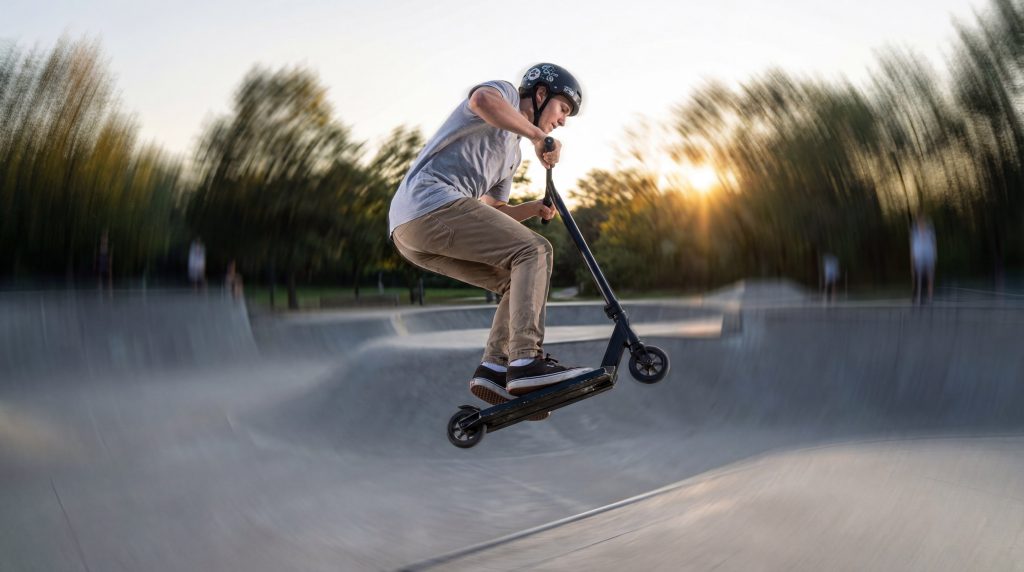
Many riders reach a plateau where their daily sessions feel repetitive and uninspiring. Staring at your high-performance equipment without knowing how to push its limits can be frustrating, especially when you see others effortlessly catching air and landing complex maneuvers. Learning technical Tricks on Electric Scooter is the definitive roadmap to transitioning from a basic commuter to a stunt professional. Can you do a tail whip as one of the Tricks on Electric Scooter? The tail whip is the fundamental building block for almost all deck-based Tricks on Electric Scooter. It involves jumping and kicking the deck so it rotates 360 degrees around the steering column before you land. For those looking for a new daily ride to practice their balance, checking out the Model B is a great way to start. Getting Maximum Air Think about it. The Kick Motion The secret is. Key Takeaway: Success depends on the speed of the deck rotation and your vertical jump height. Feature Requirement Difficulty Intermediate Speed Moderate Surface Flat or Ramp Analyze your deck rotation speed to ensure you have enough time to land both feet simultaneously. How to land a 360 spin among various Tricks on Electric Scooter? Rotation is key to adding flair to your style. A 360 spin requires you to rotate your entire body and the frame in a full circle mid-air. It is one of the most essential Tricks on Electric Scooter for building spatial awareness. Launching with Height Simply put. Shoulder and Body Rotation Here is the deal. Key Takeaway: Your body follows your eyes, so look over your shoulder to complete the full rotation. Element Focus Point Momentum Linear to Angular Vision Spot the Landing Balance Central Gravity Ensure your center of gravity remains over the deck to avoid tipping forward or backward during the spin. Is a bar spin combo the best of the Tricks on Electric Scooter? Combining movements demonstrates high-level coordination and gear control. You must flick the bars for a full rotation and immediately follow up with balanced control. To ensure your gear can handle these impacts, explore high-quality accessories to keep your setup in top shape while performing Tricks on Electric Scooter. Mastering Bar Rotation Listen to this. Transition Timing It gets better. Key Takeaway: Hand placement during the hand-off is the most critical factor for a successful bar spin. Skill Metric Hand Speed High Air Time 1-2 Seconds Grip Strength Essential Evaluate your hand-to-eye coordination to decrease the time the bars spend without rider contact. Why try an inward bri flip while doing Tricks on Electric Scooter? This maneuver is for those who want to go big and showcase advanced technicality. The deck goes overhead in an inward motion, requiring significant courage and spatial awareness. It is a “go big or go home” move among the elite Tricks on Electric Scooter. Overhead Deck Control The truth is. Catching the Deck Imagine this. Key Takeaway: Inward bri flips require total commitment; hesitation often leads to incomplete rotations and missed landings. Risk Management Impact Wear full padding Timing Practice in foam pits Height Use a steep take-off Focus on the inward pull of the handlebars to guide the deck through its vertical axis safely. What makes a finger whip unique for Tricks on Electric Scooter? Unlike a standard whip where you use your feet, the finger whip involves using your hand to flick the deck while in mid-air. This adds a level of finesse and manual control to your repertoire of Tricks on Electric Scooter. Reaching for the Deck Wait, there is more. Hand Whipping Technique Bottom line. Key Takeaway: Speed is vital; you must reach, flick, and re-grab in a fraction of a second. Phase Hand Action Launch Dual Grip Peak Single Hand Flick Landing Dual Grip Catch Monitor your reach distance to ensure you aren’t leaning too far away from the scooter’s center. Can you fly like superman while doing Tricks on Electric Scooter? The superman is a crowd favorite where the rider extends their legs fully behind them while holding the bars out front. It creates an iconic silhouette in the air. For more tips on maintaining your gear for such Tricks on Electric Scooter, visit our blog for expert maintenance advice. Momentum and Hang Time Look at this. Stretching for the Flight The secret is. Key Takeaway: Flexibility and core strength are required to maintain the horizontal flight position effectively. Physicality Benefit Core Strength Position Stability Leg Reach Visual Appeal Arm Extension Balance Practice the transition from flight to landing on a trampoline to build the necessary muscle memory. How to do a tuck no hander using Tricks on Electric Scooter? This classic move involves jumping high, pulling the bars toward your lap, and momentarily releasing your grip. It requires immense confidence in your air stability. Mastering this adds a fearless element to your Tricks on Electric Scooter collection. Releasing the Handlebars Believe it. Re-grabbing the Controls Watch closely. Key Takeaway: Stability is achieved by pinching the deck firmly between your feet while your hands are released. Step Action Initiation Bar Tuck Execution Hand Release Recovery Bar Catch Assess your bar-to-lap distance to ensure the handles are close enough for a rapid re-grab. Is the whip rewind the hardest of the Tricks on Electric Scooter? The whip rewind adds a layer of complexity by reversing the deck’s momentum mid-air. You kick the whip in one direction and then “rewind” it back the other way. It is a fast-paced move that stands out among other Tricks on Electric Scooter. First Whip Execution Check this out. The Reverse Kick Here is the kicker. Key Takeaway: Timing the reversal kick is more important than the initial whip speed for this maneuver. Rotation Direction Phase 1 Clockwise Phase 2 Counter-Clockwise Phase 3 Neutral (Land) Review the physics of angular momentum to better understand when to apply the counter-force. What is the secret to a 360 bar spin Tricks on Electric Scooter? This trick combines a full body rotation with […]

Top 10 Best Tricks on Electric Scooter You Should Learn to Master Your Ride Read More »

Electric Scooters in Los Angeles: Laws, Speed Limits & Parking Rules

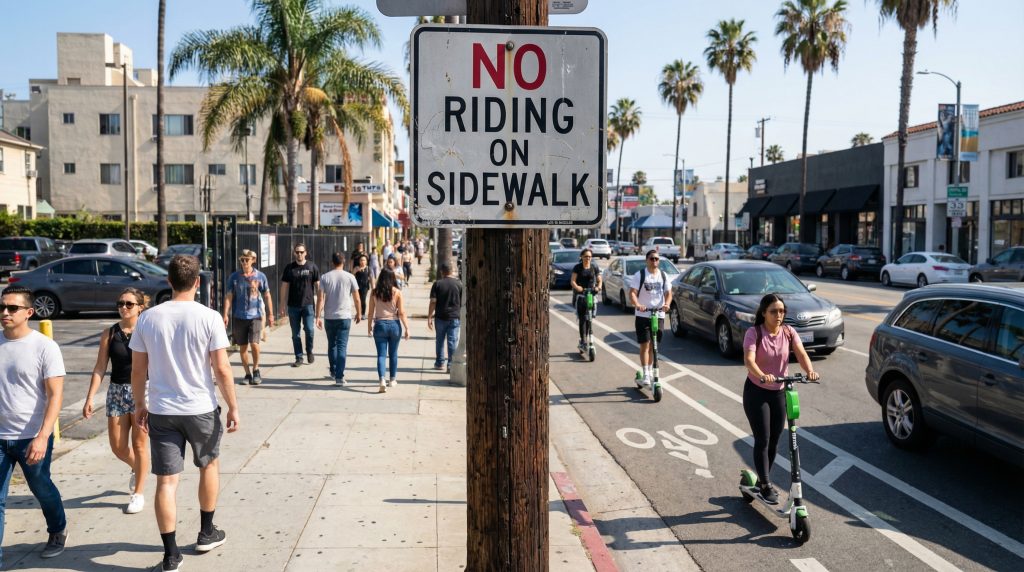
Riding on the right side of the law in Los Angeles requires staying off sidewalks, keeping speeds under 15 mph, and carrying a valid driver’s license. Navigating the dense traffic of the West Coast is often a logistical nightmare, but many riders face unexpected $250 citations for simple compliance mistakes. The truth is, failing to understand Los Angeles electric scooter laws can turn a fun commute into a legal headache. This guide provides the solutions you need to master local regulations and enjoy a compliant, stress-free ride across the city. Are electric scooters legal under Los Angeles electric scooter laws? Riding an electric scooter is fully legal under Los Angeles electric scooter laws as long as you follow the California Vehicle Code and municipal ordinances. The city has embraced micromobility to reduce gridlock, classifying these devices as motorized scooters. This classification means you are subject to specific vehicle rules rather than pedestrian or bicycle-only regulations. What is the current legal status in the city? The legal status of e-scooters in LA is defined by their recognition as valid personal transportation vehicles. You can operate them on public roads, but you must adhere to equipment standards. The truth is: You should always treat your scooter with the same respect as a car when navigating busy intersections. Do you need to register the device? No, you do not need to register your scooter with the DMV or obtain license plates. California law specifically exempts motorized scooters from the registration requirements that apply to mopeds. Think about it: Legal Requirement Status City Legality Legal DMV Registration Not Required License Plate Not Required Following these basic classifications ensures you start your journey without the risk of immediate impoundment. Electric scooters are legal motorized vehicles in LA and do not require formal registration or plates. What are the newest Los Angeles electric scooter laws for 2026? The newest Los Angeles electric scooter laws for 2026 focus on rider safety, stricter speed enforcement, and clear lane designations. These updates aim to integrate micromobility more safely into the existing traffic infrastructure. You must stay updated on these changes to avoid the recently increased fines for roadway violations. What are the main regulatory pillars? The primary framework involves age limits, speed caps, and mandatory documentation. You are required to follow these pillars to ensure the safety of everyone on the road. It gets better: You will find that modern regulations are much clearer than the experimental rules of previous years. Are there specific age requirements? Yes, you must be at least 16 years old to operate a motorized scooter on public streets. However, most commercial rental agreements in the city will require you to be 18 or older. Believe it or not: Law Category 2026 Requirement Minimum Riding Age 16 (18 for rentals) Speed Cap 15 mph Primary Path Bike Lanes The shift toward these structured rules indicates a long-term commitment to making the city more scooter-friendly. The 2026 regulations emphasize age compliance and the use of dedicated bike infrastructure. Do Los Angeles electric scooter laws require a license? Yes, Los Angeles electric scooter laws mandate that every rider must possess a valid driver’s license or a learner’s permit. Because these devices are motorized, California law requires operators to demonstrate a basic understanding of traffic rules. You cannot legally ride if you do not have this documentation on your person. Which license classes are accepted? Any class of valid government-issued driver’s license is sufficient for riding an e-scooter. You do not need a specialized motorcycle endorsement like you would for a heavy scooter or motorbike. Let’s be clear: You must ensure your license is current and not expired before you kick off. Can minors ride with a permit? Minors who have reached the age of 16 and hold a valid instructional permit are legally allowed to ride. This provides a bridge for younger commuters who are not yet old enough for a full license. The reality is: Document Type Legally Allowed? Driver’s License Yes Learner’s Permit Yes Motorcycle License Yes Having your license ready is the easiest way to pass a routine traffic stop without a hitch. A valid driver’s license or permit is a non-negotiable requirement for legal operation in the city. What speed is allowed by Los Angeles electric scooter laws? The maximum speed allowed by Los Angeles electric scooter laws is 15 miles per hour on all public roadways and paths. Even if your personal scooter is capable of reaching 20 or 30 mph, you are legally restricted to this urban limit. Staying within this threshold is crucial for your safety and the safety of pedestrians nearby. Does the limit change on fast roads? No, the 15 mph cap remains the law even if you are riding on a street with a 35 mph speed limit. You are essentially governed by a vehicle-specific limit rather than the road’s general limit. Make no mistake: You should monitor your speedometer closely when descending hills or navigating clear stretches. What are the consequences of speeding? Violating the 15 mph limit can result in a speeding citation that carries a fine of up to $250. Excessive speed is one of the most common reasons for law enforcement to stop riders. The truth is: Scoped Speed Legal Limit Maximum Legal Speed 15 mph Speeding Fine Up to $250 Adhering to the speed limit protects your wallet and keeps the city streets manageable for all users. You must never exceed 15 mph, regardless of the scooter’s power or the road’s posted limit. Can you use the sidewalk under Los Angeles electric scooter laws? No, you cannot ride on the sidewalk under Los Angeles electric scooter laws except when entering or leaving an adjacent property. Sidewalks are strictly reserved for pedestrians and those with mobility aids. Riding your motorized device on the walkway is one of the most frequent causes of pedestrian accidents. Where is the legal place to ride? You are required to use Class II bicycle lanes—marked with a […]

Electric Scooters in Los Angeles: Laws, Speed Limits & Parking Rules Read More »

Electric Scooters in San Francisco: 2026 Laws, Parking Rules, BART Tips, Best Routes, Safety Guide

Riding electric scooters in San Francisco is legal and efficient as long as you adhere to local SFMTA regulations regarding age, speed, and sidewalk prohibitions. You are probably tired of spending your mornings trapped in a gridlocked bus or searching for a parking spot that costs as much as your lunch. Navigating the steep grades and crowded intersections of the Bay Area on foot is exhausting and steals precious hours from your day. By switching to electric scooters San Francisco, you can reclaim your time and bypass the traffic with ease. What are the current laws for electric scooters San Francisco? Operating these devices requires you to be at least 16 years old and possess a valid driver’s license or learner’s permit. Local ordinances for electric scooters San Francisco follow California Vehicle Code § 21235, which prioritizes pedestrian safety. Is a helmet mandatory for all riders? While adults over 18 are not legally forced to wear one, the city strongly recommends head protection for everyone. Helmets are strictly mandatory for any rider under the age of 18 without exception. Think about it:San Francisco’s streets are filled with unpredictable obstacles like cable car tracks and hidden potholes. Protecting your head is the smartest move you can make before kicking off. Key Takeaway: Compliance starts with age verification and a valid license, but safety truly begins with a certified helmet. Rule Category Requirement Legal Reference Minimum Age 16 Years Old CVC § 21235 Licensing Class C or M2 CA DMV Speed Limit 15 MPH SFMTA Compliance with these fundamental laws ensures that you avoid costly citations and keep the city’s streets safe for everyone. Where should you park electric scooters San Francisco? Proper parking means leaving your scooter upright in the “street furniture zone,” which is the section of the sidewalk closest to the curb. When using electric scooters San Francisco, you must never block the pedestrian right-of-way or building entrances. How to avoid blocking city sidewalks? You should always look for designated bike racks or specific painted zones if they are available nearby. If these aren’t present, align your scooter with existing fixtures like light poles or parking meters. But wait, there’s more.Understanding the ultimate guide to folding electric scooters can help you realize how easy it is to simply bring your own device inside. This eliminates the stress of searching for a legal spot on the street. Key Takeaway: Always park parallel to the curb and maintain a clear path for those with mobility aids. Parking Area Status Distance Rule Furniture Zone Legal Near the curb Building Entry Illegal 6 feet clear Fire Hydrants Illegal 15 feet clear The SFMTA is very strict about parking violations, often impounding devices that obstruct the flow of sidewalk traffic. Which routes are best for electric scooters San Francisco? The Embarcadero and the Great Highway provide the most scenic and protected environments for riding electric scooters San Francisco. These paths offer dedicated lanes that separate you from heavy vehicle traffic and provide stunning bay views. Can you ride near the Golden Gate? You can ride right up to the bridge approach using the Battery East Trail, which is paved and wide. However, remember that riding on the actual Golden Gate Bridge sidewalks is prohibited for all motorized scooters. And the best part?Many of these routes connect directly to the city’s “Slow Streets” network. This creates a massive web of low-traffic zones where you can ride with significantly less stress. Key Takeaway: Stick to the waterfront for flat terrain and iconic landmarks while avoiding the most congested hills. Scenic Route Skill Level Best Feature Embarcadero Beginner Bay Bridge views Great Highway Intermediate Ocean breeze Golden Gate Park All Levels Car-free zones Selecting the right route transforms a standard commute into a tourist-worthy experience every single morning. How do you climb hills on electric scooters San Francisco? Tackling the city’s famous inclines requires you to maintain a forward-leaning posture and utilize a scooter with a high-torque motor. When navigating hills with electric scooters San Francisco, momentum is your best friend when approaching the base of the street. Does dual motor power matter? Having two motors is a game-changer for those living in Nob Hill or the Haight-Ashbury districts. A single motor often bogs down on a 15% grade, but dual motors provide the necessary “push” from both ends. Here is the deal:If you are worried about the inclines near your office, the Model B offers the portability and power needed to survive the city’s topography. It is specifically designed to handle the varied terrain found in urban environments. Key Takeaway: Prioritize high peak-wattage motors if your daily route involves crossing the city’s major ridge lines. Incline Grade Recommended Motor Rider Effort 0-5% 350W Single Minimal 6-12% 500W Single Moderate lean 13%+ 1000W+ Dual Active weight shift San Francisco’s hills can drain a battery significantly faster than flat ground, so plan your range accordingly. Can you take electric scooters San Francisco on BART? BART and MUNI both allow you to bring your device onboard, but you must keep the electric scooters San Francisco folded while inside the stations. It is strictly against the law to ride through the hallways or on the platform levels. What are the transit boarding rules? You should always use the elevators or stairs rather than the escalators when carrying your scooter. Once on the train, stay in the designated bike areas or the open spaces near the doors. Believe it or not,Combining a scooter with public transit can cut your commute time in half. This “last-mile” solution allows you to live further from the station while still getting to the office on time. Key Takeaway: Always fold your scooter before you enter the station to stay in the good graces of transit police. Transit System Folding Required Riding Allowed? BART Yes No (Inside) MUNI Yes No (Inside) Caltrain Yes No (Inside) The synergy between local trains and personal mobility devices is the most efficient way to navigate the entire Bay Area. […]

Electric Scooters in San Francisco: 2026 Laws, Parking Rules, BART Tips, Best Routes, Safety Guide Read More »

Electric Scooter vs. Hoverboard: An Electric Ride Comparison

Electric scooters are designed as robust, handle-equipped commuting vehicles for long-distance urban travel, while hoverboards are hands-free, self-balancing boards primarily used for short-distance recreation and “last-mile” fun. You likely face the daily exhaustion of gridlocked traffic, rising fuel costs, and the frustrating hunt for city parking. This friction drains your productivity and turns a simple commute into a stressful ordeal. By understanding the nuances of an Electric Scooter vs Hoverboard, you can select the precise micro-mobility tool to reclaim your time and transform your journey. What defines an electric scooter vs. hoverboard? An electric scooter is a motorized platform with a vertical steering column and handlebars, whereas a hoverboard is a two-wheeled, self-balancing board controlled entirely by shifting your body weight. When comparing an Electric Scooter vs Hoverboard, you are looking at two fundamentally different engineering approaches to personal transport. How do the control mechanisms differ? The primary difference lies in how you interact with the vehicle’s sensors and motor. You control a scooter using hand-operated throttles and brake levers, which provides a familiar, bike-like experience. But here is the kicker: Hoverboards rely on internal gyroscopes that detect the tilt of your feet to move. This requires significant core engagement and lower-body coordination to maintain a steady speed. Which motor provides better torque? Scooters generally house larger hub motors that are capable of tackling steep inclines and maintaining speed under heavier loads. This makes them significantly more reliable for professionals who need to navigate diverse urban topographies. You might be wondering: The motor in a hoverboard is optimized for flat surfaces and precise pivots. While they offer agility, they often struggle when faced with significant gradients or varying rider weights. Key Takeaway: Electric scooters provide a more mechanical and stable power delivery system compared to the sensory-based balancing of hoverboards. Feature Electric Scooter Hoverboard Control Handlebars & Throttle Weight Shifting Stability High (3 Points of Contact) Moderate (2 Points of Contact) Primary Use Commuting Recreation This structural difference is why scooters are the preferred choice for those needing a dependable daily driver. Which ride offers a faster learning curve? Electric scooters offer a significantly faster learning curve because the handlebars provide an immediate sense of balance and a physical point of contact for stability. Navigating the Electric Scooter vs Hoverboard comparison shows that most users can become proficient on a scooter in minutes. Why are handlebars a game changer? Having a physical bar to hold onto allows you to stabilize your upper body while the board moves beneath you. This drastically reduces the fear of falling and allows you to focus on the path ahead rather than your feet. Believe it or not: Handlebars act as a failsafe, allowing you to catch your balance if you hit a small bump. Without them, your body must react instantly to every vibration, which is much harder for beginners to master. Does self-balancing technology help? While hoverboards feature “auto-leveling” tech, the device only stays level relative to the ground, not your body’s center of gravity. You must learn to trust the machine while keeping your ankles flexible enough to steer. It gets better: Learning to ride a hoverboard is more akin to learning to ice skate or ski. It requires muscle memory and a developed sense of proprioception that takes hours, not minutes, to perfect. Key Takeaway: If you want to start riding immediately with minimal risk of a fall, the electric scooter is the intuitive choice. Learning Factor Electric Scooter Hoverboard Time to Master < 5 Minutes 30 – 60 Minutes Balance Type Mechanical Support Active Body Balance Confidence Level High Initially Gradual Progression The presence of a steering column simplifies the physics of riding for the average urban commuter. Is speed or range your top priority? If you prioritize high speeds and long-distance travel, the electric scooter is the undisputed winner in the Electric Scooter vs Hoverboard debate. Most commuter scooters can easily travel 15–30 miles on a single charge, whereas hoverboards are typically limited to under 10 miles. Can a hoverboard handle long distances? Hoverboards are strictly designed for “last-mile” or indoor use rather than full-scale commuting. Their smaller batteries and wheels make long-distance travel physically exhausting for the rider’s legs and feet. Think about this: For example, the Model B is engineered specifically to sustain consistent speeds for miles. It provides the endurance required for a legitimate cross-town trip that a board cannot match. Key Takeaway: Speed and range are the hallmarks of the electric scooter, making it a viable alternative to public transit. Performance Electric Scooter Hoverboard Top Speed 15 – 25+ mph 6 – 10 mph Max Range 12 – 40 miles 5 – 12 miles Charge Time 4 – 6 Hours 2 – 3 Hours Choosing a device with a larger battery ensures you aren’t left stranded halfway through your daily route. How do safety features compare between them? Electric scooters are generally safer for road use because they feature dedicated braking systems and higher visibility profiles than hoverboards. When evaluating Electric Scooter vs Hoverboard safety standards, the inclusion of mechanical brakes is the most critical differentiator. Which braking system is most reliable? Scooters use disc, drum, or electronic brakes that you activate with a hand lever for immediate stopping power. This allows you to react quickly to pedestrians or vehicles in an emergency. But here is the kicker: On a hoverboard, you must lean backward to slow down. This “leaning” braking method is much slower and can be dangerous if you lose your balance during a sudden stop. Are lighting systems standard on both? Most high-quality micro-mobility devices include some form of LED lighting, but scooters often feature more powerful, high-mounted headlights. This ensures that you can see the road surface clearly and that drivers can see you from a distance. You might be wondering: Hoverboards usually have low-mounted deck lights. While these look futuristic, they don’t illuminate the path ahead as effectively as a handlebar-mounted light does. Key Takeaway: Dedicated mechanical brakes and […]

Electric Scooter vs. Hoverboard: An Electric Ride Comparison Read More »

Ultimate Guide to Folding Electric Scooters: Buying, Portability, Safety

Folding electric scooters serve as the most efficient bridge for the modern last-mile commute, solving the critical gap between public transit and your final destination. Urban professionals often face the grinding reality of gridlock and unpredictable transit schedules that drain productivity. This daily friction leads to unnecessary stress and lost hours that could be better spent growing your business or enjoying personal time. By adopting high-performance micro-mobility, you reclaim control over your schedule and navigate the city with unprecedented agility. Discover how Folding Electric Scooters can revolutionize your corporate travel strategy. Why use folding electric scooters? These vehicles provide a seamless transition between different modes of transportation while maintaining a professional appearance. Utilizing Folding Electric Scooters allows you to bypass heavy traffic and avoid the high costs of urban parking. They are designed for the fast-paced lifestyle of a modern executive. Is multi-modal transit easier? Integrating your ride with trains or buses becomes a simple task rather than a logistical nightmare. The compact form factor ensures you never have to leave your vehicle behind at a station. Think about it. How do they improve time management? Eliminating the search for parking can save an average of fifteen minutes per trip in dense business districts. This predictability is essential for meeting tight deadlines and maintaining client commitments. The best part? Are they environmentally responsible? Reducing your carbon footprint aligns with corporate social responsibility goals and modern sustainability standards. These units utilize high-efficiency battery technology to deliver zero-emission transportation across the city. But here is the kicker: Key Takeaway: Value PropositionThe core advantage of these units is the blend of time efficiency, cost reduction, and environmental stewardship that traditional vehicles cannot match. Benefit Category Impact Level Primary Outcome Operational Speed High Time Recovery Logistic Flexibility Maximum Multi-modal Ease ESG Compliance Moderate Carbon Reduction Strategic use of micro-mobility fundamentally alters the ROI of your daily transit. How to choose folding electric scooters? Selecting the right Folding Electric Scooters requires a deep dive into technical specifications that match your specific commute profile. You must evaluate the trade-offs between battery range, motor wattage, and the total weight of the machine. Does motor power affect hills? A higher wattage motor is necessary if your route includes significant inclines or requires rapid acceleration in traffic. Performance models offer the torque needed to maintain speed without straining the internal components. Believe it or not: What range is necessary for business? You should aim for a range that is at least double your one-way commute to account for battery degradation over time. Temperature fluctuations can also impact the total distance you can travel on a single charge. You see, How much weight is manageable? The total weight of the unit determines how easily you can carry it up office stairs or into elevators. Aluminum frames offer the best balance between structural strength and portability for frequent lifters. Indeed: Key Takeaway: Technical SelectionChoosing based on a combination of wattage and weight ensures the vehicle remains a tool rather than a burden during your daily operations. Model Grade Typical Weight Best Use Case Ultra-Light < 13 kg Short urban hops Mid-Range 15 – 18 kg Standard daily commute Performance > 20 kg Hilly or long-distance Technical data indicates that as performance increases, portability typically decreases. Are folding electric scooters durable? Modern engineering has reinforced the structural integrity of Folding Electric Scooters to handle the rigors of daily urban use. High-grade materials such as aviation-grade aluminum and carbon fiber are frequently used to prevent frame fatigue. What about the folding hinge? The hinge mechanism is the most critical point of the frame and is often reinforced with steel locking pins. High-quality designs eliminate “stem wobble” to provide a ride feel as stable as a non-folding bike. But here is the kicker: Are tires a maintenance concern? Solid tires eliminate the risk of punctures but offer less vibration damping than pneumatic options. Many professionals prefer tubeless pneumatic tires for the best balance of comfort and reliability. Think about it. Is the deck weather resistant? The internal electronics are typically housed within the deck, requiring high-quality seals to prevent dust and moisture ingress. Checking for specific IP ratings ensures the vehicle can survive the unpredictable nature of city weather. The best part? Key Takeaway: Longevity FactorsDurability is a function of material quality and regular maintenance of the primary locking mechanisms and tire pressure. Component Material Durability Rating Main Frame Aviation Aluminum High Folding Latch Hardened Steel Maximum Deck Seal Silicone Gaskets Moderate Structural reliability is paramount for ensuring the safety of the rider during high-speed transit. How to fold folding electric scooters? Operating Folding Electric Scooters requires a specific sequence of actions to ensure the mechanism locks securely for transport. Most professional models utilize a one-click or two-step system designed for speed under pressure. Is the process quick? A well-designed folding mechanism allows you to collapse the stem and lock it to the rear fender in under five seconds. This speed is essential when transitioning from the street to a waiting bus or train. You see, Are there safety locks? Manufacturers include redundant locking systems to prevent the stem from collapsing while you are in motion. Always verify that the secondary safety collar is engaged before you begin your journey. Indeed: Can you fold the handlebars? Collapsible handlebars significantly reduce the width of the folded unit, making it easier to store in narrow office closets. This feature is a must-have for commuters using crowded public transportation during peak hours. Here is the kicker: Key Takeaway: Operational EaseMastering the folding sequence allows for fluid movement through urban environments without stopping the flow of your commute. Action Step Time Required Priority Release Latch 1 Second Safety Collapse Stem 2 Seconds Speed Secure Hook 1 Second Stability A rapid folding cycle is the hallmark of a high-quality commuter vehicle. Where to store folding electric scooters? The compact footprint of Folding Electric Scooters allows for creative storage solutions that keep your workspace organized. Finding a dedicated spot […]

Ultimate Guide to Folding Electric Scooters: Buying, Portability, Safety Read More »

Best Foldable Electric Scooter for Adults: Top Picks for 2026

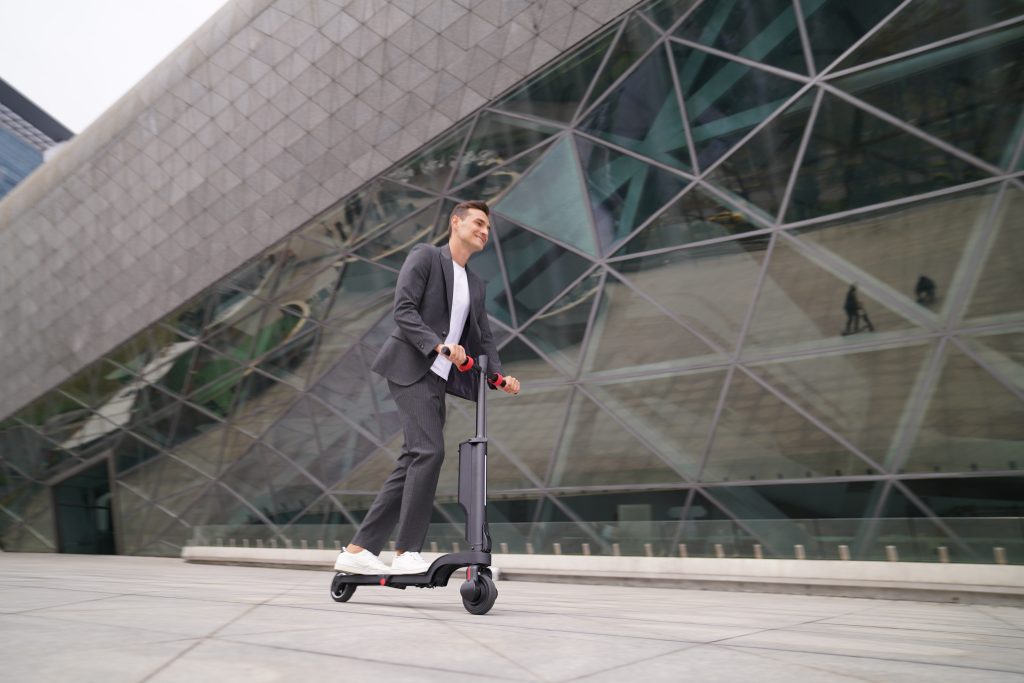
The Dynamic Scooter Model B is the definitive answer to the question of what is the best foldable electric scooter for adults currently on the market. You are likely frustrated by dense urban traffic and the “last-mile” commute gap that drains your time and energy every morning. This inefficiency doesn’t just waste minutes; it impacts your professional performance and mental clarity before you even reach your desk. By choosing a high-performance, portable solution, you can bypass gridlock and arrive at every meeting feeling refreshed and ready to lead. Why is this the best foldable electric scooter for adults? This model is recognized as the best foldable electric scooter for adults because it perfectly balances power, portability, and professional aesthetics. It is engineered to withstand the rigors of daily urban use while maintaining a sleek profile suitable for any corporate environment. It’s a game-changer. How does it improve daily productivity? Reducing your commute time directly translates to more billable hours or better work-life balance. When you aren’t waiting for a delayed bus, you regain control over your schedule and professional output. Key Takeaway: The combination of speed and efficiency makes this the ultimate tool for modern professionals seeking to optimize their daily routines. Feature Business Impact High Efficiency Faster travel between offices Low Maintenance Reduced downtime for repairs Professional Design Maintains executive image The data shows that minimizing transit friction is the fastest way to increase overall executive output and job satisfaction. How portable is this foldable electric scooter for adults? True portability in a foldable electric scooter for adults is defined by a weight under 30 lbs and a mechanism that folds in under three seconds. This allows you to transition from the street to the subway without delaying your journey or bothering fellow passengers. Think about this. Is it easy to carry on public transit? The lightweight frame ensures that you can lift the unit onto trains or buses without physical strain. This multi-modal flexibility is essential for commuters who need to cover various types of terrain and distances. Key Takeaway: Portability is not just about weight; it is about how effortlessly the device integrates into every step of your journey. Portability Metric Performance Folding Time Under 3 Seconds Total Weight 28 lbs (12.7 kg) Carrying Handle Ergonomic Design A portable design removes the barriers between different modes of transport, creating a seamless “door-to-door” professional experience. Can a foldable electric scooter for adults climb city hills? The best foldable electric scooter for adults utilizes a high-torque brushless motor to handle urban inclines up to 15 degrees without losing significant speed. This ensures that your arrival remains sweat-free and professional regardless of the city’s topography. Here is the secret. What motor power is required for adults? Adult riders need a motor that doesn’t stall under load, particularly during stop-and-go city traffic. A reliable power plant ensures that you maintain momentum even when the road turns upward. Key Takeaway: Sufficient motor torque is the difference between a functional commuter vehicle and a toy that fails on basic city streets. Incline Grade Performance Level 5% (Slight) Full Speed Maintained 10% (Moderate) Steady Climbing 15% (Steep) Reliable Torque Engineered power delivery ensures that you never have to assist the scooter manually, preserving your professional appearance throughout the day. Where do you store a foldable electric scooter for adults? You can store your foldable electric scooter for adults in remarkably small spaces, such as under a standard office desk or inside a compact vehicle trunk. This eliminates the need for expensive parking or the risk associated with leaving a vehicle locked outside. Space is money. Does it fit in a small urban apartment? The minimal footprint when folded makes it perfect for professionals living in metropolitan areas where square footage is at a premium. You don’t need a garage or a dedicated storage room to keep your ride secure and charged. Key Takeaway: Superior storage capabilities allow you to keep your primary transport method safe and accessible at all times. Storage Location Compatibility Office Desk Excellent Car Trunk High Public Transit Seamless Efficient storage design ensures that your scooter remains an asset rather than an obstacle in your workplace or home. Is a foldable electric scooter for adults safe in bike lanes? Safety is the highest priority, and a quality foldable electric scooter for adults provides the stability and braking power required for sharing space with cyclists and pedestrians. High-visibility features ensure you are seen by other road users in all conditions. Safety first. How do dual brakes protect you? Combining electronic and mechanical braking provides redundancy, allowing for safe deceleration even in emergency situations. This technical setup is vital for navigating the unpredictable nature of busy city environments. Key Takeaway: Advanced braking and tire technology provide the confidence needed to ride at full speed in professional urban settings. Safety Component Function Electronic Brake Smooth deceleration Disc Brake High-power emergency stops Air-filled Tires Shock absorption Investing in a scooter with robust safety features reduces operational risk and ensures long-term reliability for your daily commute. What features define a foldable electric scooter for adults? The defining features of a foldable electric scooter for adults include an intuitive LED dashboard that tracks speed, battery life, and system health in real-time. These data points allow you to manage your journey without the “range anxiety” often associated with electric vehicles. Knowledge is power. Why is a smart display essential for B2B use? In a professional context, you cannot afford to have your transport fail halfway to a client meeting. A clear display allows you to plan your charging cycles and ensure you always have enough power for the return trip. Key Takeaway: High-resolution displays and smart electronics transform a basic scooter into a sophisticated piece of professional equipment. Display Data Benefit Speedometer Compliance with local laws Battery Bar Accurate trip planning Mode Indicator Optimization for range The integration of smart technology ensures that the rider is always informed, reducing the likelihood of unexpected battery depletion. How do […]

Best Foldable Electric Scooter for Adults: Top Picks for 2026 Read More »

The Electric Scooter Market in 2026: Trends, New Laws, AI Tech, Battery Innovation, Safety

Urban centers are reaching a breaking point with traffic congestion, rising fuel costs, and inadequate parking, making your daily commute a source of extreme stress and inefficiency. Agitation: Traditional public transport remains overcrowded, while car ownership is increasingly penalized by “low emission zone” fees and soaring insurance rates. In 2026, the friction of simply “getting to work” is the primary barrier to your productivity. The Electric Scooter Market has evolved from a novelty into a sophisticated, AI-integrated infrastructure pillar, offering you the range, safety, and reliability required to bypass gridlock and redefine personal freedom in the city. 1. What defines the Electric Scooter Market in 2026? The Electric Scooter Market in 2026 is defined by a definitive shift toward professional-grade commuting tools and AI-enhanced safety features. You are no longer looking at toys, but at high-performance vehicles integrated into the very fabric of urban movement. Is urban congestion forcing a shift to scooters? Believe it or not, city centers have seen a 15% improvement in travel times where scooter adoption is high. You can navigate through narrow passages that remain inaccessible to traditional vehicles. Why are commuters choosing scooters over cars? Here is the kicker: the cost of car ownership in 2026 has become prohibitive for many urban residents. You save thousands annually on insurance, fuel, and congestion pricing by making the switch. What is the current market valuation? Think about this: the market has transitioned from speculative venture capital into a stable, multi-billion-dollar global industry. You are participating in an economy that values high-margin personal ownership over disposable fleet models. Key Takeaway: The 2026 market focuses on intelligence and utility, moving far beyond the recreational roots of earlier models to provide you with a legitimate car replacement. Metric 2024 Benchmark 2026 Projection Primary Use Case Last-mile / Recreation Full-commute functional Market Driver Low entry price Reliability & App Integration Ownership Trend Shared Fleet Dominance Personal Ownership Growth This data illustrates the profound shift from temporary rentals to long-term vehicle investments for modern professionals. 2. How do new laws impact the Electric Scooter Market? New legislation in the Electric Scooter Market focuses on standardizing safety and integrating these vehicles into existing traffic laws. You will find that most Tier-1 cities now have dedicated lanes and specific registration requirements to ensure orderly transit. Will speed limits become more restrictive? It is actually quite the opposite: limits are becoming more standardized at 25 km/h to match bicycle traffic flow. You can rely on your vehicle’s geofencing tech to automatically adjust speeds when you enter high-pedestrian zones. Are licensing requirements on the horizon? But that’s not all. Many regions are introducing “Micromobility Permits” to ensure you understand basic road safety before hitting the streets. Key Takeaway: Regulatory maturity ensures your safety and legitimacy on the road, turning the wild west of early adoption into a structured transport system. Regulation Type Impact Level Implementation Status Geofencing High Standard in 80% of Tier-1 Cities Mandatory Helmets Medium Variable by Region Vehicle Registration Low Experimental in select EU zones Compliance with these new standards is the primary factor driving the current hardware design phase. 3. Is AI tech evolving the Electric Scooter Market? Artificial Intelligence is the backbone of the Electric Scooter Market today, providing you with predictive analytics and enhanced situational awareness. Your vehicle now thinks ahead, identifying potential mechanical issues or road hazards before you encounter them. How does predictive maintenance work? The truth is, your scooter now monitors every internal component’s vibration and temperature in real-time. You receive a notification on your phone before a part actually fails, preventing mid-commute breakdowns. Can AI-driven routing improve safety? Now, here is the interesting part: your navigation system now prioritizes “safe zones” and protected lanes over the shortest path. You are guided away from construction and heavy traffic based on live city data feeds. Key Takeaway: AI integration has transformed the scooter from a passive device into an active partner that protects your safety and your investment. AI Feature Primary Benefit User Impact Predictive Diagnostics Longevity 30% reduction in repair costs Smart Lighting Safety Adaptive visibility based on light Energy Management Range 10% efficiency gain via AI AI-driven efficiency is now the benchmark for comparing premium hardware performance. 4. Will battery life lead the Electric Scooter Market? Battery technology remains the most critical competitive edge in the Electric Scooter Market in 2026. You can now expect ranges that rival small motorcycles, thanks to the adoption of high-density lithium cells and solid-state modules. Are solid-state batteries finally here? Yes, they have arrived: semi-solid state batteries are now appearing in top-tier models for the first time. You get significantly more range without the added weight or fire risks associated with older technology. How fast is the new charging standard? It gets even better. New “Fast-Charge” protocols allow you to gain enough power for a ten-mile trip in roughly fifteen minutes. Key Takeaway: The death of “range anxiety” means you can finally rely on your scooter for long-distance commutes without mid-day charging. Technology Range (Avg) Charge Time (0-80%) Standard Lithium (2024) 12-20 miles 4-6 Hours High-Density Cells (2026) 35-50 miles 1.5 – 2 Hours Fast-Charge Modules N/A 15 Mins (Emergency boost) Advancements in power storage are directly responsible for the 2026 surge in full-commute adoption. 5. Is durability key to the Electric Scooter Market? Durability has become the top priority in the Electric Scooter Market as users demand vehicles that can survive years of daily abuse. You need a machine that can handle rain, potholes, and the rigors of multi-modal transit without falling apart. Why are frames getting stronger? Think about this: manufacturers have moved away from basic aluminum to aerospace-grade alloys and carbon composites. You are riding a vehicle designed with the structural integrity of a high-end mountain bike. What are the new waterproofing standards? But wait, there’s more. The IPX7 rating is now the standard for any premium model, meaning you can ride through heavy rain without fear. Key Takeaway: Moving toward “repairable” rather than “disposable” […]

The Electric Scooter Market in 2026: Trends, New Laws, AI Tech, Battery Innovation, Safety Read More »

Shopping Cart
Scroll to Top