
Electric scooter battery fires are primarily caused by thermal runaway in lithium-ion cells due to physical damage, overcharging, or the use of uncertified charging equipment. You are likely enjoying the freedom of gliding through city streets on your new ride, but a nagging thought lingers in the back of your mind every time you plug it in.
We have all seen the viral videos of thick black smoke and sudden, violent flames erupting from a device in someone’s living room, turning a convenient tool into a terrifying hazard. This agitation of safety concerns is exactly why understanding the mechanics of electric scooter battery fires is essential for every rider.
By following this comprehensive safety guide, you will learn how to identify risks, implement better charging habits, and ensure your daily commute remains both efficient and entirely secure.
What causes electric scooter battery fires?
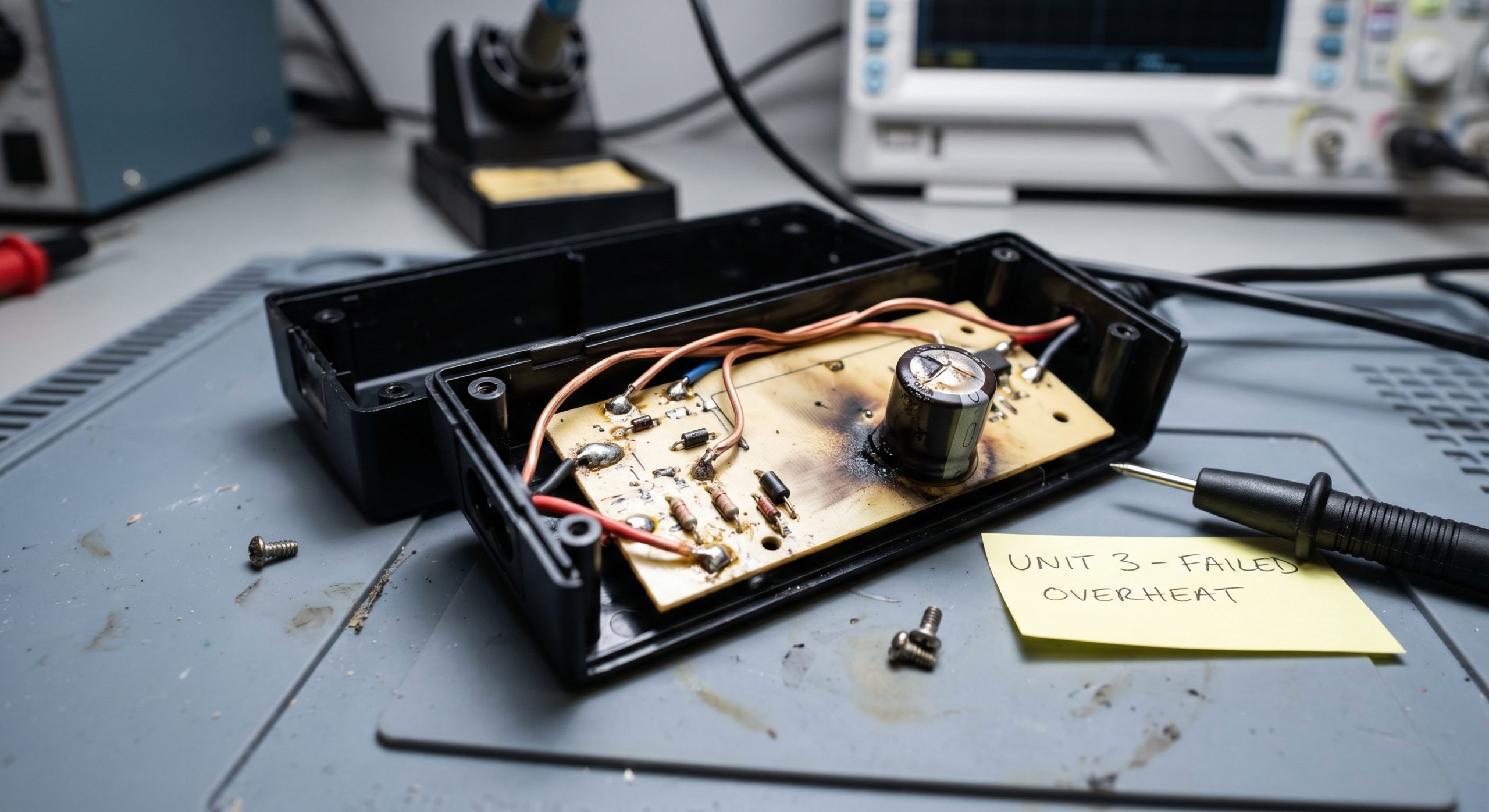
Thermal runaway triggered by physical damage or improper voltage is the root cause of electric scooter battery fires. When the internal separator of a lithium-ion cell fails, it creates a short circuit that generates immense heat. This heat then spreads to neighboring cells, creating a self-sustaining fire that is extremely difficult to extinguish.
Why do cells experience thermal runaway?
The chemistry of a battery is delicate and requires a stable environment to function without incident. If the internal components are compromised, the energy stored within is released all at once as heat.
But wait, there’s more:
- Internal manufacturing defects can lead to “dendrite” growth.
- Chemical impurities in the electrolyte can destabilize the battery.
- High-stress riding conditions can push cell temperatures to the limit.
Here is the kicker: even a single faulty cell can eventually compromise the entire battery pack.
How does electrical failure start?
Electrical failures often begin when the battery management system (BMS) fails to regulate the flow of electricity. This allows for over-voltage or under-voltage scenarios that stress the lithium ions beyond their breaking point.
Think about it:
- Faulty wiring can cause localized “hot spots” in the deck.
- A malfunctioning BMS may fail to shut off power during a surge.
- Water ingress can bridge electrical connections and cause sparks.
Key Takeaway: Understanding that internal chemical stability is the first line of defense helps you prioritize high-quality manufacturing over budget alternatives.
| Factor | Description | Danger Level |
|---|---|---|
| Thermal Runaway | Uncontrolled heat spread between cells | Extreme |
| BMS Failure | Lack of electronic safety regulation | High |
| Water Ingress | Short circuits caused by moisture | Moderate |
Proper maintenance of the internal electronics is just as vital as checking your tire pressure.
Can you prevent an electric scooter battery fire?
Yes, you can significantly reduce the risk of electric scooter battery fires by following manufacturer guidelines and using high-quality components. Prevention starts with awareness and ends with the disciplined application of safety protocols during every stage of ownership. Most incidents are avoidable if the rider takes proactive steps to protect the battery’s integrity.
Is regular inspection necessary?
You should perform a visual check of your scooter’s deck and battery housing at least once a week. Look for any signs of warping, cracks, or discoloration that might indicate internal stress.
Check this out:
- Look for loose screws on the battery compartment.
- Inspect the charging port for debris or burn marks.
- Feel for unusual heat on the deck after a long ride.
The best part? Spotting a small crack now can prevent a major catastrophe later this year.
Should you follow a maintenance schedule?
A consistent maintenance schedule ensures that small electrical issues do not escalate into fire hazards. Professional technicians can test cell health and ensure the wiring remains insulated and secure.
Believe it or not:
- Tightening connections prevents arcing.
- Firmware updates can optimize battery safety algorithms.
- Professional cleaning removes conductive dust from the electronics.
Key Takeaway: Proactive prevention through inspection and maintenance is the most effective way to ensure your safety.
| Action | Frequency | Purpose |
|---|---|---|
| Visual Check | Weekly | Identify physical damage |
| Port Inspection | Monthly | Prevent charging shorts |
| Professional Service | Yearly | Verify BMS and cell health |
Consistency in your safety routine creates a layer of protection that technology alone cannot provide.

Which charging habits lead to battery fires?
Overcharging and using uncertified power adapters are the most dangerous habits that trigger electric scooter battery fires. Leaving a scooter plugged in overnight or using a charger from a different device can bypass the battery’s safety limits. These habits gradually degrade the lithium cells until they reach a point of failure.
Why is overcharging dangerous?
Overcharging forces excess energy into the cells, causing them to plate lithium and generate internal heat. While modern systems have shut-off features, they are not infallible and can fail over time.
Now:
- Lithium plating creates needles that puncture internal separators.
- Excess heat during long charges degrades the electrolyte.
- Constant high-voltage stress shortens the overall battery lifespan.
Bottom line? Unplugging your device as soon as it reaches 100% is the smartest move you can make.
Can extension cords cause issues?
Using low-quality extension cords or power strips can lead to voltage drops and overheating at the plug. This creates an unstable power supply that stresses the charger and the battery simultaneously.
It gets better:
- Direct wall outlets provide the most stable current.
- Heavy-duty cords reduce the risk of electrical fires.
- Avoiding “daisy-chaining” power strips keeps your home safe.
Key Takeaway: Charging your scooter under supervision and using a direct wall outlet eliminates the most common electrical risks.
| Habit | Risk | Safer Alternative |
|---|---|---|
| Overnight Charging | Overheating/BMS failure | Charge only when awake |
| Third-party Chargers | Voltage mismatch | Use original equipment |
| Extension Cords | Current instability | Use wall outlets |
Changing how you power your device is a zero-cost way to enhance your household safety.
Is indoor storage safe for your electric scooter?
Indoor storage is safe provided the environment is climate-controlled and free of flammable materials that could ignite during electric scooter battery fires. Storing your scooter near a radiator or in a humid basement increases the likelihood of chemical instability. You must treat your scooter like any other high-energy electronic device in your home.
Where is the best place to store it?
The ideal storage location is a dry, cool area with plenty of ventilation and easy access to an exit. You want to ensure that if a problem does occur, the device is not blocking your only way out.
Make no mistake:
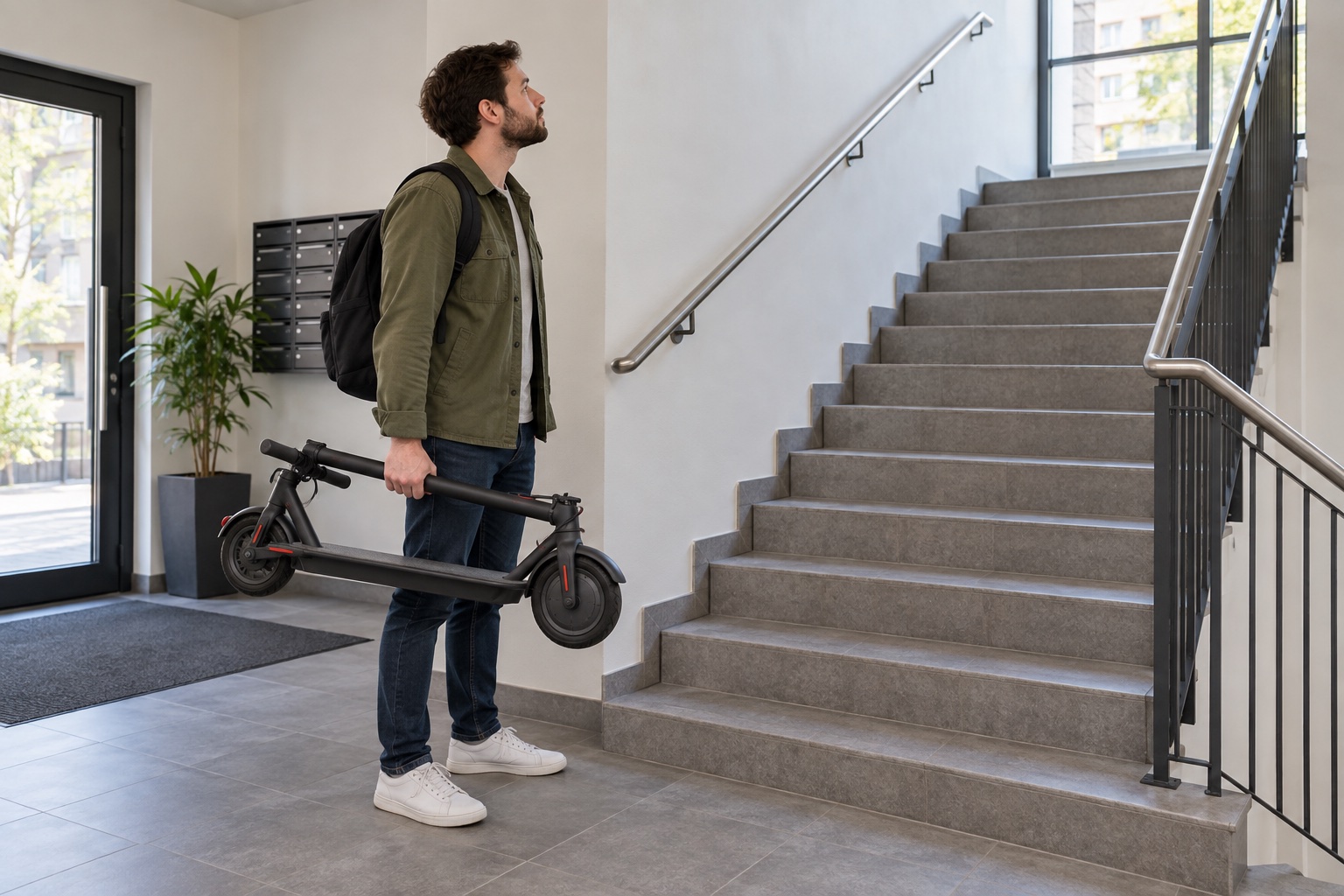
- Avoid storing scooters in hallways or near doorways.
- Keep the device away from piles of laundry or paper.
- Ensure the area is equipped with a working smoke detector.
Wait, there is a catch: storing a scooter in a hot garage during summer can be just as risky as a damp basement.
Does humidity affect the battery?
High humidity can lead to condensation inside the deck, which corrodes connections and causes short circuits. Keeping your scooter in a dry environment prevents this slow degradation of the safety components.
But wait, there’s more:
- Silica packets in the storage area can help manage moisture.
- Elevation off a cold floor prevents temperature fluctuations.
- Regular use prevents the battery from sitting in a discharged state.
Key Takeaway: Selecting a cool, dry, and unobstructed storage spot protects both the battery and your home’s exit routes.
| Location | Safety Rating | Reason |
|---|---|---|
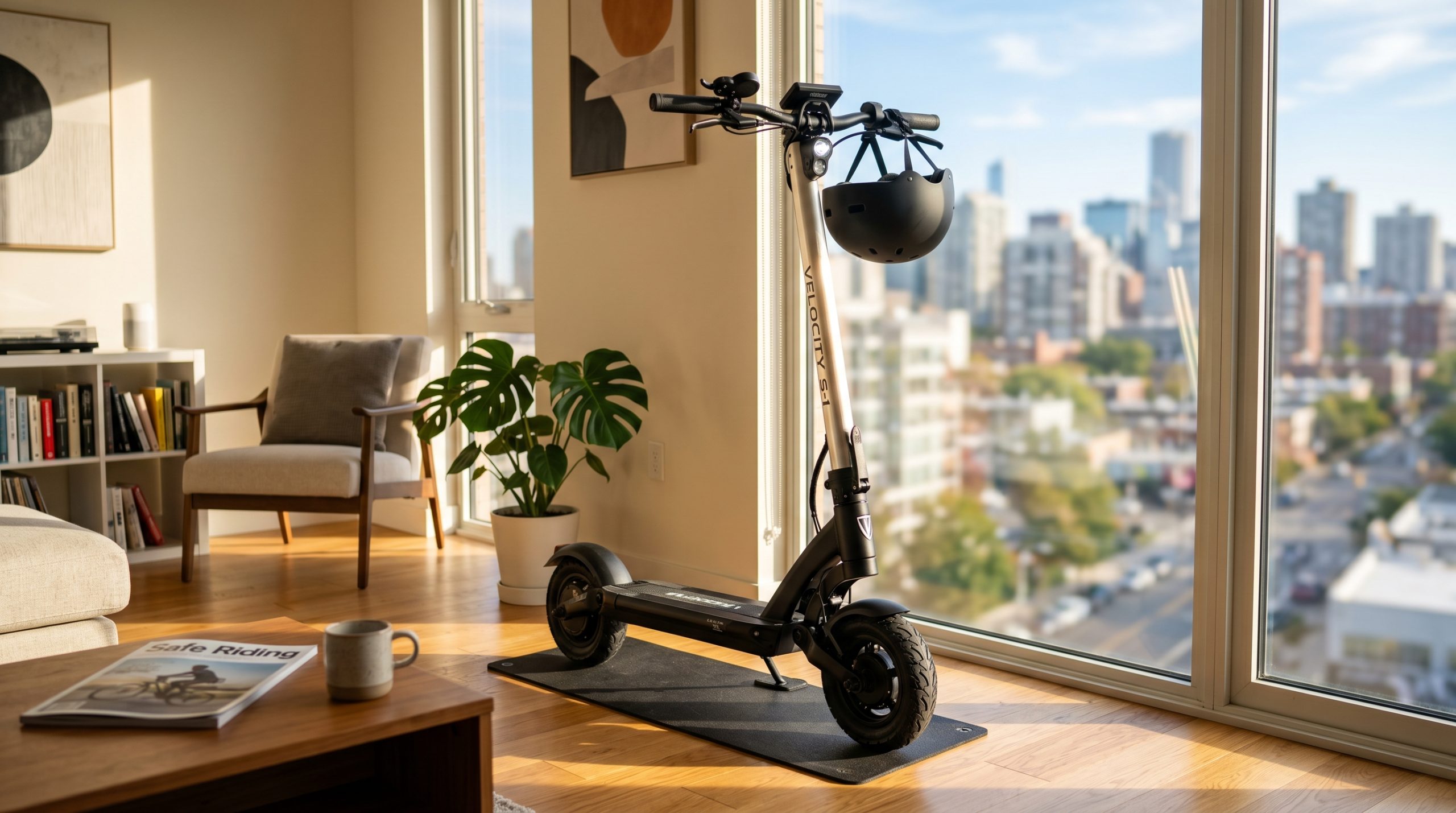
| Living Room Corner | High | Ventilated and monitored |
| Hallway/Exit | Low | Blocks escape routes |
| Damp Basement | Low | Corrosion and moisture risk |
Careful placement of your scooter ensures that it remains a tool for mobility rather than a safety obstacle.
Does physical damage cause battery fires?
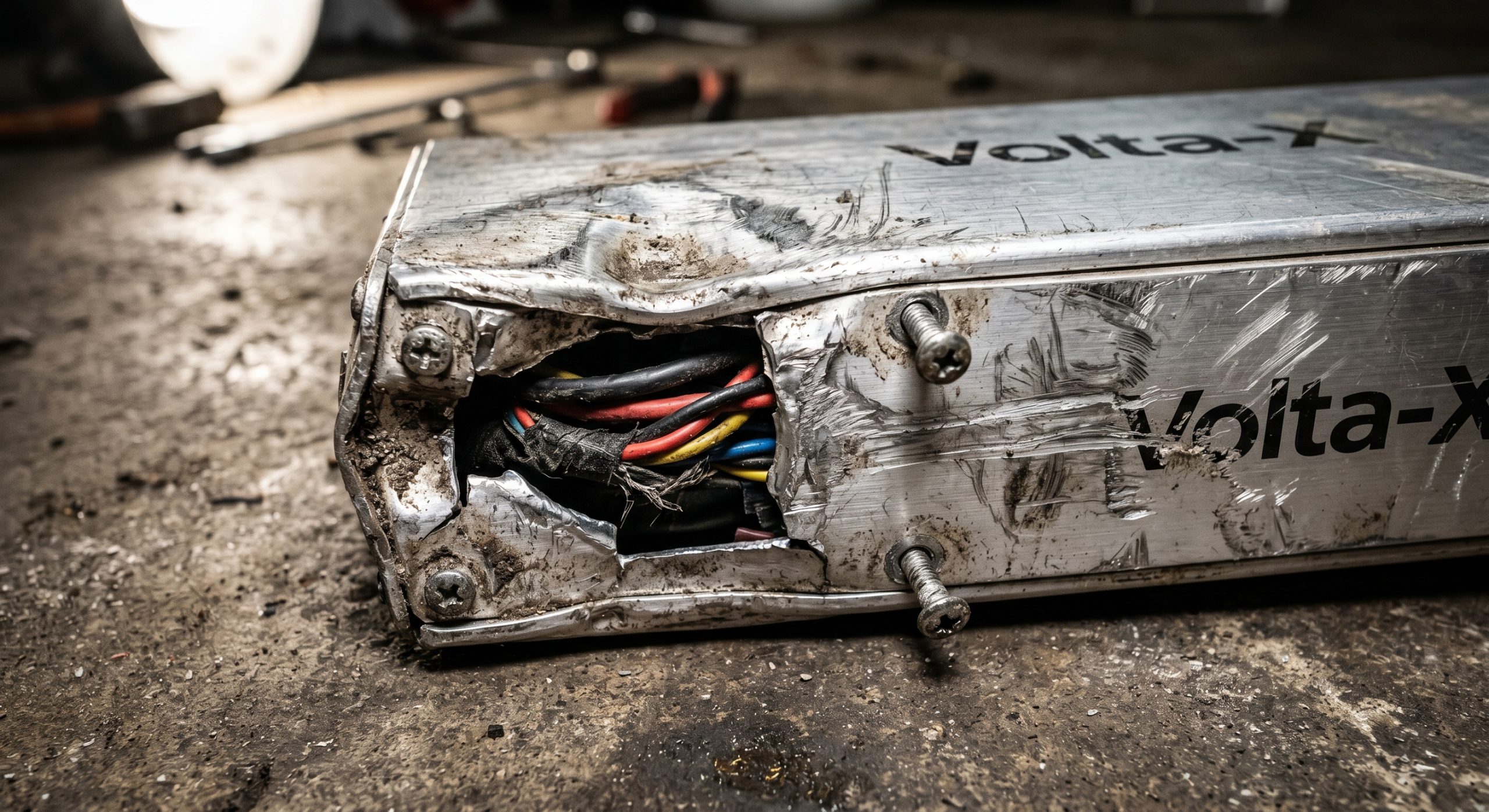
Severe impacts or punctures to the battery casing are direct precursors to electric scooter battery fires. When you hit a curb or drop your scooter, the shock can displace the internal lithium cells or tear the protective wrapping. Even if the scooter seems fine externally, the internal damage can lead to a fire hours or days later.
What happens during an impact?
During a heavy impact, the physical force can crush the delicate layers inside a battery cell. This allows the positive and negative electrodes to touch, creating an immediate and intense short circuit.
Check this out:
- Deformed decks are a sign of internal battery pressure.
- Rattling sounds suggest that cells have come loose.
- Deep scratches on the bottom of the deck can expose wiring.
Here is the kicker: internal damage is often invisible to the naked eye but highly volatile.
Should you ride after a crash?
You should never ride or charge a scooter that has sustained a major impact until it has been inspected by a professional. The chemical reaction from a puncture can be slow, meaning the fire might not start until the battery is under the stress of charging.
Think about it:
- A “latent” fault can hide for several days.
- Charging a damaged battery is the most common trigger for ignition.
- Professional diagnostics can detect high internal resistance.
Key Takeaway: Treat every major impact as a potential fire hazard and seek professional inspection immediately.
| Damage Type | Visual Sign | Required Action |
|---|---|---|
| Puncture | Holes or deep gashes | Immediate replacement |
| Dent | Warped battery casing | Professional inspection |
| Internal Looseness | Rattling sounds | Stop use immediately |
Physical integrity is the shell that keeps the chemical energy of your scooter safely contained.

How can temperature spark a battery fire?
Extreme heat or freezing conditions destabilize the chemical balance inside the cells, often resulting in electric scooter battery fires. Lithium-ion batteries have a specific “comfort zone” for both operation and storage. When pushed outside these limits, the chemicals can break down or become overly reactive.
Why does heat cause failure?
Excessive heat accelerates the chemical reactions inside the battery, leading to a buildup of pressure and gas. If this gas cannot escape, the cell casing can burst, leading to an immediate fire.
Now:
- Direct sunlight can raise deck temperatures significantly.
- High-speed riding in hot weather stresses the cooling system.
- Hot storage environments prevent the battery from shedding heat.
The best part? Simply parking in the shade can extend your battery’s life by years.
Is cold weather dangerous too?
While cold weather is less likely to cause a fire, charging a frozen battery can cause permanent damage that leads to future instability. Lithium “plating” occurs more easily in the cold, creating those dangerous internal spikes.
It gets better:
- Letting your scooter warm to room temperature is essential.
- Never charge a battery that has been stored below freezing.
- Insulation wraps can help maintain battery health in winter.
Key Takeaway: Maintaining your battery within a moderate temperature range is crucial for preventing long-term chemical degradation.
| Temp Range | Effect on Battery | Safety Status |
|---|---|---|
| 50°F – 80°F | Optimal performance | Very Safe |
| Above 100°F | Gas buildup and stress | Risky |
| Below 32°F | Lithium plating during charge | High Risk (if charging) |
Respecting the thermal limits of your scooter is one of the easiest ways to ensure a safe ride.
What are the warning signs of a battery fire?
Bulging cases, strange odors, and excessive heat are critical warning signs of impending electric scooter battery fires. Your scooter will often give you clues that something is wrong before flames actually appear. Learning to recognize these red flags can give you the precious seconds needed to move the device to a safe location.
What does a failing battery smell like?
A failing lithium battery often emits a sweet, metallic, or chemical odor that is quite distinct. This is the smell of the electrolyte leaking or outgassing due to internal heat.
Check this out:
- Odors often appear during the charging process.
- Smoke may accompany the smell in later stages.
- The scent can linger in the air even after the scooter is moved.
Bottom line? If your scooter smells like a chemistry lab, stop using it immediately.
Can you see physical changes?
You can often see the battery housing start to “bloat” or swell as internal gases expand. If your deck looks slightly rounded or if the plastic casing feels tight, the battery is in a dangerous state.
Believe it or not:
- Swelling can cause the deck cover to pop off.
- Discoloration of the paint suggests extreme heat.
- Hissing sounds indicate that pressure is escaping the cells.
Key Takeaway: Trust your senses—smell, sight, and sound are your best tools for detecting a failing battery.
| Sign | Sensory Input | Urgency |
|---|---|---|
| Swelling | Visual/Touch | Critical |
| Chemical Odor | Smell | Extreme |
| Hissing Sound | Sound | Immediate |
Never ignore the warning signs your scooter provides; they are the final warnings before a failure.

Why do cheap chargers risk battery fires?
Low-quality chargers lack voltage regulation features, which leads to overvolting and eventual electric scooter battery fires. Many budget-friendly replacement chargers found online do not have the necessary safety certifications. These devices may provide the wrong amperage or fail to stop charging when the battery is full.
Do certifications actually matter?
Certifications like UL or CE ensure that the charger has been tested to handle electrical surges and prevent overheating. A cheap charger without these marks is an unregulated gamble with your safety.
Here is the kicker:
- Uncertified chargers often use thin, low-grade wiring.
- They may lack thermal cut-off switches.
- Inconsistent power output damages battery cells over time.
Think about it: saving twenty dollars on a charger isn’t worth losing your entire home.
Can you use a friend’s charger?
You should only use a charger that matches the specific voltage and connector type of your scooter. Even if the plug fits, a charger meant for a higher-voltage system will force too much energy into your battery.
Now:
- Mismatched voltage causes immediate cell damage.
- Amperage that is too high generates excessive heat.
- Different brands use different pin configurations for safety.
Key Takeaway: Only use original, certified charging equipment to ensure the power entering your battery is stable and safe.
| Charger Type | Safety Features | Recommendation |
|---|---|---|
| Original OEM | Full regulation and cut-off | Best Choice |
| Certified Third-Party | Standard safety testing | Acceptable |
| No-Name Budget | No regulation or testing | Dangerous |
Investing in high-quality charging equipment is the most effective way to protect your battery’s long-term health.
What should you do during a battery fire?
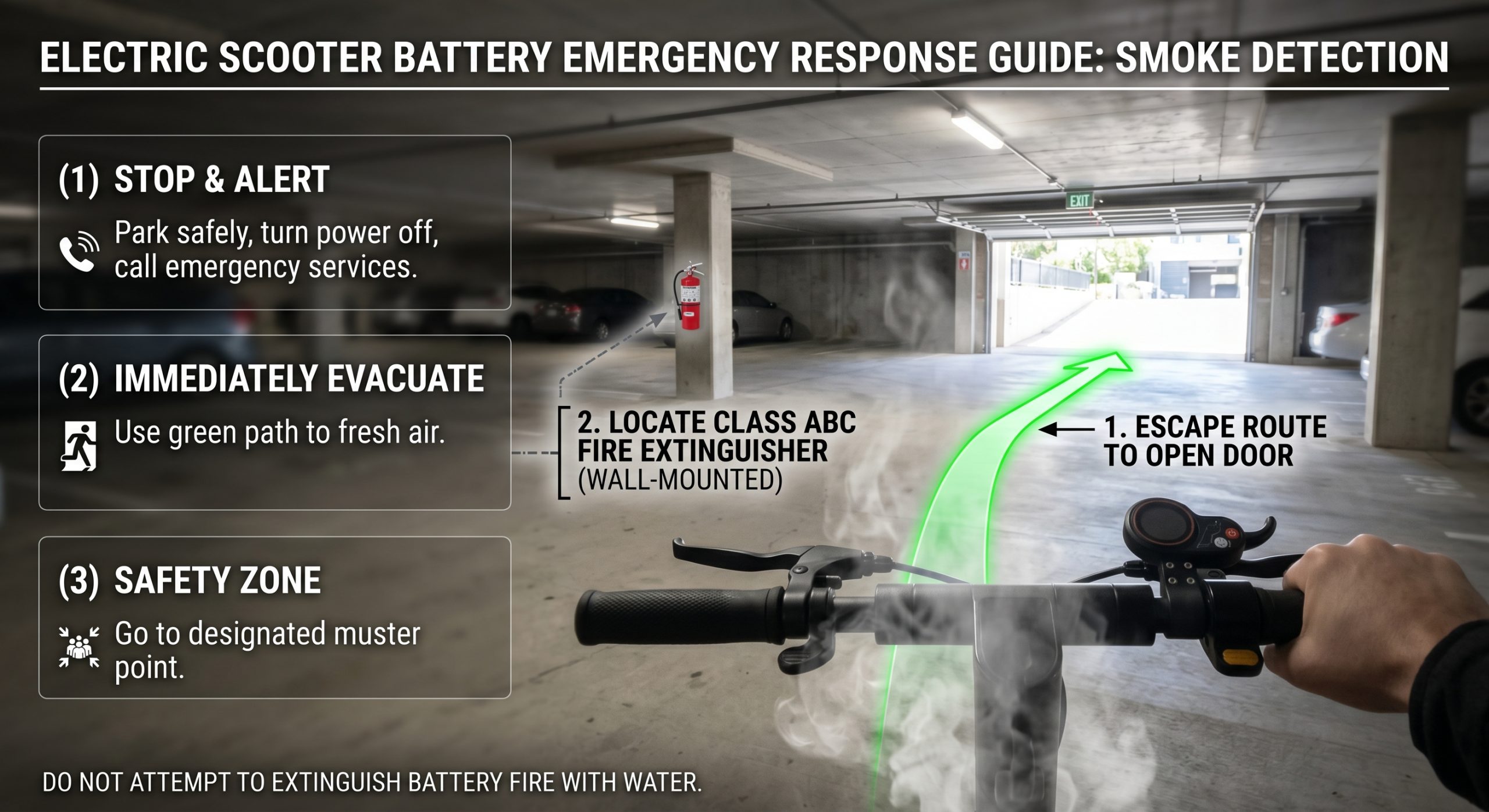
You must immediately move the device to an open area and use a fire extinguisher specifically rated for electric scooter battery fires. If a fire starts, every second counts, and having a plan in place is the difference between a small incident and a total loss. Lithium fires are unique because they provide their own oxygen, making them very difficult to put out with water alone.
How do you move a burning scooter?
If you can safely do so, use a non-flammable tool or heavy gloves to move the scooter outside. If the smoke is thick or flames are high, do not attempt to touch it and focus entirely on evacuation.
Make no mistake:
- Toxic fumes are just as dangerous as the flames.
- Battery cells can “pop” and fly like projectiles.
- Keeping a clear path to the door is vital for emergency exit.
Check this out: many people keep a fire-suppression blanket nearby for exactly this scenario.
Should you call the fire department?
You should always call emergency services immediately, even if the fire looks small. Professional firefighters have the equipment and training to handle the intense heat and toxic runoff of a lithium-ion fire.
But wait, there’s more:
- Firefighters can ensure the fire hasn’t spread behind walls.
- They have thermal cameras to check for hidden hot spots.
- Professional cleanup is required for the toxic residue.
Key Takeaway: Safety first—evacuate the area, call for professional help, and never prioritize property over your life.
| Step | Action | Priority |
|---|---|---|
| Evacuate | Get everyone out of the building | 1 |
| Call 911 | Alert emergency services | 2 |
| Suppress | Use a Class ABC or D extinguisher | 3 (If safe) |
Having an emergency plan ensures that you remain calm and effective if the worst-case scenario occurs.
Are certified batteries safer from fires?
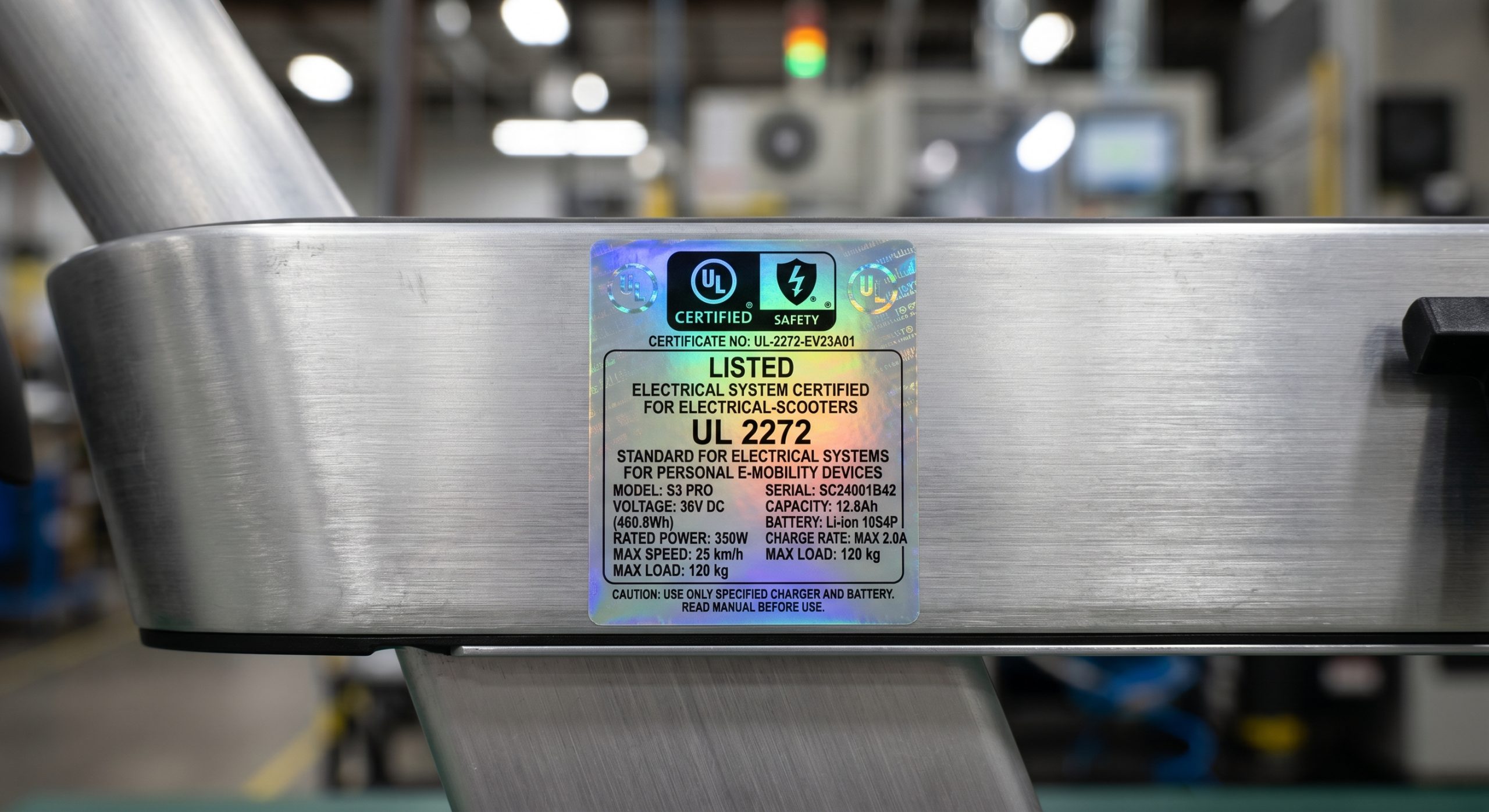
Batteries with UL 2271 or UL 2272 certification undergo rigorous testing to prevent electric scooter battery fires. These standards are the gold standard in the industry, proving that the device can withstand electrical, mechanical, and environmental stress. Choosing a scooter with these certifications is the single most important decision you can make as a consumer.
What is the UL 2272 standard?
The UL 2272 standard focuses specifically on the electrical system of personal e-mobility devices. It tests the battery, the charger, and the internal wiring as a single, cohesive system.
The best part?
- It includes “overcharge” and “short circuit” testing.
- The housing must pass a “crush” and “impact” test.
- The system is subjected to extreme temperature cycles.
Believe it or not, many cities are now making these certifications mandatory for all e-scooters.
Are there other safety marks?
While UL is the most recognized in North America, other marks like CE and RoHS also indicate that a product meets specific safety and environmental standards. However, for battery-specific safety, the UL 2271 and 2272 marks are the most comprehensive.
It gets better:
- RoHS ensures no hazardous materials like lead are used.
- CE indicates compliance with European safety regulations.
- IP ratings tell you how well the battery is protected from water.
Key Takeaway: Always look for UL 2271 or 2272 stickers on the battery and charger before making a purchase.
| Certification | Focus Area | Importance |
|---|---|---|
| UL 2272 | Total Electrical System | Highest |
| UL 2271 | Battery Pack specifically | High |
| IP54/65 | Water and Dust Resistance | Moderate |
Certification is your guarantee that the manufacturer has prioritized your safety over profit margins.
Smart Ownership for a Safer Future
At Dynamic Scooter, we believe that personal mobility should never come at the cost of personal safety. Our commitment is to provide high-quality, reliable transportation solutions that integrate the latest safety standards and battery technologies.
By choosing a reputable brand and following the safety guidelines outlined in this guide, you can enjoy the many benefits of electric scooting with total peace of mind. We are dedicated to a greener, safer future where every rider feels confident in their equipment. To learn more about our safety-first approach or to explore our latest models, contact us today and join our community of responsible riders.
Frequently Asked Questions
Can I leave my scooter to charge while I run errands?
No, you should never leave a charging scooter unattended. If a malfunction occurs, you need to be present to disconnect the power and move the device to a safe area.
How do I know if my scooter is UL-certified?
Look for a holographic or permanent UL 2272 or UL 2271 sticker on the bottom of the deck or near the charging port. You can also verify the certification on the manufacturer’s official website.
Can I put out a battery fire with a bucket of water?
No, water can actually react with lithium and make the fire more intense or cause an explosion. Use a fire extinguisher rated for electrical fires or a specialized fire blanket instead.
Is it safe to ride my scooter in the rain?
Most scooters are only water-resistant, not waterproof, so riding in heavy rain can lead to moisture ingress. If the battery compartment gets wet, it can cause short circuits and eventual fire risks.
How often should I replace my scooter’s battery?
Generally, lithium-ion batteries should be replaced every 2 to 3 years or after 300-500 charge cycles. If you notice a significant drop in range or the battery getting unusually hot, it is time for a replacement.