
Frustrated by misleading electric scooter speed claims? Manufacturers advertise 25 km/h, but real speeds disappoint, causing missed appointments and wasted time. Discover the truth about scooter speeds in this guide, revealing all factors affecting performance and how to choose a scooter that delivers on promises.
Electric scooter speeds vary significantly based on motor power, battery voltage, rider weight, and terrain conditions. Entry-level models typically reach 10-15 mph (16-24 km/h), mid-range scooters achieve 15-25 mph (24-40 km/h), while high-performance models can exceed 40 mph (64 km/h). Understanding these factors helps set realistic expectations and ensures you select a scooter that meets your specific speed requirements.
Want to know what really determines how fast your electric scooter can go? Let’s dive into the key factors that make all the difference in your riding experience.
1. What Determines the Speed of an Electric Scooter?
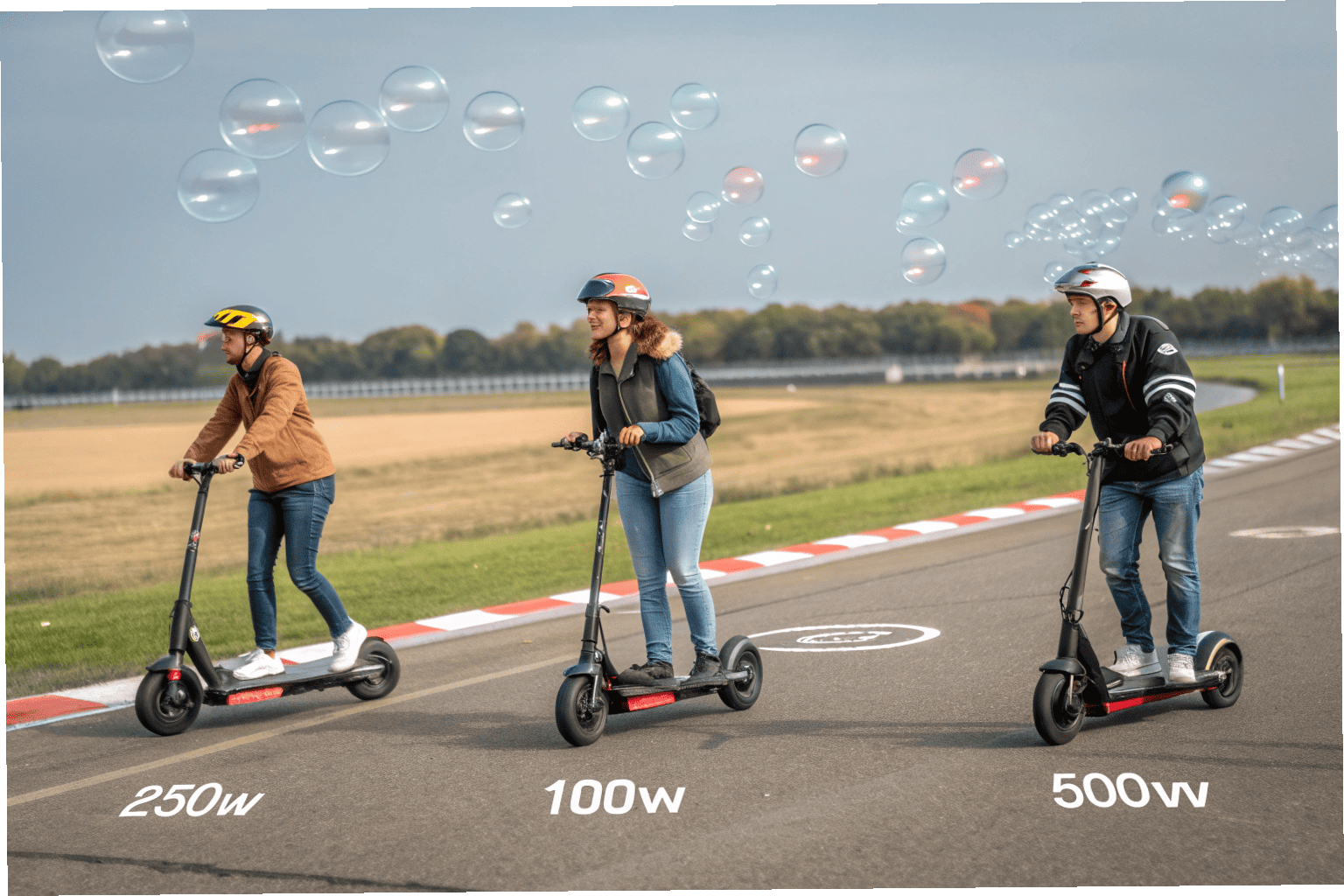
Motor power stands as perhaps the most significant factor affecting your scooter’s speed capabilities. Measured in watts, motor power typically ranges from 250W in basic models to over 5000W in premium performance scooters. Higher wattage generally translates to faster acceleration and higher top speeds.
Battery voltage plays an equally crucial role. Here’s something many riders overlook – voltage directly correlates with speed capability, while amp-hours (Ah) relates more to range.
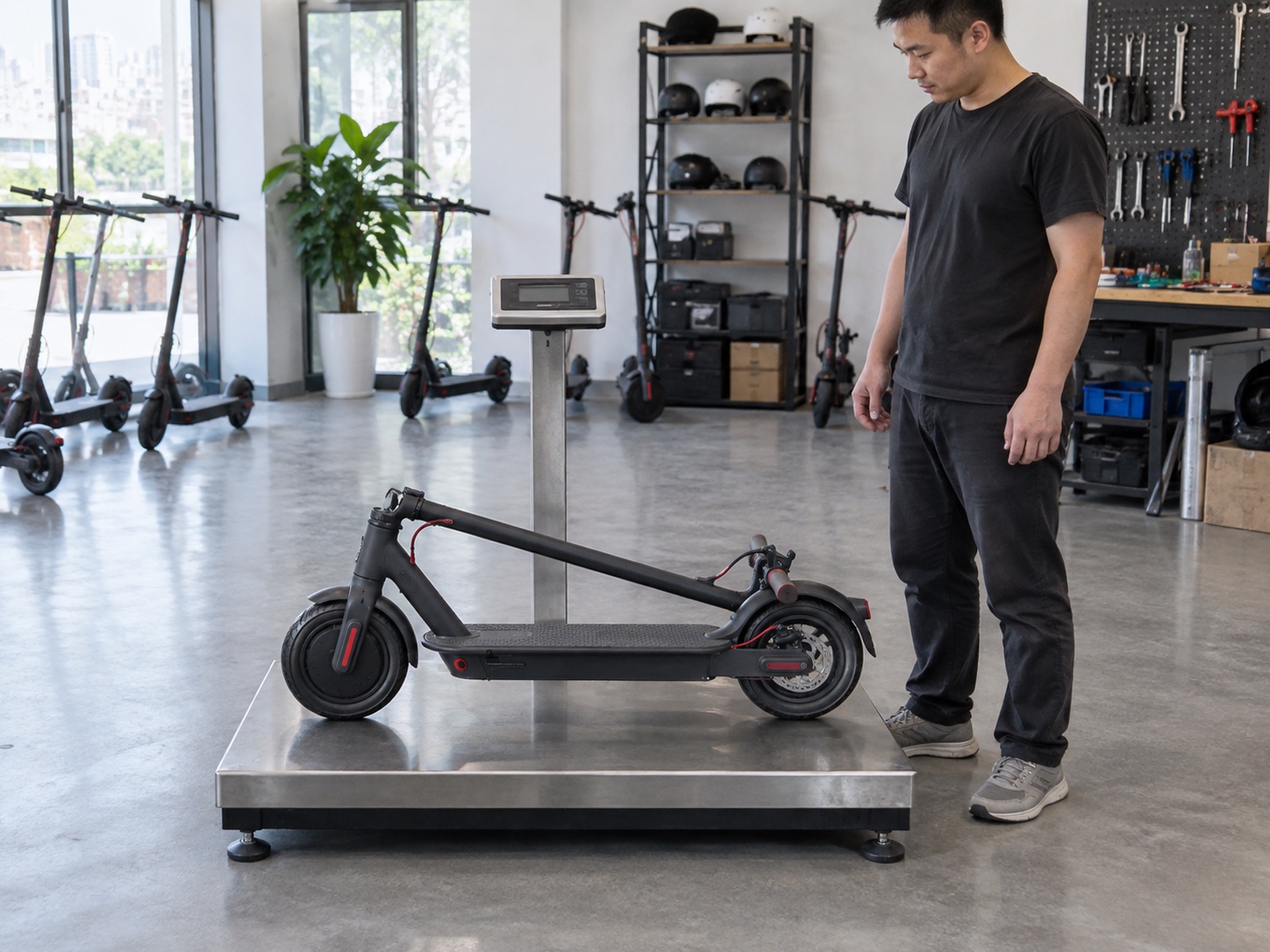
Rider weight significantly impacts actual speed achievement. A 180-pound rider might experience notably faster acceleration and higher top speeds than a 220-pound rider on the same scooter model.
| Factor | Impact on Speed | Example |
|---|---|---|
| Motor Power | Higher wattage = faster speeds | 250W ≈ 15 mph, 500W ≈ 20 mph |
| Battery Voltage | Higher voltage = faster speeds | 24V < 36V < 48V < 60V |
| Rider Weight | Heavier riders = reduced speed | 180 lbs vs. 220 lbs = ~15% speed difference |
| Terrain | Hills and rough surfaces = slower speeds | 15 mph on flat vs. 10 mph on inclines |
| Controller Settings | Eco mode = reduced speed | Sport mode vs. Eco mode = ~30% difference |
2. What Are the Average Speeds of Different Electric Scooter Types?
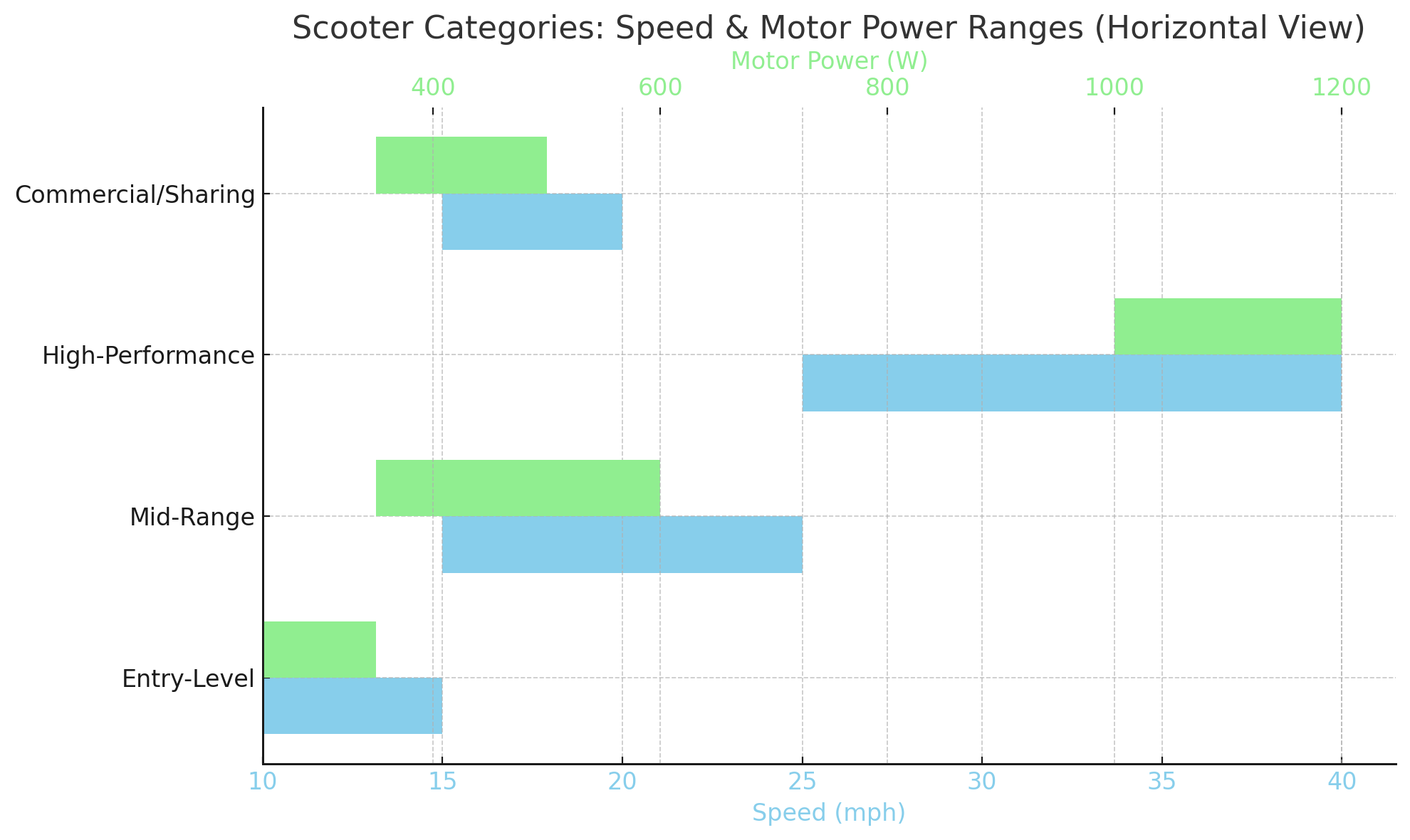
When shopping for an electric scooter, understanding the speed capabilities across different categories helps set realistic expectations. Let me break this down for you – electric scooters generally fall into distinct categories based on their performance characteristics.
Entry-level electric scooters typically reach speeds between 10-15 mph (16-24 km/h), making them perfect for casual riders, beginners, or shorter commutes. These models usually feature motors in the 250-350W range and smaller batteries.
Mid-range electric scooters, including the Dynamic Scooter Model B, offer speeds between 15-25 mph (24-40 km/h), striking an excellent balance between performance and practicality. You might wonder why this range is so popular – it provides enough speed to keep up with urban traffic while remaining manageable for most riders.
High-performance electric scooters push the boundaries with speeds ranging from 25-40+ mph (40-65+ km/h), catering to thrill-seekers and long-distance commuters.
| Scooter Category | Speed Range | Typical Motor Power | Best Use Case |
|---|---|---|---|
| Entry-Level | 10-15 mph (16-24 km/h) | 250-350W | Short commutes, beginners |
| Mid-Range | 15-25 mph (24-40 km/h) | 350-600W | Daily commuting, versatile use |
| High-Performance | 25-40+ mph (40-65+ km/h) | 1000W+ | Long commutes, enthusiasts |
| Commercial/Sharing | 15-20 mph (24-32 km/h) | 350-500W | Urban sharing programs |
3. How Do Motor Types Affect Electric Scooter Speed?
The heart of any electric scooter lies in its motor, and the type of motor dramatically influences speed capabilities. You might not realize this, but motor configuration choices impact everything from acceleration to hill-climbing ability.
Hub motors represent the most common design in modern electric scooters, with the motor integrated directly into the wheel hub. This elegant solution eliminates the need for chains, belts, or gears, reducing maintenance requirements. The Dynamic Scooter Model B utilizes an optimized hub motor design.
Chain or belt-driven motors, though less common, offer distinct advantages for speed enthusiasts. These systems mount the motor separately from the wheel, transferring power through a chain or belt connection.
Single versus dual motor configurations represent another critical choice affecting speed potential. Here’s something worth noting – dual motor setups don’t just double your speed; they transform the entire riding experience.
| Motor Characteristic | Speed Impact | Acceleration Impact | Typical Applications |
|---|---|---|---|
| Hub Motor (Direct Drive) | Higher top speeds | Moderate acceleration | Mid to high-end commuter scooters |
| Hub Motor (Geared) | Moderate top speeds | Excellent acceleration | Portable commuter scooters |
| Chain/Belt Drive | Highest potential speeds | Very strong acceleration | Performance/off-road scooters |
| Single Motor | Moderate speeds | Standard acceleration | Entry to mid-range models |
| Dual Motors | Similar top speed, better maintained on hills | Much stronger acceleration | Performance models |
4. What Role Does Battery Technology Play in Scooter Speed?
Battery technology serves as the unsung hero in electric scooter performance. Many riders don’t appreciate that battery specifications affect speed just as much as motor ratings.
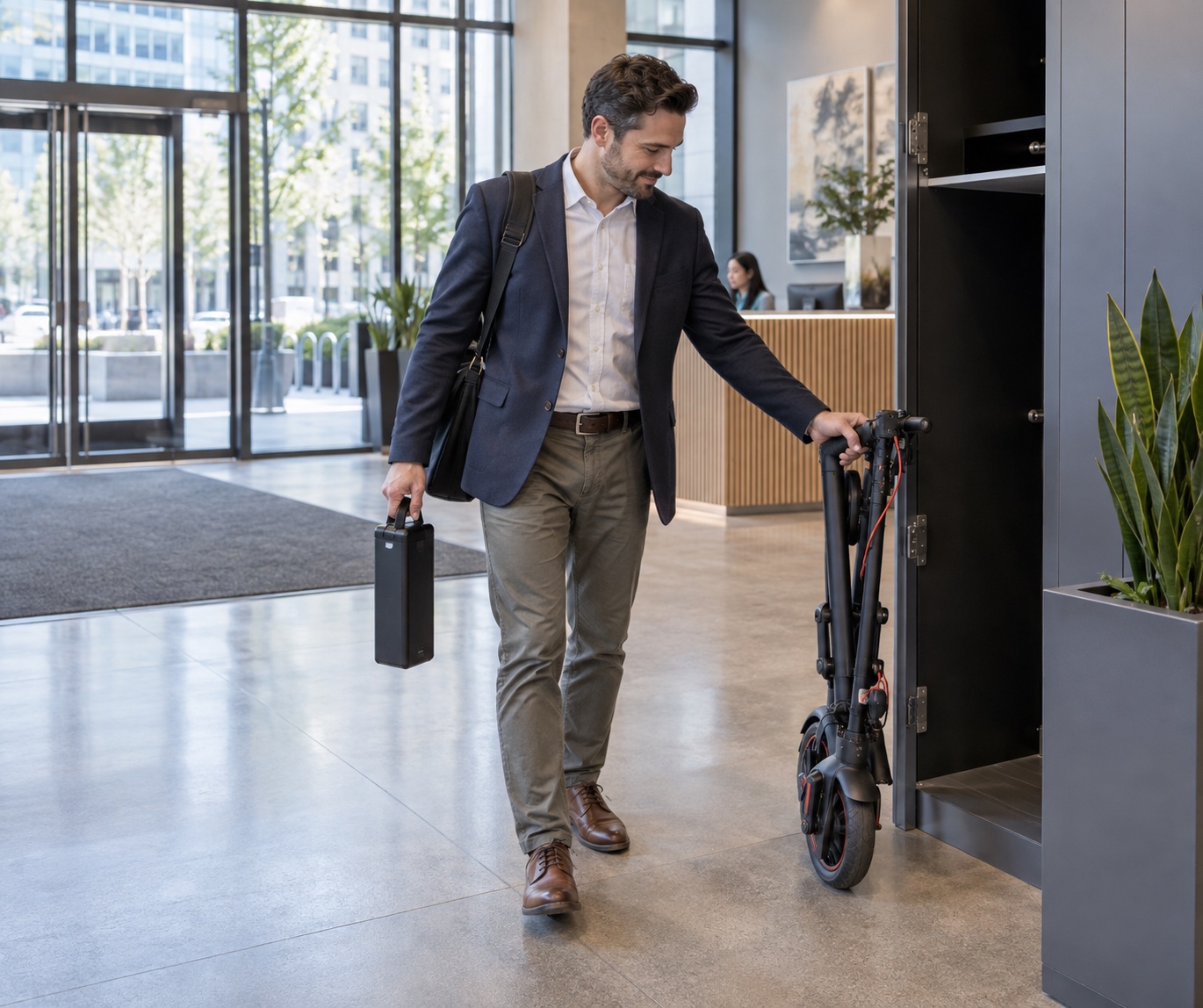
Lithium-ion batteries dominate the modern electric scooter market, having largely replaced older lead-acid technology due to their superior energy density, lighter weight, and longer lifespan. The Dynamic Scooter Model B features a detachable lithium-ion battery, combining performance with convenience for urban commuters.
Battery voltage represents perhaps the most direct battery-related factor affecting speed potential. Here’s what makes this fascinating – voltage essentially sets the ceiling for how fast your motor can spin, regardless of its power rating.
Battery capacity, measured in amp-hours (Ah), primarily affects range rather than top speed, but indirectly influences sustained speed performance.
| Battery Aspect | Impact on Speed | Example Comparison | Considerations |
|---|---|---|---|
| Battery Chemistry | Lithium-ion maintains speed longer | Li-ion maintains top speed for ~80% of discharge vs. ~50% for lead-acid | Weight, cost, lifespan |
| Voltage | Higher voltage = higher top speed | 36V vs. 48V: ~20% speed increase | Controller compatibility, safety |
| Capacity (Ah) | Larger capacity = more consistent speed | 10Ah vs. 5Ah: Similar top speed but better sustained performance | Weight, charging time, cost |
| Battery Age | Newer batteries = better speed maintenance | New vs. 500 cycles: Up to 15% difference | Replacement cost |
5. How Do Weight and Load Capacity Affect Maximum Speed?
The relationship between weight, load capacity, and electric scooter performance represents one of the most significant yet frequently underestimated factors affecting real-world speed. What many buyers fail to consider is that manufacturer speed ratings typically reflect testing under optimal conditions with lighter riders.
Rider weight impacts electric scooter performance through basic physics – more mass requires more energy to accelerate and maintain speed. Most manufacturers test their scooters with riders weighing between 150-170 pounds (68-77 kg). A 220-pound rider might experience top speeds 10-15% lower than advertised.
| Rider Weight | Typical Speed Impact | Acceleration Impact | Range Impact |
|---|---|---|---|
| 150 lbs (68 kg) | Achieves advertised speed | Quick, responsive | Achieves advertised range |
| 180 lbs (82 kg) | 0-5% reduction | Slightly reduced | 5-10% reduction |
| 220 lbs (100 kg) | 5-15% reduction | Moderately reduced | 10-20% reduction |
| 250+ lbs (113+ kg) | 15-25% reduction | Significantly reduced | 20-30% reduction |
| With 10 lb cargo | Additional 2-3% reduction | Slightly reduced | Additional 3-5% reduction |

6. What Legal Speed Limits Exist for Electric Scooters?
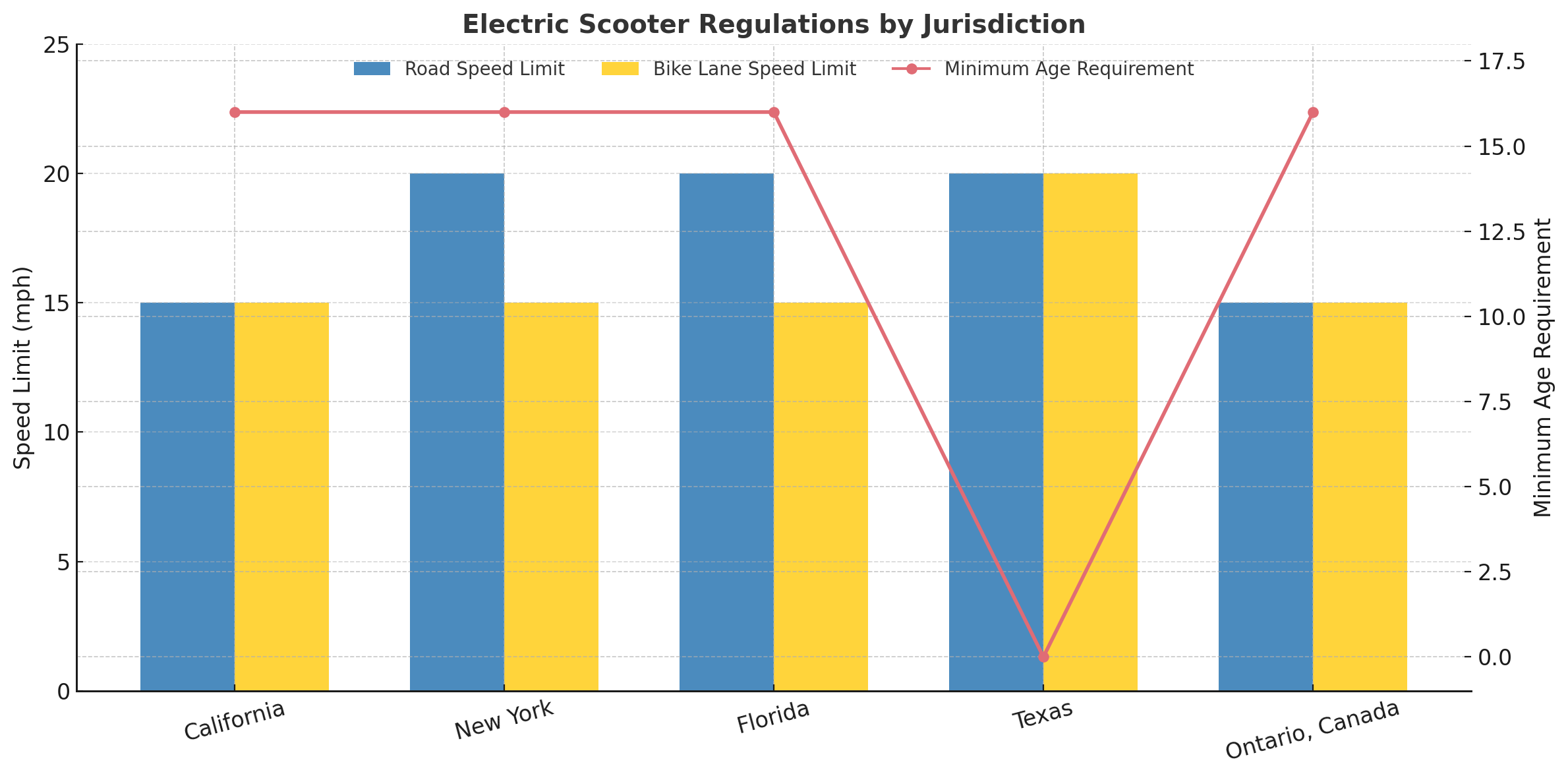
Navigating the complex landscape of electric scooter regulations can prove challenging, as legal speed limits vary dramatically across different jurisdictions. You might be surprised to learn that your scooter’s technical capabilities often exceed what’s legally permitted on public roads and pathways.
United States regulations regarding electric scooter speeds lack federal uniformity, creating a patchwork of state and local rules. Most states that have enacted specific electric scooter legislation cap speeds between 15-20 mph (24-32 km/h) on public roads and bike lanes. California limits electric scooters to 15 mph on roads with speed limits up to 25 mph.
Canadian regulations follow a similar pattern of regional variation. Most Canadian jurisdictions limit electric scooters to 24-32 km/h (15-20 mph), aligning closely with bicycle regulations.
| Jurisdiction | Road Speed Limit | Bike Lane Speed Limit | Sidewalk Riding | Age Restrictions |
|---|---|---|---|---|
| California | 15 mph | 15 mph | Prohibited in most cities | 16+ years |
| New York | 20 mph | 15 mph | Prohibited | 16+ years |
| Florida | 20 mph | 15 mph | Varies by city | 16+ years |
| Texas | 20 mph | 20 mph | Varies by city | No state minimum |
| Ontario, Canada | 24 km/h (15 mph) | 24 km/h (15 mph) | Prohibited | 16+ years |
7. How Can You Increase Your Electric Scooter’s Speed Safely?
While many riders focus on purchasing the fastest scooter they can afford, few people realize that proper maintenance and optimization can significantly improve performance on any model.
Proper maintenance stands as perhaps the most overlooked yet effective method for maintaining peak speed performance. Regular inspection and cleaning of mechanical components prevent the friction and resistance that can subtly reduce top speed over time.
Tire pressure optimization represents one of the simplest yet most effective speed-enhancing techniques. Most electric scooters perform best at the higher end of their recommended pressure range when riding on smooth surfaces.
| Optimization Method | Potential Speed Improvement | Difficulty Level |
|---|---|---|
| Bearing Maintenance | 3-5% | Low |
| Tire Pressure Optimization | 5-10% | Very Low |
| Weight Reduction | 3-8% depending on amount | Low |
| Battery Optimization | 5-15% in latter half of rides | Medium |
8. What Safety Features Are Essential at Higher Speeds?
As electric scooters continue evolving toward higher performance capabilities, safety features become increasingly critical for rider protection. What many new riders underestimate is how dramatically stopping distances and accident severity increase with even modest speed increases.
Braking systems represent the most critical safety component for faster electric scooters. Mechanical drum brakes provide adequate stopping power at lower speeds but may prove insufficient above 15 mph. Disc brakes offer substantially improved stopping power and modulation.
| Speed Range | Recommended Braking System | Suspension Importance | Lighting Requirements | Recommended Safety Gear |
|---|---|---|---|---|
| Under 15 mph | Single brake system | Basic or none | Front light, rear reflector | Bicycle helmet |
| 15-20 mph | Dual brake system | Front suspension recommended | Front light, brake light, reflectors | Bicycle helmet, gloves |
| 20-30 mph | Dual disc brakes or hydraulic systems | Full suspension highly recommended | High-output front light, brake light, turn signals | Full-face helmet, gloves, knee/elbow protection |
9. How Does Terrain Affect Electric Scooter Speed?
The relationship between terrain conditions and electric scooter performance often surprises new riders. What catches many people off guard is how dramatically the same scooter can perform differently depending on the surface and incline.
Flat versus inclined surfaces create perhaps the most noticeable terrain-related speed variations. When encountering hills, electric scooters experience significant speed reductions based on the incline angle and the scooter’s power-to-weight ratio. A scooter capable of 15 mph on flat ground might manage only 7-8 mph on a moderate 5-degree incline.
| Terrain Type | Typical Speed Reduction | Power Consumption Increase | Recommended Tire Pressure |
|---|---|---|---|
| Smooth Pavement | None (baseline) | None (baseline) | Higher end of range |
| Rough Pavement | 10-15% | 15-20% | Middle of range |
| Packed Dirt/Gravel | 20-30% | 30-40% | Lower end of range |
| Wet Surfaces | 25-35% (safety) | 10-15% | Lower end of range |
| 5° Incline | 30-40% | 50-100% | Standard recommendation |

10. What’s the Relationship Between Speed and Battery Range?
The intricate balance between speed and range represents one of the most important yet frequently misunderstood aspects of electric scooter performance. Here’s something counterintuitive – doubling your speed can reduce your range by more than half due to the non-linear relationship between speed and power consumption.
Speed versus range tradeoffs stem from basic physics – air resistance increases exponentially with speed, not linearly. At lower speeds (under 10 mph), air resistance plays a minimal role, and power consumption remains relatively proportional to speed. However, as speeds increase beyond 15 mph, air resistance becomes the dominant factor affecting energy consumption.
| Riding Speed | Typical Range Impact | Energy Consumption | Practical Application |
|---|---|---|---|
| 5-8 mph (8-13 km/h) | 150-200% of rated range | Very efficient | Maximum range needed |
| 8-12 mph (13-19 km/h) | 100-150% of rated range | Optimal efficiency | Balanced range/speed |
| 12-15 mph (19-24 km/h) | 70-100% of rated range | Moderately efficient | Typical commuting |
| 15-20 mph (24-32 km/h) | 50-70% of rated range | Less efficient | Faster commuting |
| 20+ mph (32+ km/h) | 30-50% of rated range | Least efficient | Maximum speed priority |
11. How Do Electric Scooters Compare to Other Transportation Methods?
When evaluating electric scooters as a transportation option, speed comparisons with alternative modes provide valuable context. What might surprise you is how favorably mid-range electric scooters compare to traditional transportation methods in urban environments.
Traditional bicycles typically achieve average speeds of 10-14 mph in urban environments, comparable to entry-level and mid-range electric scooters. However, electric scooters offer the advantage of consistent speed without physical exertion.
While subway systems and express buses achieve higher maximum speeds, their fixed routes and schedules often result in surprisingly comparable total journey times for trips under 3 miles.
| Transportation Method | Average Urban Speed | Maximum Speed | Best Use Case |
|---|---|---|---|
| Electric Scooter (Mid-Range) | 10-15 mph | 15-25 mph | 1-5 mile trips, mixed-mode commuting |
| Traditional Bicycle | 10-14 mph | Rider dependent | 1-10 mile trips, exercise-focused commuting |
| Electric Bicycle | 15-20 mph | 20-28 mph | 3-15 mile trips, longer commutes |
| Public Bus | 8-12 mph (including stops) | 25-35 mph | Longer trips, fixed commute routes |
| Personal Car | 15-20 mph (urban average) | 65+ mph | Longer trips, cargo needs, multiple passengers |
12. What Future Technologies Might Increase Electric Scooter Speeds?
The electric scooter industry continues evolving rapidly, with several emerging technologies poised to redefine performance capabilities. You might find it hard to believe that today’s cutting-edge scooters may seem quaint compared to what’s on the horizon.
Emerging battery technologies represent perhaps the most promising avenue for significant performance improvements. Solid-state batteries offer energy densities 2-3 times greater than current lithium-ion technology while providing higher discharge rates that directly translate to improved acceleration and sustained speed capabilities.
| Emerging Technology | Potential Speed Impact | Timeline | Current Development Stage |
|---|---|---|---|
| Solid-State Batteries | 20-40% increase | 3-5 years | Early commercialization |
| Axial Flux Motors | 15-30% increase | 2-4 years | Commercial in premium applications |
| AI-Based Control Systems | 10-20% increase in appropriate conditions | 1-3 years | Advanced prototype stage |
| Carbon Fiber Structures | 5-15% increase | Current-2 years | Available in premium models |
| Graphene-Enhanced Batteries | 30-50% increase | 3-7 years | Laboratory to prototype transition |

FAQ Section
Q1: What is the average top speed of an electric scooter? The average top speed of consumer electric scooters ranges from 15-20 mph (24-32 km/h), though entry-level models typically reach 10-15 mph (16-24 km/h) while high-performance models can exceed 40 mph (64 km/h).
Q2: How does rider weight affect electric scooter speed? Rider weight significantly impacts electric scooter performance. Heavier riders may experience reduced top speeds, slower acceleration, decreased range, and diminished hill-climbing ability. Most manufacturers specify a maximum weight capacity.
Q3: Are there speed limits for electric scooters in the US and Canada? Yes, speed limits for electric scooters vary by location. In many US states, electric scooters are limited to 15-20 mph on roads and bike lanes. Canadian regulations typically cap speeds at 24-32 km/h (15-20 mph).
Q4: Can I modify my electric scooter to go faster? While technically possible through controller modifications, battery upgrades, or motor replacements, increasing your electric scooter’s speed beyond manufacturer specifications may void warranties, compromise safety features, and potentially violate local regulations.
Q5: How do I maximize my electric scooter’s range without sacrificing speed? To optimize range while maintaining reasonable speed, maintain proper tire pressure, ride on smooth surfaces, avoid frequent stops and starts, keep batteries properly charged, reduce excess weight, and maintain a consistent moderate speed.