Ever wondered what makes your electric scooter zoom down the street without a drop of gas? The technology behind these convenient rides is more fascinating than you might think.
Electric scooters work through a simple but clever system: a battery powers an electric motor, which drives the wheels through a controller that regulates speed based on throttle input. When you press the throttle, electricity flows from the battery through the controller to the motor, creating motion.

I’ve been in the electric scooter business for years now. I’m constantly amazed by how these compact vehicles transform electrical energy into smooth motion. Let me show you what’s happening beneath that sleek exterior of your electric scooter.
Core Components of Electric Scooters
Have you ever taken a moment to think about what’s inside your electric scooter? The technology packed into these compact vehicles is truly impressive.
The core of any electric scooter has three main parts. It has an electric motor that creates motion. It has a battery that stores energy. It has a controller that manages the power flow. These parts work together to create an efficient, clean transportation solution.

Deep Dive into Electric Motors
Electric motors are the heart of any electric scooter. They come in different types, Each type affects performance, efficiency, and ride quality.
The two main motor types in electric scooters are direct current (DC) motors and brushless motors. DC motors are simpler and cost less. They are common in budget-friendly models. Brushless motors cost more but offer better efficiency and higher power output. They also need less maintenance over time.
Motor power is measured in watts (W). Consumer electric scooters typically range from 250W to 1000W+. Higher wattage means more power, faster acceleration, and better hill-climbing ability. At Dynamic Scooter, our Model B has a motor that balances power efficiency with performance needs.
Motor placement also affects the riding experience. Hub motors are built directly into the wheel. This creates a clean design with fewer moving parts. They provide direct drive with no chains or belts. Traditional motors are placed away from the wheels. They connect to wheels using a belt or chain drive system. This setup allows for better gearing options but adds complexity.
Here’s a comparison of motor types found in electric scooters:
| Motor Type | Advantages | Disadvantages | Best For |
|---|---|---|---|
| DC Motor | Inexpensive, simple design | Less efficient, needs more maintenance | Budget scooters, casual use |
| Brushless DC | Highly efficient, longer lifespan, quieter | More expensive | Premium scooters, daily commuting |
| Hub Motor | Clean design, low maintenance, direct drive | Heavier wheels, limited gearing options | Urban commuters wanting reliability |
| Chain/Belt Drive | Better torque through gearing, customizable | More complex, needs more maintenance | Performance-oriented riders |
From my experience developing our Dynamic Scooter line, I’ve found that motor selection is crucial. The right motor determines performance. It affects battery life, maintenance needs, and rider satisfaction. When we developed our flagship model, we tested over 20 different motor setups. We did this before finding the perfect balance of power, efficiency, and reliability that our customers now enjoy.
What Type of Batteries Do Electric Scooters Use?
I hear this question almost daily from customers looking at their first electric scooter. It’s no surprise – battery technology directly affects range, performance, and convenience.
Most modern electric scooters use lithium-ion batteries. These are similar to smartphone batteries but larger. These batteries offer a good balance of energy density, weight, and lifespan. They typically provide 15-40 miles of range depending on capacity, rider weight, and terrain.
Battery capacity is measured in watt-hours (Wh). This is calculated by multiplying voltage by amp-hours. Higher Wh rating means more stored energy and usually longer range. Our Dynamic Scooter Model B has a battery system that maximizes range while keeping weight low.

Battery life is a major concern for many of my customers. Lithium-ion batteries typically last for 300-500 full charge cycles before capacity starts to decrease. With proper care, your scooter battery should provide several years of reliable service. To maximize battery lifespan, I always recommend:
- Avoid complete discharges when possible
- Store your scooter at 40-80% charge when not using it for long periods
- Charge in moderate temperatures (not too hot or cold)
- Use the manufacturer’s charger
The battery management system (BMS) is another critical component many riders overlook. This electronic system monitors and protects the battery from damage. It prevents overcharging, over-discharging, short circuits, and extreme temperatures. A quality BMS extends battery life and ensures safer operation.
Recent developments in battery technology are exciting. We’re seeing advances in solid-state batteries. These offer higher energy density, faster charging, and improved safety. Some manufacturers are also exploring modular battery systems. These allow riders to carry a spare battery or easily swap depleted batteries for charged ones.
I recently tested a prototype scooter with the latest battery technology. The difference was amazing. The range increased by nearly 30% while weight decreased by 15% compared to our previous generation. These advances show that electric scooter capabilities will continue to improve in coming years.
How Do Electric Scooter Controllers Work?
The controller isn’t the most visible part of an electric scooter. But it’s definitely the brain of the operation. Without this crucial piece, your scooter would either not move at all or shoot off at full speed as soon as you turn it on!
An electric scooter controller is a power regulator that sits between the battery and the motor. It reads signals from the throttle. It processes information from various sensors. It precisely controls power flow to the motor. This device ensures smooth acceleration, consistent speed, and efficient battery use.
Controllers vary in complexity based on the scooter model. Basic controllers simply regulate power flow. Advanced ones add features like regenerative braking, multiple riding modes, and sophisticated battery management.

Speed control is one of the controller’s main jobs. When you press the throttle, the controller receives a signal showing how much acceleration you want. It then adjusts power delivery accordingly. It can provide anything from a gentle start to rapid acceleration based on your input. This precise control gives electric scooters their smooth, responsive feel.
Most modern controllers use Pulse Width Modulation (PWM) to regulate power. Rather than simply varying voltage like a dimmer switch, PWM rapidly turns power on and off many times per second. By changing the ratio of “on” time to “off” time, the controller can precisely manage power to the motor. This technique is more efficient and provides better control than older methods.
During my work on our Dynamic Scooter line, I’ve seen how controller calibration can transform the riding experience. Two identical scooters with differently programmed controllers can feel entirely different. One might be jumpy and aggressive while the other delivers smooth, progressive power.
The evolution of intelligent control systems has been impressive. Modern high-end scooters now feature controllers that:
- Adapt to different riding conditions
- Provide multiple user-selectable riding modes (eco, standard, sport)
- Limit power during battery-saving modes
- Connect to smartphone apps for customization
- Collect and analyze ride data
- Implement safety features like anti-theft systems
At Dynamic Scooter, we’ve created a control algorithm that analyzes riding patterns and adjusts power delivery to match each rider’s style. This adaptive system makes the scooter feel more intuitive and responsive while maximizing range and performance.
Braking Principles and How They Work
Stopping might seem simple, but the braking systems on electric scooters are surprisingly sophisticated. Effective braking is crucial for rider safety and control in various situations.
Modern electric scooters typically use a combination of mechanical and electronic braking systems. This dual-brake approach provides backup for safety. It allows for more precise control in different riding conditions.
Mechanical brake systems on electric scooters include disc brakes, drum brakes, and foot brakes. Electronic systems use the motor itself to create resistance. The best electric scooters, including our Dynamic Scooter models, use both systems for optimal safety and performance.
Mechanical braking systems are the most visible and traditional type of brake. Disc brakes are popular in premium electric scooters due to their excellent stopping power and control. They work by squeezing brake pads against a metal disc attached to the wheel. This creates friction that slows the scooter. Disc brakes work well in various weather conditions and provide consistent performance.
Drum brakes are enclosed within the wheel hub and protected from the elements. They offer good durability and require less maintenance than disc brakes. However, they generally provide less stopping power and heat dissipation. These are common on mid-range scooters where balance between performance and maintenance is desired.
Foot brakes are the simplest mechanical system. The rider pushes down on a fender covering the rear wheel. This creates friction directly against the tire. While basic, they serve as a reliable backup when electronic systems fail.
Electronic braking systems, often called regenerative braking, use the motor as a generator when slowing down. This creates resistance that slows the scooter. At the same time, it converts some of the motion energy back into electrical energy to recharge the battery. The effectiveness of regenerative braking varies between models. It can extend range by 5-15% in urban environments with frequent stops.
A comparison of different braking systems shows their strengths:
| Brake Type | Stopping Power | Weather Performance | Maintenance | Energy Recovery |
|---|---|---|---|---|
| Disc Brakes | Excellent | Good in all conditions | Moderate | None |
| Drum Brakes | Good | Excellent (protected) | Low | None |
| Foot Brakes | Fair | Fair | Very Low | None |
| Regenerative | Mild to Moderate | Consistent | None | 5-15% |
During my testing of various braking setups for our Dynamic Scooter lineup, I found that the ideal system combines a front regenerative brake for light deceleration and energy recovery with a rear mechanical brake (preferably disc) for strong stopping power when needed. This combination provides the best of both worlds: energy efficiency during normal riding and reliable stopping power in emergencies.
Advanced scooters now include anti-lock braking systems (ABS) similar to those in cars. These prevent wheel lockup during hard braking. This technology significantly improves safety on wet or loose surfaces. It allows riders to maintain steering control during emergency stops.
How Does Electric Scooter Suspension Work?
Have you ever ridden over a bumpy road on a scooter with good suspension versus one without? The difference is remarkable. Suspension systems separate a bone-jarring ride from a smooth, comfortable journey.
Electric scooter suspension systems absorb impacts from rough terrain. They isolate the rider from bumps and vibrations. They work through various mechanisms that allow the wheels to move up and down independently from the main deck. They convert jarring impacts into controlled movement.
Well-designed suspension systems greatly improve ride comfort, handling, and safety. They maintain consistent wheel contact with the ground. This is especially important at higher speeds or on uneven surfaces like city streets with potholes or cracks.

Most electric scooters use one of three main suspension types: spring suspension, hydraulic or air suspension, or rubber suspension. Each has distinct characteristics affecting performance, maintenance requirements, and cost.
Spring suspension is the most common type. It uses coil springs to absorb impacts. When you hit a bump, the spring compresses. It absorbs the energy and then releases it in a controlled way as it returns to its original position. Spring systems are relatively inexpensive, durable, and serviceable. They are popular across various price points.
Hydraulic or air suspension systems use fluid or compressed air instead of mechanical springs. These systems offer more sophisticated damping characteristics. They often allow for adjustment based on rider weight or terrain conditions. Premium scooters typically feature these systems for their superior performance. However, they come with higher cost and maintenance requirements.
Rubber suspension uses elastomer components that flex under pressure. These systems are lightweight, maintenance-free, and inexpensive. However, they generally provide less sophisticated performance than spring or hydraulic systems. They’re common on entry-level and ultraportable scooters where weight and simplicity are prioritized.
The positioning of suspension components also varies between models. Front suspension smooths out impacts from obstacles you’re approaching. Rear suspension is particularly important for absorbing larger bumps and maintaining traction during acceleration. Dual suspension systems with both front and rear components provide the most comprehensive comfort but add weight and complexity.
In my development work with Dynamic Scooter, I’ve conducted extensive testing across various urban environments to optimize our suspension systems. One surprising finding was that proper suspension tuning not only improves comfort but can significantly extend component life throughout the scooter by reducing stress on the frame, electronics, and battery connections.
Different terrains demand different suspension characteristics. For urban environments with occasional potholes and cracks, a balanced system with moderate travel works well. For rough terrain or cobblestone streets, more sophisticated systems with greater travel distance perform better. Smooth, well-maintained paths require minimal suspension. Here, lightweight design might be prioritized instead.
How Do Electric Scooter Handlebars Work?
The handlebars of an electric scooter might seem simple at first glance. But they’re actually sophisticated control centers that integrate multiple functions into an intuitive interface.
Electric scooter handlebars serve three critical functions. They provide steering control, throttle/acceleration management, and braking. They’re designed for intuitive operation while housing the controls, displays, and wiring needed for these functions.
Modern electric scooters feature ergonomically designed handlebars with non-slip grips. They have easily accessible controls and information displays showing speed, battery level, and other important data at a glance.

The physical design of handlebars is carefully engineered for ergonomics and control. Most electric scooters use a T-bar design that provides good leverage for steering while maintaining a compact profile. The height and angle of the handlebars significantly impact riding posture and comfort. At Dynamic Scooter, we’ve conducted extensive human factors research to determine the optimal handlebar position. This accommodates riders of different heights while maintaining proper weight distribution for stability.
Acceleration control is typically managed through a thumb throttle or twist grip mechanism. Thumb throttles are activated by pushing a small lever with your thumb. They allow you to maintain a secure grip on the handlebar while modulating speed. Twist grips work similarly to motorcycle throttles. You rotate a portion of the handlebar grip to accelerate. Each system has its advocates. Thumb throttles tend to be more common on modern scooters for their precision and ease of use.
The throttle doesn’t directly control power to the motor. Instead it sends a signal to the controller. The controller then regulates power delivery. This indirect control allows for features like cruise control, speed limiting, and different riding modes without changing the physical throttle mechanism.
The handlebar assembly also houses brake levers that activate the mechanical braking systems. These levers are designed to provide progressive action. Initial pressure applies gentle braking. Firmer pressure provides stronger stopping power. Some advanced models include adjustable brake levers to accommodate different hand sizes and grip preferences.
Modern electric scooters feature increasingly sophisticated display systems integrated into the handlebars. Basic displays show essential information like current speed and battery level. Advanced systems might include:
- Trip computers showing distance traveled and riding time
- GPS navigation
- Bluetooth connectivity for smartphone integration
- Diagnostic information and error codes
- Customizable riding mode selection
- Lighting controls
The integration of these systems into a clean, intuitive interface is challenging but crucial for the riding experience. During the development of our Dynamic Scooter models, we went through dozens of interface iterations before arriving at our current design. It balances information accessibility with minimal distraction.
Foldable electric scooters incorporate additional complexity in the handlebar design. They require secure locking mechanisms that are both sturdy during use and easily operated when folding. The most innovative designs channel control wires internally through the folding mechanisms. This maintains a clean appearance while protecting critical electrical connections.
Mobility Systems of Electric Scooters
What makes an electric scooter so nimble and responsive? The answer lies in a carefully engineered mobility system that translates power into smooth movement.
An electric scooter’s mobility system involves wheels, tires, and the deck structure working together with the drive components. This integrated system determines how the scooter handles, its stability, and the quality of the riding experience.
How Do Electric Scooter Wheels Work?
The wheels are where the rubber meets the road – literally. Though they might seem simple, the wheels and tires on electric scooters are specialized components engineered for specific performance characteristics.
Electric scooter wheels typically consist of a hub, often containing the motor in hub-motor designs, surrounded by either a solid tire or pneumatic (air-filled) tire. The size, material, and design of these components significantly impact ride quality, range, and maintenance requirements.
Wheel size typically ranges from 8 to 10 inches in diameter on most consumer electric scooters. Larger wheels handle bumps better and provide more stability. Smaller wheels offer greater maneuverability and lighter weight.

The debate between solid (airless) tires and pneumatic (air-filled) tires is one of the most common discussions I have with customers at Dynamic Scooter. Each type offers distinct advantages and disadvantages that riders should consider based on their specific needs.
Pneumatic tires provide superior shock absorption and traction, especially on uneven surfaces. The air inside acts as natural suspension. It smooths out small bumps and vibrations. However, they require maintenance of proper pressure and can suffer punctures, potentially leaving riders stranded. Many of our customers who prioritize comfort and ride quality prefer pneumatic tires despite the maintenance requirements.
Solid tires eliminate puncture concerns entirely. They are essentially maintenance-free. They’re ideal for riders who prioritize convenience over maximum comfort. The latest generation of solid tires uses advanced rubber compounds and internal honeycomb structures to improve shock absorption while maintaining puncture resistance. Our Dynamic Scooter Model B uses a proprietary solid tire compound that approaches pneumatic tire comfort while eliminating maintenance concerns.
Tire tread patterns also significantly impact performance. Street-oriented patterns with minimal tread provide lower rolling resistance and longer range on smooth surfaces. More aggressive tread patterns offer better grip on loose or wet surfaces at the cost of some efficiency. Some advanced scooters now offer specialized winter tires with enhanced grip patterns for regions with seasonal weather challenges.
The relationship between wheels and stability is fascinating. Wheel diameter, width, profile, and positioning all interact to determine how stable a scooter feels, particularly at higher speeds. Larger diameter wheels roll more easily over obstacles and provide more gyroscopic stability at speed. Wider tires increase the contact patch with the ground, enhancing traction but potentially increasing rolling resistance. The physical positioning of the wheels relative to the rider’s center of gravity also significantly impacts stability and handling characteristics.
During our development process at Dynamic Scooter, we conducted extensive testing with various wheel configurations. We measured not just subjective comfort but also empirical data on efficiency, stopping distance, and stability across different surfaces. This research led to our current optimized wheel design that balances performance across these sometimes competing priorities.
For urban commuters, I typically recommend a medium-sized pneumatic tire (around 8.5-9.5 inches) as the best all-around choice. It offers a good balance of comfort, efficiency, and reasonable maintenance requirements. However, for those seeking absolute convenience, the latest generation of advanced solid tires provides a compelling alternative.
Other Components of Electric Scooters
Beyond the major systems, electric scooters contain numerous other components that contribute to their functionality, durability, and convenience. These “supporting” parts are often what separate great scooters from merely good ones.
Key additional components include the frame structure, lighting systems, folding mechanisms, and weather protection features. These elements work together to create a complete transportation solution that’s practical for daily use.
Quality electric scooters feature frames made from aircraft-grade aluminum alloys, bright LED lighting systems, secure folding mechanisms, and varying degrees of water resistance certification.

The frame is literally the backbone of any electric scooter. Most quality scooters use aluminum alloys that balance strength, weight, and cost. Premium models often specify aircraft-grade aluminum (typically 6061-T6 or similar alloys) that provides excellent strength-to-weight ratios. The frame design must accommodate all components while maintaining structural integrity under various stresses, including the dynamic loads that occur during riding.
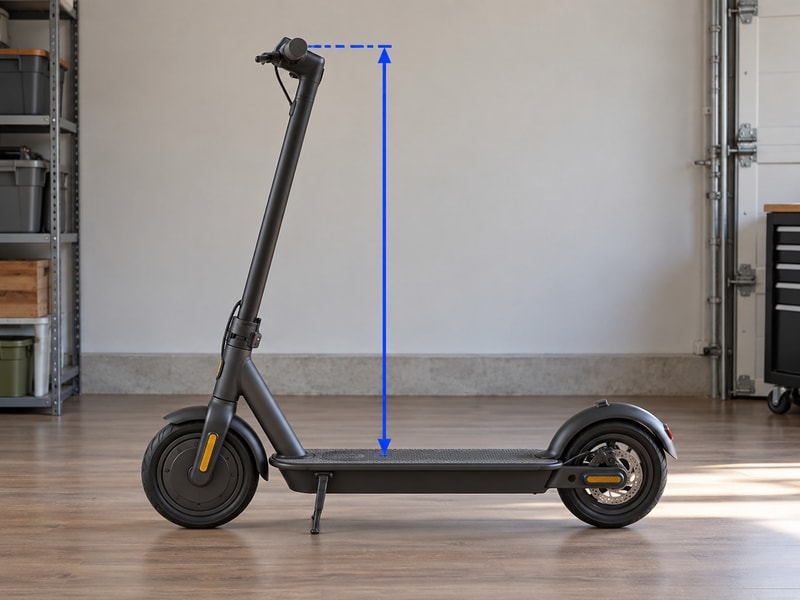
Frame geometry significantly impacts riding characteristics. The deck height affects stability (lower is generally more stable). The angle and length of the stem (the vertical portion supporting the handlebars) influence responsiveness and riding posture. At Dynamic Scooter, we’ve gone through numerous prototypes to find the optimal geometry that works for riders of different heights and riding styles.
Lighting systems are crucial for safety and visibility. Modern electric scooters typically feature LED headlights, taillights, and often side lights or deck illumination. Advanced lighting systems include features like automatic activation based on ambient light conditions, braking-activated tail lights that brighten when slowing down, and turn signals for improved communication with other road users. I’ve found that visibility features are among the most appreciated by customers who regularly ride in urban environments with vehicle traffic.
Folding mechanisms represent a significant engineering challenge. They require both security when riding and convenience when folding. The best designs accomplish this with minimal added weight and complexity. Various approaches exist, from simple collar clamps to more sophisticated locking systems with redundant safety features. Durability of these mechanisms is paramount, as they experience substantial stress during normal use.
Water resistance is categorized using IP (Ingress Protection) ratings that indicate protection levels against dust and water. Most quality electric scooters offer at least IP54 protection, meaning they’re protected against dust and water splashes from all directions. More premium models might offer IP65 or greater, providing protection against low-pressure water jets or even temporary immersion. It’s important to note that few consumer electric scooters are completely waterproof, and manufacturers typically recommend avoiding riding in heavy rain when possible.
Other notable components include:
- Fenders that protect riders from water and debris thrown up by the wheels
- Kickstands for convenient parking
- Carrying handles or straps for portability when folded
- Storage hooks or attachments for bags and accessories
- Security features like keyed ignition or alarm systems
- Bluetooth connectivity modules for smartphone integration
The integration of these various components into a cohesive, reliable package is what distinguishes exceptional electric scooters from mediocre ones. During my years developing our Dynamic Scooter line, I’ve found that it’s often the attention to these “smaller” details that generates the most enthusiastic customer feedback. A thoughtfully designed folding mechanism or an especially bright lighting system can transform the ownership experience, even if they don’t generate the same excitement as raw performance specifications.
System Integration and Operation
Have you ever wondered what happens from the moment you press the throttle until your scooter starts moving? The magic lies in the seamless integration of multiple systems working together.
Electric scooters operate through a sophisticated dance of electrical and mechanical systems. When you press the throttle, the controller sends precisely modulated power from the battery to the motor. The motor then transfers mechanical energy to the wheels through either direct drive or a gear system.

The Complete System Workflow of Electric Scooters
The operation of an electric scooter involves a fascinating chain of energy transformations and control processes that happen within milliseconds of your input.
When you power on an electric scooter and press the throttle, a sequence of events occurs. The throttle sends a signal to the controller. The controller draws current from the battery and delivers it to the motor at the appropriate level. The motor converts this electrical energy into mechanical rotation, propelling you forward.
This seemingly simple process involves sophisticated power management, energy conversion, and mechanical systems all working in perfect coordination.
The energy flow in an electric scooter begins with the chemical energy stored in the battery. This energy is converted to electrical energy when demanded by the controller. Lithium-ion batteries provide this energy at a relatively constant voltage until they’re nearly depleted. This helps maintain consistent performance throughout most of the discharge cycle.
The controller acts as the brain and nervous system. It processes multiple inputs simultaneously. It monitors throttle position, current battery voltage, motor feedback, and in advanced models, data from gyroscopes and accelerometers that detect lean angles and acceleration. Based on these inputs, it makes thousands of adjustments per second to optimize power delivery.
Power delivery to the motor is carefully managed through pulse width modulation (PWM). The controller rapidly switches the power on and off many times per second. By changing the ratio of “on” time to “off” time, it precisely controls how much power reaches the motor. This allows for smooth acceleration and efficient operation across different speed ranges.
The motor converts electrical energy back into mechanical energy through electromagnetic interactions. In brushless motors, electromagnets in the stationary portion (stator) create a rotating magnetic field that interacts with permanent magnets in the rotating portion (rotor), causing it to spin. This rotation is transferred either directly to the wheel in hub motors or through a reduction gear or belt in non-hub designs.
During deceleration with regenerative braking, this process works in reverse. The motor acts as a generator. It converts kinetic energy back into electrical energy that recharges the battery. Though the efficiency of this process is not perfect (typically 60-70% at best), it helps extend range in stop-and-go conditions.

Throughout normal operation, the battery management system (BMS) constantly monitors individual cell voltages, current flow, and temperature to protect the battery from damage. If it detects potentially harmful conditions like excessive current draw or overheating, it can limit power output or even shut down the system entirely to prevent damage.
Common troubleshooting issues I encounter with customers typically involve one of these key systems:
- Battery issues: Often indicated by reduced range, inconsistent power, or failure to charge
- Controller problems: Can manifest as erratic acceleration, cutouts during riding, or complete failure to power on
- Motor malfunctions: Typically present as unusual noises, vibration, or loss of power
- Connection failures: Often caused by water ingress or vibration loosening connectors
Preventative maintenance is fairly straightforward for electric scooters. Regular inspection of fasteners, tire condition and pressure (for pneumatic tires), brake adjustment, and keeping electrical components clean and dry will address most potential issues before they become problems. At Dynamic Scooter, we provide comprehensive maintenance guides with all our models to help customers maximize the lifespan of their scooters.
Future Development of Electric Scooters
I see new scooter technology every day. The future models will be better than what we ride now.
Electric scooter makers are working on longer battery life, stronger frames, better safety, and smart features. These changes will make scooters more popular for daily travel.

Battery technology is getting better fast. New batteries hold more power but weigh less. Some expensive models now use solid-state batteries. These batteries charge faster, last longer, and are safer than regular lithium-ion batteries.
Motors are also improving. New motors use less energy but provide more power. This gives riders more range and better performance. Companies use better materials that reduce weight but stay strong. Smart motor controls adjust power based on how you ride.
Most mid-range and premium scooters now connect to smartphones. You can change settings, check problems, protect against theft, and get directions. Some scooters even get updates through your phone that add new features.
At Dynamic Scooter, we’re testing new suspension systems. These systems adjust to road conditions automatically. They can detect bumps and change settings before you hit them. This makes your ride smoother without making the scooter wobbly.
Conclusion
Electric scooters combine simple parts to create an efficient way to travel. A battery powers a motor through a controller. The wheels, brakes, and other systems work together to give you a smooth ride. Understanding how your scooter works helps you ride better and make it last longer. As technology improves, electric scooters will become even more practical for everyday transportation.