
Proper electric scooter storage involves cleaning the frame, maintaining the battery at roughly 50% charge, and finding a dry, temperature-controlled environment.
You’ve likely invested significant money into a high-performance machine, but now it’s sitting idle as the seasons change. If you simply park it and forget it, you’re inviting battery degradation and rust to ruin your ride.
Thankfully, our guide ensures your scooter stays in showroom condition for your next adventure.
How to prep for electric scooter storage?

You prep by deep cleaning the deck, lubricating all moving joints, and applying anti-rust spray to any exposed metal parts. Proper electric scooter storage starts with removing the corrosive grime that accumulates during daily commutes. Leaving dirt on the frame can trap moisture against the metal, leading to oxidation over time.
Why clean the frame before storing?
Cleaning the frame ensures that salt, mud, and debris don’t eat away at your finish while the scooter sits. Here’s the deal: even a small amount of road salt can cause significant pitting on aluminum and steel components. Use a damp cloth and mild soap, but avoid high-pressure hoses that could force water into the electronics.
How to lubricate the moving parts?
Should you oil the folding mechanism before putting it away? Absolutely, as this prevents the metal-on-metal joints from seizing up during months of inactivity. Apply a thin layer of silicone lubricant to the following areas:
- The main folding hinge.
- Brake lever pivots.
- Kickstand spring.
Key Takeaway for Preparation
The bottom line? A clean scooter is a protected scooter that will function flawlessly when you’re ready to ride again.
| Step | Action | Benefit |
|---|---|---|
| Cleaning | Wipe with damp cloth | Prevents corrosion |
| Drying | Use microfiber towel | Eliminates moisture |
| Lubing | Apply silicone spray | Keeps joints fluid |
Thoroughly preparing the mechanical aspects of your ride prevents small issues from becoming expensive repairs during the off-season.
Where is the best electric scooter storage?

The best place for electric scooter storage is a dry, indoor location with a stable temperature between 50°F and 85°F. Humidity and extreme temperature swings are the hidden enemies of sensitive electronic components and battery cells. Storing your ride in a living room, hallway, or a climate-controlled basement is always the safest bet.
Is a garage or basement safe?
Garages are acceptable as long as they are dry and don’t experience sub-freezing temperatures. But wait, there’s more: if your garage is damp, you run the risk of internal condensation forming inside the motor controller. Ensure the area is well-ventilated and kept away from any chemicals that might off-gas and damage rubber parts.
Key Takeaway for Location
Selecting a stable environment is the most important factor in preserving the lifespan of your scooter’s internal electronics.
| Location | Safety Level | Climate Control |
|---|---|---|
| Living Room | Excellent | Full Control |
| Dry Garage | Good | Moderate |
| Damp Shed | Poor | None |
An indoor environment protects the scooter from the primary causes of hardware failure: moisture and extreme heat.
What battery tips aid electric scooter storage?

Keep your battery level between 40% and 60% and check it once a month to prevent a dangerous deep discharge state. Strategic electric scooter storage ensures your battery chemistry remains stable while the device is not in active use. Never store a battery at 0% or 100%, as both extremes put unnecessary stress on the lithium cells.
Should you charge to 100%?
Is it a good idea to top off the battery before a long break? No, because keeping a lithium-ion battery at maximum voltage for months can cause permanent capacity loss. Here is the kicker: batteries naturally lose a small amount of charge over time, so starting at the middle range provides a safe buffer.
- Check the level every 30 days.
- Charge for 15-20 minutes if it drops below 30%.
- Avoid leaving the charger connected overnight.
Key Takeaway for Battery Care
Monitoring your charge level is the single most effective way to ensure your battery doesn’t “brick” during the winter.
| Metric | Ideal Range | Frequency |
|---|---|---|
| Charge Level | 40% – 60% | Permanent |
| Check-up | Status Check | Monthly |
| Temperature | 50°F – 75°F | Continuous |
Maintaining the “sweet spot” of battery voltage preserves the chemical integrity of the cells for hundreds of future cycles.
How to treat tires during electric scooter storage?

You should slightly over-inflate pneumatic tires and store the scooter on a stand to prevent the rubber from developing flat spots. Neglecting the tires during electric scooter storage can lead to cracks in the sidewalls or an uncomfortable, wobbly ride later. If the wheels support the full weight of the scooter in one position for months, the rubber can permanently deform.
How to prevent tire flat spots?
What’s the easiest way to keep tires round? Using a dedicated stand or even a sturdy box to lift the wheels off the ground is the professional’s choice. Think about it: if you can’t lift it, simply rolling the scooter a few inches every two weeks will redistribute the pressure points.
- Inflate to 5-10 PSI above normal.
- Use a central kickstand or block.
- Check for sidewall cracks before reusing.
Key Takeaway for Tire Health
Lifting the scooter takes the pressure off the rubber and the bearings, ensuring a smooth transition back to the road.
| Tire Type | Storage Action | Risk Factor |
|---|---|---|
| Pneumatic | Elevate & Over-inflate | Flat spots |
| Solid | Elevate | Bearing stress |
| Honeycomb | Keep Dry | Dry rot |
By removing the constant load from the tires, you prevent structural damage that often goes unnoticed until you reach high speeds.
Why use covers for electric scooter storage?
Using a breathable cover prevents dust buildup and protects sensitive electronics from moisture present in the ambient air. High-quality electric scooter storage solutions always prioritize environmental shielding even when the device is kept indoors. Dust can act as a bridge for static electricity or trap moisture against electrical contacts, potentially causing short circuits.
How to keep your scooter dust-free?
Can you just use an old bedsheet to cover your ride? While any cover is better than none, a specialized scooter cover offers a tighter fit and better protection against accidental scratches. Now for the best part: many covers are made from rip-stop material that resists punctures and UV damage if the sun hits your storage area.
Key Takeaway for Shielding
A simple cover acts as a first line of defense against the invisible threats of dust, pets, and household humidity.
| Cover Material | Best Use | Protection Level |
|---|---|---|
| Nylon/Polyester | Indoors/Garage | High |
| Plastic Tarp | Emergency only | Low (traps moisture) |
| Cotton Sheet | Dust only | Medium |
Investing in a dedicated cover ensures that your scooter looks and performs like new the moment you uncover it.
How to secure your electric scooter storage?

Secure your device using a heavy-duty U-lock or chain attached to a fixed anchor point even when keeping it inside. Theft can happen even in “secure” shared garages or apartment complexes, making security a vital part of electric scooter storage. Never assume that a closed door is enough to protect your high-value asset from a determined thief.
Which locks work best for indoors?
Is a simple cable lock sufficient for a basement storage locker? Generally, a hardened steel U-lock is the gold standard because it resists the bolt cutters often used by opportunistic thieves. But wait, there’s more: if your scooter has an app, enable the electronic “lock” or “parking mode” to add a digital layer of protection.
- Lock through the frame, not just a wheel.
- Use a ground anchor if available.
- Remove the battery if it is detachable.
Key Takeaway for Security
Physical security is just as important as mechanical maintenance when your scooter is out of your sight for long periods.
| Lock Type | Security Level | Best Scenario |
|---|---|---|
| U-Lock | High | Shared Garages |
| Chain Lock | Medium | Awkward Anchors |
| Disc Lock | Medium | Brief Stops |
Layering your security with both physical locks and digital tracking gives you the ultimate peace of mind while your scooter is stored.
Can outdoors work for electric scooter storage?
Outdoor storage is never recommended due to moisture and temperature extremes that can rapidly destroy internal circuitry. If you absolutely must store it outside, use a heavy-duty waterproof cover as a last resort for electric scooter storage. Rain, snow, and even morning dew can seep into the motor casing and cause irreversible rust on the stator and magnets.
What are the main weather risks?
How does humidity affect the battery over time? High moisture levels cause corrosion on the battery terminals, which can lead to fire hazards or a failure to charge. The bottom line? The fluctuating temperatures outside cause expansion and contraction of seals, eventually letting water into “water-resistant” compartments.
Key Takeaway for Outdoor Risks
Storing a scooter outdoors is a gamble that usually ends in a shortened lifespan for the battery and motor.
| Risk Factor | Effect | Prevention |
|---|---|---|
| Rain/Snow | Motor rust | Indoor storage |
| Sun/UV | Plastic degradation | UV-rated cover |
| Cold | Battery death | Thermal bag |
If you have no choice but to store outside, check on the device weekly and ensure the cover hasn’t trapped condensation underneath.
How does Model B help electric scooter storage?

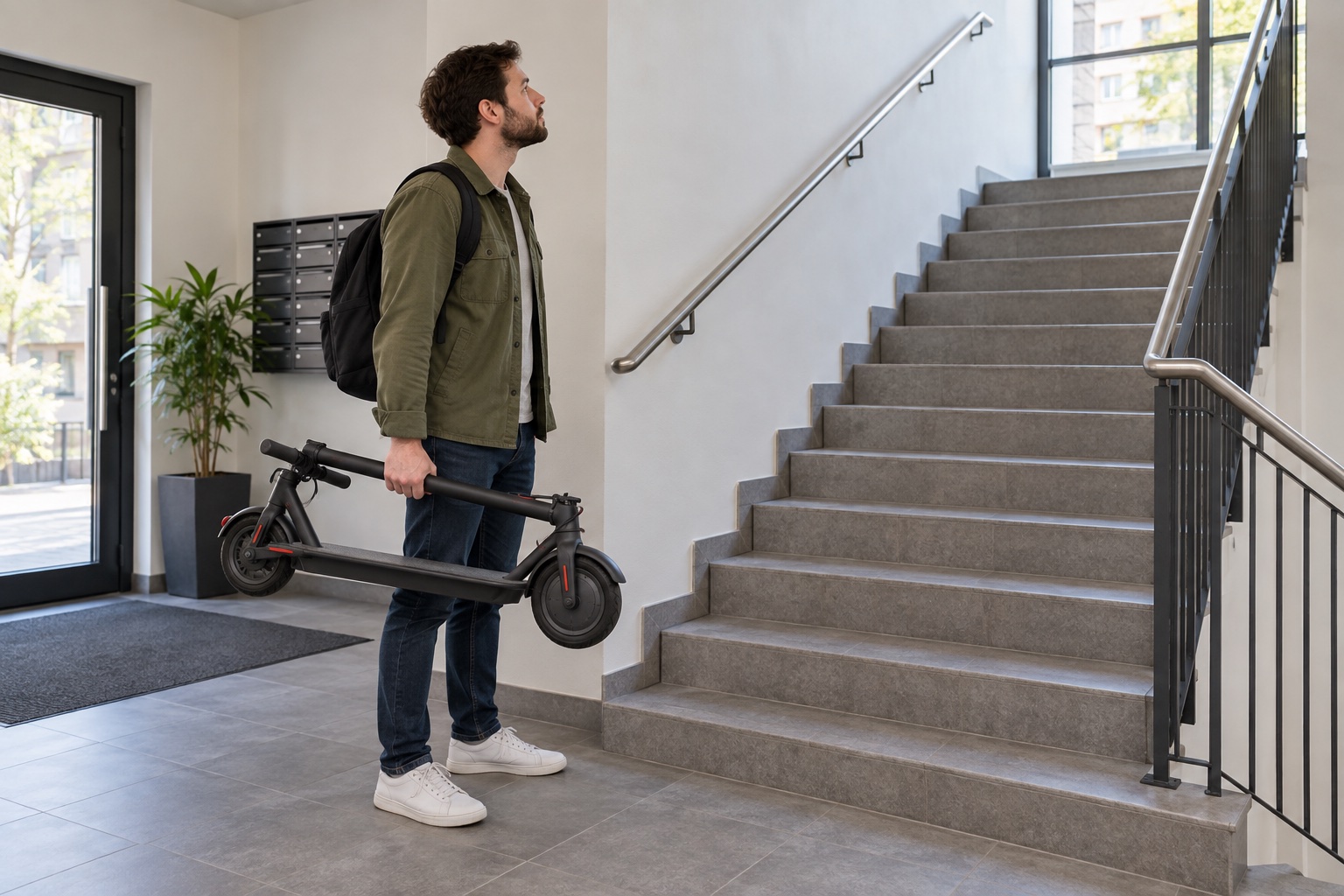
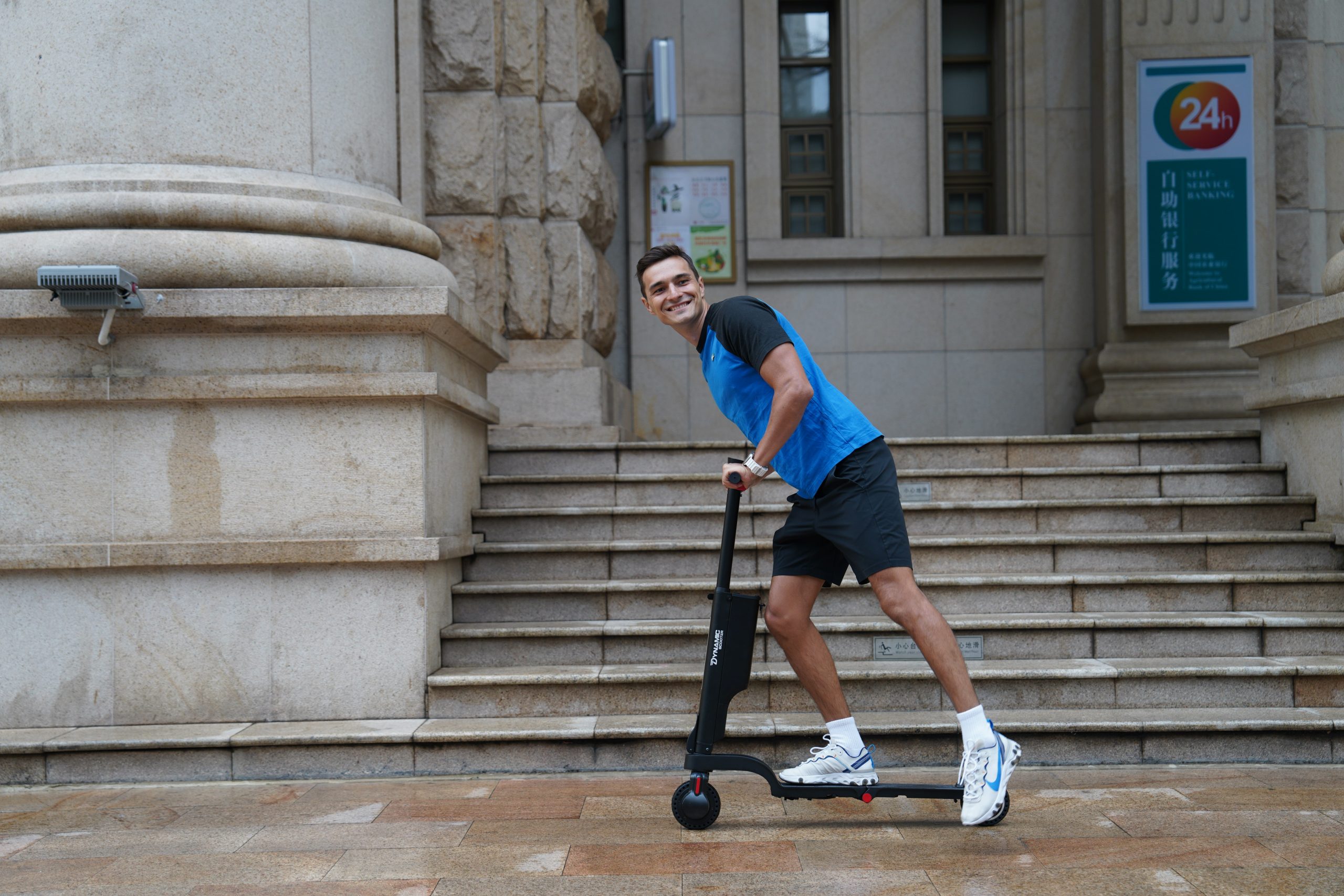
The Dynamic Scooter Model B features an ultra-compact folding mechanism that fits easily into small closets or under standard furniture. This makes electric scooter storage effortless for apartment dwellers who lack the luxury of a dedicated garage or basement. Its lightweight design ensures that you can carry it up stairs or tuck it away without straining your back.
Is the Model B easy to carry inside?
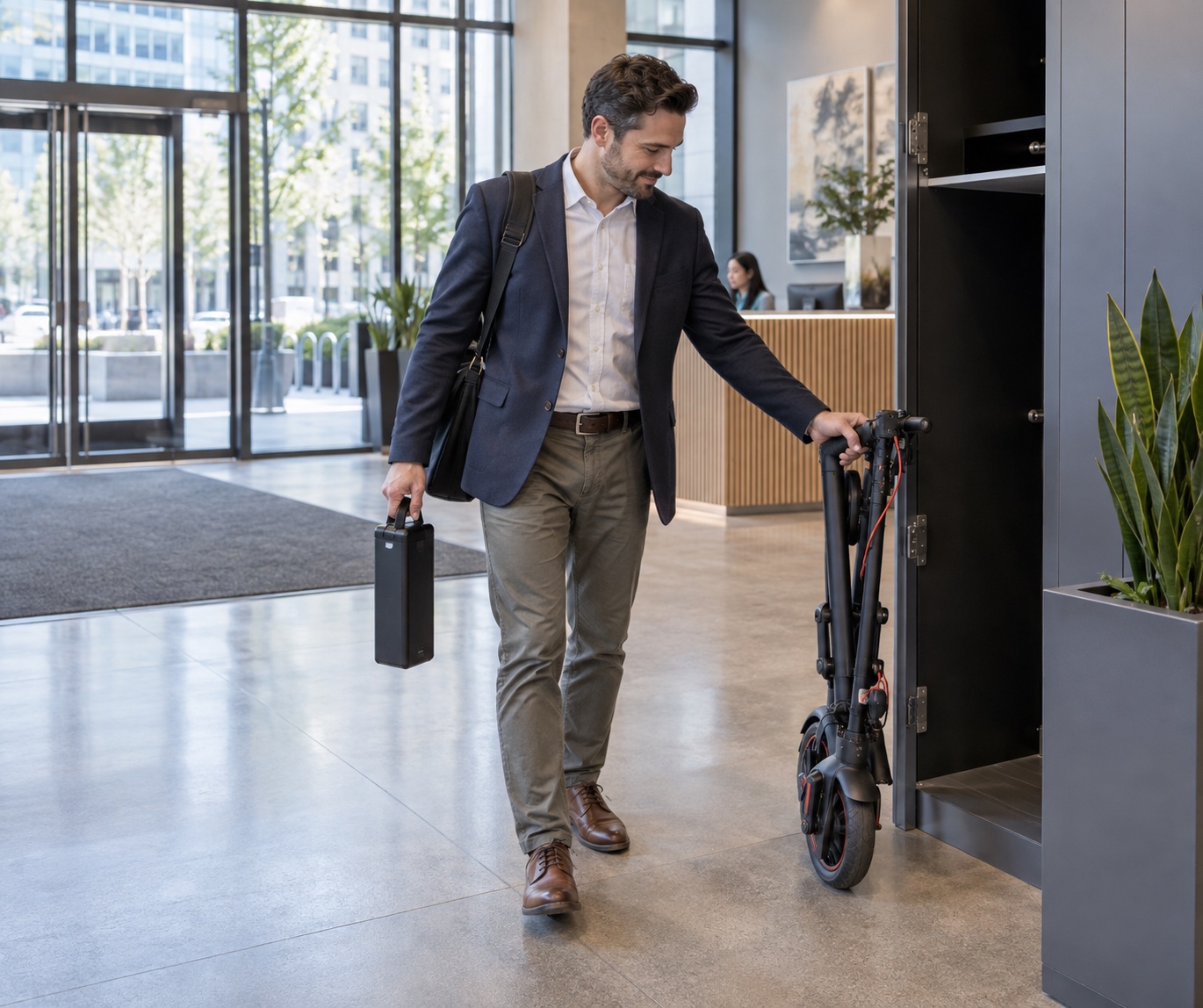
Can a commuter scooter really be that portable? The Dynamic Scooter Model B is designed with a “fold-and-go” philosophy that reduces its footprint by over 60% when collapsed. Here’s the deal: because it folds so small, you can store it in climate-controlled indoor spaces that would be too cramped for larger, bulkier models.
Key Takeaway for Model B
Design matters when it comes to storage, and a scooter that folds efficiently is much easier to protect long-term.
| Feature | Model B Advantage | Storage Benefit |
|---|---|---|
| Folding Hinge | One-click lock | Minimizes space |
| Weight | Lightweight alloy | Easy to lift |
| Dimensions | Slim profile | Fits in closets |
Choosing a model like the Dynamic Scooter Model B eliminates the “where do I put this?” headache that often plagues new owners.
What follows electric scooter storage?

Perform a full safety inspection, including brake tests and bolt tightening, before your very first ride after a long break. Resuming your commute after electric scooter storage requires ensuring everything is as tight and responsive as the day you bought it. Bolts can vibrate loose or settle over time, and tires will almost certainly need a fresh pump of air.
How to inspect brakes after storage?
Should you trust your brakes immediately? No, you should squeeze the levers while walking the scooter to ensure they grab firmly without a “spongy” feel. Think about it: brake fluid or cable tension can change slightly with temperature shifts, so a quick adjustment might be necessary for maximum safety.
- Tighten all handlebar and deck bolts.
- Charge the battery to 100% before the first trip.
- Test the throttle response in a safe area.
Key Takeaway for Post-Storage
Never skip the pre-ride check; five minutes of inspection can prevent a serious accident on your first day back.
| Component | Inspection Task | Status |
|---|---|---|
| Brakes | Test lever tension | Must be firm |
| Tires | Check PSI levels | Must match spec |
| Hardware | Check folding latch | Must be secure |
A systematic approach to exiting storage ensures that your first ride is just as enjoyable and safe as your last one.
Need help with your electric scooter storage?
You can find specialized wall mounts, heavy-duty stands, and custom covers designed specifically to enhance your electric scooter storage experience. Utilizing the right tools ensures your device remains safe, organized, and ready for the road at a moment’s notice. Proper accessories turn a cluttered corner into a professional-grade maintenance and storage hub.
Where to find storage accessories?
Are you looking for the best way to clear floor space? Vertical wall mounts are the perfect solution for keeping your scooter out of the way while showing it off like a piece of tech art. Now for the best part: using manufacturer-approved parts ensures that the weight of the scooter is distributed correctly across the frame during storage.
Key Takeaway for Accessories
The right gear makes the difference between a scooter that is “stored” and a scooter that is “protected.”
| Accessory | Purpose | Value |
|---|---|---|
| Wall Mount | Saves floor space | High |
| Storage Bag | Portable protection | Medium |
| Floor Stand | Prevents flat spots | High |
Equipping yourself with the proper storage tools is an investment that pays for itself by extending the life of your electric scooter.
Ready to Ride?
Don’t let improper storage turn your premium ride into a paperweight. Whether you’re looking for the ultra-portable Dynamic Scooter Model B or need expert advice on maintenance, we are here to support your journey.
Our vision is to provide seamless, sustainable mobility solutions that stand the test of time and weather. Contact us today to find the perfect scooter or accessory for your lifestyle.
Frequently Asked Questions
- Can I store my electric scooter in a cold garage?
While a garage is better than outdoors, extreme cold can damage lithium-ion batteries. Ideally, store your scooter in a temperature-controlled environment between 50°F and 85°F. - How often should I check the battery during storage?
You should check the charge level every 30 days. If the battery drops below 30%, give it a partial charge to bring it back to the 50% “sweet spot” for longevity. - What’s the best way to prevent tire damage?
The best way is to use a stand to lift the wheels off the ground. If that isn’t possible, slightly over-inflate the tires and move the scooter every few weeks. - Can I leave the charger plugged in all winter?
No. Never leave your scooter on the charger for extended periods during storage, as this can lead to battery degradation or potential fire risks. - Is it okay to store my scooter vertically?
Yes, as long as you use a purpose-built wall mount that supports the frame and doesn’t put undue stress on the folding mechanism or handlebars.