
Charge

How Far Can an Electric Scooter Go on One Charge? Complete Range Analysis

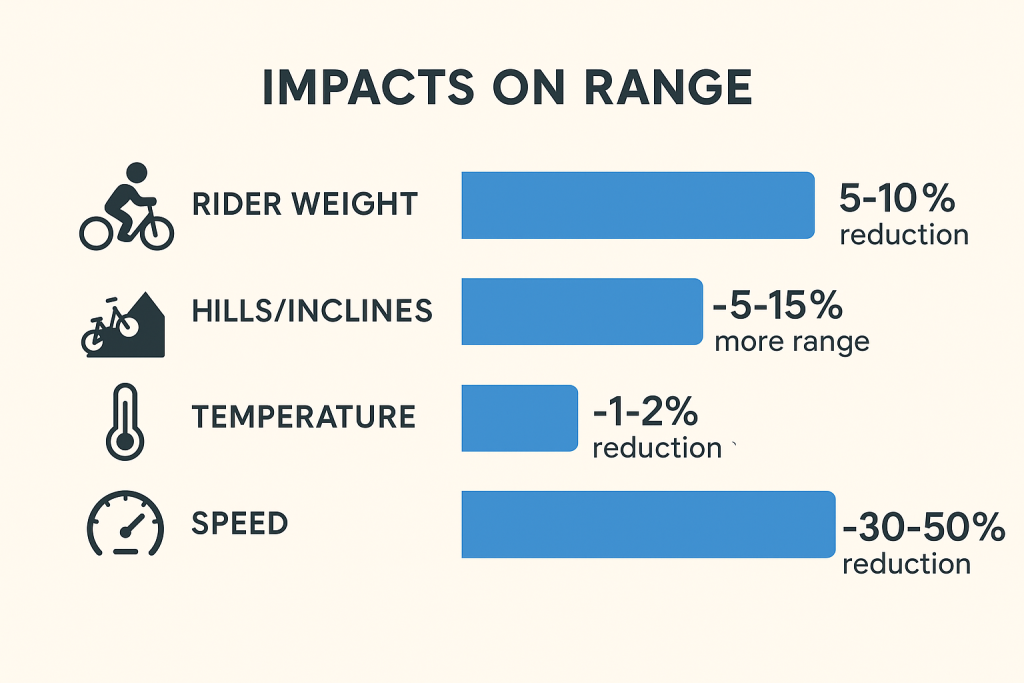
Electric scooters have transformed urban mobility with their convenience and eco-friendly nature. But one question remains at the forefront for potential buyers and current owners alike: How far can an electric scooter go on one charge? This comprehensive guide breaks down everything you need to know about electric scooter range. 1. What is the average range of electric scooters? The typical electric scooter can travel between 10 and 40 miles on a single charge, but this range varies dramatically across models and price points. Budget scooters often deliver 10-15 miles of range, while mid-tier options typically offer 15-25 miles. Premium models can reach impressive distances of 25-40+ miles per charge. You might wonder what causes such variation. Well, several factors come into play simultaneously. Battery capacity stands as the primary determinant – measured in watt-hours (Wh), higher capacity batteries store more energy and thus provide longer ranges. Most consumer electric scooters feature batteries ranging from 250Wh to 1000Wh. Motor efficiency also plays a crucial role in determining range. More efficient motors convert battery power into motion with less waste, allowing riders to travel farther on the same charge. Advanced models from companies like Dynamic Scooter incorporate sophisticated motor management systems that optimize power usage across various riding conditions. Price Range Typical Battery Capacity Expected Range Under $300 250-350Wh 8-12 miles $300-$500 350-450Wh 12-18 miles $500-$800 450-600Wh 15-25 miles $800+ 600-1000Wh+ 20-40+ miles 2. What factors affect electric scooter range? Battery capacity might seem like the obvious answer, but the story runs much deeper than just battery size. Think about this – two identical scooters with the same battery can achieve vastly different ranges depending on how and where they’re ridden. Rider weight significantly impacts range – heavier riders require more power to maintain speed. Most manufacturers test their scooters with riders weighing around 150-170 pounds. For every 20 pounds above this benchmark, expect a 5-10% reduction in range. Terrain type dramatically affects battery consumption. Flat, smooth surfaces allow for maximum efficiency, while hills and rough terrain drain batteries much faster. A scooter rated for 20 miles on flat ground might only achieve 10-12 miles on hilly terrain. Weather conditions play a surprisingly large role too. Cold temperatures temporarily reduce battery capacity – lithium-ion batteries perform best between 60-80°F (15-27°C). Riding in temperatures below 40°F (4°C) can decrease range by 20-30%. Factor Impact on Range Example Rider Weight 5-10% reduction per 20lbs over test weight 200lb rider = ~20% less range Hills/Inclines 5-15% reduction per degree of average incline 5° incline = 25-75% less range Temperature 1-2% reduction per degree below optimal 40°F = ~30% less range Speed Higher speeds = exponentially more power Max speed = 30-50% less range 3. How do different electric scooter brands compare in terms of range? Brand differences extend beyond marketing claims – engineering philosophy, component quality, and price positioning all influence range performance. Let’s examine how various market segments compare. High-end brands like Dualtron, Kaabo, and VSETT have built reputations around exceptional range capabilities. These premium scooters often feature dual motors, massive batteries (sometimes exceeding 1500Wh), and sophisticated battery management systems. Models like the Dualtron Thunder can achieve 50+ miles per charge. Mid-range manufacturers balance performance with affordability. Brands like Segway-Ninebot, Apollo, and Dynamic Scooter occupy this space with models offering 20-30 miles of real-world range. The Dynamic Scooter Model B exemplifies this category with its 20km (12 miles) range, striking an excellent balance between performance and price. Budget-friendly options from companies like Gotrax and Hiboy focus on accessibility with lower prices but modest range capabilities. These scooters typically deliver 8-15 miles per charge – sufficient for short commutes but potentially limiting for longer trips. 4. How can you accurately interpret manufacturer range claims? Manufacturer range claims require careful interpretation since testing methods vary widely across the industry. No standardized testing protocol exists for electric scooters, creating significant inconsistencies in how range figures are determined and reported. Most manufacturers test under ideal conditions: flat, smooth surfaces; moderate temperatures (65-75°F); riders at or below the weight testing standard (usually 150-170 pounds); and constant, moderate speeds (typically 10-15 mph). These controlled environments maximize range but rarely reflect real-world riding conditions. A good rule of thumb? Assume you’ll achieve 60-80% of the advertised range under typical conditions. For a scooter claiming 25 miles of range, expect 15-20 miles in real-world use. This mental adjustment helps avoid disappointment and ensures your scooter meets your actual transportation needs. Range Claim Type What It Usually Means How to Interpret “Up to X miles” Maximum possible under perfect conditions Expect 60-70% in real-world use “X miles (eco mode)” Slowest speed setting, flat terrain Realistic for slow, flat riding only “X-Y miles” Range from normal to eco mode Expect closer to X in typical use 5. How can you maximize your electric scooter’s range? Extending your scooter’s range doesn’t require technical expertise – simple riding habits and maintenance practices can significantly impact how far you can travel on a single charge. Let’s explore practical strategies that make a real difference. Riding technique profoundly affects battery consumption. Maintaining a steady, moderate speed conserves energy much more effectively than frequent acceleration and braking. Each time you accelerate, particularly from a complete stop, your scooter draws a surge of power from the battery. Speed selection represents the single most significant factor under rider control. Higher speeds require exponentially more power due to increased air resistance. Reducing speed from maximum to 75% can increase range by 30-50% in many cases. Battery maintenance practices preserve capacity over time. Lithium-ion batteries prefer partial discharge cycles rather than complete depletion. Avoiding regular deep discharges (below 10-20% capacity) extends battery lifespan and maintains maximum range capability. Range Extension Strategy Potential Impact Difficulty Level Ride at 75% of max speed 30-50% more range Easy Maintain steady speed 15-25% more range Moderate Keep tires properly inflated 5-15% more range Easy Use eco/battery saving mode 20-40% more range Easy 6. What usage scenarios are long-range electric scooters best suited for? Different riding

How Far Can an Electric Scooter Go on One Charge? Complete Range Analysis Read More »
How to Charge an Electric Scooter Without Its Charger

Losing your e-scooter charger is frustrating. This guide explores how to charge electric scooter without charger, covering alternative methods, risks, and essential safety. While an OEM charger is always best, understanding emergency options is vital. We will cover battery needs to knowing when to call professionals. Yes, charge an e-scooter without its original charger via a compatible universal charger, USB-PD (if supported), or an identical scooter charger. Prioritize safety: match voltage, amperage, and polarity precisely. OEM chargers are safest. Bottom line: charging without the dedicated charger needs extreme caution and knowledge to avoid damage or hazards. This guide aims to inform your decisions for safe power-up when your charger is missing. A rushed attempt can be severe; knowledge is your first defense. 1. What Are the Common Reasons for Needing to Charge an E-Scooter Without Its Charger? Several scenarios lead to needing to charge electric scooter without charger. It happens. Misplacing or forgetting the charger is common. Chargers can also suddenly malfunction. Some riders intentionally leave bulky chargers behind to travel light. Emergencies also arise: far from home, low battery, charger inaccessible. In these cases, finding alternative ways to charge electric scooter without charger becomes urgent. Knowing safe methods is key to avoid turning inconvenience into a costly mistake. 2. Can You Really Charge an Electric Scooter Safely Without the Original Charger? Safely trying to charge electric scooter without charger is complex and risky. Caution is paramount. While technically possible, it introduces variables compromising safety. The main concern is matching battery electrical needs: correct voltage (V), amperage (A), connector, and critical polarity. An OEM charger guarantees this, working with the scooter’s Battery Management System (BMS). Alternatives bypass this. Risks include frying the BMS/battery with wrong voltage, overheating with wrong amperage, arcing with ill-fitting connectors, or catastrophic damage from reversed polarity. Manufacturers warn against non-approved chargers, voiding warranties. So, while you might find ways, consider it only in emergencies, with full understanding of battery needs, meticulous compatibility checks, and unwavering safety adherence. An OEM charger is always safest. 3. What Alternative Charging Methods Could Potentially Work for Electric Scooters? When you must charge electric scooter without charger, few alternatives exist, each with risks. Extreme caution needed. Universal chargers exist but quality varies; precise voltage, amperage, and correct polarity are critical and hard to guarantee. Mistakes are disastrous. USB charging is viable only if your model supports USB Power Delivery (USB-PD) for its main battery (uncommon but increasing). It’s slower and needs a high-power USB-PD source and certified cable. DIY solutions are exceptionally dangerous (shock, fire risk) and for experts only. Using another e-scooter’s charger is possible only if all specs (voltage, amperage, connector, polarity) are an exact match. Slight differences cause damage. Thorough research and electrical safety understanding are non-negotiable. The OEM charger remains the safest. 4. How Might a USB Port Be Utilized for E-Scooter Charging? Using a USB port to charge electric scooter without charger is appealing but limited. Not a universal fix. Confirm your model supports main battery charging via USB; most don’t (ports are for accessories). Some newer models use USB-C Power Delivery (PD). If so, you need a compatible high-wattage USB-C PD source (45W, 60W, 100W+) and a rated cable. Standard USB-A or low-wattage USB-C won’t work. USB-PD charging is much slower than dedicated AC chargers, suitable for emergency top-ups. Use certified chargers/cables, ensure compatible voltage (PD negotiates), and monitor for overheating. Always verify scooter manual compatibility. 5. Is It Ever Safe to Employ a Universal Charger for Your Electric Scooter? Using a universal charger to charge electric scooter without charger is perilous; safety is conditional. High-stakes gamble. Precisely matching voltage (V) and amperage (A) is vital. Too high voltage fries components; too low won’t charge. Amperage should match or be slightly higher; lower means slow charging and charger overheating. Correct connector type is key. Crucially, correct polarity is non-negotiable; reversed polarity causes instant, severe damage (fire, short circuits). If considering a universal charger as a last resort: choose high-quality, reputable brands with clear markings/safety certifications. Meticulously set correct voltage. Triple-check polarity (use a multimeter if proficient). Ensure perfect connector fit. Never leave unattended; monitor constantly. It remains risky versus an OEM charger. 6. What Specific Dangers Are Associated with Improvised or DIY E-Scooter Charging Setups? Improvised or DIY setups to charge electric scooter without charger are exceptionally dangerous for non-experts. Do not attempt. Risks include severe electrical shock from high DC voltages (36V+). DIY setups lack control circuitry, leading to battery overcharging (damaging cells, causing overheating, fire/explosion) or deep discharge. Short circuits from improvised wiring cause intense heat and fire. Such methods will void warranties. Commercial chargers have multiple safety layers; bypassing these is unsafe. The potential for catastrophic failure is too high. DIY Charging Danger Description of Risk Why It\’s Critical to Avoid for Non-Experts Electrical Shock Direct contact with high-voltage DC can cause severe injury or fatality. Lack of training, safety gear, and controlled environment. Battery Overcharge/Deep Discharge Incorrect voltage/current damages cells, causes overheating, swelling, or failure. DIY setups lack precise control and safety cutoffs of BMS/OEM chargers. Overheating & Thermal Runaway Excessive heat from improper charging leads to fire/explosion. Battery chemistry is sensitive; heat degrades and can ignite cells. Short Circuits Unintended current paths cause massive heat, fire, or explosion. Improvised wiring, loose connections, unsuitable materials are common. Voiding Warranty Unauthorized modifications/charging methods nullify manufacturer coverage. Manufacturers don\’t cover damage from non-approved practices. 7. How Can You Accurately Match Voltage and Amperage When Considering an Alternative Charger? To charge electric scooter without charger safely with an alternative, accurately matching voltage/amperage is paramount. Crucial for safety. Locate battery specs: manual, original charger label (OUTPUT V/A), battery casing, or manufacturer site. Understand roles: Voltage (V) = electrical pressure; must match battery needs precisely (e.g., 36V battery often uses 42V charger). Too high fries circuits; too low won’t charge. Amperage (A) = current flow; ideally match original or be slightly higher. Lower amperage means slow charging and charger overheating. Mismatched voltage is more critical,

How to Charge an Electric Scooter Without Its Charger Read More »

How to Charge Electric Scooter: Complete Charging Guide

Introduction Electric scooters transform daily commutes but require proper charging techniques to maintain peak performance and battery longevity. Many owners unknowingly damage their scooter batteries through incorrect charging habits. Want to know the shocking truth? To charge an electric scooter correctly, first connect the charger to a wall outlet, then plug it into your scooter’s charging port. Wait until the indicator light turns green (typically 3-8 hours), then promptly disconnect. For optimal battery life, charge between 20-80% capacity and store at room temperature away from extreme conditions. Most scooter performance issues stem from improper charging rather than manufacturing defects. This guide walks through essential steps and best practices to maximize your electric scooter’s lifespan while ensuring optimal performance every time you ride. 1. Understanding Your Electric Scooter Battery Before plugging in your electric scooter, understanding what powers your ride makes all the difference for long-term performance. Modern electric scooters primarily use lithium-ion batteries, though some budget models still feature lead-acid or nickel-metal hydride alternatives. Here’s something most retailers won’t tell you: battery chemistry significantly affects charging requirements and overall lifespan. Different types of batteries used in electric scooters Lithium-ion batteries dominate the market due to their superior energy density, lightweight properties, and minimal memory effect. These powerhouses typically last 500-1000 charge cycles when properly maintained. Lead-acid batteries cost less upfront but weigh considerably more and provide shorter ranges between charges. Nickel-metal hydride batteries occupy a middle ground with decent performance but require specific charging patterns to prevent memory effect issues. Battery capacity and voltage specifications explained Battery capacity measures in ampere-hours (Ah) or watt-hours (Wh), indicating how much energy your scooter stores. Most commuter models feature capacities between 250-500Wh, determining your potential range per charge. Voltage ratings typically range from 24V for entry-level models to 48V or higher for performance scooters. The surprising reality? Higher voltage generally means better hill-climbing ability and acceleration rather than simply greater range. Battery management systems and their functions Quality electric scooters incorporate sophisticated Battery Management Systems (BMS) that regulate charging flow, prevent overheating, and balance cell voltages. This silent guardian protects against overcharging, deep discharging, and short circuits while monitoring temperature fluctuations. Premium models feature adaptive BMS technology that adjusts charging parameters based on environmental conditions and battery health status. Battery Type Typical Lifespan Weight Best Charging Practice Lithium-ion 500-1000 cycles Light Partial charges (20-80%) Lead-acid 200-300 cycles Heavy Full charges recommended Nickel-MH 300-500 cycles Medium Occasional full discharge 2. Essential Charging Equipment Proper charging equipment safeguards your investment while maintaining optimal battery performance throughout your scooter’s lifespan. The truth nobody mentions? Using incorrect chargers ranks among the leading causes of premature battery failure in electric scooters. Standard chargers vs fast chargers Standard chargers supplied with most electric scooters deliver power at 1.5-2A, providing gentle, battery-friendly charging over 4-8 hours depending on capacity. Fast chargers push 3-5A for dramatically reduced charging times but generate additional heat that potentially degrades battery cells over time. Some premium models feature smart charging technology that starts fast then tapers to gentler rates as batteries approach full capacity. Charging adapters and extensions Quality charging adapters maintain proper voltage regulation when standard outlets prove inaccessible. Extension cords should feature minimum 16-gauge wire for short runs and 14-gauge for distances exceeding 25 feet to prevent voltage drop issues that stress charging components. Shocked by this next fact? Inadequate extension cords cause voltage fluctuations that damage both chargers and batteries while creating potential fire hazards. Safety features to look for in quality chargers Premium chargers incorporate multiple safety mechanisms including thermal cut-offs, short-circuit protection, and automatic shut-off when batteries reach full charge. Look for UL certification, proper insulation at connection points, and LED indicators showing charging status. Advanced models feature adaptive charging algorithms that adjust power delivery based on battery temperature and state-of-charge for maximum cell longevity. Charger Type Charging Speed Heat Generation Impact on Battery Life Standard (1.5-2A) 4-8 hours Low Minimal degradation Fast (3-5A) 2-3 hours High Moderate degradation Smart/Adaptive Variable Dynamic Optimized for longevity 3. Step-by-Step Charging Process Following a systematic charging process ensures safety while maximizing battery performance for years of trouble-free riding. Ever wondered why some scooters last years while others fail within months? The difference often lies in these seemingly simple charging steps. Preparing your scooter for charging Begin by positioning your scooter in a dry, room-temperature environment away from direct sunlight and flammable materials. Allow hot scooters to cool for 15-30 minutes after riding before connecting chargers, especially during summer months. Check charging ports for moisture, debris or damage that might compromise connections. Remove any accessories drawing parasitic power like lights or phone chargers for more efficient battery replenishment. Proper connection techniques Always connect your charger to the wall outlet first, then to your scooter to prevent arcing that damages charging ports. Ensure the connector aligns properly without forcing, which might bend pins or damage sockets. Most quality scooters feature keyed connectors that only insert one way to prevent reverse polarity issues. The surprising detail many miss? Slightly loose connections create resistance that generates heat, potentially damaging both charger and scooter components over time. Monitoring the charging progress Quality electric scooters display charging status through LED indicators or mobile apps. Typically, red lights indicate active charging while green signals completion. Some advanced models show percentage-based charging progress. Monitor for unusual heating, strange odors, or abnormal noises during the charging process. Modern scooters with Bluetooth connectivity provide detailed battery analytics including cell voltage, temperature, and estimated range based on current charge level. Knowing when charging is complete Charging completion typically indicates when LEDs change from red to green or apps show 100% status. However, smart charging systems often continue balancing individual cells for 30-60 minutes after reaching full capacity. This critical fact changes everything: allowing this balancing phase to complete fully prevents premature battery degradation even when indicators suggest charging has finished. Charging Stage Indicator Color What’s Happening Action Required Not Connected No light/Off No power flow Connect charger Active Charging Red Normal charging cycle

How to Charge Electric Scooter: Complete Charging Guide Read More »

Shopping Cart
Scroll to Top