
...

April 17, 2026

How to Avoid Common Accidents on Electric Scooters?

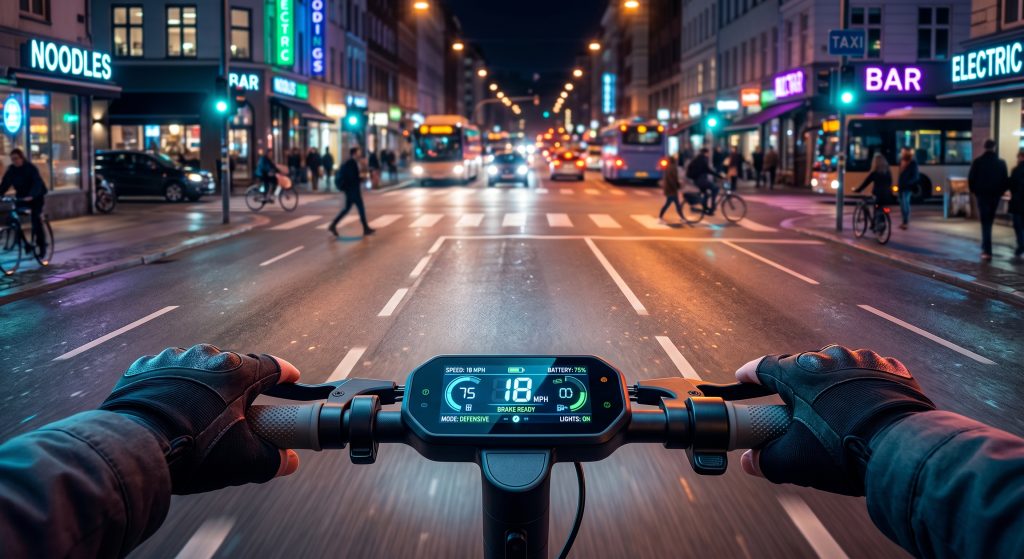
You avoid common accidents by mastering defensive riding techniques, performing consistent maintenance checks, and wearing appropriate safety gear. As urban streets get busier, the number of riders experiencing injuries is climbing steadily. It only takes one hidden pothole or a distracted driver to turn your smooth morning commute into a painful and costly emergency room visit. Fortunately, learning the primary causes of electric scooter accidents and how to sidestep them allows you to ride with total confidence and security. What are the main causes of electric scooter accidents? Root causes include rider inexperience, environmental hazards, and distracted behavior. Understanding the primary drivers of electric scooter accidents is the first step toward total prevention. Most incidents stem from a simple lack of situational awareness on the road. Recognizing Environmental Risk Factors Small wheels are particularly vulnerable to road debris that cars or bicycles roll right over. Potholes, loose gravel, and uneven sidewalk cracks can cause a sudden loss of balance. Understanding Human Error Think about this. Many new riders fail to master the controls before hitting heavy traffic zones. Key Takeaway: Preventing human error requires total focus and a solid understanding of how your vehicle handles different surfaces. Cause Category Primary Risk Mitigation Strategy Environment Road Debris Active Scanning Human Distraction Device-Free Riding Technical Speeding Speed Limiting This data shows that behavioral adjustments are just as critical as physical road conditions in preventing collisions. Which safety gear is essential to prevent injury? A certified helmet is the single most important piece of gear to prevent severe trauma. While no one plans for electric scooter accidents, wearing the right accessories and parts can be the difference between a minor scrape and a major injury. Protection should always be your top priority before you power on your deck. Choosing the Right Helmet A well-fitting helmet is a non-negotiable requirement for every single trip you take. If you are riding at speeds above 20 mph, you should consider a full-face helmet for jaw protection. Essential Limb Protection The best part? Modern pads are lightweight and breathable, making them easy to wear over work clothes. Key Takeaway: Investing in high-quality safety gear drastically reduces the medical severity of any unexpected fall. Gear Item Protection Level Recommended For Helmet Critical All Riders Knee Pads High Commuters Gloves Moderate High Speed The correlation between gear usage and reduced injury rates highlights why personal protection is the foundation of rider safety. How do pre-ride checks ensure your daily safety? Pre-ride checks identify mechanical issues like loose bolts or low tire pressure before they cause a crash. Failing to inspect your equipment is a leading contributor to mechanical-related electric scooter accidents. A simple two-minute check can identify catastrophic failures before they happen on a busy road. Inspecting Mechanical Components Check your brakes to ensure they engage smoothly and stop the wheels completely. You should also verify that the folding mechanism is securely locked in place to avoid a sudden collapse. Checking Tires and Electronics Look: tire pressure affects more than just speed; it is vital for maintaining grip. Key Takeaway: A consistent pre-flight routine ensures that your vehicle is mechanically sound and ready for the demands of the road. Component Check Frequency Warning Sign Brakes Every Ride Spongy Lever Tires Weekly Visible Cracks Bolts Monthly Rattling Sounds Regular inspections act as a preventative shield against the mechanical failures that frequently lead to avoidable falls. How can you safely navigate busy city traffic? Staying safe in traffic requires you to remain predictable, follow signals, and maintain visibility at all times. Navigating through dense urban environments increases the likelihood of electric scooter accidents due to the high volume of unpredictable variables. If you want to learn more about us and our safety philosophy, you will see we prioritize defensive urban riding. Positioning Yourself in Lanes Utilize designated bike lanes whenever they are available to stay separated from cars. When a bike lane is not present, stay to the right but avoid the “door zone” of parked vehicles. Communicating with Other Drivers Wait, there’s more. You must treat yourself as a vehicle and follow every traffic sign and signal. Key Takeaway: Predictability is your greatest asset in traffic, as it allows drivers to anticipate your movements and give you space. Traffic Rule Purpose Benefit Signal Turns Communication Prevents Rear-ends Stop Signs Law Compliance Avoids Cross-traffic Eye Contact Verification Confirms Visibility Adhering to standard traffic protocols bridges the communication gap between small scooters and much larger motor vehicles. What lighting makes you most visible to drivers? A combination of high-lumen headlights, reactive brake lights, and reflective clothing ensures drivers see you from every angle. Low visibility is a major factor in night-time electric scooter accidents. If a driver cannot see you, they cannot avoid you, making lighting systems non-negotiable for commuters. Optimizing Built-in Scooter Lights Most scooters come with basic lighting, but these are often too low to the ground for cars to notice. Ensure your headlight is angled to illuminate the road without blinding oncoming traffic. Using Secondary Visibility Gear Check this out. Adding lights to your helmet or backpack places the light source at the driver’s eye level. Key Takeaway: Layering your light sources makes you visible from multiple heights and angles, significantly lowering the risk of side-impact collisions. Light Type Placement Primary Benefit Headlight Handlebars Road Illumination Brake Light Rear Fender Deceleration Warning LEDs Helmet Eye-Level Visibility Multiple light points create a larger visual footprint, ensuring you stand out against the background of city lights. How do you safely maneuver around road hazards? You navigate hazards by scanning the road ahead and crossing obstacles like tracks at a perpendicular angle. Abruptly hitting a pothole or a slick metal plate can cause sudden electric scooter accidents that throw riders off balance. You can find more detailed guides on hazard identification on our blog. Dealing with Potholes and Debris When you see a hazard ahead, slow down and prepare to absorb the impact with your legs. Never try to swerve at

How to Avoid Common Accidents on Electric Scooters? Read More »
How To Protect Your Scooter From The Sun And Overheating?

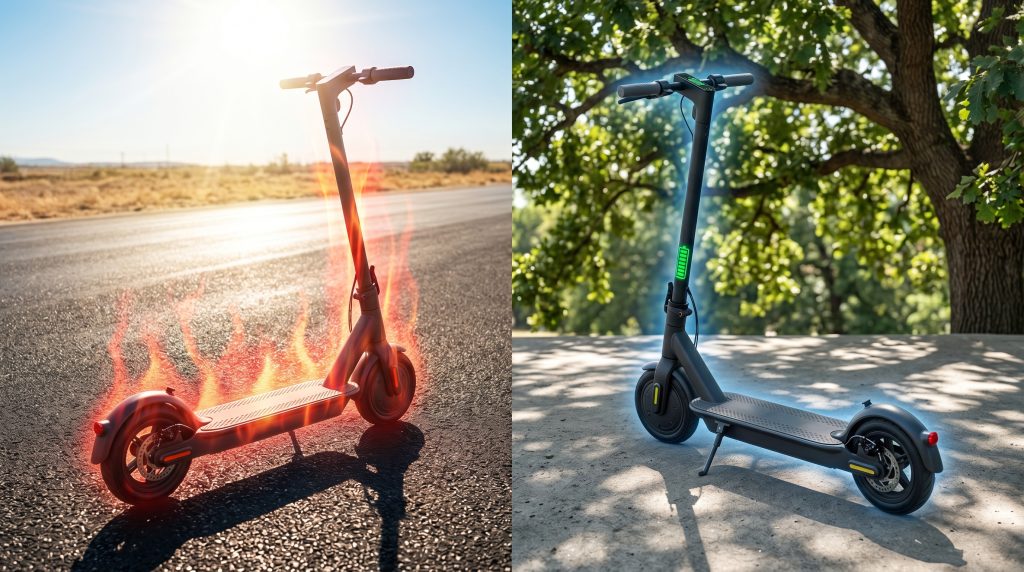
You can protect your scooter from solar damage by parking in shade, using reflective covers, and letting the motor cool before charging. Imagine your commute being cut short because your battery simply gave up under the sweltering midday heat. This electric scooter overheating isn’t just a nuisance; it’s a silent threat to your vehicle’s lifespan and your personal safety. If you ignore the rising deck temperatures, you risk permanent lithium-ion degradation or even dangerous thermal runaway events. Fortunately, by following a few expert strategies, you can maintain peak performance and keep your ride running cool all summer long. 1. Why does direct sun cause electric scooter overheating? Direct sun heats the internal components through radiant energy and the greenhouse effect within the deck. This concentrated radiation causes the dark surfaces of your scooter to absorb and trap heat, leading to electric scooter overheating. When the metal frame stays under the sun, it acts like a heat sink, slowly transferring high temperatures to the sensitive electronics inside. Protecting the Chassis Direct sunlight can warp the plastic components and melt the adhesives that keep your gaskets waterproof. You should always look for a spot that offers at least partial coverage to avoid this physical degradation. Think about it: The best part? Keeping the frame cool also protects your resale value. Preserving Paint and Grips A “sunburned” scooter looks aged and neglected, which can lead to peeling paint and sticky grips. Heat also degrades the integrity of the wiring insulation near the deck surface. Here is the kicker: Key Takeaway: Sunlight is a primary external catalyst for heat damage; physical protection is your first line of defense. Exposure Factor Impact Level Mitigation Strategy UV Radiation High UV-Resistant Wax Infrared Heat Critical Reflective Covers Ambient Temp Moderate Shaded Parking Strategic shielding prevents infrared energy from penetrating the deck and cooking the internal circuitry. 2. How can hardware help prevent electric scooter overheating? High-quality hardware like advanced Battery Management Systems (BMS) and aluminum heat sinks dissipate thermal energy to stop electric scooter overheating. These components are designed to regulate the flow of electricity when temperatures rise too high. Without these safety features, a standard battery could easily reach critical failure points on a hot afternoon. The Role of the BMS The BMS acts as the brain of your battery, constantly monitoring individual cell temperatures. If it detects a spike, it will throttle the power output to ensure safety. Believe it or not: It’s a lifesaver for your battery’s long-term health. Dynamic Scooter Model B Design Advantages The Dynamic Scooter Model B utilizes an aerospace-grade aluminum chassis that naturally draws heat away from the motor. This passive cooling system works in tandem with the firmware to optimize performance during summer rides. Let’s be honest: Key Takeaway: Investing in superior hardware provides an automated safety net that protects your battery from human error. Hardware Feature Function Primary Benefit Smart BMS Power Throttling Prevents Thermal Runaway Aluminum Deck Passive Cooling Rapid Heat Dissipation Thermal Sensors Live Monitoring Early Warning System Sophisticated thermal management hardware ensures that your scooter remains operational even when external temperatures are less than ideal. 3. Does parking in shade reduce electric scooter overheating? Parking in the shade can lower ambient temperature exposure by up to 20 degrees, preventing electric scooter overheating. When you leave your scooter on hot asphalt in the sun, it absorbs heat from both the air and the ground. This “double-heating” effect can push internal battery temperatures well beyond their safe storage limits. Strategic Parking Habits You should always prioritize indoor parking or covered garages whenever they are available. If you must park outdoors, find a large tree or the shadow of a tall building to keep the sun off the deck. Bottom line? A little planning goes a long way. Utilizing Reflective Covers If shade isn’t available, a specialized reflective cover can bounce the sun’s rays away from your vehicle. These portable shields are lightweight and can be stored in a backpack for daily use. Here is the deal: Key Takeaway: Lowering the starting temperature of your scooter ensures it has more “thermal headroom” before it reaches a danger zone. Parking Spot Temp Reduction Difficulty Level Indoor Garage 30°F+ Medium Tree Shade 15-20°F Easy Reflective Cover 10-15°F Easy Environmental control is the most cost-effective method to preserve the chemical stability of your lithium-ion cells. 4. How does riding style impact electric scooter overheating? Aggressive acceleration and steep hill climbs increase current draw, which is a leading cause of electric scooter overheating. When the motor works harder, it generates internal resistance heat that can quickly soak into the battery. Constant high-speed riding prevents the components from having any “rest” periods to shed this excess energy. Managing Motor Load You can reduce heat by avoiding “full-throttle” starts and using your feet to kick-start the motion. This reduces the initial high-amp surge that causes the most significant temperature spikes in the motor. Keep this in mind: Your thumb controls more than just speed; it controls temperature. Allowing Airflow Cooling The movement of the scooter creates a natural breeze that helps dissipate heat from the motor casing. However, if you are riding in stop-and-go city traffic, this airflow is inconsistent. The truth is: Key Takeaway: Smooth, consistent riding is far more thermal-efficient than erratic, aggressive maneuvers. Riding Habit Heat Impact Recommendation Full Throttle High Accelerate Gradually Steep Inclines Critical Use Kick-Assistance Heavy Payload High Stay Within Weight Limits Modifying your riding behavior can extend your battery range while keeping internal components within a safe thermal window. 5. What temperatures trigger electric scooter overheating? Overheating typically begins when internal battery temperatures exceed 113°F (45°C) during operation, which leads to electric scooter overheating. While most scooters can handle ambient air temperatures up to 100°F, the internal components generate their own heat. This cumulative effect means your battery might be much hotter than the weather forecast suggests. Dangerous Operating Ranges Lithium-ion batteries are safest when they operate between 68°F and 85°F. Once the internal temperature hits

How To Protect Your Scooter From The Sun And Overheating? Read More »

Why Your Electric Scooter Doesn’t Get the Range It Promised?

Your battery likely drains faster than expected because manufacturer tests occur in perfect lab settings that differ from your daily commute. This discrepancy is a common frustration for riders who rely on their electric scooter range to get to work or meetings. Imagine being halfway to your destination only to have your ride lose power on a busy street. Our guide helps you understand how to manage your battery so you can ride with total confidence. 1. Why is my electric scooter range so low? The gap between the manual and the road is usually due to “ideal condition” testing that doesn’t reflect your actual riding habits. Most brands calculate their maximum electric scooter range using the lightest possible rider on flat ground at very low speeds. But wait, there’s more: Are lab tests for electric scooter range realistic? The short answer is no, because they ignore variables like wind and stop-and-go traffic. Lab settings are designed to show the absolute maximum potential of the hardware under perfect circumstances. You should view these numbers as a ceiling rather than a daily guarantee. Which factors drain battery the most? Energy consumption is all about overcoming resistance from the world around you. Frequent acceleration and heavy wind resistance force the motor to pull massive current from the cells. This rapid discharge reduces the total distance you can travel on a single charge. Key Takeaway: Real-world mileage is typically 30-40% less than the box suggests because of everyday variables. Condition Impact on Range Ideal Lab Environment 100% Advertised Typical City Commute 60-70% of Advertised Heavy Hilly Terrain 40-50% of Advertised Consistent riding habits are the best way to bridge the gap between lab stats and your daily results. 2. How does speed affect your electric scooter range? Optimizing your electric scooter range starts with understanding that your thumb is the biggest battery killer. Higher speeds require significantly more wattage to maintain momentum against air resistance. Here is the deal: Why does going faster kill your battery? Aerodynamic drag is the silent enemy of every electric commuter. As you double your speed, the energy required to push through the air actually quadruples. This means your motor has to work much harder just to stay at a high velocity. Is there a sweet spot for efficiency? Most motors have an efficiency “sweet spot” usually found between 12 and 15 mph. Staying within this range allows the motor to run cool while maximizing the distance per charge. You will notice a major difference in how long your battery bars last at this pace. Key Takeaway: Dropping your speed by just 5 mph can sometimes add several miles to your total trip distance. Speed (MPH) Efficiency Rating Estimated Range Impact 10-12 MPH Excellent +15% Gain 15-18 MPH Good Baseline 20+ MPH Poor -30% Loss Using cruise control features can help you stay in the efficiency zone without constant throttle adjustments. 3. Does rider weight impact electric scooter range? The motor definitely cares how much you weigh because every extra pound requires more torque to move. Heavier payloads demand more energy from the electric scooter range for every foot of travel. The truth is: How much does payload affect performance? Heavier riders will notice that the motor sounds “busier” and the battery drops faster on inclines. This happens because the controller must draw more Amps to overcome the inertia of a larger load. It is an unavoidable law of physics that impacts every electric vehicle. Can lighter riders go further? Yes, lighter riders naturally experience less friction and rolling resistance during their journey. They can often get much closer to the manufacturer’s suggested range numbers without trying. Their scooters don’t have to work as hard to maintain a steady cruising speed. Key Takeaway: Payload is a primary variable; being near the maximum weight limit will cut your range significantly. Rider Weight Range Expectation 150 lbs ~90% of Advertised 200 lbs ~70% of Advertised 250 lbs (Max) ~50% of Advertised Always consider your total carry weight, including gear, when planning a long-distance commute. 4. Can tire pressure boost your electric scooter range? Maintaining your electric scooter range often comes down to basic weekly maintenance. One of the most overlooked factors is the air pressure inside your pneumatic tires. Check this out: Do soft tires cause more drag? Under-inflated tires create massive rolling resistance that slows you down and drains power. This can lead to motor overheating and premature battery exhaustion during a single ride. Keeping tires at the recommended pressure is the easiest way to save energy. What is the ideal PSI for range? Most commuter models thrive when kept between 45 and 50 PSI for maximum efficiency. While solid tires don’t lose air, they generally have higher resistance than well-inflated pneumatic ones. Checking your pressure weekly can save up to 10% of your total battery life. Key Takeaway: Firm tires are the easiest “free” upgrade you can give your scooter for an immediate mileage boost. Tire Status Rolling Resistance Range Effect Under-inflated High -15% Factory Recommended Moderate Baseline Max Recommended Low +5% Keep a small portable pump in your bag to ensure you never ride on soft, energy-draining tires. 5. Why do hills drain your electric scooter range? Gravity is a relentless force that demands a very high price in Watt-hours from your battery. When you point your scooter upward, the motor enters a high-torque mode that consumes the electric scooter range rapidly. Wait, it gets better: Does climbing require more wattage? To fight gravity, your controller pushes maximum current to the motor to keep you moving. This heavy load generates heat and drains the battery cells at an accelerated rate. You will see your battery indicator drop much faster when your route includes significant elevation changes. How to tackle inclines efficiently? Instead of pinning the throttle to the maximum, try to maintain a steady and moderate pace. If your scooter has a kick-to-start feature, use it to get momentum before the hill starts. Helping the motor

Why Your Electric Scooter Doesn’t Get the Range It Promised? Read More »

Shopping Cart
Scroll to Top