
You avoid common accidents by mastering defensive riding techniques, performing consistent maintenance checks, and wearing appropriate safety gear. As urban streets get busier, the number of riders experiencing injuries is climbing steadily. It only takes one hidden pothole or a distracted driver to turn your smooth morning commute into a painful and costly emergency room visit.
Fortunately, learning the primary causes of electric scooter accidents and how to sidestep them allows you to ride with total confidence and security.
What are the main causes of electric scooter accidents?
Root causes include rider inexperience, environmental hazards, and distracted behavior. Understanding the primary drivers of electric scooter accidents is the first step toward total prevention. Most incidents stem from a simple lack of situational awareness on the road.
Recognizing Environmental Risk Factors
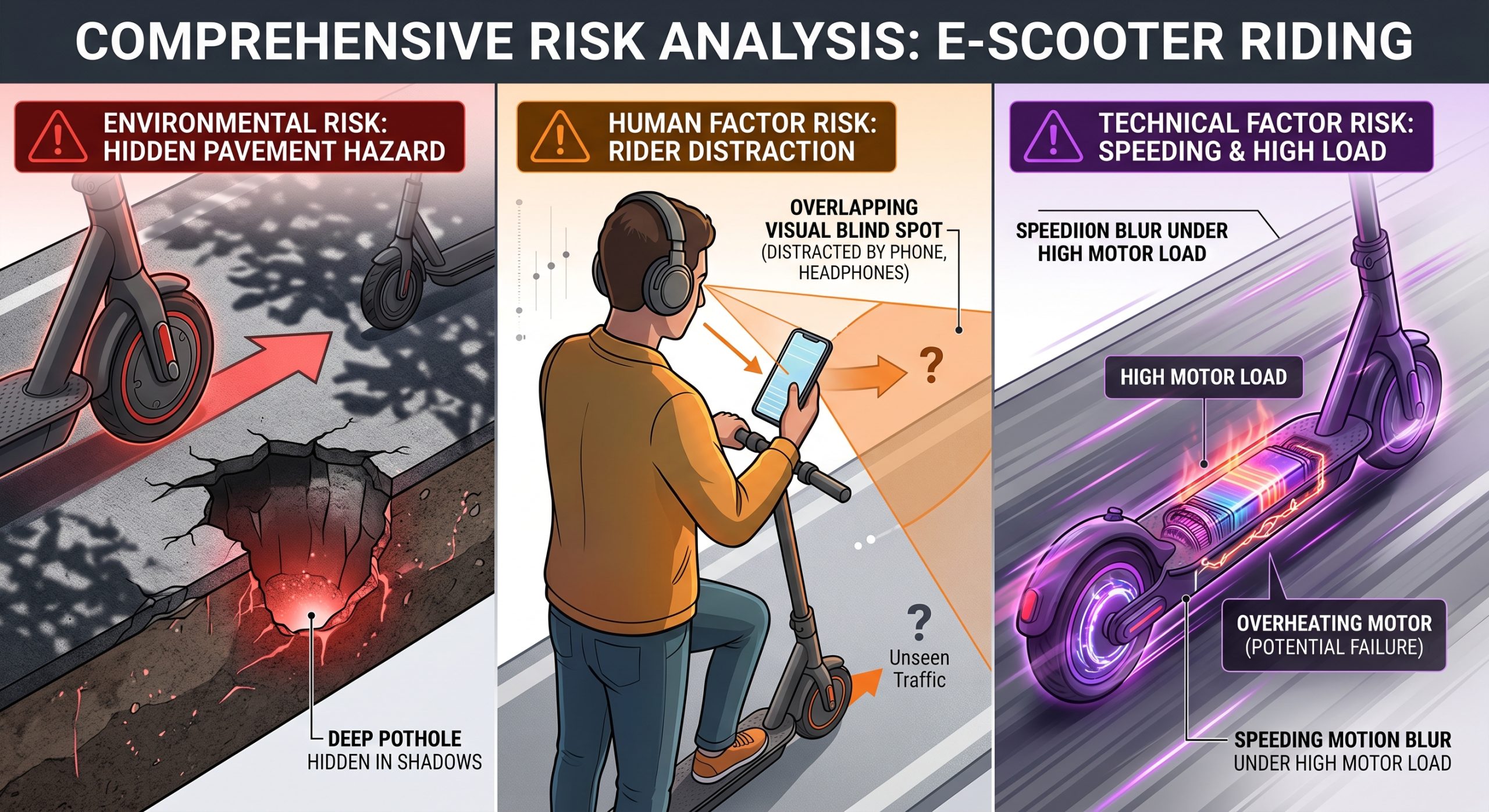
Small wheels are particularly vulnerable to road debris that cars or bicycles roll right over. Potholes, loose gravel, and uneven sidewalk cracks can cause a sudden loss of balance.
Understanding Human Error
Think about this. Many new riders fail to master the controls before hitting heavy traffic zones.
- Riding while using a mobile phone or wearing headphones.
- Failing to yield to pedestrians or following the rules of the road.
- Operating the vehicle at speeds too high for the current environment.
Key Takeaway: Preventing human error requires total focus and a solid understanding of how your vehicle handles different surfaces.
| Cause Category | Primary Risk | Mitigation Strategy |
|---|---|---|
| Environment | Road Debris | Active Scanning |
| Human | Distraction | Device-Free Riding |
| Technical | Speeding | Speed Limiting |
This data shows that behavioral adjustments are just as critical as physical road conditions in preventing collisions.
Which safety gear is essential to prevent injury?
A certified helmet is the single most important piece of gear to prevent severe trauma. While no one plans for electric scooter accidents, wearing the right accessories and parts can be the difference between a minor scrape and a major injury. Protection should always be your top priority before you power on your deck.
Choosing the Right Helmet
A well-fitting helmet is a non-negotiable requirement for every single trip you take. If you are riding at speeds above 20 mph, you should consider a full-face helmet for jaw protection.
Essential Limb Protection
The best part? Modern pads are lightweight and breathable, making them easy to wear over work clothes.
- Knee pads to protect against joint impact.
- Elbow pads for slide protection during a fall.
- Wrist guards to prevent fractures during a forward tumble.
Key Takeaway: Investing in high-quality safety gear drastically reduces the medical severity of any unexpected fall.
| Gear Item | Protection Level | Recommended For |
|---|---|---|
| Helmet | Critical | All Riders |
| Knee Pads | High | Commuters |
| Gloves | Moderate | High Speed |
The correlation between gear usage and reduced injury rates highlights why personal protection is the foundation of rider safety.
How do pre-ride checks ensure your daily safety?
Pre-ride checks identify mechanical issues like loose bolts or low tire pressure before they cause a crash. Failing to inspect your equipment is a leading contributor to mechanical-related electric scooter accidents. A simple two-minute check can identify catastrophic failures before they happen on a busy road.
Inspecting Mechanical Components
Check your brakes to ensure they engage smoothly and stop the wheels completely. You should also verify that the folding mechanism is securely locked in place to avoid a sudden collapse.
Checking Tires and Electronics
Look: tire pressure affects more than just speed; it is vital for maintaining grip.
- Verify tire inflation levels to ensure optimal traction.
- Test the front and rear lights for functionality.
- Check the battery level to avoid a sudden loss of power in traffic.
Key Takeaway: A consistent pre-flight routine ensures that your vehicle is mechanically sound and ready for the demands of the road.
| Component | Check Frequency | Warning Sign |
|---|---|---|
| Brakes | Every Ride | Spongy Lever |
| Tires | Weekly | Visible Cracks |
| Bolts | Monthly | Rattling Sounds |
Regular inspections act as a preventative shield against the mechanical failures that frequently lead to avoidable falls.

Staying safe in traffic requires you to remain predictable, follow signals, and maintain visibility at all times. Navigating through dense urban environments increases the likelihood of electric scooter accidents due to the high volume of unpredictable variables. If you want to learn more about us and our safety philosophy, you will see we prioritize defensive urban riding.
Positioning Yourself in Lanes
Utilize designated bike lanes whenever they are available to stay separated from cars. When a bike lane is not present, stay to the right but avoid the “door zone” of parked vehicles.
Communicating with Other Drivers
Wait, there’s more. You must treat yourself as a vehicle and follow every traffic sign and signal.
- Use hand signals to indicate your intention to turn or stop.
- Make eye contact with drivers at intersections to ensure you are seen.
- Avoid weaving in and out of slow-moving traffic.
Key Takeaway: Predictability is your greatest asset in traffic, as it allows drivers to anticipate your movements and give you space.
| Traffic Rule | Purpose | Benefit |
|---|---|---|
| Signal Turns | Communication | Prevents Rear-ends |
| Stop Signs | Law Compliance | Avoids Cross-traffic |
| Eye Contact | Verification | Confirms Visibility |
Adhering to standard traffic protocols bridges the communication gap between small scooters and much larger motor vehicles.
What lighting makes you most visible to drivers?
A combination of high-lumen headlights, reactive brake lights, and reflective clothing ensures drivers see you from every angle. Low visibility is a major factor in night-time electric scooter accidents. If a driver cannot see you, they cannot avoid you, making lighting systems non-negotiable for commuters.
Optimizing Built-in Scooter Lights
Most scooters come with basic lighting, but these are often too low to the ground for cars to notice. Ensure your headlight is angled to illuminate the road without blinding oncoming traffic.
Using Secondary Visibility Gear
Check this out. Adding lights to your helmet or backpack places the light source at the driver’s eye level.
- High-visibility vests or jackets with reflective strips.
- Clip-on LED flashers for your clothing or bag.
- Reflective tape applied to the sides of the scooter stem.
Key Takeaway: Layering your light sources makes you visible from multiple heights and angles, significantly lowering the risk of side-impact collisions.
| Light Type | Placement | Primary Benefit |
|---|---|---|
| Headlight | Handlebars | Road Illumination |
| Brake Light | Rear Fender | Deceleration Warning |
| LEDs | Helmet | Eye-Level Visibility |
Multiple light points create a larger visual footprint, ensuring you stand out against the background of city lights.
How do you safely maneuver around road hazards?
You navigate hazards by scanning the road ahead and crossing obstacles like tracks at a perpendicular angle. Abruptly hitting a pothole or a slick metal plate can cause sudden electric scooter accidents that throw riders off balance. You can find more detailed guides on hazard identification on our blog.
Dealing with Potholes and Debris
When you see a hazard ahead, slow down and prepare to absorb the impact with your legs. Never try to swerve at the last second, as this often leads to a more severe loss of control.
You might be wondering: how do I handle slippery metal surfaces?
- Approach railroad tracks at a 90-degree angle to prevent wheels from catching.
- Slow down significantly when approaching pedestrians or pets.
- Avoid riding over wet leaves or metal manhole covers.
Key Takeaway: Active scanning allows you to spot hazards early enough to brake smoothly rather than reacting with a dangerous jerk.
| Hazard Type | Best Reaction | Avoidance Tip |
|---|---|---|
| Pothole | Stand/Bend Knees | Scan 20ft Ahead |
| Wet Leaves | No Leaning | Reduced Speed |
| Pedestrians | Ring Bell/Slow | Yield Right of Way |
Anticipatory riding techniques transform dangerous obstacles into manageable events by giving you the time needed to react.
Does regular maintenance actually prevent crashes?
Yes, consistent maintenance prevents mechanical failures such as brake loss or tire blowouts that lead to falls. Neglecting your vehicle’s health is an invitation for electric scooter accidents. Mechanical integrity ensures that your vehicle responds exactly as expected during emergency maneuvers.
Maintaining Brake and Tire Health
Worn brake pads increase your stopping distance, which can be fatal in an emergency. Check for thinning pads and replace them immediately to maintain peak stopping power.
Monitoring Battery and Frame
Truth is: a small crack in the frame can lead to a catastrophic failure under stress.
- Tighten every bolt on the stem and folding mechanism weekly.
- Keep the battery charged to prevent power dips during acceleration.
- Clean the bearings to ensure smooth and predictable steering.
Key Takeaway: A well-maintained vehicle is a predictable vehicle, providing you with the reliability needed for safe urban transit.
| Task | Detail | Frequency |
|---|---|---|
| Bolt Tightening | Stem/Fender | Weekly |
| Brake Adjust | Cable Tension | Bi-Weekly |
| Tire Check | PSI Levels | Every Ride |
Consistent upkeep minimizes the “surprise factor” of mechanical failure, ensuring your scooter performs correctly when you need it most.
Can you ride safely during poor weather conditions?
Riding in bad weather is safe only if you reduce your speed and increase your braking distance significantly. Slippery surfaces and reduced visibility during rain significantly increase the rate of electric scooter accidents. When using your Model B, adjusting your style to match the environment is the only way to stay upright.
Adjusting Speed for Slick Roads
Rain makes painted road lines and metal surfaces as slippery as ice. You must take corners much wider and slower than you would on a dry afternoon.
Managing Visibility and Grip
Here is the kicker. Your brakes will take much longer to engage when the discs are wet.
- Increase following distance behind vehicles by at least double.
- Avoid deep puddles that can hide potholes or damage electronics.
- Wear clear goggles to keep rain out of your eyes while maintaining vision.
Key Takeaway: Weather safety is about patience and recognizing that your vehicle’s physical limits are reduced by the rain.
| Weather Factor | Impact | Adjustment |
|---|---|---|
| Rain | Low Traction | 50% Less Speed |
| Wind | Balance Shifts | Firm Grip/Lean |
| Fog | Low Visibility | Extra Lights |
Proactive adjustments to your riding speed are the most effective way to counteract the inherent dangers of a wet road.
Why is focused awareness vital for scooter safety?
Focused awareness allows you to react to split-second changes in your environment before they become accidents. A split second of distraction is all it takes for electric scooter accidents to occur. Maintaining a “heads-up” riding style allows you to anticipate threats before they manifest into collisions.
Eliminating Electronic Distractions
Using a phone for navigation is helpful, but you should never look at it while the scooter is in motion. Mount your phone on the handlebars and use audio cues to keep your eyes on the road.
Practicing Defensive Scanning
Sounds simple, right? You should always be looking several yards ahead of your current position.
- Watch for car exhaust or reverse lights in parking lanes.
- Scan for children or animals who might dart into your path.
- Listen for sirens or approaching vehicles that might be in your blind spot.
Key Takeaway: Awareness is your first line of defense, acting as a mental shield that identifies danger before it touches you.
| Awareness Level | Action | Result |
|---|---|---|
| High | Scanning | Threat Identified |
| Medium | Reaction | Narrow Escape |
| Low | Distraction | Collision Risk |
The mental state of the rider is often the deciding factor in whether a hazard becomes a harmless event or a dangerous crash.
Is riding with a passenger a significant risk?
Yes, carrying a second person on a scooter designed for one makes the vehicle unstable and extremely difficult to stop. Attempting to carry a passenger is one of the most dangerous ways to cause electric scooter accidents. Most units are engineered for a single center of gravity, and exceeding weight limits compromises the entire safety system.
Understanding Center of Gravity
When you add a second person, the weight distribution shifts toward the rear, making the front wheel light and unstable. This makes steering much more difficult and increases the chance of the scooter tipping over during a turn.
Evaluating Braking Performance
Let’s be honest. Your brakes were not designed to stop the momentum of two adults at once.
- Doubling the weight can quadruple the required stopping distance.
- Excess weight puts extreme stress on the motor and battery.
- The deck and stem may suffer structural fatigue or snapping.
Key Takeaway: Respecting the single-rider design is essential for maintaining the mechanical integrity and handling of your scooter.
| Rider Count | Stability | Brake Safety |
|---|---|---|
| Single | High | Optimal |
| Dual | Very Low | Dangerous |
| Overweight | None | Critical Failure |
Physics dictates that overloading a small-frame vehicle will always result in diminished control and increased risk of injury.
Staying safe on two wheels requires a combination of high-quality equipment, consistent maintenance, and a defensive mindset. By respecting the rules of the road and staying alert, you can enjoy the freedom of electric mobility without the fear of injury.
At Dynamic Scooter, we believe your commute should be the safest part of your day, which is why we build our products with stability and reliability in mind. If you have questions about our safety features or need help choosing the right gear, feel free to contact us today at any time.
FAQ
Can I ride my electric scooter on the sidewalk?
No, in most urban areas, it is illegal and dangerous to ride on sidewalks because they are designed for pedestrians. Riding on the sidewalk increases the risk of hitting people coming out of shops or children who move unpredictably.
What is the best way to brake in an emergency?
You should shift your weight toward the rear and apply both brakes steadily without locking the wheels. Moving your center of gravity backward prevents the scooter from tipping forward and gives the tires more grip during a hard stop.
How do I know if my tire pressure is correct?
You must check the sidewall of your tire for the recommended PSI and use a pressure gauge to verify it. Correct pressure prevents pinch flats and ensures that the tire has the right amount of surface contact with the road for safety.
Can I use my phone for navigation while riding?
Yes, but only if it is mounted to your handlebars and you do not touch it while in motion. Looking down at a handheld device takes your eyes off the road for several seconds, which is more than enough time for a serious accident to occur.
How often should I tighten the bolts on my scooter?
You should perform a quick check every week and a deep inspection once a month. Constant vibrations from the road can loosen the hardware over time, which can lead to the stem or handlebars becoming unstable during a ride.