
You can protect your scooter from solar damage by parking in shade, using reflective covers, and letting the motor cool before charging. Imagine your commute being cut short because your battery simply gave up under the sweltering midday heat. This electric scooter overheating isn’t just a nuisance; it’s a silent threat to your vehicle’s lifespan and your personal safety.
If you ignore the rising deck temperatures, you risk permanent lithium-ion degradation or even dangerous thermal runaway events. Fortunately, by following a few expert strategies, you can maintain peak performance and keep your ride running cool all summer long.
1. Why does direct sun cause electric scooter overheating?
Direct sun heats the internal components through radiant energy and the greenhouse effect within the deck. This concentrated radiation causes the dark surfaces of your scooter to absorb and trap heat, leading to electric scooter overheating. When the metal frame stays under the sun, it acts like a heat sink, slowly transferring high temperatures to the sensitive electronics inside.
Protecting the Chassis
Direct sunlight can warp the plastic components and melt the adhesives that keep your gaskets waterproof. You should always look for a spot that offers at least partial coverage to avoid this physical degradation.
Think about it:
- UV rays break down rubber handlebar grips.
- Metal frames expand slightly under extreme heat.
- Plastics can become brittle over time.
The best part? Keeping the frame cool also protects your resale value.
Preserving Paint and Grips
A “sunburned” scooter looks aged and neglected, which can lead to peeling paint and sticky grips. Heat also degrades the integrity of the wiring insulation near the deck surface.
Here is the kicker:
- UV-resistant wax can help shield the paint.
- Light-colored covers reflect more energy than dark ones.
- Silicone grips handle heat better than standard rubber.
Key Takeaway: Sunlight is a primary external catalyst for heat damage; physical protection is your first line of defense.
| Exposure Factor | Impact Level | Mitigation Strategy |
|---|---|---|
| UV Radiation | High | UV-Resistant Wax |
| Infrared Heat | Critical | Reflective Covers |
| Ambient Temp | Moderate | Shaded Parking |
Strategic shielding prevents infrared energy from penetrating the deck and cooking the internal circuitry.

2. How can hardware help prevent electric scooter overheating?
High-quality hardware like advanced Battery Management Systems (BMS) and aluminum heat sinks dissipate thermal energy to stop electric scooter overheating. These components are designed to regulate the flow of electricity when temperatures rise too high. Without these safety features, a standard battery could easily reach critical failure points on a hot afternoon.
The Role of the BMS
The BMS acts as the brain of your battery, constantly monitoring individual cell temperatures. If it detects a spike, it will throttle the power output to ensure safety.
Believe it or not:
- Smart BMS units can shut down the system entirely.
- Real-time monitoring prevents cell imbalance.
- Thermal sensors are located in the hottest parts of the pack.
It’s a lifesaver for your battery’s long-term health.
Dynamic Scooter Model B Design Advantages
The Dynamic Scooter Model B utilizes an aerospace-grade aluminum chassis that naturally draws heat away from the motor. This passive cooling system works in tandem with the firmware to optimize performance during summer rides.
Let’s be honest:
- Aluminum conducts heat 15 times better than steel.
- Built-in vents allow airflow through the deck.
- The Model B’s wiring is rated for high-temperature environments.
Key Takeaway: Investing in superior hardware provides an automated safety net that protects your battery from human error.
| Hardware Feature | Function | Primary Benefit |
|---|---|---|
| Smart BMS | Power Throttling | Prevents Thermal Runaway |
| Aluminum Deck | Passive Cooling | Rapid Heat Dissipation |
| Thermal Sensors | Live Monitoring | Early Warning System |
Sophisticated thermal management hardware ensures that your scooter remains operational even when external temperatures are less than ideal.
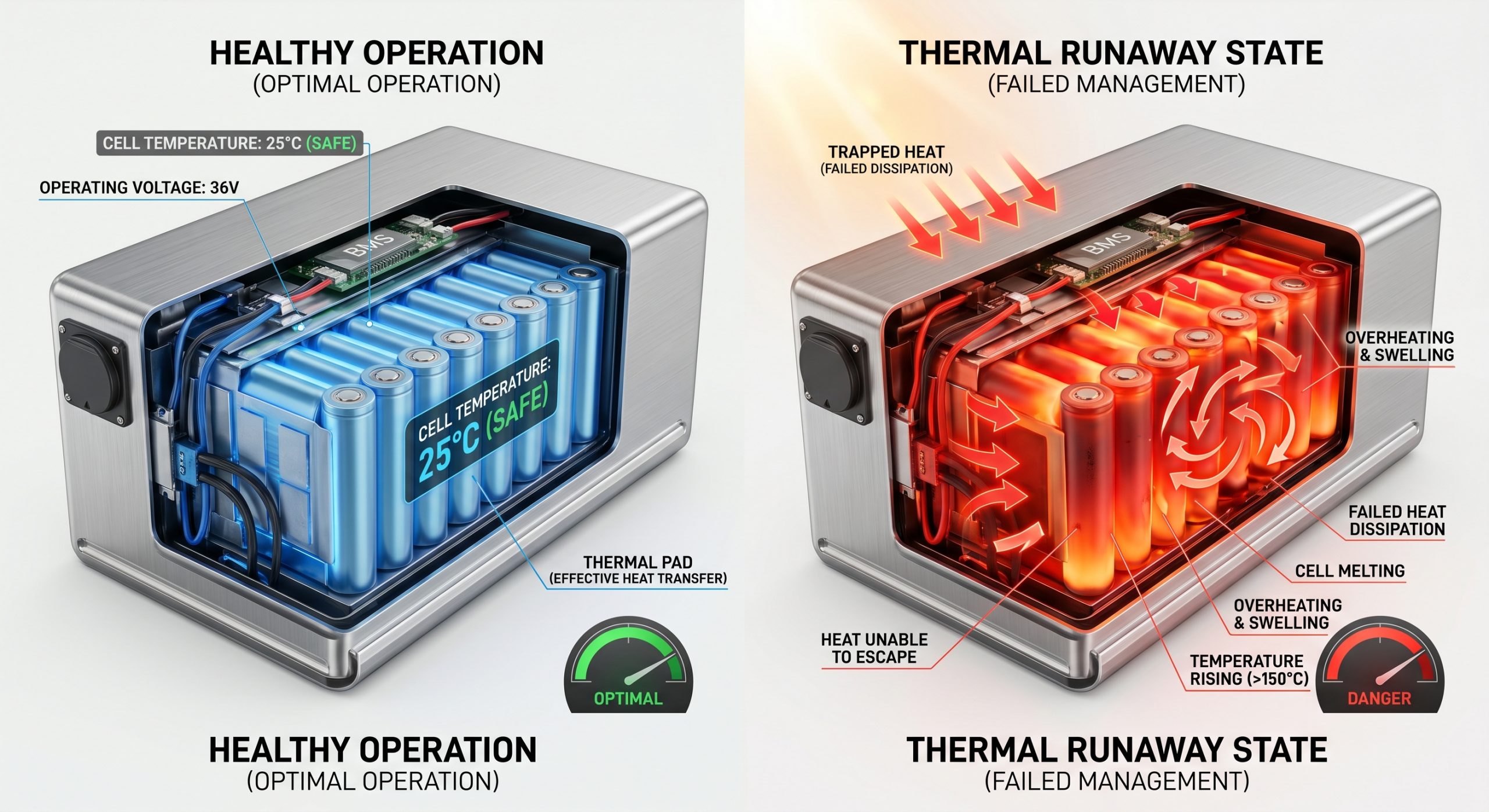
3. Does parking in shade reduce electric scooter overheating?
Parking in the shade can lower ambient temperature exposure by up to 20 degrees, preventing electric scooter overheating. When you leave your scooter on hot asphalt in the sun, it absorbs heat from both the air and the ground. This “double-heating” effect can push internal battery temperatures well beyond their safe storage limits.
Strategic Parking Habits
You should always prioritize indoor parking or covered garages whenever they are available. If you must park outdoors, find a large tree or the shadow of a tall building to keep the sun off the deck.
Bottom line?
- Asphalt can reach temperatures 40°F higher than the air.
- Shaded areas allow the motor to cool down faster.
- Parking on grass is cooler than parking on concrete.
A little planning goes a long way.
Utilizing Reflective Covers
If shade isn’t available, a specialized reflective cover can bounce the sun’s rays away from your vehicle. These portable shields are lightweight and can be stored in a backpack for daily use.
Here is the deal:
- Silver coatings are the most effective at reflecting heat.
- Covers also protect your scooter from dust and bird droppings.
- Breathable fabrics prevent moisture from trapping heat inside.
Key Takeaway: Lowering the starting temperature of your scooter ensures it has more “thermal headroom” before it reaches a danger zone.
| Parking Spot | Temp Reduction | Difficulty Level |
|---|---|---|
| Indoor Garage | 30°F+ | Medium |
| Tree Shade | 15-20°F | Easy |
| Reflective Cover | 10-15°F | Easy |
Environmental control is the most cost-effective method to preserve the chemical stability of your lithium-ion cells.
4. How does riding style impact electric scooter overheating?
Aggressive acceleration and steep hill climbs increase current draw, which is a leading cause of electric scooter overheating. When the motor works harder, it generates internal resistance heat that can quickly soak into the battery. Constant high-speed riding prevents the components from having any “rest” periods to shed this excess energy.
Managing Motor Load
You can reduce heat by avoiding “full-throttle” starts and using your feet to kick-start the motion. This reduces the initial high-amp surge that causes the most significant temperature spikes in the motor.
Keep this in mind:
- Gradual acceleration keeps the controller cool.
- High weight loads force the motor to draw more current.
- Riding on flat ground is significantly cooler than hill climbing.
Your thumb controls more than just speed; it controls temperature.
Allowing Airflow Cooling
The movement of the scooter creates a natural breeze that helps dissipate heat from the motor casing. However, if you are riding in stop-and-go city traffic, this airflow is inconsistent.
The truth is:
- Higher speeds provide better airflow but generate more internal heat.
- 15-18 mph is often the “sweet spot” for thermal balance.
- Stopping frequently in the sun prevents effective cooling.
Key Takeaway: Smooth, consistent riding is far more thermal-efficient than erratic, aggressive maneuvers.
| Riding Habit | Heat Impact | Recommendation |
|---|---|---|
| Full Throttle | High | Accelerate Gradually |
| Steep Inclines | Critical | Use Kick-Assistance |
| Heavy Payload | High | Stay Within Weight Limits |
Modifying your riding behavior can extend your battery range while keeping internal components within a safe thermal window.
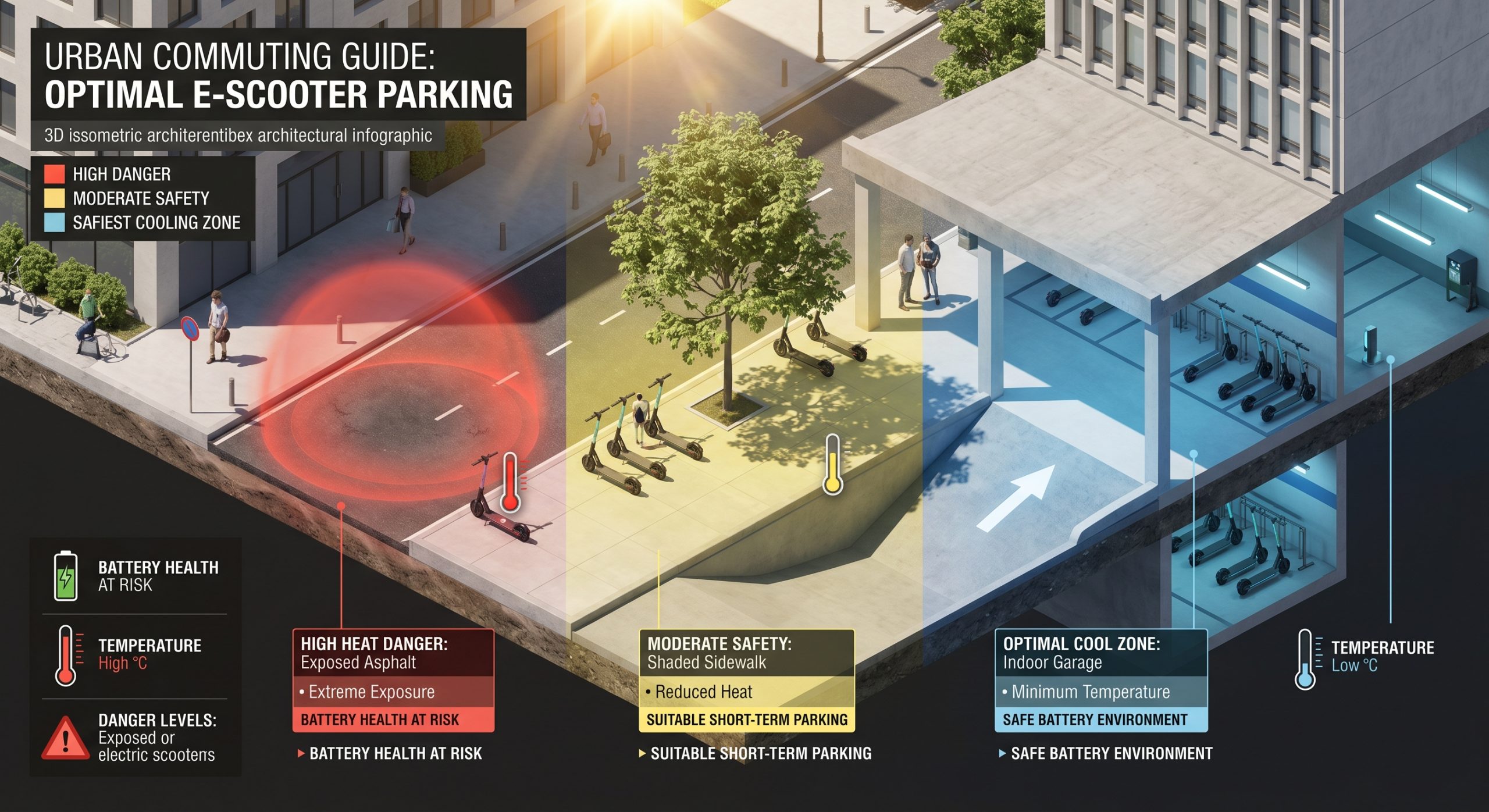
5. What temperatures trigger electric scooter overheating?
Overheating typically begins when internal battery temperatures exceed 113°F (45°C) during operation, which leads to electric scooter overheating. While most scooters can handle ambient air temperatures up to 100°F, the internal components generate their own heat. This cumulative effect means your battery might be much hotter than the weather forecast suggests.
Dangerous Operating Ranges
Lithium-ion batteries are safest when they operate between 68°F and 85°F. Once the internal temperature hits 140°F, the battery enters a danger zone where permanent capacity loss occurs.
Here is the kicker:
- 113°F: Performance begins to throttle.
- 131°F: Permanent cell degradation starts.
- 158°F: Serious risk of fire or thermal runaway.
Don’t wait for the smoke to take action.
Environmental Thresholds
High humidity can also interfere with the scooter’s ability to shed heat through convection. On a humid 95°F day, your scooter will struggle to stay cool much more than on a dry day.
Think about it:
- Dense air holds more heat.
- Direct sunlight can add 15°F to the deck temperature.
- Dark asphalt radiates heat back up into the motor.
Key Takeaway: Monitoring the ambient environment is important, but the internal “core” temperature is what actually dictates safety.
| Zone | Temp (°F) | System Behavior |
|---|---|---|
| Optimal | 68 – 85 | Full Performance |
| Warning | 105 – 120 | Power Throttling |
| Critical | 140+ | System Shutdown |
Understanding these thermal thresholds allows you to make informed decisions about when to ride and when to rest.
6. Can storage habits stop electric scooter overheating?
Storing your scooter in a climate-controlled room rather than a hot garage prevents electric scooter overheating from environmental heat soak. Many riders don’t realize that a closed garage can reach temperatures well over 110°F during the summer. This constant heat stress slowly drains the battery’s chemistry even when it isn’t being used.
Avoiding the “Oven” Effect
If you must store your scooter in a garage, try to place it on the floor where the air is coolest. Never leave it in a car trunk, as vehicle interiors can quickly reach 140°F, which is catastrophic for lithium cells.
The best part?
- Basements are usually the coolest spots for storage.
- Keeping the battery at a 50% charge during storage reduces stress.
- Avoid placing the scooter near water heaters or furnaces.
A cool battery is a long-lasting battery.
Long-Term Summer Storage
If you aren’t planning to ride for a few weeks, remove the battery if your model allows it. Storing the battery separately in a cool, dry place is the ultimate way to protect its lifespan.
Here is the deal:
- Heat speeds up the self-discharge rate of the battery.
- A fully charged battery is more sensitive to heat than a partially discharged one.
- Inspect the battery for swelling every few weeks in summer.
Key Takeaway: Your storage environment is just as important as your riding environment for total thermal health.
| Storage Location | Avg. Summer Temp | Safety Rating |
|---|---|---|
| Living Room | 72°F | Excellent |
| Garage | 105°F | Poor |
| Car Trunk | 140°F | Dangerous |
Proper storage ensures that you don’t start your ride with a battery that is already half-baked.
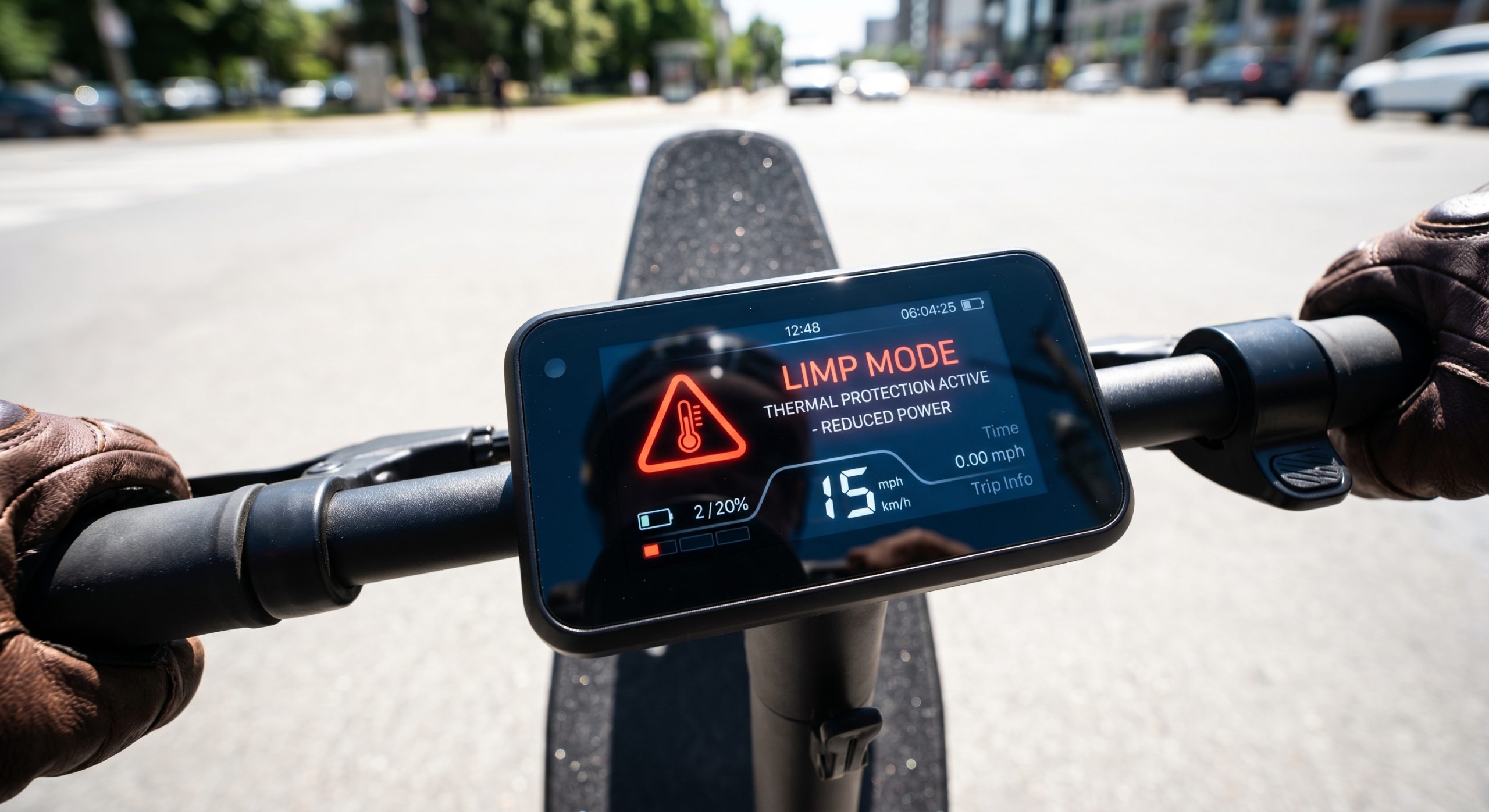
7. Why is cool-down time vital for electric scooter overheating?
Allowing the battery to rest for 30 minutes after a ride prevents electric scooter overheating during the high-stress charging phase. Charging generates its own heat due to electrical resistance within the cells. If you plug in a battery that is already hot from a long commute, you are layering heat on top of heat.
The Science of Charging Heat
When you charge, ions move through the electrolyte, creating friction at a molecular level. This process is most efficient and safest when the battery starts at room temperature.
Believe it or not:
- Charging a hot battery can lead to “swelling.”
- The charger itself also gets hot and adds to the ambient temp.
- Wait until the deck feels cool to the touch before plugging in.
Patience is the cheapest maintenance you can perform.
Post-Ride Inspection
Use those 30 minutes of cool-down time to check your scooter for any other issues. Look at the tires and the motor hub to see if they feel unusually hot or smell like burning plastic.
The truth is:
- A hot motor hub usually means you over-strained the gears.
- Smells are an immediate indicator of a failing component.
- Most thermal incidents happen during or immediately after charging.
Key Takeaway: Never rush the charging process; a cool-down period is a non-negotiable safety step.
| Step | Action | Duration |
|---|---|---|
| Ride End | Power Off & Park in Shade | 0 Mins |
| Resting | Let Air Dissipate Deck Heat | 30 Mins |
| Charging | Use Original Charger Indoors | Varies |
Standardizing a post-ride rest period significantly reduces the cumulative heat load on your battery cells.
8. Does maintenance prevent electric scooter overheating?
Cleaning debris from motor vents and lubricating moving parts reduces friction-based electric scooter overheating. Over time, dust and mud can build up in the cooling fins of your motor or the vents of your controller. This acts like an insulation blanket, trapping heat inside the components where it does the most damage.
Clearing Air Passages
You should use a soft brush or compressed air to keep the motor’s exterior clean. This allows the aluminum casing to radiate heat into the air as designed by the manufacturer.
Here is the kicker:
- Mud on the motor casing can raise temps by 10%.
- Clogged vents force the internal fan (if present) to work harder.
- A clean scooter simply operates more efficiently.
It only takes five minutes a week.
Lubrication and Friction Reduction
Squeaky bearings aren’t just annoying; they are a sign of friction that creates extra heat. Keeping your wheels and folding mechanisms lubricated ensures that the motor doesn’t have to fight unnecessary resistance.
Let’s be honest:
- Friction turns kinetic energy into wasted heat.
- Dry bearings can seize up and burn out the motor.
- Use specialized scooter lubricants for the best results.
Key Takeaway: A well-maintained scooter is a cooler scooter because every part is working in harmony.
| Maintenance Task | Frequency | Heat Reduction |
|---|---|---|
| Clean Motor Vents | Weekly | Moderate |
| Lubricate Bearings | Monthly | High |
| Inspect Wiring | Bi-Monthly | Safety Only |
Regular upkeep prevents “invisible” heat sources from compromising the efficiency of your electrical system.
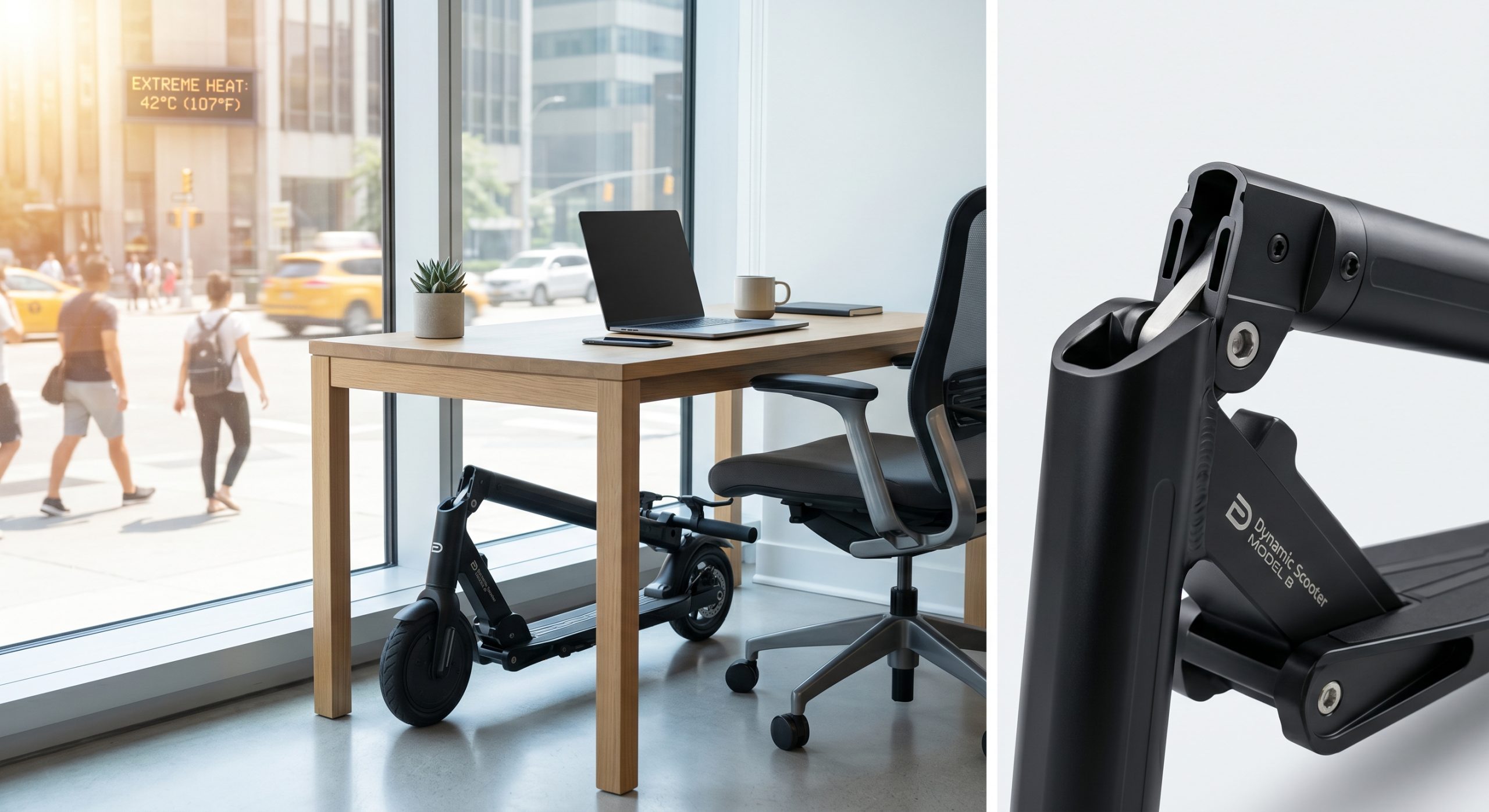
9. How do you monitor electric scooter overheating live?
Real-time dashboard indicators and mobile app alerts allow you to identify electric scooter overheating before permanent damage occurs. Modern scooters are equipped with digital displays that show more than just your speed. Many include temperature warnings or error codes that trigger when the system detects a thermal anomaly.
Understanding Error Codes
If your dashboard flashes a red thermometer or an “E-code,” you must stop riding immediately. These codes are calibrated to trigger before the hardware melts or catches fire.
Keep this in mind:
- Refer to your manual to learn what specific codes mean.
- A flickering display can sometimes indicate a heat-stressed controller.
- Most smart scooters will automatically limit speed if a code triggers.
Don’t ignore what your scooter is trying to tell you.
Using Companion Apps
Many premium scooters connect to your phone via Bluetooth to provide detailed health diagnostics. These apps often show the exact temperature of the battery pack and the motor in degrees.
The best part?
- You can set custom alerts for temperature thresholds.
- Data logs help you see which routes cause the most heat.
- App updates can often improve thermal management software.
Key Takeaway: Technology is your best ally in monitoring what your human senses cannot feel inside the deck.
| Indicator | Meaning | Required Action |
|---|---|---|
| Red Thermometer | System Overheat | Stop & Power Off |
| Sluggish Speed | Thermal Throttling | Reduce Load/Rest |
| High App Temp | Warning Level | Park in Shade |
Real-time data turns guesswork into proactive safety management during the peak of summer.
10. Do tires influence electric scooter overheating risks?
Low tire pressure creates excessive rolling resistance, forcing the motor to work harder and triggering electric scooter overheating. When your tires are soft, the motor has to use significantly more energy to push the scooter forward. This extra effort results in a massive spike in current draw, which translates directly into battery heat.
The Importance of Correct PSI
You should check your tire pressure at least once a week, especially during temperature swings. The Dynamic Scooter Model B performs best when tires are inflated to the manufacturer’s exact specifications.
Bottom line?
- Low PSI can reduce your battery range by up to 20%.
- Soft tires generate friction heat on the asphalt.
- Correct inflation makes the ride smoother and the motor cooler.
It’s the simplest fix for a hot motor.
Heat and Tire Expansion
Remember that air expands when it gets hot, so your tire pressure will naturally rise on a sunny day. Always measure your PSI when the tires are “cold” (before you start riding) for the most accurate reading.
Here is the deal:
- Over-inflation can lead to blowouts in the heat.
- Under-inflation is the leading cause of motor stress.
- Solid tires don’t have pressure issues but offer less heat dissipation.
Key Takeaway: Your tires are the bridge between the motor and the road; if they are inefficient, the motor pays the price in heat.
| Tire Condition | Motor Stress | Overheat Risk |
|---|---|---|
| Under-Inflated | Very High | Critical |
| Properly Inflated | Low | Minimal |
| Over-Inflated | Low | Blowout Risk |
Maintaining optimal tire pressure is a crucial, yet often overlooked, component of a complete thermal management strategy.
FAQ
Can I use water to cool down a hot scooter?
No, you should never pour water on a hot scooter motor or battery. Rapid cooling can cause metal components to crack and water could seep into seals that have expanded from the heat, causing a short circuit.
What’s the best time of day to ride during a heatwave?
The best times to ride are early morning (before 10 AM) or late evening (after 7 PM). During these windows, the sun is less intense and the ground has not yet absorbed the day’s maximum thermal energy.
How do I know if my battery is already damaged from heat?
Signs of heat damage include a noticeable drop in range, the battery taking longer to charge than usual, or the deck feeling hot even when the scooter is turned off. If the battery is bulging or smelling like chemicals, it must be replaced immediately.
Can I ride my scooter in the sun if it’s only 75 degrees?
Yes, 75 degrees is generally safe for riding. However, keep in mind that the battery generates its own internal heat, so if you are climbing steep hills for a long period, you should still monitor the deck temperature.
Is it okay to charge my scooter in a garage?
It is only okay if the garage is well-ventilated and stays below 85°F. If your garage feels like a sauna during the day, it is much safer to bring the scooter inside your home to charge in a climate-controlled room.
Conclusion
Mastering the thermal health of your vehicle requires a proactive blend of smart parking, smooth riding, and consistent maintenance. By understanding how environmental factors and riding habits contribute to internal heat, you can ensure that your scooter remains a reliable companion for years to come. At Dynamic Scooter, we believe that safety and longevity go hand in hand with high-performance engineering.
Whether you need a battery upgrade or a complete safety checkup, our team is ready to help. To learn more about our hardware or to get professional support for your ride, contact us today and let us help you stay cool on the road.