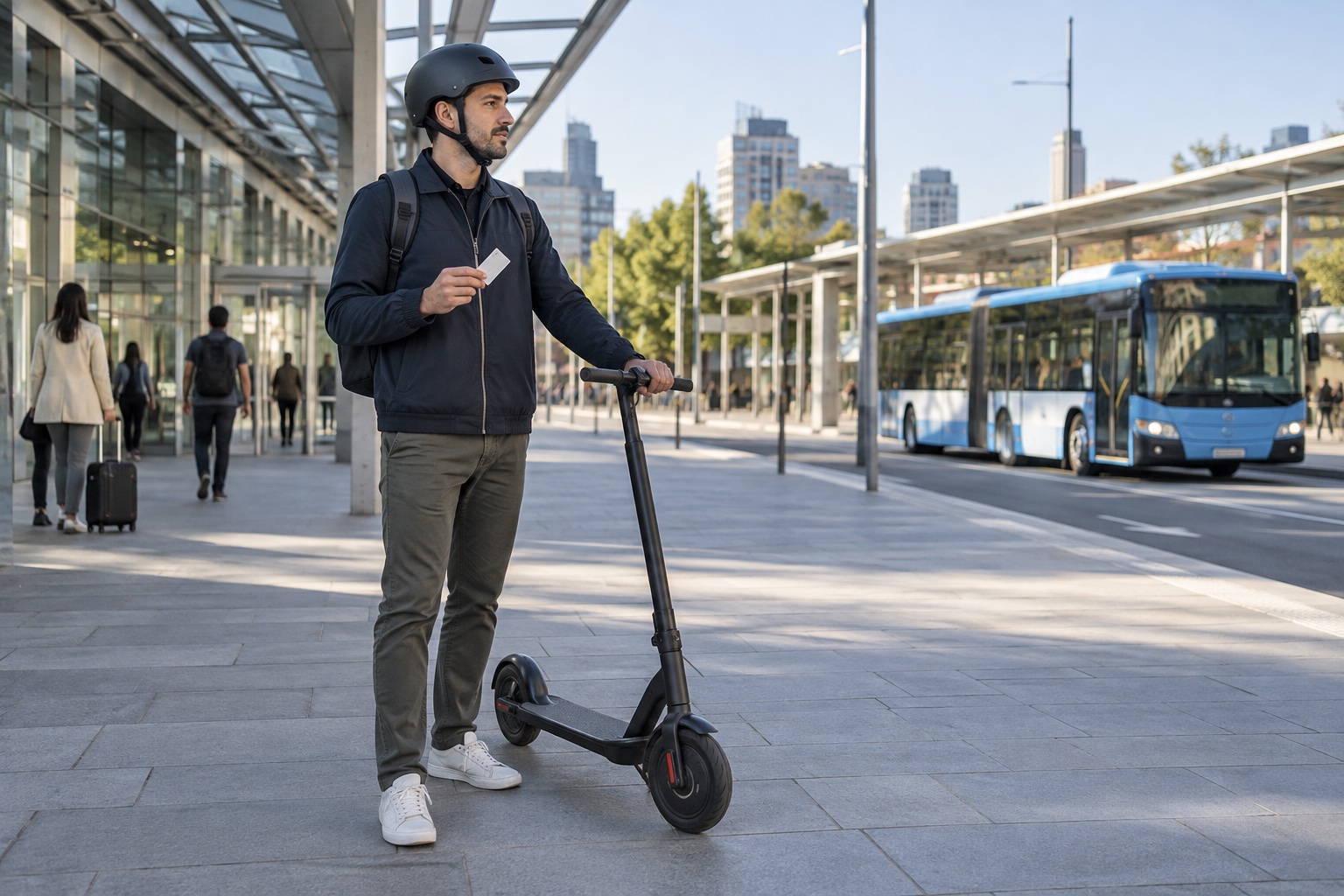

Your battery likely drains faster than expected because manufacturer tests occur in perfect lab settings that differ from your daily commute. This discrepancy is a common frustration for riders who rely on their electric scooter range to get to work or meetings. Imagine being halfway to your destination only to have your ride lose power on a busy street. Our guide helps you understand how to manage your battery so you can ride with total confidence.
1. Why is my electric scooter range so low?
The gap between the manual and the road is usually due to “ideal condition” testing that doesn’t reflect your actual riding habits. Most brands calculate their maximum electric scooter range using the lightest possible rider on flat ground at very low speeds.
- Most tests use a 165lb (75kg) rider.
- The environment is usually windless and temperature-controlled.
- The scooter stays in its least powerful “Eco” mode.
But wait, there’s more:
Are lab tests for electric scooter range realistic?
The short answer is no, because they ignore variables like wind and stop-and-go traffic. Lab settings are designed to show the absolute maximum potential of the hardware under perfect circumstances. You should view these numbers as a ceiling rather than a daily guarantee.
Which factors drain battery the most?
Energy consumption is all about overcoming resistance from the world around you. Frequent acceleration and heavy wind resistance force the motor to pull massive current from the cells. This rapid discharge reduces the total distance you can travel on a single charge.
Key Takeaway: Real-world mileage is typically 30-40% less than the box suggests because of everyday variables.
| Condition | Impact on Range |
|---|---|
| Ideal Lab Environment | 100% Advertised |
| Typical City Commute | 60-70% of Advertised |
| Heavy Hilly Terrain | 40-50% of Advertised |
Consistent riding habits are the best way to bridge the gap between lab stats and your daily results.

2. How does speed affect your electric scooter range?
Optimizing your electric scooter range starts with understanding that your thumb is the biggest battery killer. Higher speeds require significantly more wattage to maintain momentum against air resistance.
- Maintaining top speed forces the battery to discharge at its maximum rate.
- High heat generated by fast riding reduces overall battery efficiency.
- Constant high-speed riding can cut your travel distance in half.
Here is the deal:
Why does going faster kill your battery?
Aerodynamic drag is the silent enemy of every electric commuter. As you double your speed, the energy required to push through the air actually quadruples. This means your motor has to work much harder just to stay at a high velocity.
Is there a sweet spot for efficiency?
Most motors have an efficiency “sweet spot” usually found between 12 and 15 mph. Staying within this range allows the motor to run cool while maximizing the distance per charge. You will notice a major difference in how long your battery bars last at this pace.
Key Takeaway: Dropping your speed by just 5 mph can sometimes add several miles to your total trip distance.
| Speed (MPH) | Efficiency Rating | Estimated Range Impact |
|---|---|---|
| 10-12 MPH | Excellent | +15% Gain |
| 15-18 MPH | Good | Baseline |
| 20+ MPH | Poor | -30% Loss |
Using cruise control features can help you stay in the efficiency zone without constant throttle adjustments.
3. Does rider weight impact electric scooter range?
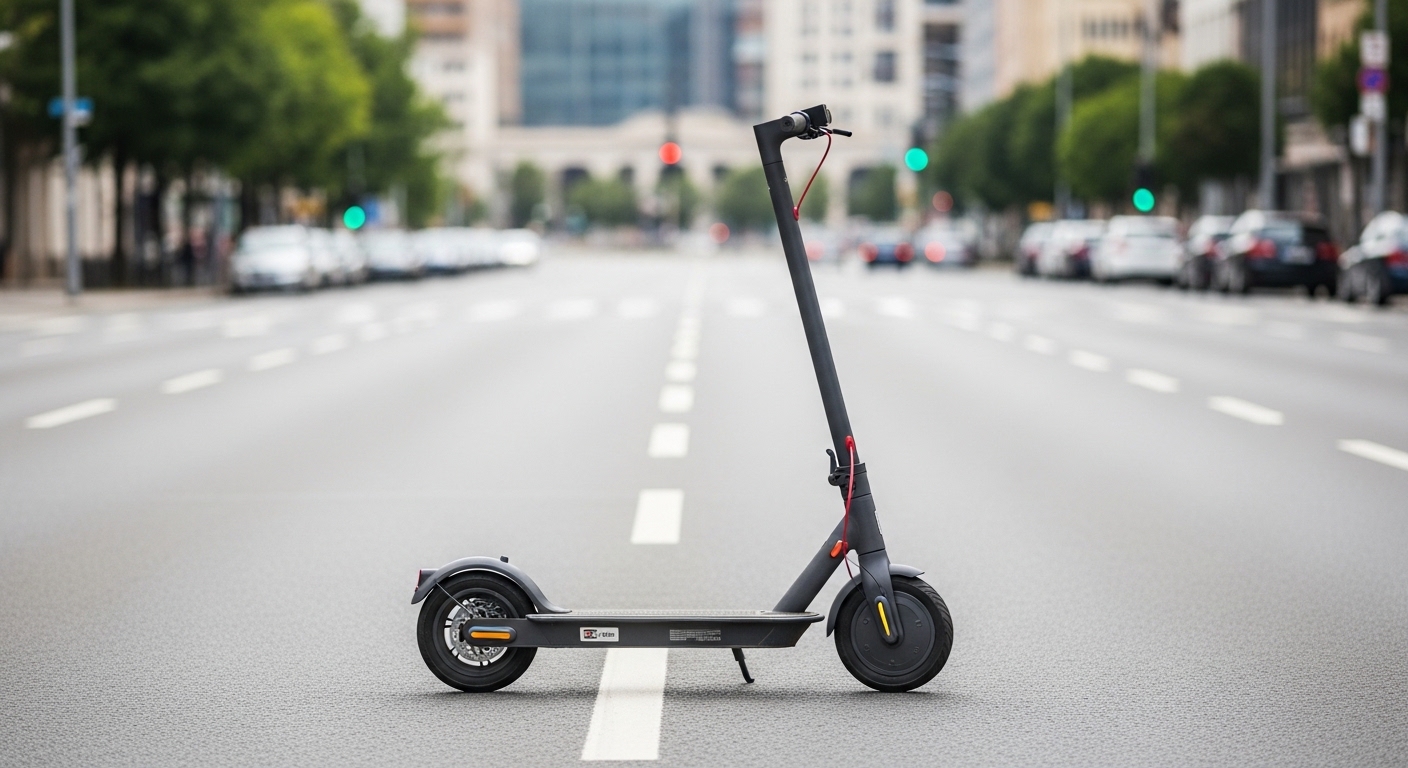
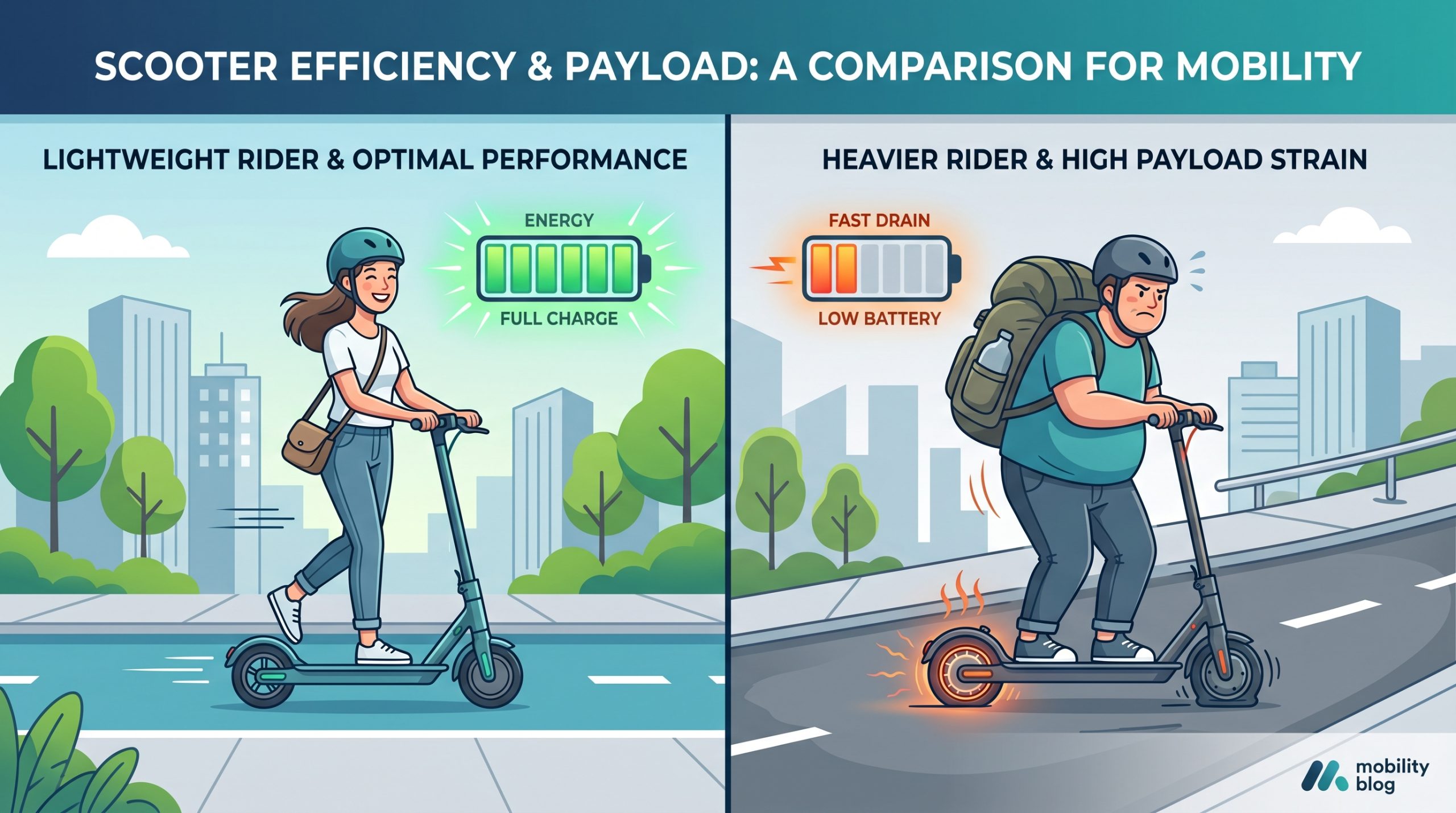
The motor definitely cares how much you weigh because every extra pound requires more torque to move. Heavier payloads demand more energy from the electric scooter range for every foot of travel.
- A 220lb rider uses nearly 25% more energy than a 150lb rider.
- Carrying heavy backpacks or groceries adds to this hidden weight drain.
- Higher weight increases rolling resistance between the tires and the road.
The truth is:
How much does payload affect performance?
Heavier riders will notice that the motor sounds “busier” and the battery drops faster on inclines. This happens because the controller must draw more Amps to overcome the inertia of a larger load. It is an unavoidable law of physics that impacts every electric vehicle.
Can lighter riders go further?
Yes, lighter riders naturally experience less friction and rolling resistance during their journey. They can often get much closer to the manufacturer’s suggested range numbers without trying. Their scooters don’t have to work as hard to maintain a steady cruising speed.
Key Takeaway: Payload is a primary variable; being near the maximum weight limit will cut your range significantly.
| Rider Weight | Range Expectation |
|---|---|
| 150 lbs | ~90% of Advertised |
| 200 lbs | ~70% of Advertised |
| 250 lbs (Max) | ~50% of Advertised |
Always consider your total carry weight, including gear, when planning a long-distance commute.
4. Can tire pressure boost your electric scooter range?
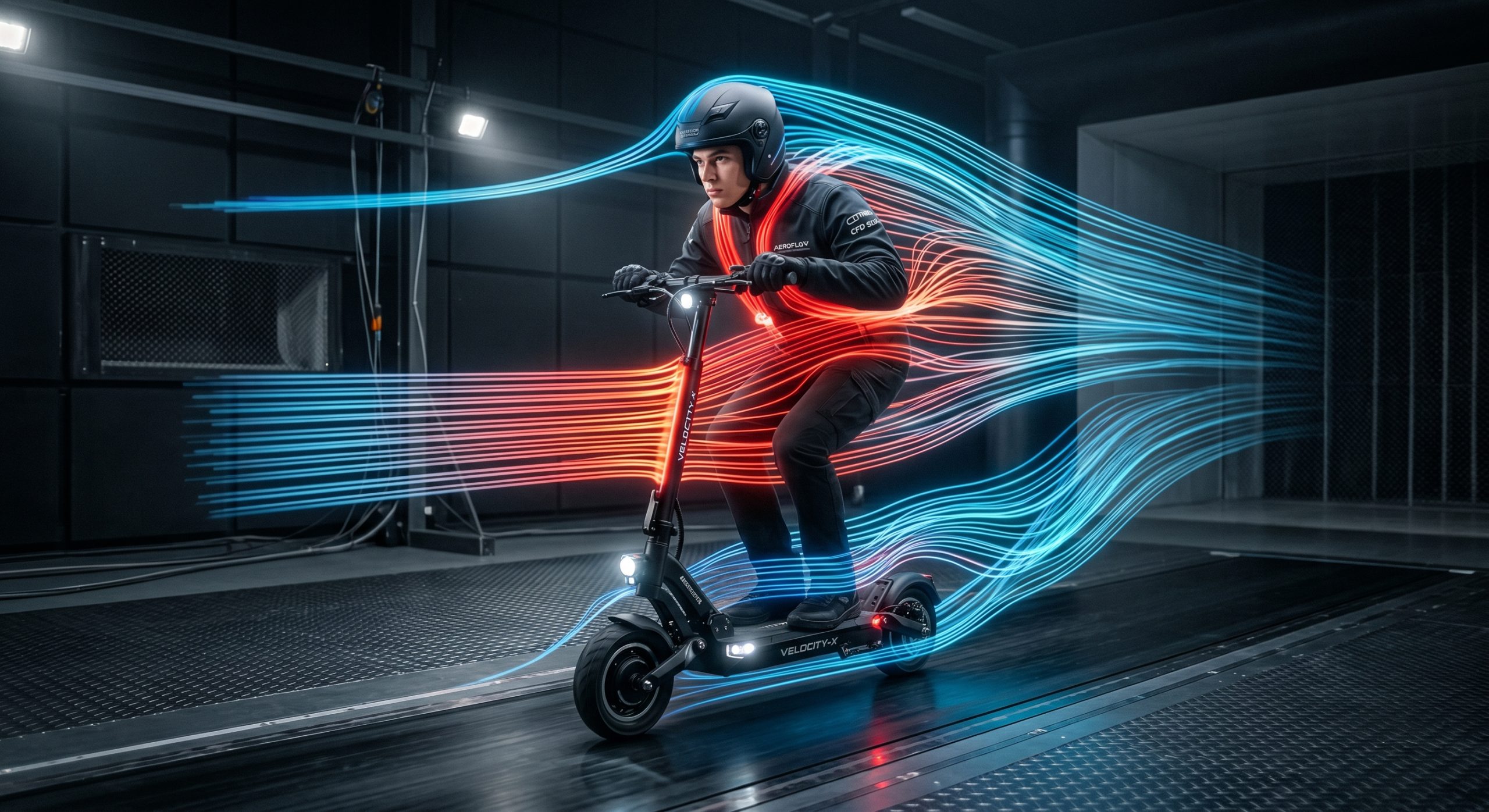
Maintaining your electric scooter range often comes down to basic weekly maintenance. One of the most overlooked factors is the air pressure inside your pneumatic tires.
- Soft tires create a larger contact patch with the pavement.
- Lower PSI causes the motor to work harder to maintain basic speed.
- Firm tires allow for a smoother, low-friction glide across the road.
Check this out:
Do soft tires cause more drag?
Under-inflated tires create massive rolling resistance that slows you down and drains power. This can lead to motor overheating and premature battery exhaustion during a single ride. Keeping tires at the recommended pressure is the easiest way to save energy.
What is the ideal PSI for range?
Most commuter models thrive when kept between 45 and 50 PSI for maximum efficiency. While solid tires don’t lose air, they generally have higher resistance than well-inflated pneumatic ones. Checking your pressure weekly can save up to 10% of your total battery life.
Key Takeaway: Firm tires are the easiest “free” upgrade you can give your scooter for an immediate mileage boost.
| Tire Status | Rolling Resistance | Range Effect |
|---|---|---|
| Under-inflated | High | -15% |
| Factory Recommended | Moderate | Baseline |
| Max Recommended | Low | +5% |
Keep a small portable pump in your bag to ensure you never ride on soft, energy-draining tires.
5. Why do hills drain your electric scooter range?
Gravity is a relentless force that demands a very high price in Watt-hours from your battery. When you point your scooter upward, the motor enters a high-torque mode that consumes the electric scooter range rapidly.
- A single steep hill can consume the same energy as a mile of flat riding.
- Motor noise increases on inclines, which is a sign of high energy draw.
- Voltage sag often occurs on hills, making the battery look emptier than it is.
Wait, it gets better:
Does climbing require more wattage?
To fight gravity, your controller pushes maximum current to the motor to keep you moving. This heavy load generates heat and drains the battery cells at an accelerated rate. You will see your battery indicator drop much faster when your route includes significant elevation changes.
How to tackle inclines efficiently?
Instead of pinning the throttle to the maximum, try to maintain a steady and moderate pace. If your scooter has a kick-to-start feature, use it to get momentum before the hill starts. Helping the motor with a few manual kicks on steep grades can save significant battery life.
Key Takeaway: Hills are ultimate range killers; planning a flatter route is often faster and better for your battery.
| Grade Incline | Energy Consumption |
|---|---|
| 0% (Flat Ground) | 1.0x (Normal) |
| 5% Incline | 2.5x Increase |
| 10% Incline | 4.0x Increase |
Choosing a slightly longer but flatter path will usually result in more remaining battery at your destination.
6. Does weather change your electric scooter range?
Your electric scooter range is highly dependent on the temperature of the air outside. Lithium-ion batteries are chemical engines that perform best in mild, room-temperature environments.
- Riding in freezing temperatures can slash your range by up to 50%.
- Batteries take longer to charge when the cells are cold.
- High heat plus high speed equals a stressed and less efficient battery.
But that’s not all:
Do cold temperatures hurt lithium batteries?
In cold weather, the internal resistance of the battery cells increases significantly. This means the energy cannot move as freely, leading to a noticeable drop in total available capacity. You might notice your scooter feels sluggish and dies much sooner during winter months.
Can heat cause thermal throttling?
While heat makes chemistry move faster, excessive temperatures can trigger safety sensors in the controller. If the battery gets too hot, the system will throttle the power to prevent permanent damage. Storing your scooter in a hot car can permanently degrade its total range over time.
Key Takeaway: For maximum distance, try to ride and store your scooter between 60°F and 75°F.
| Temperature | Battery Performance |
|---|---|
| 70°F (21°C) | 100% (Optimal) |
| 40°F (4°C) | 70-80% Capacity |
| 32°F (0°C) | 50-60% Capacity |
Avoid charging a frozen battery; let it warm up to room temperature first to protect the cells.
7. Can battery age reduce electric scooter range?
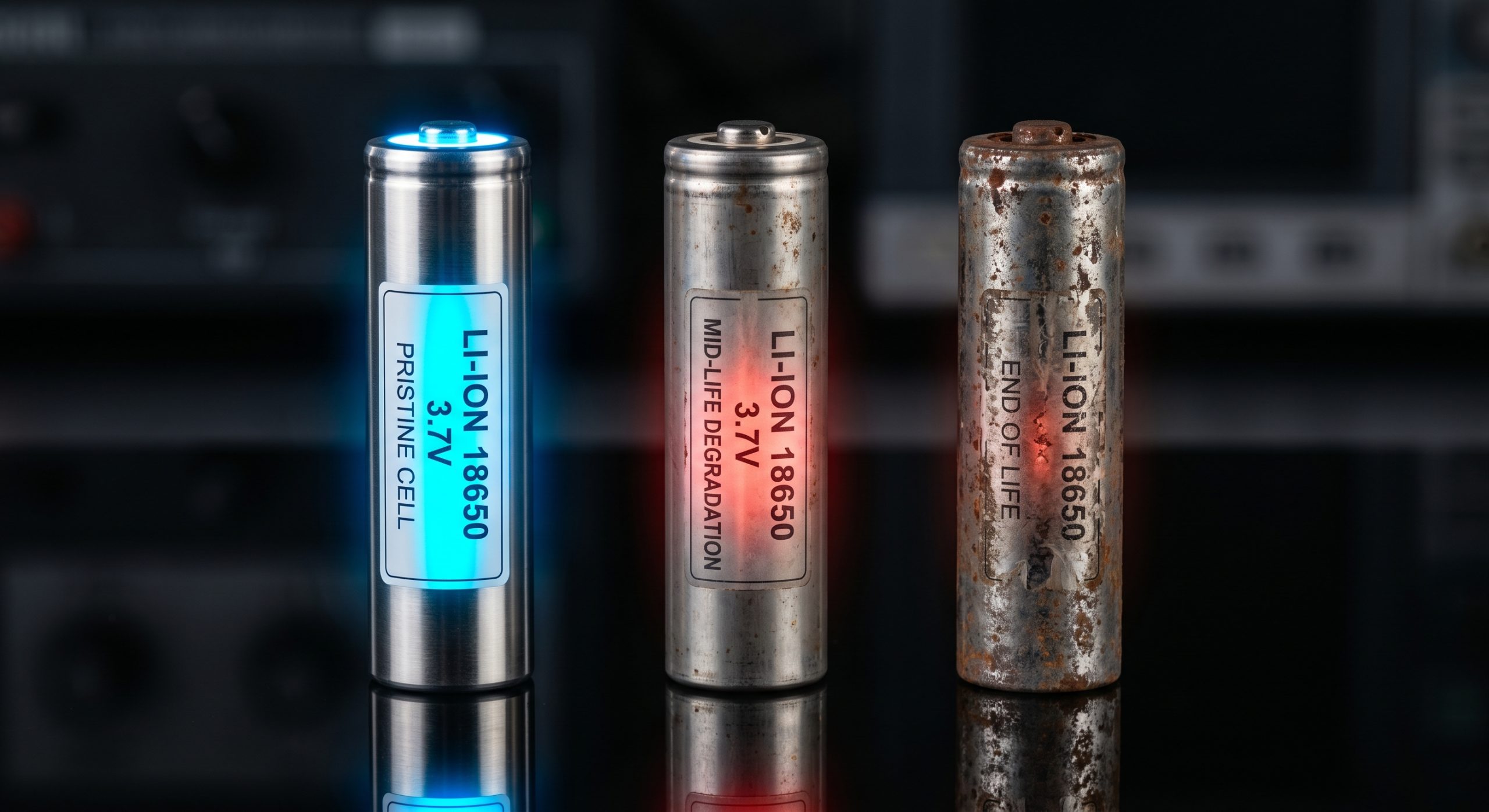
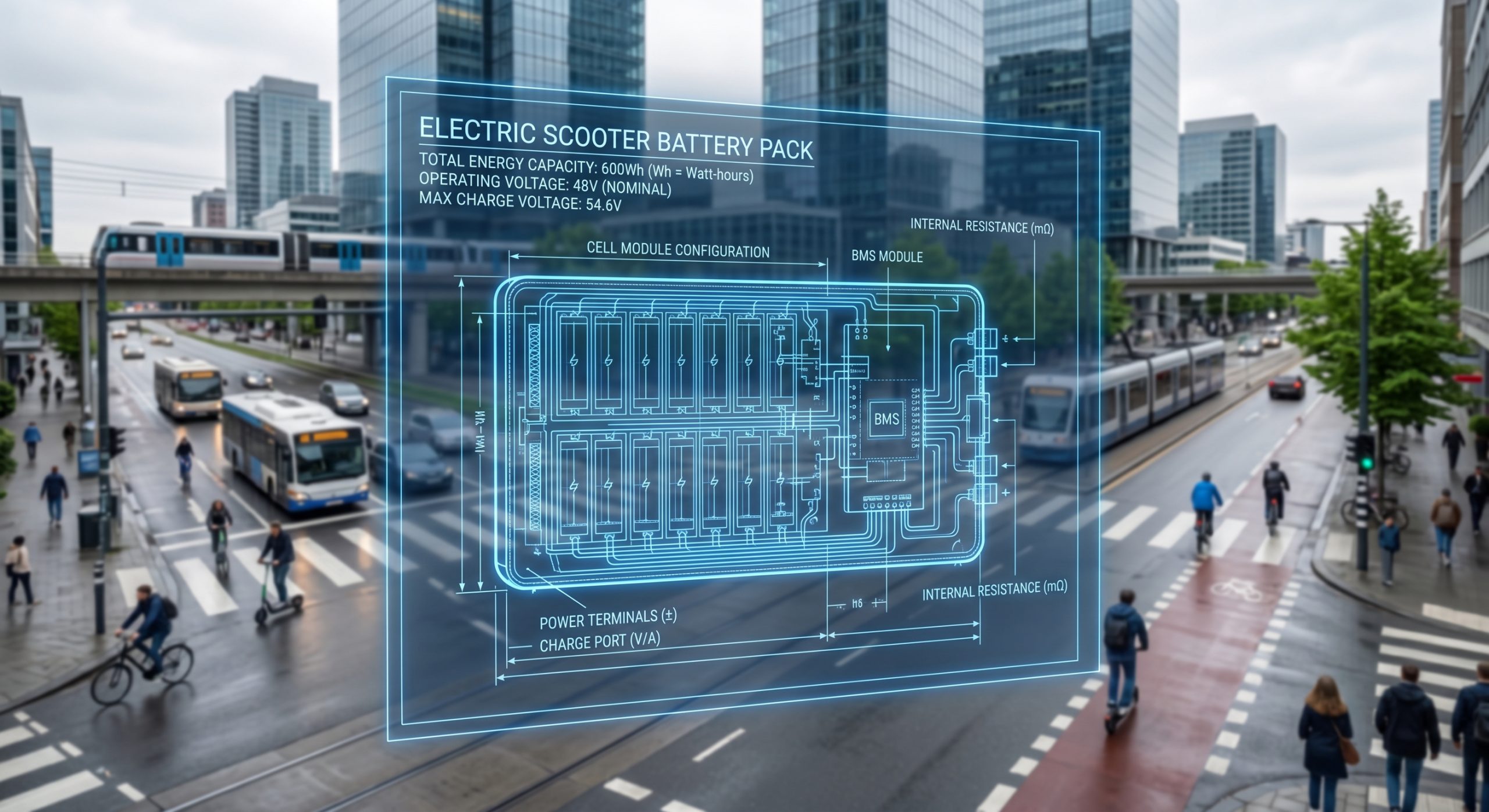
Every lithium battery has a finite lifespan measured in charge cycles that impacts your electric scooter range. As the chemistry inside wears out over time, the amount of energy it can hold slowly diminishes.
- Most batteries are rated for 300 to 500 full charge cycles.
- Deeply discharging your battery to zero frequently can damage the cells.
- Partial cycles are actually healthier for the battery than full discharges.
Here is the bottom line:
Do charge cycles limit total distance?
After a few hundred cycles, your battery might only hold 80% of its original capacity. This means a scooter that once traveled 20 miles may eventually only reach 16 miles. It is a natural part of the aging process for all modern portable electronics.
How to maintain long-term battery health?
Smart charging habits can extend the life of your battery by several years. Avoid leaving your scooter on the charger for days at a time after it hits 100%. Store the battery at roughly 50% charge if you do not plan to ride for a month.
Key Takeaway: Battery degradation is inevitable, but proper storage and charging can slow the process significantly.
| Age / Cycles | Expected Capacity |
|---|---|
| 0-100 Cycles | 100% |
| 250 Cycles | ~90% |
| 500+ Cycles | ~70-80% |
Always use the original manufacturer charger to ensure the correct voltage is applied to your battery cells.
8. How to double your electric scooter range?
Maximizing your electric scooter range sometimes requires a hardware solution rather than just a change in riding style. If your commute is longer than your battery’s capacity, you need more total Watt-hours to finish the trip.
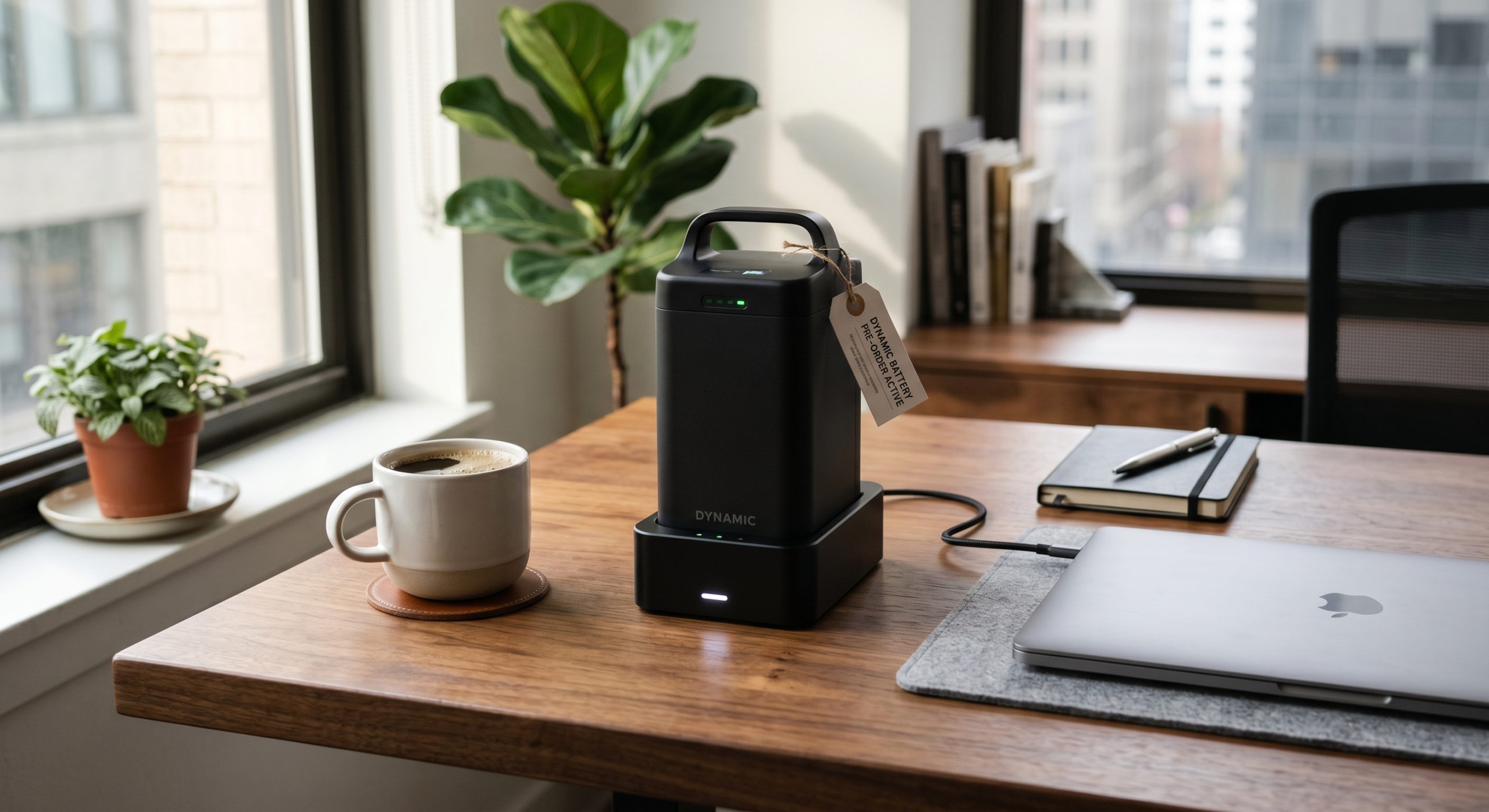
- Detachable battery designs allow you to swap in a fresh pack instantly.
- Carrying a spare battery in a backpack effectively resets your mileage to zero.
- Bundles often provide extra batteries at a lower cost than buying them separately.
Think about it:
Should you carry a spare battery?
If your scooter supports it, carrying a spare is the most effective range hack available today. Modern batteries are lightweight enough to fit in a standard bag without causing discomfort. This allows you to charge one at the office while using the other for your ride.
Are there bundle deals for extra power?
Many savvy riders look for bundles that include secondary power sources and specialized carrying gear. Purchasing these items together can save you 20% or more compared to buying them individually. It is the best way to ensure you always have enough power for long weekend adventures.
Key Takeaway: A secondary, swappable battery is the only guaranteed way to 2x your distance without changing how you ride.
| Solution | Range Increase | Portability |
|---|---|---|
| Riding in Eco Mode | ~15-20% | N/A |
| Higher PSI Tires | ~5-10% | N/A |
| Spare Battery | 100% | High (Removable) |
Investing in a swappable battery system eliminates range anxiety and makes your scooter much more versatile for long trips.
9. Is regen braking good for electric scooter range?
Regenerative braking turns your motor into a generator to put a small amount of energy back into the electric scooter range. While it won’t give you infinite power, it certainly helps when navigating busy urban environments.
- Regen can return between 3% and 5% of your energy in city traffic.
- It is most effective on long, gradual descents where you need to slow down.
- Using electronic brakes reduces the physical wear on your mechanical brake pads.
Look at it this way:
How much energy is actually recovered?
The amount of recovered energy is small but can be the difference between reaching your door and walking. In typical stop-and-go traffic, every bit of harvested power adds up over the course of a week. It is a smart way to squeeze every possible inch out of your battery pack.
When should you use electronic brakes?
You should use your electronic brakes as your primary way to slow down in non-emergency situations. Save the mechanical disc or drum brakes for sudden stops to maximize your energy recovery. Some apps even allow you to adjust the strength of the regeneration to suit your riding style.
Key Takeaway: Regen braking is a great secondary tool for city riders that also reduces maintenance on physical brakes.
| Brake Type | Range Benefit | Hardware Wear |
|---|---|---|
| Mechanical Only | 0% | High |
| Light Regen | 1-2% | Moderate |
| Strong Regen | 3-5% | Low |
Mastering the use of regenerative braking makes your ride smoother and your battery last just a little bit longer.
10. Why trust the stated electric scooter range?
When looking for the best electric scooter range, transparency is more important than the biggest number on the box. Knowing how manufacturers calculate these figures makes you a much smarter consumer and rider.
- Manufacturers use best-case scenarios to provide a standardized baseline.
- Treat the “Max Range” as a theoretical ceiling rather than a daily guarantee.
- Look for Watt-hour (Wh) ratings to get the most accurate picture of power.
Believe it or not:
How is advertised distance calculated?
Brands use a standardized metric so you can compare different models on an even playing field. If every brand tested in different winds or hills, you could never accurately compare their performance. It is a laboratory measurement of the total potential energy stored in the battery cells.
What is the most realistic range metric?
A more reliable way to judge distance is by looking at the Watt-hour capacity and dividing it by 25. This gives you a conservative, real-world estimate for typical commuting conditions and speeds. A battery with more Watt-hours will almost always outperform a smaller one, regardless of the marketing.
Key Takeaway: Always subtract 30% from any advertised range to find your realistic, everyday commuting distance.
| Metric Type | Reliability | Utility |
|---|---|---|
| Advertised Max | Low | Comparison only |
| Real-World Estimate | High | Daily planning |
| Watt-Hour Rating | Highest | Engineering truth |
Focusing on battery specs rather than marketing slogans will help you choose the right scooter for your needs.
Frequently Asked Questions
Can I bring the battery on a plane?
Generally, batteries over 160Wh are prohibited on commercial flights. Since most commuter scooters use batteries between 180Wh and 500Wh, they usually must be shipped via ground transport rather than taken as carry-on luggage.
What’s the best way to charge for range?
The “80/20” rule is best for long-term health, but you should charge to 100% right before a long trip. Keeping the battery between 20% and 80% for daily use prevents the cells from becoming stressed and losing capacity.
How do I know if my tires need more air?
You should feel a slight “bounce” and very little resistance when rolling the scooter manually. If the steering feels heavy or the scooter sluggishly accelerates, your tire pressure is likely too low and draining your battery.
Can I ride in the rain without losing range?
Wet roads increase friction and decrease tire efficiency, which can slightly lower your total distance. While light rain is usually fine for IP54-rated scooters, the cold water can also lower battery temperature and further impact performance.
What’s the best speed for maximum distance?
For most commuter models, the efficiency sweet spot is between 12 and 15 mph. Riding at this pace provides the best balance between motor output and air resistance, allowing you to travel much further than at top speed.
Conclusion
Understanding the limits of your hardware is the first step toward a more reliable commute. By managing your speed, maintaining your tires, and choosing your routes wisely, you can significantly close the gap between advertised numbers and real-world performance. Don’t let range anxiety stop you from enjoying the freedom of the road.
At Dynamic Scooter, we are on a mission to revolutionize short-distance transportation and change the way people get around. Our vision is to become the world’s leading provider of electric mobility solutions, ensuring every person has access to fast, reliable, and sustainable travel. If you want to optimize your ride or need advice on the best accessories, feel free to contact us today.