
Owning an electric scooter brings an incredible sense of freedom, but it also comes with a nagging question: What happens when the battery gets low? This feeling, often called “range anxiety,” can be stressful, making you second-guess taking longer trips. You might worry about getting stranded far from home, facing a long walk with a heavy, dead scooter. The uncertainty of not knowing where your next charge will come from can turn a fun, convenient ride into a source of constant worry.
Fortunately, with a little planning, you can charge your electric scooter in a wide variety of locations, including at home, at work, and even at public charging stations. The key is to know your options and always be prepared.
So, where exactly can you plug in and power up? Let me explain… This guide will explore all the potential places to charge your electric scooter, from the most obvious to the surprisingly convenient, ensuring you can ride with confidence.
1. Is charging your electric scooter at home the best option?
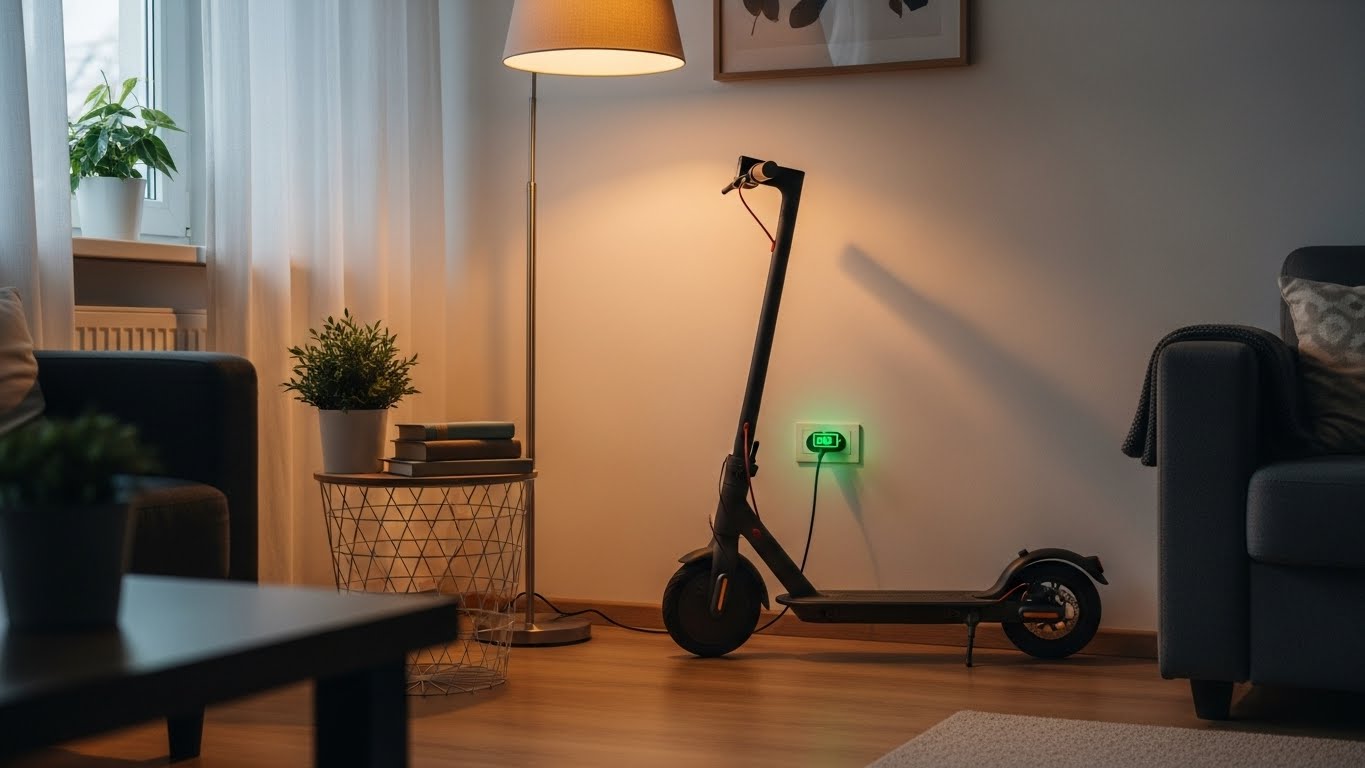
For most electric scooter owners, charging at home is the most convenient, cost-effective, and safest option. You have easy access to a standard wall outlet, and you can charge your scooter overnight so it’s ready to go in the morning. Setting up a dedicated charging spot in your garage or a corner of your room ensures you have a consistent and safe routine. There’s no need to hunt for a public plug or worry about someone tampering with your scooter.
Using your home electricity is also incredibly cheap. Here’s the deal… the most critical aspect of home charging is to always use the official charger that came with your scooter. Your scooter’s battery and its Battery Management System (BMS) are designed to work with the specific voltage and current of its original charger. Using a mismatched charger can damage your battery and even create a fire hazard.
To create the perfect home charging setup, choose a spot that is dry, temperature-controlled, and has good ventilation. Avoid cluttered areas and make sure the charging cables don’t create a trip hazard. This simple routine makes your life easier and protects your investment.
| Home Charging: Pros vs. Cons | Description | Recommendation |
| Pro: Ultimate Convenience | Charge overnight or anytime you are home. | Make it a habit to plug in after your last ride of the day. |
| Pro: Maximum Safety | You control the environment and can monitor the scooter. | Charge in an open, ventilated space away from flammable materials. |
| Con: Not an Option for All | Can be difficult for those in apartments without accessible outlets. | Consider scooters with removable batteries if you lack easy outlet access. |
2. Can I charge my electric scooter at my workplace?
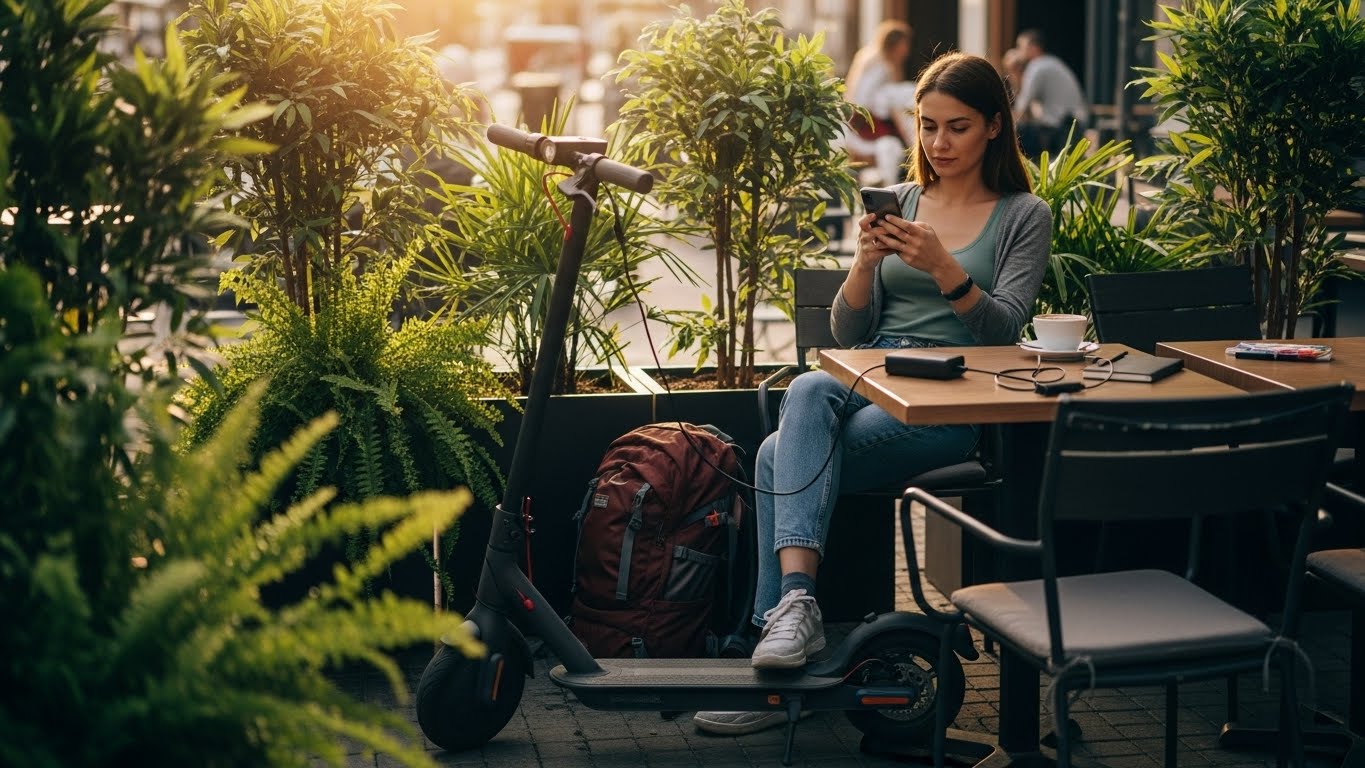
Charging your scooter at work is an excellent way to ensure you have a full battery for your commute home, especially if you have a long ride. It effectively doubles your daily range and eliminates any range anxiety. However, you can’t just assume it’s okay to plug in. The first and most important step is to check your company’s policy and ask for permission.
Most employers are reasonable and will likely be supportive of eco-friendly commuting. The bottom line? Frame your request in a positive light. Explain that you’re using a green mode of transportation and that the cost of the electricity is negligible. Being transparent and respectful is key. Once you have permission, find a safe and out-of-the-way spot to charge, such as under your desk, ensuring it doesn’t create a safety hazard.
Bringing your charger with you every day can be a hassle, so some commuters buy a second official charger to leave at the office. This adds to the convenience and ensures you’re never caught without one. Charging at work is a fantastic perk for any scooter commuter.
| Asking to Charge at Work | Approach | What to Say |
| Be Proactive & Respectful | Speak to your manager or HR department before you start charging. | “I commute on an electric scooter to be more eco-friendly. Would it be okay if I charged it under my desk? The electricity cost is very low.” |
| Highlight the Benefits | Mention environmental benefits and your commitment to being on time. | “This helps me reduce my carbon footprint and ensures I always have a reliable way to get to and from work.” |
| Address Safety Concerns | Assure them you will use a safe, certified charger and place it out of the way. | “I will be using the official charger that came with the scooter, and I’ll make sure the cables are safely tucked away.” |
3. Are there public charging stations for electric scooters?
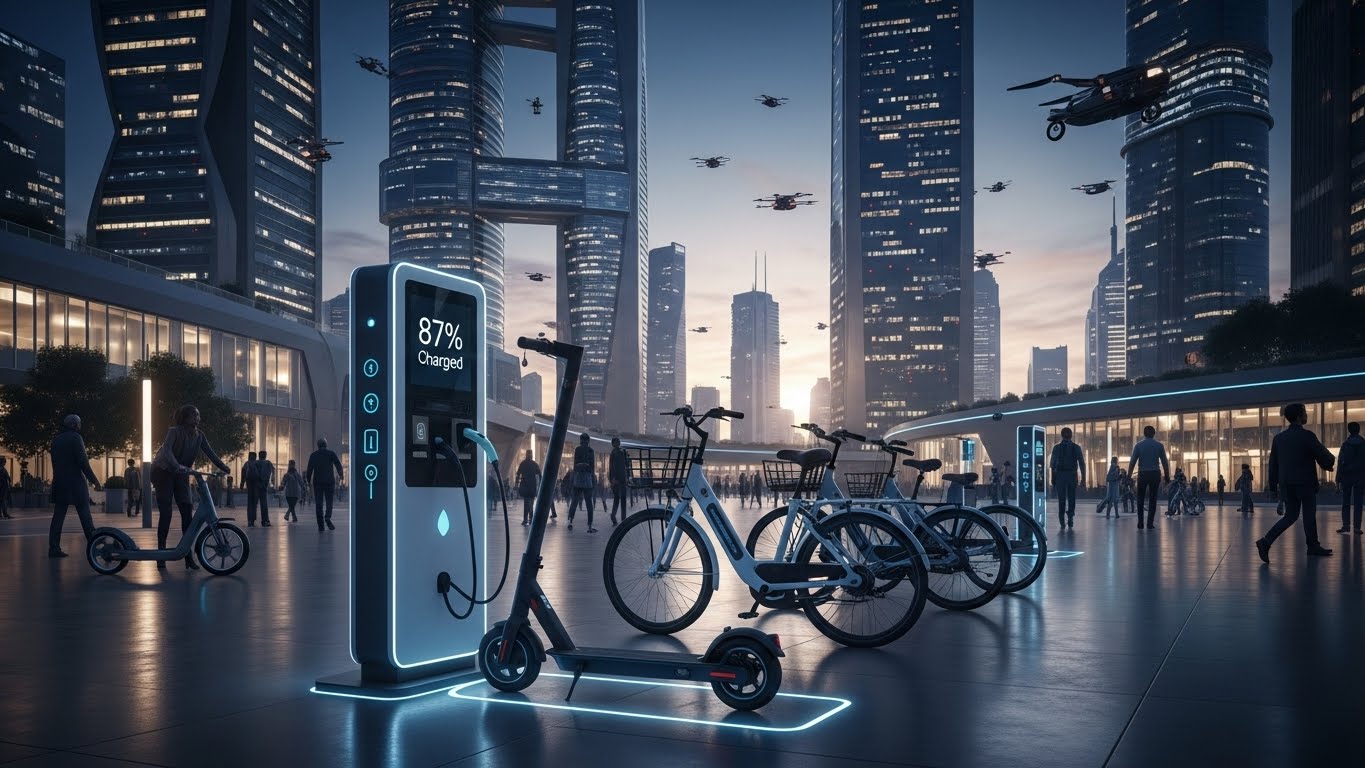
The landscape of public charging is rapidly evolving. While dedicated public charging stations for electric scooters are still not widespread, they are beginning to appear in progressive cities. These stations often feature secure locking docks and built-in charging cables, providing a safe and convenient way to power up.
More commonly, you will find public charging stations for electric vehicles (EVs). But here’s the thing… most of these are Level 2 or DC Fast Chargers designed for cars and are not compatible with your scooter’s standard plug. However, many of these EV charging locations also include standard 120V wall outlets. These are perfect for plugging in your scooter’s charger.
To find these opportunities, you can use apps like PlugShare, which allow users to filter for different plug types and often have photos and comments from other users pointing out accessible wall outlets. As more people adopt personal electric vehicles, the demand for this infrastructure will only grow.
| Type of Public Charging | How to Use It | Availability |
| Dedicated Scooter Docks | Lock your scooter into the station; may require an app or payment. | Rare, but growing in some urban centers and private campuses. |
| EV Charging Stations | Look for an integrated, standard 120V wall outlet on the station housing. | Common, but you must bring your own scooter charger. |
| Public Plugs (Parks, Plazas) | Find standard outlets in public spaces, often near benches or pavilions. | Varies greatly by city; may be unreliable or turned off. |

4. Is it acceptable to charge my scooter at a cafe or library?
Sometimes you just need a quick top-off to make it to your next destination. In these situations, a coffee shop or library can be a lifesaver. This is often called “opportunity charging.” However, it’s crucial to approach this with the right etiquette. These are private businesses, and their electricity is not a free public utility. Always ask for permission before you plug in.
Want to know the secret? Your chances of getting a positive response are much higher if you are a paying customer. Buy a coffee or a snack. Support the business that is helping you out. When you ask, be polite and explain your situation. Most managers will be understanding, especially since the cost of charging your scooter is so minimal.
Once you have permission, be a considerate guest. Find an outlet that is out of the way, where your scooter and its charging cable won’t be a trip hazard. Don’t leave your scooter unattended. The goal is to be discreet, respectful, and appreciative. A little courtesy can go a long way.
| Charging Etiquette in Private Businesses | Do | Don’t |
| Asking for Permission | Politely ask an employee or manager before plugging in. | Don’t just plug in without asking, assuming it’s okay. |
| Being a Customer | Purchase something to show your appreciation for using their outlet. | Don’t treat the business like a free public charging station. |
| Placement and Safety | Choose an out-of-the-way outlet and keep your scooter and cables tidy. | Don’t block walkways or create a trip hazard for others. |
5. What are the safety risks of charging in different locations?
Charging your electric scooter is generally very safe, but it’s important to be aware of the potential risks, especially when charging outside of your home. The number one rule is to never use a damaged charger or a faulty outlet. If your charger’s cable is frayed or the brick is cracked, replace it. If a public outlet looks loose or burnt, do not use it. These conditions can lead to short circuits and create a fire risk.
Environmental conditions also play a huge role. You need to know this… you should never charge your scooter in the rain or in wet conditions. Water and electricity are a dangerous combination. Furthermore, avoid charging your scooter in direct, intense sunlight or in extreme temperatures. Lithium-ion batteries are sensitive to temperature, and charging them when they are too hot or too cold can cause permanent damage.
Finally, there’s the risk of theft. A scooter that is plugged into a wall for several hours is a tempting target. Never leave your scooter unattended in a public place while it’s charging unless it is securely locked to an immovable object. Even then, it’s best to keep it within your line of sight.
| Charging Hazard | How to Mitigate It | Why It’s Important |
| Electrical Faults | Only use your official charger and inspect outlets before use. | Prevents short circuits, electrical fires, and damage to your scooter. |
| Extreme Temperatures | Charge in a shaded, temperature-controlled environment (room temperature is ideal). | Protects the long-term health and capacity of your lithium-ion battery. |
| Theft | Always lock your scooter to a fixed object when charging in public. | Prevents your investment from being stolen while it’s vulnerable. |
6. How can I charge my scooter if I live in an apartment building?
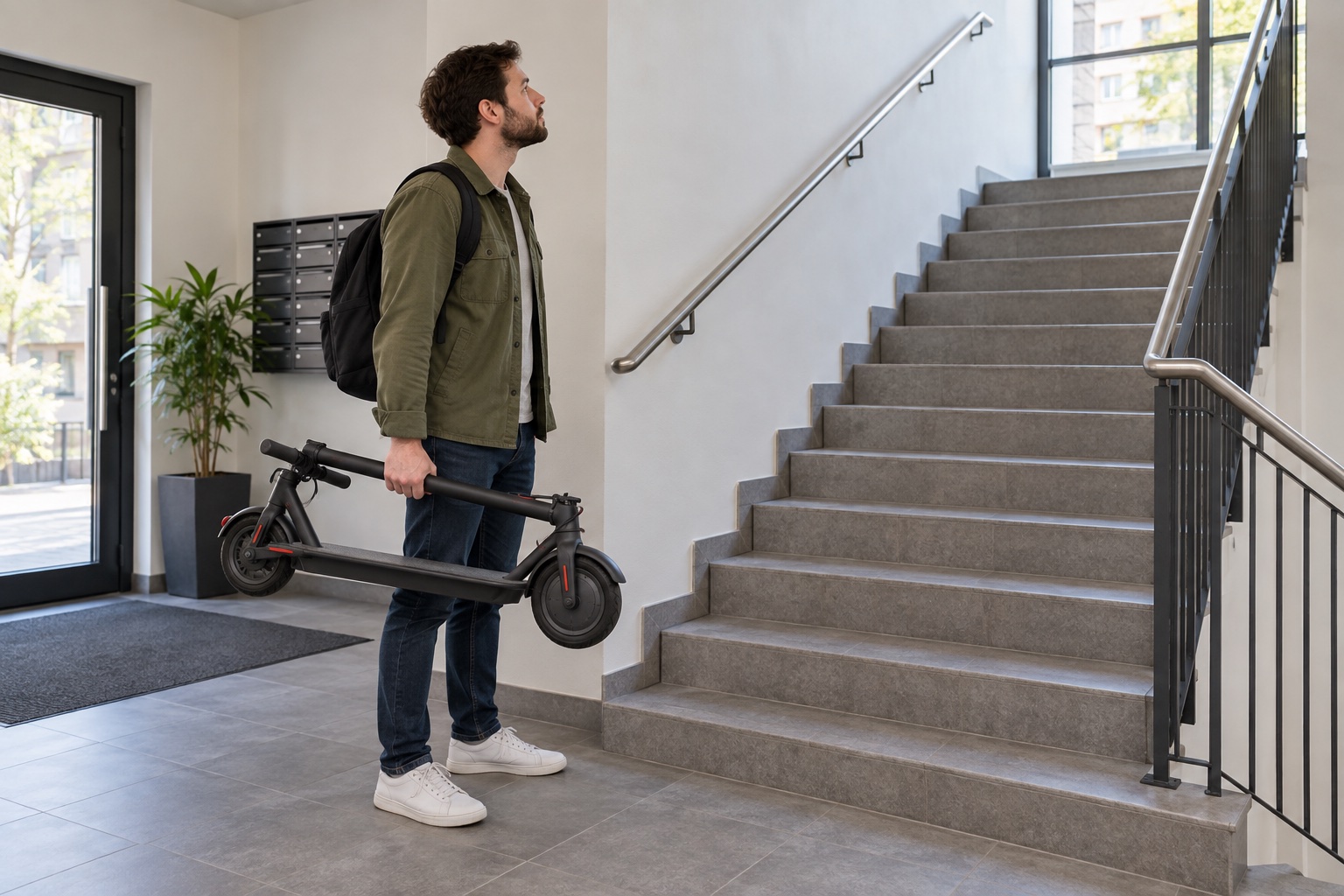
Living in an apartment can present unique challenges for scooter owners. You might not have a private garage or an easily accessible outdoor outlet. Running an extension cord through a hallway or out a window is often a violation of building rules and a fire hazard. The best solution is to choose a scooter with a removable battery.
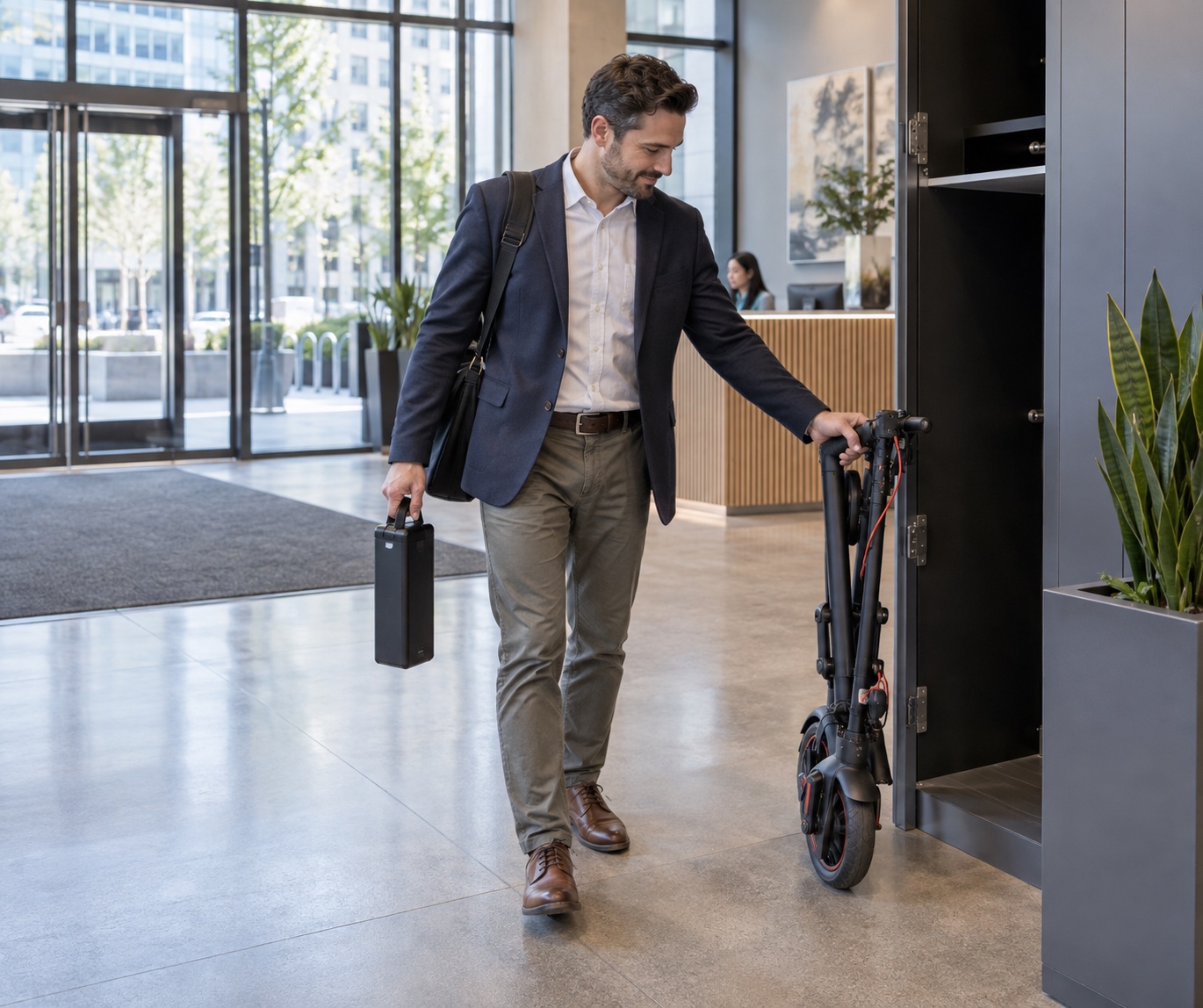
Scooters with removable batteries, like some models from Dynamic Scooter, allow you to leave your scooter locked up securely and simply carry the lightweight battery pack up to your apartment to charge. This is a game-changer… it solves the problem of access and makes apartment living incredibly convenient. You can charge the battery at your desk, just like a laptop.
If your scooter doesn’t have a removable battery, talk to your building management. Some modern apartment complexes are starting to add designated charging areas for e-bikes and e-scooters. If your building doesn’t have this, you could propose the idea. Citing the growing popularity of micro-mobility might convince them to invest in a solution.
| Apartment Charging Solution | How It Works | Best For… |
| Removable Battery | Detach the battery from the scooter and carry it inside to charge. | Almost all apartment dwellers; offers the most flexibility and security. |
| Ask Building Management | Inquire about using outlets in common areas like a garage or bike room. | Residents in buildings that may have accessible and permissible outlets. |
| Advocate for a Charging Station | Propose that management install a dedicated, safe charging area for residents. | Long-term solution for making the entire building more EV-friendly. |
7. Are portable power banks a viable option for charging on the go?
When you think of a power bank, you probably picture the small device you use to charge your smartphone. It’s important to understand that these small power banks will not work for an electric scooter. The battery in your scooter is massive compared to a phone battery and requires a much higher power output to charge.
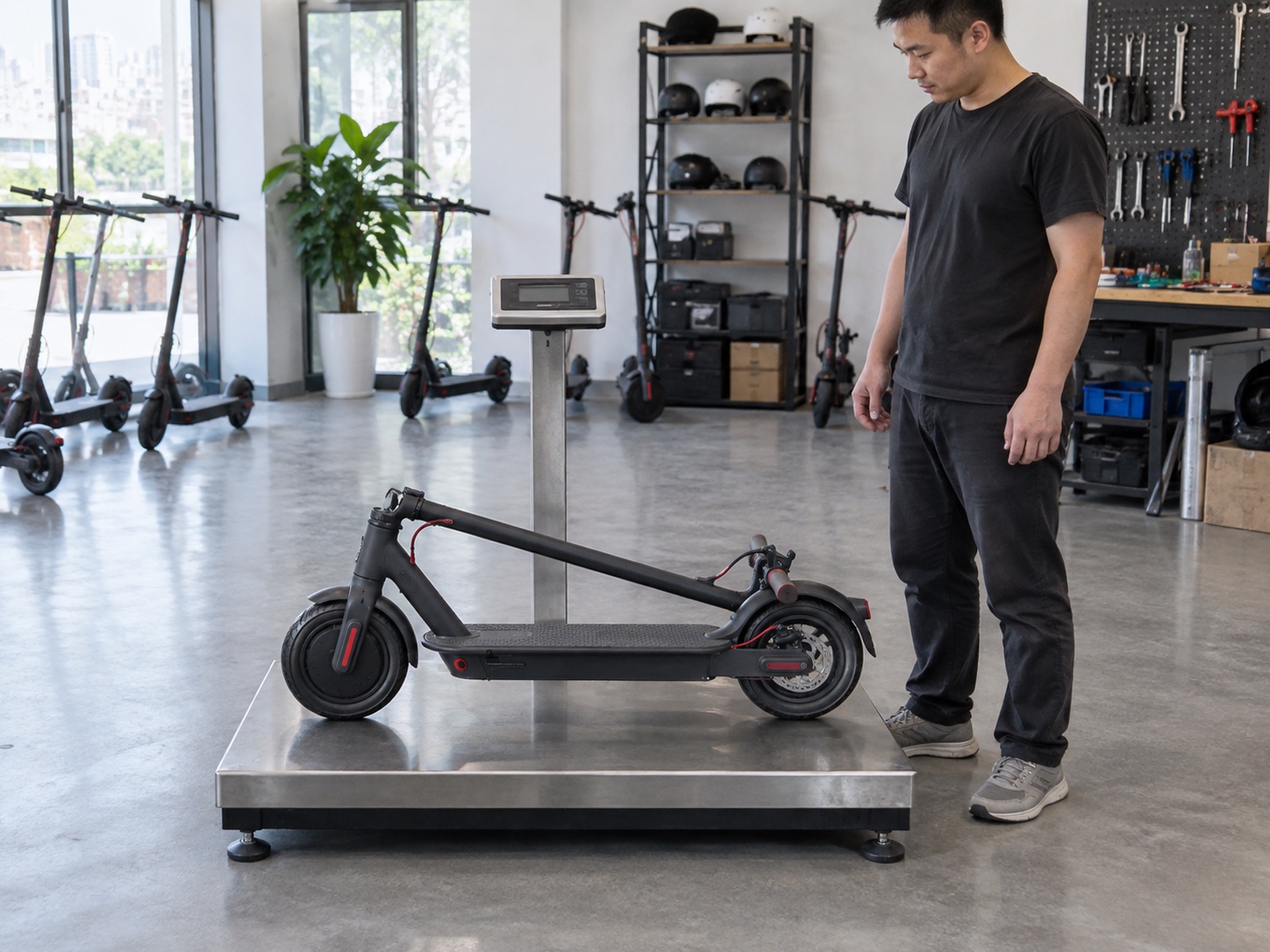
However, there is a category of larger devices called portable power stations that can charge a scooter. These are essentially large batteries with a standard wall outlet built-in. You need to understand this… you need to check two key specs: the power station’s capacity (in Watt-hours) and its power output (in Watts).
To provide a full charge for a typical scooter (e.g., 500 Wh), you would need a power station with at least that much capacity. These devices are much larger and heavier than a phone power bank. While they are technically portable, they aren’t something you can easily carry in a backpack. They are more suitable for keeping in your car for a weekend trip.
| Power Device | Can It Charge a Scooter? | Key Consideration |
| Standard USB Power Bank | No | The power output is far too low. |
| Portable Power Station | Yes | Must have a high enough capacity (Wh) and power output (W) to be effective. |
| Car Inverter | Maybe | A high-quality inverter plugged into your car might work, but it can drain the car battery. |
8. What apps can help me find scooter charging locations?
While dedicated scooter charging stations aren’t everywhere yet, several apps designed for electric vehicle (EV) drivers can be surprisingly helpful. The most popular of these is PlugShare. It’s a community-driven app with a map showing charging points worldwide. Its key feature for scooter riders is the ability to filter for standard 120V wall outlets.
When using PlugShare, you can look for public charging stations and then check the user-submitted photos and comments. The best part? Other EV drivers often note the presence of a standard wall outlet on the side of a charging unit. This crowd-sourced information is invaluable. Other apps like ChargePoint and EVgo also sometimes have information about nearby public outlets.
Beyond EV apps, don’t underestimate Google Maps. Searching for “public library,” “community center,” or “cafe with outdoor seating” can reveal potential locations. Check the photos and reviews for glimpses of accessible outdoor outlets. It’s a useful strategy for finding those “opportunity charging” spots when you’re in a pinch.
| App | Primary Use | How It Helps Scooter Riders |
| PlugShare | Finding all types of EV charging stations. | Can filter for standard 120V outlets and has user comments. |
| ChargePoint | Accessing the ChargePoint network of EV chargers. | Some of their stations have accessible 120V outlets. |
| Google Maps | General navigation and business search. | Can help you locate places (cafes, libraries) that might have public outlets. |
9. What’s the difference between standard, fast, and opportunity charging?
Not all charging is created equal. Understanding the different types can help you manage your time and your scooter’s battery health. The most common method is standard charging. This is what you do when you plug your scooter’s stock charger into a regular wall outlet. It’s a relatively slow process, often taking 5-8 hours for a full charge, but it’s also the healthiest for your battery.
Fast charging is an emerging technology that promises to dramatically reduce charging times. These systems use a higher-power direct current (DC) and require a special charging port and station. The takeaway is this… while common for electric cars, it is still very rare for personal electric scooters. If a scooter advertises “fast charging,” it usually just means its standard charger is slightly more powerful than average.
Finally, there’s opportunity charging. This isn’t a technology, but a strategy. It means plugging in and topping off your battery for short periods whenever you get the chance—for 30 minutes at a coffee shop, or for an hour at a friend’s house. These short bursts can add a few crucial miles of range, which can be enough to get you to your destination.
| Charging Type | Speed | Best Use Case |
| Standard Charging | Slow (5-8 hours) | Overnight charging at home; best for long-term battery health. |
| Fast Charging | Very Fast (e.g., 1-2 hours) | Still rare for scooters; for quick top-offs at future public stations. |
| Opportunity Charging | Varies | Grabbing a few extra miles of range whenever you have access to an outlet. |

10. How can I protect my scooter from theft while it’s charging publicly?
Charging your scooter in a public place introduces a significant security risk. A scooter tethered to a wall is a stationary and attractive target for thieves. The single most important thing you can do to protect your investment is to use a high-quality, reliable lock. A cheap cable lock can be cut in seconds.
You need to invest in this… a heavy-duty U-lock or a thick chain lock. When you lock your scooter, make sure you secure the main frame to an immovable object, like a bike rack or a sturdy signpost. Do not lock just the wheel, as a thief can simply remove it. The goal is to make stealing your scooter as difficult as possible.
For an extra layer of security, consider a scooter with built-in anti-theft features. Many modern scooters, including those from Dynamic Scooter, come with mobile apps that allow you to electronically lock the motor. Some also have motion-sensing alarms and GPS tracking. Combining a strong physical lock with these smart security features provides the best possible protection.
| Security Measure | How It Works | Effectiveness |
| High-Quality Lock (U-Lock/Chain) | Physically secures the scooter frame to a fixed object. | High; the most important deterrent against theft. |
| Motor Lock (via App) | Electronically disables the motor so it cannot be ridden. | Medium; stops ride-away theft but not being carried away. |
| Alarm & GPS Tracking | A loud alarm deters thieves, and GPS helps with recovery. | Medium to High; adds valuable layers of protection and recovery. |
Conclusion
Knowing where you can charge your electric scooter is the key to unlocking its full potential and eliminating range anxiety. While home is the primary charging hub, you have a wealth of other options. From asking permission to plug in at your workplace to finding public outlets at libraries and cafes, there are many ways to top off your battery. As micro-mobility infrastructure grows, dedicated public charging stations will become even more common. By practicing good charging etiquette, prioritizing safety, and investing in solid security, you can confidently ride farther and explore more.
The freedom of electric scooting isn’t just about the ride; it’s about knowing you have the power to get wherever you need to go. To find a reliable scooter with a great battery and smart security features, explore the latest lineup from Dynamic Scooter today.
FAQ
Q1: Can I use any standard wall outlet to charge my scooter?
Yes, your scooter’s standard charger is designed to plug into any standard 120V wall outlet in North America (or 220-240V in Europe). Always make sure the outlet is in good condition.
Q2: Is it safe to leave my scooter charging overnight?
Yes, for modern scooters with a quality Battery Management System (BMS), it is safe. The BMS will automatically stop the flow of electricity once the battery is full, preventing overcharging. It’s still good practice to unplug it once it’s charged.
Q3: Can I charge my scooter in the rain or wet conditions?
Absolutely not. Water and electricity are a dangerous combination. Never charge your scooter in the rain, and make sure the scooter, charger, and charging port are all completely dry before you plug it in.
Q4: How much does a full electric scooter charge typically cost?
The cost is extremely low. Based on the average US electricity price, charging a typical 500Wh scooter battery from empty to full costs only about 5-8 cents. It’s one of the most economical ways to travel.
Q5: Is it possible to charge my scooter using a car’s battery?
Yes, but it requires a power inverter, which converts your car’s 12V DC power to 120V AC power. You need a high-quality inverter, and you should only do it while the car’s engine is running to avoid draining the car battery.