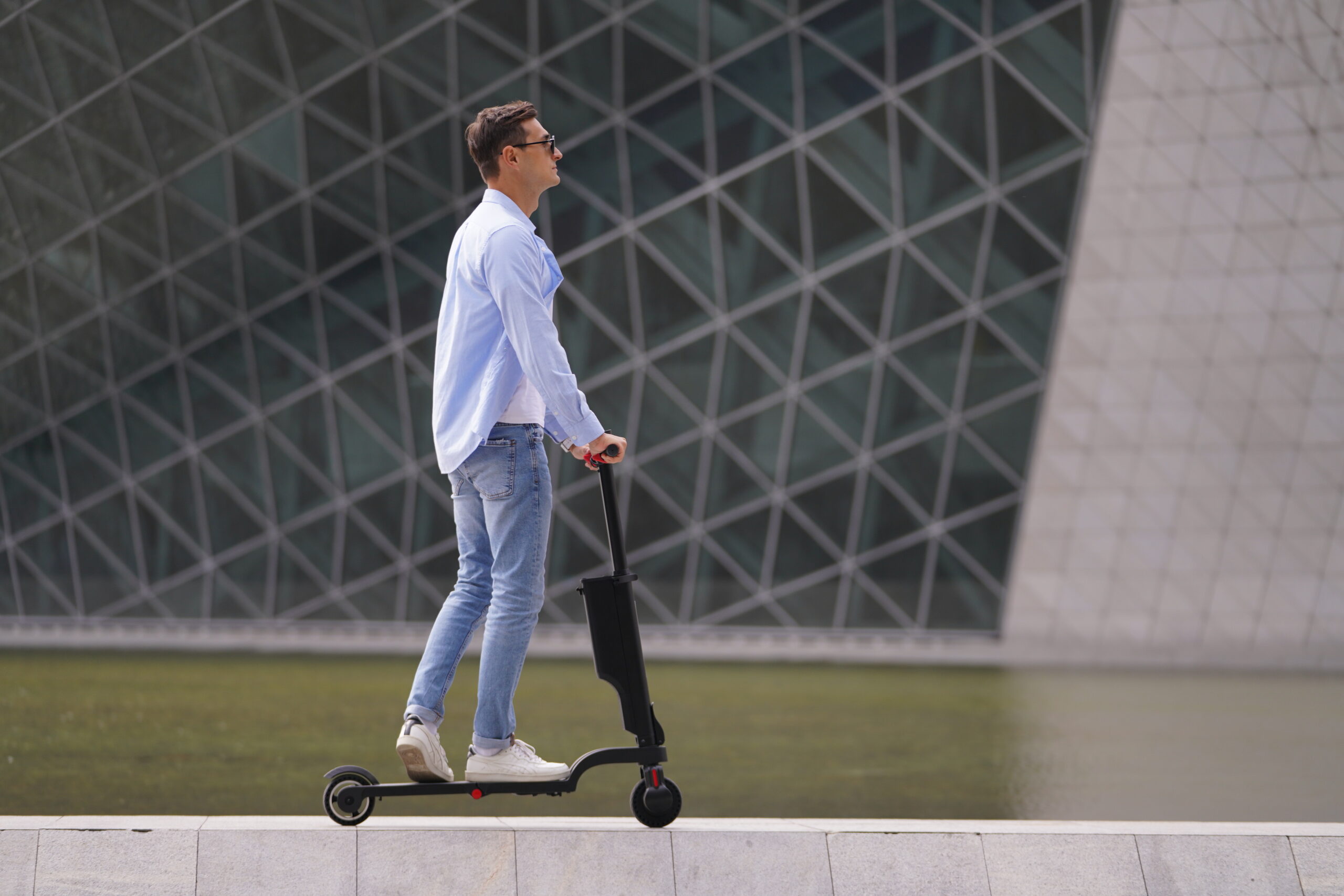

Your daily commute costs too much and takes too long. Traffic jams waste your time while gas prices drain your wallet. Electric scooter commuting offers a smart fix that saves money, cuts travel time, and helps the planet.
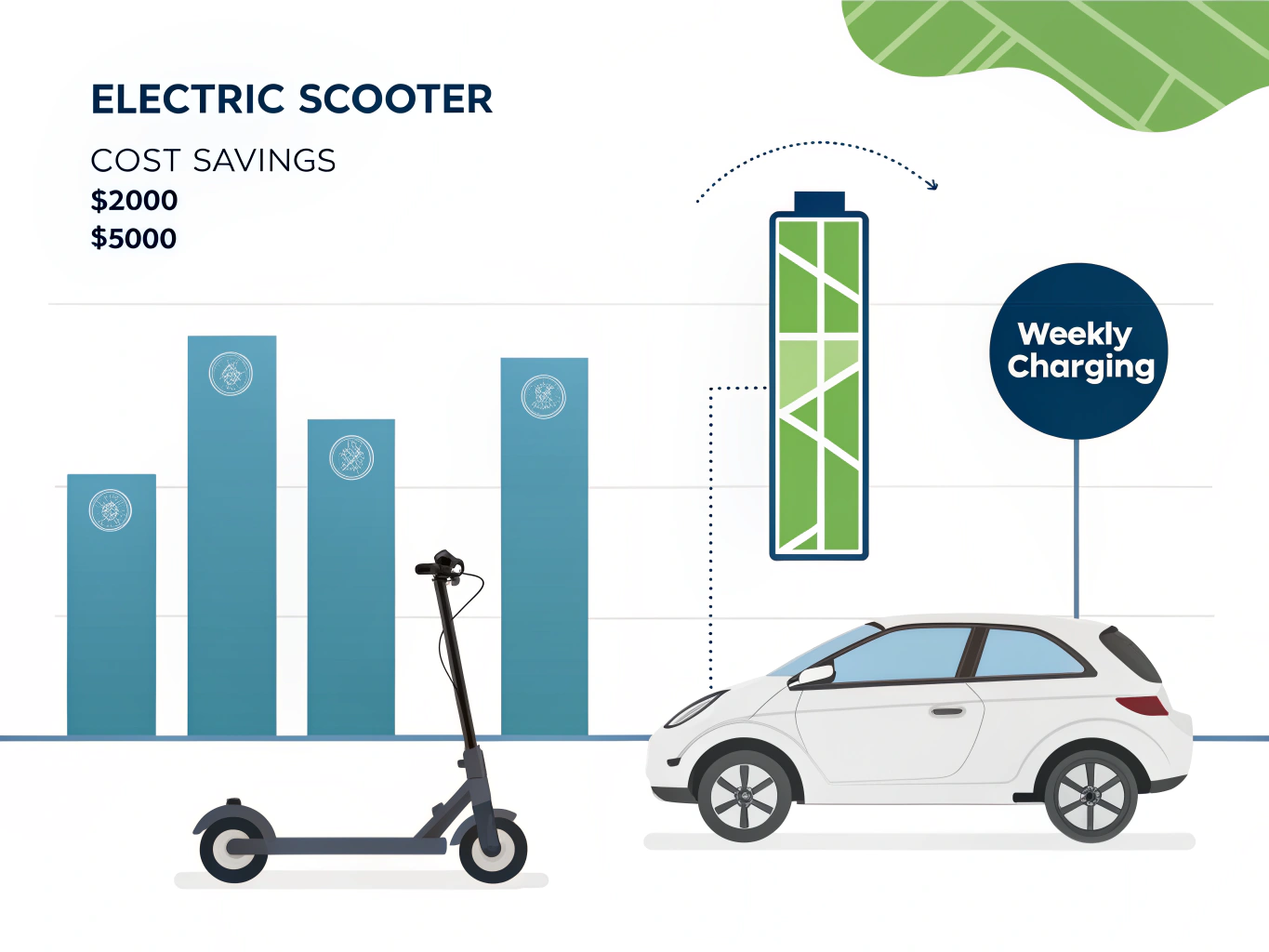
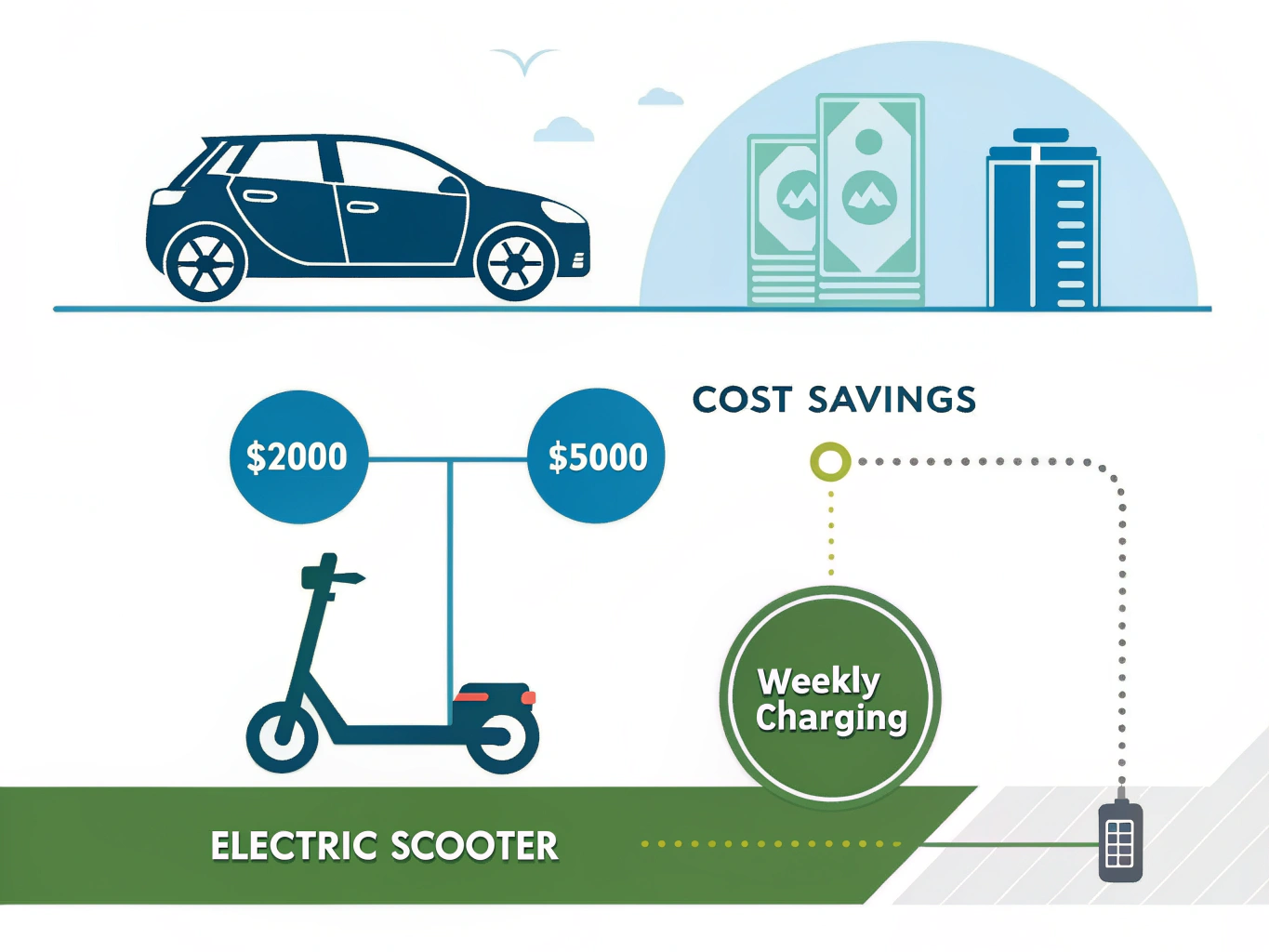
Electric scooter commuting saves you $2,000-5,000 each year compared to owning a car. It cuts commute times by 30-50% in busy cities. Most scooters go 15-40 miles per charge and cost under $1 weekly to run. You need to know local laws, safety rules, weather limits, and how to pick the right scooter for your route.
Here’s the deal – successful scooter commuting requires planning and preparation.
1. What are the main benefits of electric scooter commuting?
Electric scooter commuting transforms your daily travel experience while delivering significant financial and lifestyle benefits. These advantages make scooters an attractive alternative to traditional transportation methods for many urban workers.
Cost savings represent the biggest advantage for most commuters who switch to electric scooters. Car ownership costs average $9,000-12,000 annually including payments, insurance, gas, and maintenance. This is important because scooter ownership costs under $500 per year for most riders.
Public transportation expenses add up quickly in major cities. Monthly transit passes cost $50-200 depending on your location. Annual public transport costs often exceed $1,000-2,400 per person.
Scooter operating costs remain remarkably low compared to other options. Electricity costs under $0.05 per charge for most models. Weekly charging costs typically range from $0.25-1.00 depending on usage patterns.
| Transportation Method | Annual Cost | Daily Time | Environmental Impact | Flexibility |
| Electric Scooter | $300-500 | 15-30 min | Very Low | Very High |
| Car Ownership | $9,000-12,000 | 30-60 min | High | Medium |
| Public Transit | $600-2,400 | 45-90 min | Medium | Low |
| Rideshare Services | $3,000-8,000 | 20-45 min | Medium-High | High |
| Bicycle | $100-300 | 20-40 min | Very Low | High |
Environmental impact reduction appeals to eco-conscious commuters seeking sustainable transportation. Electric scooters produce zero direct emissions during operation. Manufacturing impacts remain lower than cars or motorcycles.
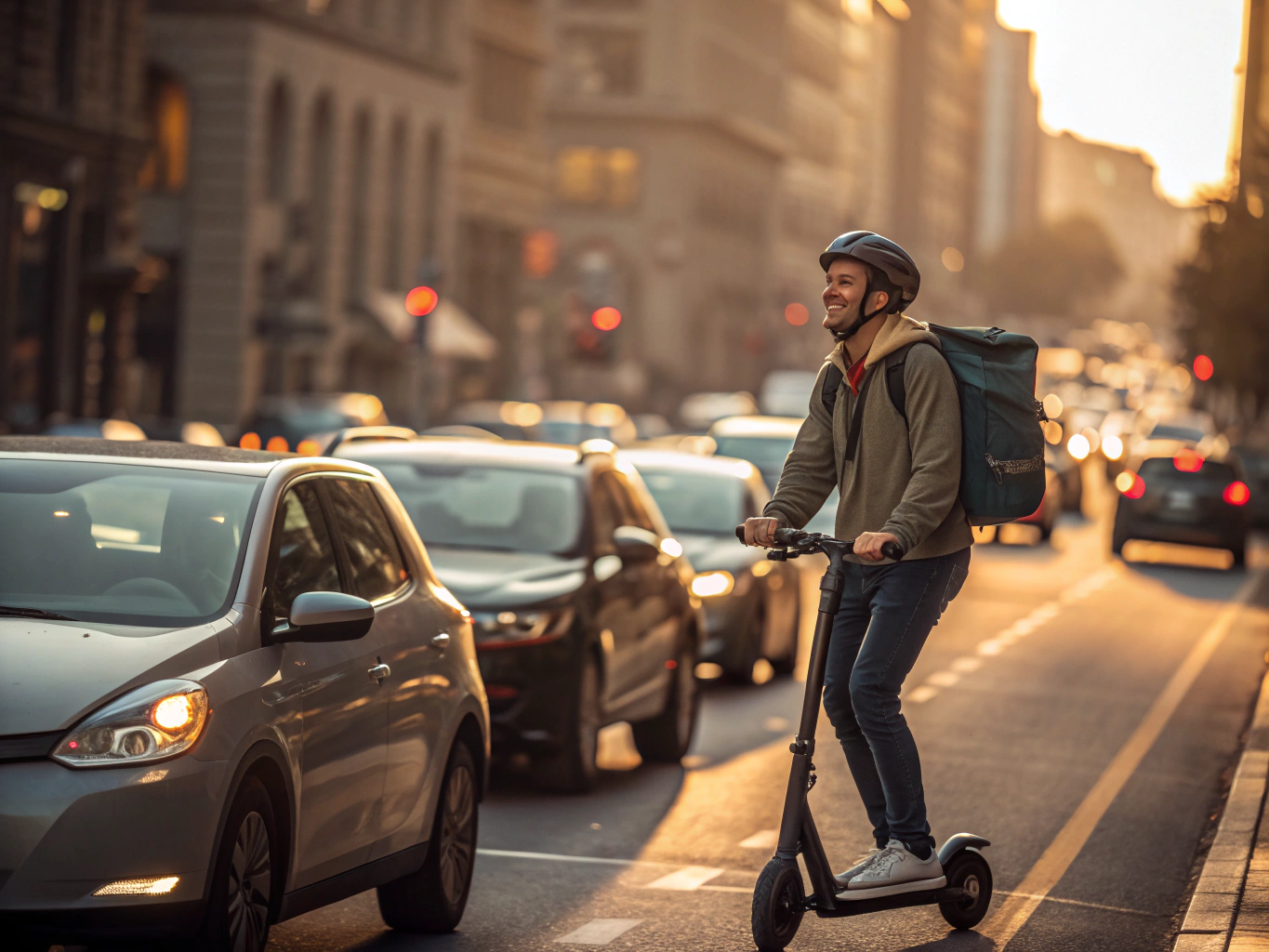
Time efficiency improves dramatically in congested urban areas where scooters can navigate traffic. Door-to-door travel times often beat cars and public transit. No waiting for buses or searching for parking spaces.
Health benefits include light exercise and fresh air exposure during commutes. Standing and balancing on scooters engages core muscles. Outdoor activity improves mood and energy levels compared to sitting in cars.
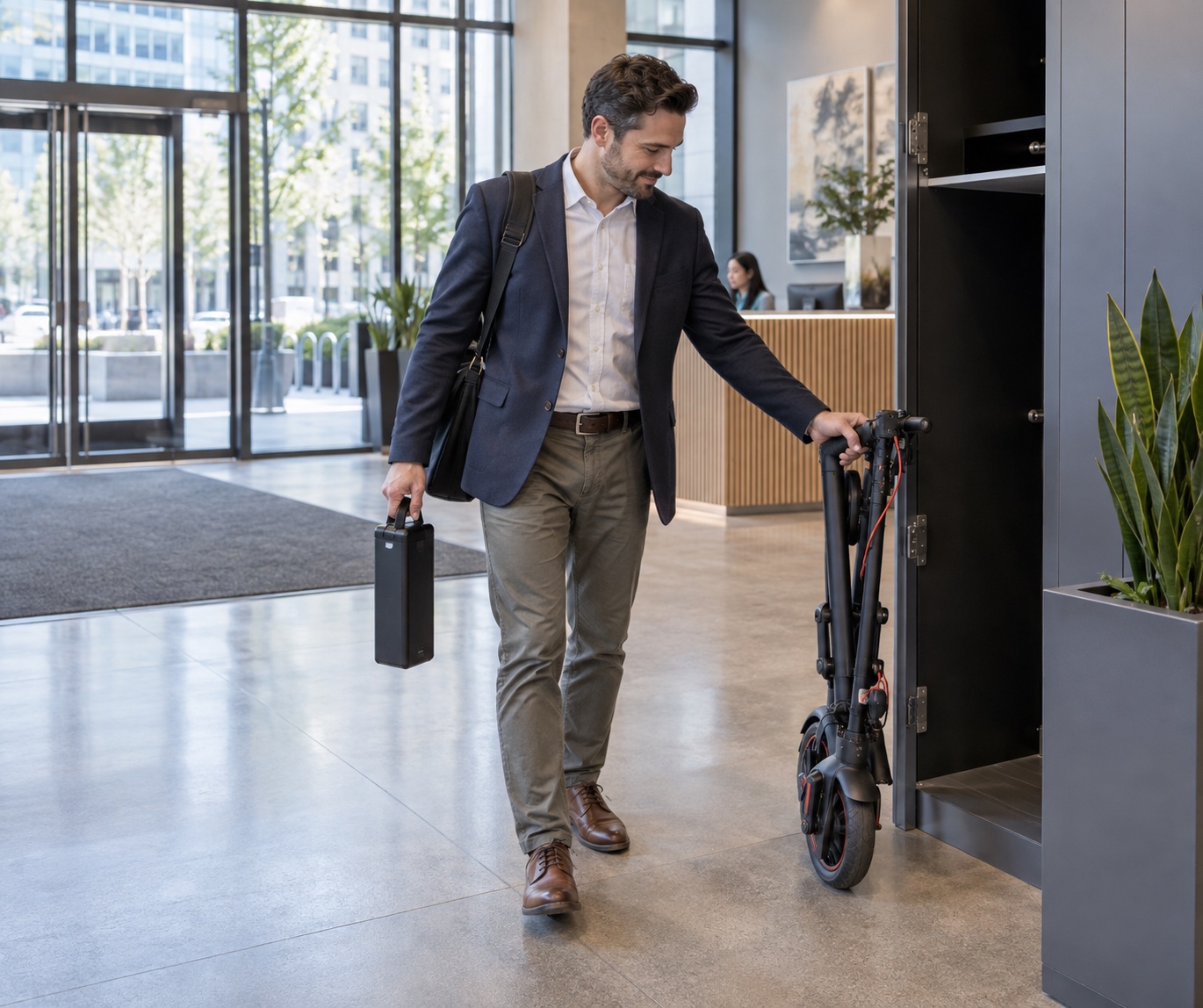
Parking convenience eliminates the stress and cost of finding car parking. Most scooters fold for easy storage in offices or apartments. No parking fees or tickets to worry about daily.

2. How do you choose the right electric scooter for commuting?
Selecting the perfect commuter scooter requires matching your specific needs with available features and capabilities. The right choice depends on your route, budget, storage options, and personal preferences.
Range and battery life determine whether a scooter can handle your daily commute reliably. Calculate your total daily distance including any detours or errands. Want to know the secret? Choose a scooter with 50% more range than your daily needs for safety margin.
Most commuter routes require 10-25 miles of daily range for round trips. Factor in hills, headwinds, and cold weather that reduce battery performance. Battery degradation over time also affects maximum range.
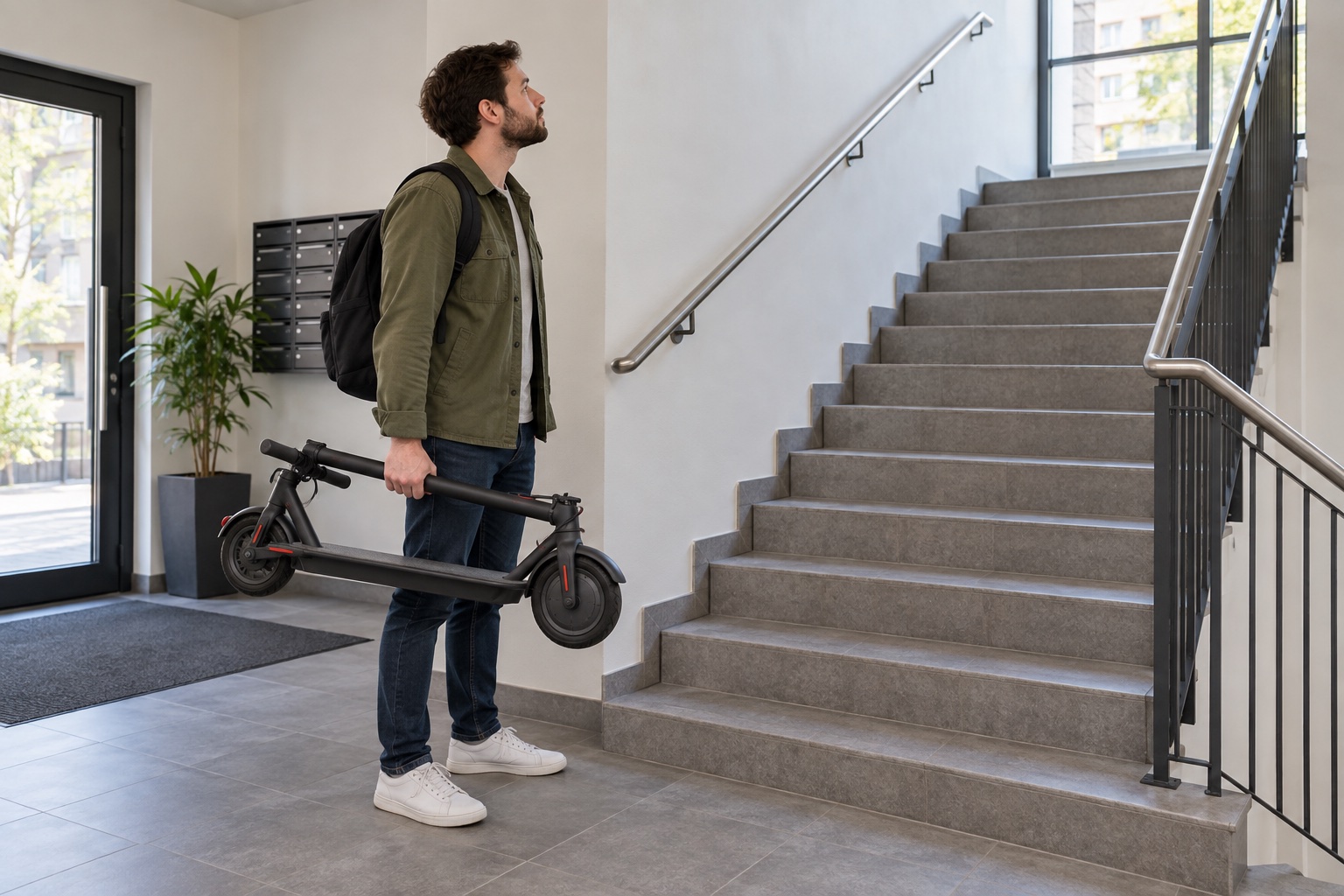
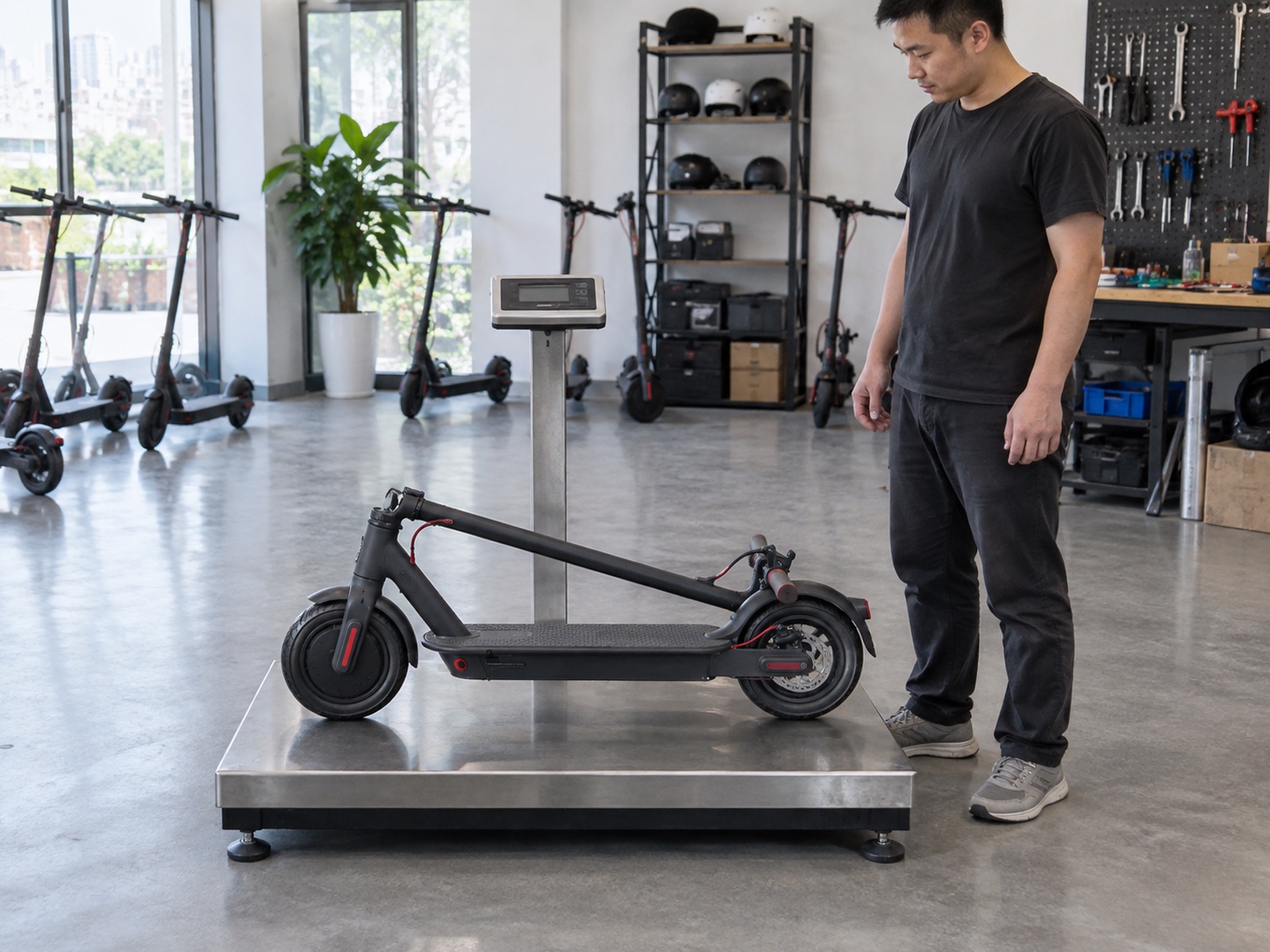
Weight and portability matter if you need to carry your scooter upstairs or store it indoors. Lightweight models under 30 pounds are easier to handle. Folding mechanisms should be quick and reliable for daily use.
| Scooter Category | Weight Range | Typical Range | Top Speed | Price Range |
| Lightweight Commuter | 20-30 lbs | 15-25 miles | 15-20 mph | $300-800 |
| Standard Commuter | 30-45 lbs | 25-40 miles | 20-25 mph | $500-1,500 |
| Heavy-Duty Commuter | 45-65 lbs | 30-50 miles | 25-30 mph | $800-2,500 |
| Premium Commuter | 35-55 lbs | 40-60 miles | 25-35 mph | $1,200-3,000 |
Speed and power specifications affect your commute time and ability to handle hills. Most urban commuting requires 15-25 mph top speeds. Higher speeds help with longer routes but may face legal restrictions.
Motor power between 250-500 watts handles most commuting needs effectively. More powerful motors climb hills better but drain batteries faster. Dual motors provide extra power but add weight and cost.
Build quality and durability determine long-term reliability and maintenance costs. Look for solid construction, quality components, and good warranties. Read reviews from actual commuters in similar conditions.
Weather resistance protects your investment from rain and moisture damage. IP54 or higher ratings provide adequate protection for most climates. Avoid riding in heavy rain regardless of ratings.
3. What safety precautions should commuters take?
Safety preparation prevents accidents and injuries that can derail your commuting plans. Proper precautions protect you from traffic, weather, and equipment failures while building confidence for daily riding.
Helmet and protective gear provide critical protection during falls or collisions. Quality helmets reduce head injury risk by 85% according to safety studies. Now, you might be wondering which type works best – bicycle helmets offer the right protection for scooter speeds.
Choose helmets with CPSC or SNELL certification for proven safety standards. Proper fit is crucial – helmets should sit level and snug without sliding. Replace helmets after any impact or every 3-5 years.
Additional protective gear includes knee pads, elbow pads, and gloves for extra protection. Reflective clothing improves visibility to drivers during dawn and dusk commutes. Bright colors help you stand out in traffic.
| Safety Gear | Protection Level | Cost Range | Replacement Frequency |
| Certified Helmet | Critical | $30-150 | After impact/3-5 years |
| Reflective Vest | High | $10-30 | When worn/faded |
| Knee/Elbow Pads | Medium | $20-60 | When damaged |
| Gloves | Medium | $15-40 | Seasonally |
| Proper Footwear | Medium | $50-200 | When worn out |
Traffic rules and road positioning keep you safe while maintaining traffic flow. Follow bicycle laws in most areas unless local rules specify otherwise. Ride with traffic, not against it, for predictable movement patterns.
Use bike lanes when available and legal for scooters. Stay visible and predictable in your movements. Signal turns and stops clearly to communicate with drivers and pedestrians.
Weather condition considerations affect both safety and equipment performance. Wet roads reduce traction and increase stopping distances. Cold weather reduces battery range and affects tire pressure.
Avoid riding in heavy rain, snow, or ice conditions. Wind affects stability, especially on lightweight scooters. Plan alternative transportation for severe weather days.
Night riding safety requires proper lighting and increased caution. Front white lights and rear red lights are legally required in most areas. Additional reflective gear improves visibility from all angles.
4. How much does electric scooter commuting cost?
Understanding the complete cost picture helps you make informed decisions about scooter commuting. Total costs include purchase price, maintenance, charging, and potential accessories or insurance.
Initial purchase prices vary widely based on features, quality, and brand reputation. Budget commuter scooters start around $300-500 for basic models. The best part? Even premium scooters cost less than one year of car payments for most people.
Mid-range commuter scooters with good range and build quality cost $500-1,200. Premium models with advanced features and longer warranties range from $1,200-3,000. Consider your daily needs versus nice-to-have features.
Financing options make higher-end scooters more accessible through monthly payments. Some retailers offer 0% interest plans for qualified buyers. Factor financing costs into your total ownership expenses.
| Cost Category | Budget Option | Mid-Range | Premium | Annual Total |
| Purchase Price | $300-500 | $500-1,200 | $1,200-3,000 | Varies |
| Charging Costs | $15-25 | $20-35 | $25-50 | $15-50 |
| Maintenance | $50-100 | $75-150 | $100-200 | $50-200 |
| Accessories | $50-150 | $100-250 | $200-400 | $50-400 |
| Insurance (optional) | $0-100 | $50-150 | $100-300 | $0-300 |
Ongoing maintenance expenses remain low compared to cars but require budgeting. Tire replacements cost $20-60 per set depending on scooter type. Brake adjustments and pad replacements cost $15-40 when needed.
Battery replacement represents the largest long-term expense for most scooters. Replacement batteries cost $100-400 depending on capacity and brand. Quality batteries last 2-4 years with proper care.
Charging costs depend on local electricity rates and usage patterns. Most scooters use 0.3-0.8 kWh per full charge. At average US electricity rates, this costs $0.04-0.10 per charge.
Daily charging for commuting typically costs $0.20-0.50 per week. Annual electricity costs range from $10-50 for most commuters. Cold weather increases charging frequency and costs slightly.
Insurance and registration requirements vary by location and scooter specifications. Some areas require registration for faster scooters. Personal liability insurance may cover scooter accidents under existing policies.
5. What are the legal requirements for scooter commuting?
Legal compliance ensures safe, hassle-free commuting while avoiding fines and legal problems. Requirements vary significantly by state, city, and local jurisdiction, making research crucial before starting.
Local laws and regulations change frequently as governments adapt to growing scooter popularity. Some cities welcome scooters while others restrict or ban them completely. Here’s why it matters – violations can result in fines, impoundment, and legal liability.
Research your specific route including all jurisdictions you’ll travel through. Laws can differ between neighboring cities or counties. Check for recent updates as regulations evolve rapidly.
Speed limits for scooters typically range from 15-25 mph in areas where they’re legal. Some locations have lower limits in business districts or near schools. Exceeding speed limits can result in traffic citations.
| Legal Requirement | Common Rules | Typical Penalties | Compliance Tips |
| Speed Limits | 15-25 mph max | $50-200 fines | Check local limits |
| Helmet Laws | Varies by age/location | $25-100 fines | Always wear one |
| License Requirements | Usually none | Registration fees | Verify locally |
| Insurance Needs | Rarely required | Liability exposure | Check coverage |
| Parking Rules | Follow bike rules | $25-150 fines | Use designated areas |
License and registration needs depend on scooter power and local regulations. Most areas don’t require licenses for scooters under 750 watts. Higher-powered scooters may need motorcycle licenses and registration.
Age restrictions commonly require riders to be 14-16 years old minimum. Some areas require adult supervision for younger riders. Business districts may have different age requirements than residential areas.
Helmet requirements vary widely by location and rider age. Some areas require helmets for all riders while others only require them for minors. Safety experts recommend helmets regardless of legal requirements.
Traffic law compliance means following the same rules as bicycles in most areas. This includes stopping at red lights, yielding to pedestrians, and using proper signals. Treat stop signs and traffic signals the same as other vehicles.
Parking and storage rules typically follow bicycle regulations where scooters are legal. Avoid blocking sidewalks, building entrances, or accessibility ramps. Some areas provide designated scooter parking zones.
6. How do you maintain your commuter scooter?
Proper maintenance extends scooter life, prevents breakdowns, and ensures safe daily operation. Regular care prevents small problems from becoming expensive repairs that could interrupt your commuting routine.
Daily maintenance routines take just a few minutes but prevent major problems. Check tire pressure weekly as under-inflated tires reduce range and handling. Let me explain why this matters – proper pressure improves safety and battery efficiency significantly.
Inspect brakes before each ride to ensure proper function and adjustment. Squeaking or grinding sounds indicate brake pad wear that needs attention. Test both front and rear brakes at low speeds regularly.
Clean your scooter weekly to remove dirt, salt, and debris that cause corrosion. Use damp cloths rather than pressure washers that can damage electrical components. Dry thoroughly after cleaning to prevent rust.
| Maintenance Task | Frequency | Time Required | Cost | Difficulty Level |
| Tire Pressure Check | Weekly | 2 minutes | Free | Easy |
| Brake Inspection | Daily | 1 minute | Free | Easy |
| General Cleaning | Weekly | 10 minutes | $5 | Easy |
| Battery Care | Daily | 2 minutes | Free | Easy |
| Professional Service | Annually | 1 hour | $50-150 | N/A |
Battery care and charging practices directly affect range and battery lifespan. Avoid completely draining batteries as this reduces their total lifespan. Charge after each use rather than waiting for complete discharge.
Store batteries at 50-80% charge for long-term storage periods. Extreme temperatures damage battery cells and reduce capacity. Charge indoors when possible to maintain optimal temperatures.
Use only manufacturer-approved chargers to prevent damage and safety hazards. Cheap aftermarket chargers can overcharge batteries and create fire risks. Replace damaged charging cables immediately.
Tire and brake maintenance prevents accidents and improves ride quality. Replace tires when tread depth becomes shallow or sidewalls show cracking. Properly inflated tires last longer and provide better traction.
Brake adjustments may be needed as cables stretch and pads wear. Most scooters have adjustment screws for fine-tuning brake tension. Replace brake pads when they become thin or glazed.
Weather protection methods preserve your investment during harsh conditions. Cover stored scooters to prevent UV damage and moisture exposure. Remove batteries for indoor storage during freezing weather.
7. What challenges might you face while commuting?
Understanding potential challenges helps you prepare solutions and backup plans for successful long-term scooter commuting. Most problems have practical solutions when you plan ahead.
Weather and seasonal limitations affect scooter performance and rider comfort significantly. Rain reduces traction and visibility while making roads slippery and dangerous. The bottom line? Weather planning determines whether scooter commuting works year-round in your climate.
Cold weather reduces battery range by 20-40% as chemical reactions slow down. Heating systems in cars aren’t available on scooters, requiring appropriate clothing. Ice and snow make scooter riding extremely dangerous.
Hot weather can cause battery overheating and reduced performance. Direct sunlight degrades plastic components over time. Extreme heat makes riding uncomfortable without proper ventilation.
| Challenge Category | Impact Level | Solutions Available | Backup Options |
| Weather Conditions | High | Gear, planning | Public transit |
| Infrastructure Issues | Medium | Route planning | Alternative routes |
| Security Concerns | Medium | Locks, storage | Indoor parking |
| Range Limitations | Medium | Charging, planning | Backup transport |
| Social Acceptance | Low | Education, patience | Ignore negativity |
Infrastructure and road conditions vary widely between cities and neighborhoods. Poor road surfaces damage scooters and create safety hazards. Construction zones may block bike lanes and force dangerous detours.
Lack of bike lanes forces scooter riders into traffic or onto sidewalks illegally. Steep hills challenge scooter motors and drain batteries quickly. Plan routes that avoid problematic areas when possible.
Security and theft prevention require constant vigilance in urban areas. Scooters are attractive targets for thieves due to their portability and value. Quality locks deter casual theft but determined thieves can defeat most security measures.
Remove batteries and accessories when parking in public areas. Choose well-lit, visible parking locations when possible. Consider folding scooters that can be stored indoors at work.
Range anxiety affects new commuters who worry about running out of power. Plan charging opportunities at work or during the day for longer commutes. Carry chargers for emergency top-ups when needed.
Map charging stations along your route for backup power options. Some coffee shops and businesses allow customers to charge devices. Portable battery packs can extend range in emergencies.

Conclusion
Electric scooter commuting saves you $2,000-5,000 every year and cuts your travel time in half. You get freedom from traffic jams, parking problems, and high transport costs. The best part is staying active while helping the environment with zero emissions. Success comes from picking the right scooter, following safety rules, knowing local laws, and keeping your scooter in good shape.
Ready to change how you get to work? Dynamic Scooter helps you find the perfect commuter scooter that fits your needs and budget. Visit Dynamic Scooter today to start saving money and time with clean, efficient transportation that works.

FAQ
Q1: How far can electric scooters travel on a single charge?
Most commuter scooters can travel 10-40 miles per charge, depending on battery size, rider weight, terrain, and weather conditions.
Q2: Are electric scooters allowed on bike lanes?
Laws vary by location, but many cities allow electric scooters in bike lanes. Check your local regulations before commuting.
Q3: How long does it take to charge an electric scooter?
Charging times range from 3-8 hours for a full charge, depending on battery capacity and charger specifications.
Q4: Can you ride electric scooters in the rain?
Many scooters have water resistance ratings, but riding in heavy rain is not recommended for safety and equipment protection.
Q5: What’s the average lifespan of a commuter electric scooter?
With proper maintenance, quality electric scooters can last 1-5 years or 3,000-5,000 miles of regular commuting use.