
Buying an electric scooter without checking certifications is a huge risk. An electric scooter needs proper safety marks. You could end up with an unsafe product that is a fire hazard or illegal to ride. This guide explains the key electric scooter certifications to look for. They protect yourself and your investment.
The most important certification for an electric scooter is UL 2272. It tests the entire electrical system. This includes the battery and charger. It checks for fire safety. Other key certifications include CE for European markets. FCC is for wireless components. IP ratings show water resistance. These certifications mean the scooter meets strict safety standards. They also confirm quality and regulatory compliance. Always verify these markings before buying an electric scooter. The Dynamic Scooter Model B, for example, is fully UL 2272 certified.
Ready to decode the alphabet soup of electric scooter safety? Here’s everything you need to know.
1. Why Do Electric Scooters Need Certifications?
Electric scooter certifications are not just stickers on a box. They are a critical part of consumer safety. These standards protect you from unsafe products. They cover electrical systems. They also cover material quality. Without them, there is no guarantee your scooter is safe. This is a big risk. You need these standards.
These rules also provide legal protection. In many places, it is illegal to sell or ride an uncertified electric scooter. Here’s why it matters. If you are in an accident on an uncertified scooter, your insurance may not cover you. You could also face fines. Manufacturers who follow these rules show they care about safety. They show they care about quality.
Certifications create a baseline for quality. They force manufacturers to meet minimum safety and performance standards. This helps remove dangerous, low-quality products from the market. For you, it means a more reliable and safer ride. It also protects your investment. A certified scooter is a scooter that is built to last. It is strong. It is safe. It lasts long.
Think about liability. If an uncertified scooter causes a fire or an injury, the legal consequences can be severe. This applies to the seller. It can also apply to the owner. Certifications from bodies like UL mean the product has been independently tested. UL stands for Underwriters Laboratories. This third-party validation is your best defense. It protects you from faulty products. It is a sign of a trustworthy brand. Trust matters. Safety matters.
| Reason for Certification | Why It Is Important for You |
| Consumer Safety | Protects against fire, electrical, and mechanical failures. |
| Legal Compliance | Makes sure the scooter is legal to ride in your area. |
| Quality Assurance | Guarantees a minimum standard of performance and durability. |
| Insurance & Liability | Provides coverage in case of an accident and reduces legal risk. |

2. What Is UL 2272 Certification?
UL 2272 is the gold standard for electric scooter safety in North America. It is a comprehensive testing standard. Underwriters Laboratories created it. It focuses on the risk of fire. It also focuses on electrical shock. This standard was developed in response to fires. Early hoverboards caused these fires.
The UL 2272 test covers the entire electrical system. This includes the battery pack. It includes the charger, the motor, and all wiring. The best part? It does not just test individual parts. It tests them all working together. This is a much tougher test. It is more realistic. It simulates real-world conditions. This is smart. This is safe.
To get UL 2272 certified, a scooter must pass tough tests. These include overcharge tests. They include short circuit tests. They include temperature tests. The scooter is also tested for impact. It is tested for vibration. It is tested for water exposure. The goal is to make sure the electrical system will not fail. This is true even under stress. This rigorous process makes the UL label trustworthy. You can trust it. It means safety.
The certification process is long and expensive for manufacturers. They must submit their product to a UL-approved lab for testing. If it passes, they can use the UL mark on their product and packaging. This mark is a clear sign that the scooter has met high safety standards. The Dynamic Scooter Model B proudly carries the UL 2272 certification, a testament to its safety-first design.
| UL 2272 Test Category | Purpose of the Test |
| Electrical Tests | Checks for overcharging, short circuits, and overheating. |
| Mechanical Tests | Assesses stability, vibration, and impact resistance. |
| Environmental Tests | Tests for performance in extreme temperatures and water exposure. |
| Material Tests | Confirms plastics and other materials are flame-resistant. |
3. Which Other Certifications Are Important?
While UL 2272 is key, other certifications also matter. The CE marking is required for products sold in the European Union. It shows the product meets EU safety requirements. It also shows health and environmental protection standards. If you are in Europe, the CE mark is a must-have. It is the law. You need it.
The FCC mark is another one to look for. This is required for electronic products with wireless components. This applies to products sold in the United States. But here’s the thing. If your electric scooter has Bluetooth for an app, it needs FCC certification. This means it will not interfere with other wireless signals. It is a sign of proper electronic design. Good design is key. It keeps you safe.
The CPSC in the U.S. also plays a role. CPSC stands for Consumer Product Safety Commission. They do not issue a certification mark themselves. But they set safety standards for consumer products. A manufacturer that states its product complies with CPSC rules shows a commitment to safety. They confirm their product is safe for its intended use. This is good. This is right.
Finally, look for an IP rating. This stands for Ingress Protection. It is a two-digit number. It tells you how resistant the scooter is to dust and water. The first digit is for dust protection. It ranges from 1 to 6. The second is for water protection. It ranges from 1 to 8. A higher number means better protection. An IP54 rating is a good baseline for an electric scooter. It offers protection from dust and water splashes.
| Certification/Rating | Region/Purpose | What It Signifies |
| CE Marking | European Union | Meets EU safety, health, and environmental standards. |
| FCC Mark | United States | Wireless components will not cause harmful interference. |
| CPSC Compliance | United States | Product meets federal consumer product safety rules. |
| IP Rating | International | Resistance to dust and water ingress. |

4. How Do You Verify Certification Status?
Verifying that an electric scooter is certified is a crucial step. Start by looking for the certification marks on the product itself. The UL logo, CE mark, and FCC ID should be on a label. This label is often on the underside of the deck. It can also be on the charging port. They should also be on the packaging. They should be in the user manual.
Do not just trust the label. Now, you might be wondering how to check if it is real. For UL certification, you can use UL’s online database. You can search by the company name. You can also search by the UL file number. This number should be near the UL logo. This allows you to confirm the certification is valid. It also confirms it applies to that specific model.
For CE and FCC marks, it is a bit harder to verify directly. However, you can look for red flags. Be wary of logos that look distorted or are missing key information. A real FCC label will have an FCC ID number that you can look up in the FCC database. Reputable manufacturers will always provide clear information about their certifications on their website.
Fake certifications are a real problem. This is especially true on very cheap electric scooters from online marketplaces. Electric scooter safety should never be compromised. If a deal seems too good to be true, it probably is. A scooter that is hundreds of dollars cheaper than competitors likely cut corners. Safety certification is often the first thing to go. Always buy from a reputable dealer. Or buy directly from the manufacturer, like Dynamic Scooter. This helps you get a genuinely certified product. You stay safe. You stay legal.
| Verification Method | How to Do It |
| Physical Inspection | Look for clear, official-looking certification marks on the scooter and box. |
| Online Database | Use the UL Product iQ database to search for the model or file number. |
| Manufacturer Website | Check the product page for a list of certifications and compliance statements. |
| Reputable Seller | Purchase from authorized dealers who can vouch for the product’s authenticity. |
5. What Are the Risks of Uncertified Scooters?
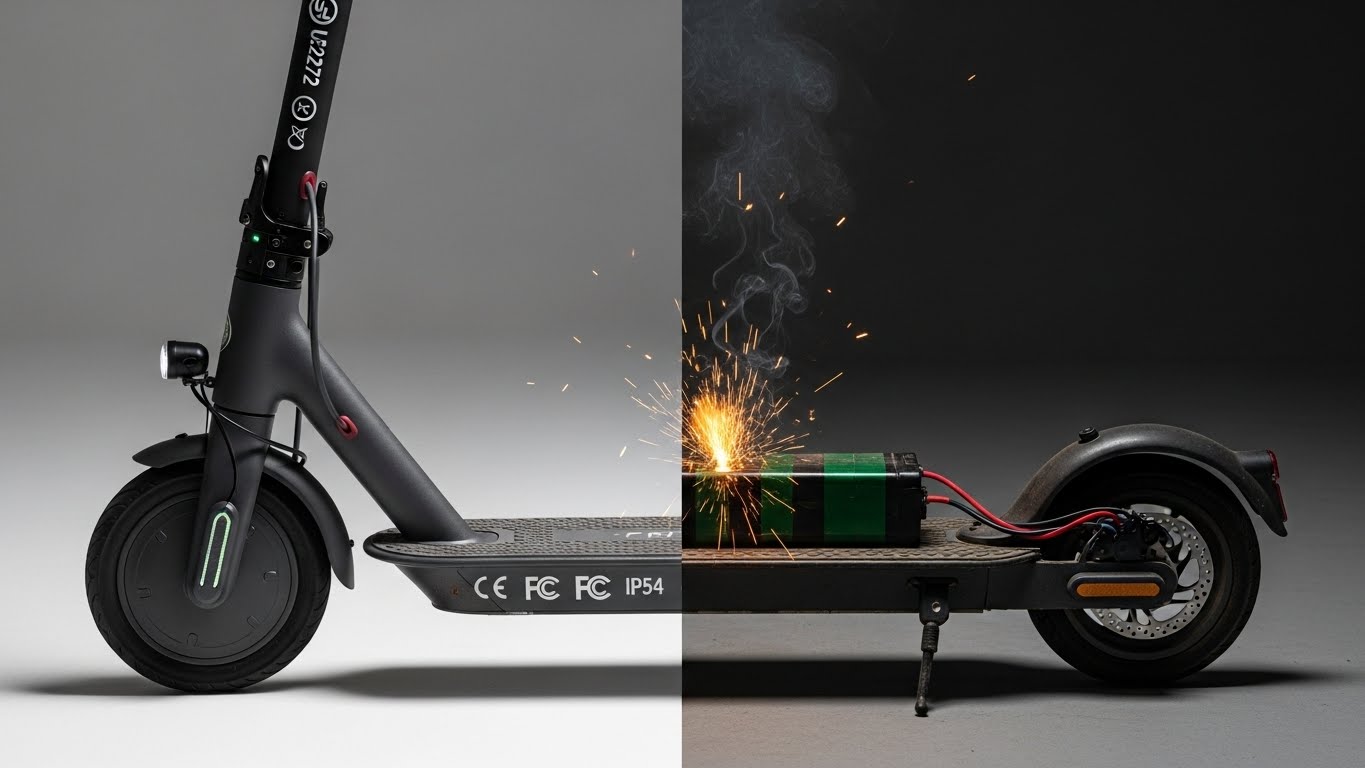
The risks of buying an uncertified electric scooter are significant. The most serious risk is fire. The lithium-ion batteries in an electric scooter store a lot of energy. Electric scooters need proper battery protection. If they are poorly made, they can overheat. They can catch fire. They can even explode. A proper battery management system (BMS) is needed. UL 2272 certification is designed to prevent this.
Electrical system failures are another major concern. This is important because a sudden power cutoff while riding can be extremely dangerous. This is especially true in traffic. An uncertified scooter might have faulty wiring. It might have a poorly designed motor controller. This can lead to a complete loss of power. It can also cause sudden, unexpected acceleration. These failures can cause serious accidents. They can cause injuries.
There are also legal and warranty issues. If you buy an uncertified scooter, you may be breaking local laws. If you get into an accident, you could be held liable. Your warranty will also likely be void. Most reputable companies will not service uncertified products. They will not provide parts. You are left with a product that is unsafe. It is also unsupported.
Insurance problems are another risk. If an uncertified scooter causes a fire that damages your home, your insurance may refuse to cover it. They can argue that you knowingly used an unsafe product. It was non-compliant. The small amount of money you might save on an uncertified scooter is not worth it. The financial risks are massive. The safety risks are massive. Do not take this risk. Buy certified.
| Risk Category | Specific Dangers of Uncertified Scooters |
| Fire Hazard | Poorly made batteries can overheat, catch fire, or explode. |
| Electrical Failure | Sudden power loss or acceleration can cause serious accidents. |
| Legal Issues | May be illegal to ride; you could be liable in an accident. |
| Financial Loss | Voided warranties and denied insurance claims are common. |
6. Do All Countries Require the Same Certifications?
Electric scooter certification standards are not the same everywhere. Different countries and regions have their own rules. In North America, UL 2272 is the primary electric scooter standard. This includes the U.S. and Canada. It is for electrical safety. While not always legally mandatory to sell, it is often required. Major retailers require it. It is becoming a de facto requirement for legal street use in many cities.
In the European Union, the CE marking is mandatory. Here’s the deal. A product cannot be legally sold in the EU without it. The CE mark covers multiple directives. This includes the Machinery Directive. It includes the Low Voltage Directive. It includes the EMC Directive. It is a broad declaration by the manufacturer. It says their product meets all relevant EU laws. This is not just electrical safety.
Asian markets have their own set of rules. China has the CCC mark. Japan has the PSE mark. South Korea has the KC mark. These are all mandatory for products sold in those countries. A manufacturer looking to sell globally must navigate this complex web. Dynamic Scooter does this. They need to design and test their products. They must meet multiple standards.
There are some international harmonization efforts. The IEC (International Electrotechnical Commission) creates standards that many countries adopt. This helps simplify the process. However, for now, the landscape is fragmented. As a consumer, you need to look for the certifications that are relevant to your region. A scooter with only a CE mark may not be fully compliant in the U.S., and vice versa.
| Region | Key Certification(s) | Is It Mandatory? |
| North America | UL 2272, FCC | Often required by law/retailers. |
| European Union | CE Marking | Yes, mandatory for all products. |
| China | CCC Mark | Yes, mandatory. |
| Japan / South Korea | PSE / KC Marks | Yes, mandatory. |

7. What Are the Key Certifications for Your Country?
Knowing which certifications matter in your country is key. This helps you buy the right electric scooter. An electric scooter must meet local standards. It also keeps you legal. Different regions have different rules. You need to know what applies to you. Your electric scooter needs the right marks. This section breaks it down by region. It is simple. It is clear.
If you are in the United States or Canada, look for UL 2272 first. Here’s what you need to know. This is the gold standard for electrical safety. Also check for an FCC mark if your scooter has Bluetooth or wireless features. These two marks mean your scooter is safe. They also mean it is legal to use. The Dynamic Scooter Model B has both of these certifications.
For buyers in the European Union, the CE mark is a must. You cannot legally buy or use a scooter without it in the EU. The CE mark shows the scooter meets all EU safety laws. This includes electrical safety. It also includes environmental standards. If you see a scooter without a CE mark in Europe, do not buy it. It is illegal. It is also unsafe.
In Asia, the rules vary by country. China requires the CCC mark. Japan requires the PSE mark. South Korea requires the KC mark. If you are buying a scooter in these countries, check for the right mark. A scooter with only a UL or CE mark may not be legal there. Always verify the local requirements before you buy. This saves you trouble later. It is smart. It is safe.
Australia and New Zealand have their own standards too. They often accept CE or UL certifications. But they may also require additional testing. Check with local authorities or the retailer. Make sure your scooter meets local laws. This is especially important if you plan to ride on public roads. Safety and legality go hand in hand. Both matter. Both protect you.
| Country/Region | Required Certification(s) | What to Look For |
| United States | UL 2272, FCC | UL mark on scooter, FCC ID for wireless features. |
| Canada | UL 2272, IC (Innovation, Science and Economic Development Canada) | UL mark, IC mark for wireless. |
| European Union | CE Marking | CE mark on product and packaging. |
| United Kingdom | UKCA (post-Brexit) | UKCA mark (similar to CE). |
| China | CCC Mark | CCC logo on product. |
| Japan | PSE Mark | PSE symbol on battery and charger. |
| Australia/New Zealand | RCM (Regulatory Compliance Mark) | RCM mark, may accept UL/CE with additional docs. |
Conclusion
Electric scooter certifications are your best guarantee of safety. They also guarantee quality. Standards like UL 2272, CE, and FCC are important. They make sure a scooter’s electrical and mechanical systems have been tested. The testing is rigorous. Verifying these certifications protects you. It protects you from dangerous products. It protects you from legal issues. It protects you from financial loss. Certified scooters may cost more. But that price includes peace of mind. It comes from independent safety validation.
Ready to ride with confidence? Partner with Dynamic Scooter. Choose a model like the Model B. It is fully certified to the highest industry standards. You get a safer journey. You get a more reliable journey.
FAQ
Q1: What is the most important certification for electric scooters?
UL 2272 is the most critical certification for electric scooters. It tests the battery and electrical system for safety. This certification helps prevent fires and explosions. Always look for UL 2272 when buying a scooter.
Q2: Are all electric scooters certified?
No, not all electric scooters have proper certifications. Some cheap imports lack safety testing. Always check for UL 2272 or CE markings. Avoid scooters without visible certification labels.
Q3: Can I ride an uncertified electric scooter legally?
Laws vary by location. Many places require certified scooters for legal use. Uncertified scooters may be banned from public roads. Check your local regulations before buying.
Q4: How can I tell if a certification is fake?
Check the manufacturer’s website for certification numbers. Verify markings match official certification logos. Use online databases to confirm validity. Be suspicious of very cheap scooters claiming certifications.
Q5: Does Dynamic Scooter have proper certifications?
Yes, Dynamic Scooter products meet all required safety certifications. The Model B has UL 2272 certification for electrical safety. All products comply with regional standards. This gives you peace of mind and legal protection.