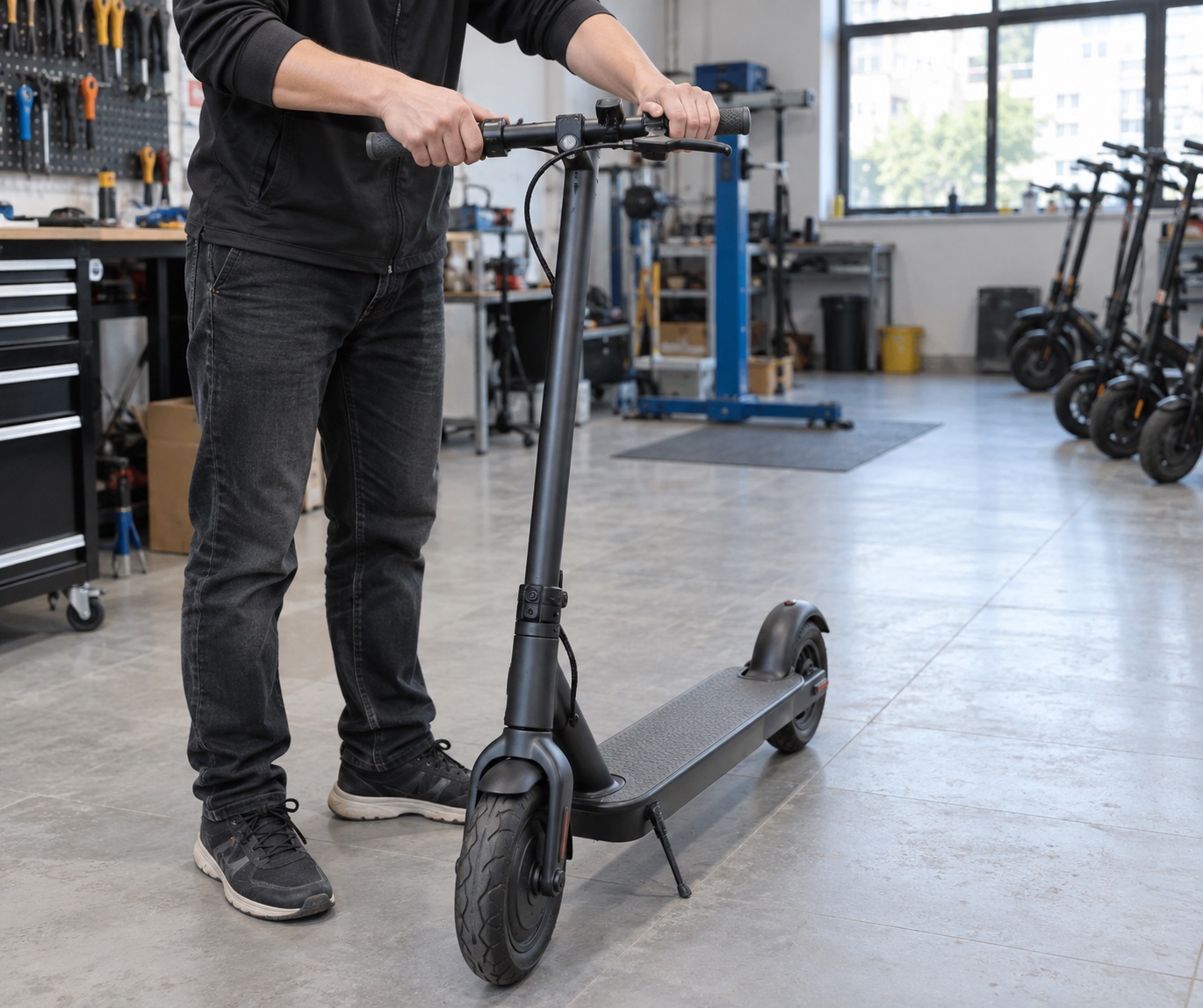

An electric scooter with a removable battery suits riders who need off-scooter charging or an easy battery swap, but pack weight, cost, and fit can make it the wrong choice for others. You get home from work, find no outlet near your apartment parking spot, and face another morning with a half-charged scooter. A removable pack lets you bring power indoors while the scooter stays parked; the real question is whether that convenience matches your route and your budget.
1. Can an Electric Scooter With a Removable Battery Charge Anywhere?

Yes, an electric scooter with a removable battery can charge away from the scooter if the maker approves off-board charging and you have a suitable indoor outlet. That helps when parking sits in a garage, basement, or shared area without power. It doesn’t make every socket or charger safe for every pack.
Where does off-scooter charging help most?
Start with your parking spot: if the scooter must stay downstairs, you can carry the pack to your apartment or office. A rider with a short train connection might leave the folded scooter in approved storage and charge only the pack at home. Our home charging guide covers the room setup and routine worth checking before you plug in. The U.S. Consumer Product Safety Commission advises using an approved charger and staying present while charging.
- Confirm that the model allows charging with its battery removed.
- Put the pack on a clear, hard surface and stay nearby while it charges.
- Keep the original or manufacturer-approved charger with the pack.
What should you check before plugging in?
Match the charger, connector, and instructions to the exact battery model. Let a hot or wet pack return to the condition specified in its manual before charging, and stop if the case, cable, or port looks damaged. Indoor access makes charging easier only when you can use an appropriate space.
| Your parking setup | What removable charging changes |
|---|---|
| No outlet near scooter | Pack can move to an approved charging spot |
| Outlet next to scooter | Little charging-location benefit |
Key Takeaway: If your parking spot has no outlet, check off-board charging support and identify a safe place for the pack before you buy.
2. Can Battery-as-a-Service Lower the Upfront Cost?

Sometimes, an electric scooter with a removable battery costs less upfront when a seller offers a battery subscription instead of including pack ownership. Many sellers do not offer that plan, and a monthly fee can cost more over time. Compare the full agreement with the price of buying the scooter and pack together.
What changes when you own the pack?
Check the ownership line: buying the battery means you keep it, maintain it, and replace it under the seller’s terms. Battery-as-a-Service (BaaS), where offered, may bundle pack service or swaps, but you may owe a fee even during light-use months. Ask who owns the pack, what happens if it fails, and whether a replacement is available where you ride.
- Add the scooter price, pack price, and any spare-pack cost.
- For a subscription, add monthly fees over the period you expect to ride.
- Read damage, cancellation, and return terms before comparing totals.
Which price matters over several years?
Use your likely ownership period, not the advertised checkout price. For a daily commuter, predictable service can have value; for occasional weekend rides, recurring fees may be hard to justify. Keep taxes, charger costs, and replacement availability in the same calculation.
| Battery arrangement | Upfront payment | Later obligation |
|---|---|---|
| Owned pack | Usually higher | Care and possible replacement |
| Subscription, if offered | May be lower | Fees and contract terms |
Key Takeaway: Compare total ownership cost over your real riding period; a low entry price alone says little about value.
3. Does a Removable Battery Make Charging Faster?
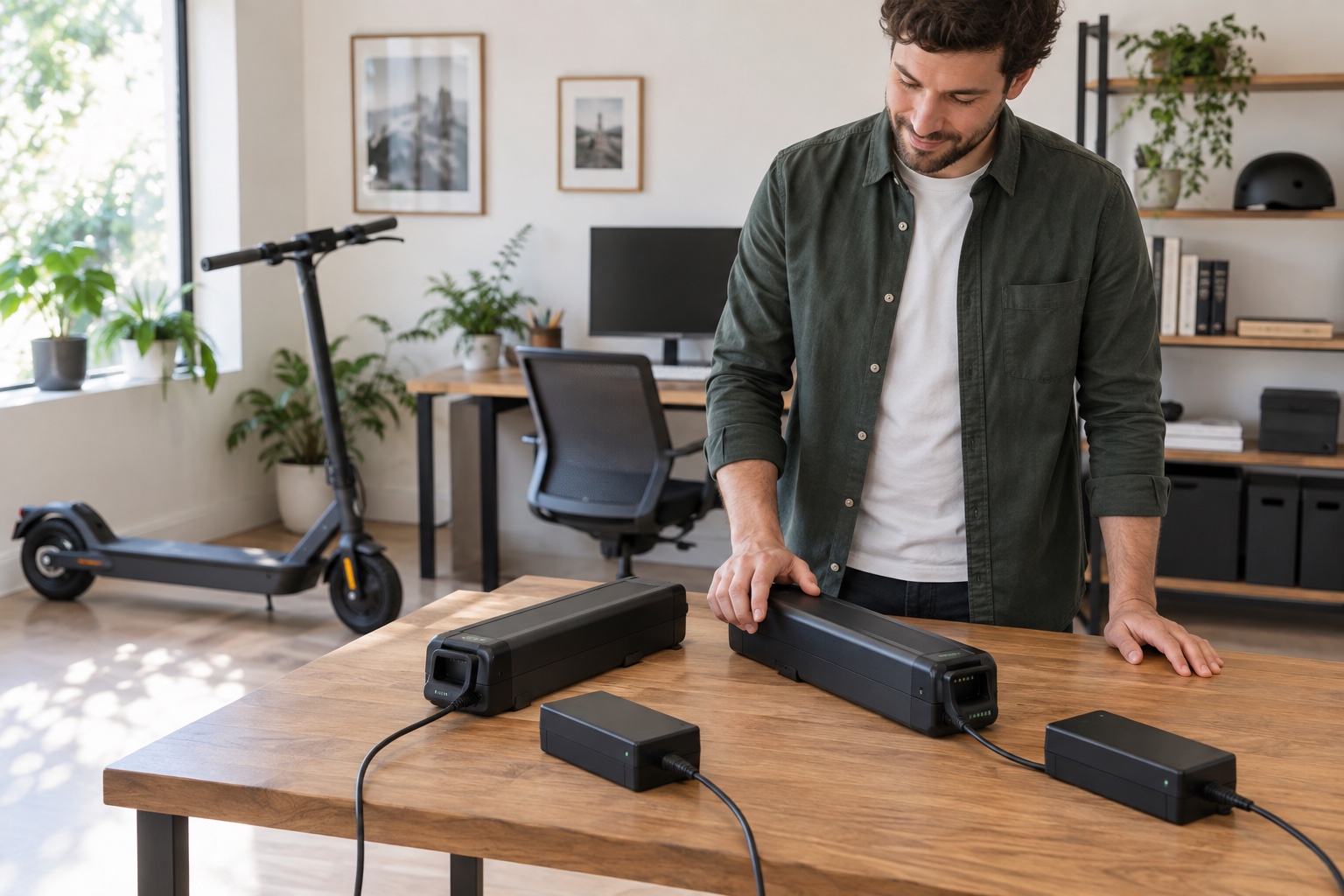
No, an electric scooter with a removable battery does not charge faster merely because its pack comes out. Charging time depends on pack capacity, the approved charger, and the battery system. A spare charged pack can reduce waiting between rides, but only if your model supports a safe swap.
What actually reduces downtime?
Separate charging time from waiting time: a spare lets you ride while another pack charges, if both packs are approved for that scooter. That matters for delivery work or a commute with little time between trips. It also means carrying or storing another battery and paying for it.
- Check the stated charge time with the supplied charger.
- Confirm spare-pack fit by exact model and version.
- Ask whether the scooter can run on one pack while another charges.
Can you use a faster charger?
Only use a charger the manufacturer confirms for your exact pack. A plug that fits can still deliver the wrong electrical output; a faster advertised charger is no shortcut around that risk. If speed matters, compare official charging specifications rather than assuming a removable design will save hours.
| Way to spend less time waiting | What must be true |
|---|---|
| Approved faster charger | Pack and maker support it |
| Charged spare pack | Exact-model swap is supported |
Key Takeaway: Buy a spare or faster charger only after checking model compatibility and the time it saves on your actual schedule.
4. How Do Warranty and Support Work for a Removable Pack?

An electric scooter with a removable battery may make a battery claim easier to handle because the pack can sometimes be inspected separately. Warranty length and coverage still depend on the seller’s written policy. Do not assume a removable pack has a longer warranty than a fixed one.
Which warranty details deserve a close read?
Read the exclusions next: coverage may distinguish manufacturing defects from wear, water damage, or misuse. Keep your proof of purchase and record symptoms before contacting support. Ask whether the seller needs the pack, charger, whole scooter, photos, or a diagnostic report.
- Find the coverage period for the battery and scooter body.
- Check who pays shipping for a claim in your location.
- Confirm whether an opened or modified pack voids coverage.
Will service be simpler?
A removable pack gives a technician one component to inspect without opening the scooter, though other faults can still require the whole vehicle. Faster service depends on parts and support availability. Never open a sealed lithium-ion pack yourself to test cells.
| Support question | Why it affects you |
|---|---|
| Can the pack be sent alone? | May avoid moving the whole scooter |
| Is a replacement in stock? | Determines downtime after approval |
Key Takeaway: Save the exact warranty terms and ask how a battery claim works before a problem leaves you without a ride.
5. Can Better Battery Care Help It Last Longer?
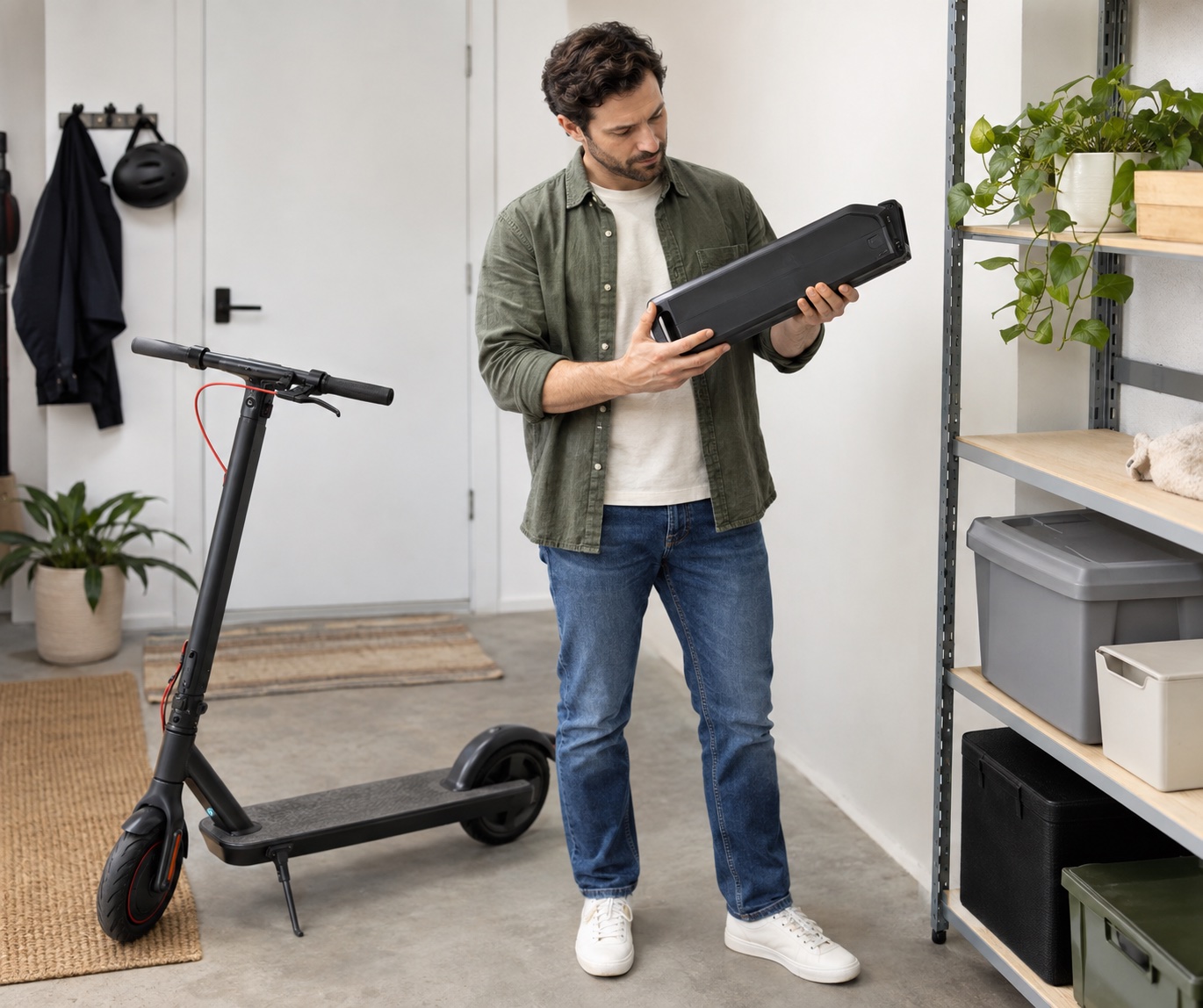
Yes, careful use can help an electric scooter with a removable battery last longer, though no routine guarantees a set lifespan. Keep the pack within its manual’s temperature and storage guidance. Removal gives you easier access for a visual check, not permission to open the case.
What can you inspect safely?
Look at the outside only: check the case, handle, contacts, and charger lead for damage, moisture, or unusual heat. Wipe only accessible exterior surfaces as the manual directs, with power disconnected. If the pack swells, leaks, smokes, or smells unusual, stop using and charging it and contact qualified support.
- Store the pack in a dry place within its specified temperature range.
- Keep contacts clean without scraping or bending them.
- Use only a replacement pack approved for the scooter.
How should you handle longer storage?
Follow the maker’s storage charge guidance rather than leaving the pack empty or plugged in for weeks. Check it at the intervals in the manual, especially before a commute after a long break. A battery management system helps protect normal operation, but it cannot make damaged hardware safe.
| Habit | Practical purpose |
|---|---|
| Dry, moderate storage | Reduces exposure to harsh conditions |
| Regular visual check | Catches visible damage before charging |
Key Takeaway: Use the manual’s storage routine and stop at visible damage; replacing a questionable pack beats gambling on one more ride.
6. Does Removing the Battery Help With Security and Repairs?
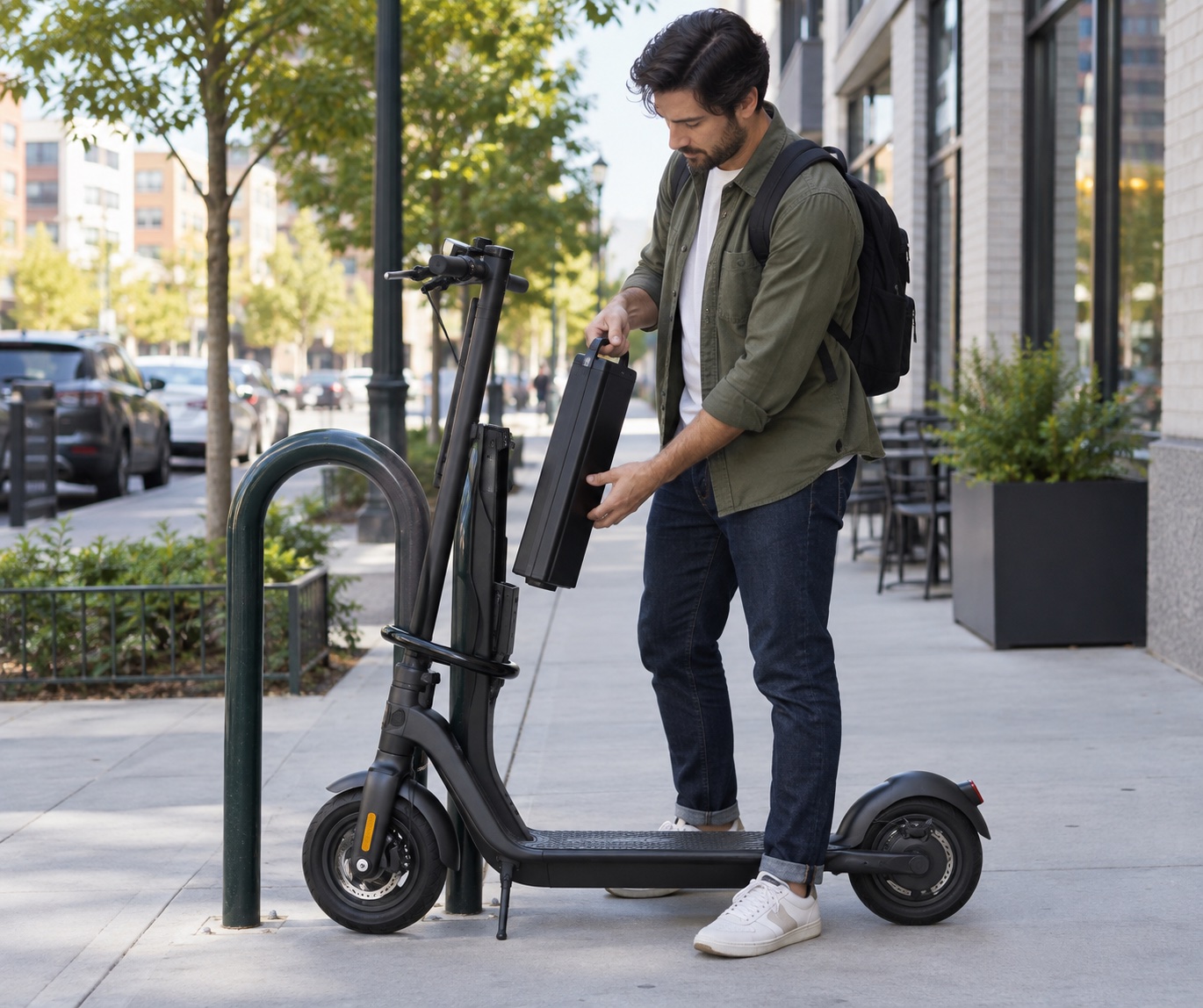
Yes, an electric scooter with a removable battery can be less convenient to ride away when you take its pack, and a technician may diagnose battery faults separately. The scooter itself can still be stolen. Use a physical lock through a secure frame point and follow local parking rules.
What does battery removal protect?
Keep the lock in the plan: removing the pack takes away power but leaves wheels and frame exposed. Carrying a pack also adds weight to your day, especially if you climb stairs or change trains. Choose a locked location that does not block access or emergency routes.
- Lock the scooter to a fixed object where permitted.
- Take the battery only if its design supports routine removal.
- Keep the pack dry and protected while you carry it.
Can it narrow down a fault?
A service team may test the pack and charger separately before checking scooter wiring or the controller. That can narrow a charging complaint, though it does not prove every failure starts in the battery. Note display messages and when the problem occurs so support has useful evidence.
| Action | What it helps with |
|---|---|
| Remove approved pack | Limits unauthorized riding |
| Bring pack to service | Allows separate battery checks |
Key Takeaway: Treat pack removal as one useful step alongside a good lock and a clear support record.
7. How Do Removable and Fixed Batteries Compare?
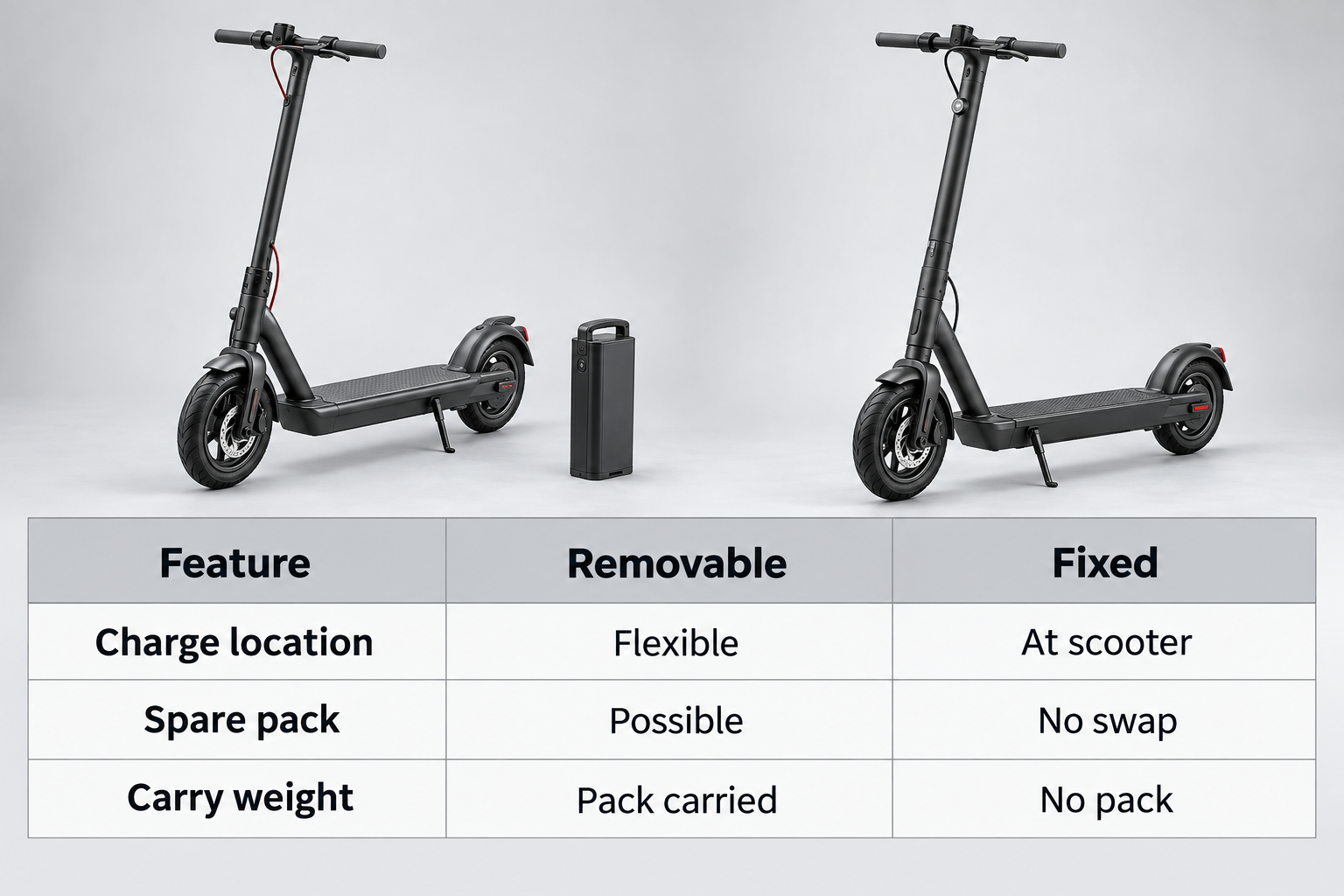
An electric scooter with a removable battery gives you more charging-location choice, while a fixed-battery model avoids carrying a separate pack. Neither design automatically wins on range, speed, or reliability. Your parking setup and the pack’s actual weight decide more than the label on the box.
Which difference affects a normal week?
Walk through Monday morning: if you park beside an outlet, a fixed pack may be easy enough. If the scooter stays in a shared garage without power, carrying a removable pack upstairs could solve a daily problem. Try the lifting motion before buying; a manageable showroom lift can feel different after a long shift.
- Compare where each model can charge under its manual.
- Test the pack’s handle and weight over your likely carrying distance.
- Check whether a spare is sold for the exact scooter version.
What should you compare beyond the battery?
Review rated range, rider weight limit, folding size, brakes, and support terms. A short daily route can favor portability, while longer rides may call for a larger pack and scooter. Compare claims under similar conditions and leave room for hills, wind, and rider load.
| Decision point | Removable pack | Fixed pack |
|---|---|---|
| Charge away from scooter | Often possible if approved | Usually unavailable |
| Carry battery separately | Required for off-board charge | Not required |
Key Takeaway: Choose the design that fits your parking and carrying routine, then compare the actual scooter specifications.
8. Who Gets the Most From a Removable Battery Scooter?

An electric scooter with a removable battery best serves riders who cannot plug in where they park or who need an approved spare for a tight schedule. Apartment residents, mixed train-and-scooter commuters, and some high-mileage workers may benefit. If you have an easy outlet and rarely need a swap, the extra pack handling may add little.
Does your route match the feature?
Trace one complete trip: include stairs, train platforms, office rules, and the walk from parking to an outlet. A compact folding scooter may suit a short final-mile leg; a long route needs enough usable range before any spare-pack plan matters. Check building and transit rules before assuming you can carry or charge a battery there.
- Write down your daily round-trip distance and charging opportunities.
- Include the pack and scooter in your carry-weight test.
- Compare an approved spare with the cost of a larger-range model.
Which buyer might skip it?
A rider with secure ground-level parking and a nearby outlet may gain little from battery removal. Someone who cannot comfortably lift the pack may prefer a fixed model or a lighter scooter. Choose by the routine you actually repeat, not by the number of features listed.
| Rider situation | Likely value of removal |
|---|---|
| No outlet at parking spot | High, if off-board charging is approved |
| Outlet beside scooter | Lower unless a spare is useful |
Key Takeaway: The strongest case is a charging problem you face every week and can solve by safely carrying the pack.
9. What Are the Drawbacks Before You Buy?
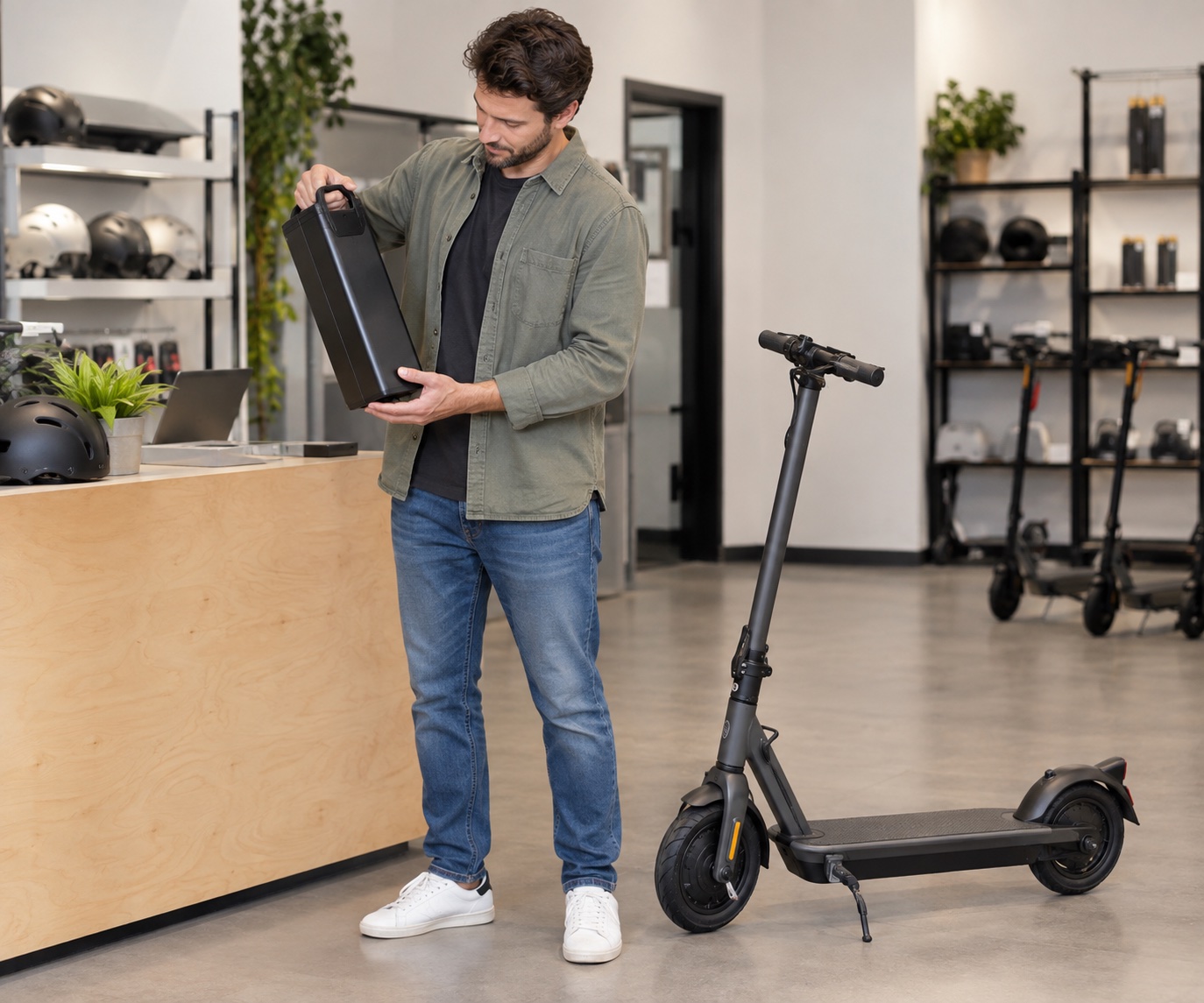
An electric scooter with a removable battery can cost more, add a pack to carry, and tie replacements to a particular model. The removable connection also needs proper seating and protection from damage. These are manageable tradeoffs when off-board charging solves a real problem, but they deserve a hands-on check.
Which costs and limits are easy to miss?
Price the complete setup: the scooter, approved charger, spare pack, shipping, and possible subscription fees all count. Ask how long replacement packs remain available and whether later model revisions use the same connector. Our charger compatibility guide explains why a matching plug is not enough.
- Lift the pack and repeat the motion you would make at home.
- Seat and remove it using the actual locking mechanism.
- Ask for the exact pack and charger part numbers.
What should you inspect in person?
Check that the pack latches positively without force and that its handle feels secure. Look for a protected charging port and clear instructions for wet-weather use. If the seller cannot identify approved replacement parts, factor that uncertainty into your decision.
| Buying check | Why it matters |
|---|---|
| Pack weight and grip | Daily carrying comfort |
| Part availability | Future repair and replacement |
Key Takeaway: Test the removal routine and verify replacement parts before paying for convenience you may struggle to use.
10. Is a Removable Battery Scooter Right for You?
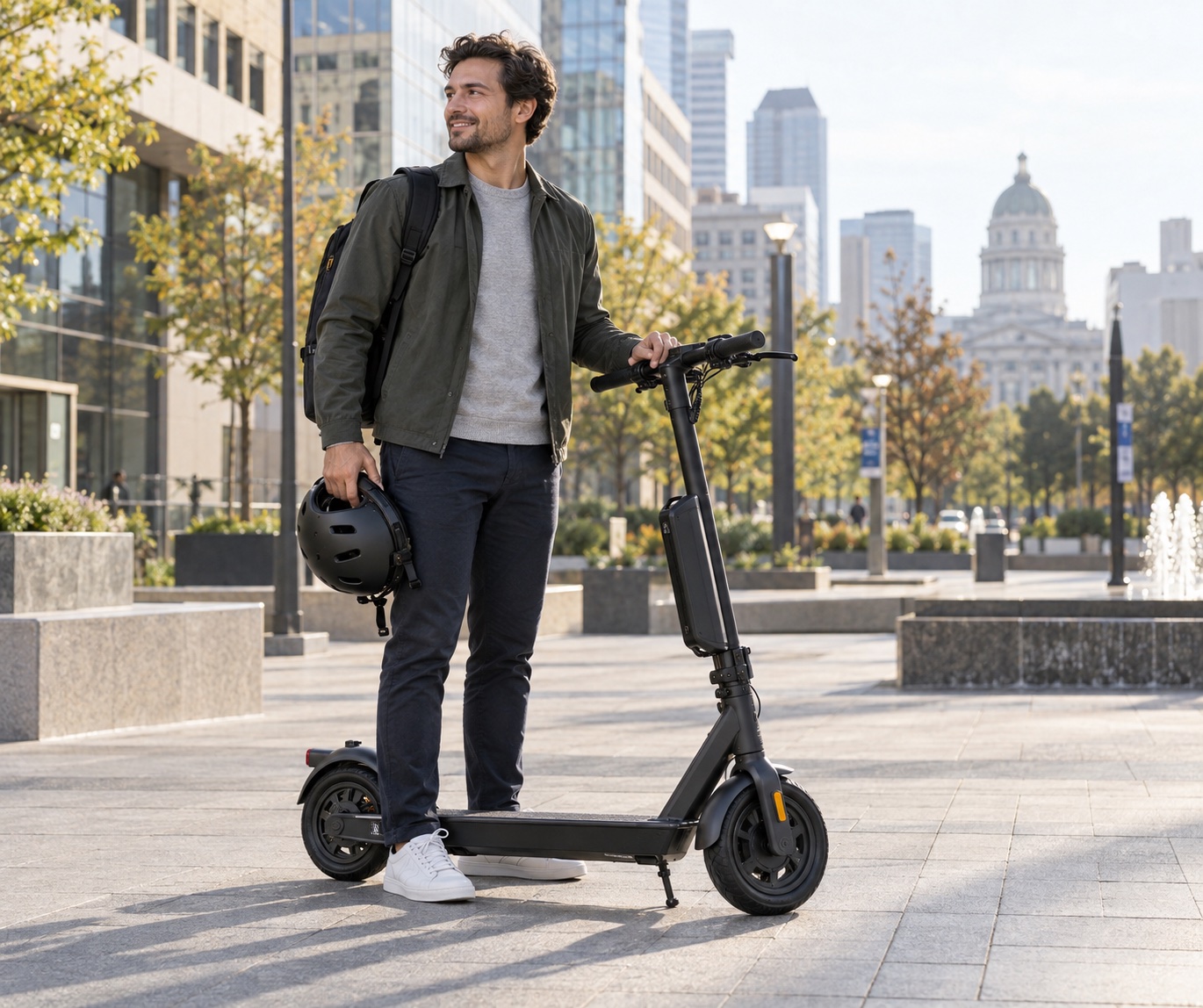
An electric scooter with a removable battery is right for you when safe off-board charging or a compatible spare solves a recurring travel problem. It is a weaker fit when you can charge beside the scooter and do not want to carry a pack. Use your actual route, parking, and support options to make the call.
How can you make the choice quickly?
Use the trip you know: measure your round-trip distance and count reliable places where you may charge. Then test the battery’s weight, check the manual’s charging instructions, and confirm spare-pack supply. If one of those steps fails, compare another model before committing.
- Can you charge safely where the scooter parks?
- Can you carry the pack comfortably as often as needed?
- Can you buy the correct pack and get support later?
What should you do next?
The right scooter should make a normal weekday easier to manage, from parking through charging. Dynamic Scooter offers compact models with detachable-battery options; compare the current specifications and ask which setup fits your route. We think a city commute should fit around your life, down to where you can charge the battery.
| If your answer is… | Your next step |
|---|---|
| Parking has no outlet | Confirm off-board charging and pack weight |
| Parking has power | Compare total scooter value and range |
Key Takeaway: You now know where removable packs help, what they cost in effort, and what to verify before buying; contact us today with your route and charging setup so we can help you choose a suitable model.
Frequently Asked Questions
Q1. Can I charge a removable battery in my apartment? Yes, if the scooter maker permits off-board charging and your building allows it. Use its approved charger on a clear, hard surface and stay present while it charges.
Q2. Will a removable battery charge faster than a fixed one? No, removal alone does not change charge speed. Compare the exact pack and approved charger specifications; an approved spare may reduce waiting between rides.
Q3. How do I know if a spare battery will fit? Check the scooter’s exact model and version against the manufacturer’s approved part number. Similar voltage or connector shape does not prove compatibility.
Q4. What’s the best way to judge whether the pack is too heavy? Lift the actual pack and carry it over a distance like your usual walk or stairs. The published weight is a starting point; your routine decides whether it feels practical.
Q5. Can I keep riding if the pack looks swollen or damaged? No, stop using and charging it. Keep it away from heat and contact qualified support for safe next steps.