
To fix loose electric scooter handlebars, switch off your scooter, identify the moving joint, secure its fasteners to your model's specification, and test steering before riding.
You're halfway through a commute when the bars twist slightly as you brake. That small movement can make every turn feel uncertain. A careful, joint-by-joint check will show whether you can make a basic adjustment or need a technician. The steps below keep your scooter parked until its steering feels solid again.
1. Why Do Loose Electric Scooter Handlebars Develop?
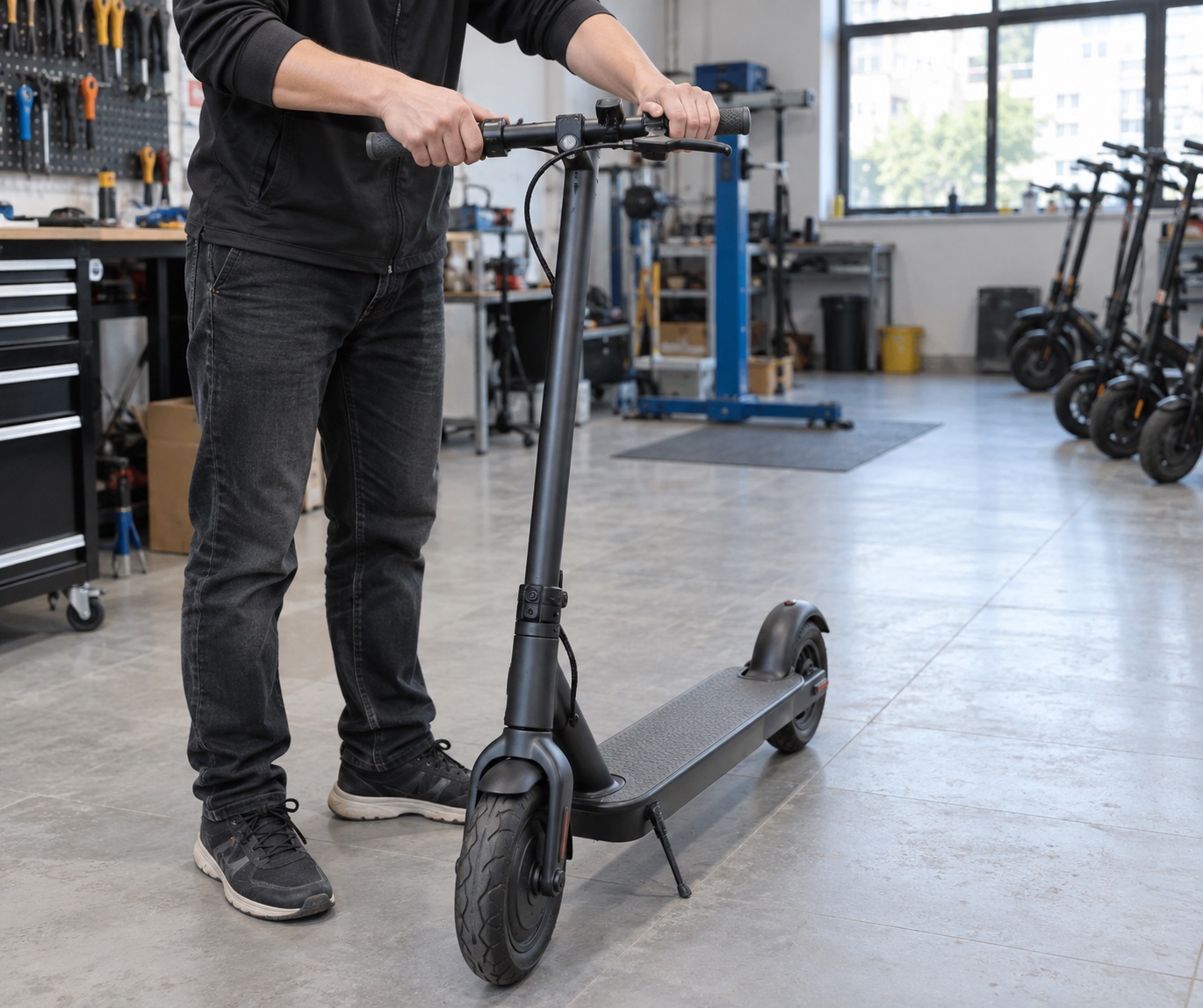
You can get loose electric scooter handlebars when road vibration eases a clamp bolt, an assembly was uneven, or a bump shifts the stem. Wear at a folding hinge or steering bearing can create the same shaky feeling, so find the moving joint before turning a screw.
Where does the movement begin?
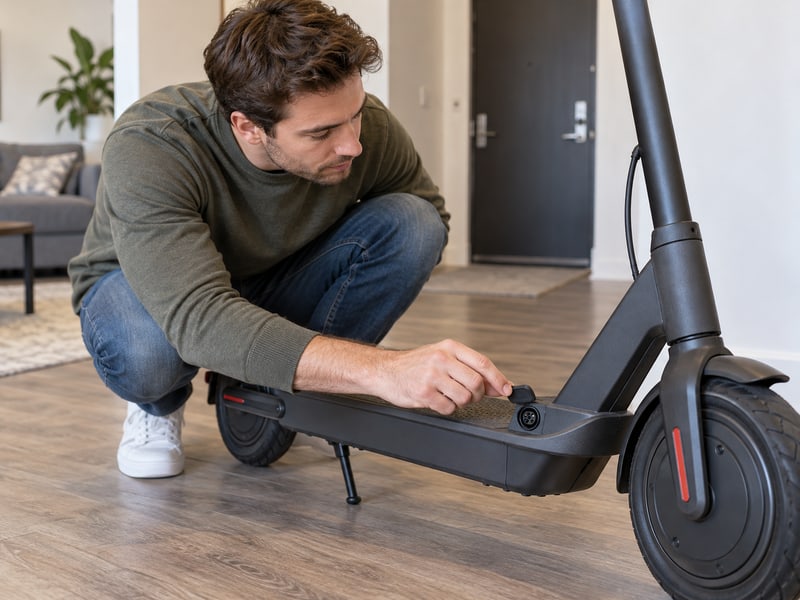
Watch the joint while you move the bars. With power off and both wheels on the floor, hold the front wheel steady and gently turn the grips. If one joint clicks or opens a gap, focus there.
- Bars shift inside their clamp: inspect clamp bolts.
- Stem shifts at the hinge: inspect its latch.
- Entire steering column rocks: check for headset play.
What signs change the repair?
| What you notice | Likely area | Next move |
|---|---|---|
| Bar rotates in clamp | Handlebar clamp | Check fasteners |
| Hinge clicks or opens | Folding joint | Stop and inspect latch |
| Crack or bent part | Structural hardware | Arrange service |
These signs narrow your search without guessing at torque.
Key Takeaway: Fix the joint that actually moves, and leave cracked parts out of service.
2. Which Tools Do You Need Before You Start?
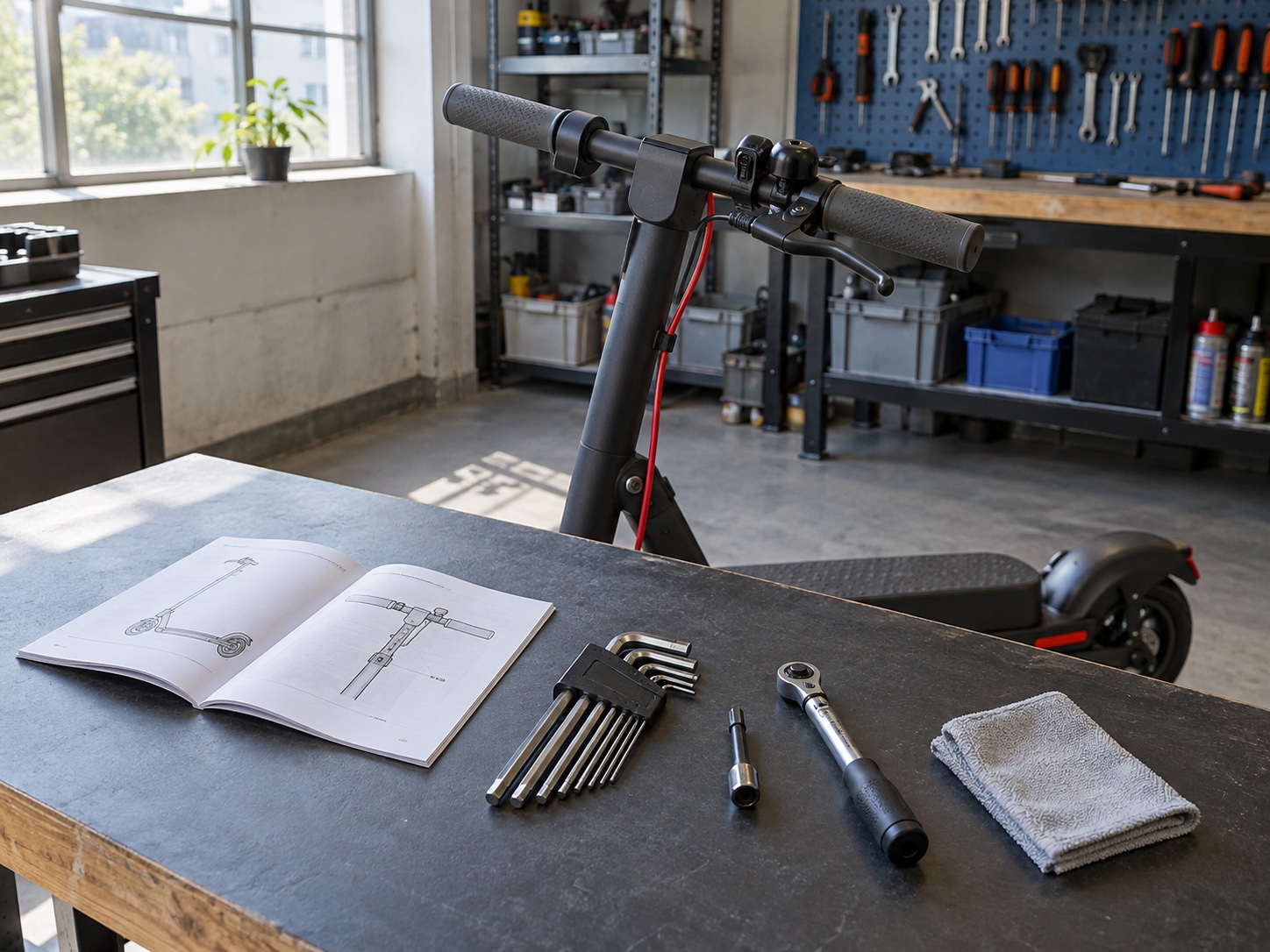
For loose electric scooter handlebars, gather the hex key that fits each bolt fully, a clean cloth, and your scooter's manual. Use a torque wrench only if your model provides a tightening value and you have a suitable bit; a guessed setting can damage small fasteners.
How do you choose the right tool?
Check the fit before applying force. A key that rocks in the bolt head can round it, leaving you with a harder repair. If you own a Dynamic Scooter Model B, use its documentation to confirm the hardware on your actual unit.
- Match the hex key or driver to each head.
- Wipe grit away so the tool seats fully.
- Keep the manual open for the correct tightening order.
What should stay off the bench?
| Item | Use it? | Reason |
|---|---|---|
| Correctly fitting key | Yes | Reduces slipping |
| Worn or undersized key | No | Can round the head |
| Random long lever | No | Hides how much force you apply |
Because the bolt heads are small, tool fit matters more than brute force.
Key Takeaway: A clean, correctly seated tool lets you work without turning a small adjustment into a stripped bolt.
3. How Can You Find the Loose Joint?
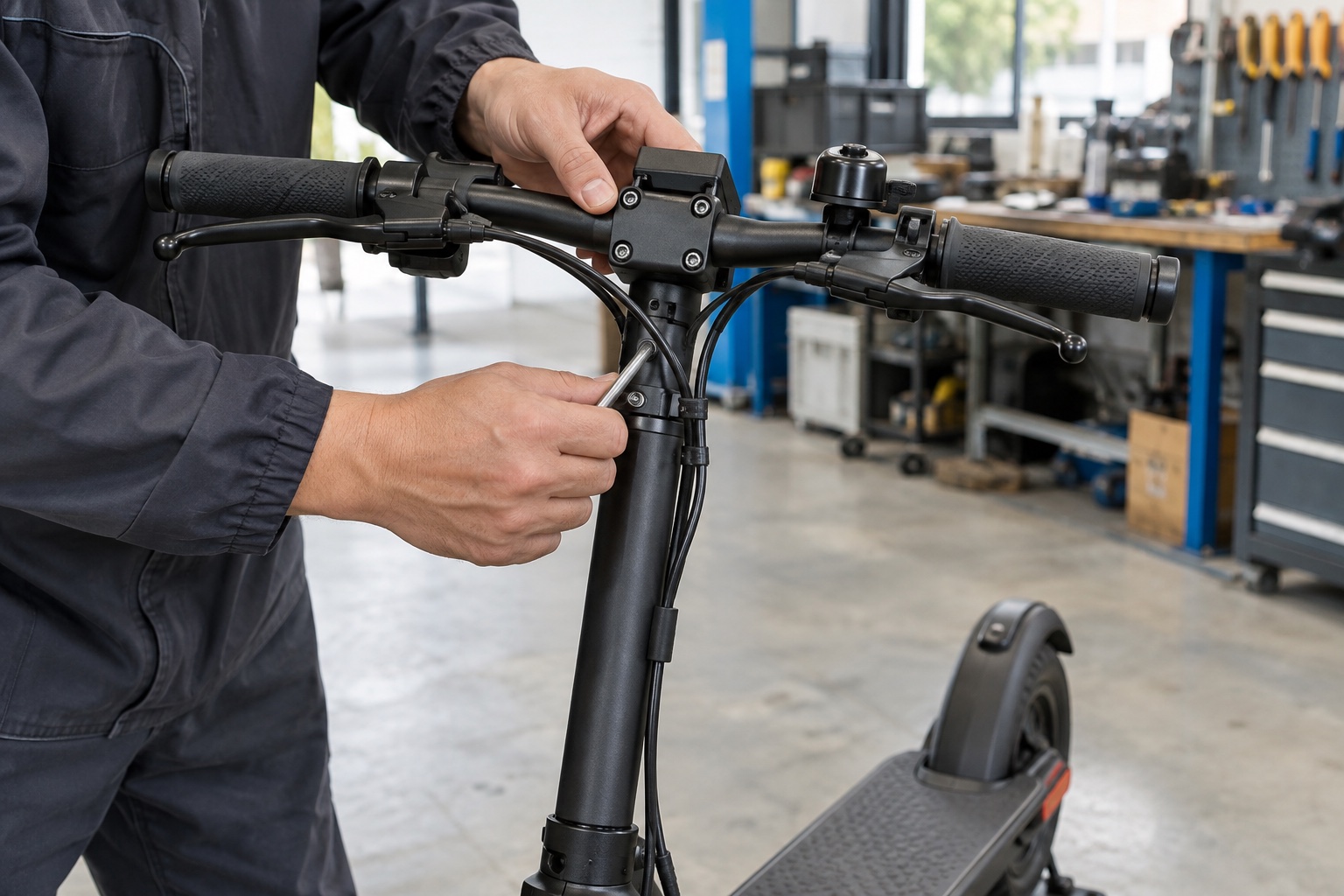
You find loose electric scooter handlebars by checking the bar clamp, stem connection, folding joint, and steering bearing separately. Park on level ground, power off, and keep your hands away from the throttle while you inspect.
Which checks isolate the movement?
Move one part at a time. Hold the front wheel between your knees, then gently twist the bars; next, apply light forward and backward pressure with the front brake held. This separates rotational slip from a rocking stem.
- Look for a gap opening at a clamp or hinge.
- Listen for a click at the headset or latch.
- Check whether a brake or throttle cable pulls tight.
What do visible faults tell you?
| Observation | Meaning | Action |
|---|---|---|
| Clamp bolt backed out | Possible clamp slip | Follow manual |
| Cable stretched at full turn | Poor routing or alignment | Stop and correct |
| Cracked stem or hinge | Structural damage | Seek repair |
A crack changes this from an adjustment to a service job.
Key Takeaway: Name the moving part before tightening anything, and stop if the stem or hinge looks damaged.
4. How Do You Tighten the Handlebar Clamp Safely?
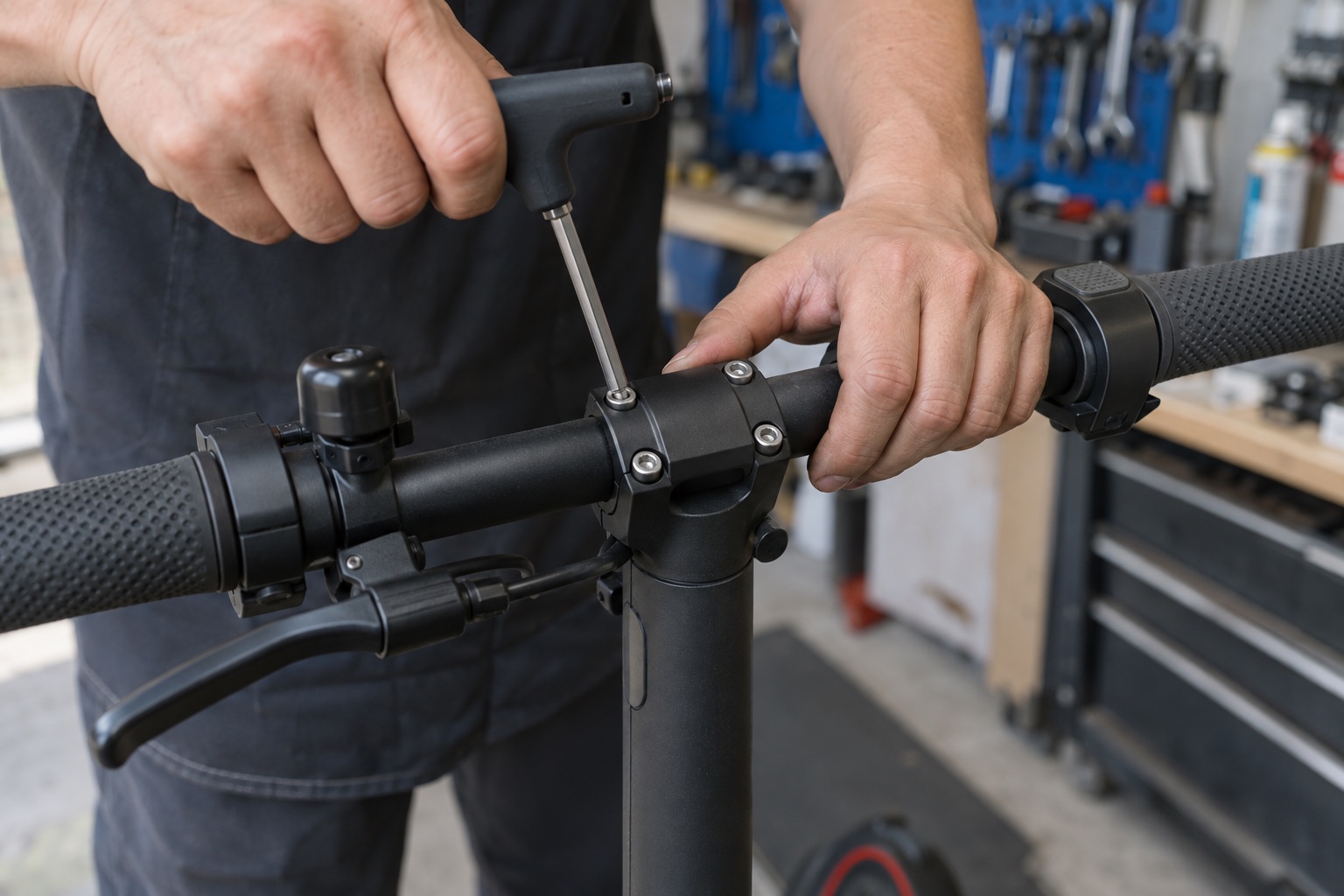
You tighten loose electric scooter handlebars at the clamp by seating the correct tool fully and bringing paired bolts up evenly to the manufacturer's specification. Work in small turns with the bar centered; stop if a fastener slips, spins freely, or resists abnormally.
What order keeps the clamp even?
Keep the gap balanced. If your clamp uses several bolts, alternate between opposite bolts rather than fully tightening one side at once. Check the manual because clamp designs and recommended values vary.
- Hold the bar in its intended position.
- Make small alternating turns across the clamp.
- Check for an even gap and no bar rotation.
When should you stop tightening?
| Result | What it suggests | Next step |
|---|---|---|
| Bar holds firm | Clamp seated | Run static checks |
| Bolt head rounds | Tool or bolt damage | Stop; replace correctly |
| Bolt turns without gripping | Stripped thread | Arrange repair |
If threads are stripped, more force will not restore them.
Key Takeaway: Even pressure and the model's stated limit matter more than how hard you can turn a key.
5. How Can You Straighten Crooked Handlebars?
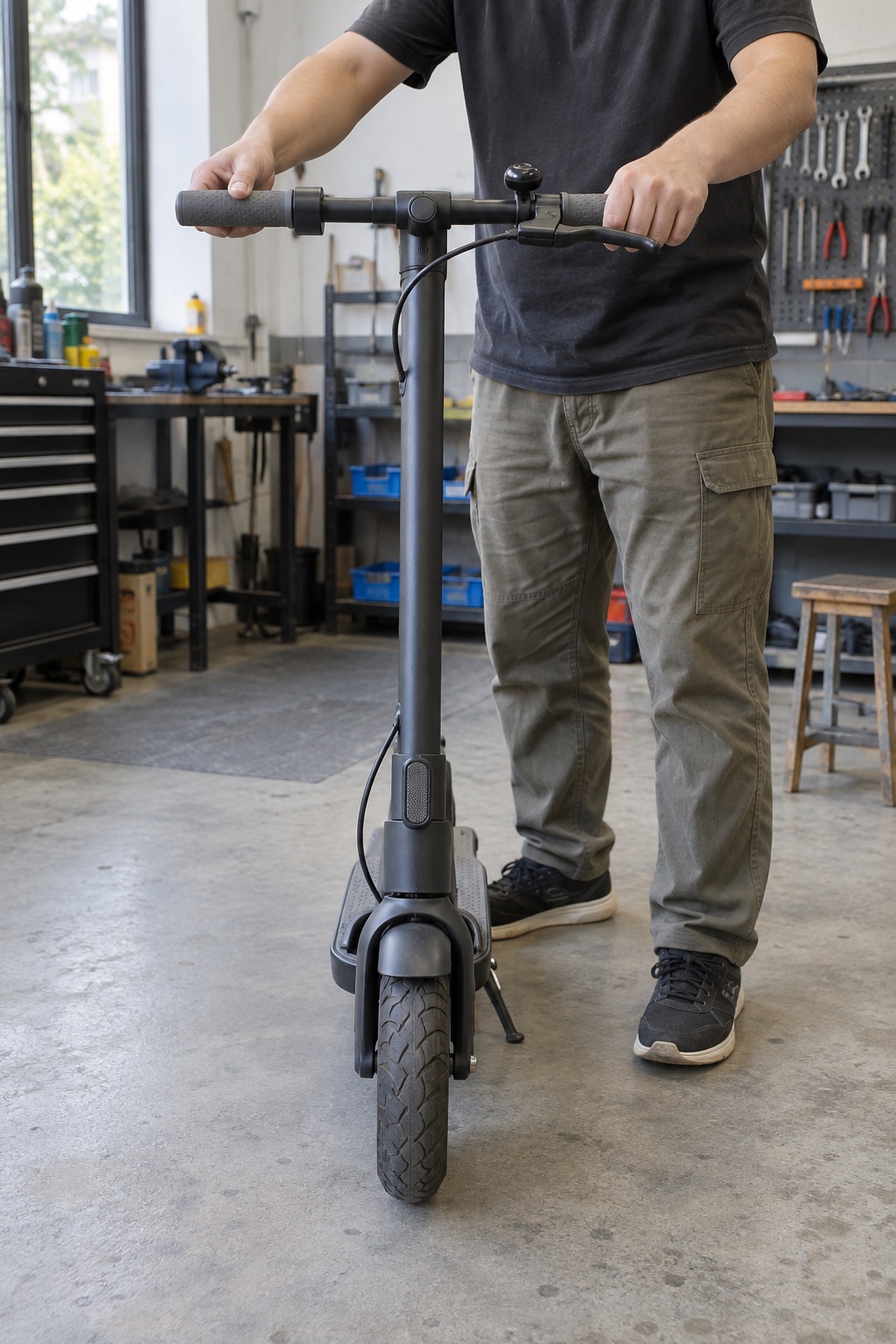
You straighten loose electric scooter handlebars by holding the front wheel straight, easing only the relevant clamp, aligning the bars, and retightening evenly. Check the owner's manual before loosening a stem joint because some scooters use separate bar and steering clamps.
What does straight alignment look like?
Use the front wheel as your reference. Stand in front of the parked scooter and sight along the tire, stem, and grips. Correct alignment keeps the grips square to the wheel without forcing a cable around the stem.
- Center the front wheel.
- Set the grips level and square to the wheel.
- Turn fully left and right to check cable slack.
What if the bars drift again?
| Symptom | Possible cause | Next move |
|---|---|---|
| Bars shift under light hand pressure | Clamp still loose | Recheck fasteners |
| Bars shift after a short test | Worn or damaged joint | Stop riding |
| Cable pulls at full lock | Routing problem | Correct before use |
If the bars drift again, treat it as more than a cosmetic issue.
Key Takeaway: The wheel, bar, and cables must all agree before you ride.
6. What Should You Check on a Folding Stem?
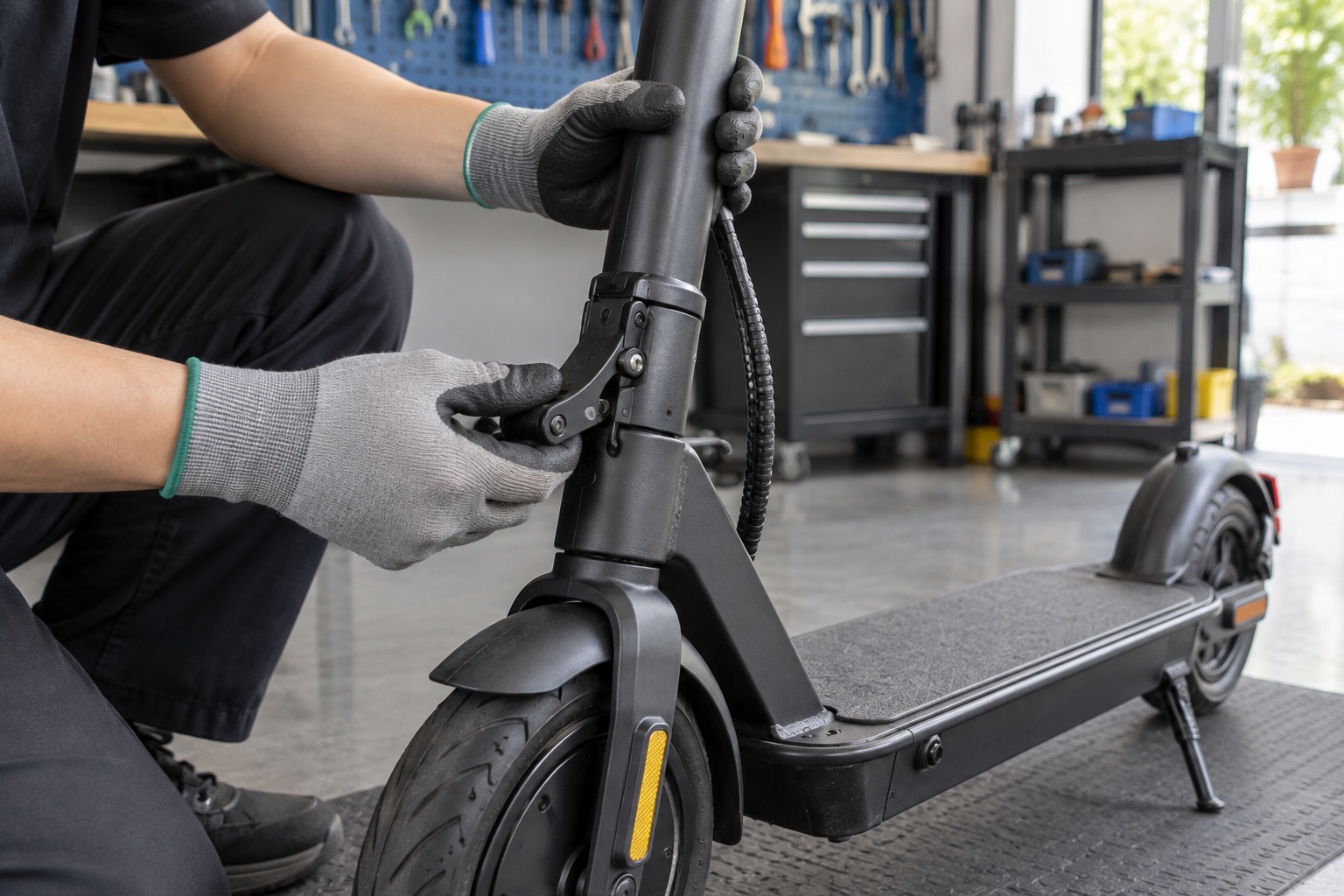
On a foldable scooter, loose electric scooter handlebars may come from a folding latch that has not fully engaged or a hinge with worn parts. With power off, open and close the latch only as your manual directs, then confirm its lock sits fully in place.
How do you inspect the latch?
Look at the lock itself. A closed lever should engage its catch without a visible gap or accidental release. The folding scooter guide can help you compare designs, but your own model's instructions control the adjustment.
- Check for a complete latch engagement.
- Inspect pins, hinge plates, and nearby bolts.
- Note clicking, rough movement, or fresh metal wear.
What if the hinge still moves?
| Finding | Safe response |
|---|---|
| Latch does not lock fully | Do not ride |
| Hinge rocks despite locking | Request service |
| Hinge stays solid | Continue static checks |
Even when a lever appears closed, it can miss its catch.
Key Takeaway: A folding stem must lock positively and stay still under a gentle hand check.
7. How Do You Test the Repair Before Riding?
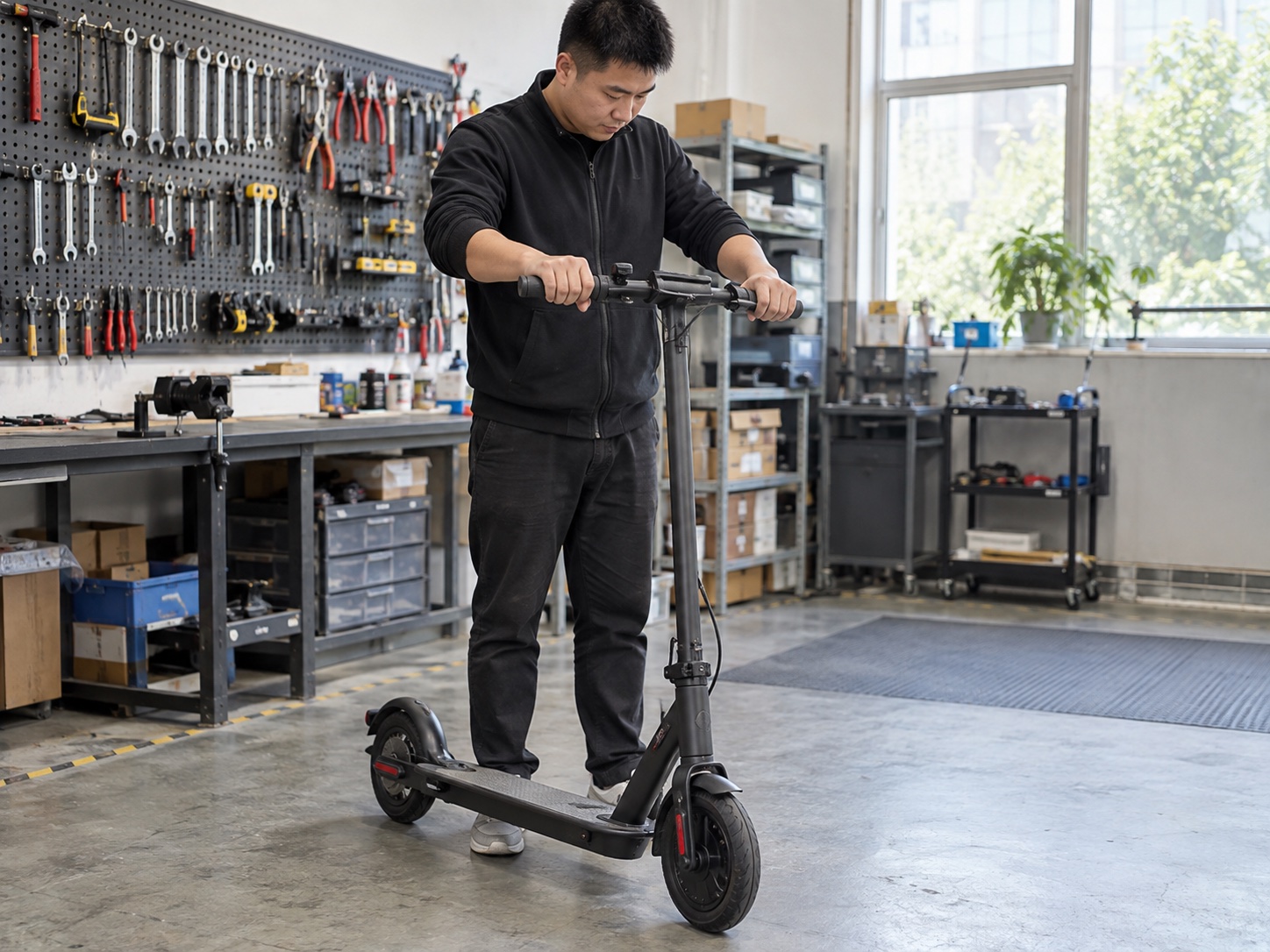
You test loose electric scooter handlebars with the scooter stationary before considering a slow ride in a clear area. The bars should not rotate in their clamp, the stem should not rock, and the brakes and throttle must work without cable strain.
Which static checks matter?
Keep both feet on the ground. Hold the front brake and rock the stem gently, then turn steering to each stop without tugging a wire. A firm squeeze of each brake lever should feel consistent.
- Try a gentle bar twist against a stationary front wheel.
- Rock the stem with the front brake held.
- Check brake lever and throttle movement at both steering stops.
When is a short ride reasonable?
| Static result | Decision |
|---|---|
| No play; controls move freely | Try a slow, clear-area check |
| Click, twist, or cable pull remains | Do not ride |
| Wobble returns during slow check | Stop and seek service |
After a clean static check, a short test makes sense; it never replaces that check.
Key Takeaway: Ride only after steering and controls feel steady throughout their full travel.
8. How Can You Prevent Loose Electric Scooter Handlebars?
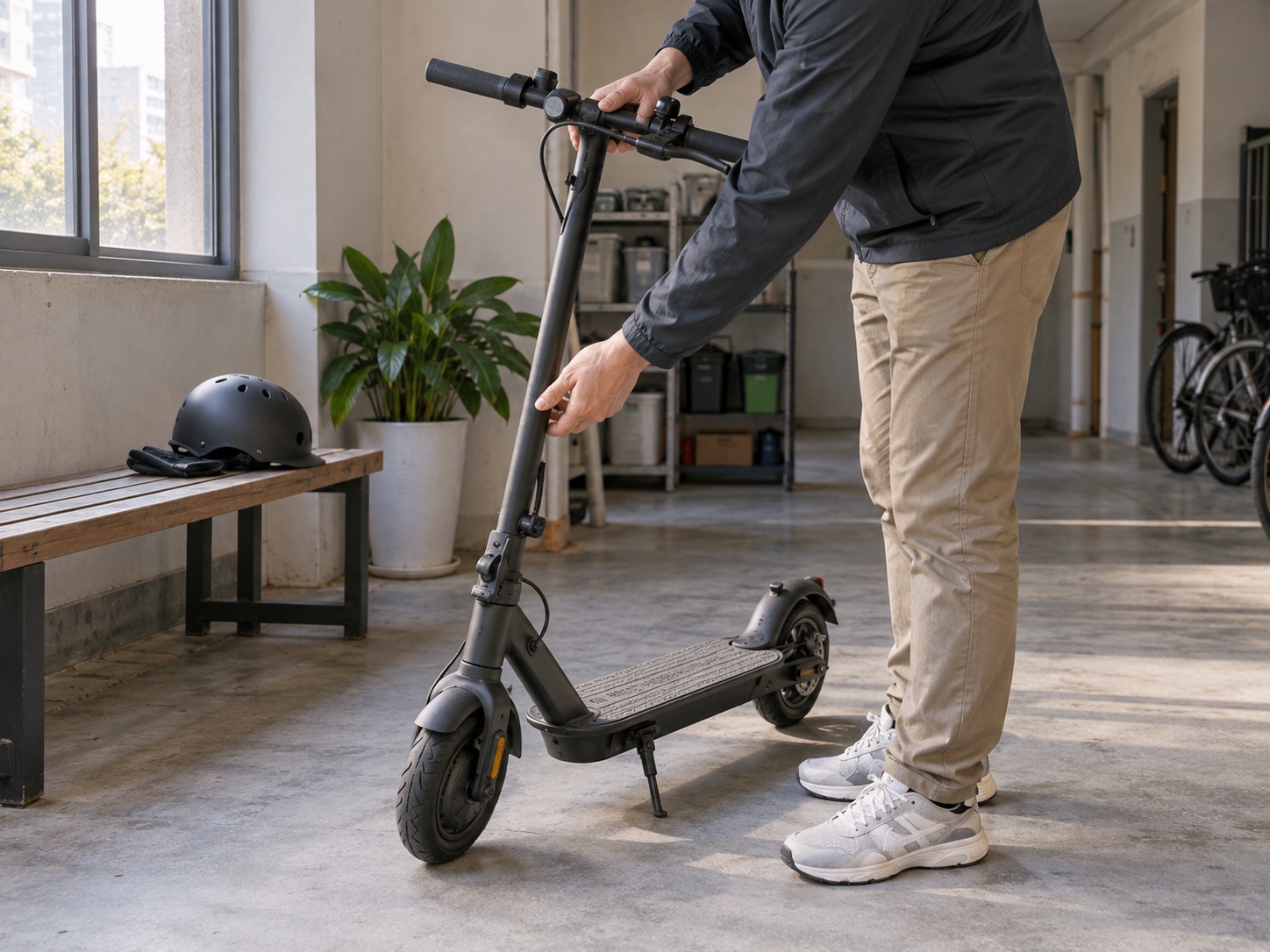
You prevent loose electric scooter handlebars by checking clamp and latch movement before rides, cleaning exposed joints, and following your model's service schedule. Rough pavement, impacts, and frequent folding call for closer attention than a scooter stored and ridden gently.
What belongs in a quick check?
Make it part of parking. With the scooter switched off, feel for bar twist and stem rock before you set off. After wet or dusty travel, wipe accessible joints with a dry cloth, following your model's cleaning instructions. For a broader pre-ride check, the U.S. Consumer Product Safety Commission advises inspecting handlebars, brakes, throttle, cables, and frame for damage.
- Confirm the latch fully locks.
- Feel for bar or stem movement.
- Look for corrosion, cracks, and loose visible bolts.
What habits reduce repeat problems?
| Habit | Why it helps |
|---|---|
| Store dry | Limits corrosion at joints |
| Check after a bump | Catches shifted hardware |
| Follow service intervals | Finds wear before it grows |
Before you ride, a quick check can catch new movement.
Key Takeaway: Regular inspection saves you from finding a steering problem in traffic.
9. Can Loose Electric Scooter Handlebars Signal a Headset Problem?
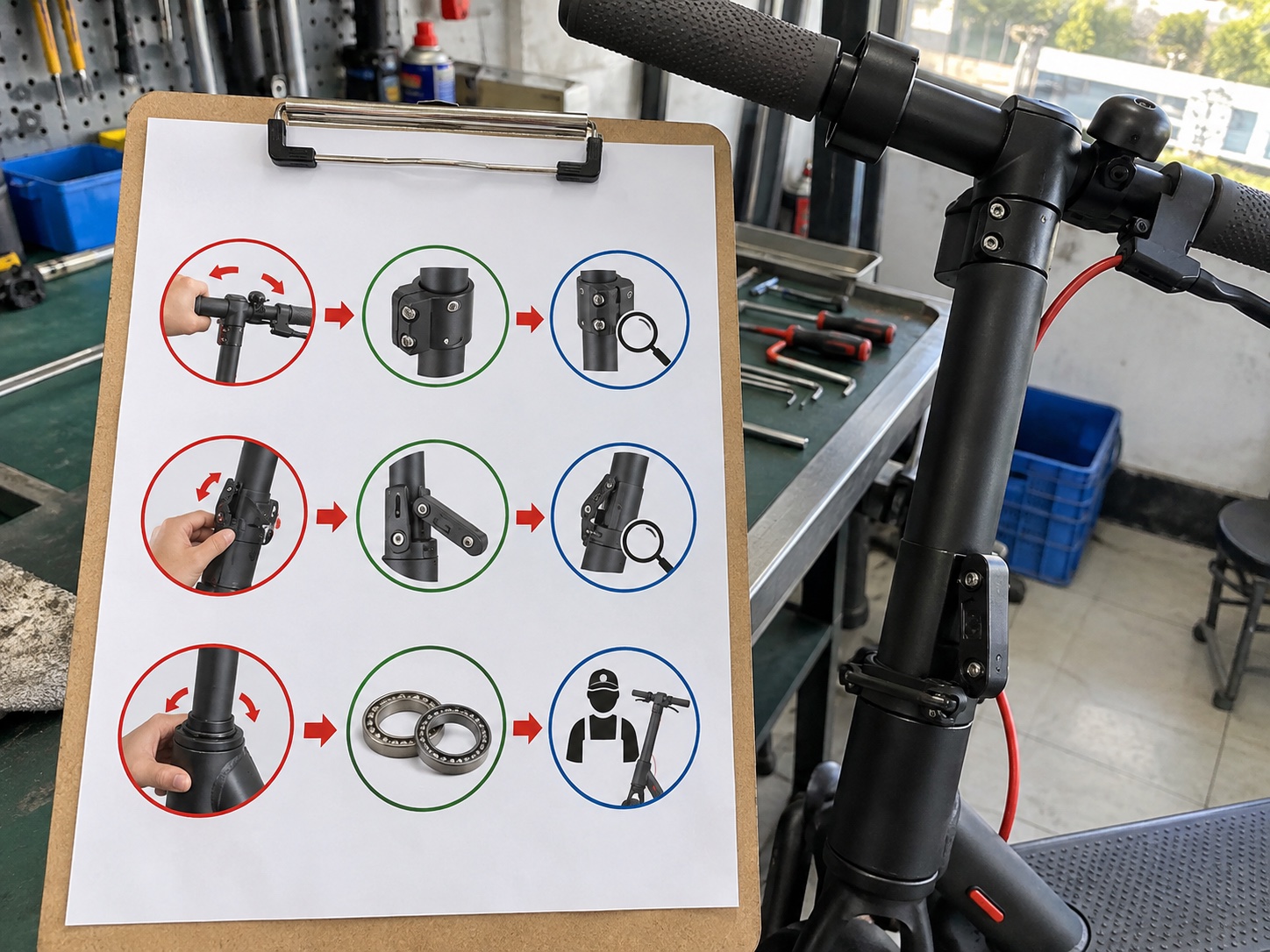
Yes, loose electric scooter handlebars can feel like a headset fault when the whole steering column rocks near the front fork. If bar and hinge joints stay still but the stem clicks under a gentle front-brake rock, consult your model manual or a technician before changing bearing adjustment.
How can you tell where play lives?
Place a fingertip across each joint. Gently rock the parked scooter with its front brake held; movement you can feel between two adjoining parts helps locate the source. Do not force the steering or ride to reproduce the noise.
- Bar moves against stem: inspect bar clamp.
- Hinge plates move against each other: inspect latch.
- Stem moves against fork area: suspect headset.
Why avoid guessing at bearing tension?
| Adjustment state | Possible effect |
|---|---|
| Too loose | Steering play persists |
| Too tight | Steering may bind |
| Correct for model | Smooth turn without play |
Because binding steering can be as unsafe as a loose joint, stop if it occurs.
Key Takeaway: Treat headset adjustment as model-specific work, especially when the source of play remains uncertain.
10. When Should You Stop and Call a Technician?
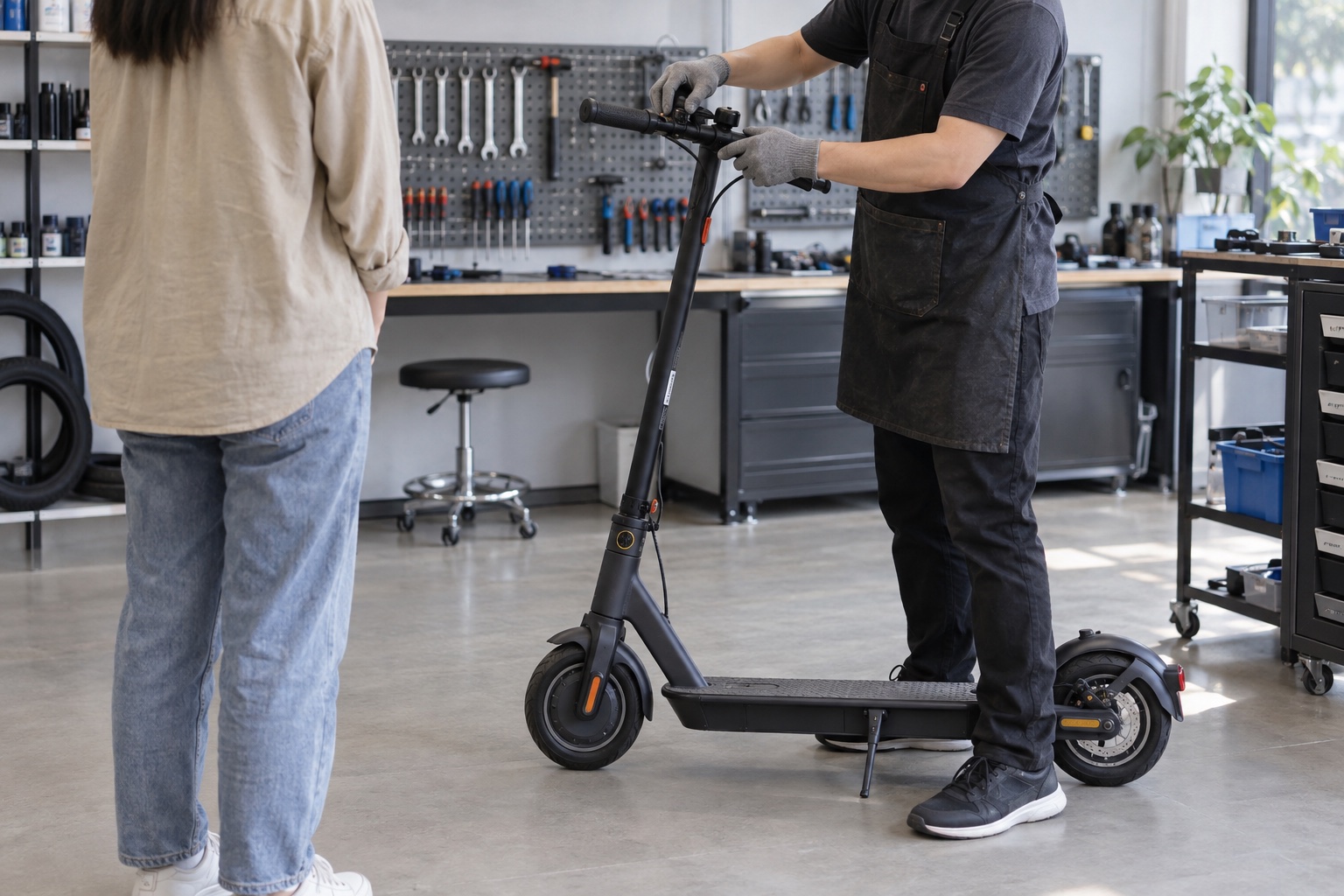
Stop using loose electric scooter handlebars and call a technician when you see a crack, stripped fastener, worn hinge, persistent play, or steering that binds after adjustment. If your scooter remains under coverage, review the product guarantee before arranging parts or service.
What should you document?
Record the symptom while parked. A short video showing the moving joint and any clicking can help support identify the right repair. Include your model, purchase details, and whether the wobble followed a fall or gradually appeared.
- Photograph any visible crack or damaged bolt.
- Record where your hand feels movement.
- Note whether the latch locks fully.
What repair decision protects you?
| Situation | Best next step |
|---|---|
| Simple clamp slip, sound threads | Follow manual and retest |
| Cracked, bent, or stripped part | Professional repair |
| Play returns after adjustment | Stop riding and diagnose |
If movement returns, the original cause remains.
Key Takeaway: A stable repair matters more than getting back on the road today.
What to do next
You now have a way to locate the moving joint, tighten a sound clamp, check alignment and the folding latch, and decide when to stop. If your bars still move or you need model-specific help, contact us today with a photo or short video of the joint. We want every short trip to start with steering you can trust.
Frequently Asked Questions
Q1: Can I ride if my handlebars move a little? No. Any movement at a steering joint deserves a parked inspection because it can change how the scooter responds.
Q2: What's the best tool for tightening handlebar bolts? A snug-fitting key or bit is best. Use a torque wrench only when your manual gives a value for that fastener.
Q3: How do I know if the folding latch is secure? It should engage fully and resist a gentle hand check without opening or rocking. If you cannot confirm that, keep the scooter parked.
Q4: Can I use threadlocker on scooter handlebar bolts? Only if your manufacturer specifies the type and location. An unsuitable compound can affect service or damage nearby materials.
Q5: How do I know if a headset needs professional service? Seek service when movement comes from the fork area, steering binds, or play remains after basic checks. Bearing adjustment varies by model.