
Rapid electric scooter battery drain is typically caused by a combination of freezing temperatures, low tire pressure, excessive payload weight, high-speed riding modes, and natural lithium-ion cell degradation.
You charge your electric scooter overnight, step onto the deck with high expectations, and set off on your daily commute. But within just a few blocks, you glance down and feel a wave of dread as your battery indicator starts flashing red. It is incredibly frustrating to be left stranded miles from your destination, forced to push a heavy, dead machine.
Fortunately, you can easily identify the root causes of this energy loss and implement immediate fixes to restore your range.
Does Cold Weather Speed Up Electric Scooter Battery Drain?

Yes, freezing temperatures slow down internal chemical reactions, which triggers rapid electric scooter battery drain. When the weather drops below 15°C (59°F), the liquid electrolyte inside the cells becomes highly viscous. This sluggish state makes it extremely difficult for lithium ions to flow freely. As a result, your battery pack must work much harder and expend extra energy to deliver standard power.
Storing your machine in unheated garages during winter can also cause permanent capacity losses. Microscopic tears can develop inside the cells when they are exposed to sub-zero environments. To prevent this, always bring your scooter indoors to keep its chemistry stable. Protecting the pack from extreme cold ensures you maintain optimal daily range.
Why low temperatures freeze lithium-ion chemistry
Cold temperatures increase the internal resistance within your battery pack significantly. This means the system loses a major portion of its energy as heat before it even reaches the motor.
Here is the deal:
You will often experience up to a 30% drop in range during freezing winter days.
To combat this drop, store your scooter inside your home and only charge it at room temperature. You should also focus on maintaining standard riding habits during winter.
- Never charge a frozen battery pack.
- Keep the deck insulated from snow.
- Plan shorter commutes during winter.
Key Takeaway: Cold weather temporarily reduces your range by slowing down the essential chemical reactions, but storing the scooter indoors will fully protect its long-term health.
| Temperature Range | Capacity Retention | Immediate Operational Impact | Recommended Action |
|---|---|---|---|
| Above 20°C (68°F) | 100% | Optimal energy flow, maximum range | Standard riding and charging habits |
| 0°C to 10°C (32°F – 50°F) | 75% – 85% | Moderate voltage sag under load | Store indoors, charge at room temp |
| Below 0°C (32°F) | 50% – 70% | High risk of sudden shutdown | Avoid riding if possible; insulate deck |
Understanding how climate affects your ride allows you to better manage your battery expectations during the winter months.
Does Riding Uphill Cause Electric Scooter Battery Drain?

Yes, conquering steep inclines demands massive motor effort, which directly accelerates electric scooter battery drain. When fighting gravity, your motor has to draw maximum electrical current from the cells to sustain momentum. This continuous peak amperage draw depletes your energy reserves far quicker than cruising on flat streets. If your commute involves constant climbing, you will notice your battery indicator dropping rapidly.
This extreme energy transfer also generates excessive heat within the controller and motor windings. Operating at high temperatures decreases overall electrical efficiency, leading to further power loss. To safeguard your battery, you should plan flatter routes whenever possible. Reducing motor strain is a simple way to preserve your daily mileage.
The heavy energy toll of fighting gravity
When climbing, your motor operates outside of its peak RPM efficiency zone, converting precious energy into wasted heat.
Think about it:
A single steep hill can consume as much energy as two miles of flat-ground riding.
To ease this burden, you can choose a high-performance, dual-motor model like the Dynamic Scooter for challenging terrains. You should also focus on basic physical assistance.
- Kick-start your scooter on steep inclines to help the motor.
- Maintain a steady, moderate throttle speed.
- Avoid stopping completely while ascending.
Key Takeaway: Help your motor during steep climbs by kick-pushing to maintain speed and prevent heavy current spikes.
| Incline Angle (Degrees) | Motor Effort Level | Battery Consumption Rate | Estimated Range Loss |
|---|---|---|---|
| 0° (Flat Terrain) | Low (Cruising) | Standard baseline | 0% (Baseline) |
| 5° – 10° (Moderate Hill) | Medium | 1.5x baseline consumption | 20% – 30% range reduction |
| 15°+ (Steep Incline) | Maximum | 3x to 4x baseline consumption | Up to 60% range reduction |
Since terrain gradients play a massive role in energy consumption, proper charging practices become your next line of defense.
Can Overcharging Trigger Electric Scooter Battery Drain?
Yes, leaving your charger connected for days on end degrades chemical cells, causing faster electric scooter battery drain over time. When a lithium-ion battery remains at maximum voltage, the internal components experience high chemical stress. This constant pressure accelerates the breakdown of the liquid electrolyte. Eventually, the damaged cells lose their ability to hold a full charge.
Overcharging can also promote the formation of microscopic short circuits called dendrites. These tiny pathways allow energy to leak slowly even when your machine is turned off. To prevent this silent drain, always unplug your charger once the green indicator lights up. Proper charging habits are essential to extending your pack’s lifespan.
How smart charging habits protect your cells
Your Battery Management System (BMS) controls the energy flow, but manual care is still required.
But wait, there’s more:
Unplugging your charger early can actually double your battery’s total lifetime cycles.
By managing your charging cycles responsibly, you preserve cell capacity and prevent range drops.
- Unplug immediately after the light turns green.
- Use an automatic outlet timer to cut power.
- Avoid charging a hot battery right after a ride.
Key Takeaway: Never leave your charger plugged in overnight to avoid keeping the cells under high-voltage stress.
| Charging State | Voltage Strain | Battery Wear Level | Recommended Action Plan |
|---|---|---|---|
| 0% to 80% (Bulk) | Very Low | Minimal wear on cells | Ideal daily state for short commutes |
| 80% to 100% (Saturation) | High | Moderate strain | Charge fully, but do not leave connected |
| Connected 24+ Hours | Extremely High | Accelerated degradation | Use an outlet timer to auto-shutoff |
While charging habits protect internal chemistry, external mechanical factors like tires also dictate how fast your power drains.
Can Flat Tires Accelerate Electric Scooter Battery Drain?

Yes, riding on under-inflated tires creates massive rolling resistance, which triggers rapid electric scooter battery drain. When your tires lack proper air pressure, the rubber flattens against the pavement, increasing the contact patch. This friction forces your motor to pull twice as much current to maintain speed. Keeping your tires firm is crucial to achieving your advertised mileage.
Low tire pressure also leads to excessive heat buildup in both the rubber and the motor. This wasted thermal energy directly translates to a shorter riding range. Furthermore, soft tires make your machine sluggish and harder to steer. Regularly inflating your tires is the simplest way to regain lost range.
Finding the perfect PSI for maximum range
To optimize efficiency, you should check your tire pressure using a digital gauge every single week.
Here is the deal:
Maintaining the maximum recommended PSI printed on the tire sidewall will instantly boost your speed and efficiency.
For riders looking for an optimal balance of comfort and efficiency, choosing a scooter like the versatile Dynamic Scooter Model B with wider pneumatic tires is a great choice. You must follow standard check-up routines.
- Check pressure when the tires are completely cold.
- Adjust PSI based on your total payload.
- Inspect tires weekly for slow leaks or punctures.
Key Takeaway: Keep your tires inflated to the upper limit of the manufacturer’s recommendation to enjoy a smoother and more energy-efficient ride.
| Tire Pressure (PSI) | Rolling Resistance Level | Motor Efficiency | Estimated Range Impact |
|---|---|---|---|
| Below 20 PSI (Soft) | Extremely High | Very Low | Lose up to 35% of total range |
| 30 PSI to 35 PSI | High | Moderate | Lose 10% to 15% of total range |
| 40 PSI to 50 PSI (Optimal) | Minimal (Perfect) | Maximum | 100% of advertised range |
Maintaining proper tire pressure is highly effective, but managing the total weight your scooter carries is equally vital.
Does Extra Weight Worsen Electric Scooter Battery Drain?

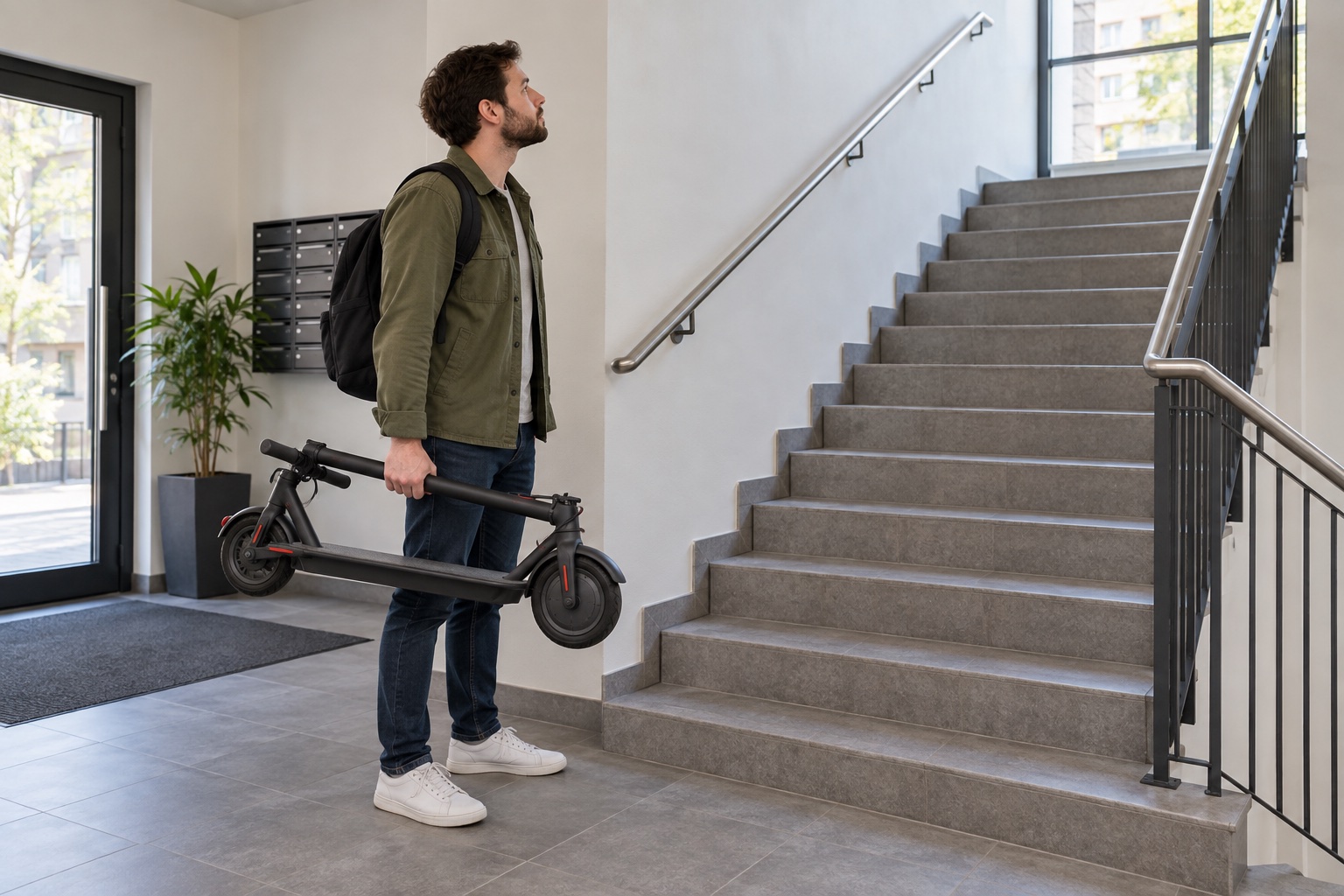
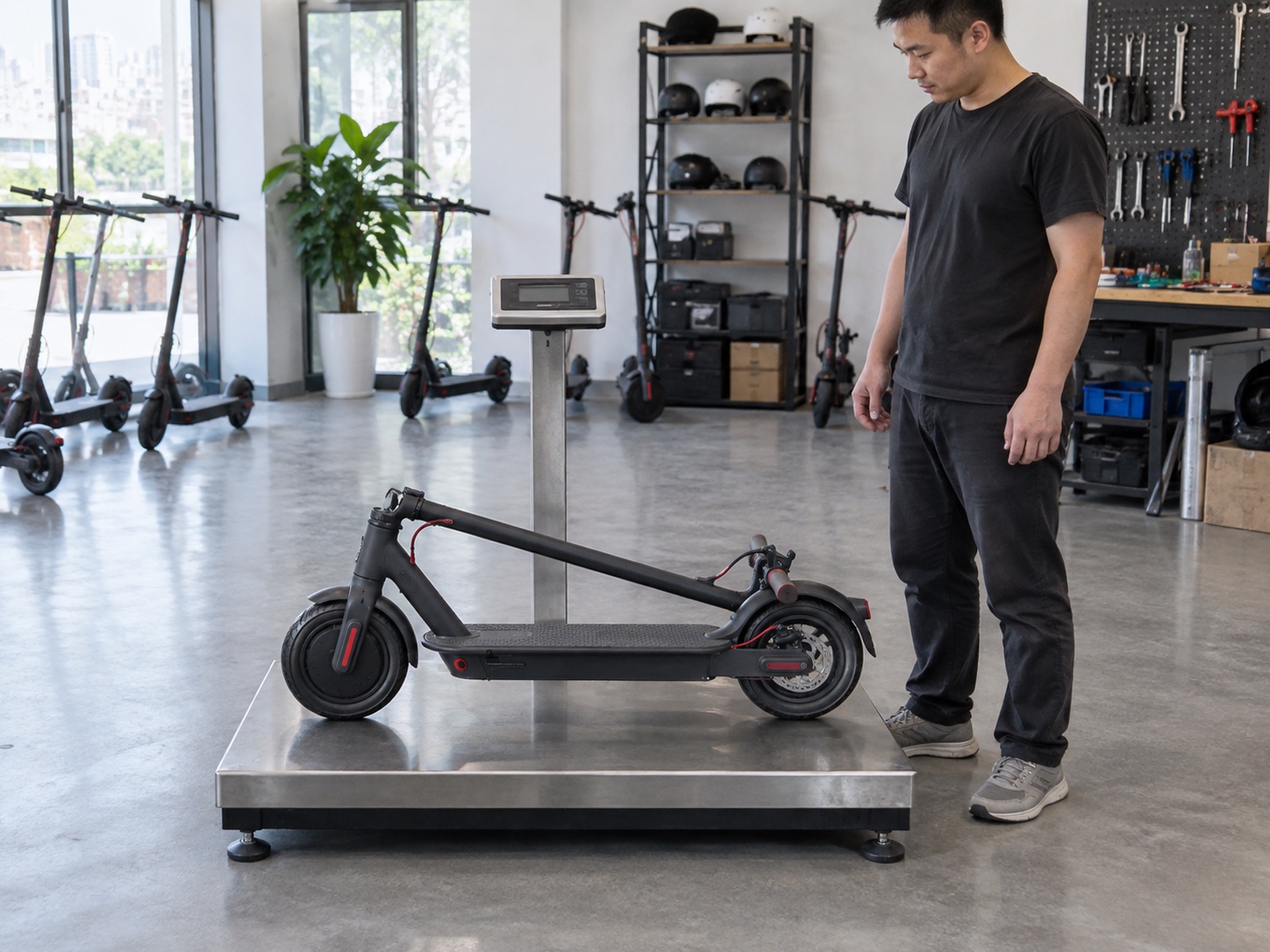
Yes, carrying heavy backpacks or exceeding the payload limit causes severe electric scooter battery drain on every ride. Your scooter’s motor is calibrated to move a specific maximum weight. When you overload the deck, the controller must pump extra power into the motor just to start moving. This constant high current draw rapidly depletes your battery pack.
An overloaded motor operates far outside of its optimal efficiency zone, converting electricity into wasted heat. This thermal buildup degrades the cells and triggers premature voltage drops. To protect your range, try to travel light and remove unnecessary cargo. Ensuring your payload stays within limits is key to maximizing battery performance.
How payload limits impact motor workload
Heavy loads require constant peak current draw even when you are riding on flat pavement.
Think about it:
An extra twenty pounds in your backpack can cut your total travel distance by up to fifteen percent.
If you regularly need to transport heavy gear, you should choose a heavy-duty model designed for larger payloads. Always keep your payload distributed correctly.
- Remove heavy, unnecessary items from your backpack.
- Avoid carrying heavy cargo on the handlebars.
- Distribute your body weight evenly on the deck.
Key Takeaway: Keep your cargo light to minimize motor workload and prevent your battery from draining prematurely.
| Total Rider + Cargo Weight | Motor Stress Level | Battery Discharge Speed | Range Reduction Factor |
|---|---|---|---|
| Under 70 kg (150 lbs) | Light | Low (Efficient) | 0% (Optimal Performance) |
| 75 kg to 100 kg (165-220 lbs) | Moderate | Standard | 10% to 15% range loss |
| Over 110 kg (240 lbs) | Heavy | Extremely Fast | 30% to 50% range loss |
While physical weight strains the motor, the speed at which you ride also dictates how fast your energy depletes.
Does High Speed Drive Quick Electric Scooter Battery Drain?

Yes, riding at maximum throttle causes exponential electric scooter battery drain due to extreme aerodynamic drag. Air resistance is not a linear force; it increases quadratically as your speed climbs. This means doubling your speed actually quadruples the wind resistance your machine must fight. Consequently, your motor must pull maximum current continuously to maintain top speed.
Continuous high-speed riding also causes severe voltage sag, making your battery level appear lower than it is. To maximize your range, you should utilize your scooter’s efficiency modes. Riding just a few miles per hour slower can save a massive amount of energy. Switching to a moderate speed mode is the best way to extend your commute.
Why eco mode preserves your daily battery range
Most modern scooters feature specialized speed modes designed to limit current draw and protect your range.
But wait, there’s more:
Using Eco mode can increase your total travel distance by up to fifty percent.
For long-distance commuters, choosing an efficient model like the Dynamic Scooter Model B helps you manage these power modes seamlessly. Use physical options to save power.
- Use Eco mode for crowded city sidewalks.
- Save Sport mode for short, flat straightaways.
- Avoid sudden, aggressive full-throttle starts.
Key Takeaway: Ride in Eco or Normal mode to keep aerodynamic drag low and get the maximum range out of your battery.
| Speed/Riding Mode | Average Speed | Power Delivery Behavior | Estimated Range Realized |
|---|---|---|---|
| Eco Mode | 10 – 12 mph | Soft acceleration, capped draw | 90% – 100% of spec |
| Normal Mode | 15 – 18 mph | Balanced acceleration and power | 70% – 80% of spec |
| Sport Mode | 20+ mph | Instant response, max power | 40% – 50% of spec |
Choosing the right speed mode preserves energy, but a naturally aging battery will eventually limit your total range.
Will Old Age Worsen Your Electric Scooter Battery Drain?

Yes, natural lithium-ion cell degradation is a leading cause of severe electric scooter battery drain as your machine gets older. Every charge and discharge cycle causes minor physical changes within the battery’s chemical cells. Over hundreds of cycles, active lithium ions become permanently trapped, reducing capacity. This inevitable chemical process means your battery will store less energy over time.
Aging cells also develop high internal resistance, causing them to run hotter and deliver less power. This results in rapid voltage drops under normal riding loads. If your scooter struggles to cover half the distance it used to, replacement may be necessary. Recognizing these signs helps you avoid being stranded on your commute.
Knowing when to replace your worn-out cells
A degraded battery pack poses safety risks and delivers highly unpredictable performance.
Here is the deal:
If your battery gauge jumps wildly from 80% to 20% in seconds, your cells are failing.
To ensure safety and performance, you can browse high-quality options from our electric scooters collection to find a fresh machine. Watch out for aging symptoms.
- Replace the pack if range drops below 50%.
- Never use a battery that shows physical swelling.
- Only buy official manufacturer replacement parts.
Key Takeaway: Battery degradation is an unavoidable chemical process, but replacing a worn pack will instantly restore your original range.
| Age / Total Charge Cycles | Battery Health Status | Typical Behavior | Required Action |
|---|---|---|---|
| 0 to 150 Cycles (New) | 95% – 100% | Peak power delivery, max range | Standard maintenance |
| 150 to 400 Cycles (Mid) | 80% – 90% | Slight range reduction, minor sag | Avoid deep discharges |
| 500+ Cycles (Aged) | Below 70% | Swift battery drop, sluggish feel | Purchase replacement pack |
Replacing an old battery restores original range, but you must also ensure mechanical issues like dragging brakes are not holding you back.
Can Dragging Brakes Cause Electric Scooter Battery Drain?

Yes, misaligned brake calipers or bent rotors create constant mechanical friction, leading to rapid electric scooter battery drain. This friction acts as a silent anchor, requiring your motor to work twice as hard to maintain forward motion. The extra power needed to overcome this resistance drains your battery quickly. Regularly checking for brake drag is essential for maintaining optimal efficiency.
Dragging brakes also generate excessive heat in the wheel hub and brake components. This wasted energy is converted into thermal heat instead of motion, reducing your total travel range. Fortunately, aligning your brakes is a straightforward maintenance task. Taking a few minutes to adjust your calipers can instantly recover lost mileage.
How to identify and fix dragging brakes
You can easily check for brake friction by elevating your scooter and spinning the wheels by hand.
Think about it:
A healthy wheel should spin completely silently and freely for several seconds.
If you hear scraping noises or if the wheel stops abruptly, your brakes need alignment.
- Loosen the caliper bolts to adjust the spacing.
- Inspect the disc rotor for any warping or bends.
- Clean the calipers regularly to remove road debris.
Key Takeaway: Ensure your wheels spin completely freely so your motor does not waste valuable energy fighting constant brake friction.
| Test Method | Healthy Indicator | Failure Sign | Correction Step |
|---|---|---|---|
| Free Spin Test | Wheel spins freely for 5+ seconds | Stops spinning in 1-2 seconds | Loosen caliper bolts and realign |
| Audio Inspection | Completely silent rotation | Metallic scraping or squeaking | Adjust pad clearance spacing |
| Heat Check | Rotor is cool after a flat ride | Rotor is hot without active braking | Check for bent rotor or tight cable |
Keeping your brakes properly aligned prevents energy waste, but you should also avoid power-hungry custom modifications.
Do Custom Lights Increase Electric Scooter Battery Drain?

Yes, adding non-standard electronic accessories directly to your system triggers accelerated electric scooter battery drain during operation. Many riders install extra-bright LED light bars, phone chargers, or loud horn systems to customize their ride. However, drawing power from the main battery pack reduces the energy available for riding. These custom additions can significantly shorten your maximum travel distance.
Modified firmware that unlocks higher speeds also causes extreme current draw and power loss. Bypassing manufacturer-established limits places severe thermal stress on the battery pack. To ensure reliable performance, it is best to keep your electrical system as close to stock as possible. Preserving original specifications is key to maximizing your scooter’s range.
Aftermarket devices often create a constant parasitic power draw even when your scooter is switched off.
But wait, there’s more:
Poorly installed custom wiring can cause electrical leaks that permanently damage your battery cells.
To prevent accessory-related drain, use independent rechargeable battery packs for your external lights and gear.
- Avoid splicing custom wires into the main harness.
- Use USB power banks to charge your phone instead.
- Keep your firmware updated to official versions.
Key Takeaway: Run aftermarket accessories on independent batteries to avoid draining your scooter’s main power source.
| Modification Type | Estimated Power Draw | Battery Range Impact | Safety & Reliability Risk |
|---|---|---|---|
| Stock Accessories | Extremely Low | 0% (Designed baseline) | None (Fully covered) |
| Aftermarket Lights | Low to Moderate | 5% – 10% range reduction | Low, if on independent power |
| Custom Firmware | Extremely High | 30% – 50% range reduction | Very High; risks motor burn-out |
By keeping your electrical system stock, you prevent accessory drain, but you must still watch out for loose internal wiring.
Can Loose Wiring Cause Fast Electric Scooter Battery Drain?

Yes, loose or corroded electrical connections create high resistance, which triggers severe electric scooter battery drain. When connectors are loose, the contact area for current flow is significantly reduced, creating an electrical bottleneck. This restriction converts precious electrical power into wasted thermal heat before it can reach your motor. Ensuring clean, tight connections is vital for efficient energy transfer.
Corrosion inside the deck can also act as an insulator, blocking electricity and reducing range. Over time, vibrations from riding on rough pavement can fray internal wires and loosen terminal plugs. This issues force your battery to discharge much faster to compensate for the drop in voltage. Regularly inspecting your internal wiring helps maintain peak electrical efficiency.
How to inspect and secure internal connections
Performing regular inspections of your scooter’s internal plugs prevents voltage drops and preserves range.
Here is the deal:
Clean, tight, and well-insulated connectors ensure that every watt-hour of power goes toward driving you forward.
If you notice frayed wires or melted plastic plugs, they must be repaired immediately to prevent failures.
- Unplug and inspect the main battery connectors.
- Use electrical contact cleaner to remove corrosion.
- Ensure all yellow phase wire plugs are tightly clicked.
Key Takeaway: Keep your electrical connections tight and dry to prevent bottlenecks from wasting your battery power as heat.
| Suspect Area | Potential Issue | Range Impact | Recommended Solution |
|---|---|---|---|
| Main Battery Plug | Loose contact pins | High voltage drop, severe loss | Tighten connector pins or replace |
| Charging Port | Corrosion on terminals | Incomplete or slow charging | Clean with electrical contact cleaner |
| Motor Phase Wires | Melted insulation | Short circuits, extreme drain | Repair wires with heat-shrink tubing |
By keeping your connections secure, you protect your system from range-killing resistance.
Restoring Your Electric Scooter’s Peak Performance
Dealing with rapid power loss can turn a fun, efficient commute into a stressful ordeal. Fortunately, you now have the tools to diagnose and resolve the most common range-killing issues. Whether you need to inflate your tires, clean dragging brakes, avoid freezing winter storage, or swap out an aging battery pack, regular maintenance will keep you riding further.
At Dynamic Scooter, we build high-quality electric scooters engineered to deliver dependable, long-range performance for all of your daily adventures. If you have tried these diagnostic steps and are still struggling with range, it may be time to upgrade to a more reliable machine. Let us help you find the perfect ride to keep you moving without interruption—feel free to contact us today to find your ultimate commuter solution.

Frequently Asked Questions
Can I leave my electric scooter charging overnight without damaging the battery?
No, you should avoid leaving your electric scooter plugged in overnight. Keeping your charger connected after the battery reaches 100% subjects the chemical cells to prolonged high-voltage stress. This accelerates the degradation of the electrolyte and permanently reduces your long-term capacity.
What’s the best way to store my electric scooter battery during winter?
The best way is to store it indoors in a temperature-controlled environment charged to about 50% to 60%. Sub-zero temperatures can damage the lithium-ion chemistry and cause irreversible cell damage. Checking the charge monthly and topping it up prevents the pack from falling into a dangerous deep-discharge state.
How do I know if my electric scooter battery needs to be replaced entirely?
You will know your battery needs replacement when your maximum range drops below 50% of its original spec. If your battery level drops rapidly under load but returns to normal when stationary, severe voltage sag is occurring. Swelling, overheating, or a failure to charge are also signs of immediate failure.
Can I ride my electric scooter in freezing temperatures safely?
Yes, you can ride in freezing temperatures, but you must expect a range reduction of up to 30%. Low temperatures slow down internal chemical reactions and increase electrical resistance, making the battery work harder. Remember to let your scooter reach room temperature before plugging it in to prevent cell damage.
How do I know if my tires are causing my battery to drain prematurely?
Yes, you can check this easily by performing a manual pressure test. If your tires are soft or flex when squeezed, they are under-inflated and creating high rolling resistance. This extra friction forces your motor to pull more current, quickly draining your battery.