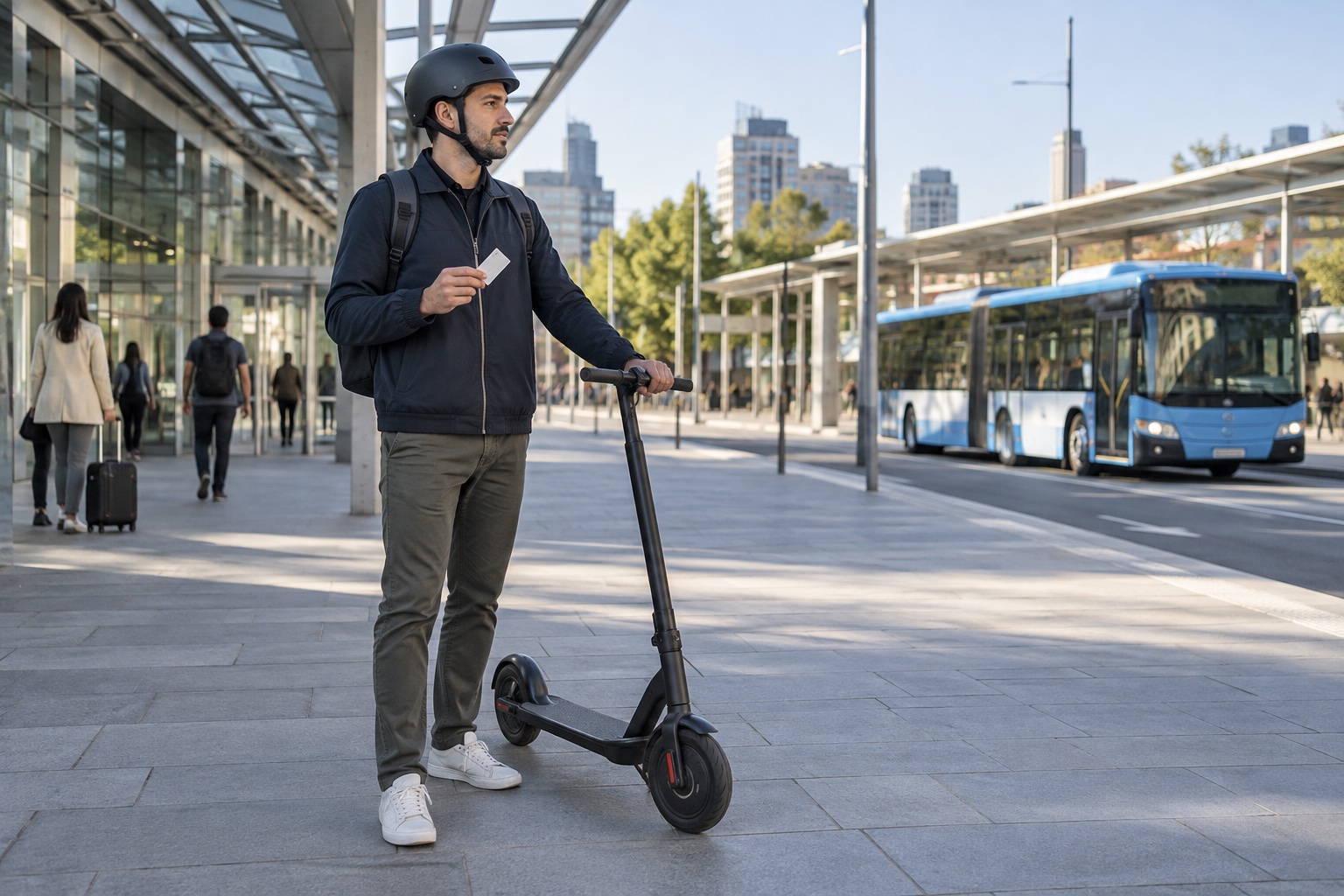
Electric scooters promise clean transport but hide complex costs. Marketing claims focus on zero emissions. They ignore manufacturing impacts. Battery production, charging sources, and disposal create hidden pollution. Understanding the complete picture helps consumers make smart choices about green transport.
Electric scooters produce 50-80% fewer emissions than cars over their lifetime. But they carry higher costs than bikes or walking. Making batteries accounts for 60% of total impact. Battery production is the biggest contributor. Charging from clean energy cuts operational emissions by 90%. Proper recycling and longer product life can cut overall impact by 40%. The net benefit depends on usage patterns, local energy sources, and end-of-life management.
But here’s the thing – most studies ignore real-world usage patterns and infrastructure impacts.
1. How Do Electric Scooters Compare to Other Transportation Methods?
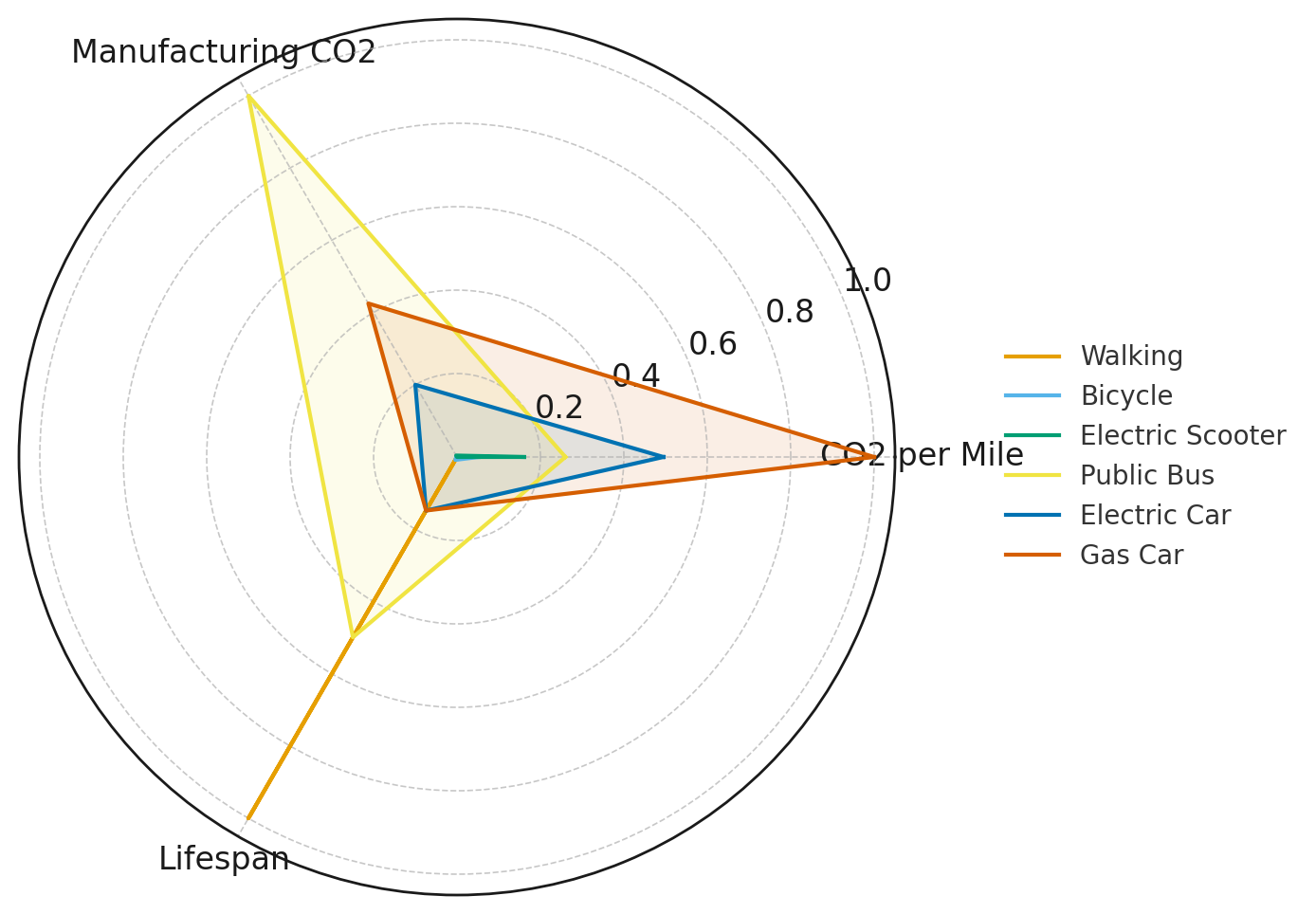
Carbon footprint analysis reveals significant differences between transportation modes. Electric scooters produce 65 grams of CO2 per mile compared to 404 grams for cars. Buses generate 105 grams per passenger mile while bicycles create only 21 grams. Walking produces virtually zero operational emissions.
Energy consumption per mile shows electric scooters use 0.3 kWh compared to 3.2 kWh for electric cars. Gas cars consume equivalent energy of 10.2 kWh per mile. Public transit averages 2.6 kWh per passenger mile depending on occupancy rates.
Here’s why it matters – transportation choices compound over time and distance. Daily commuters traveling 10 miles create vastly different environmental impacts. Small efficiency gains multiply across millions of trips annually.
Manufacturing impact differences vary dramatically between vehicle types. Cars require 17 tons of CO2 to manufacture while electric scooters need only 165 kg. Bicycles produce 96 kg of manufacturing emissions. However, scooters have shorter lifespans than cars or bikes.
| Transportation Mode | CO2 per Mile (grams) | Manufacturing CO2 (kg) | Lifespan (miles) | Total Impact Score |
| Walking | 0 | 0 | Unlimited | Excellent |
| Bicycle | 21 | 96 | 10,000 | Excellent |
| Electric Scooter | 65 | 165 | 2,000 | Good |
| Public Bus | 105 | 40,000 | 500,000 | Good |
| Electric Car | 200 | 8,000 | 150,000 | Fair |
| Gas Car | 404 | 17,000 | 150,000 | Poor |
Infrastructure requirements create additional environmental costs often overlooked in comparisons. Cars need extensive road networks, parking structures, and maintenance systems. Electric scooters require minimal infrastructure but need charging stations and redistribution networks.
Lifecycle assessments must include all phases from raw material extraction to disposal. Electric scooters show advantages in operational phases but higher per-mile manufacturing impacts. Usage intensity determines which transportation mode offers better environmental performance.
2. What Is the Real Carbon Footprint of Electric Scooter Production?
Battery manufacturing dominates electric scooter production emissions. Lithium-ion batteries account for 40-50% of total manufacturing footprint. Mining lithium, cobalt, and nickel creates significant environmental damage. Processing these materials requires energy-intensive chemical processes.
Raw material extraction impacts extend beyond carbon emissions. Lithium mining consumes massive water quantities in drought-prone regions. Cobalt extraction often involves environmentally destructive practices. Nickel mining creates acid drainage and habitat destruction.
The best part? Battery technology improvements reduce environmental impact annually. New chemistries require fewer rare materials. Manufacturing processes become more efficient. Recycling programs recover valuable materials for reuse.
Factory production emissions vary significantly by location and energy sources. Chinese factories using coal power create 60% more emissions than European facilities using renewable energy. Transportation from Asian factories to global markets adds 15-25% to carbon footprint.
| Production Phase | CO2 Emissions (kg) | Environmental Impact | Improvement Potential | Timeline |
| Raw Material Mining | 45 | Very high | Medium | 5-10 years |
| Battery Manufacturing | 65 | High | High | 2-5 years |
| Frame Production | 25 | Medium | Low | 10+ years |
| Assembly | 15 | Low | Medium | 2-5 years |
| Transportation | 15 | Medium | High | 1-3 years |

Transportation and distribution footprint depends on manufacturing location and market distance. Shipping from China to North America creates 12-18 kg CO2 per scooter. European production for European markets reduces this by 70%. Local assembly from imported components offers middle-ground solutions.
Component sourcing affects overall production impact significantly. Sustainable material choices reduce environmental costs. Recycled aluminum frames cut emissions by 30%. Responsibly sourced batteries minimize mining impacts.
Quality control and durability directly impact environmental performance. Higher-quality scooters last longer, reducing per-mile manufacturing impact. Cheap scooters requiring frequent replacement multiply environmental costs. Investment in durability pays environmental dividends.
3. How Much Energy Do Electric Scooters Actually Consume?
Electricity usage per mile varies significantly based on rider weight, terrain, and weather conditions. Average consumption ranges from 0.25-0.4 kWh per mile. Heavy riders on hills can double energy consumption. Cold weather reduces battery efficiency by 20-30%.
Charging infrastructure environmental impact depends heavily on local electricity sources. Coal-powered grids create 2.2 pounds CO2 per kWh. Natural gas generates 0.9 pounds per kWh. Solar and wind power produce virtually zero operational emissions.
Now, you might be wondering about charging efficiency losses and their environmental impact. Standard chargers waste 10-15% of electricity as heat. Fast chargers can waste up to 25%. Smart charging systems optimize efficiency and reduce grid stress.
Grid energy source considerations dramatically affect operational emissions. Scooters charged from renewable sources produce 90% fewer emissions than coal-powered charging. Time-of-use charging can utilize cleaner grid energy during peak renewable generation.
| Energy Source | CO2 per kWh (lbs) | Scooter Emissions per Mile | Relative Impact | Availability |
| Coal | 2.2 | 132g CO2 | Worst | Declining |
| Natural Gas | 0.9 | 54g CO2 | Poor | Stable |
| Nuclear | 0.1 | 6g CO2 | Excellent | Limited |
| Hydroelectric | 0.05 | 3g CO2 | Excellent | Geographic |
| Solar/Wind | 0.02 | 1g CO2 | Best | Growing |
Efficiency comparisons with other vehicles show electric scooters perform well per passenger. Cars carry multiple passengers but often transport only one person. Scooters optimize energy use for single-passenger trips. Public transit efficiency depends heavily on ridership levels.
Battery degradation affects long-term energy consumption. Older batteries require more frequent charging for same range. Degraded batteries waste more energy as heat. Proper battery management extends efficiency over scooter lifetime.
Regenerative braking systems recover energy during deceleration. Quality systems can recover 10-15% of energy used. This feature reduces overall energy consumption and extends range. Not all scooters include effective regenerative braking.
4. What Happens to Electric Scooters at End of Life?
Battery disposal presents the largest end-of-life environmental challenge. Lithium-ion batteries contain toxic materials requiring special handling. Improper disposal contaminates soil and groundwater. Landfill disposal wastes valuable materials and creates pollution.
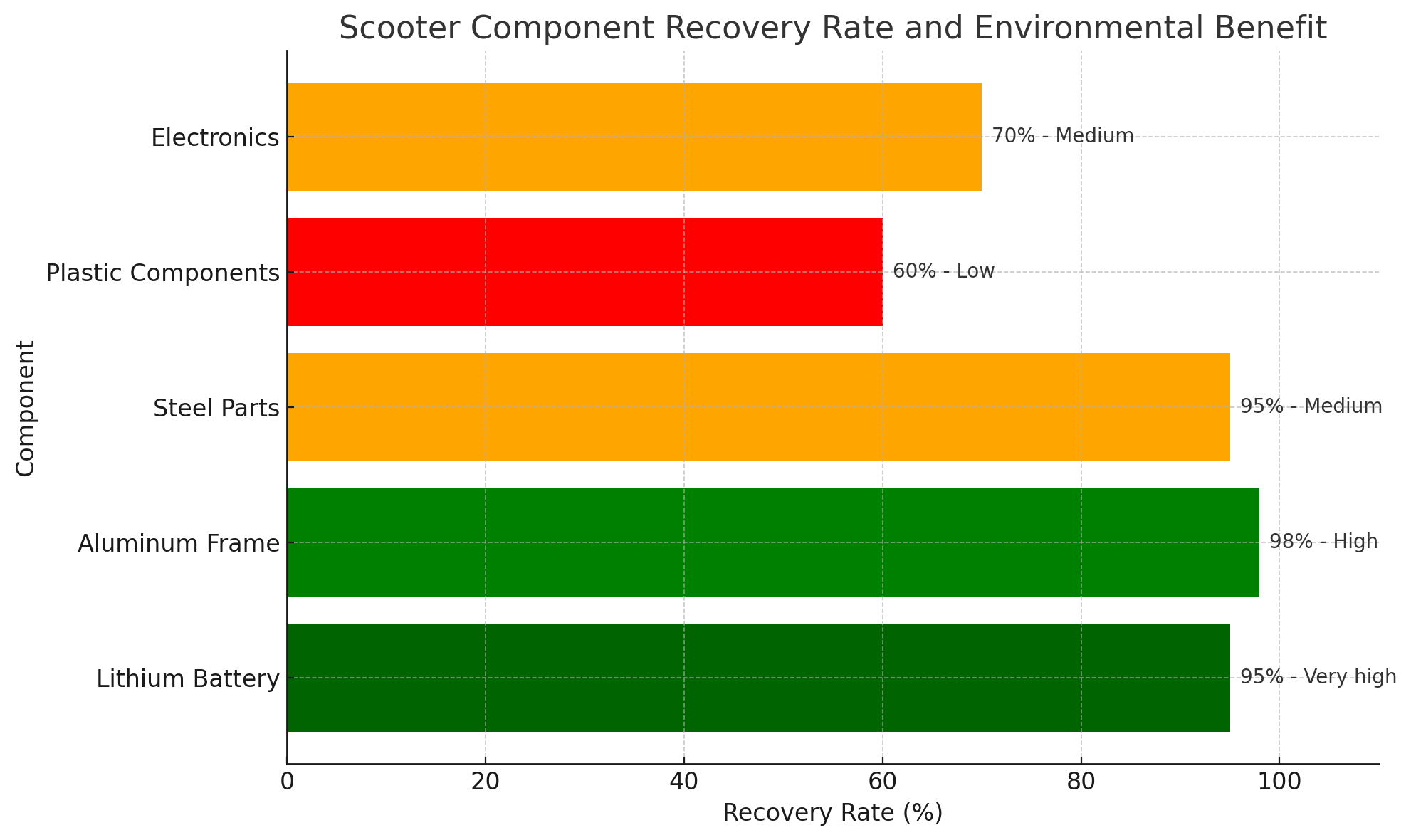
Recycling programs for scooter batteries remain limited but growing. Specialized facilities can recover 95% of lithium, cobalt, and nickel. Battery recycling reduces mining needs for new batteries. However, collection and processing infrastructure needs expansion.
Let me explain why proper end-of-life management matters so much for environmental impact. Recycling one scooter battery saves materials equivalent to mining 500 pounds of ore. Proper disposal prevents toxic contamination lasting decades.
Frame and component recyclability varies by material choices. Aluminum frames recycle easily with minimal environmental impact. Steel components also recycle well through existing infrastructure. Plastic parts present more challenges but remain recyclable.
| Component | Recyclability | Recovery Rate | Environmental Benefit | Processing Difficulty |
| Lithium Battery | High | 95% | Very high | High |
| Aluminum Frame | Excellent | 98% | High | Low |
| Steel Parts | Excellent | 95% | Medium | Low |
| Plastic Components | Medium | 60% | Low | Medium |
| Electronics | Medium | 70% | Medium | High |
Landfill impact varies significantly by component type and local waste management. Batteries in landfills create long-term contamination risks. Metal components eventually corrode and leach materials. Plastic parts persist for hundreds of years without degrading.
Circular economy opportunities emerge through design for disassembly and reuse. Modular designs allow component replacement and refurbishment. Leasing programs keep manufacturers responsible for end-of-life management. Take-back programs ensure proper recycling.
Extended producer responsibility policies make manufacturers accountable for product lifecycle. These policies incentivize durable design and recycling programs. Several countries implement such requirements for electronic products. Similar policies for scooters would improve environmental outcomes.
Fleet utilization rates determine environmental efficiency of shared programs. High-utilization scooters serve multiple users daily, maximizing environmental benefits per unit. Low-utilization fleets waste manufacturing resources and create unnecessary emissions. Optimal utilization requires 4-6 trips per scooter daily.
Maintenance and redistribution impacts add significant environmental costs. Trucks collect and redistribute scooters nightly in many programs. This process can generate 50-100g CO2 per scooter per day. Electric cargo bikes reduce redistribution emissions by 80%.
This is important because shared programs can either multiply or minimize environmental benefits. Well-managed programs with high utilization and efficient operations provide net environmental benefits. Poorly managed programs may create more emissions than private ownership.
Replacement frequency environmental costs vary dramatically between operators. Some shared scooters last only 3-6 months before replacement. Others achieve 18-24 month lifespans through better maintenance. Frequent replacement multiplies manufacturing environmental impact.
| Program Aspect | Best Practice | Poor Practice | Environmental Impact | Improvement Potential |
| Utilization Rate | 6+ trips/day | <2 trips/day | 300% difference | High |
| Lifespan | 24+ months | 3-6 months | 800% difference | Very high |
| Redistribution | Electric vehicles | Diesel trucks | 400% difference | High |
| Maintenance | Proactive | Reactive | 200% difference | Medium |
User behavior changes create additional environmental considerations. Shared scooters may replace walking or cycling trips, reducing environmental benefits. However, they also replace car trips, creating significant emission reductions. Modal shift analysis shows mixed results depending on local conditions.
Fleet management technology optimizes environmental performance. Smart redistribution reduces unnecessary truck trips. Predictive maintenance extends scooter lifespans. Dynamic pricing encourages efficient usage patterns.
Seasonal variations affect shared program environmental performance. Winter storage and reduced usage increase per-trip environmental costs. Summer peak usage maximizes environmental benefits. Year-round programs need strategies for seasonal efficiency.
6. How Can Electric Scooter Environmental Impact Be Reduced?
Sustainable manufacturing practices offer significant improvement opportunities. Renewable energy in factories reduces production emissions by 60%. Local sourcing cuts transportation impacts. Sustainable material choices minimize mining environmental damage.
Battery technology improvements provide the largest potential impact reduction. Solid-state batteries promise 40% lower manufacturing emissions. Improved energy density reduces material requirements. Longer-lasting batteries reduce replacement frequency.
Here’s the deal – technology improvements compound over time to create dramatic environmental benefits. Today’s best practices become tomorrow’s minimum standards. Early adoption of sustainable practices creates competitive advantages.
Renewable energy charging solutions eliminate operational emissions. Solar charging stations provide clean energy for scooter fleets. Wind power integration reduces grid dependence. Battery storage systems optimize renewable energy utilization.
| Improvement Strategy | Emission Reduction | Implementation Cost | Timeline | Adoption Rate |
| Renewable Manufacturing | 60% | High | 2-5 years | Growing |
| Better Batteries | 40% | Medium | 3-7 years | Rapid |
| Local Production | 25% | High | 5-10 years | Slow |
| Renewable Charging | 90% | Medium | 1-3 years | Moderate |
User behavior optimization reduces environmental impact through education and incentives. Proper charging practices extend battery life. Gentle riding reduces wear and maintenance needs. Route planning minimizes energy consumption.
Design for durability and repairability extends product lifespans significantly. Modular designs allow component replacement instead of full scooter replacement. Quality materials resist wear and weather damage. Standardized parts simplify maintenance and repair.
Circular economy integration creates closed-loop material flows. Recycled materials reduce mining needs. Refurbishment programs extend product life. Take-back programs ensure proper end-of-life management.
7. What Does the Future Hold for Sustainable Electric Scooters?
Emerging green technologies promise dramatic environmental improvements. Solid-state batteries offer higher energy density with lower environmental impact. Hydrogen fuel cells provide zero-emission alternatives. Advanced materials reduce weight and improve durability.
Policy and regulation developments drive industry sustainability improvements. Extended producer responsibility laws make manufacturers accountable for product lifecycle. Emission standards push technology development. Recycling mandates create infrastructure for proper disposal.
What does this mean for you? Future scooters will offer significantly better environmental performance. Early adoption of sustainable models supports industry development. Consumer choices drive manufacturer priorities toward sustainability.
Industry sustainability commitments accelerate environmental improvements. Major manufacturers pledge carbon neutrality by 2030-2040. Supply chain sustainability requirements improve component environmental performance. Transparency initiatives provide better environmental data.
| Future Development | Timeline | Impact Potential | Certainty Level | Investment Required |
| Solid-State Batteries | 3-7 years | Very high | Medium | High |
| Renewable Manufacturing | 2-5 years | High | High | Medium |
| Circular Economy | 5-10 years | High | Medium | High |
| Policy Changes | 1-5 years | Medium | High | Low |
Long-term environmental projections show improving trends for electric scooter sustainability. Manufacturing emissions should decrease 50% by 2030. Operational emissions will approach zero with renewable energy adoption. End-of-life management will improve through better recycling infrastructure.
Research and development investments focus on sustainability improvements. Battery chemistry research reduces environmental impact. Manufacturing process optimization cuts emissions. Lifecycle assessment tools improve environmental understanding.
Consumer awareness drives demand for sustainable transportation options. Environmental labeling helps consumers make informed choices. Sustainability certifications verify environmental claims. Education programs promote responsible usage patterns.
Conclusion
Electric scooters offer big benefits compared to cars. But you need to consider manufacturing, usage, and disposal impacts. They produce 50-80% fewer lifetime emissions than cars. Their advantage depends on usage patterns, local energy sources, and proper disposal. Shared programs can multiply benefits through high use. But poor management creates unnecessary costs. Future improvements in battery tech, clean energy, and recycling will make electric scooters much more sustainable.
Dynamic Scooter leads the industry in sustainable design and manufacturing. We use clean energy in production. We design for durability and recycling. Our Model B achieves top efficiency while maintaining high build quality for long life.
Contact Dynamic Scooter today to experience responsible transport that doesn’t compromise on performance or reliability.

FAQ
Q1: Are electric scooters really better for the environment than cars?
Yes, electric scooters produce 50-80% fewer lifetime emissions than cars, even accounting for manufacturing and electricity generation. However, they’re not as environmentally friendly as bicycles or walking. The environmental benefit is greatest when replacing car trips rather than active transportation.
Q2: How long do electric scooter batteries last before replacement?
Quality electric scooter batteries typically last 2-4 years or 500-1000 charge cycles before significant capacity loss. Proper charging practices, temperature management, and avoiding deep discharges can extend battery life. Shared scooter batteries may need replacement more frequently due to intensive use.
Q3: Can electric scooter batteries be recycled properly?
Yes, lithium-ion scooter batteries can be recycled with 95% material recovery rates at specialized facilities. However, recycling infrastructure remains limited in many areas. Proper recycling recovers valuable materials and prevents environmental contamination from improper disposal.
Q4: Do electric scooters reduce overall transportation emissions?
Electric scooters reduce emissions when they replace car trips but may increase emissions if they replace walking or cycling. Studies show mixed results depending on local transportation patterns. The net environmental benefit depends on what transportation mode scooters replace.
Q5: What makes some electric scooters more environmentally friendly?
Environmentally friendly scooters feature durable construction for longer lifespans, efficient motors and batteries, sustainable manufacturing practices, and recyclable materials. Charging from renewable energy sources and proper end-of-life recycling also significantly improve environmental performance.