
California’s electric scooter laws confuse many riders. You could face big fines and legal trouble without knowing the rules. This guide shows you exactly what’s legal and what’s not.
California requires electric scooter riders to be at least 16 years old. Riders under 18 must wear helmets. You can only ride in bike lanes or streets with speed limits under 25 mph. Scooters cannot go faster than 15 mph. Sidewalk riding is banned statewide with fines up to $200.
But here’s the thing – each city adds its own rules too.
1. What are the basic electric scooter laws in California?
California has statewide rules for electric scooters that apply everywhere. These rules apply in every city and county across the state. Local governments can add stricter rules on top of these basic requirements.
You must be at least 16 years old to ride an electric scooter legally on public roads. Here’s why it matters – younger riders get automatic tickets regardless of adult supervision. The base fine starts at $197 plus court costs that often exceed $300.
Your scooter cannot go faster than 15 mph on flat ground during normal use. Scooters that can reach over 20 mph maximum speed need DMV registration and a motorcycle license.
Speed testing happens on level, dry pavement under normal conditions. Police use radar guns to check scooter speeds during traffic stops.
| Rule Type | What’s Required | Fine Amount | Court Costs | Total Cost |
| Age Limit | 16 years old minimum | $197 | $300+ | $497+ |
| Speed Limit | 15 mph maximum | $238 | $300+ | $538+ |
| Helmet Under 18 | Must wear approved helmet | $197 | $300+ | $497+ |
| No Sidewalk Riding | Stay off all sidewalks | $200 | $300+ | $500+ |
| Night Lights | Required after sunset | $238 | $300+ | $538+ |
Riders under 18 must wear bike helmets that meet safety standards. The helmet must fit properly with working chin straps. Adults 18 and older can choose whether to wear helmets. Safety experts recommend helmets for all riders regardless of age.
You don’t need a driver’s license for standard scooters under 20 mph capability. You do need valid government ID to prove your age to police. No special permits or endorsements are required for basic operation.
You don’t need to register your scooter with the California DMV. Electric scooters follow modified bicycle regulations rather than motor vehicle laws. This saves you registration fees and paperwork.
Your scooter must have working brakes on both front and rear wheels. Brakes must stop you within 25 feet when traveling 10 mph. You need proper lighting systems for safe night riding operations.
2. Where can you legally ride electric scooters in California?
California law tells you exactly where you can and cannot ride your scooter. Knowing these rules keeps you safe and helps you avoid expensive tickets. Breaking location rules is one of the most common violations.
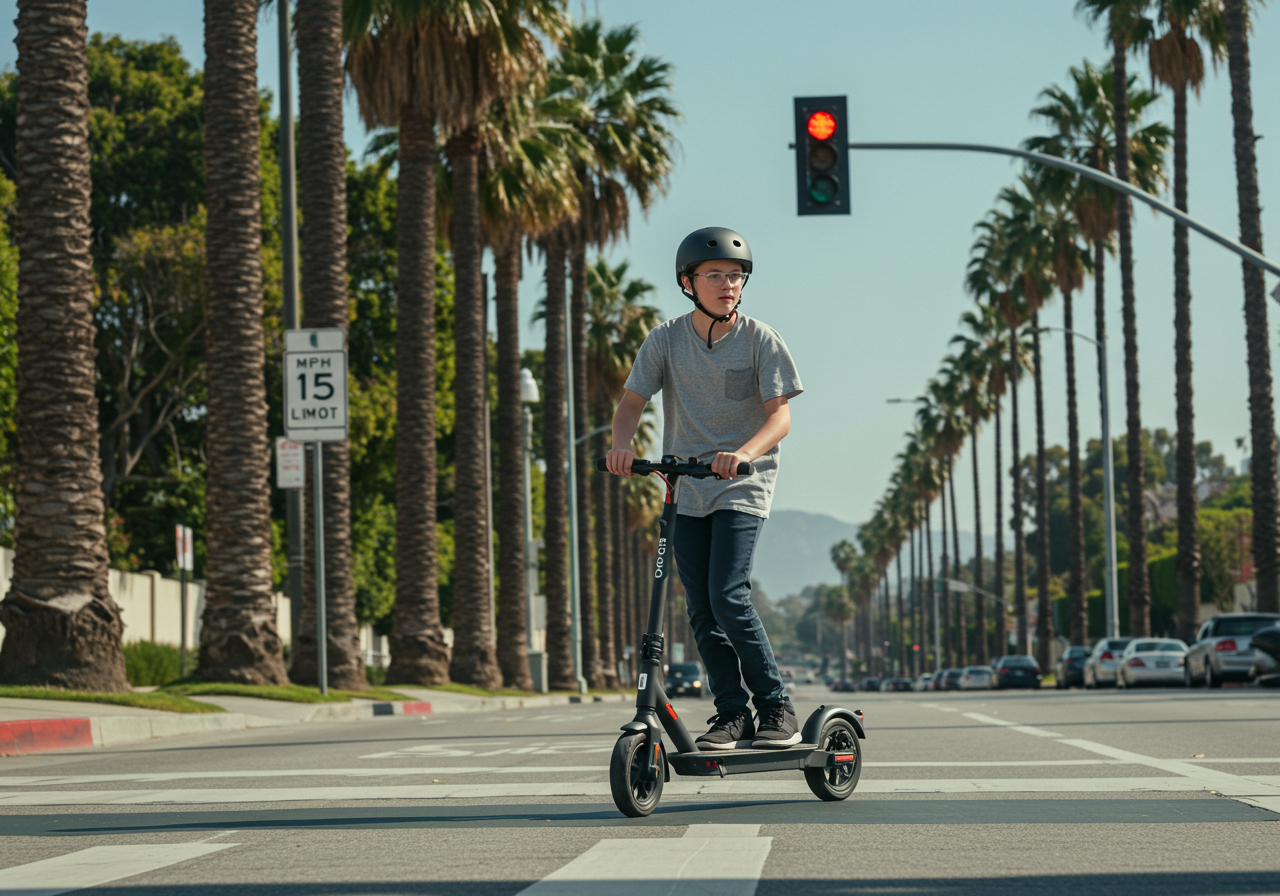
Bike lanes are the best and safest place to ride your electric scooter. Both painted bike lanes and protected bike lanes allow scooters at all times. These lanes are designed for vehicles like yours.
You can ride on streets with posted speed limits of 25 mph or less. The best part? You can use the whole traffic lane, not just the edge. This makes you more visible to drivers and safer overall.
Traffic laws require you to ride with traffic flow, not against it. You must follow the same rules as bicycles when using streets. This includes stopping at red lights and stop signs.
| Where You Can Ride | Is It Legal? | Speed Limit | Special Rules | Ticket Risk |
| Painted Bike Lanes | Yes | 15 mph | Best choice available | Low |
| Protected Bike Lanes | Yes | 15 mph | Safest option available | Low |
| Streets 25 mph or less | Yes | 15 mph | When no bike lane exists | Medium |
| Streets over 25 mph | No | N/A | Too dangerous for scooters | High |
| Sidewalks | No | N/A | Banned everywhere in state | High |
| Crosswalks | Walk only | N/A | Must get off and walk | Medium |
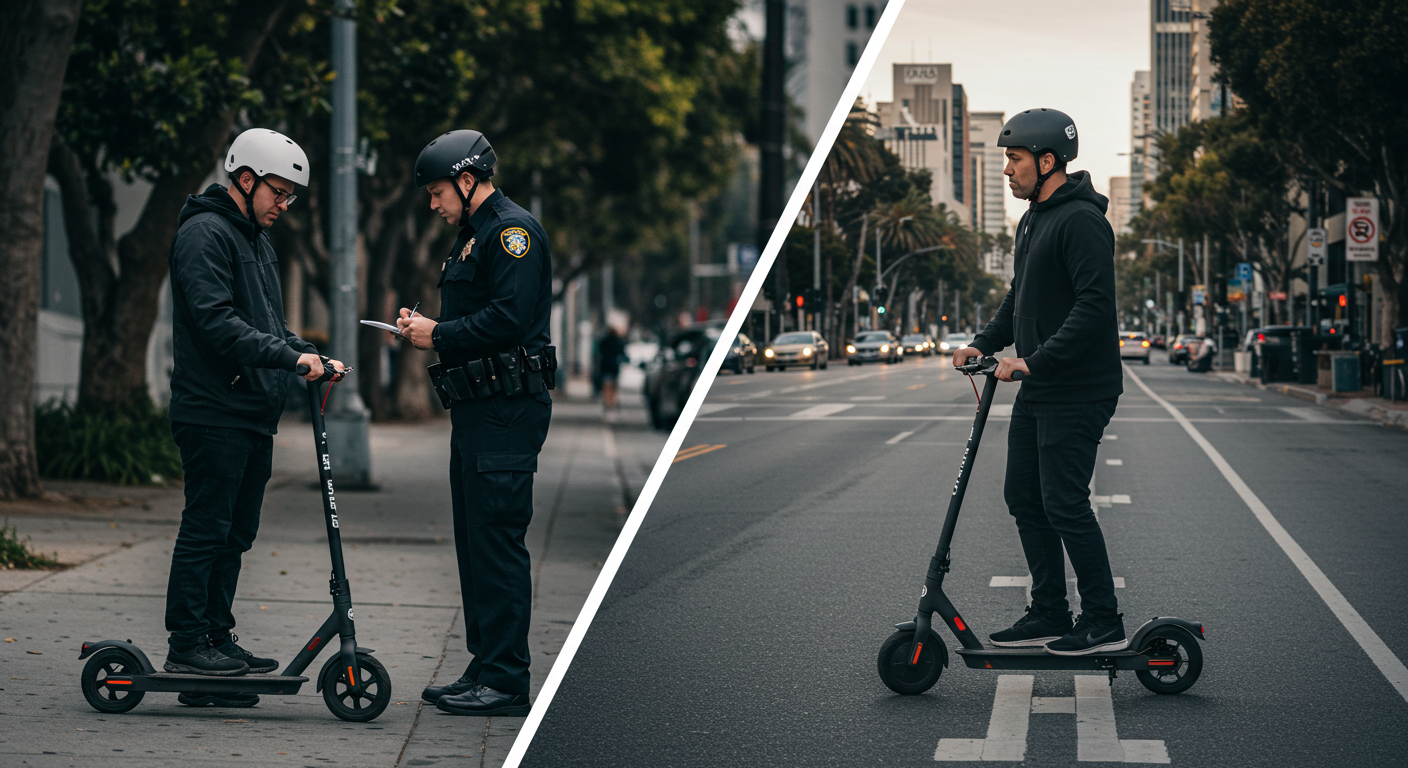
You cannot ride on sidewalks anywhere in California without exception. This rule applies statewide regardless of city or county. Breaking this rule costs up to $200 plus mandatory court fees.
Crosswalks require you to get off your scooter and walk. Riding through crosswalks counts as sidewalk riding. Police watch crosswalks carefully for violations.
Highways and freeways are completely off-limits to all scooters. This includes on-ramps, off-ramps, and shoulder areas. Any road over 25 mph speed limit is too dangerous.
Private property follows different rules set by property owners. Shopping centers and business parks can allow or ban scooters. Always look for posted signs that explain the local rules.
Parks have mixed rules depending on who manages them. California state parks usually ban all motorized vehicles including scooters. City and county parks may allow scooters on paved paths only.
School zones often have extra restrictions beyond state law. Many schools ban scooters during school hours for student safety. Police increase enforcement near schools during busy times.
3. What safety equipment is required for electric scooters?
California requires specific safety gear for legal scooter riding throughout the state. This equipment protects you and other people on the road. Having the right gear also keeps you out of legal trouble.
Your scooter must have working brakes on both front and rear wheels. The brakes must be able to stop you within 25 feet from 10 mph speed. This test happens on flat, dry pavement under normal weather conditions.
Now, you might be wondering about lighting requirements that many riders forget about completely. You need a white front light and red rear reflector when riding after dark. Dark officially means 30 minutes after sunset until 30 minutes before sunrise.
Brake testing by police happens during traffic stops and safety inspections. Officers may test your brakes on the spot. Broken brakes result in immediate citations and possible scooter impoundment.
| Safety Gear | What You Need | Who Needs It | Fine Amount | Extra Penalties |
| Bike Helmet | Proper fit with chin strap | Under 18 only | $197 | May require traffic school |
| Front Light | White light visible ahead | Everyone at night | $238 | Scooter may be impounded |
| Rear Reflector | Red reflector visible behind | Everyone at night | $238 | Scooter may be impounded |
| Working Brakes | Both wheels must work | Everyone always | $238 | Safety inspection required |
| Bell or Horn | For warning other people | Optional for all | No fine | Recommended for safety |
Helmets must be bicycle-style helmets with official safety approval stamps. They need proper fit and working chin straps that stay secure. Motorcycle helmets work too but cost much more than needed.
Helmet fit matters for both safety and legal compliance. Loose helmets that fall off don’t meet legal requirements. Police check helmet fit during stops involving minors.
Extra lights and reflective clothing help visibility but aren’t required by state law. Many experienced riders add LED strips and bright safety vests. These additions make you much more visible to drivers.
Insurance coverage isn’t required by California state law but provides valuable financial protection. It helps pay for medical bills and property damage if accidents happen. Some cities require insurance for rental companies but not individual riders.
Bells and horns help warn pedestrians and cyclists that you’re approaching. They aren’t legally required but prevent many accidents. Most new scooters come with bells already installed as standard equipment.
4. How do California cities regulate electric scooter sharing?
California cities control rental scooter companies through permits and rules. These local laws affect how many scooters you see and where you can find them.
Rental companies must get city permits before putting scooters on streets. The application process includes insurance proof and detailed plans.
Cities limit how many scooters each company can have. This is important because too many scooters create sidewalk problems and block walkways.
| City | Max Scooters | Yearly Fee | Data Required | Parking Fines |
| Los Angeles | 3,000 per company | $20,000 | GPS tracking | $100 each |
| San Francisco | 2,500 per company | $25,000 | Trip data | $200 each |
| San Diego | 2,000 per company | $15,000 | Monthly reports | $150 each |
| Sacramento | 1,500 per company | $10,000 | Safety reports | $75 each |
| Oakland | 1,000 per company | $12,000 | Real-time data | $125 each |
Scooters must be parked properly to keep sidewalks clear. They need 3 feet of space for people to walk by. They can’t block doors, bus stops, or fire hydrants.
Companies must share data with cities. This includes trip info, usage patterns, and safety reports. Cities use this data to make better rules.
Cities charge permit fees and monthly scooter fees. Some take a percentage of company profits. This money pays for city staff and street improvements.
Companies must fix broken scooters quickly and provide customer service. If they don’t meet standards, they can lose their permits.
5. What are the penalties for violating scooter laws?
California scooter tickets cost real money and can affect your driving record. Knowing the penalties helps you decide if breaking rules is worth the risk.
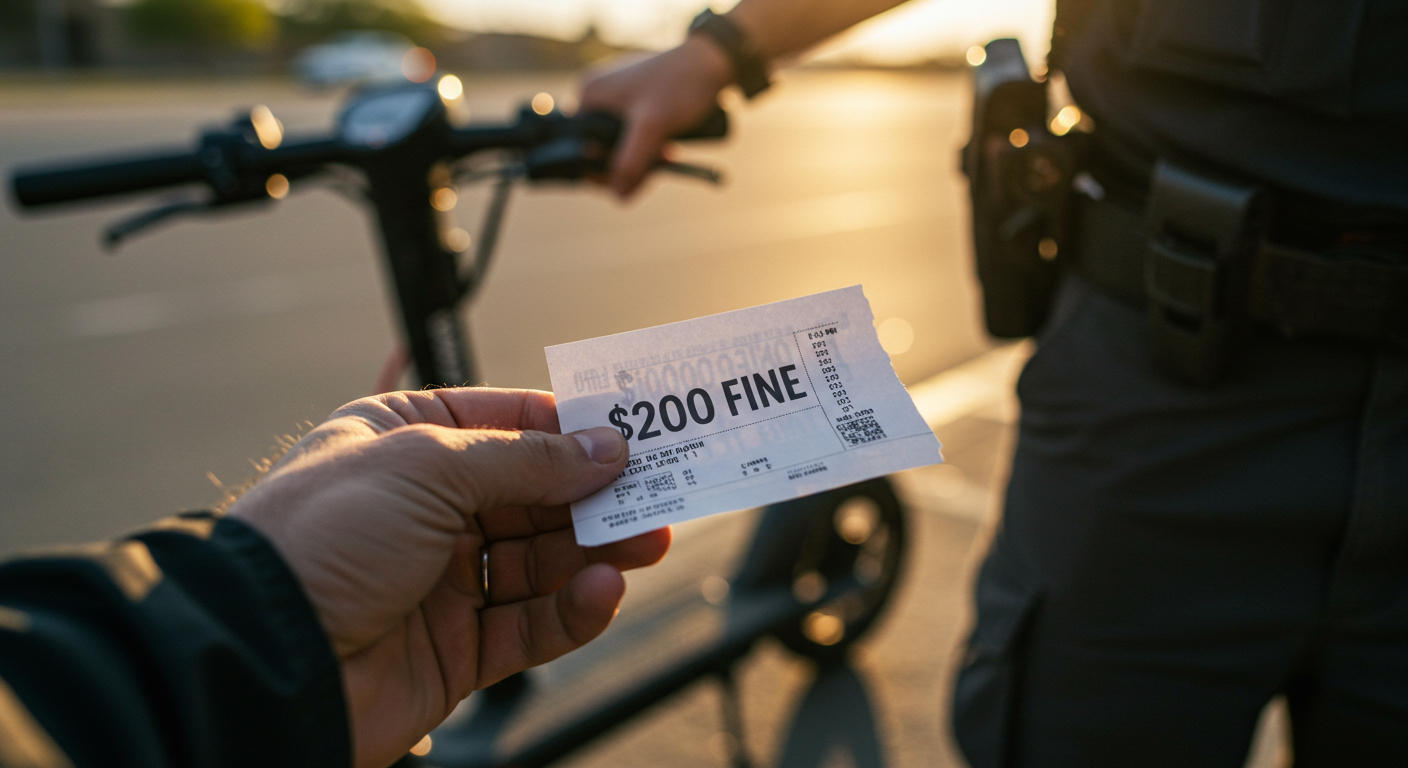
Basic tickets start at $197 for things like being too young or not wearing a helmet. Serious violations like sidewalk riding cost $238 plus court fees.
Here’s the deal – some scooter tickets count as moving violations. These can raise your car insurance rates even though scooters don’t need licenses.
| What You Did Wrong | Base Fine | Court Fees | Admin Fees | Total Cost | Driving Points |
| Too Young to Ride | $197 | $300+ | $50+ | $547+ | None |
| No Helmet (Under 18) | $197 | $300+ | $50+ | $547+ | None |
| Riding on Sidewalk | $200 | $300+ | $50+ | $550+ | None |
| Going Too Fast | $238 | $300+ | $50+ | $588+ | Maybe |
| Reckless Riding | $490 | $300+ | $50+ | $840+ | Yes, 2 points |
| DUI on Scooter | $1,000+ | $500+ | $200+ | $1,700+ | Yes, 2 points |
Police can take your scooter for serious violations or repeat offenses. Getting it back costs extra for towing and storage. This often adds $400-600 to your total bill.
If you have a driver’s license, some scooter violations add points to your record. These points make your car insurance more expensive.
You might have to go to court for serious violations or if someone gets hurt. Minor tickets can often be paid online without going to court.
Multiple violations in one year lead to bigger fines and required traffic school. Three violations in 12 months can become criminal charges.

6. How do electric scooter laws vary by California city?
California cities can add their own scooter rules on top of state law. These local rules can be much stricter than state requirements.
Los Angeles has detailed parking rules with painted boxes where scooters must go. The city also bans scooters near schools and hospitals.
Want to know the secret? San Francisco has some of the strictest scooter rules in California. Some neighborhoods ban scooters completely.
| City | Special Rules | Parking Rules | Speed Limits | Banned Areas |
| Los Angeles | Must use painted boxes | Designated zones only | 8 mph in parks | School zones |
| San Francisco | Some areas banned | Permit zones only | 5 mph on waterfront | Financial District |
| San Diego | Beach restrictions | 3-foot sidewalk space | 8 mph in parks | Mission Beach |
| Sacramento | Downtown limits | Business areas only | Standard 15 mph | Capitol grounds |
San Diego focuses on beach and tourist areas. Scooters are banned on boardwalks and beach paths. Rental companies need special permits for coastal areas.
Sacramento restricts scooters around government buildings. The State Capitol area has special security rules that limit scooter access.
Smaller cities often ban scooters completely. Cities like Beverly Hills and Manhattan Beach don’t allow any scooters within city limits.
Some cities actively write tickets while others just give warnings. Research local rules before riding in a new city.
7. What changes are coming to California scooter laws?
California’s scooter laws keep changing as the technology grows. New rules are coming that will affect how and where you can ride.
New bills in the state legislature could require insurance for all riders. Helmet rules might expand to cover more age groups. These changes could start in 2026.
The bottom line? Technology rules may soon require GPS tracking and automatic speed limits in school zones.
| Proposed Change | When It Starts | How Big the Impact | Who It Affects |
| Required Insurance | 2026 | Major change | All riders |
| GPS Speed Control | 2025 | Medium change | Scooter makers |
| Standard Parking Rules | 2025 | Major change | Cities and companies |
| Better Lights | 2024 | Small change | Scooter makers |
Safety rules may require turn signals and better brakes. Night riding equipment could become more advanced. These changes aim to reduce accidents.
Environmental rules could limit battery types and require recycling programs. California’s green goals drive these potential requirements.
Police may get new technology to catch violations automatically. Digital tickets and online payment could become standard.
Future laws may address scooter modifications and illegal commercial use. Lawmakers watch how people use scooters to find problems that need fixing.

Conclusion
California requires scooter riders to be 16 or older and wear helmets if under 18. You can only ride in bike lanes or on streets under 25 mph. Violations cost $197-$538 plus court fees. Cities add their own rules that vary widely.
Following scooter laws saves you from expensive tickets that can cost over $800 total. Ready to ride safely and legally? Dynamic Scooter sells California-legal electric scooters with all required safety equipment.
Contact Dynamic Scooter today for help understanding California scooter rules and find the right legal scooter for you at dynamicscooter.com.
FAQ
Q1: Do I need a license to ride an electric scooter in California?
No driver’s license is required for scooters under 20 mph, but you must be at least 16 years old to ride legally.
Q2: Can I ride my electric scooter on sidewalks in California?
No, California bans scooter riding on all sidewalks statewide. Violations result in fines up to $200 plus court costs.
Q3: Are helmets required for all electric scooter riders?
Helmets are required only for riders under 18 years old. Adults can choose whether to wear helmets.
Q4: What’s the maximum speed limit for electric scooters?
Electric scooters cannot exceed 15 mph on level ground under California state law.
Q5: Can cities ban electric scooters completely?
Yes, cities can prohibit electric scooters entirely or restrict them to specific areas through local laws.