
Learning scooter tricks seems hard and risky without proper guidance. Poor technique leads to crashes, injuries, and damaged equipment that costs hundreds to replace. This guide teaches you safe, proven methods to master impressive tricks step by step.
The best electric scooter tricks for beginners include proper balance, basic turns, controlled stops, and simple wheelies. Intermediate riders can master bunny hops, sharp corners, and curb riding. Advanced tricks include tailwhips, barspins, and 180-degree turns. Always wear safety gear and practice in safe areas.
But here’s the thing – most riders skip the basics and get hurt trying advanced moves.
1. What basic tricks should beginners start with?
Every great trick rider starts with solid fundamentals that build confidence and prevent serious injuries. These basic skills form the foundation for all advanced maneuvers you’ll want to learn later in your riding journey.
Proper stance and balance create the stable base for everything else you’ll do. Stand with feet shoulder-width apart and knees slightly bent for shock absorption. Here’s why it matters – good balance prevents falls and gives you complete control during tricks and normal riding.
Keep your weight centered over the scooter deck at all times. Lean forward slightly when accelerating and backward when braking or preparing to stop. Practice standing still on your scooter for 30 seconds without moving or wobbling.
Body positioning affects every aspect of your riding performance. Keep your head up and eyes looking ahead, not down at the deck. Relax your shoulders and arms while maintaining a firm grip on the handlebars.
| Basic Skill | Practice Time | Difficulty Level | Safety Risk | Key Focus Area |
| Balance Stance | 1-2 days | Easy | Low | Weight distribution |
| Smooth Turns | 3-5 days | Easy | Low | Body lean technique |
| Controlled Stops | 2-3 days | Easy | Medium | Brake pressure control |
| Speed Control | 1 week | Medium | Medium | Throttle management |
| Confidence Building | 2 weeks | Medium | Low | Mental preparation |
Simple turning techniques help you navigate safely while building essential control skills. Start with wide, gentle turns at slow speeds to get the feel. Lean your body slightly into the turn while keeping your feet planted firmly on the deck.
Practice figure-eight patterns in an empty parking lot or safe open area. This drill improves your turning skills and builds muscle memory for smooth direction changes. Start with large patterns and gradually make smaller circles as you improve.
Weight shifting during turns requires practice to master completely. Shift your weight to the inside of the turn while maintaining balance. Too much lean causes crashes while too little makes turns ineffective.
Controlled stopping prevents crashes and builds confidence for all riding situations. Use both brakes gradually rather than grabbing them hard and suddenly. Practice stopping from different speeds until smooth braking becomes completely automatic.
Speed control separates good riders from great ones who can handle any situation. Learn to maintain steady speeds and make smooth adjustments without jerky movements. This skill helps with all other tricks and keeps you safe in traffic.

2. How do you perform intermediate scooter tricks?
Intermediate tricks build on your basic skills and add real excitement to your riding experience. These moves require more practice and coordination but create impressive results when performed correctly and safely.
Manual wheelies look cool and significantly improve your balance skills for all riding situations. Start by shifting your weight backward while gently pulling up on the handlebars with controlled force. The best part? This trick teaches you weight distribution principles that help with all advanced moves.
Begin practicing wheelies at very slow speeds on completely flat ground. Lift the front wheel just a few inches at first to get the feel. Gradually increase the height and duration as your balance and confidence improve steadily.
Wheelie timing requires precise coordination between weight shift and handlebar pull. Pull too hard and you’ll flip backward dangerously. Pull too soft and the wheel won’t lift at all.
| Intermediate Trick | Learning Time | Skill Level | Equipment Needs | Practice Surface |
| Manual Wheelie | 2-3 weeks | Medium | Standard scooter | Flat pavement |
| Bunny Hop | 3-4 weeks | Medium-Hard | Good brakes | Smooth concrete |
| Sharp Cornering | 1-2 weeks | Medium | Grippy tires | Open parking lot |
| Curb Riding | 2-3 weeks | Medium-Hard | Sturdy wheels | Low practice curbs |
| Obstacle Navigation | 4-5 weeks | Hard | Practice cones | Controlled environment |
Bunny hops help you clear small obstacles and look impressive to other riders. Compress your body down like a spring, then explode upward while pulling the handlebars toward your chest. Land with both wheels touching down together smoothly.
Practice bunny hops over small objects like sticks, chalk lines, or small cones. Gradually increase the height and distance as your technique improves with repetition. This trick requires good timing and coordination between upper and lower body.
Compression and extension timing makes bunny hops work effectively. Compress quickly but extend explosively for maximum height. Practice the motion without obstacles first to build muscle memory.
Sharp cornering at speed requires advanced balance and precise control techniques. Lean into turns more aggressively while maintaining appropriate speed for conditions. Practice on wide turns before attempting tight corners that require more skill.
Curb riding involves riding along raised surfaces like curbs, ledges, or rails. Start with wide, low curbs and progress to narrower ones as skills develop. This trick builds precision and confidence for technical riding situations.
3. What advanced tricks can experienced riders master?
Advanced tricks require months of dedicated practice and carry significantly higher risks than basic moves. Only attempt these complex maneuvers after mastering all basic and intermediate skills completely and consistently.
Tailwhips involve spinning the scooter deck 360 degrees while jumping and maintaining control. This complex trick requires perfect timing, strong leg muscles, and lots of dedicated practice time. Now, you might be wondering how long it takes to master – most dedicated riders need 3-6 months of regular, focused practice sessions.
Start by practicing the jump motion without spinning the deck at all. Get comfortable with the height and landing technique first. Then add small deck movements before attempting full rotations that require precise timing.
Deck spinning technique requires kicking the deck with your back foot while jumping. The kick must be strong enough to complete the rotation but controlled enough to catch it. Practice the kicking motion while holding onto something stable.
| Advanced Trick | Mastery Time | Risk Level | Prerequisites | Practice Hours Needed |
| Tailwhip | 3-6 months | High | All intermediate tricks | 100+ hours |
| Barspin | 2-4 months | High | Strong grip strength | 80+ hours |
| 180-Degree Turn | 1-3 months | Medium-High | Sharp cornering mastery | 60+ hours |
| Jump Landing | 2-3 months | High | Bunny hop perfection | 70+ hours |
| Combo Sequences | 6+ months | Very High | Multiple individual tricks | 200+ hours |
Barspins require spinning the handlebars 360 degrees while maintaining complete control and balance. This trick demands strong grip strength and precise timing coordination. Practice the spinning motion while stationary first to build muscle memory.
Work on your grip strength with specific exercises off the scooter regularly. The spinning motion must be smooth and controlled throughout the entire rotation. Many riders struggle with catching the bars cleanly on the return spin.
Hand positioning affects barspin success significantly. Keep your hands in the right position to catch the bars. Practice letting go and catching without spinning first to build confidence.
180-degree turns involve spinning yourself and the scooter halfway around while moving forward. This trick combines jumping, turning, and landing skills into one fluid motion. Start with smaller angle turns and gradually build up to full 180s.
Jump and landing skills form the foundation for many advanced tricks and combinations. Practice jumping over increasingly larger obstacles with perfect form. Focus on smooth takeoffs and controlled landings every single time you practice.
4. Which safety gear is needed for trick riding?
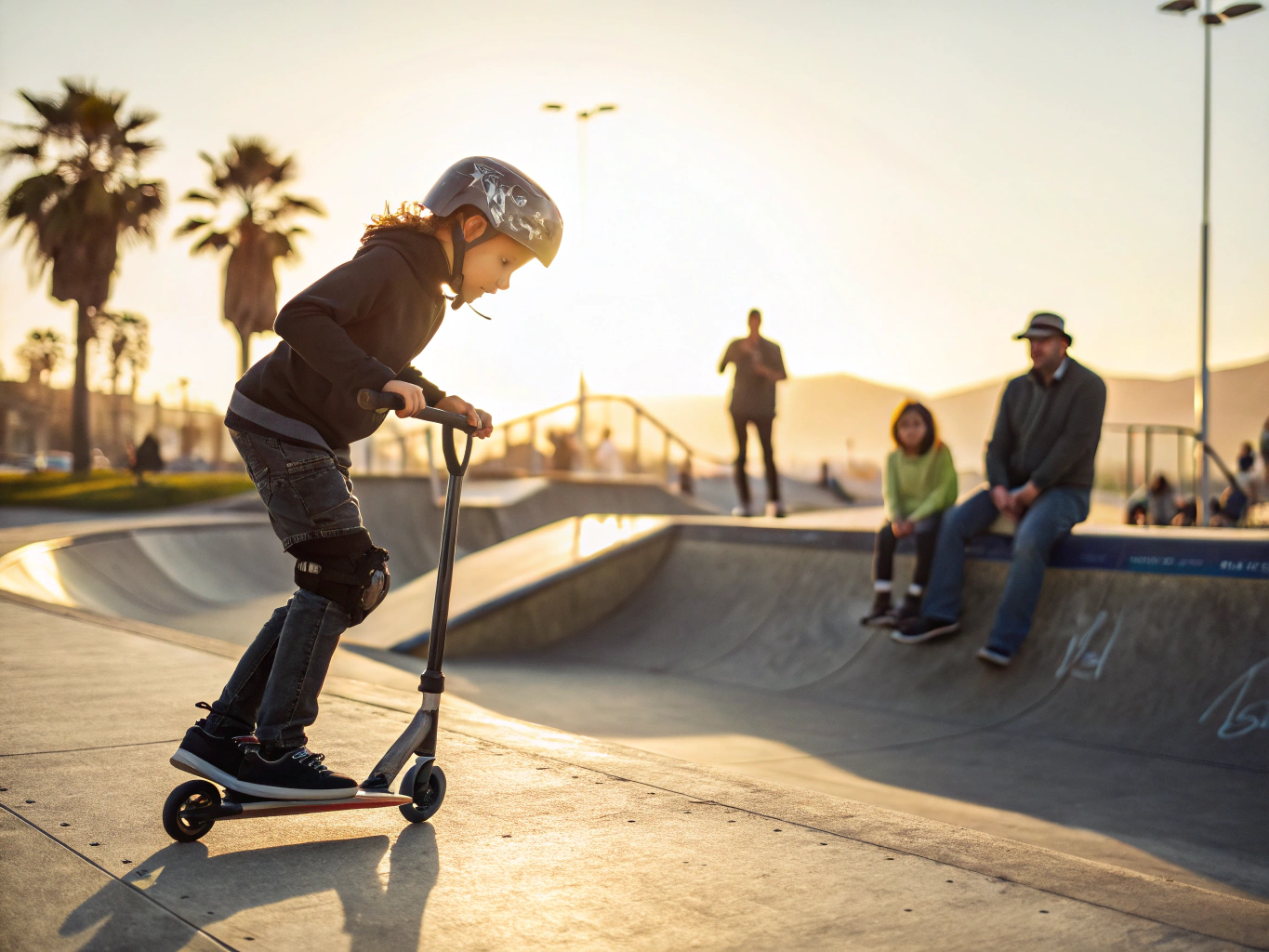
Safety gear prevents serious injuries and gives you confidence to attempt new tricks. Never compromise on protection when learning dangerous maneuvers.
Helmet selection makes the biggest difference in preventing head injuries. Choose a certified skateboard or bike helmet that fits snugly. This is important because head injuries can be permanent and life-changing.
Look for helmets with CPSC or ASTM certification. The helmet should sit level on your head without tilting. Replace helmets after any significant impact or every few years.
| Safety Gear | Protection Level | Cost Range | Replacement Frequency |
| Certified Helmet | Critical | $30-100 | After impact/3 years |
| Knee Pads | High | $15-40 | When worn out |
| Elbow Pads | High | $10-30 | When worn out |
| Wrist Guards | Medium | $10-25 | When worn out |
| Proper Shoes | Medium | $50-150 | When worn out |
Protective pads for knees and elbows prevent scrapes and fractures during falls. Choose pads that fit securely without restricting movement. Quality pads last longer and provide better protection.
Look for pads with hard plastic caps and thick foam padding. They should stay in place during movement but not cut off circulation. Replace pads when the straps stretch out.
Proper footwear provides grip and ankle support during tricks. Avoid sandals or loose shoes that can slip off. Skateboard shoes work well for scooter tricks.
Choose shoes with flat soles and good grip patterns. High-top shoes provide extra ankle support for landing tricks. Replace shoes when the soles wear smooth.
5. How do you practice tricks safely and effectively?
Safe practice methods prevent injuries and speed up your learning process. Smart practice habits separate successful riders from those who get hurt.
Ideal practice locations have smooth surfaces and plenty of space. Empty parking lots work perfectly for most tricks. Here’s the deal – the right location makes learning faster and safer.
Avoid areas with traffic, pedestrians, or obstacles you can’t control. Look for spots with good lighting if you practice in the evening. Smooth concrete or asphalt works better than rough surfaces.
| Practice Factor | Good Choice | Poor Choice | Safety Impact |
| Surface Type | Smooth concrete | Rough asphalt | High |
| Space Available | Large parking lot | Narrow sidewalk | High |
| Traffic Level | Empty area | Busy street | Critical |
| Lighting | Good visibility | Dark corners | High |
| Ground Conditions | Clean and dry | Wet or debris | High |
Progressive skill building prevents injuries and builds confidence steadily. Master each trick completely before moving to the next level. Rushing leads to bad habits and crashes.
Spend at least a week on each new skill. Practice the same trick multiple times per session. Quality repetition builds muscle memory better than trying many different tricks.
Common mistake prevention saves time and reduces injury risk. Most beginners try advanced tricks too early. Others practice without proper safety gear or in dangerous locations.
Film yourself practicing to spot technique problems. Ask experienced riders for feedback on your form. Join local scooter groups for tips and motivation.
6. What scooter modifications help with tricks?
The right modifications make tricks easier and safer to perform. Some changes improve control while others add durability for hard landings.
Handlebar height adjustments affect your leverage and control during tricks. Lower bars give more control for technical moves. Want to know the secret? Most trick riders prefer bars at waist height or slightly below.
Adjust bars so your arms are slightly bent when riding normally. Too high makes tricks harder while too low hurts your back. Most scooters allow height adjustments within limits.
| Modification Type | Trick Benefit | Cost Range | Difficulty Level |
| Handlebar Height | Better control | Free | Easy |
| Grip Tape | Improved foot grip | $10-20 | Easy |
| Wheel Upgrades | Smoother rides | $30-80 | Medium |
| Brake Adjustments | Better stopping | Free-$20 | Easy |
| Weight Distribution | Balance improvement | $20-50 | Medium |
Grip tape improvements help your feet stay planted during tricks. Replace worn grip tape with fresh, sticky material. Some riders prefer different textures for better feel.
Clean your grip tape regularly to maintain stickiness. Replace it when it becomes smooth or starts peeling. Quality grip tape lasts longer and provides better control.
Wheel and bearing upgrades create smoother rides and better landings. Higher quality bearings roll more smoothly and last longer. Softer wheels absorb impacts better.
Choose wheels based on your riding style and surface type. Harder wheels roll faster but provide less cushioning. Softer wheels grip better but wear out faster.
7. How do you troubleshoot common trick problems?
Every rider faces challenges when learning new tricks. Knowing how to fix common problems speeds up your progress and prevents frustration.
Balance and stability issues affect most beginners learning their first tricks. Poor stance and tension cause wobbling and falls. The bottom line? Relaxed muscles and proper positioning solve most balance problems.
Practice standing on your scooter without moving for longer periods. Focus on keeping your muscles relaxed while maintaining control. Tension makes balance harder, not easier.
| Common Problem | Main Cause | Quick Fix | Long-term Solution |
| Poor Balance | Muscle tension | Relax and breathe | Daily balance practice |
| Speed Issues | Fear or technique | Start slower | Gradual speed increase |
| Landing Problems | Timing errors | Practice timing | Repetition and filming |
| Equipment Issues | Wear or damage | Inspect regularly | Quality maintenance |
| Confidence Loss | Previous crashes | Return to basics | Progressive rebuilding |
Speed control difficulties happen when riders feel nervous or use poor technique. Some go too fast and lose control while others go too slow for tricks to work properly.
Find the right speed for each trick through experimentation. Most tricks have a minimum speed requirement to work correctly. Practice speed control as a separate skill.
Landing technique problems cause crashes and equipment damage. Poor timing and body position create hard landings. Focus on smooth, controlled landings rather than just completing tricks.
Practice landing from small jumps before attempting trick landings. Keep your knees bent and weight centered. Smooth landings prevent injuries and look more professional.
Equipment malfunction fixes keep you riding safely and smoothly. Regular maintenance prevents most problems before they become dangerous. Check your scooter before each practice session.

Conclusion
Mastering electric scooter tricks requires starting with basic balance and control skills before progressing to intermediate moves like wheelies and bunny hops. Advanced tricks like tailwhips and barspins take months to perfect and require proper safety gear. The key benefit is building confidence and control that makes you a safer, more skilled rider overall.
Ready to start your trick journey safely? Dynamic Scooter offers high-quality scooters built for trick riding with the durability and control you need to progress quickly. Visit Dynamic Scooter today to find the perfect scooter for your skill level and start mastering impressive tricks with confidence.
FAQ
Q1: Can I perform tricks on any electric scooter?
Not all scooters are suitable for tricks. Look for models with sturdy construction, good balance, and appropriate weight limits for trick performance.
Q2: How long does it take to learn basic scooter tricks?
Most beginners can master basic tricks within 2-4 weeks of regular practice, while advanced tricks may take several months to perfect.
Q3: Are electric scooter tricks dangerous?
Like any action sport, tricks carry risks. Proper safety gear, gradual progression, and safe practice areas significantly reduce injury chances.
Q4: What’s the most important trick to learn first?
Balance and proper stance form the foundation for all other tricks. Master these basics before attempting more complex maneuvers.
Q5: Can adults learn scooter tricks or are they just for kids?
Adults can definitely learn scooter tricks. Many adult riders enjoy trick riding as a fun way to improve their scooter skills and fitness.