
Buying the wrong electric scooter wastes your money and leaves you stranded. Cheap models break quickly, while expensive ones drain your budget. Finding the right balance between price and quality saves money and gets you reliable transportation.
The best low-cost electric scooters for Americans cost $300-$600 and offer 15-25 mile range, 15-20 mph speeds, and solid build quality. Key features include pneumatic tires, dual braking systems, and removable batteries. Top budget brands include Dynamic Scooter, Razor, Gotrax, and Hiboy. Consider your daily commute distance, local laws, and maintenance costs when choosing. Always prioritize safety features over speed or fancy extras.
Ready to find your perfect budget ride? Let’s start shopping smart.
1. What Makes a Low-Cost Electric Scooter Worth Buying?
Low-cost electric scooters range from $200 to $600, but not all budget options deliver good value. The cheapest models often use poor materials and lack basic safety features. Smart buyers focus on scooters that balance price with reliability and performance. You want a scooter that lasts more than a few months.
Price alone does not determine value. A $300 scooter with quality components beats a $200 model that breaks after 100 miles. Here’s the deal… look for scooters with aluminum frames, name-brand batteries, and proven motors. These cost more upfront but save money over time through better reliability and lower repair costs.
Key features matter more than flashy extras. Focus on range, speed, and build quality rather than LED strips or smartphone apps. A scooter that gets you to work reliably is worth more than one with Bluetooth speakers that dies halfway through your commute. Practical features like folding mechanisms and carrying handles add real value.
Long-term costs include maintenance, repairs, and battery replacement. Budget scooters with proprietary parts cost more to fix than models using standard components. Check if replacement parts are available and reasonably priced. A slightly more expensive scooter with better parts availability often costs less over its lifetime.
| Price Range | What You Get | Best For |
| $200-$300 | Basic features, shorter range | Occasional short trips |
| $300-$450 | Better build quality, decent range | Daily commuting under 10 miles |
| $450-$600 | Good performance, reliable components | Regular use, longer commutes |

2. How Do You Choose the Right Motor Power for Your Needs?
Motor power determines how fast your scooter accelerates and climbs hills. Most budget scooters use 250W to 500W motors. Higher wattage means better performance but also higher cost and shorter battery life. Choose motor power based on your weight, terrain, and speed needs.
A 250W motor works for flat terrain and riders under 150 pounds. These motors struggle with hills and heavier riders but offer good battery life. This is important because… underpowered motors work harder and wear out faster when overloaded. Match motor power to your actual needs, not your wishes.
350W to 500W motors handle most American riding conditions well. They climb moderate hills and work for riders up to 220 pounds. These motors provide good acceleration from stops and maintain speed on inclines. Most quality budget scooters use motors in this range.
Consider your local terrain when choosing motor power. Flat cities like Miami need less power than hilly areas like San Francisco. Check the scooter’s maximum grade rating, usually expressed as a percentage. A 15% grade rating handles most urban hills, while 20% or higher works for steeper terrain.
Speed limits also affect motor choice. Many states limit electric scooters to 15-20 mph. A powerful motor reaches these speeds quickly but does not provide higher top speeds due to legal restrictions. Focus on acceleration and hill climbing rather than maximum speed when comparing motors.
| Motor Power | Best For | Typical Performance |
| 250W | Flat terrain, light riders | 12-15 mph, 10% grades |
| 350W | Mixed terrain, average riders | 15-18 mph, 15% grades |
| 500W | Hills, heavier riders | 18-20 mph, 20% grades |
3. What Battery Specifications Should American Riders Prioritize?
Battery capacity determines how far your scooter travels on a single charge. Measured in amp-hours (Ah) or watt-hours (Wh), larger batteries provide longer range but add weight and cost. Most budget scooters use 7-15 Ah batteries, providing 15-30 miles of range under ideal conditions.
Real-world range is always less than advertised. Manufacturers test under perfect conditions with lightweight riders on flat terrain. Now, you might be wondering… how much less? Expect 60-80% of advertised range in normal use. Hills, headwinds, and cold weather reduce range further.
Charging time affects daily usability. Most budget scooter batteries take 4-8 hours to fully charge. Fast-charging models reduce this to 2-4 hours but cost more. Consider your daily routine when evaluating charging time. Overnight charging works for most people, but longer commutes may need faster charging.
Battery lifespan impacts long-term costs. Lithium-ion batteries last 300-500 charge cycles before losing significant capacity. Daily charging means replacement every 1-2 years. Replacement batteries cost $100-$300, so factor this into your budget. Some scooters have removable batteries, making replacement easier.
Temperature affects battery performance significantly. Cold weather reduces range by 20-40%, while extreme heat damages batteries. Store your scooter indoors when possible and avoid leaving it in hot cars. Battery management systems in better scooters protect against temperature damage.
| Battery Size | Typical Range | Charging Time | Best For |
| 7-10 Ah | 15-20 miles | 4-6 hours | Short commutes |
| 10-13 Ah | 20-25 miles | 5-7 hours | Medium commutes |
| 13-15 Ah | 25-30 miles | 6-8 hours | Long commutes |

4. Which Safety Features Are Non-Negotiable on Budget Scooters?
Safety features protect you from accidents and injuries. Budget scooters often skimp on safety to reduce costs, but some features are too important to compromise. Prioritize braking systems, lighting, and structural integrity over cosmetic features. Your safety is worth more than saving $50.
Braking systems are the most critical safety feature. Dual braking systems combine electronic and mechanical brakes for maximum stopping power. Electronic brakes provide smooth deceleration, while mechanical brakes (disc or drum) work even if electronics fail. Want to know the secret? test the brakes before buying by checking stopping distance and brake feel.
Lighting keeps you visible to cars and pedestrians. Front headlights should be bright enough to see the road ahead, while rear taillights make you visible from behind. Many budget scooters have weak lights that barely meet legal requirements. Consider adding aftermarket lights if the built-in ones are inadequate.
Tire quality affects traction and ride comfort. Pneumatic (air-filled) tires provide better grip and shock absorption than solid tires. They require more maintenance but offer superior safety on wet or uneven surfaces. Solid tires never go flat but provide harsh rides and poor traction.
Frame stability and weight limits ensure the scooter can handle your weight safely. Cheap scooters often have low weight limits and flexible frames that wobble at speed. Check the maximum weight rating and subtract 20-30 pounds for a safety margin. A sturdy frame costs more but prevents dangerous failures.
| Safety Feature | Why It Matters | What to Look For |
| Dual Brakes | Reliable stopping power | Electronic + mechanical brakes |
| Quality Lighting | Visibility to others | Bright LED front/rear lights |
| Pneumatic Tires | Better traction and comfort | Air-filled tires with good tread |
| Sturdy Frame | Prevents wobbling and failure | High weight rating, rigid construction |
5. How Do American Laws Affect Your Electric Scooter Choice?
Electric scooter laws vary significantly between states and cities. Some areas treat them like bicycles, while others have strict regulations on speed, age, and where you can ride. Understanding local laws helps you choose a compliant scooter and avoid fines. Check both state and local regulations before buying.
Speed limits are the most common restriction. Many states limit electric scooters to 15-20 mph on public roads. Faster scooters may be illegal or require registration and insurance. The bottom line? buying a 25 mph scooter is pointless if local laws limit you to 15 mph. Match your scooter’s capabilities to legal requirements.
Age requirements affect who can ride legally. Most states require riders to be 14-16 years old, with some requiring helmets for younger riders. A few states have no age limits but recommend adult supervision for children. Check your state’s specific requirements before buying a scooter for a teenager.
Riding location rules determine where you can use your scooter. Some areas allow scooters on bike lanes and roads but prohibit sidewalk riding. Others restrict scooters to private property only. Urban areas typically have more permissive rules than suburban or rural areas. Know where you can legally ride before making a purchase.
Registration and insurance requirements vary widely. Most states treat low-speed electric scooters like bicycles with no registration needed. However, faster or more powerful scooters may require motor vehicle registration, insurance, and driver’s licenses. These requirements add significant ongoing costs to scooter ownership.
| Legal Factor | Typical Requirements | Impact on Choice |
| Speed Limits | 15-20 mph maximum | Choose compliant models |
| Age Requirements | 14-16 years minimum | Consider helmet laws |
| Riding Locations | Roads/bike lanes only | Affects daily usability |
| Registration | Usually not required | Check for powerful models |
6. What Are the Best Budget Electric Scooter Brands for Americans?
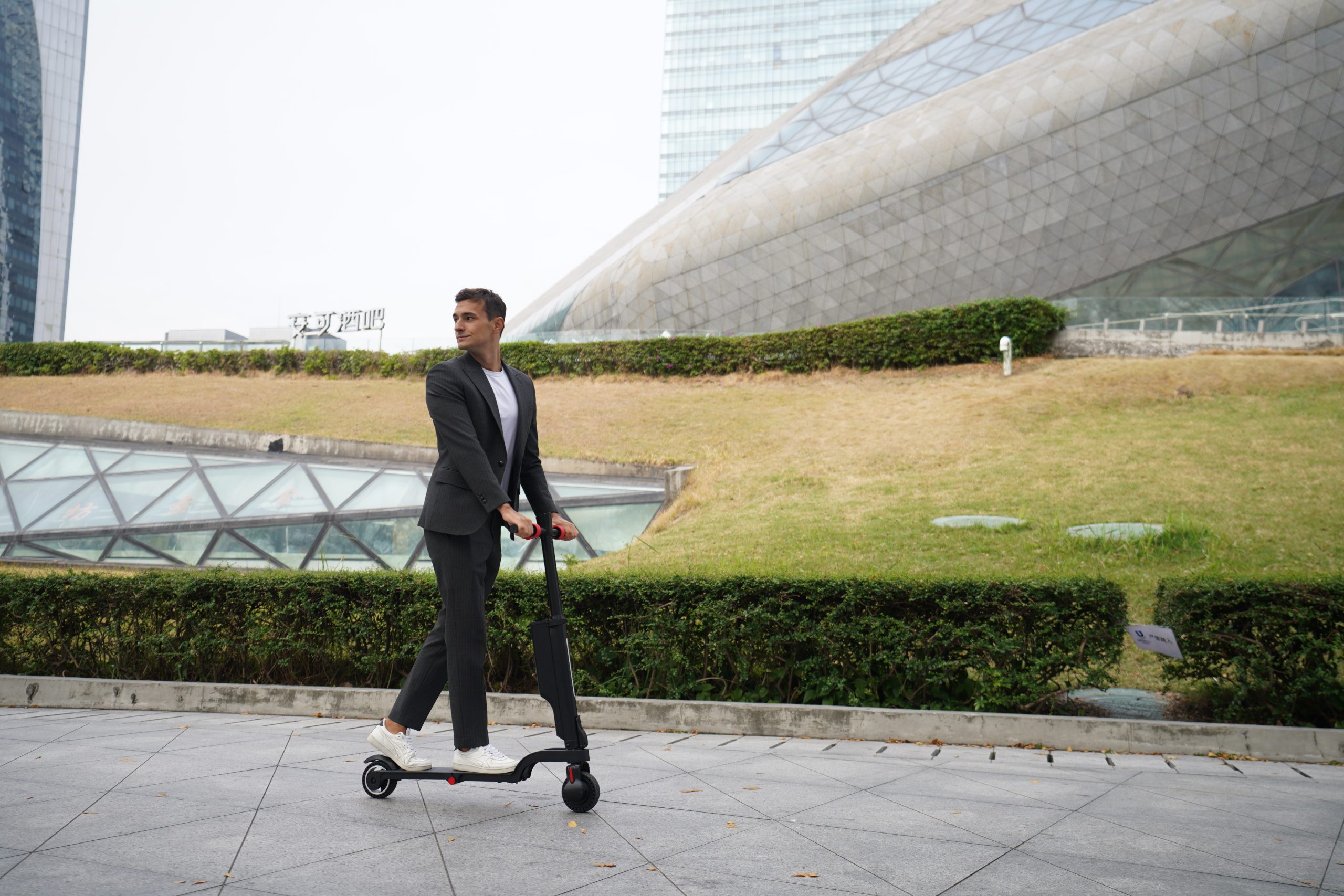
Several brands compete in the budget electric scooter market, but Dynamic Scooter stands out with superior value and reliability. While other manufacturers cut corners to reduce costs, Dynamic Scooter maintains high standards without premium pricing. Here’s why it matters… choosing the right brand affects your daily experience and long-term satisfaction.
Razor offers basic American-made scooters but lacks the advanced features found in Dynamic Scooter models. Their limited range and slower speeds make them suitable only for short trips. Dynamic Scooter’s Model B provides 20km range compared to Razor’s typical 10-15km, giving you twice the freedom for the same price range.
Gotrax focuses on rock-bottom pricing but compromises on build quality and customer support. Their scooters use basic components and lack advanced safety features like dual braking systems. Dynamic Scooter’s premium aluminum-magnesium alloy frame and superior motor efficiency provide much better value than Gotrax’s plastic-heavy construction. You get professional-grade components at budget prices, something Gotrax simply cannot offer.
Hiboy offers decent features but falls short on safety and durability. Their braking systems and frame construction cannot match Dynamic Scooter’s dual-brake system and aluminum-magnesium alloy frame. Dynamic Scooter’s IP54 waterproof rating also surpasses most budget competitors, protecting your investment in all weather conditions.
Dynamic Scooter combines the best aspects of all competitors while avoiding their weaknesses. You get Razor’s reliability, better features than Gotrax, and superior build quality compared to Hiboy. Most importantly, Dynamic Scooter offers genuine value – not just low prices, but quality that justifies every dollar spent.
| Brand | Strengths | Weaknesses vs Dynamic Scooter | Price Range |
| Dynamic Scooter | Superior range, dual brakes, IP54 rating | None – best overall value | $375 |
| Razor | US company, basic reliability | Limited range, slower speeds | $200-$400 |
| Gotrax | Low prices | Poor build quality, short lifespan | $250-$450 |
| Hiboy | Decent features | Inferior safety, no weather protection | $300-$500 |

7. How Should You Maintain Your Low-Cost Electric Scooter?
Regular maintenance keeps your budget scooter running safely and extends its lifespan. Budget models need more attention than expensive ones due to lower-quality components. Simple maintenance tasks prevent expensive repairs and dangerous failures. Spend a few minutes monthly to save hundreds in repair costs.
Check tire pressure weekly if you have pneumatic tires. Under-inflated tires reduce range, increase wear, and create safety hazards. Keep a portable pump handy and maintain manufacturer-recommended pressure. Let me explain… proper tire pressure improves performance and prevents flats that strand you miles from home. But there is good news: Some electric scooters now have non-pneumatic tires, such as the Dynamic Scooter Model B. These are solid tires that can withstand high-intensity pressure and can also save the trouble of inflation.
Inspect brakes monthly for wear and proper adjustment. Brake pads wear out faster on budget scooters due to softer materials. Replace worn pads immediately to maintain stopping power. Clean brake discs regularly to prevent squealing and reduced performance. Brake maintenance is critical for safety.
Keep the scooter clean and dry to prevent corrosion. Wipe down the frame after riding in wet conditions and store indoors when possible. Avoid pressure washing, which can damage electrical components. Use a damp cloth and mild soap for cleaning. Dry thoroughly before storage.
Battery care extends lifespan and maintains performance. Charge regularly but avoid leaving the battery at 100% for extended periods. Store at 50-70% charge if not using for weeks. Extreme temperatures damage batteries, so store indoors when possible. Replace batteries when range drops significantly.
| Maintenance Task | Frequency | Why It Matters |
| Tire Pressure Check | Weekly | Safety and performance |
| Brake Inspection | Monthly | Critical for stopping |
| Cleaning | After wet rides | Prevents corrosion |
| Battery Care | Daily charging | Extends battery life |
Conclusion
Choosing the right low-cost electric scooter requires balancing price, performance, and reliability. While other brands force you to compromise, Dynamic Scooter delivers everything you need without cutting corners. Our Model B outperforms competitors with 20km range, dual-brake safety, and weatherproof design at just $375, and can use Code SS10 for 10% Off.
You save money compared to premium brands while getting features that budget competitors cannot match. Skip the disappointment of cheap scooters that break quickly or expensive ones that drain your budget. Choose Dynamic Scooter Model B and get the perfect balance of quality, performance, and value that American riders deserve.

FAQ
Q1: What is considered a low-cost electric scooter price range?
Low-cost electric scooters typically range from $200 to $600. Models under $300 are entry-level with basic features, while $400-$600 scooters offer better build quality and performance without premium pricing.
Q2: Can budget electric scooters handle American road conditions?
Yes, but choose carefully. Look for scooters with pneumatic tires, good suspension, and sturdy frames. Avoid the cheapest models with solid tires if you plan to ride on rough pavement or need to handle curbs.
Q3: How long do batteries last in budget electric scooters?
Most budget scooter batteries last 300-500 charge cycles, which equals 1-2 years of regular use. Proper charging habits and storage can extend battery life. Replacement batteries typically cost $100-$200.
Q4: Do I need insurance for a low-cost electric scooter?
Insurance requirements vary by state. Some states treat electric scooters like bicycles with no insurance needed, while others require liability coverage. Check your local laws and consider personal liability protection.
Budget scooters focus on basic transportation with shorter range, lower speeds, and simpler features. Premium models offer longer range, faster speeds, better build quality, advanced features like apps, and superior customer support.